Within Poland
What Really Drove Poland's Witch Trials?
Poland's witch trials grew from local disputes, legal power and demonological ideas rather than one nationwide wave of panic.
On this page
- How neighbourhood misfortune became an accusation
- Courts, torture and the uneven scale of prosecution
- Doruchow and the making of a national myth
Page outline Jump by section
Introduction
Poland’s witch trials were real, deadly and locally significant, but they did not take the form of one enormous nationwide panic. Instead, prosecutions appeared unevenly across the Polish–Lithuanian Commonwealth, reaching their greatest intensity during the late seventeenth and early eighteenth centuries. Most accusations grew from neighbourhood disputes, unexplained illness, failed harvests, livestock deaths or long-running personal conflicts. Local courts then transformed these suspicions into criminal cases, often using torture to obtain confessions that reflected learned European ideas about witches and the Devil rather than the original accusations. Modern historians have also challenged several popular stories about Polish witch-hunting, particularly the famous Doruchów case, showing how later legend has sometimes overshadowed the surviving evidence.[Springer]link.springer.comWitchcraft in Early Modern Poland, 1500-1800 | Springer Nature LinkOctober 17, 2013…
What Really Drove Poland’s Witch Trials?
Unlike the stereotype of irrational crowds suddenly turning on alleged witches, Polish prosecutions usually emerged from ordinary village life. A sick child, spoiled milk, an unexplained fire or the death of livestock might be interpreted as supernatural harm when no obvious explanation existed. Suspicion frequently focused on someone with whom the complainant had recently quarrelled or someone whose behaviour already attracted mistrust.
These local tensions alone did not normally produce executions. The decisive step came when courts accepted accusations as criminal matters. Judges, clergy and legal officials often interpreted village complaints through the wider European demonological belief that witches made pacts with the Devil, attended secret gatherings and deliberately harmed Christian society. This combination of local grievances and elite legal theory gave many prosecutions their distinctive character.[Springer]link.springer.comWitchcraft in Early Modern Poland, 1500-1800 | Springer Nature LinkOctober 17, 2013…
The process therefore differed from the image of an entire population gripped by identical fears. Some communities never experienced witch trials, some courts dismissed accusations, and neighbouring regions could follow very different legal practices.
How neighbourhood misfortune became an accusation
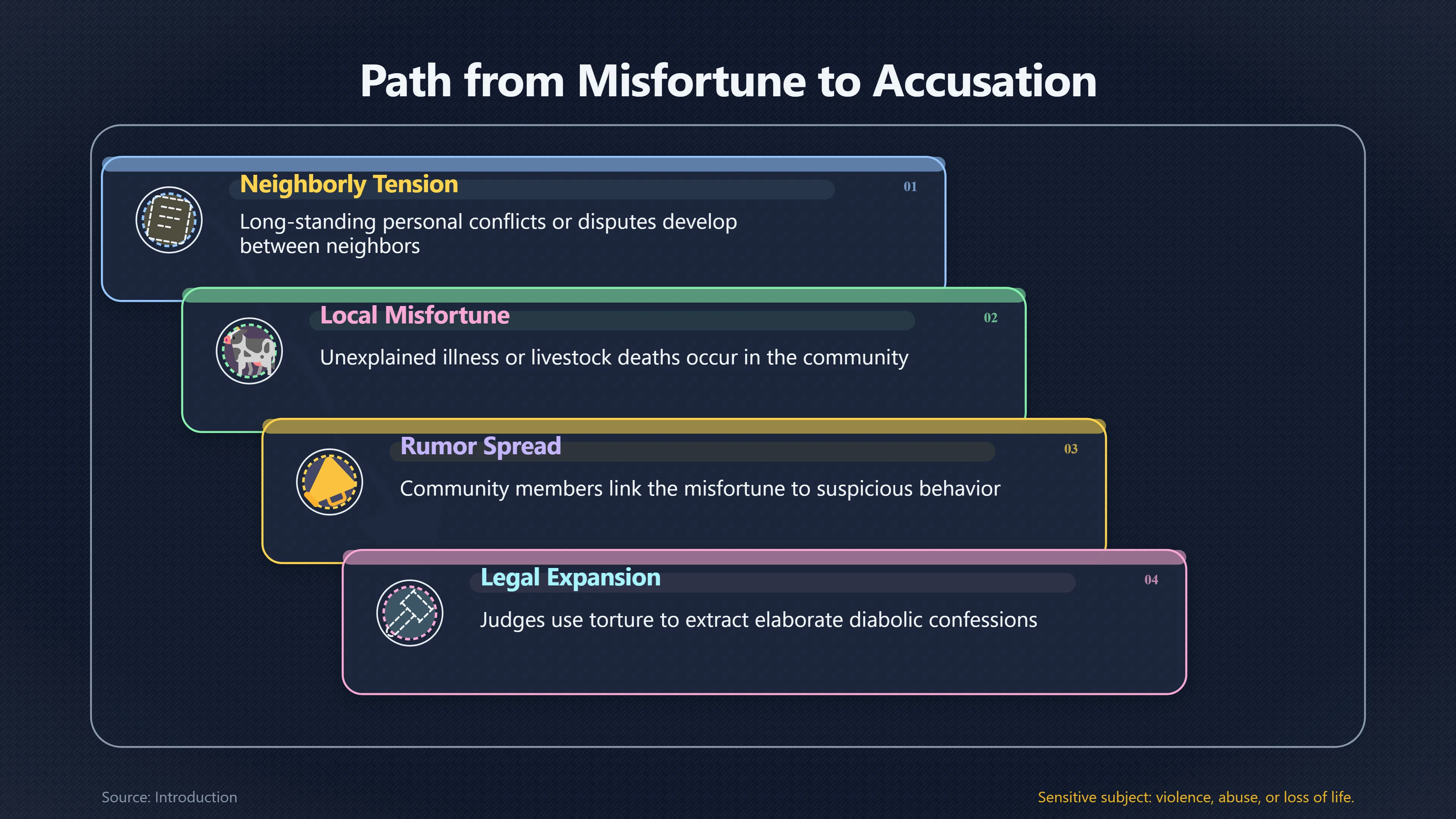
Most surviving records suggest a familiar sequence rather than a sudden panic:
- A dispute or longstanding tension developed between neighbours.
- Misfortune followed, such as illness, crop failure or animal deaths.
- Rumours connected the two events.
- Witnesses repeated stories about suspicious behaviour or previous threats.
- Legal interrogation, sometimes under torture, expanded ordinary accusations into elaborate confessions involving diabolic magic.
Confessions obtained under torture often included descriptions of flying, meetings with the Devil or magical rituals because interrogators expected such answers. Historians therefore distinguish carefully between what villagers originally believed and what courts recorded after coercive questioning.[Springer]link.springer.comWitchcraft in Early Modern Poland, 1500-1800 | Springer Nature LinkOctober 17, 2013…
Courts, Torture and the Uneven Scale of Prosecution
One of the biggest misconceptions is that Poland experienced a centrally organised witch hunt comparable to the largest persecutions elsewhere in Europe. The Polish–Lithuanian Commonwealth had no single judicial system directing witch prosecutions. Cases were handled by a mixture of municipal courts, noble estate courts and ecclesiastical authorities, producing considerable regional variation.[Springer]link.springer.comWitchcraft in Early Modern Poland, 1500-1800 | Springer Nature LinkOctober 17, 2013…
Torture played an important role in many cases. Once authorised, it could produce increasingly elaborate confessions and accusations against additional suspects, allowing investigations to expand beyond the original complaint. Nevertheless, surviving records also show acquittals, abandoned prosecutions and judicial scepticism. Not every accusation resulted in conviction.
Modern research has also complicated popular assumptions about the accused.
- Women formed the majority of defendants, but men were prosecuted as well.
- Many accused women were married or middle-aged rather than isolated elderly widows.
- Some defendants occupied ordinary positions within their communities instead of existing on the social margins.
- The social relationships between accusers and accused often mattered more than simple poverty or old age.[Springer]link.springer.comWitchcraft in Early Modern Poland, 1500-1800 | Springer Nature LinkOctober 17, 2013…
This evidence suggests that accusations reflected local social conflict as much as gender stereotypes.
The Scale Was Serious—but Smaller Than Popular Legend
Older books and popular accounts sometimes claimed that around 40,000 people were executed for witchcraft in Poland. Modern specialists reject this figure.
The surviving documentation is incomplete, making precise national totals impossible. Many court records have disappeared, while others survive only in fragments. Historians therefore avoid presenting exact numbers and instead emphasise that executions almost certainly numbered far below the dramatic totals repeated in older literature. Estimates remain uncertain, but current scholarship treats sensational figures with considerable caution.[Springer]link.springer.comWitchcraft in Early Modern Poland, 1500-1800 | Springer Nature LinkOctober 17, 2013…
This matters because exaggerated numbers can create the misleading impression of a uniquely intense Polish witch craze. The evidence instead points to substantial but regionally uneven persecution within the broader European pattern of early modern witch trials.
Doruchów and the Making of a National Myth
No story illustrates the gap between historical evidence and later memory better than the famous Doruchów witch trial.
For generations, many books described Doruchów as the site of Poland’s last great witch trial in 1775, where fourteen women were supposedly burned after being condemned as witches. According to the familiar story, public outrage over the executions helped persuade the Polish parliament to prohibit witch-burning the following year.
It is an appealing narrative because it offers a dramatic ending to Poland’s witch-hunting history. Recent historical research, however, has challenged almost every part of it.[czasopisma.uni.lodz.pl]czasopisma.uni.lodz.plProces o czary w Doruchowie w 1775 roku. Fakt czy mit? | Przegląd Nauk Historycznych…
What the evidence actually shows
Historian Jacek Wijaczka examined the documentary basis for the famous 1775 story and concluded that the evidence is remarkably weak.
The detailed account of fourteen executions rests largely on an anonymous narrative published decades later, in 1835, together with an earlier questionnaire rather than contemporary court documentation. By contrast, a witch trial at Doruchów in 1762 is supported by surviving historical evidence.
Wijaczka therefore argues that the celebrated 1775 mass execution is best understood as a later literary construction rather than an event securely established by contemporary records.[czasopisma.uni.lodz.pl]czasopisma.uni.lodz.plProces o czary w Doruchowie w 1775 roku. Fakt czy mit? | Przegląd Nauk Historycznych…
This does not mean witch trials never occurred in Poland. Rather, it shows how memorable stories can gradually replace more complicated historical realities when later writers repeat them without re-examining the original evidence.
Why the Myths Persist
Several factors have helped simplified versions of Polish witch-trial history survive.
First, dramatic stories are easier to remember than uneven regional patterns. A single “last witch trial” provides a satisfying ending that historical reality rarely offers.
Second, nineteenth-century writers often viewed witch trials as symbols of ignorance overcome by Enlightenment progress. This encouraged narratives with clear moral turning points, even when the documentation was incomplete.
Third, popular culture has reinforced familiar stereotypes:
- every accused witch was an elderly outcast;
- trials reflected universal public belief rather than contested legal processes;
- confessions accurately described popular magic;
- Poland experienced one continuous nationwide witch panic.
Modern research presents a more complicated picture in which local conflict, legal institutions, torture, religious ideas and regional variation all shaped individual cases.[springer.com]link.springer.comWitchcraft in Early Modern Poland, 1500-1800 | Springer Nature LinkOctober 17, 2013…

Why Polish Witch Trials Still Matter
Polish witch trials reveal how ordinary social tensions could become deadly when reinforced by legal authority and accepted ideas about supernatural crime. They also demonstrate the importance of distinguishing between documented history and later mythmaking.
The surviving records show neither a uniquely credulous society nor an uninterrupted wave of collective hysteria. Instead, they reveal a patchwork of local prosecutions shaped by community conflict, judicial practice and changing religious ideas. The continuing debate over Doruchów serves as a reminder that even famous historical episodes deserve to be tested against contemporary evidence rather than accepted because they have been repeated for generations.[springer.com]link.springer.comWitchcraft in Early Modern Poland, 1500-1800 | Springer Nature LinkOctober 17, 2013…
Amazon book picks
Further Reading
Books and field guides related to What Really Drove Poland's Witch Trials?. Use these as the next step if you want deeper reading beyond the article.
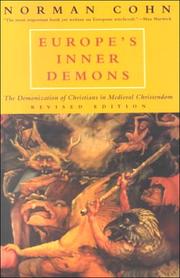
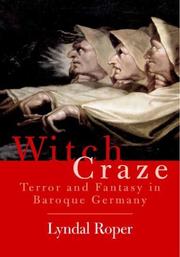
The witch-hunt in early modern Europe
Best general history for understanding Polish witch trials in European context.

God's playground, a history of Poland
First published 1981. Subjects: History, Poland, history.
Endnotes
1.
Source: link.springer.com
Link:https://link.springer.com/book/10.1057/9781137384218
Source snippet
Witchcraft in Early Modern Poland, 1500-1800 | Springer Nature LinkOctober 17, 2013...
Published: October 17, 2013
2.
Source: czasopisma.uni.lodz.pl
Link:https://czasopisma.uni.lodz.pl/pnh/article/view/18630
Source snippet
Proces o czary w Doruchowie w 1775 roku. Fakt czy mit? | Przegląd Nauk Historycznych...
3.
Source: czasopisma.uni.lodz.pl
Link:https://czasopisma.uni.lodz.pl/pnh/article/view/23622
Source snippet
obraz czarownic i procesów o czary w Polsce | Przegląd Nauk HistorycznychJuly 23, 2025 — NIEPRAWDZIWY OBRAZ CZAROWNIC I PROCESÓW O CZARY...
Published: July 23, 2025
4.
Source: dspace.uni.lodz.pl
Link:https://dspace.uni.lodz.pl/handle/11089/48915?locale-attribute=en
Source snippet
Fakt czy mit?December 20, 2023 — PROCES O CZARY W DORUCHOWIE W 1775 ROKU. FAKT CZY MIT? Image: Thumbnail VIEW/OPEN 83-109_Wijaczka.pdf (4...
Published: December 20, 2023
5.
Source: dspace.uni.lodz.pl
Link:https://dspace.uni.lodz.pl/handle/11089/48915?show=full
Source snippet
Fakt czy mit?December 20, 2023 — PROCES O CZARY W DORUCHOWIE W 1775 ROKU. FAKT CZY MIT? dc.contributor.author | Wijaczka, Jacek | dc.date...
Published: December 20, 2023
6.
Source: czasopisma.uni.lodz.pl
Title: uni.lodz.pl Procesy o czary w Polsce czy w Wielkopolsce?
Link:https://czasopisma.uni.lodz.pl/pnh/article/view/15862
Source snippet
(Rec.: Wanda Wyporska, Czary w nowożytnej Polsce w latach 1500–1800, przekł. M.L. Kalinowski, Wydawnictwo Naukowe Uniwersytetu Mikołaja K...
7.
Source: repozytorium.uni.lodz.pl
Link:https://repozytorium.uni.lodz.pl/handle/11089/45923?show=full
8.
Source: repozytorium.uni.lodz.pl
Link:https://repozytorium.uni.lodz.pl/handle/11089/45923?locale-attribute=en&show=full
Additional References
9.
Source: yadda.icm.edu.pl
Title: bwmeta1.element.ojs doi 10 18778 1644 857X 22 02 03
Link:https://yadda.icm.edu.pl/cejsh/element/bwmeta1.element.ojs-doi-10_18778_1644-857X
Source snippet
The Witchcraft Trial in Doruchów in 1775 Fact or Myth? - Przegląd Nauk Historycznych - Volume 22, Issue 2 (2023) - CEJSH - Yadda...
10.
Source: youtube.com
Title: Polish Witch Trials: Dark Days in History
Link:https://www.youtube.com/watch?v=m9ZkEcWOCTY
Source snippet
3 Witches in Old Poland: Fear of the Devil in 17th-Century Greater Poland...
11.
Source: youtube.com
Title: The history of witch persecution in Poland
Link:https://www.youtube.com/watch?v=Zj_TjCPARZE
Source snippet
2 Polish Witch Trials: Dark Days in History...
12.
Source: youtube.com
Title: Witches in Old Poland: Fear of the Devil in 17th-Century Greater Poland
Link:https://www.youtube.com/watch?v=ZPGRwx01yjk
Source snippet
4 Witch! Witch Hunt...
13.
Source: youtube.com
Title: Witch Trials and Male ‘Witches’ in Poland with Łukasz Hajdrych
Link:https://www.youtube.com/watch?v=PYuvLmP5bRQ
14.
Source: youtube.com
Title: Witch! Witch Hunt
Link:https://www.youtube.com/watch?v=2zSsMkzfCnM
Source snippet
5 Witch Trials and Male 'Witches' in Poland with Łukasz Hajdrych...
15.
Source: omega.umk.pl
Link:https://omega.umk.pl/info/article/UMK9ca154fc290b4334aa6e4db29b98770d/
16.
Source: omega.umk.pl
Link:https://omega.umk.pl/info/article/UMKd85ed522345d49968813a3893214e29c/
17.
Source: ceeol.com
Title: CEEO L
Link:https://www.ceeol.com/content-files/document-1254186.pdf
Topic Tree