When Fear and Faith Swept Portugal
Portugal’s history of contagious belief is not dominated by one vast national “hysteria”.
Page outline Jump by section
Introduction
These histories should not be forced into a single category. Witch prosecutions involved judicial persecution and coerced testimony. Sebastianism was a flexible messianic tradition rather than a tightly organised sect. Fátima remains a legitimate religious devotion for millions, although its visions and reported miracle are interpreted differently by believers, sceptics and historians. The school outbreak is the clearest Portuguese example of mass psychogenic illness: genuine physical distress spreading without an identified infectious cause. Understanding those differences is more useful than casually labelling every unusual collective experience a “cult” or “mass hysteria”.
Why Portugal largely escaped Europe’s great witch hunts
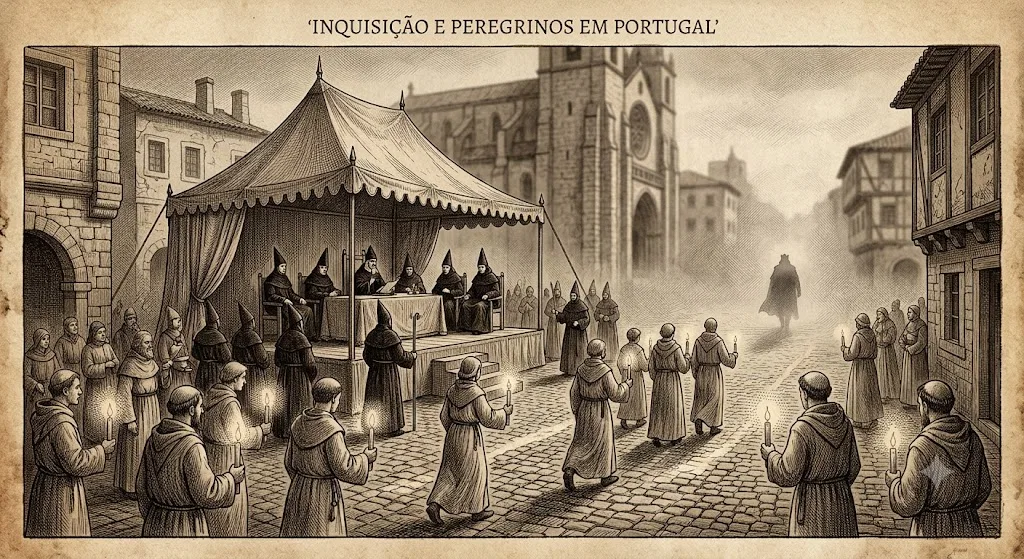
Early modern Portuguese people certainly feared harmful magic. They consulted healers, blamed misfortune on spells and denounced neighbours for divination, love magic, spirit contact and alleged dealings with the Devil. Yet Portugal did not experience witch executions on the scale seen in parts of Germany, Switzerland or Scotland. Research on Portuguese inquisitorial practice describes an institution that prosecuted magical and superstitious activities but was comparatively reluctant to accept the full demonological picture of organised witches flying to nocturnal gatherings and participating in a continent-wide satanic conspiracy.[tufts.edu]dl.tufts.eduTufts Digital LibraryThe European Witch Hunt Bruxaria Without the Sabbath in…The Inquisition was an organization somewhat skeptical of…
One reason was institutional. From 1536 until its abolition in 1821, the Portuguese Inquisition concentrated heavily on suspected secret Judaism among converts and their descendants, as well as religious dissent, prohibited books and other offences against Catholic orthodoxy. Witchcraft mattered, but it competed with concerns that inquisitors generally considered more urgent. The tribunals also distinguished between claims of supernatural power and actions they could punish as fraud, superstition, improper healing or heretical belief.[Cambridge University Press & Assessment]resolve.cambridge.orgCambridge University Press & AssessmentThe Mediterranean Inquisitions of early modern EuropePortuguese Inquisition, obtained a founding c…
That relative restraint must not be romanticised. People accused of magical offences could be imprisoned, interrogated, publicly humiliated, whipped or banished. Inquisitorial records also reveal how accusations exposed vulnerable healers, poor women, migrants and people of African descent to surveillance. The absence of a vast execution campaign did not mean an absence of fear or suffering.[Cambridge University Press & Assessment]cambridge.orgUniversity Press & Assessment Religion and Culture (Chapter 5University Press & Assessment Religion and Culture (Chapter 5
The Lisbon panic of 1559
The major exception was the Lisbon witch trial of 1559–60. Secular authorities prosecuted a group of women whose recorded confessions included intercourse with the Devil, infant killing and other claims familiar from European demonological literature. Five women were initially burned, and the alarm prompted Queen Catherine to order a wider investigation. Twenty-seven further suspects were reportedly accused, with another execution following. It was an extraordinary concentration of capital punishment by Portuguese standards.[wikipedia.org]WikipediaLisbon witch trialLisbon witch trial
The confessions cannot safely be read as straightforward descriptions of what the women believed or did. Early modern interrogations were shaped by threats, leading questions and assumptions already held by judges. Stories about demonic sex and murdered babies also resemble accusation scripts found elsewhere in European witch prosecutions. They tell historians a great deal about elite fears and judicial expectations, but much less about any real clandestine organisation.[tufts.edu]dl.tufts.eduTufts Digital LibraryThe European Witch Hunt Bruxaria Without the Sabbath in…The Inquisition was an organization somewhat skeptical of…
What makes the episode important is the reaction after it. A local prosecution widened into a royal inquiry because authorities treated the confessions as evidence of a broader hidden danger. That is a recognisable panic mechanism: frightening testimony produces investigation; investigation generates more accusations; those accusations appear to confirm the original fear. In Portugal, however, the escalation did not develop into a sustained nationwide witch hunt. Later inquisitorial practice generally remained more sceptical and less execution-focused than the secular court had been in 1559.[ull.es]fradive.webs.ull.esOpen source on ull.es.
The lost king who would return
In 1578, the young King Sebastian disappeared during Portugal’s disastrous defeat at the Battle of Alcácer Quibir in Morocco. His body was not convincingly identified to everyone’s satisfaction, and the succession crisis eventually helped place Portugal under the Spanish Habsburg monarchy. From this combination of military catastrophe, missing remains and lost independence grew the belief that Sebastian had survived—or would somehow return—to restore the kingdom.[brill.com]brill.comChapter 5 Sebastianism: A Portuguese Prophecy in1 Dec 2020 — The messianic Sebastianist phenomenon arose in Portugal after the Lusit…
Sebastianism was not a single organisation with fixed membership. It ranged from literal expectations that the king was alive to symbolic hopes for a divinely appointed national redeemer. Prophetic verses associated with the shoemaker Bandarra were repeatedly reinterpreted, while the Jesuit writer António Vieira later connected Portuguese destiny with the biblical idea of a future Fifth Empire. The tradition could therefore absorb changing disappointments: Spanish rule, political decline, foreign domination or dissatisfaction with existing rulers.[brill.com]brill.comChapter 5 Sebastianism: A Portuguese Prophecy in1 Dec 2020 — The messianic Sebastianist phenomenon arose in Portugal after the Lusit…
Several pretenders appeared claiming to be the missing monarch. Their success, however temporary, shows that Sebastianism was more than a literary metaphor. Uncertainty about the king’s death created an opening, while political resentment made the claim emotionally attractive. Support for a pretender could express opposition to Habsburg rule as much as literal conviction that an ageing stranger was the vanished king.[Wikipedia]WikipediaSebastian, King of PortugalSebastian, King of Portugal
The belief endured because it offered a simple story about national reversal. Portugal’s humiliation was temporary; the rightful ruler remained hidden; restoration would arrive at the moment of greatest need. Such “sleeping hero” traditions appear in many cultures, but the Portuguese version became unusually influential in political writing, poetry and ideas of national identity. It survived even after Portugal regained independence in 1640 because the returning king could be reimagined as a symbol of any hoped-for renewal.[brill.com]brill.comChapter 5 Sebastianism: A Portuguese Prophecy in1 Dec 2020 — The messianic Sebastianist phenomenon arose in Portugal after the Lusit…
Calling Sebastianism a cult would therefore be misleading. At certain moments it inspired committed prophetic circles or support for impostors, but more often it functioned as folklore, political language and cultural memory. Its lasting importance lies in how a collective trauma—the unexplained loss of a king and an empire’s apparent decline—was transformed into an expectation of future rescue.
Fátima: apparition, crowd event and political symbol
In 1917, three shepherd children—Lúcia dos Santos and her cousins Francisco and Jacinta Marto—reported repeated appearances of the Virgin Mary near Fátima. According to the established devotional narrative, the encounters occurred over six months and included requests for prayer, repentance and the building of a chapel. News spread through families, clergy, pilgrims and newspapers, drawing increasingly large crowds to the site.[Santuário de Fátima]fatima.ptOpen source on fatima.pt.
The timing mattered. Portugal was experiencing the First World War, economic hardship and fierce conflict between Catholic communities and the anticlerical First Republic established in 1910. In that environment, the children’s reports could be understood not only as private religious experiences but also as reassurance that sacred power remained present in a country undergoing political and cultural upheaval. Republican officials detained and questioned the children in August 1917, an intervention that did not end the movement and may have strengthened the impression among supporters that innocent believers were being persecuted.[harvard.edu]ces.fas.harvard.eduMinda de Gunzburg CenterThe Marian Apparitions in Fátima as Political Realityby PC Manuel — Virgin Mary is said to have appeared to three…
The decisive public event came on 13 October 1917. A vast crowd assembled after the children had said that a sign would occur. Many witnesses reported unusual movements, colours or changes in the appearance of the sun, an episode later called the Miracle of the Sun. Not everyone present reported the same thing, and no agreed physical explanation has settled the dispute. Believers regard the reports as miraculous confirmation; sceptical interpretations include optical effects, expectation, staring at the sun, meteorological conditions and the social influence of a crowd primed to witness something extraordinary.[fatima.pt]fatima.ptchronology of the three seerschronology of the three seers
It would be inaccurate to describe the event simply as mass psychogenic illness. Most accounts concern perception rather than a shared outbreak of sickness, and the evidence consists of varied witness reports rather than controlled observation. “Collective visionary experience” is a more careful description, leaving open whether individuals saw a miracle, an optical phenomenon, an expectation-shaped perception or different events interpreted through a shared religious frame.
From local testimony to global message
The Catholic Church did not immediately authenticate the apparitions. Formal diocesan recognition came in 1930, after years of inquiry and growing pilgrimage. This delay is important: popular devotion helped establish Fátima before the institution fully endorsed it. The shrine’s later expansion shows how repeated pilgrimage, ritual, architecture and official recognition can stabilise a disputed event into a durable religious tradition.[wikipedia.org]WikipediaOur Lady of FátimaOur Lady of Fátima
The meaning of Fátima also changed over time. Later accounts associated the apparitions with visions of hell, the fate of Russia, war, papal suffering and the consecration of nations. The “third secret”, written down by Lúcia and held by the Vatican, became a focus of apocalyptic speculation until its publication in 2000. The Vatican interpreted its imagery primarily in relation to twentieth-century persecution and the 1981 attempt to assassinate Pope John Paul II, while rejecting the idea that it supplied a detailed timetable of inevitable future disasters.[Vatican]vatican.varc con cfaith doc 20000626 message fatima enrc con cfaith doc 20000626 message fatima en
During the dictatorship and the Cold War, Fátima’s anticommunist associations gave the devotion political weight far beyond the original village setting. Yet it cannot be reduced to propaganda. For pilgrims, its central themes have included grief, healing, penance, peace and hope. A fair account must therefore recognise two realities at once: Fátima became useful to political and ecclesiastical institutions, and it remained a sincere religious practice with meanings not controlled entirely by those institutions.[harvard.edu]ces.fas.harvard.eduMinda de Gunzburg CenterThe Marian Apparitions in Fátima as Political Realityby PC Manuel — Virgin Mary is said to have appeared to three…
When a television illness entered real schools
Portugal’s clearest documented episode of mass psychogenic illness began in May 2006. A storyline in the popular teenage television drama Morangos com Açúcar depicted pupils at a fictional school suffering from a dangerous virus. Soon afterwards, real students in Portuguese schools reported similar symptoms, including dizziness, breathing difficulty, rashes and general weakness. More than 300 pupils across 14 schools were affected, and some schools temporarily closed while authorities investigated.[nih.gov]pmc.ncbi.nlm.nih.govPMCPsychogenic epidemicmass hysteria phenomena in Portugalby A Costa · 2022 — Years later, more than 300 students from 14 schools described the same symptoms: d…
No infectious agent or environmental source was found that could explain the pattern. Doctors and public-health observers classified the outbreak as psychogenic: symptoms were real, but their spread was linked to attention, anxiety, social contact and expectation rather than a transmissible pathogen. The television plot provided a ready-made symptom script, showing viewers what the supposed illness looked and felt like.[PMC]pmc.ncbi.nlm.nih.govPMCPsychogenic epidemicmass hysteria phenomena in Portugalby A Costa · 2022 — Years later, more than 300 students from 14 schools described the same symptoms: d…
The outbreak occurred close to end-of-year examinations, when many pupils were already under stress. It also spread through schools, environments in which young people closely observe peers and where reports of unexplained illness quickly attract adult attention. Once several students became unwell, ambulances, closures and news coverage could unintentionally make the threat appear more credible, increasing bodily vigilance among other pupils.[smithsonianmag.com]smithsonianmag.comhow soap opera virus felled hundreds students portugal 180962383how soap opera virus felled hundreds students portugal 180962383
“Psychogenic” does not mean that the students were pretending. Anxiety and expectation can produce dizziness, rapid breathing, faintness, pain, nausea and skin changes. Once sufferers fear an infection, normal bodily sensations may also be interpreted as signs of disease. Dismissing such outbreaks as imaginary can worsen distress and discourage reporting of genuine hazards; treating every symptom as proof of poisoning or infection can intensify contagion. The responsible approach is to investigate physical causes promptly, communicate findings clearly and reduce alarm without humiliating those affected.[frontiersin.org]frontiersin.orgOpen source on frontiersin.org.
The case is especially memorable because it illustrates a modern form of contagious belief. No village rumour or prophetic preacher was required. A fictional narrative reached a large, closely connected audience at the same time, supplied a recognisable cluster of symptoms and was then reinforced by peer observation and national media attention.
What these episodes have in common
Portugal’s witch prosecutions, Sebastianism, Fátima and the school outbreak were fundamentally different events. Nevertheless, each reveals how beliefs spread more easily when several conditions coincide.
An unresolved shock created room for interpretation. The disappearance of Sebastian left no emotionally satisfying ending. Wartime suffering and political conflict framed Fátima. Unexplained symptoms in schools created immediate fear. In Lisbon, alarming confessions appeared to reveal an invisible criminal conspiracy.
A familiar story organised uncertainty. Demonology explained misfortune through witches. Prophecy promised a returning king. Catholic imagery gave meaning to children’s visions. A television drama supplied a symptom pattern for anxious pupils.
Authority could amplify as well as restrain belief. Judges widened the Lisbon inquiry. Attempts to suppress the Fátima gatherings helped make them politically significant. School closures and emergency responses understandably protected pupils but also signalled that an extraordinary danger might be present. Conversely, inquisitorial scepticism helped prevent Portuguese witch accusations from escalating as dramatically as they did elsewhere.[ull.es]fradive.webs.ull.esOpen source on ull.es.
Communication determined scale. Early modern denunciations travelled through neighbourhood and judicial networks. Sebastianist prophecy circulated through verse, preaching and political rumour. Fátima grew through pilgrimage and newspapers. The 2006 symptoms moved through television, schools and rapid national news coverage.
These patterns do not prove that crowds are irrational. People usually interpret uncertain situations using the information, institutions and cultural stories available to them. Collective fear becomes dangerous when authorities mistake accusation for evidence, when media repetition turns possibility into apparent fact, or when dissenting explanations are treated as betrayal.

Myths, panics and genuine belief
The phrase “mass hysteria” is often applied too broadly to Portuguese history. It can obscure more than it explains, particularly because it has traditionally been used to dismiss women, children, religious believers and people with unexplained symptoms. More precise terms produce a clearer account.
The Lisbon trials were a witch panic and judicial persecution, not evidence that a secret society of witches existed. Sebastianism was a messianic political and cultural tradition, sometimes exploited by impostors but rarely equivalent to a bounded religious group. Fátima is a contested apparition tradition and pilgrimage movement whose supernatural claims lie outside what historical methods can prove. The 2006 school outbreak was mass psychogenic illness, in which distress and bodily symptoms spread through social influence without an identified infectious cause.
Portugal’s experience is therefore less a catalogue of bizarre credulity than a history of how communities respond to danger, loss and uncertainty. Its most significant episodes endured not because Portuguese society was uniquely suggestible, but because each belief answered a pressing human need: to identify an enemy, recover a lost future, find meaning in suffering or understand frightening sensations. Their consequences depended on what happened next—whether courts punished, institutions recognised, media amplified or investigators calmly distinguished evidence from expectation.
Amazon book picks
Further Reading
Books and field guides related to When Fear and Faith Swept Portugal. Use these as the next step if you want deeper reading beyond the article.

fatima in lucia's own words
Primary account of Portugal's most influential apparition tradition.


Miracles
First published 1947. Subjects: Miracles, Nonfiction, Religion & Spirituality, Christianity.
The Penguin History of Portugal
Covers the historical setting behind Portugal's major episodes of collective belief.
Endnotes
1.
Source: brill.com
Link:https://brill.com/display/book/9789004443631/BP000007.xml?language=en&srsltid=AfmBOoqsgvj8kXIJp5vuAph_Z36B9Gpt1Kj115PNGoulF_-rjJA0Pczh
Source snippet
Chapter 5 Sebastianism: A Portuguese Prophecy in1 Dec 2020 — The messianic Sebastianist phenomenon arose in Portugal after the Lusit...
2.
Source: pmc.ncbi.nlm.nih.gov
Title: PMCPsychogenic epidemic
Link:https://pmc.ncbi.nlm.nih.gov/articles/PMC9567156/
Source snippet
mass hysteria phenomena in Portugalby A Costa · 2022 — Years later, more than 300 students from 14 schools described the same symptoms: d...
3.
Source: fradive.webs.ull.es
Link:https://fradive.webs.ull.es/web-conmirel/PAIVA.htm
4.
Source: dl.tufts.edu
Link:https://dl.tufts.edu/downloads/qj72pj687?filename=kd17d410m.pdf
Source snippet
Tufts Digital LibraryThe European Witch Hunt Bruxaria Without the Sabbath in...The Inquisition was an organization somewhat skeptical of...
5.
Source: brill.com
Link:https://brill.com/display/book/9789047407348/B9789047407348_s012.pdf?srsltid=AfmBOooOZ3PgPymUDHbABNPq23taSF_9LRfn_Ga08biIsVHxreeIp1uC
Source snippet
PORTUGUESE INQUISITION TRIALS AGAINST POPULAR...Portuguese Inquisition tribunals used to prosecute persons in mag- ical crimes tria...
6.
Source: resolve.cambridge.org
Link:https://resolve.cambridge.org/core/services/aop-cambridge-core/content/view/965FBA0322E937A692A6B719A13F8334/9781139054843c16_p283-301_CBO.pdf/the-mediterranean-inquisitions-of-early-modern-europe.pdf
Source snippet
Cambridge University Press & AssessmentThe Mediterranean Inquisitions of early modern EuropePortuguese Inquisition, obtained a founding c...
7.
Source: cambridge.org
Link:https://www.cambridge.org/core/journals/revista-de-historia-economica-journal-of-iberian-and-latin-american-economic-history/article/numeracy-of-religious-minorities-in-spain-and-portugal-during-the-inquisition-era/F0B49AE7BA5AFA17406F3A6C734EA949
8.
Source: cambridge.org
Title: University Press & Assessment Religion and Culture (Chapter 5)
Link:https://www.cambridge.org/core/books/crosscultural-exchange-in-the-atlantic-world/religion-and-culture/DC403D5BD75F3D66407DF898801E3883
9.
Source: cambridge.org
Link:https://www.cambridge.org/core/journals/history-in-africa/article/inquisition-records-from-goa-as-sources-for-the-study-of-slavery-in-the-eastern-domains-of-the-portuguese-empire/AC265CE6DEF4FDF11647C2656E1C07E8
10.
Source: Wikipedia
Title: Lisbon witch trial
Link:https://en.wikipedia.org/wiki/Lisbon_witch_trial
11.
Source: Wikipedia
Title: Witch trials in Portugal
Link:https://en.wikipedia.org/wiki/Witch_trials_in_Portugal
12.
Source: cambridge.org
Title: University Press & Assessment Old Europe (Part IV)
Link:https://www.cambridge.org/core/books/cambridge-history-of-magic-and-witchcraft-in-the-west/old-europe/B5E63F092C5D673AB7A68D0C533A11C8
13.
Source: Wikipedia
Title: Sebastian, King of Portugal
Link:https://en.wikipedia.org/wiki/Sebastian%2C_King_of_Portugal
14.
Source: researchgate.net
Link:https://www.researchgate.net/publication/294824621_Sebastianism_messianism_and_nationalism_of_Portuguese_overseas_expansion_in_the_sixteenth_century
15.
Source: Wikipedia
Link:https://en.wikipedia.org/wiki/Sebastianism
16.
Source: academic.oup.com
Title: Academic After the Medium: Rereading Stories on a String
Link:https://academic.oup.com/jaar/article-pdf/89/4/1290/42597562/lfab097.pdf
17.
Source: Wikipedia
Title: Our Lady of Fátima
Link:https://en.wikipedia.org/wiki/Our_Lady_of_F%C3%A1tima
18.
Source: vatican.va
Title: hf jp ii spe 19971001 [fatima]({{ ‘fatima/’ | relative_url }})
Link:https://www.vatican.va/content/john-paul-ii/en/speeches/1997/october/documents/hf_jp-ii_spe_19971001_fatima.html
19.
Source: vatican.va
Title: rc con cfaith doc 20000626 message fatima en
Link:https://www.vatican.va/roman_curia/congregations/cfaith/documents/rc_con_cfaith_doc_20000626_message-fatima_en.html
20.
Source: vatican.va
Title: hf jp ii aud 20000517
Link:https://www.vatican.va/content/john-paul-ii/en/audiences/2000/documents/hf_jp-ii_aud_20000517.html
21.
Source: academic.oup.com
Link:https://academic.oup.com/edited-volume/34365/chapter/327331833?login=false
22.
Source: vatican.va
Link:https://www.vatican.va/roman_curia/pontifical_councils/migrants/pom2005_97-suppl/rc_pc_migrants_pom97_gomes.html
23.
Source: sajp.org.za
Link:https://sajp.org.za/index.php/sajp/article/view/1671/2648
24.
Source: academic.oup.com
Link:https://academic.oup.com/edited-volume/34393/chapter/291663944
25.
Source: academic.oup.com
Link:https://academic.oup.com/jaar/article/91/3/633/7630134
26.
Source: academic.oup.com
Link:https://academic.oup.com/edited-volume/34628/chapter/295042688
27.
Source: academic.oup.com
Title: suppl 13
Link:https://academic.oup.com/past/article/238/suppl_13/317/5230767
28.
Source: academic.oup.com
Link:https://academic.oup.com/past/article-pdf/238/suppl_13/345/27008673/gty035.pdf
29.
Source: academic.oup.com
Title: Supplement 14
Link:https://academic.oup.com/past/article/242/Supplement_14/1/5637699
30.
Source: academic.oup.com
Title: upso 9781399519458
Link:https://academic.oup.com/edinburgh-scholarship-online/book/61031/book-pdf/64290922/upso-9781399519458.pdf
31.
Source: academic.oup.com
Title: upso 9781501765872
Link:https://academic.oup.com/cornell-scholarship-online/book/46260/book-pdf/50377842/upso-9781501765872.pdf
32.
Source: Wikipedia
Title: List of mass panic cases
Link:https://en.wikipedia.org/wiki/List_of_mass_panic_cases
33.
Source: Wikipedia
Title: Satanic panic
Link:https://en.wikipedia.org/wiki/Satanic_panic
34.
Source: Wikipedia
Title: Morangos com Açúcar Virus
Link:https://en.wikipedia.org/wiki/Morangos_com_A%C3%A7%C3%BAcar_Virus
35.
Source: cambridge.org
Link:https://www.cambridge.org/core/journals/journal-of-ecclesiastical-history/article/impact-of-luther-and-the-reformation-in-the-portuguese-seaborne-empire-asia-and-brazil-15201580/1E21D9A818AA5D3D4CC9F1AC2B44F507
36.
Source: cambridge.org
Link:https://www.cambridge.org/core/books/women-who-threw-corn/inquisitions-sorcery-investigations-and-the-law-in-mexico-15211571/0C4E0CFC955FBEB9144D53567A353606
37.
Source: cambridge.org
Title: Inquisitions (Chapter 25)
Link:https://www.cambridge.org/core/product/identifier/9781316492659%23CT-bp-26/type/BOOK_PART
38.
Source: cambridge.org
Link:https://www.cambridge.org/core/books/cambridge-world-history-of-violence/religious-and-sacred-violence/9AE2A9B14ACCB64D21F30391F8A88B73
39.
Source: cambridge.org
Link:https://www.cambridge.org/core/books/reformations-compared/reception-of-the-protestant-reformation-in-the-iberian-peninsula/415C98D48BCDED8609AFC73D06C4053B
40.
Source: cambridge.org
Title: Chapter 5
Link:https://www.cambridge.org/core/books/between-court-and-confessional/negotiating-the-catholic-monarchy/3DFF0D89438AECAE30602A53FD6BA91C
41.
Source: cambridge.org
Link:https://www.cambridge.org/core/books/cambridge-history-of-the-papacy/papacy-and-the-protestants-15171563/1ABA574B31D9689BA8AE72ABE1533801
42.
Source: cambridge.org
Link:https://www.cambridge.org/core/books/cambridge-companion-to-the-spanish-inquisition/cartagena-de-indias/12BDECD35FCEFCB1D9AB1F3DF623805B
43.
Source: cambridge.org
Title: Inquisitions (Chapter 2)
Link:https://www.cambridge.org/core/books/judging-faith-punishing-sin/inquisitions/EE3653FC9C7CFDCEC3D30068566F015E
44.
Source: cambridge.org
Title: Geographical Reach (Part III)
Link:https://www.cambridge.org/core/books/cambridge-companion-to-the-spanish-inquisition/geographical-reach/59013699026A2FE3638E20DC3DAF9E24
45.
Source: resolve.cambridge.org
Link:https://resolve.cambridge.org/core/services/aop-cambridge-core/content/view/59980728EC66FA0ABD37BB0EDB42D124/9781316492659c21_p266-278_CBO.pdf/inquisitions.pdf
46.
Source: cambridge.org
Link:https://www.cambridge.org/core/books/judging-faith-punishing-sin/local-contexts-and-regional-variations/B117FC3FF7412F6670E4296D258EA872
47.
Source: cambridge.org
Link:https://www.cambridge.org/core/books/cambridge-world-history-of-violence/violence-towards-heretics-and-witches-in-europe-10221800/010E6D80D5BAE3F236DD2EF51471203E
48.
Source: cambridge.org
Title: Chapter 10
Link:https://www.cambridge.org/core/books/cambridge-history-of-magic-and-witchcraft-in-the-west/common-magic/359776CE03A0E1406C779FDAF22E2DFD
49.
Source: resolve.cambridge.org
Title: iberia and beyond
Link:https://resolve.cambridge.org/core/services/aop-cambridge-core/content/view/EF0473E76A327C41A0B9D4F1C41D1D6A/9781139017169c7_p201-225_CBO.pdf/iberia_and_beyond.pdf
50.
Source: cambridge.org
Link:https://www.cambridge.org/core/books/cambridge-history-of-religions-in-latin-america/inquisition-in-the-new-world/A4EA7F4305A3B34C1615D5F9CDE68A56
51.
Source: vatican.va
Title: rc con cfaith doc 20000626 message fatima fr
Link:https://www.vatican.va/roman_curia/congregations/cfaith/documents/rc_con_cfaith_doc_20000626_message-fatima_fr.html
52.
Source: vatican.va
Title: hf jp ii mes 16101996 world day of the sick 1997
Link:https://www.vatican.va/content/john-paul-ii/en/messages/sick/documents/hf_jp-ii_mes_16101996_world-day-of-the-sick-1997.html
53.
Source: vatican.va
Title: hf ben xvi reg 20060514
Link:https://www.vatican.va/content/benedict-xvi/en/angelus/2006/documents/hf_ben-xvi_reg_20060514.html
54.
Source: vatican.va
Title: rc seg st 20071014 bertone fatima en
Link:https://www.vatican.va/roman_curia/secretariat_state/card-bertone/2007/documents/rc_seg-st_20071014_bertone-fatima_en.html
55.
Source: vatican.va
Title: ns lit doc 20001007 presentazione en
Link:https://www.vatican.va/news_services/liturgy/documents/ns_lit_doc_20001007_presentazione_en.html
56.
Source: vatican.va
Title: hf jp ii let 20050214 bishop coimbra
Link:https://www.vatican.va/content/john-paul-ii/en/letters/2005/documents/hf_jp-ii_let_20050214_bishop-coimbra.html
57.
Source: researchgate.net
Link:https://www.researchgate.net/profile/Prosenjit-Ghosh-4/publication/326473288_Mass_psychogenic_illness_among_school_children_a_descriptive_study_of_demographic_and_clinical_variables/links/5b534eb00f7e9b240ff93d7a/Mass-psychogenic-illness-among-school-children-a-descriptive-study-of-demographic-and-clinical-variables.pdf
58.
Source: researchgate.net
Title: Psychogenic epidemic
Link:https://www.researchgate.net/publication/363217028Psychogenic_epidemic-_mass_hysteria_phenomena_in_Portugal
59.
Source: researchgate.net
Link:https://www.researchgate.net/publication/286051543_From_start_to_finish_The_history_of_the_Portuguese_Inquisition_revisited
60.
Source: history.com
Title: salem witch trials hysteria factors
Link:https://www.history.com/articles/salem-witch-trials-hysteria-factors
61.
Source: history.com
Title: what was satanic panic 1980s
Link:https://www.history.com/articles/what-was-satanic-panic-1980s
62.
Source: focus.org
Title: what happened at fatima our lady of fatima explained
Link:https://focus.org/posts/what-happened-at-fatima-our-lady-of-fatima-explained/
63.
Source: catholic.com
Title: our lady of fatima the apparitions three secrets and historical impact
Link:https://www.catholic.com/tract/our-lady-of-fatima-the-apparitions-three-secrets-and-historical-impact
64.
Source: youtube.com
Title: The Fifth Empire: When Portugal Tried to Rule the World
Link:https://www.youtube.com/watch?v=D81g33lrGK4
Source snippet
The Portuguese Inquisition | Full History | Human Voiced, No Ads...
65.
Source: youtube.com
Title: The Portuguese Inquisition | Full History | Human Voiced, No Ads
Link:https://www.youtube.com/watch?v=eWt8HdsbDIA
Source snippet
Witness the Amazing Story of Our Lady of Fatima in 1917...
66.
Source: ces.fas.harvard.edu
Link:https://ces.fas.harvard.edu/uploads/files/Working-Papers-Archives/CES_WP88.pdf
Source snippet
Minda de Gunzburg CenterThe Marian Apparitions in Fátima as Political Realityby PC Manuel — Virgin Mary is said to have appeared to three...
67.
Source: fatima.pt
Link:https://www.fatima.pt/en/pages/places-of-the-apparitions
68.
Source: fatima.pt
Title: narrative of the apparitions
Link:https://www.fatima.pt/en/pages/narrative-of-the-apparitions-
69.
Source: fatima.pt
Title: chronology of the three seers
Link:https://www.fatima.pt/en/pages/chronology-of-the-three-seers
70.
Source: fatima.pt
Link:https://www.fatima.pt/en/news/168
71.
Source: fatima.pt
Link:https://www.fatima.pt/en
72.
Source: smithsonianmag.com
Title: how soap opera virus felled hundreds students portugal 180962383
Link:https://www.smithsonianmag.com/history/how-soap-opera-virus-felled-hundreds-students-portugal-180962383/
73.
Source: frontiersin.org
Link:https://www.frontiersin.org/journals/psychiatry/articles/10.3389/fpsyt.2020.493094/full
74.
Source: drpress.org
Link:https://drpress.org/ojs/index.php/EHSS/article/view/6439
75.
Source: fatima.pt
Link:https://www.fatima.pt/en/news/192
76.
Source: fatima.pt
Link:https://www.fatima.pt/pt/download?file=https%3A%2F%2Fwww.fatima.pt%2Ffiles%2Fupload%2Ffatima_luz_e_paz_1%2FFLP018_2008-08-13_EN.pdf
77.
Source: fatima.pt
Link:https://www.fatima.pt/en/pages/places-of-cult-and-prayer
78.
Source: papa2017.fatima.pt
Link:https://www.papa2017.fatima.pt/en/pages/the-popes-and-fatima
79.
Source: fatima.pt
Link:https://www.fatima.pt/en/news/270
80.
Source: lettersfromlisbon.substack.com
Link:https://lettersfromlisbon.substack.com/p/sebastianism
81.
Source: pbs.org
Link:https://www.pbs.org/wgbh/pages/frontline/shows/terror/meaning/
Additional References
82.
Source: youtube.com
Title: 25 Outrageous Mass Hysteria Events Throughout History
Link:https://www.youtube.com/watch?v=34PI7rAtZ9o
Source snippet
The Miracle of the Sun: Fatima's Astonishing Sign — October 13 Feast Day Explained...
83.
Source: youtube.com
Link:https://www.youtube.com/watch?v=JzMgZYrhoAk
Source snippet
25 Outrageous Mass Hysteria Events Throughout History...
84.
Source: academia.edu
Link:https://www.academia.edu/142955098/Unveiling_non_elite_female_knowledge_accusations_of_witchcraft_and_social_networks_in_seventeenth_century_Lisbon
85.
Source: dergipark.org.tr
Link:https://dergipark.org.tr/en/download/article-file/5049491
86.
Source: acad-ciencias.pt
Link:https://www.acad-ciencias.pt/eng/scholars/jose-pedro-paiva/
87.
Source: fieldepidemiology.org
Link:https://fieldepidemiology.org/index.php/ajfe/article/download/7807/6435/21437
88.
Source: facebook.com
Link:https://www.facebook.com/MedievalUpdates/posts/scrutinizing-the-devils-plots-magic-witchcraft-and-inquisition-14th-20th-centuri/1287477803514093/
89.
Source: encyclopedia.com
Link:https://www.encyclopedia.com/humanities/encyclopedias-almanacs-transcripts-and-maps/sebastianismo
90.
Source: reddit.com
Link:https://www.reddit.com/r/todayilearned/comments/w282gs/til_about_sebastianism_a_cult_which_believes/
91.
Source: britsoccrim.org
Link:https://www.britsoccrim.org/volume3/004.pdf
Topic Tree
Follow this branch
Related pages 192
- Antigua and Barbuda
- Argentina Belief Scares
- Azerbaijan Belief
- Bahrain Beliefs
- North Korea
- +187 more in sidebar