When Belief Became a Threat in Barbados
Barbados does not have a well-documented history of classic “mass hysteria” episodes such as dancing plagues, contagious fainting outbreaks or large satanic-abuse scares.
Page outline Jump by section
Introduction
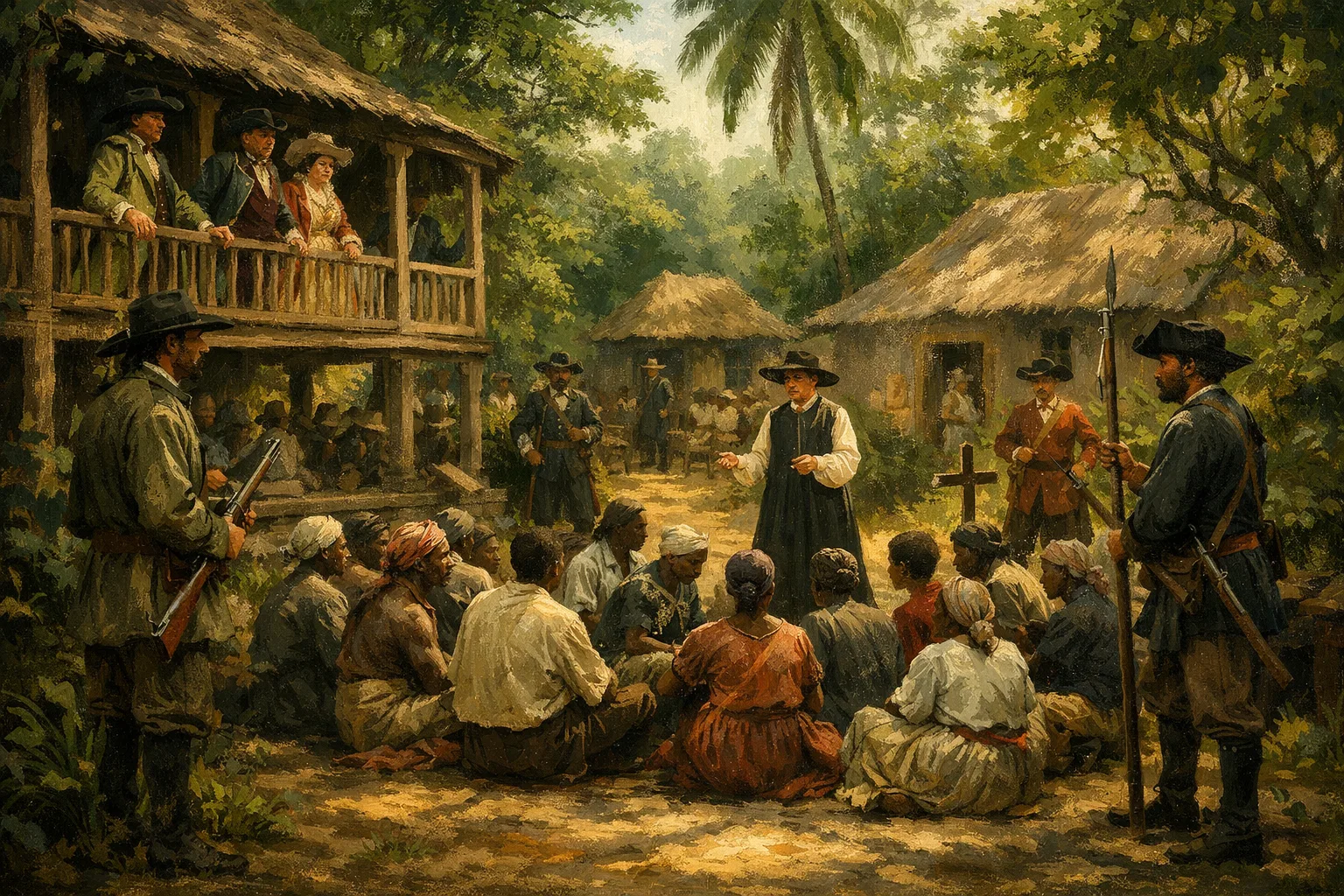
Two episodes are especially revealing. After an alleged uprising was uncovered in 1675, slaveholders blamed Quaker contact with enslaved people and treated Christian conversion itself as a possible route to revolt. Following the major rebellion of 1816, the legislature strengthened its campaign against Obeah, a loose colonial label applied to forms of African-Caribbean healing, protection, divination and harmful magic. In both cases, genuine resistance existed, but ruling elites enlarged it into a broader fear of dangerous belief. The result was persecution, restrictive law and a lasting habit of portraying marginalised religious practices as threats to public order.[jstor.org]jstor.orgslave revolts and conspiracies inby JS HANDLER · 1982 · Cited by 57 — the 1675 plot, the Barbados legislature enacted provisions pro…
Why Barbados produced fears of hidden rebellion
By the later seventeenth century, Barbados had become one of England’s most intensively organised plantation colonies. A relatively small white population governed a much larger enslaved African and African-descended population through surveillance, violent punishment and laws restricting movement, assembly and communication. Under those conditions, even ordinary social or religious gatherings could appear politically dangerous to slaveholders.
This does not mean that every reported conspiracy was imaginary. Enslaved Barbadians resisted plantation rule in numerous ways, and documentary evidence supports the existence of organised plans for revolt. The difficulty is separating what enslaved organisers intended from what frightened officials subsequently claimed. Most surviving records were produced by governors, interrogators, legislators and slaveholders. They describe the people under investigation through hostile categories such as conspirator, heathen, sorcerer or deceiver.
That imbalance matters. Barbados’s panic history is not simply a story of people believing things that were false. It is a history in which authorities confronted real opposition but interpreted whole religious and cultural worlds as evidence of disloyalty.
The 1675 conspiracy and the fear of Quaker conversion
In 1675, colonial authorities reported the discovery of an extensive plan by enslaved people to overthrow white rule. Accounts stated that the conspirators intended to kill slaveholders and establish an African-style political order. People accused of involvement were interrogated and punished, although the precise scale and readiness of the planned uprising remain difficult to reconstruct from records created by the regime suppressing it.[JSTOR]jstor.orgslave revolts and conspiracies inby JS HANDLER · 1982 · Cited by 57 — the 1675 plot, the Barbados legislature enacted provisions pro…
The scare rapidly became entangled with a second colonial anxiety: Quaker missionaries were allowing enslaved people to attend religious meetings. Quakers challenged the established Church of England and rejected many of the social rituals through which rank was displayed. Some criticised brutal treatment, although most seventeenth-century Barbadian Quakers were not abolitionists and some owned enslaved people themselves.[Friends Journal]friendsjournal.orgFriends JournalSlavery in the Quaker WorldSeptember 1, 2019 — 1 Sept 2019 — The author, Katharine Gerbner, giving a lecture on slavery an…
To slaveholders, however, the dangerous point was not necessarily abolition. It was the suggestion that enslaved Africans possessed souls, could become full Christians and might gather with white believers in a religious community. In a society built on inherited racial inequality, spiritual equality could appear politically subversive.
When the Quaker minister William Edmundson visited Barbados in 1675, the governor accused Quakers of making enslaved people Christians so that they would rebel and cut their owners’ throats. Historian Katharine Gerbner argues that the alleged conspiracy became a decisive turning point: fears of Christianisation hardened into open hostility towards missionary work among the enslaved.[friendsjournal.org]friendsjournal.orgFriends JournalSlavery in the Quaker WorldSeptember 1, 2019 — 1 Sept 2019 — The author, Katharine Gerbner, giving a lecture on slavery an…
The legislature subsequently restricted Quakers from bringing enslaved people to their meetings. Measures adopted in 1676 and 1678 were partly justified through the recent revolt scare. Religious assembly had been reframed as a potential conspiracy network.[Zenodo]zenodo.orgOpen source on zenodo.org.
What was feared?
Several anxieties overlapped:
- Secret organisation: religious gatherings might allow enslaved people from different estates to communicate.
- Competing authority: a missionary or religious community might command loyalty that otherwise belonged to the slaveholder.
- Spiritual equality: baptism and Christian fellowship threatened arguments that Africans were naturally outside the moral community.
- Violent revolt: the alleged conspiracy made every disputed religious meeting easier to portray as preparation for bloodshed.
This was therefore more than a conventional persecution of an unpopular Christian sect. The Quaker scare joined religious prejudice to the practical fears of a slave society. The actual conspiracy supplied the spark; racial hierarchy determined how widely suspicion spread.
Obeah: belief, medicine and colonial invention
The word “Obeah” does not identify a single organised church, uniform theology or centralised movement. Across the English-speaking Caribbean, colonial officials used it for a wide range of African-derived practices involving healing, protection, divination, spirit work, oaths, medicines and, in hostile accounts, poisoning or curses. Practitioners themselves might have understood their work in much more specific ways and did not necessarily use “Obeah” as a common identity.[northeastern.edu]ecda.northeastern.eduECDAWhat is Obeah? – ECDAECDAWhat is Obeah? – ECDA
That looseness made the term unusually useful to colonial authorities. Conduct that was difficult to understand could be placed inside one threatening category. A healer, herbal specialist, diviner, ritual expert, alleged poisoner and person selling supernatural assistance might all be described as an “Obeah man” or “Obeah woman”.
Historian Diana Paton argues that colonial law did not merely suppress a clearly defined practice called Obeah. Law helped create Obeah as a broad, seemingly coherent object of fear. Courts and officials gathered diverse activities together, classified them as wicked or fraudulent and gradually established the boundaries of what the state claimed to be policing.[Cambridge University Press & Assessment]cambridge.orgOpen source on cambridge.org.
This is why it is misleading simply to call Obeah “witchcraft”. That was the language favoured by many colonial writers. It reflected European Christian assumptions and the political needs of slaveholders more than a neutral description of African-Caribbean religion.
The 1816 rebellion and the tightening of Obeah law
On 14 April 1816, a major revolt began in the eastern parishes of Barbados. It was carefully planned and involved trusted plantation workers, including drivers, artisans and domestic workers who were able to move, communicate and gather information. The rising is commonly called Bussa’s Rebellion, although historian Jerome Handler has cautioned that surviving documentation does not prove that the man remembered as Bussa was the single or predominant organiser.[nationalarchives.gov.uk]nationalarchives.gov.ukThe National Archives Bussa's rebellionThe National Archives Bussa's rebellion
The revolt was real, not a fantasy created by panic. Yet the colonial response again broadened fear beyond the armed participants. Authorities considered African-derived rituals, medicines, oaths and spiritual claims part of the infrastructure through which rebellion might be encouraged. Across the British Caribbean, slaveholders believed ritual specialists could inspire courage, bind conspirators to secrecy or convince fighters that they were protected from weapons. Comparable claims had already appeared in colonial accounts of uprisings elsewhere in the region.[wikipedia.org]WikipediaOpen source on wikipedia.org.
Barbados had legislated against practices classed as Obeah before 1816, but the rebellion intensified official concern. An 1818 measure, commonly dated in surviving legal collections as the 1819 Act, applied to all “persons” rather than solely to enslaved people. Its preamble described the “wicked acts and pretensions” of people called Obeah men and women and declared earlier controls ineffective.[Cambridge University Press & Assessment]resolve.cambridge.orgcreole slave society obeah and the lawCambridge University Press & Assessment3 Creole slave society, obeah, and the lawBarbados's 1818 anti-obeah law theoretically applied to…
The wording shows two ideas operating at once. Officials portrayed Obeah as genuinely capable of causing grave social harm, yet also as pretence or deception. Colonial government could therefore treat practitioners as both supernatural dangers and fraudulent impostors. The apparent contradiction made prosecution easier: belief in Obeah’s power justified alarm, while disbelief justified punishment for trickery.
Was the Obeah scare a moral panic?
A moral panic occurs when a person, practice or group is presented as an exceptional threat to society, usually through simplified claims that exceed the available evidence. By that definition, aspects of Barbados’s treatment of Obeah resemble a long-running moral panic. A poorly defined collection of practices was transformed into a single menace associated with poison, rebellion, credulity and moral disorder.
Yet the label must be used carefully. Enslaved people genuinely sought protection, healing and justice through spiritual specialists. Some practitioners may have claimed an ability to harm enemies. Others may have administered dangerous substances. Spiritual rituals could also support solidarity or resistance. The colonial fear was not invented from nothing.
What made it panic-like was the leap from particular acts to collective suspicion. Authorities treated African-derived knowledge itself as evidence of danger. Practices that might elsewhere have been regarded as medicine, religious counsel or private ritual were interpreted through the overriding security needs of plantation slavery.
The social imbalance was extreme. Slaveholders could use Christian prayers, legal oaths and physical violence to preserve their authority. Enslaved people’s rituals were more likely to be described as superstition, witchcraft or conspiracy. The issue was therefore not simply whether supernatural claims were true. It was who possessed the power to declare one form of belief legitimate and another criminal.
Fear survived emancipation
Emancipation did not bring an immediate end to anti-Obeah law. Across the British Caribbean, nineteenth- and early twentieth-century statutes increasingly redefined Obeah as fraud, vagrancy or obtaining money through claims of supernatural power. This allowed governments to continue controlling poor and religiously marginalised communities without relying entirely on the legal structures of slavery.[jstor.org]jstor.orgOpen source on jstor.org.
Paton notes that Caribbean territories generally retained their Obeah legislation when they became independent. In Barbados, postcolonial debate continued to carry inherited assumptions that Obeah was equivalent to witchcraft rather than a contested category shaped by slavery and colonial rule.[Cambridge University Press & Assessment]cambridge.orgOpen source on cambridge.org.
The persistence of such laws does not prove that every prosecution was religious persecution. Fraud, coercion, poisoning and financial exploitation can be prosecuted through ordinary criminal law. The problem is that an offence based on professing supernatural power may penalise particular religious vocabularies while leaving more socially accepted claims of divine healing, prophecy or miraculous intervention untouched.
Modern religious-freedom analysis therefore questions whether special Obeah offences are necessary or compatible with equal treatment. Barbados’s constitution protects freedom of conscience and religion, making the colonial origin and selective reach of such laws especially significant.[State Department]state.govDepartment BarbadosDepartment Barbados
Why Barbados has no famous witch-trial tradition
Barbados is sometimes placed casually alongside societies known for European witch trials, but the historical pattern was different. There is no Barbadian equivalent of the large judicial witch persecutions associated with early modern Scotland, Germany or Salem.
Instead, concepts of witchcraft were racialised and redirected. British colonists increasingly applied the language of witchcraft to African-Caribbean practices while European prosecutions for witchcraft were declining. Paton’s comparative research shows that British Caribbean authorities tended to emphasise Obeah, while French colonies more often framed similar fears through accusations of poison. These differences reflected imperial legal cultures as well as local conditions.[University of Edinburgh Research]research.ed.ac.ukwitchcraft poison law and atlantic slaverywitchcraft poison law and atlantic slavery
The result was a form of persecution that resembled a witch panic without requiring conventional witch trials. There were frightening supernatural claims, supposed secret specialists, allegations of hidden harm and harsh legal punishment. But these fears were embedded in slavery, race and resistance rather than in the village-level prosecution of Christian neighbours for making pacts with the Devil.
Religion, respectability and later minority movements
The same broad pattern—unfamiliar worship being treated as disorder—appeared elsewhere in the eastern Caribbean. Spiritual Baptist communities, whose services could include vigorous singing, movement, visions and spirit possession, were prohibited in Saint Vincent, Grenada and Trinidad during the twentieth century. Officials and newspapers portrayed worshippers as noisy, uncivilised, idle or sexually suspect. Persecution helped spread the faith through migration.[gla.ac.uk]gla.ac.ukUniversity of Glasgow Research ProjectsUniversity of Glasgow Research Projects
Spiritual Baptism reached Barbados in a substantial organised form during the 1950s, associated particularly with Archbishop Granville Williams. It became part of Barbadian religious life rather than the subject of a comparable national prohibition campaign. Its history nevertheless connects Barbados to a wider regional story in which African-influenced Christian expression was repeatedly stigmatised before gaining public recognition.[Wikipedia]WikipediaSpiritual BaptistSpiritual Baptist
This comparison helps distinguish Barbados’s documented history from claims of a continuous island-wide “cult panic”. The evidence supports enduring suspicion of African-derived spirituality and unconventional worship. It does not support treating every minority denomination or charismatic church as a dangerous cult.
The word “cult” should be reserved for precise discussion of control, exploitation or abuse, not used merely because a group is small, emotionally expressive or theologically unfamiliar.
What the evidence does not show
No strong historical or medical evidence presently identifies Barbados as the site of a major, clinically investigated outbreak of mass psychogenic illness. That term refers to real physical symptoms spreading through a group where investigation finds no adequate infectious, toxic or environmental cause and where stress, observation and social communication appear central. It is not interchangeable with rumour, religious enthusiasm, crowd disorder or moral panic.[PMC]pmc.ncbi.nlm.nih.govPMCMass psychogenic illness and the social networkPMCMass psychogenic illness and the social network
Nor is there reliable evidence of a distinctly Barbadian satanic panic, UFO religion or millenarian mass movement comparable with the best-known international cases. Such beliefs may have circulated through churches, imported media and personal networks, but circulation alone does not establish a significant national episode.
This absence is important. It prevents a country-level history from being padded with weak anecdotes or events imported from neighbouring islands. Barbados’s clearest cases concern the politics of belief under slavery: how rumours of conspiracy, fears of conversion and claims about Obeah allowed authorities to turn cultural difference into a security threat.

How historians interpret the pattern
Modern scholarship generally moves away from the older question, “Did people really possess magical powers?” The more revealing questions are who made the accusation, what actions it authorised and why certain beliefs appeared dangerous at a particular moment.
Several interpretations overlap:
Plantation security: Slaveholders feared any network that could operate beyond their supervision. Religious meetings, healers and ritual specialists could connect people across estates and provide alternative forms of leadership.
Racial control: Describing African-derived practices as primitive or diabolical helped justify claims that Black Barbadians required strict governance.
Competing systems of knowledge: Herbal treatment, divination and spiritual healing challenged the authority of colonial churches, doctors and courts. Labelling them fraudulent protected institutional monopolies over truth and legitimate expertise.
Fear shaped by real resistance: The 1675 conspiracy and 1816 rebellion gave officials genuine reasons to fear organised revolt. Panic arose when that fear spread from identifiable organisers to entire religious and cultural traditions.
Law as a producer of belief: By repeatedly defining, prosecuting and publicising “Obeah”, the state helped persuade the wider population that many different practices belonged to one secret and dangerous system.
These interpretations do not require assuming that enslaved Barbadians were passive victims or that all spiritual practitioners were harmless. They show instead how unequal power determined whose violence was lawful, whose religion was respectable and whose knowledge became evidence of criminality.
Why this history still matters
Barbados’s history of collective fear is culturally important because it reveals how readily the language of public safety can absorb religious and racial prejudice. The authorities responding to the conspiracies of 1675 and 1816 were not simply irrational crowds. They were organised governments defending an extraordinarily violent economic system.
Their fears nevertheless had many features familiar from later moral panics: hidden networks, threatening outsiders, claims that ordinary appearances concealed sinister intentions and laws broad enough to punish people far beyond the original danger.
The lasting lesson is that real threats and exaggerated fears can coexist. There were genuine rebellions against slavery. There were also sweeping attempts to blame conversion, African spirituality and unfamiliar ritual for the instability produced by slavery itself.
Seen in that light, Barbados’s central panic story is not about an island mysteriously losing its reason. It is about a ruling society converting its own insecurity into religious suspicion—and using that suspicion to police belief long after the immediate rebellion had been defeated.
Amazon book picks
Further Reading
Books and field guides related to When Belief Became a Threat in Barbados. Use these as the next step if you want deeper reading beyond the article.
Bury the Chains
Provides broad context for slavery, resistance and colonial fears in the British Caribbean.
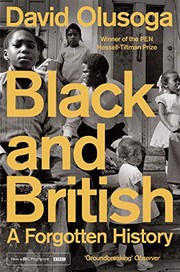
Black and British
Places Barbados within the wider history of Britain's Atlantic empire.
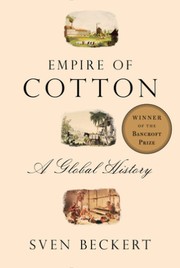
Empire of cotton
Explains plantation economies and imperial systems behind colonial repression.
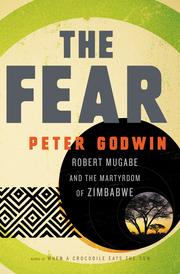
The fear
Explores how ruling elites use fear to maintain power, paralleling colonial Barbados.
Endnotes
1.
Source: jstor.org
Link:https://www.jstor.org/stable/41849060
Source snippet
slave revolts and conspiracies inby JS HANDLER · 1982 · Cited by 57 — the 1675 plot, the Barbados legislature enacted provisions pro...
2.
Source: resolve.cambridge.org
Title: creole slave society obeah and the law
Link:https://resolve.cambridge.org/core/services/aop-cambridge-core/content/view/614D64A80BF1F8CCF008F662FC7AD8D3/9781139198417c3_p76-118_CBO.pdf/creole_slave_society_obeah_and_the_law.pdf
Source snippet
Cambridge University Press & Assessment3 Creole slave society, obeah, and the lawBarbados's 1818 anti-obeah law theoretically applied to...
3.
Source: slaveryandfreedomlaws.lib.unb.ca
Link:https://slaveryandfreedomlaws.lib.unb.ca/laws/barbados-1819
4.
Source: zenodo.org
Link:https://zenodo.org/records/13158972
5.
Source: ecda.northeastern.edu
Title: ECDAWhat is Obeah? – ECDA
Link:https://ecda.northeastern.edu/home/about-exhibits/obeah-narratives-exhibit/what-is-obeah/
6.
Source: cambridge.org
Link:https://www.cambridge.org/core/journals/journal-of-law-and-religion/article/obeah-vagrancy-and-the-boundaries-of-religious-freedom-analyzing-the-proscription-of-pretending-to-possess-supernatural-powers-in-the-anglophone-caribbean/11EEE1AD5948F72F423FE174FFE61F87
7.
Source: cambridge.org
Link:https://www.cambridge.org/core/books/cultural-politics-of-obeah/creole-slave-society-obeah-and-the-law/614D64A80BF1F8CCF008F662FC7AD8D3
8.
Source: cambridge.org
Link:https://www.cambridge.org/core/books/cultural-politics-of-obeah/obeah-prosecutions-from-the-inside/003D8B2DCA83B2F570538EBE75B42C1C
9.
Source: cambridge.org
Title: University Press & Assessment4
Link:https://www.cambridge.org/core/books/cultural-politics-of-obeah/obeah-and-its-meanings-in-the-postemancipation-era/6A7F011F3389E7AB4E0211657CE0545C
10.
Source: Wikipedia
Link:https://en.wikipedia.org/wiki/Obeah
11.
Source: cambridge.org
Link:https://www.cambridge.org/core/books/cultural-politics-of-obeah/obeahand-the-slavetrade-debates/38753CE9D5FB39785ED0FD7D5F1ED6BE
12.
Source: cambridge.org
Link:https://www.cambridge.org/core/books/caribbean-and-the-medical-imagination-17641834/intimate-union-of-medicine-and-magic/4B925E6EBEAE71CB2EEFD0AFC3835350
13.
Source: jstor.org
Link:https://www.jstor.org/stable/26855622
14.
Source: cambridge.org
Link:https://www.cambridge.org/core/books/cultural-politics-of-obeah/postcolonial-politics-of-obeah/4A9FB8FC8E027EF50AB659189A86399E
15.
Source: state.gov
Title: Department Barbados
Link:https://www.state.gov/reports/2023-report-on-international-religious-freedom/barbados
16.
Source: resolve.cambridge.org
Link:https://resolve.cambridge.org/core/services/aop-cambridge-core/content/view/38753CE9D5FB39785ED0FD7D5F1ED6BE/9781139198417c2_p43-75_CBO.pdf/obeahand_the_slavetrade_debates.pdf
17.
Source: Wikipedia
Title: Spiritual Baptist
Link:https://en.wikipedia.org/wiki/Spiritual_Baptist
18.
Source: pmc.ncbi.nlm.nih.gov
Title: PMCMass psychogenic illness and the social network
Link:https://pmc.ncbi.nlm.nih.gov/articles/PMC3536509/
19.
Source: pmc.ncbi.nlm.nih.gov
Title: PMCPublic health, politics and the stigma of mass hysteria
Link:https://pmc.ncbi.nlm.nih.gov/articles/PMC4872203/
20.
Source: Wikipedia
Title: New religious movement
Link:https://en.wikipedia.org/wiki/New_religious_movement
21.
Source: Wikipedia
Title: List of mass panic cases
Link:https://en.wikipedia.org/wiki/List_of_mass_panic_cases
22.
Source: Wikipedia
Title: Mass psychogenic illness
Link:https://en.wikipedia.org/wiki/Mass_psychogenic_illness
23.
Source: Wikipedia
Title: Salem witch trials
Link:https://en.wikipedia.org/wiki/Salem_witch_trials
24.
Source: Wikipedia
Link:https://en.wikipedia.org/wiki/Jonestown
25.
Source: cambridge.org
Link:https://www.cambridge.org/core/books/cultural-politics-of-obeah/index/49376339E2F8CAAF8B91464ACD9F6E0C
26.
Source: open.edu
Link:https://www.open.edu/openlearn/mod/oucontent/view.php?id=142149§ion=3
27.
Source: jstor.org
Link:https://www.jstor.org/stable/2784416
28.
Source: katharinegerbner.com
Title: Gerbner SA
Link:https://www.katharinegerbner.com/wp-content/uploads/2025/09/Gerbner_SA.pdf
Source snippet
Barbados – from hesitant discomfort in the mid-seventeenth century...Read more...
29.
Source: friendsjournal.org
Link:https://www.friendsjournal.org/slavery-in-the-quaker-world/
Source snippet
Friends JournalSlavery in the Quaker WorldSeptember 1, 2019 — 1 Sept 2019 — The author, Katharine Gerbner, giving a lecture on slavery an...
Published: September 1, 2019
30.
Source: research.ed.ac.uk
Title: witchcraft poison law and atlantic slavery
Link:https://www.research.ed.ac.uk/en/publications/witchcraft-poison-law-and-atlantic-slavery/
31.
Source: nationalarchives.gov.uk
Title: The National Archives Bussa’s rebellion
Link:https://www.nationalarchives.gov.uk/education/resources/bussas-rebellion/
32.
Source: jeromehandler.com
Title: the 1816 slave revolt in barbados an exchange in barbados newspapers
Link:https://jeromehandler.com/2000/03/the-1816-slave-revolt-in-barbados-an-exchange-in-barbados-newspapers/
33.
Source: gla.ac.uk
Title: University of Glasgow Research Projects
Link:https://www.gla.ac.uk/schools/humanities/research/historyresearch/researchprojects/grenadaheritage/banningthespiritualbaptistfaith/
34.
Source: gov.vc
Link:https://www.gov.vc/images/pdf_documents/May_21_Public_Holiday.pdf
35.
Source: obeahhistories.org
Link:https://obeahhistories.org/about/
36.
Source: ebsco.com
Link:https://www.ebsco.com/research-starters/social-sciences-and-humanities/mass-hysteria
37.
Source: sk.sagepub.com
Link:https://sk.sagepub.com/ency/edvol/globalreligion/chpt/barbados
38.
Source: governmentprintery.gov.bb
Link:https://governmentprintery.gov.bb/category/part-a/acts/
39.
Source: sajp.org.za
Link:https://sajp.org.za/index.php/sajp/article/view/1671/2648
40.
Source: ericwilliams.gov.tt
Link:https://ericwilliams.gov.tt/wp-content/uploads/2024/08/EW69.pdf
Additional References
41.
Source: web.tricolib.brynmawr.edu
Link:https://web.tricolib.brynmawr.edu/speccoll/quakersandslavery/commentary/people/fox.php
42.
Source: slaverylawpower.org
Title: Barbados Slave Rebellion
Link:https://slaverylawpower.org/chapters/restoration-settlements/barbados-slave-rebellion/
Source snippet
Slavery, Law, and PowerIn 1675, Barbadian slaveowners uncovered a plot by enslaved people to overthrow colonial rule and establish their...
43.
Source: youtube.com
Title: Back From the Past
Link:https://www.youtube.com/watch?v=08XObZ7WepM
Source snippet
History of Barbados: The Island Blueprint That Shaped the New World...
44.
Source: cdc.gov
Link:https://www.cdc.gov/mmwr/preview/mmwrhtml/00000068.htm
45.
Source: youtube.com
Title: Christian Slavery: Conversion and Race in the Protestant Atlantic World
Link:https://www.youtube.com/watch?v=cC0hE22e18c
Source snippet
Christian Slavery with Katharine Gerbner...
46.
Source: instagram.com
Link:https://www.instagram.com/reel/DGgX-HcqghR/?hl=en
47.
Source: facebook.com
Link:https://www.facebook.com/centralbanktt/posts/as-we-observe-spiritual-baptist-liberation-day-on-march-30-we-honour-a-pivotal-m/1100953305414528/
48.
Source: amrevmuseum.org
Link:https://www.amrevmuseum.org/press-releases/author-and-historian-katharine-gerbner-to-discuss-slavery-in-the-quaker-world-during-the-17th-century
49.
Source: facebook.com
Link:https://www.facebook.com/TheChaseFilesBlog/posts/but-urges-swift-action-after-suspected-gastro-outbreak-at-st-pauls-primarythe-ba/1459642605835969/
50.
Source: facebook.com
Link:https://www.facebook.com/barbadoschildrendirectory/posts/the-below-article-and-photo-was-taken-from-todays-nation-newspaperit-concerned-m/950395100602373/
Topic Tree
Follow this branch
Related pages 192
- Antigua and Barbuda
- Argentina Belief Scares
- Azerbaijan Belief
- Bahrain Beliefs
- North Korea
- +187 more in sidebar