Within Israel
What Caused the 1983 Fainting Epidemic?
The 1983 outbreak shows how real symptoms can spread through fear, distrust, media coverage and close social networks.
On this page
- How the outbreak began and spread
- Why poisoning rumours seemed credible
- What investigators concluded
Page outline Jump by section
Introduction
The 1983 West Bank fainting epidemic is one of the world’s best-documented examples of mass psychogenic illness, sometimes called mass sociogenic illness. Between late March and early April 1983, hundreds of Palestinians—mostly teenage schoolgirls—developed sudden symptoms including dizziness, headaches, breathing difficulties, blurred vision and fainting. The symptoms were genuine and often severe enough to require hospital treatment, but extensive medical investigations failed to find evidence of poisoning, infectious disease or any other common toxic exposure. Instead, investigators concluded that a combination of an initial environmental trigger, intense fear, political tension, rumours and social contagion best explained the outbreak.[CDC]cdc.govEpidemic of Acute Illness–West BankEpidemic of Acute Illness–West Bank…
The episode remains important because it illustrates how collective fear can produce real physical illness without deliberate deception or fabrication. It also shows why such outbreaks are especially likely in societies marked by conflict, distrust and competing political narratives.
How the outbreak began and spread
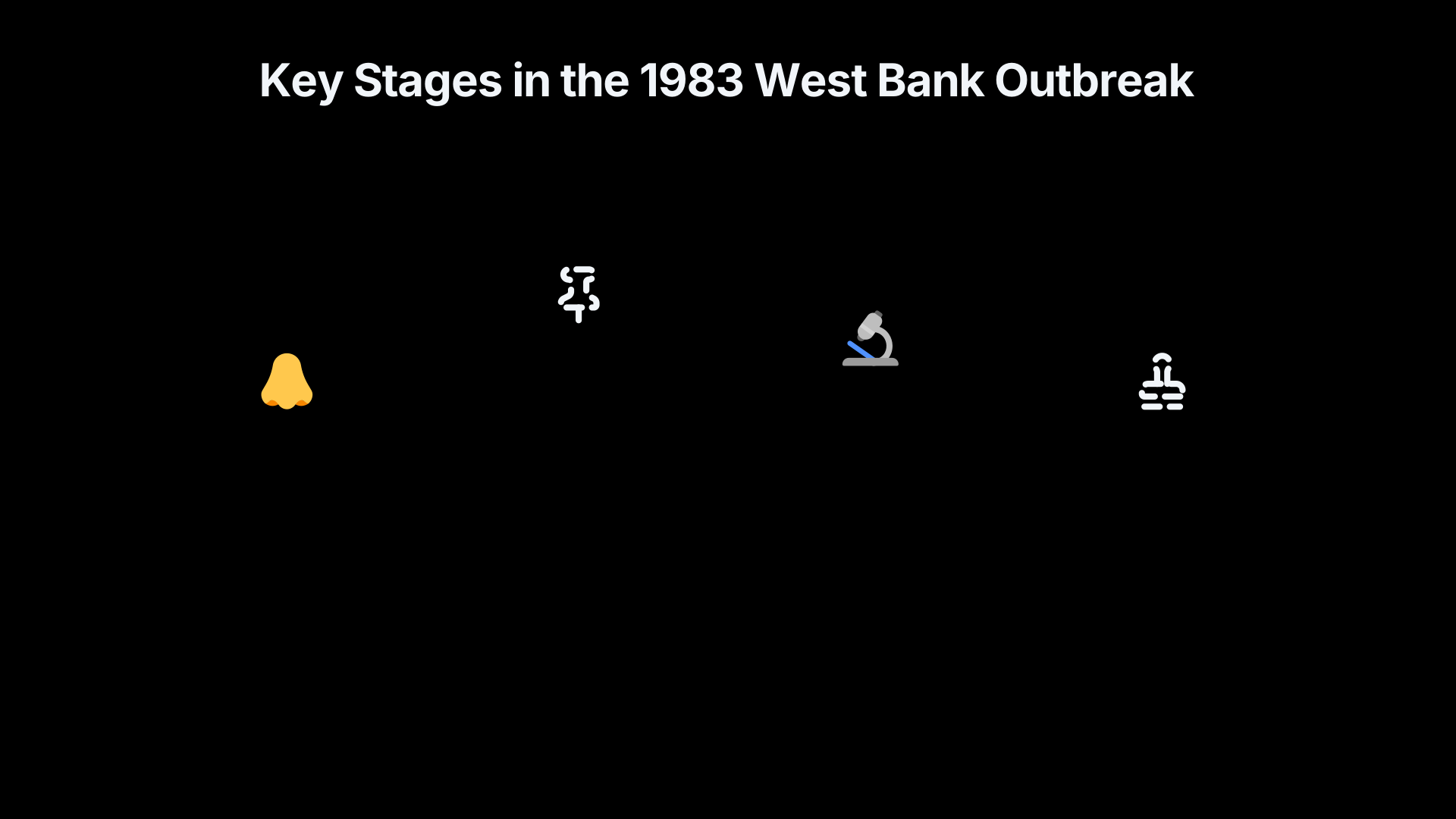
The first recognised cases appeared on 21 March 1983 at a girls’ secondary school in Arraba in the occupied West Bank. Several pupils complained of throat irritation, dizziness and difficulty breathing after noticing an unpleasant smell near the school. More students soon became ill, with some collapsing or fainting.[CDC]cdc.govEpidemic of Acute Illness–West BankEpidemic of Acute Illness–West Bank…
Over the following days the illness spread rapidly to other schools and towns, including Jenin, Tulkarm and Hebron. By early April:
- Around 943 people had been affected.
- Approximately 70% of patients were girls aged between 12 and 17.
- A smaller number of boys, adults and Israeli soldiers also reported similar symptoms.
- Schools became focal points because students spent long periods together and observed one another becoming ill.[CDC]cdc.govEpidemic of Acute Illness–West BankEpidemic of Acute Illness–West Bank…
The reported symptoms were remarkably consistent:
- headaches
- dizziness
- blurred vision
- abdominal pain
- weakness
- difficulty breathing
- fainting
- occasional temporary changes such as dilated pupils or rapid heartbeat.
Although frightening, the illness caused no confirmed deaths and left no evidence of permanent physical injury. Laboratory tests repeatedly failed to identify a shared poison or infectious agent.[CDC]cdc.govEpidemic of Acute Illness–West BankEpidemic of Acute Illness–West Bank…
Why poisoning rumours seemed credible
The outbreak occurred during Israeli military occupation of the West Bank, where distrust between Palestinians and Israeli authorities was already profound. This political environment shaped how people interpreted an otherwise mysterious illness.
Many Palestinians believed that Israeli settlers or military authorities had deliberately released poisonous gas or chemicals. Some rumours claimed the supposed aim was to drive Palestinians from their homes or damage the fertility of young women. These claims spread rapidly through families, schools and local communities before any scientific investigation had reached conclusions.[Wikipedia]Wikipedia1983 West Bank fainting epidemic1983 West Bank fainting epidemic
Israeli officials, meanwhile, rejected accusations of poisoning. Some suggested that Palestinian activists might be exploiting or even encouraging the rumours to generate unrest and international criticism of Israel. As a result, the medical investigation quickly became entangled with political accusations from both sides.[Wikipedia]Wikipedia1983 West Bank fainting epidemic1983 West Bank fainting epidemic
The rumours gained credibility because several factors reinforced one another:
- the initial reports of a strange smell;
- widespread anxiety about chemical weapons during the Cold War era;
- longstanding political mistrust;
- the rapid appearance of similar symptoms in nearby schools;
- extensive newspaper and radio coverage describing suspected poisoning before evidence was available.
For many families, poisoning appeared more believable than an explanation based on stress, particularly given the realities of military occupation and previous experiences of conflict.
What investigators concluded
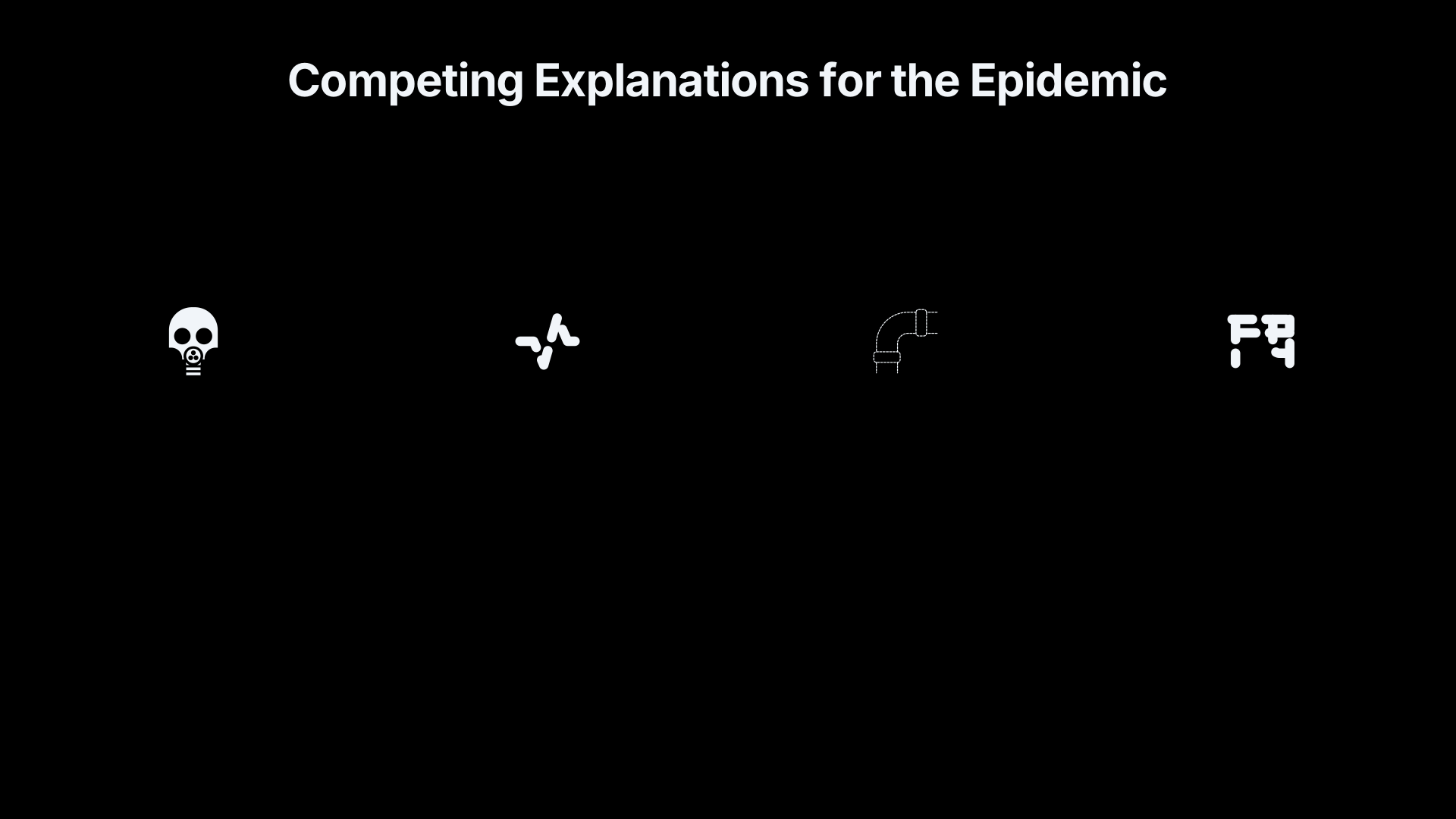
Medical investigators from Israeli institutions and the United States Centers for Disease Control carried out extensive environmental, clinical and toxicological studies.
Their findings ruled out many proposed explanations:
- no common contaminated food or water source;
- no infectious disease pattern;
- no pesticide exposure linking all cases;
- no evidence of nerve agents or other toxic chemicals in patients or environmental samples.[CDC]cdc.govEpidemic of Acute Illness–West BankEpidemic of Acute Illness–West Bank…
Investigators did discover low concentrations of hydrogen sulphide gas near a faulty outdoor latrine at the first affected school. Hydrogen sulphide has a distinctive rotten-egg smell and can irritate the eyes and throat. However, the concentrations detected were far below those expected to produce the widespread illness observed across numerous towns.
The CDC concluded that the odour may have acted as the initial trigger but could not explain the subsequent epidemic. Instead, the wider spread was most consistent with mass psychogenic illness occurring in a population experiencing high levels of stress and anxiety.[CDC]cdc.govEpidemic of Acute Illness–West BankEpidemic of Acute Illness–West Bank…
Importantly, investigators emphasised that the patients were not pretending. Their symptoms were genuine physiological responses associated with anxiety, hyperventilation and stress rather than conscious fabrication.[CDC]cdc.govEpidemic of Acute Illness–West BankEpidemic of Acute Illness–West Bank…
How fear spread through schools
Mass psychogenic illness typically spreads through observation and expectation rather than through bacteria or chemicals. Schools provide conditions in which this can happen unusually quickly because pupils spend long periods together, closely observe one another and communicate continuously.
The West Bank outbreak followed several patterns commonly seen in documented psychogenic epidemics:
- adolescents were affected disproportionately;
- girls were affected more often than boys;
- symptoms spread in clusters rather than along routes expected for toxic exposure;
- reports expanded rapidly after publicity increased;
- the outbreak ended quickly once schools closed.[CDC]cdc.govEpidemic of Acute Illness–West BankEpidemic of Acute Illness–West Bank…
Researchers also noted that later outbreaks often developed much more rapidly than the first cluster. Once communities expected an invisible gas or poison, similar sensations could be interpreted as evidence that another attack was occurring.

The role of the media
Contemporary investigators argued that media reporting unintentionally amplified the epidemic.
Newspapers and radio broadcasts frequently described suspected poison gas, detailed the symptoms and reported new clusters almost immediately. Such coverage reinforced public expectations that an invisible chemical threat was spreading across the region.
Later analyses by psychiatric investigators suggested that both media reporting and official public statements from multiple sides contributed to maintaining the belief that poisoning was occurring, even though scientific evidence increasingly pointed elsewhere.[CDC]cdc.govEpidemic of Acute Illness–West BankEpidemic of Acute Illness–West Bank…
This does not mean journalists created the epidemic. Rather, repeated reporting of uncertain information appears to have accelerated an already developing process of social contagion.
Why the epidemic still matters
The 1983 West Bank fainting epidemic remains one of the strongest historical case studies showing how political conflict, fear and social networks can produce large outbreaks of genuine physical symptoms without a shared toxic exposure.
It also serves as a reminder that mass psychogenic illness is not simply “imagined illness”. The symptoms experienced by patients are real, measurable and distressing. What differs is the mechanism producing them: psychological and social processes trigger physical reactions rather than infection or poisoning.
Historians, psychologists and epidemiologists continue to study the episode because it demonstrates several important lessons:
- real illness can emerge from collective stress;
- political conflict shapes how people interpret ambiguous events;
- rumours become especially persuasive where trust is already low;
- rapid communication can spread expectations as effectively as it spreads information;
- careful scientific investigation is essential before concluding that an unexplained outbreak has a toxic or infectious cause.[cdc.gov]cdc.govEpidemic of Acute Illness–West BankEpidemic of Acute Illness–West Bank…
Amazon book picks
Further Reading
Books and field guides related to What Caused the 1983 Fainting Epidemic?. Use these as the next step if you want deeper reading beyond the article.
Extraordinary Popular Delusions and the Madness of Crowds
Rating: 4.0/5 from 5 Google Books ratings
Introduces historical episodes of collective belief and panic.


The Psychology of Pandemics
Discusses contagion of fear, rumor and psychosomatic responses.
Endnotes
1.
Source: cdc.gov
Title: Epidemic of Acute Illness–West Bank
Link:https://www.cdc.gov/mmwr/preview/mmwrhtml/00000068.htm
Source snippet
Epidemic of Acute Illness--West Bank...
2.
Source: stacks.cdc.gov
Title: Stacks THE ARJENYATTAH EPIDEMIC Home Interview Data and Toxicological Aspects
Link:https://stacks.cdc.gov/view/cdc/205684/cdc_205684_DS1.pdf
Source snippet
CDC StacksTHE ARJENYATTAH EPIDEMIC Home Interview Data and Toxicological Aspects...
3.
Source: Wikipedia
Title: 1983 West Bank fainting epidemic
Link:https://en.wikipedia.org/wiki/1983_West_Bank_fainting_epidemic
4.
Source: cdc.gov
Title: 32 / No. 52 * Perspectives in Disease Prevention and Health Promo
Link:https://www.cdc.gov/mmwr/preview/index83.html
Source snippet
MMWR - MMWR Publications - MMWR Weekly: Past Volume (1983)January 15, 2010 — MORBIDITY AND MORTALITY WEEKLY REPORT (MMWR) MMWR HOME...
Published: January 15, 2010
5.
Source: stacks.cdc.gov
Link:https://stacks.cdc.gov/view/cdc/184760
Source snippet
Public DomainImage * 1984/05/01 * By Boxer, Peter A.; Hartle, Richard W.; Singal, Mitchell [Button: Download] Citation [Select] Ti...
6.
Source: stacks.cdc.gov
Link:https://stacks.cdc.gov/view/cdc/205684
Source snippet
Home interview data and toxicological aspectsDecember 24, 1983 — DETAILS * Personal Author: Landrigan, Philip J.; Miller B * Description...
Published: December 24, 1983
7.
Source: stacks.cdc.gov
Link:https://stacks.cdc.gov/view/cdc/193652
Source snippet
govAcute illness epidemic, West Bank--JerusalemMay 20, 1983 — ACUTE ILLNESS EPIDEMIC, WEST BANK--JERUSALEM Public DomainImage * 1983/05/2...
Published: May 20, 1983
8.
Source: stacks.cdc.gov
Link:https://stacks.cdc.gov/view/cdc/183076
9.
Source: stacks.cdc.gov
Link:https://stacks.cdc.gov/cbrowse?maxResults=100&parentId=cdc%3A101&pid=cdc%3A101&start=7700
10.
Source: cdc.gov
Link:https://www.cdc.gov/Mmwr/preview/mmwrhtml/00000092.htm
Additional References
11.
Source: sciencedirect.com
Title: TH E ARJENYATTAH EPIDEMIC: A Mass Phenomenon: Spread and Triggering Factors
Link:https://www.sciencedirect.com/science/article/abs/pii/S0140673683908140
Source snippet
THE ARJENYATTAH EPIDEMIC: A Mass Phenomenon: Spread and Triggering Factors - ScienceDirectDecember 31, 1983 — THE LANCET Volume 322, Issu...
Published: December 31, 1983
12.
Source: sciencedirect.com
Title: TH E ARJENYATTAH EPIDEMIC: Home Interview Data and Toxicological Aspects
Link:https://www.sciencedirect.com/science/article/pii/S0140673683908152
Source snippet
THE ARJENYATTAH EPIDEMIC: Home Interview Data and Toxicological Aspects - ScienceDirectDecember 31, 1983 — THE LANCET Volume 322, Issues...
Published: December 31, 1983
13.
Source: youtube.com
Link:https://www.youtube.com/watch?v=mnmv9erAqkM
Source snippet
Why Did Hundreds of People Dance Until They Died?...
14.
Source: youtube.com
Title: East African Laughing Epidemic – History Documentary
Link:https://www.youtube.com/watch?v=pGVvD7hlYzI
Source snippet
Episode 72. Mass Psychogenic Illness with Robert Baloh– Author of Medically Unexplained Symptoms...
15.
Source: youtube.com
Title: On Mass Hysteria by Laia Abril
Link:https://www.youtube.com/watch?v=3rKUyWX49y4
Source snippet
East African Laughing Epidemic – History Documentary...
16.
Source: youtube.com
Title: 25 Cases of Mass Hysteria That Defy Explanation
Link:https://www.youtube.com/watch?v=Js8pYoFJZj0
Source snippet
On Mass Hysteria by Laia Abril...
17.
Source: pubmed.ncbi.nlm.nih.gov
Link:https://pubmed.ncbi.nlm.nih.gov/6140560/
18.
Source: washingtonpost.com
Title: U.S. Team Reports on West Bank Outbreak
Link:https://www.washingtonpost.com/archive/politics/1983/04/26/us-team-reports-on-west-bank-outbreak/aed1b98f-85e7-4590-a500-76701be7040a/
19.
Source: youtube.com
Title: Why Did Hundreds of People Dance Until They Died?
Link:https://www.youtube.com/watch?v=epIMKVsHIMo
Topic Tree