When Fear and Power Shaped Belief in Chad
Chad does not have a well-documented national history of dance plagues, school fainting epidemics or apocalyptic sects comparable with the best-known cases elsewhere.
Page outline Jump by section
Introduction
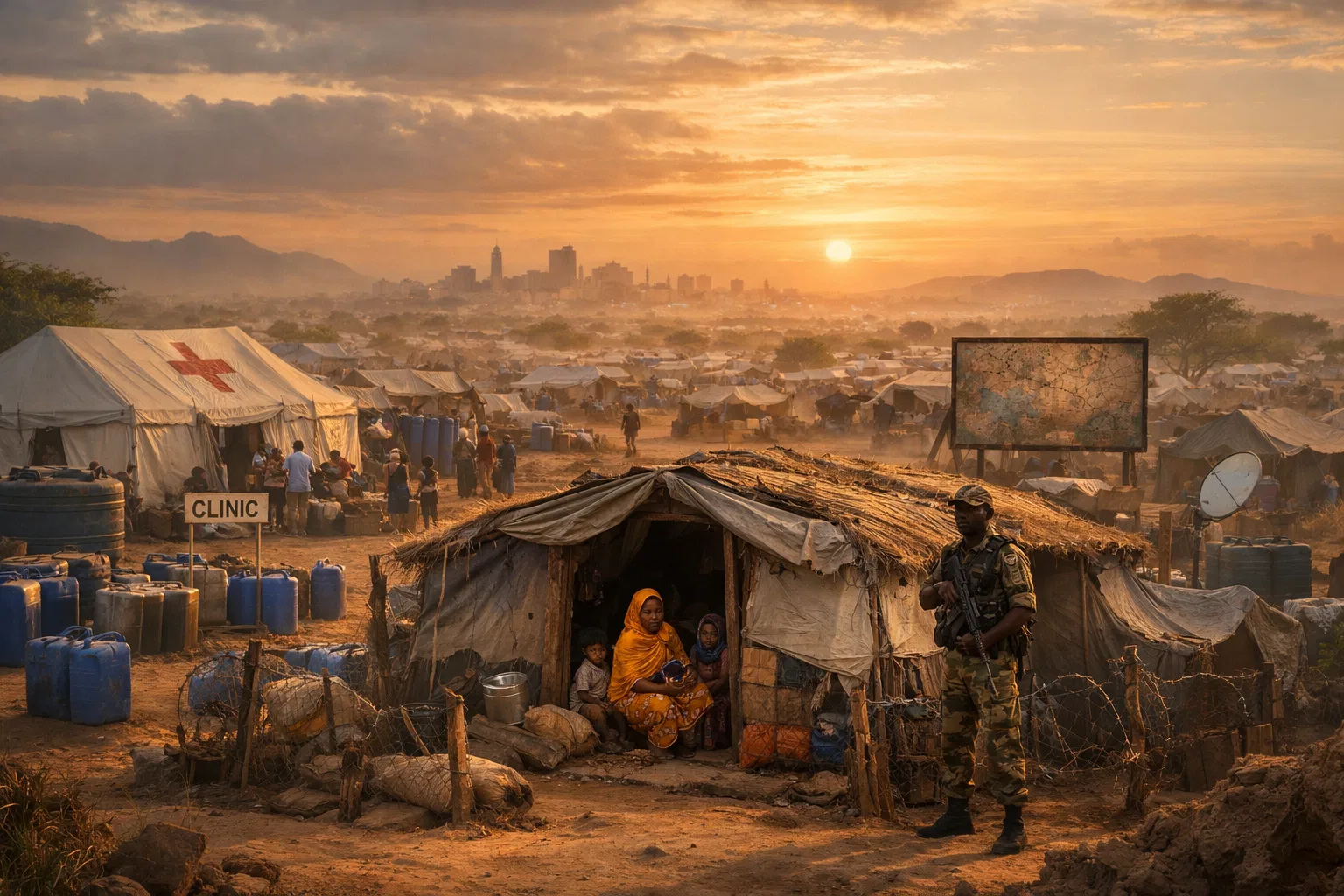
Two cases stand out. In 2007, unexplained-looking deaths in a refugee camp in southern Chad led frightened residents to accuse several women of causing illness through witchcraft. The accusations produced assault, arson, avoidance of medical care and continuing social exclusion. Three decades earlier, President François Tombalbaye’s collapsing government invoked “political sorcery” against suspected rivals and compelled thousands of officials and other southerners to undergo initiation rites associated with part of his own ethnic community. These were not instances of mass psychogenic illness. They were episodes in which fear, uncertainty and authority turned contested beliefs into practical harm.[unhcr.org]unhcr.orgWitchcraft allegations plague southern Chad's camps | UNHCRWitchcraft allegations plague southern Chad's camps | UNHCR…
Why Chad’s evidence is unusually thin
Research on cults and mass panics in Chad is fragmented. The country’s modern history has been dominated by colonial disruption, civil war, dictatorship, displacement and regional insurgency. Contemporary records tend to concentrate on armed conflict and humanitarian emergencies rather than systematically documenting rumours, local religious movements or episodes of collective distress. Scholars also warn that words such as “cult” can stigmatise unfamiliar communities before their beliefs, organisation or conduct have been properly examined.[OUP Academic]academic.oup.comOUP AcademicChad: Armed Presidents and Politics - Oxford Academic27 Oct 2020 — In June of the same year, General Malloum was eventually c…
It is therefore misleading to present every supernatural belief as hysteria or every initiation society as a cult. Belief in hidden spiritual causation may be an ordinary part of a community’s understanding of illness or misfortune. A panic begins when accusations spread, evidence is displaced by suspicion, alleged offenders become scapegoats and institutions reinforce rather than restrain the fear. Similarly, an initiation rite is not inherently abusive because outsiders find it unfamiliar. The central issue in the Tombalbaye period was state coercion: participation became entangled with employment, promotion and political loyalty.
The strongest documented Chadian cases are consequently best understood through three distinctions:
- Witchcraft belief versus witch persecution: private belief becomes a public danger when identifiable people are assaulted, expelled or denied protection.
- Traditional ritual versus compulsory ritual: a ceremony practised within a community changes character when the state forces it on unwilling citizens.
- Rumour versus psychogenic illness: Chad’s documented episodes concern beliefs about who caused suffering, not clusters of medically unexplained symptoms spreading through social contact.

The Dosseye witchcraft panic
In 2007, eleven refugees became ill and died within a single week at Dosseye camp in southern Chad. Most of the deaths were attributed by humanitarian workers to diarrhoea, malaria and malnutrition. Within the frightened refugee population, however, allegations circulated that certain women had caused the deaths through witchcraft. Four women from the Fulbe or Peul community were accused, attacked and driven from their shelters; their tents or homes were burnt.[UNHCR]unhcr.orgWitchcraft allegations plague southern Chad's camps | UNHCRWitchcraft allegations plague southern Chad's camps | UNHCR…
One of the accused was a widowed mother of eight whose identity was concealed in the UN refugee agency’s account. After three siblings died within an hour, a group of about fifteen people attacked her and accused her of cursing the children. She reportedly remained under gendarme protection and could not safely return to ordinary camp life. The case illustrates how quickly bereavement can become accusation when several deaths occur close together and no explanation feels emotionally adequate.[UNHCR]unhcr.orgWitchcraft allegations plague southern Chad's camps | UNHCRWitchcraft allegations plague southern Chad's camps | UNHCR…
The episode did not arise in a settled, secure community. Dosseye housed refugees who had fled the Central African Republic and were living with poor sanitation, infectious disease, malnutrition and recent experiences of violence and displacement. UNHCR’s wider work on forced migration has found that women, children and older people are especially vulnerable to witchcraft accusations, and that such allegations often intensify when communities are disrupted by war, return or resettlement.[UNHCR]unhcr.orgWitchcraft allegations plague southern Chad's camps | UNHCRWitchcraft allegations plague southern Chad's camps | UNHCR…
How fear worsened the health emergency
The accusations did more than harm the women. They altered health behaviour throughout the camp. Some residents lost confidence in clinical treatment and consulted healers instead. Others stopped drinking well water and collected water from rivers or swamps, while sick people either avoided the clinic or arrived too late for effective treatment. A belief intended to explain illness therefore increased exposure to the very conditions that made further illness likely.[UNHCR]unhcr.orgWitchcraft allegations plague southern Chad's camps | UNHCRWitchcraft allegations plague southern Chad's camps | UNHCR…
This feedback loop is one of the most important features of the case:
- Several people died in rapid succession.
- Residents sought a personal and morally meaningful cause.
- Accusations identified supposed human agents behind the deaths.
- Trust in sanitation and medical treatment weakened.
- Riskier behaviour increased the possibility of additional disease.
- New illness could then appear to confirm the original accusation.
The people involved were not simply behaving “irrationally”. They were attempting to interpret frightening events amid poor information, inadequate living conditions and profound insecurity. Yet the social explanation they adopted had measurable victims: the accused women, their families and anyone discouraged from obtaining medical care.
How the authorities responded
A Chadian judge in Goré cleared the four accused women of wrongdoing. The ruling also stated that documents from the Central African Republic identifying some women as healers or exorcists had no formal legal standing in Chad. This was significant because it rejected the idea that a claimed supernatural status constituted evidence of criminal responsibility.[UNHCR]unhcr.orgWitchcraft allegations plague southern Chad's camps | UNHCRWitchcraft allegations plague southern Chad's camps | UNHCR…
UNHCR and partner organisations held seven community sessions. Rather than attempting to settle whether witchcraft existed, the sessions concentrated on sanitation, health, community cohesion and the danger of accusing people without evidence. This was a pragmatic response. A direct assault on deeply held beliefs might have alienated residents, whereas separating spiritual belief from assault and unsupported accusation offered a route towards immediate protection. Clinic attendance subsequently began to rise.[UNHCR]unhcr.orgWitchcraft allegations plague southern Chad's camps | UNHCRWitchcraft allegations plague southern Chad's camps | UNHCR…
Legal acquittal did not erase the stigma. Some women remained unable to return to the main camp community, demonstrating a recurring weakness in official responses to accusation panics: courts can dismiss a charge, but they cannot automatically restore trust, housing or personal safety. The social verdict may survive long after the legal one has been reversed.[UNHCR]unhcr.orgWitchcraft allegations plague southern Chad's camps | UNHCRWitchcraft allegations plague southern Chad's camps | UNHCR…

When sorcery entered presidential politics
The most striking example of supernatural accusation at the level of the Chadian state occurred during the final years of President François Tombalbaye, who ruled from independence in 1960 until he was killed in a military coup in 1975. By the early 1970s, his government faced civil war, drought, economic decline, student unrest and mistrust within the ruling elite. Chad’s political order had become heavily militarised, with authority resting on armed loyalty, surveillance and fear of conspiracy.[oup.com]academic.oup.comOUP AcademicChad: Armed Presidents and Politics - Oxford Academic27 Oct 2020 — In June of the same year, General Malloum was eventually c…
In June 1973, Tombalbaye arrested General Félix Malloum, senior party figures and other southern officials. They were accused of “political sorcery” and alleged involvement in animal sacrifices. The affair became known as the “Black Sheep Plot”. Whatever private beliefs may have existed, the charge served an obvious political purpose: it transformed suspected disloyalty into a hidden, sinister conspiracy that ordinary evidence could neither easily prove nor disprove.[loc.gov]loc.govThe Library of CongressBook/Printed Material Image 53 of Chad: a country studyknown as the “'Black Sheep Plot'' because of their alleged…
The episode resembles a political witch panic more than a conventional criminal investigation. An invisible threat was said to operate inside the government; powerful figures were recast as secret enemies; and extraordinary claims helped justify detention and the removal of rivals. Supernatural language did not replace political conflict. It intensified it by suggesting that opposition was both treasonous and spiritually dangerous.
The forced initiation campaign
Later in 1973, Tombalbaye replaced the ruling party with the National Movement for the Cultural and Social Revolution and promoted a campaign of cultural “authenticity”. Names associated with the colonial period were changed, and the president adopted the name N’Garta Tombalbaye. The most divisive measure was the compulsory extension of male initiation ceremonies associated with sections of the Sara population in southern Chad.[minorityrights.org]minorityrights.orgMinority Rights Group ChadMinority Rights Group Chad
Such ceremonies had their own social and religious meaning when practised within participating communities. They marked a transition to adult male status, reinforced bonds between initiates and transmitted social responsibilities. Tombalbaye’s government, however, turned a particular cultural institution into a test of national and administrative loyalty. Civil servants, military officers, ministers, students and professionals could be pressured to submit, even when they were Christian, belonged to other southern communities or rejected the ceremony.[Minority Rights Group]minorityrights.orgMinority Rights Group ChadMinority Rights Group Chad
Contemporary accounts indicated that thousands underwent initiation during the campaign. The rites could involve seclusion, physical hardship and scarification, although descriptions vary and some later retellings are more sensational than the strongest documentary evidence permits. The crucial fact is less the ritual detail than the coercive setting: refusal could obstruct a career or mark a person as politically suspect. Amnesty International reported in the 1970s that Chadians from many walks of life were being compelled to participate, despite official denials.[amnesty.org]amnesty.orgOpen source on amnesty.org.
Resistance came from several directions. Christians could view the campaign as an attack on their faith; educated southerners resented being subjected to a ceremony that was not necessarily part of their own heritage; and military officers saw political advancement tied to ritual compliance. Rather than producing national unity, the policy deepened divisions within Tombalbaye’s remaining southern base. His government was overthrown in April 1975, after further arrests of senior officers, and Malloum emerged as head of state.[jstor.org]jstor.orgRegionalism, Political Decay, and Civil Strife in Chadby S Decalo · 1980 · Cited by 65 — Plots, attempted coups, and purges pulveris…
Was this a cult of personality?
Tombalbaye’s cultural campaign is sometimes described as part of a personality cult, but the label needs care. A personality cult normally involves organised glorification of a ruler through propaganda, ritualised loyalty and the identification of the leader with the destiny of the nation. Tombalbaye’s name changes, single-party mobilisation, suspicion of internal enemies and use of initiation as a loyalty test fit parts of that pattern.
It would nevertheless be inaccurate to call the underlying Sara religious traditions themselves a cult. They were not invented by Tombalbaye, nor were their participants merely followers of his personal doctrine. The state appropriated existing ceremonies, detached them from their normal community boundaries and used them to discipline officials. The abusive element lay in political compulsion and exclusion, not in the mere existence of the traditional rite.
This distinction matters because hostile accounts can make an unfamiliar practice seem inherently sinister. Responsible analysis asks who controlled participation, whether consent was possible, how dissenters were treated and what consequences followed. Those questions reveal the coercion more clearly than a broad label such as “cult”.
Panic, persecution and genuine conflict
Neither the Dosseye crisis nor Tombalbaye’s political sorcery affair should be reduced to “mass hysteria”. The phrase has often been used loosely to dismiss collective behaviour without examining its setting. In Dosseye, disease and malnutrition were real, even though the accusation of magical responsibility lacked evidence. Under Tombalbaye, political struggle and fears of coups were real, although supernatural conspiracy charges were used against selected rivals.
The two cases are better understood as forms of scapegoating under pressure:
- In the refugee camp, sudden deaths created an urgent demand for explanation, and marginalised women became personalised causes of communal suffering.
- In the presidential system, political insecurity created a demand for hidden enemies, and supernatural allegations helped legitimise purges.
- In both settings, uncertainty increased the authority of people claiming to identify an invisible threat.
- Formal intervention could stop some immediate harm, but fear and stigma outlasted official decisions.
This approach avoids portraying Chadians as uniquely governed by superstition. Comparable mechanisms occur globally whenever epidemics, war, displacement or political crisis produce rumours about secret contaminators, traitors, satanic networks or conspiratorial minorities. What differs is the cultural vocabulary through which danger is described.
Why these cases still matter
The Dosseye episode remains important because it shows how a health emergency can become a protection crisis. An accusation made in grief can lead to assault, homelessness and delayed medical care. Effective intervention required more than correcting a false claim: it required clean water, accessible treatment, legal protection and a way to discuss evidence without humiliating the community.
The Tombalbaye period demonstrates a second danger. Governments can borrow religious or cultural symbols to manufacture unity, then use participation as proof of loyalty. Once ritual compliance becomes a condition of public employment or political safety, the line between heritage and state coercion disappears. The resulting resentment may be especially strong among people who share some cultural background with the ruler but reject his claim to define it for everyone.
Chad’s surviving evidence therefore offers a restrained but valuable history of contagious belief. It is not a catalogue of spectacular mass delusions. It is a history of how bereavement, displacement and authoritarian insecurity allowed invisible threats to acquire visible victims—and of how courts, health workers and communities struggled to restore evidence, safety and trust.
Amazon book picks
Further Reading
Books and field guides related to When Fear and Power Shaped Belief in Chad. Use these as the next step if you want deeper reading beyond the article.


Endnotes
1.
Source: unhcr.org
Title: Witchcraft allegations plague southern Chad’s camps | UNHCR
Link:https://www.unhcr.org/news/witchcraft-allegations-plague-southern-chads-camps
Source snippet
Witchcraft allegations plague southern Chad's camps | UNHCR...
2.
Source: refworld.org
Link:https://www.refworld.org/reference/annualreport/uscri/2008/en/59329
Source snippet
World Refugee Survey 2008 - Chad | Refworld...
3.
Source: academic.oup.com
Link:https://academic.oup.com/edited-volume/62239/chapter/550780641?searchresult=1
Source snippet
OUP AcademicChad: Armed Presidents and Politics - Oxford Academic27 Oct 2020 — In June of the same year, General Malloum was eventually c...
4.
Source: jstor.org
Link:https://www.jstor.org/stable/160409
Source snippet
Regionalism, Political Decay, and Civil Strife in Chadby S Decalo · 1980 · Cited by 65 — Plots, attempted coups, and purges pulveris...
5.
Source: amnesty.org
Link:https://www.amnesty.org/en/wp-content/uploads/2021/09/POL100011975ENGLISH.pdf
6.
Source: refworld.org
Link:https://www.refworld.org/en/download/87639
7.
Source: refworld.org
Link:https://www.refworld.org/pdfid/4d8879542.pdf
8.
Source: refworld.org
Link:https://www.refworld.org/en/download/68565
9.
Source: refworld.org
Link:https://www.refworld.org/reference/annualreport/usdos/2008/en/69554
10.
Source: refworld.org
Link:https://www.refworld.org/reference/annualreport/usdos/2013/en/96707
11.
Source: refworld.org
Link:https://www.refworld.org/reference/annualreport/usdos/2012/en/86562
12.
Source: refworld.org
Link:https://www.refworld.org/reference/annualreport/usdos/2014/en/98478
13.
Source: refworld.org
Link:https://www.refworld.org/reference/annualreport/usdos/2001/en/25747
14.
Source: refworld.org
Link:https://www.refworld.org/en/download/30373
15.
Source: unhcr.org
Link:https://www.unhcr.org/4d346eab9.pdf
16.
Source: unhcr.org
Link:https://www.unhcr.org/in/sites/en-in/files/legacy-pdf/4fbe2e9f9.pdf
17.
Source: academic.oup.com
Link:https://academic.oup.com/afraf/article-pdf/79/317/491/71793/79-317-491.pdf
18.
Source: history.com
Title: salem witch trials hysteria factors
Link:https://www.history.com/articles/salem-witch-trials-hysteria-factors
19.
Source: loc.gov
Link:https://www.loc.gov/resource/gdcmassbookdig.chadcountrystudy00coll/?sp=53&st=text
Source snippet
The Library of CongressBook/Printed Material Image 53 of Chad: a country studyknown as the “'Black Sheep Plot'' because of their alleged...
20.
Source: tile.loc.gov
Title: Library of Congress Tile
Link:https://tile.loc.gov/storage-services/master/frd/frdcstdy/ch/chadcountrystudy00coll/chadcountrystudy00coll.pdf
Source snippet
Chad: a country study - Loc13 Dec 1988 — Tombalbaye broke Chad's relations with Israel in September. 1972. A... known as the "Black She...
21.
Source: minorityrights.org
Title: Minority Rights Group Chad
Link:https://minorityrights.org/app/uploads/2023/12/chad.pdf
22.
Source: marines.mil
Link:https://www.marines.mil/Portals/1/Publications/Chad%20Study_3.pdf
23.
Source: marines.mil
Title: Chad Study 4
Link:https://www.marines.mil/Portals/1/Publications/Chad%20Study_4.pdf
24.
Source: atjhub.csvr.org.za
Title: African Transitional Justice Hub Chad
Link:https://atjhub.csvr.org.za/chadtj/
25.
Source: Wikipedia
Title: Mass psychogenic illness
Link:https://en.wikipedia.org/wiki/Mass_psychogenic_illness
26.
Source: Wikipedia
Title: François Tombalbaye
Link:https://en.wikipedia.org/wiki/Fran%C3%A7ois_Tombalbaye
27.
Source: kids.kiddle.co
Title: François Tombalbaye
Link:https://kids.kiddle.co/Fran%C3%A7ois_Tombalbaye
28.
Source: countrystudies.us
Link:https://countrystudies.us/chad/10.htm
29.
Source: globalsecurity.org
Link:https://www.globalsecurity.org/military/world/africa/cd-tombalbaye-2.htm
30.
Source: guides.loc.gov
Title: witch trials witchcraft
Link:https://guides.loc.gov/feminism-french-women-history/witch-trials-witchcraft
31.
Source: sajp.org.za
Link:https://sajp.org.za/index.php/sajp/article/view/1671/2648
32.
Source: dullahomarinstitute.org.za
Link:https://dullahomarinstitute.org.za/acjr/resource-centre/chad
33.
Source: adst.org
Link:https://adst.org/Readers/Chad.pdf
Additional References
34.
Source: fmreview.org
Title: FM Review Witchcraft and displacement
Link:https://www.fmreview.org/crisp-3/
Source snippet
FM ReviewWitchcraft and displacement - Forced Migration Review...
35.
Source: youtube.com
Title: Ngarta Tombalbaye: The Strange Dictator from Chad
Link:https://www.youtube.com/watch?v=utQiQrlgrWs
Source snippet
Chad's Strange and Brutal Dictators: Tombalbaye, Habré and Déby...
36.
Source: historysnob.com
Link:https://www.historysnob.com/war-and-historical-events/20-famous-examples-of-moral-panic
37.
Source: researchgate.net
Link:https://www.researchgate.net/publication/271759288_Mass_hysteria_among_South_African_primary_school_learners_in_Kwa-Dukuza_KwaZulu-Natal
38.
Source: facebook.com
Link:https://www.facebook.com/LeadershipNGA/posts/boko-haram-threaten-to-marry-off-68-ngoshe-women-after-72-hour-ultimatum/1366150738894322/
39.
Source: unicef.org
Link:https://www.unicef.org/guineabissau/media/681/file/Child-trafficking-in-Guinea-Bissau-report.pdf
40.
Source: researchgate.net
Link:https://www.researchgate.net/profile/Jeffrey_Kaplan4/publication/292964457_The_Cultic_Milieu_Oppositional_Subcultures_in_an_age_of_globalization/links/56b24cac08ae795dd5c7b0a0/The-Cultic-Milieu-Oppositional-Subcultures-in-an-age-of-globalization
41.
Source: unicef.org
Link:https://www.unicef.org/executiveboard/media/906/file/2006-5-Rev1-Board-report-EN-ODS.pdf
42.
Source: au.int
Link:https://au.int/sites/default/files/documents/39217-doc-171._frustrations_of_regional_peacekeeping.the_oau_in_chad_1977-1982.pdf
43.
Source: facebook.com
Link:https://www.facebook.com/OfficialGboahTv/posts/you-need-to-see-the-massive-punishment-metted-out-to-a-captured-boko-haram-membe/1301203043251051/
Topic Tree
Follow this branch
Related pages 192
- Antigua and Barbuda
- Argentina Belief Scares
- Azerbaijan Belief
- Bahrain Beliefs
- North Korea
- +187 more in sidebar