When Belief Became a Public Threat
Brazil’s history of collective belief and fear is not one story of “mass hysteria”.
Page outline Jump by section
Introduction
The consequences ranged from pilgrimage and cultural reinvention to ruined lives and military slaughter. Canudos and the Contestado War show how officials could portray marginal religious communities as fanatical enemies of the state. The Escola Base scandal demonstrates how police speculation and competitive journalism could manufacture guilt before evidence was tested. The Varginha alien story, by contrast, became a largely non-violent legend sustained by disputed testimony, media retelling and local identity. Together, these cases reveal a recurring Brazilian pattern: social conflict is often intensified when rumour, institutional anxiety and unequal power reinforce one another.
What counts as collective fear in Brazil?
Several concepts are often carelessly bundled together. They describe different processes and should not be treated as synonyms.
A millenarian movement expects a dramatic transformation of the world, sometimes involving divine judgement, the defeat of an unjust order or the creation of a sacred community. Such movements may attract people facing poverty, displacement or political exclusion, but their members are not necessarily irrational or detached from material grievances.
A moral panic occurs when a person, practice or group is represented as an exceptional threat to society’s values. The alleged danger becomes exaggerated, simplified and personalised. Journalists, politicians, police, religious campaigners or other authorities may then demand urgent action before the evidence is secure.
Mass psychogenic illness involves real physical symptoms spreading within a group without an identified infectious, toxic or structural cause sufficient to explain the pattern. The symptoms are not consciously invented. Stress, expectation, observation and rumour can shape how they appear and spread.
Collective folklore develops when ambiguous events are repeatedly narrated until they acquire recognisable characters, motifs and meanings. UFO legends often work this way. A story may remain important even when its extraordinary claims cannot be verified.
These distinctions matter in Brazil because the language of “fanaticism”, “hysteria” and “superstition” has often been applied by powerful outsiders to poor, rural, Black, Indigenous or religiously unconventional communities. In some cases, those labels explained less about the people being described than about the fears of officials, journalists and medical elites.
Canudos: when a religious settlement became a national enemy
The destruction of Canudos in 1897 is Brazil’s most consequential example of a feared religious community being transformed into an imagined existential conspiracy.
Antônio Conselheiro was a wandering lay preacher who gathered followers in the drought-prone interior of Bahia. In the early 1890s, they established a settlement commonly called Canudos, although its residents knew it as Belo Monte. It attracted impoverished farmers, labourers, former slaves and others seeking religious fellowship, practical security and an alternative to the authority of landowners and local political bosses. Conselheiro criticised aspects of the recently established republic and opposed some new civil measures, but later portrayals of the settlement as the headquarters of a coordinated monarchist counter-revolution greatly exceeded the available evidence. Historians have repeatedly questioned the official image of Canudos as a disciplined conspiracy directed by royalist elites.[jstor.org]jstor.orgThe Canudos War in HistoryThe Canudos War in HistoryJuly 12, 1993 — by L Madden · 1993 · Cited by 38 — The Canudos war was fought in 1897 in the interior of B…
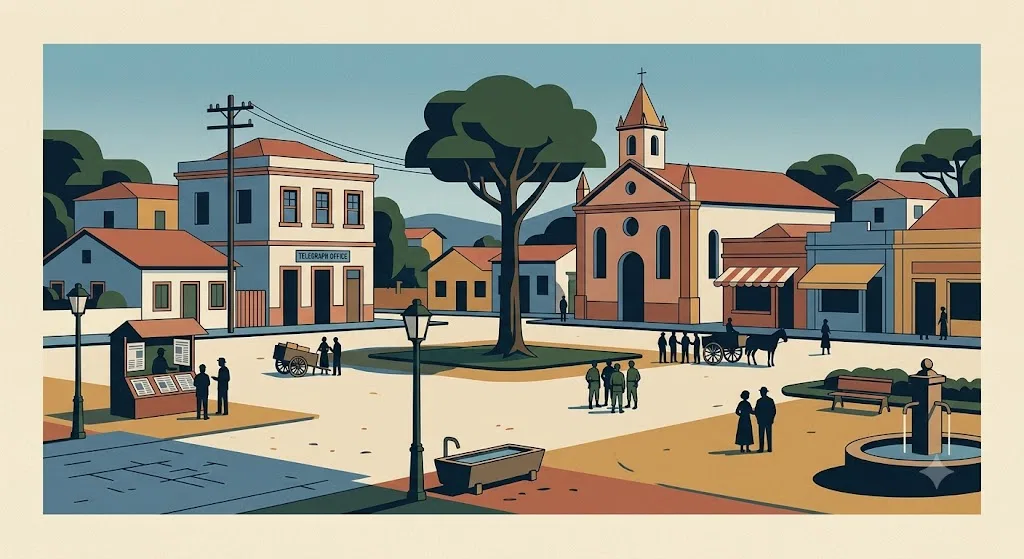
The political setting made the rumours explosive. Brazil had abolished slavery in 1888 and overthrown the monarchy in 1889. The new republic remained insecure, and its supporters feared restoration plots. When local conflict brought Canudos into confrontation with the authorities, newspapers and officials increasingly described its inhabitants as dangerous fanatics manipulated by monarchists. Telegraph networks allowed alarming reports to circulate rapidly, making Canudos one of Brazil’s first conflicts to receive sustained, near-modern national news coverage.[ReVista]revista.drclas.harvard.eduthe ghosts of canudosThe Ghosts of Canudos: A War Memorial | ReVista2 Sept 2021 — The Canudos War was the first historical event in Brazil to feature w…
Three military expeditions failed to destroy the settlement. Rather than encouraging caution, these defeats intensified the panic. Canudos appeared stronger and more mysterious each time government troops were repelled. The republic’s prestige became entangled with the campaign, and the settlement was recast as a challenge that had to be eliminated rather than a community whose grievances might be negotiated.
A fourth expedition overwhelmed Canudos in October 1897. The settlement was burned and most of its remaining inhabitants were killed. Estimates vary considerably, but historians agree that the campaign caused mass death on a scale far beyond an ordinary police action. Prisoners were executed, and Conselheiro’s body was exhumed so that his head could be examined by doctors seeking supposed physical signs of degeneracy or criminal abnormality.[harvard.edu]revista.drclas.harvard.edua tale of the three canudosA Tale of the Three Canudos | ReVista22 Oct 2020 — The fourth and last expedition, in September 1897, was a massacre that took the…
Canudos was therefore not simply a millenarian “cult” that provoked the state. It was also a political panic produced by the early republic’s insecurity, elite fear of autonomous poor communities and a media system that circulated unverified claims of monarchist conspiracy. Religious belief was real and central to the community, but it became dangerous partly because outsiders interpreted it through assumptions about race, backwardness and national progress.
The conflict’s best-known literary account, Euclides da Cunha’s Rebellion in the Backlands, helped expose the brutality of the campaign. Yet even that influential work employed some of the racial and evolutionary theories of its time. Later historians have consequently read Canudos both through da Cunha and against him, recovering the residents as historical actors rather than specimens of fanaticism.[Internet Archive]archive.orgOpen source on archive.org.

Contestado: prophecy amid dispossession
The Contestado War of 1912–16 echoed Canudos, but its origins were inseparable from land loss and economic upheaval.
The conflict occurred in a disputed border region between Paraná and Santa Catarina. Railway construction, commercial logging and changes in land ownership displaced rural inhabitants who had long depended on land they did not formally own. The construction company received extensive concessions, while workers recruited for the railway were left without secure livelihoods when the project ended.
Religious healers and wandering holy men had long circulated in the region. One of them, José Maria, became the focus of a community whose followers combined popular Catholicism, healing traditions and expectations of a divinely protected social order. After José Maria was killed in a confrontation with state forces in 1912, some followers believed he would return with a sacred army. Communities formed around prophetic leaders, visions and the hope that a holy monarchy would replace the unjust present.[JSTOR]jstor.orgOpen source on jstor.org.
Officials and much of the press emphasised the rebels’ messianic beliefs, frequently describing them as fanatics. The religious element was genuine, but concentrating on it could obscure why the movement attracted support. Families had lost access to land, faced the expansion of private property and found little protection from state institutions. Prophecy offered both a spiritual explanation of suffering and a language through which an alternative community could be imagined.
The government responded with a large military campaign. Artillery, machine guns, scorched-earth tactics and aerial reconnaissance were used against rebel settlements. By 1916 organised resistance had been crushed, with thousands dead and many more displaced. The exact toll remains disputed because records are incomplete and participants were widely scattered.
Canudos and Contestado are often grouped together as Brazilian messianic rebellions, but neither can be understood through religion alone. In both cases, authorities converted complex rural conflicts into wars against supposed fanaticism. Millenarian belief helped organise resistance, while the label of fanaticism helped legitimise extreme repression. Scholarship on Brazilian messianism has accordingly moved away from treating such movements as collective pathology and towards examining the interaction of faith, economic dispossession, political exclusion and state-building.[Redalyc.org]redalyc.orgOpen source on redalyc.org.
Miracles, pilgrimage and the authority to believe
Not every contested religious movement in Brazil ended in military destruction. The career of Padre Cícero in Juazeiro do Norte shows how a disputed miracle could create a durable religious centre while producing decades of argument over who had the right to declare an event sacred.
In 1889, a communion wafer administered by Cícero was reported to have turned to blood in the mouth of Maria de Araújo, a devout laywoman. The event was repeated and interpreted by many local believers as miraculous. Pilgrims travelled to Juazeiro, and Cícero’s reputation as a holy protector grew rapidly.
Church authorities investigated and rejected the miracle claims. Cícero was suspended from some priestly duties, while Maria de Araújo was subjected to scrutiny and later marginalised in official accounts. Yet institutional condemnation did not dissolve popular devotion. Juazeiro became a major pilgrimage destination, and Cícero developed considerable social and political influence. Archival collections document the religious movement’s close entanglement with regional politics from the late nineteenth century until his death in 1934.[ufl.edu]uflib.ufl.eduUF Libraries Brazil's Padre CíceroUF Libraries Brazil's Padre Cícero
It would be misleading to call Juazeiro a simple miracle panic. The dominant popular response was devotion rather than uncontrolled fear. The “panic” existed largely among church and political authorities who worried about unauthorised revelation, clerical disobedience and the mobilisation of a vast following around a charismatic local figure.
The case also illustrates how gender and status shape historical memory. Cícero became a nationally recognisable figure, whereas Maria de Araújo—the person whose body was at the centre of the reported event—was often reduced to a supporting role or treated as a problem to be contained. The dispute was therefore about more than whether blood appeared on a wafer. It concerned whose testimony counted, whether local religious experience could override hierarchy, and how a poor region represented as backward could produce its own sacred authority.
Pilgrimage to Juazeiro remains culturally and economically important. The survival of the devotion does not prove the physical miracle, but neither can it be dismissed as a temporary outbreak of credulity. It became a long-lived social tradition through family memory, ritual journeys, sacred objects and the belief that Cícero represented neglected people to distant institutions. Research on present-day pilgrimages shows how objects associated with Juazeiro continue to acquire value through their connection to place, blessing and personal devotion.[JSTOR]jstor.orgMessianism and the Padre Cícero StoriesMessianism and the Padre Cícero Stories
The Itapagipe dancers and the dangers of medical certainty
In 1882, residents of Itapagipe, near Salvador in Bahia, reported an unusual outbreak involving involuntary movement, convulsions or dance-like behaviour. The episode later became known as the Itapagipe dancing epidemic.
The surviving evidence is filtered heavily through physicians who studied or retrospectively interpreted the event. One of the most influential was Raimundo Nina Rodrigues, a doctor and anthropologist associated with the Bahia medical school. Medical writers attempted to classify the dancers through contemporary theories of hysteria, nervous illness, religious influence and racial difference.[sciencedirect.com]sciencedirect.comOpen source on sciencedirect.com.
It is difficult to reconstruct precisely what each affected person experienced. The label “dancing epidemic” may create a false image of a single crowd seized simultaneously by irresistible dancing. The historical material instead describes a more complicated cluster of symptoms, performances, diagnoses and observations unfolding over time.
The episode is important because it reveals how medical explanations can themselves be culturally contagious. Doctors did not approach an empty field of neutral facts. They interpreted behaviour through nineteenth-century ideas about race, civilisation, gender and popular religion. Afro-Brazilian practices and the bodies of poor or non-white patients were frequently treated as evidence of primitiveness or abnormal susceptibility.
Modern readers should therefore resist replacing one overconfident explanation with another. The Itapagipe cases may have involved psychogenic symptoms, neurological illness, religious performance, imitation or more than one process. The records do not support a definitive retrospective diagnosis. What they clearly document is the creation of medical knowledge by observers whose assumptions shaped what they noticed and how the event entered history.
This makes Itapagipe different from Canudos but connected to it. In both cases, educated authorities converted unfamiliar collective behaviour into a story about backward populations. The immediate harm at Itapagipe was not a military massacre. It was classification: people’s experiences were absorbed into racialised theories that later appeared to offer scientific proof of the prejudices with which the investigation had begun.
Escola Base: a modern panic with identifiable victims
The 1994 Escola Base scandal in São Paulo is one of Brazil’s clearest examples of a media-driven moral panic. Unlike older religious conflicts, its central mechanism is well documented: an allegation became public certainty before investigators had established whether a crime had occurred.
Parents accused staff and associates of a private nursery school of sexually abusing children. Police discussed the allegations with journalists while the investigation was still at an early stage. News organisations competed to report increasingly disturbing versions of the story, presenting suspects as members of an organised abuse network. The accused included the school’s owners, employees and parents connected to pupils.
The allegations were not supported by a reliable body of physical or corroborating evidence. The investigation was eventually closed without charges, but the correction came after the accused had been publicly identified and treated as guilty. The school was vandalised and forced to close. Those targeted suffered threats, financial ruin, damaged health and long-term social stigma. Fundação Getulio Vargas and the Innocence Project Brazil continue to treat the case as a major lesson in wrongful accusation and criminal-justice failure.[Portal FGV]portal.fgv.brescola base incident subject debate criminal justice systemescola base incident subject debate criminal justice system
The episode shared features with child-abuse panics elsewhere during the late twentieth century: emotionally powerful allegations, suggestive or poorly controlled questioning, pressure to believe every developing claim and a media environment in which caution appeared morally suspect. Concern for children was legitimate. The failure lay in turning concern into certainty without adequate verification.
Escola Base was not simply an example of “the press getting a story wrong”. Several institutions reinforced one another:
- preliminary police suspicions gave journalists a claim of official authority;
- repeated coverage made the allegations seem independently confirmed;
- public outrage increased pressure for dramatic police action;
- new reports were interpreted within an established narrative of hidden abuse;
- later corrections could not match the force or visibility of the original accusations.
The case remains central to Brazilian debates about journalistic ethics because it shows how legally cautious words such as “suspected” can coexist with coverage that communicates guilt through headlines, images and repetition. It also demonstrates an asymmetry common to moral panics: accusation travels quickly because it is alarming, whereas exoneration travels slowly because it appears less urgent.
Calling Escola Base a moral panic does not mean that child abuse is imaginary or that allegations should be ignored. It means that safeguarding requires disciplined investigation. When authorities leak untested claims and news organisations compete to dramatise them, genuine protection can be replaced by spectacle—harming innocent adults, children and public trust at the same time.
Varginha and the making of a UFO capital
In January 1996, several young women in Varginha, Minas Gerais, reported seeing a strange crouching creature with unusual skin, large red eyes and a powerful smell. Their account became the centre of a much larger story involving alleged UFO sightings, military vehicles, captured beings, dead animals and the sudden death of a police officer.
Some elements are uncontested: witnesses reported something they found frightening; the story received extensive media attention; military and emergency vehicles were seen in the city; and the case became the subject of investigations, documentaries and sustained campaigning by UFO researchers. The extraordinary interpretation—that Brazilian authorities captured one or more non-human beings—has not been demonstrated by publicly available physical evidence.
A Brazilian military investigation dismissed the central alien claim, offering ordinary explanations for at least some reported incidents. One explanation was that the witnesses had encountered a local man whose appearance and posture, seen during poor weather and heightened anxiety, were misinterpreted. UFO investigators reject this account and cite alleged testimony from military personnel, hospital staff and others. Much of that supporting testimony, however, emerged indirectly, anonymously or after the story had already become nationally famous.[EL PAÍS English]english.elpais.comEL PAÍS English The 'ET of Varginha' captivates Brazil 30 years after sightingEL PAÍS English The 'ET of Varginha' captivates Brazil 30 years after sighting
Varginha is best understood neither as proven extraterrestrial contact nor as a clinical episode of mass psychogenic illness. There was no well-documented cluster of spreading physical symptoms. It was a folklore-forming event built around ambiguous sightings, credible feelings of fear, uncertain movements of officials and an expanding network of interpretation.
The story’s development followed a familiar pattern:
- an unusual but limited encounter created a memorable core narrative;
- intense press coverage connected separate events into one mystery;
- gaps in official information encouraged suspicion;
- later witnesses interpreted memories through the established alien framework;
- documentaries and anniversary coverage kept the disputed case culturally active.
Varginha has embraced the legend through monuments, tourism, merchandise and plans for further alien-themed attractions. Thirty years after the reported encounter, the story remains part of the city’s public identity.[The Guardian]theguardian.comDespite skepticism, interest in the "ET of Varginha" remains strong, with a burgeoning tourism industry featuring an alien museum, themed…
That cultural afterlife is not evidence for an alien capture, but it matters. Folklore can create community identity and economic value even when the founding event remains unresolved. Varginha also shows why ridicule is a poor response to extraordinary claims. Mocking witnesses tends to harden suspicion and deepen the division between believers and authorities. A more useful approach distinguishes sincere testimony from proof, acknowledges uncertainty and asks which later additions to the story can be independently verified.
Brazil’s wider UFO history reinforces this point. The country has released records concerning military encounters with unidentified aerial phenomena, including the well-known “Official UFO Night” of 1986, when pilots and radar operators reported unexplained objects. Government acknowledgement that reports were investigated establishes that unusual observations occurred; it does not establish that they were extraterrestrial. Serviços e Informações do Brasil[gov.br]gov.brServiços e Informações do Brasil Official UFO Night in BrazilServiços e Informações do Brasil Official UFO Night in Brazil

From television panic to networked fear
Brazil’s recent collective scares spread through a media system very different from that of Canudos or Escola Base. Encrypted messaging, short-form video and social platforms allow rumours, threats and emotionally charged images to circulate faster than journalists or authorities can verify them.
The wave of fear surrounding school violence in 2023 demonstrates both the usefulness and the danger of the moral-panic framework. Brazil had experienced real attacks, including fatal incidents in Aracruz, São Paulo and Blumenau. Researchers and government advisers identified genuine links among some attackers, online extremist subcultures, glorification of previous killers and the circulation of violent propaganda.[Rest of World]restofworld.orgRest of World Research links school shootings with extremist onlineRest of World Research links school shootings with extremist online
After highly publicised attacks, however, schools across the country also faced a flood of rumours, anonymous warnings and hoax threats. Parents kept children at home, institutions cancelled classes and police investigated posts whose authors sometimes sought attention rather than possessing any operational plan. The fear was not invented: it grew from actual violence. Yet repeated forwarding could strip a warning of its location, date or source, making old or false material appear immediate and local.
This is one reason “panic” must not be used to dismiss public concern. A social scare may contain several things at once:
- a real underlying danger;
- exaggerated estimates of how common it is;
- false threats imitating genuine attacks;
- media practices that reward repetition;
- opportunistic political explanations;
- protective measures that may either reduce risk or amplify fear.
The appropriate response is neither blanket reassurance nor indiscriminate alarm. Authorities need rapid channels for checking threats, careful language that does not glorify attackers, support for frightened school communities and interventions aimed at credible warning signs. Researchers examining Brazilian school violence have stressed that online extremism and misinformation are not merely imaginary explanations imposed after the fact. The challenge is to address those documented mechanisms without treating every rumour as evidence of an imminent attack.[Rest of World]restofworld.orgRest of World Research links school shootings with extremist onlineRest of World Research links school shootings with extremist online
Modern Brazilian moral panics also emerge around claims that schools, teachers or public-health institutions are secretly corrupting children. Academic research has described campaigns against supposed “gender ideology” as moral-panic politics in which complex debates about education and rights are converted into an urgent story of innocent children threatened by organised ideological enemies. Such campaigns gained force through emotionally charged disinformation and the repeated claim that ordinary educational material concealed sexual or political indoctrination.[ubc.ca]open.library.ubc.caOpen source on ubc.ca.
The recurring mechanism resembles Escola Base even though the political context differs. The protection of children supplies an unquestionable moral goal; an ambiguous or distorted claim identifies a hidden threat; repetition creates apparent confirmation; and demands for immediate action make requests for evidence seem evasive or complicit.
What Brazil’s cases have in common
Brazil’s most revealing panics and collective-belief episodes do not share a single psychological cause. They share conditions that allow uncertain stories to acquire authority.
Institutional insecurity turns difference into conspiracy. The young republic saw Canudos as a monarchist danger partly because it feared for its own survival. Political anxiety made an isolated settlement appear nationally threatening.
Material grievances can be expressed through sacred narratives. Contestado’s prophecies cannot be separated from land dispossession. Religion did not conceal the social conflict; it gave suffering a moral structure and offered followers a vision of justice.
Elite labels can become instruments of power. Descriptions such as fanatic, hysterical or primitive have often placed the observer above the observed. They can close investigation by presenting contested behaviour as the natural product of an inferior group.
Media repetition can substitute for independent confirmation. In the Escola Base case, multiple reports created the appearance of abundant evidence even though they depended on the same fragile allegations. Digital circulation can now reproduce this effect within minutes.
Official secrecy encourages narrative expansion. Where institutions communicate poorly, people fill gaps with speculation. This does not make every alternative explanation true, but it helps explain the endurance of stories such as Varginha.
Beliefs survive because they perform social work. Padre Cícero’s following offered protection, belonging and regional dignity. Varginha’s alien became a civic symbol. A belief’s persistence therefore cannot be judged solely by asking whether its founding claim was physically verified.
The most serious historical mistake is to assume that collective fear belongs only to the crowd. Governments, newspapers, churches, police forces and scientific institutions can also become enclosed within a shared interpretation. Canudos was destroyed not because every official possessed conclusive evidence of a monarchist plot, but because institutions repeatedly validated the same fear until retreat became politically difficult.
Brazil’s history consequently supports a more careful vocabulary than “mass hysteria”. Some episodes involved sincere religious movements facing hostile labelling. Some were moral panics in which uncertain accusations became public certainty. Some were ambiguous experiences transformed into folklore. Others involved real danger surrounded by imitation, exaggeration and rumour. Understanding the difference is not a matter of politeness. It determines whether the people involved are investigated fairly, treated humanely or punished for a story that powerful institutions have decided to believe.
Amazon book picks
Further Reading
Books and field guides related to When Belief Became a Public Threat. Use these as the next step if you want deeper reading beyond the article.
Extraordinary Popular Delusions and the Madness of Crowds
Rating: 4.0/5 from 5 Google Books ratings
Useful comparative reading on mass belief.

The Brazilians
First published 1995. Subjects: Brazilian National characteristics, Características nacionales brasileñas, Condiciones económicas, Condic...

Brazil
First published 2017. Subjects: Brazil, history, Brazil, civilization, Brazil, description and travel, History, Civilization.
Rebellion in the Backlands (Os Sertoes ) by Euclides da Cunha...
First published 1716.
Endnotes
1.
Source: jstor.org
Title: The Canudos War in History
Link:https://www.jstor.org/stable/3513950
Source snippet
The Canudos War in HistoryJuly 12, 1993 — by L Madden · 1993 · Cited by 38 — The Canudos war was fought in 1897 in the interior of B...
Published: July 12, 1993
2.
Source: aaihs.org
Link:https://www.aaihs.org/state-violence-and-the-canudos-massacre-in-brazil/
Source snippet
State Violence and the Canudos Massacre in Brazil18 Feb 2017 — Yet in the process an estimated 15,000- 30,000 people lost their lives...
3.
Source: archive.org
Link:https://archive.org/details/rebellioninbackl0000cunh
4.
Source: jstor.org
Link:https://www.jstor.org/stable/3629739
5.
Source: jstor.org
Link:https://www.jstor.org/stable/3513169
6.
Source: redalyc.org
Link:https://www.redalyc.org/journal/2433/243354741020/243354741020.pdf
7.
Source: jstor.org
Link:https://www.jstor.org/stable/2503339
8.
Source: jstor.org
Title: Messianism and the Padre Cícero Stories
Link:https://www.jstor.org/stable/3513286
9.
Source: eaesp.fgv.br
Link:https://eaesp.fgv.br/sites/default/files/files-eaesp/pesquisa-eaesp-files/arquivos/if_it_comes_from_juazeiro_it_s_blessed_liquid_and_solid_attachment_in_systems_of_object_itineraries_of_pilgrimages.pdf
10.
Source: sciencedirect.com
Link:https://www.sciencedirect.com/science/article/abs/pii/S1369848617301759
11.
Source: jstor.org
Link:https://www.jstor.org/stable/26450314
12.
Source: portal.fgv.br
Title: escola base incident subject debate criminal justice system
Link:https://portal.fgv.br/en/news/escola-base-incident-subject-debate-criminal-justice-system
13.
Source: open.library.ubc.ca
Link:https://open.library.ubc.ca/media/stream/pdf/24/1.0431597/2
14.
Source: periodicos.uem.br
Link:https://periodicos.uem.br/ojs/index.php/ActaSciEduc/article/download/68066/751375157147/751375284110
15.
Source: read.dukeupress.edu
Link:https://read.dukeupress.edu/hahr/article-pdf/68/3/525/724573/0680525.pdf
Source snippet
Region headquarters in Salvador, the archives of the...Read more...
16.
Source: read.dukeupress.edu
Title: The Historiography of Brazil 1889 1964 Part II
Link:https://read.dukeupress.edu/hahr/article/56/1/81/150501/The-Historiography-of-Brazil-1889-1964-Part-II
Source snippet
Duke University PressThe Historiography of Brazil, 1889-1964, Part IIby TE Skidmore · 1976 · Cited by 13 — That confrontation has been im...
17.
Source: revista.drclas.harvard.edu
Title: the ghosts of canudos
Link:https://revista.drclas.harvard.edu/the-ghosts-of-canudos/
Source snippet
The Ghosts of Canudos: A War Memorial | ReVista2 Sept 2021 — The Canudos War was the first historical event in Brazil to feature w...
18.
Source: revista.drclas.harvard.edu
Title: a tale of the three canudos
Link:https://revista.drclas.harvard.edu/a-tale-of-the-three-canudos/
Source snippet
A Tale of the Three Canudos | ReVista22 Oct 2020 — The fourth and last expedition, in September 1897, was a massacre that took the...
Published: September 1897
19.
Source: revistadelcesla.com
Link:https://www.revistadelcesla.com/index.php/revistadelcesla/article/view/416
20.
Source: uflib.ufl.edu
Title: UF Libraries Brazil’s Padre Cícero
Link:https://www.uflib.ufl.edu/spec/exhibits/cicero.pdf
21.
Source: english.elpais.com
Title: EL PAÍS English The ‘ET of Varginha’ captivates Brazil 30 years after sighting
Link:https://english.elpais.com/international/2026-01-20/the-et-of-varginha-captivates-brazil-30-years-after-sighting-dismissed-by-a-military-investigation.html
22.
Source: theguardian.com
Link:https://www.theguardian.com/science/2026/mar/21/anniversary-et-of-legend-varginha-alien-incident-musuem-documentary
Source snippet
Despite skepticism, interest in the "ET of Varginha" remains strong, with a burgeoning tourism industry featuring an alien museum, themed...
23.
Source: gov.br
Title: Serviços e Informações do Brasil Official UFO Night in Brazil
Link:https://www.gov.br/en/government-of-brazil/latest-news/2022/official-ufo-night-in-brazil
24.
Source: restofworld.org
Title: Rest of World Research links school shootings with extremist online
Link:https://restofworld.org/2023/online-extremism-linked-school-shootings-brazil/
25.
Source: Wikipedia
Title: Contestado War
Link:https://en.wikipedia.org/wiki/Contestado_War
26.
Source: Wikipedia
Link:https://en.wikipedia.org/wiki/Canudos
27.
Source: Wikipedia
Title: Escola Base case
Link:https://en.wikipedia.org/wiki/Escola_Base_case
28.
Source: Wikipedia
Title: Antônio Conselheiro
Link:https://en.wikipedia.org/wiki/Ant%C3%B4nio_Conselheiro
29.
Source: semanticscholar.org
Link:https://www.semanticscholar.org/paper/In-a-spin%3A-the-mysterious-dancing-epidemic-of-1518.-Waller/013b66ec587345c605c9e6ba9acff7df7f2ae503/figure/2
30.
Source: degruyterbrill.com
Link:https://www.degruyterbrill.com/document/doi/10.1525/9780520325869-008/pdf?licenseType=restricted&srsltid=AfmBOoqXy1hsAkNBGd0BVnw0mdrLH_SSskrg2NWP2FonVTa-MsRY6_Mw
Additional References
31.
Source: scielo.br
Link:https://www.scielo.br/j/rh/a/YDx7L9cVFntjY3Shm6RMxjF/?lang=en
Source snippet
segredos da guerra de canudos (1896- 1897): telegramas...by C Costa · 2024 — Colonel Moreira César was convinced that Antonio Cons...
32.
Source: youtube.com
Title: The War of Canudos | The Backpacker of the Future
Link:https://www.youtube.com/watch?v=dbRBKD-jaWg
Source snippet
Contestado: The Republic's Largest and Bloodiest Civil War...
33.
Source: researchgate.net
Link:https://www.researchgate.net/publication/364108004_Fake_news_moral_panic_and_polarization_in_Brazil_A_critical_discursive_approach
34.
Source: scielo.br
Link:https://www.scielo.br/j/cp/a/RVtnH7kfF5Rk3TJXN5srtjf/?format=pdf&lang=en
35.
Source: encyclopedia.com
Link:https://www.encyclopedia.com/humanities/encyclopedias-almanacs-transcripts-and-maps/contestado-rebellion
36.
Source: researchgate.net
Link:https://www.researchgate.net/publication/6951268_Mass_Psychogenic_Illness_After_Vaccination
37.
Source: reddit.com
Link:https://www.reddit.com/r/UFOs/comments/1qjc61a/new_documents_related_to_the_varginha_case_are/
38.
Source: centremulti.qc.ca
Link:https://www.centremulti.qc.ca/qc-news/[padre-cicero
39.
Source: scielo.br
Link:https://www.scielo.br/j/es/a/PT69sYtTRCYq7wLBLYB6ngR/?format=pdf&lang=en
40.
Source: cybernews.com
Link:https://cybernews.com/news/trump-ufo-speech-okinawa-sighting/
Topic Tree
Follow this branch
Related pages 192
- Antigua and Barbuda
- Argentina Belief Scares
- Azerbaijan Belief
- Bahrain Beliefs
- North Korea
- +187 more in sidebar