When Fear Became Dangerous in Guatemala
Guatemala’s history of collective fear is not best understood as a catalogue of bizarre “mass hysteria” episodes. Its most revealing cases concern rumours and accusations that became believable because they drew on real experiences of conquest, racial persecution, civil war, child trafficking, weak justice and religious conflict.

Page outline Jump by section
Introduction
Some of these beliefs were demonstrably false. Others exaggerated genuine dangers. In several cases, the panic itself caused more immediate harm than the alleged threat. Guatemala therefore offers a particularly important lesson: rumours flourish not simply because people are credulous, but because institutions have repeatedly given communities good reasons to distrust outsiders, officials and one another.
When belief becomes a public danger
Several different phenomena sit beneath the loose label of “mass hysteria”, and confusing them can obscure rather than explain what happened.
A moral panic arises when a person, practice or group is portrayed as an extraordinary threat to society. A rumour panic develops when alarming, unverified information spreads through social networks and prompts protective or violent action. Mass psychogenic illness refers more narrowly to clusters of real physical symptoms that spread without an identified infectious or toxic cause. A witch panic turns misfortune, illness or death into evidence that a supposed sorcerer deliberately caused it.
Guatemala has strong documentary evidence for moral panics, rumour-driven violence and witchcraft accusations. It has far less reliable evidence for a nationally significant outbreak of mass psychogenic illness comparable with famous school fainting or laughter epidemics elsewhere. That absence matters. It would be misleading to force every episode of contagious fear into a medical model when Guatemala’s best-documented cases arose from political violence, social mistrust and contested religious authority.
Nor should Maya spirituality itself be treated as a strange cult phenomenon. It is a diverse body of living Indigenous religious traditions involving sacred places, calendrical knowledge, healing, offerings and relationships with ancestors and the natural world. Guatemalan law formally protects religious freedom, yet Maya spiritual practitioners continue to report discrimination, restricted access to sacred sites and accusations that their ceremonies constitute witchcraft.[U.S. Department of State]2021-2025.state.govDepartment of State2023 Report on International Religious Freedom: GuatemalaMayan spiritual leaders reported continued societal discrimin…
Colonial fear of Indigenous religion
The oldest recurring pattern began with the Spanish conquest. Colonial authorities and missionaries interpreted many Indigenous ceremonies through Christian categories such as idolatry, devil worship and sorcery. Sacred objects could be treated as idols, ritual specialists as witches, and community ceremonies as evidence that conversion had failed.
This was not merely a disagreement over theology. Labelling Indigenous practices as diabolical helped justify surveillance, punishment and the destruction or replacement of religious institutions. Campaigns against “idolatry” elsewhere in colonial Mesoamerica produced interrogations and prosecutions of people accused of preserving forbidden rites. Scholarship on colonial religion shows that accusations of witchcraft and idolatry were part of the wider effort to reorder Indigenous life under Christian and imperial authority.[JSTOR]jstor.orgIn Servitio Dei: Fray Diego de Landa, the Franciscan Order…by F John IV · 2005 · Cited by 56 — The great number of cases compile…
Maya communities did not simply abandon their beliefs. Ceremonies survived through adaptation, secrecy and combinations of Indigenous and Catholic practice. This history explains why modern descriptions of Maya healers as “witches” are not neutral folk labels. They carry the weight of a colonial system that classified Indigenous knowledge as dangerous or illegitimate.
It also cautions against presenting Guatemala’s religious landscape as a simple contest between superstition and modernity. Practices dismissed by outsiders as magical may serve recognisable social purposes: treating illness, marking agricultural cycles, interpreting loss, maintaining community memory or seeking guidance at times of uncertainty. Conflict arises when one religious system claims sole authority to decide which of these practices are acceptable.
The hidden-enemy panic of the civil war
Guatemala’s most destructive collective fear was political rather than supernatural: the belief that entire Maya communities formed part of an internal communist enemy.
During the 36-year armed conflict, state counter-insurgency doctrine increasingly treated civilian support networks, community organisers, catechists and Indigenous villages as extensions of the guerrilla movement. Suspicion spread far beyond identifiable combatants. Ethnicity, residence, political participation or association with reformist Catholic organisations could become evidence of subversion.
The United Nations-backed Commission for Historical Clarification concluded that more than 200,000 people were killed or disappeared during the conflict, that 83 per cent of identified victims were Maya, and that state forces and associated groups were responsible for the overwhelming majority of documented violations. The commission found that acts of genocide had been committed against Maya groups in particular regions.[hrdag.org]hrdag.orgCEHreport englishCEHreport english
Calling this merely a “panic” would risk trivialising organised state violence. Yet the machinery of persecution depended on panic-like thinking. A broad and diverse civilian population was compressed into the image of a concealed, contagious enemy. Neutrality became difficult to prove because ordinary activities could be reinterpreted as signs of collaboration.
Religious change became entangled with this atmosphere. Catholic social programmes and liberation theology encouraged some communities to discuss land, poverty and political rights, leading conservative authorities to associate sections of the Church with insurgency. Evangelical and Pentecostal churches expanded rapidly during and after the war, assisted in part by missionary activity following the 1976 earthquake. Under the evangelical ruler Efraín Ríos Montt, military counter-insurgency was sometimes expressed in explicitly religious language, although Guatemala’s many Protestant communities should not be treated as a single political bloc.[theworld.org]theworld.orgdid war change guatemalas faithdid war change guatemalas faith
The enduring lesson is that moral panics need not revolve around imaginary beings. They can attach themselves to real political conflicts while radically expanding the category of the enemy. In Guatemala, anti-communist fear helped erase the distinction between armed opponents and Indigenous civilians.
The child-organ theft rumours of 1994
One of Guatemala’s clearest rumour panics erupted in 1994, when stories circulated that foreign visitors were kidnapping children and removing their organs for transplantation abroad.
On 29 March, American tourist Melissa Larson was attacked in the village of Santa Lucía Cotzumalguapa after being accused of trying to abduct a child. Days later, on 4 April, another American, June Weinstock, was assaulted by a crowd in San Cristóbal Verapaz. Security forces subsequently arrested large numbers of local people; Amnesty International reported that at least 150, many of them Pokomchi Maya, were detained after the second attack.[Amnesty International]amnesty.orgOpen source on amnesty.org.
No evidence established that either woman was involved in organ trafficking. The transplantation story nevertheless felt plausible to many Guatemalans because it condensed several genuine forms of exploitation into one terrifying narrative.
Guatemala had a troubled international adoption system in which intermediaries profited from supplying children to foreign families. Later investigations and testimony documented coercion, falsified records, irregular relinquishments and cases in which children were taken from their families. Child disappearance and trafficking were therefore not imaginary social concerns, even though the specific claim that tourists were harvesting organs was unsupported.[theguardian.com]theguardian.comThe Guardian Guatemala's baby brokers: how thousands of children wereThe Guardian Guatemala's baby brokers: how thousands of children were
The rumour also emerged near the end of a war marked by disappearances, clandestine violence and official deception. In that setting, assurances from police or government officials did not automatically carry authority. The figure of the foreign organ thief expressed a wider fear that poor Indigenous children could be converted into commodities for wealthy outsiders.
Anthropologists have consequently treated the episode neither as simple gullibility nor as proof that the organ story was true. It was a “rumoured reality”: a false or unverified allegation built from recognisable inequalities. Research on the attacks emphasises how stories of adoption, medical extraction, foreign wealth and missing children combined with distrust of the state.[uchicago.edu]knowledge.uchicago.eduKnowledge UChicago KnowledgeKnowledge UChicago Knowledge
The consequences were real. Innocent visitors were attacked, local residents faced mass arrest and alleged mistreatment, and fear deepened between Indigenous communities, foreign travellers and state authorities. The episode demonstrates why correcting a rumour requires more than announcing that it is false. Authorities must also confront the genuine abuses that make it believable.
Witchcraft accusations and mob justice
Accusations of witchcraft remain one of the most dangerous meeting points between personal misfortune, religious hostility and Guatemala’s weak justice system.
In many communities, suspected thieves, kidnappers, extortionists and supposed witches have faced collective punishment outside the courts. Scholars analysing post-war lynchings connect them to low confidence in police, slow legal processes, unresolved wartime violence and local demands for immediate justice. Witchcraft allegations can be especially difficult for state institutions to address because the accusation concerns invisible harm rather than conduct recognised in ordinary criminal law.[jstor.org]jstor.orgUn)imagining the StateUn)imagining the State
This does not mean that lynching is an authentic or inevitable expression of Maya customary justice. That claim has often been challenged as a distortion. Mob attacks developed within a modern history of militarisation, impunity and fractured authority, not from an unchanging Indigenous tradition. The use of community assemblies, public accusation or collective punishment may resemble local forms of decision-making, but lethal vigilantism cannot simply be equated with customary law.
The murder of Maya healer and spiritual guide Domingo Choc Che in June 2020 made the danger internationally visible. Choc, a respected specialist in medicinal plants who had collaborated with researchers, was seized in Chimay, Petén, tortured and burned after being blamed for a man’s illness and death. Police arrested several suspects, and three people were later convicted.[theguardian.com]theguardian.comThe Guardian Outrage as Guatemalan Maya spiritual guide is torturedThe Guardian Outrage as Guatemalan Maya spiritual guide is tortured
The accusation transformed bereavement into certainty: a death required an intentional agent, and a spiritual practitioner already regarded with suspicion became the target. Reports following the killing also drew attention to hostility from some Christian sectors towards Maya ceremonies, which may be described as demonic or as witchcraft. Maya organisations argued that Choc’s murder should therefore be understood not only as an isolated crime but as part of continuing discrimination against Indigenous spirituality.[theguardian.com]theguardian.comThe Guardian Herbalist's murder highlights assault on Mayan spiritualityThe Guardian Herbalist's murder highlights assault on Mayan spirituality
Care is needed here. Religious disagreement does not automatically produce violence, and Guatemala contains many examples of coexistence and blended practice. Nor is every witchcraft accusation simply a disguise for ethnic prejudice; accusations may grow from family disputes, unexplained illness, competition, grief or local power struggles. But the Choc case shows how older demonising language can make violence appear morally defensive to perpetrators.
The Maya apocalypse that Maya people did not predict
The most internationally famous Guatemalan “apocalypse” was largely manufactured outside Guatemala.
In the years before 21 December 2012, books, websites, films and television programmes claimed that the ancient Maya Long Count calendar predicted the destruction or transformation of the world on that date. The idea combined misread calendar inscriptions with Western apocalyptic traditions, New Age speculation and internet-era conspiracy culture.
The date marked the completion of a major calendrical cycle, not a clearly documented prophecy of global annihilation. Maya scholars and community representatives repeatedly rejected the doomsday interpretation. Reporting from Guatemala immediately before the date found little evidence of widespread local panic; many Maya treated the occasion as a transition, commemoration or opportunity for ceremony rather than an approaching catastrophe.[aljazeera.com]aljazeera.comAl Jazeera No panic in Guatemala over 'Mayan Apocalypse' | NewsAl Jazeera No panic in Guatemala over 'Mayan Apocalypse' | News
The episode nevertheless affected Guatemala. Government agencies and tourism businesses promoted large public events, including celebrations at archaeological sites. Some Indigenous organisations criticised this as commercial appropriation: officials were marketing a distorted version of Maya culture while living Maya communities continued to experience poverty, exclusion and restrictions around sacred places.[businessinsider.com]businessinsider.comOpen source on businessinsider.com.
The 2012 phenomenon is therefore best described as a global media panic projected onto Guatemala, rather than a Guatemalan millenarian movement. Its supposed authors—the Maya—were often placed in the absurd position of having to deny a prophecy attributed to them by outsiders.
It also illustrates a common mechanism in modern collective belief. A technical or unfamiliar subject is simplified into a dramatic claim; repetition across entertainment, news and online discussion makes the claim appear established; businesses then gain an incentive to keep it visible. Even sceptical coverage can extend the story by constantly repeating its central image.

What connects these episodes
Guatemala’s panics differ in scale and seriousness, but several recurring pressures help explain why accusations have spread.
A history of concealed violence. During the armed conflict, people disappeared, officials denied abuses and clandestine networks operated with impunity. Later rumours entered a society in which improbable crimes could not always be dismissed merely because authorities denied them.
Unequal power between Indigenous communities and outsiders. Colonial persecution, land dispossession, foreign intervention, adoption abuses and racial discrimination supplied a believable structure for stories in which powerful outsiders preyed upon vulnerable people.
Weak or distrusted institutions. Where police and courts are seen as corrupt, absent or ineffective, crowds may act on accusation before evidence can be tested. This helps explain both lynching and the speed with which rumours become emergency warnings.
Religious competition. Catholic, evangelical, Pentecostal and Maya traditions coexist in Guatemala, often peacefully but sometimes through mutual suspicion. Describing a rival ceremony as witchcraft or devil worship transforms theological disagreement into a perceived struggle against dangerous evil.
Media translation and commercialisation. The 2012 apocalypse showed how international entertainment and tourism could turn Maya history into a global fantasy. Similar processes occur when reporters present rumours as exotic curiosities without explaining the abuses and mistrust beneath them.
None of these pressures removes individual responsibility. People who attack an accused witch or supposed kidnapper remain responsible for violence. But social explanation clarifies why a particular accusation becomes persuasive at a particular moment—and why simply mocking believers rarely prevents recurrence.
How to judge Guatemala’s strange-history claims
Accounts of Guatemala’s collective fears are especially vulnerable to exaggeration. A useful assessment begins by asking what kind of evidence survives.
A documented panic should have identifiable incidents, contemporary records and evidence that a belief affected behaviour. The 1994 organ-theft rumours meet that standard because there were named victims, attacks, arrests, human-rights reports and subsequent anthropological research. Domingo Choc’s killing is likewise well documented through journalism, organisational statements, arrests and convictions.
A broader claim needs greater caution. Statements that “Guatemalans believe in witchcraft” flatten a religiously and ethnically diverse country. Claims of a Guatemalan satanic panic require evidence of coordinated allegations, investigations or institutional campaigns rather than isolated sermons or crimes. Reports of mass possession or mysterious school illness should not be labelled mass psychogenic illness until infectious, toxic and environmental causes have been properly investigated.
The language used by sources also matters. “Cult”, “witch”, “idolater”, “communist collaborator” and “organ thief” may reveal more about the accuser than the accused. Historians therefore ask who applied the label, what interests it served and whether independent evidence supports it.
Finally, false rumours should be separated from the real conditions embedded within them. Foreign tourists were not roaming Guatemala for transplant organs in 1994, but children really had been stolen or improperly transferred through the adoption system. The Maya calendar did not predict the end of the world in 2012, but Maya religious knowledge really had been appropriated and commercialised. Domingo Choc was not proven to have supernaturally caused a death, but local grief and religious hostility were real.
Why this history still matters
Guatemala’s collective fears repeatedly turned vulnerable people into symbolic enemies: Indigenous ritual specialists became witches, villages became communist strongholds, tourists became organ thieves, and living Maya communities became props in someone else’s apocalypse.
The most important pattern is not irrational belief alone. It is the conversion of uncertainty into accusation. Illness demands a sorcerer. A missing child demands a foreign predator. Political unrest demands a hidden internal enemy. An unfamiliar calendar demands an end-of-the-world prophecy.
These stories became dangerous when institutions, media or crowds acted before uncertainty could be tolerated and evidence examined. Their legacy survives in continuing discrimination against Maya spirituality, distrust of public authority, periodic vigilante violence and commercial versions of Indigenous culture that receive more attention than Indigenous voices themselves.
Guatemala’s experience therefore changes the usual lesson of moral-panic history. Better information is essential, but facts travel through relationships of trust. Where communities remember genuine persecution, trafficking or state deception, reassurance without reform may sound like another denial. Preventing the next panic requires credible justice, protection for religious minorities, responsible reporting and acknowledgement of the real injuries from which frightening stories draw their power.
Amazon book picks
Further Reading
Books and field guides related to When Fear Became Dangerous in Guatemala. Use these as the next step if you want deeper reading beyond the article.
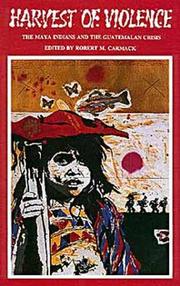

The Guatemala reader
Covers colonialism, civil war, Indigenous history and modern society.
Open Veins Of Latin America
Provides regional historical background to inequality and distrust.
Endnotes
1.
Source: 2021-2025.state.gov
Link:https://2021-2025.state.gov/reports/2023-report-on-international-religious-freedom/guatemala/
Source snippet
Department of State2023 Report on International Religious Freedom: GuatemalaMayan spiritual leaders reported continued societal discrimin...
2.
Source: 2021-2025.state.gov
Link:https://2021-2025.state.gov/reports/2022-report-on-international-religious-freedom/guatemala/
Source snippet
Department of State2022 Report on International Religious Freedom: GuatemalaMayan spiritual guides and practitioners reported continued s...
3.
Source: jstor.org
Link:https://www.jstor.org/stable/4490974
Source snippet
In Servitio Dei: Fray Diego de Landa, the Franciscan Order...by F John IV · 2005 · Cited by 56 — The great number of cases compile...
4.
Source: jstor.org
Link:https://www.jstor.org/stable/27108994
Source snippet
Mayan and Andean Medicine and Urban Space in the...by S FREDRICK · 2021 · Cited by 3 — In these cities, despite the disapproval and...
5.
Source: jstor.org
Link:https://www.jstor.org/content/pdf/oa_book_monograph/j.ctt9qg53g
Source snippet
Church in Latin America, which I had the pleasure and honor to teach first.Read more...
6.
Source: hrdag.org
Title: CEHreport english
Link:https://hrdag.org/wp-content/uploads/2013/01/CEHreport-english.pdf
7.
Source: theworld.org
Title: did war change guatemalas faith
Link:https://theworld.org/stories/2016/06/29/did-war-change-guatemalas-faith
8.
Source: amnesty.org
Link:https://www.amnesty.org/en/documents/amr34/021/1994/en/
9.
Source: amnesty.org
Link:https://www.amnesty.org/en/wp-content/uploads/2021/06/amr340211994en.pdf
10.
Source: jstor.org
Link:https://www.jstor.org/stable/3814829
11.
Source: news.trust.org
Title: 20131004103251 6uga0
Link:https://news.trust.org/item/20131004103251-6uga0/
12.
Source: knowledge.uchicago.edu
Title: Knowledge UChicago Knowledge
Link:https://knowledge.uchicago.edu/record/205/files/Rothenberg_uchicago_0330D_14209.pdf
13.
Source: jstor.org
Title: (Un)imagining the State
Link:https://www.jstor.org/stable/23217861
14.
Source: herbalgram.org
Title: three convicted of domingo choc che murder
Link:https://www.herbalgram.org/resources/herbalegram/volumes/volume-18/issue-10-october/news-and-features-1/three-convicted-of-domingo-choc-che-murder/
15.
Source: princeton.edu
Title: untangling myths and misconceptions behind maya apocalypse
Link:https://www.princeton.edu/news/2013/02/11/untangling-myths-and-misconceptions-behind-maya-apocalypse
16.
Source: herbalgram.org
Title: Maya Healer Domingo
Link:https://www.herbalgram.org/resources/herbalegram/volumes/volume-17/number-9-september/murder-maya-healer/maya-healer-domingo/
17.
Source: jstor.org
Link:https://www.jstor.org/stable/1499480
18.
Source: jstor.org
Link:https://www.jstor.org/stable/41105069
19.
Source: jstor.org
Link:https://www.jstor.org/content/oa_chapter_monograph/10.1163/j.ctv2gjwv2m.5
20.
Source: jstor.org
Link:https://www.jstor.org/stable/3338987
21.
Source: jstor.org
Link:https://www.jstor.org/content/pdf/oa_book_monograph/10.2307/j.ctt9qft42.pdf
22.
Source: jstor.org
Link:https://www.jstor.org/stable/2692073
23.
Source: jstor.org
Link:https://www.jstor.org/stable/27733871
24.
Source: jstor.org
Link:https://www.jstor.org/stable/48787046
25.
Source: jstor.org
Link:https://www.jstor.org/stable/pdf/23778631.pdf
26.
Source: state.gov
Link:https://www.state.gov/report/custom/08689a0307
27.
Source: state.gov
Title: Guatemala 3
Link:https://www.state.gov/wp-content/uploads/2019/01/Guatemala-3.pdf
28.
Source: pascalfroissart.online.fr
Link:https://pascalfroissart.online.fr/3-cache/1996-scheperhughes.pdf
29.
Source: digitalcommons.wcl.american.edu
Link:https://digitalcommons.wcl.american.edu/cgi/viewcontent.cgi?article=1439&context=auilr&httpsredir=1&referer=
30.
Source: history.com
Title: salem witch trials hysteria factors
Link:https://www.history.com/articles/salem-witch-trials-hysteria-factors
31.
Source: dpu-p-001.sitecorecontenthub.cloud
Link:https://dpu-p-001.sitecorecontenthub.cloud/api/public/content/b844130c3e0e451dbcf9843a97595ce2?v=0076de15
32.
Source: online.ucpress.edu
Title: Pentecostalism and Power in Guatemala
Link:https://online.ucpress.edu/currenthistory/article/122/841/63/195138/Pentecostalism-and-Power-in-Guatemala
33.
Source: theguardian.com
Title: The Guardian Guatemala’s baby brokers: how thousands of children were
Link:https://www.theguardian.com/news/2024/jan/04/guatemalas-baby-brokers-how-tens-of-thousands-of-children-were-stolen-for-adoption
34.
Source: degruyterbrill.com
Link:https://www.degruyterbrill.com/document/doi/10.1515/9780822383895-006/pdf?licenseType=restricted&srsltid=AfmBOoo93MySBdwBY2vNbUKX33m7U46XuNNr6Fpl58Zma37YXy5VLpTY
35.
Source: eprints.bournemouth.ac.uk
Title: Weston Etnofoor Final
Link:https://eprints.bournemouth.ac.uk/37620/7/WestonEtnofoorFinal.pdf
36.
Source: theguardian.com
Title: The Guardian Outrage as Guatemalan Maya spiritual guide is tortured
Link:https://www.theguardian.com/world/2020/jun/10/guatemalan-maya-spiritual-guide-tortured-burned-alive
37.
Source: theguardian.com
Title: The Guardian Herbalist’s murder highlights assault on Mayan spirituality
Link:https://www.theguardian.com/global-development/2021/oct/25/guatemala-mayan-spirituality-herbalist-murder-domingo-choc-che
38.
Source: iccaconsortium.org
Title: Collective Statement Tat Domingo Choc Che
Link:https://www.iccaconsortium.org/wp-content/uploads/2020/06/Collective-Statement-Tat-Domingo-Choc-Che.pdf
39.
Source: aljazeera.com
Title: Al Jazeera No panic in Guatemala over ‘Mayan Apocalypse’ | News
Link:https://www.aljazeera.com/news/2012/12/20/no-panic-in-guatemala-over-mayan-apocalypse
40.
Source: businessinsider.com
Link:https://www.businessinsider.com/why-mayans-dont-actually-believe-the-world-will-end-in
41.
Source: globalissues.org
Link:https://www.globalissues.org/news/2012/11/08/15224
42.
Source: Wikipedia
Title: Satanic panic
Link:https://en.wikipedia.org/wiki/Satanic_panic
43.
Source: Wikipedia
Title: Mass psychogenic illness
Link:https://en.wikipedia.org/wiki/Mass_psychogenic_illness
44.
Source: Wikipedia
Title: 2012 phenomenon
Link:https://en.wikipedia.org/wiki/2012_phenomenon
45.
Source: ictj.org
Link:https://www.ictj.org/sites/default/files/subsites/challenging-conventional-truth-commissions-peace/guatemala.html
46.
Source: theguardian.com
Title: carol morley the falling mass hysteria is a powerful group activity
Link:https://www.theguardian.com/film/2015/mar/29/carol-morley-the-falling-mass-hysteria-is-a-powerful-group-activity
47.
Source: theguardian.com
Title: ancient mayans environmental concerns apocalypse
Link:https://www.theguardian.com/environment/blog/2012/dec/20/ancient-mayans-environmental-concerns-apocalypse
48.
Source: degruyterbrill.com
Link:https://www.degruyterbrill.com/document/doi/10.1515/9780822383895-006/pdf?licenseType=restricted&srsltid=AfmBOoqnDgE7QNnuQzfY5sCYGml9nnehgl6sIMpieHprpDrNVfRYPEut
49.
Source: businessinsider.com
Title: was mass hysteria behind a mysterious middle school fainting epidemic 2023 6
Link:https://www.businessinsider.com/was-mass-hysteria-behind-a-mysterious-middle-school-fainting-epidemic
Additional References
50.
Source: youtube.com
Link:https://www.youtube.com/watch?v=AZQOQwZyRUA
Source snippet
The Adoption Business Causes Havoc In Guatemala (2000)...
51.
Source: youtube.com
Link:https://www.youtube.com/watch?v=-4Mv8E4JQiA
Source snippet
The Civilization That Predicted Its Own Collapse — And Wrote It Down Before It Happened...
52.
Source: arxiv.org
Link:https://arxiv.org/abs/2205.03096
53.
Source: ca1.uscourts.gov
Link:https://www.ca1.uscourts.gov/sites/ca1/files/citations/Guatemala%20Memory%20of%20Silence%20Report%20of%20the%20Commission%20for%20Historical%20Clarification%20Conclusions%20and%20Recommendations.pdf
54.
Source: uscirf.gov
Link:https://www.uscirf.gov/sites/default/files/2023-06/2023%20Religious%20Freedom%20Violations%20Against%20Indigenous%20Communities%20in%20Latin%20America%20v2.pdf
55.
Source: youtube.com
Title: Jewish minority forced to flee homes by hostile villagers
Link:https://www.youtube.com/watch?v=bpdSq9FJuoA
Source snippet
Orthodox Jews forced from Guatemala village after opposition...
56.
Source: youtube.com
Link:https://www.youtube.com/watch?v=F0gv4MFqkxU
Source snippet
Jewish minority forced to flee homes by hostile villagers...
57.
Source: facebook.com
Link:https://www.facebook.com/Intercontinental.Cry/posts/police-in-guatemala-have-arrested-four-men-on-suspicion-of-murder-after-a-respec/3289456604411898/
58.
Source: x.com
Link:https://x.com/rjstrikers/status/1269889810476326912?ref_src=twsrc%5Etfw
59.
Source: researchgate.net
Link:https://www.researchgate.net/publication/285752880_Children_as_Prey_A_Case_of_the_Utmost_Contemporary_Legends_of_Organ_Theft_Children%27s_Disappearances_Kidnappings_and_the_Sexual_Abuse_of_Children_and_Adolescents
Topic Tree
Follow this branch
Related pages 192
- Antigua and Barbuda
- Argentina Belief Scares
- Azerbaijan Belief
- Bahrain Beliefs
- North Korea
- +187 more in sidebar