Who Decided Which Jamaican Beliefs Were Dangerous?
Jamaica’s history of collective belief and fear is not a catalogue of irrational crowds.
Page outline Jump by section
Introduction
Four episodes reveal the pattern especially clearly: the long campaign against obeah after the 1760 rebellion known as Tacky’s Revolt; the rise and suppression of Alexander Bedward’s prophetic movement; the official persecution of early Rastafari, culminating in the Coral Gardens violence of 1963; and the mass fainting and spiritual alarm at Oberlin High School in 2022. These were not identical phenomena. Some involved political resistance, some millenarian hope, some moral panic and one a possible episode of psychogenic illness. What connects them is the struggle to decide whose explanation of extraordinary events would count as truth.
How obeah became Jamaica’s enduring supernatural threat
Obeah is often described loosely as witchcraft, but the label conceals a much wider field of practices. Historical research describes it as involving spiritual protection, healing, divination, the treatment of illness, the pursuit of justice and, sometimes, attempts to harm or frighten others. It was not a centralised religion with one doctrine or priesthood. Nor did practitioners necessarily call themselves obeah workers. The term was frequently imposed by courts, newspapers, clergy and frightened neighbours.[Jerome Handler]jeromehandler.comJerome Handler ObeahJerome HandlerObeah: - Healing and Protection in West Indian Slave ife elAugust 18, 2009 — by KM BILBY · 2004 · Cited by 139 — Obeah enco…
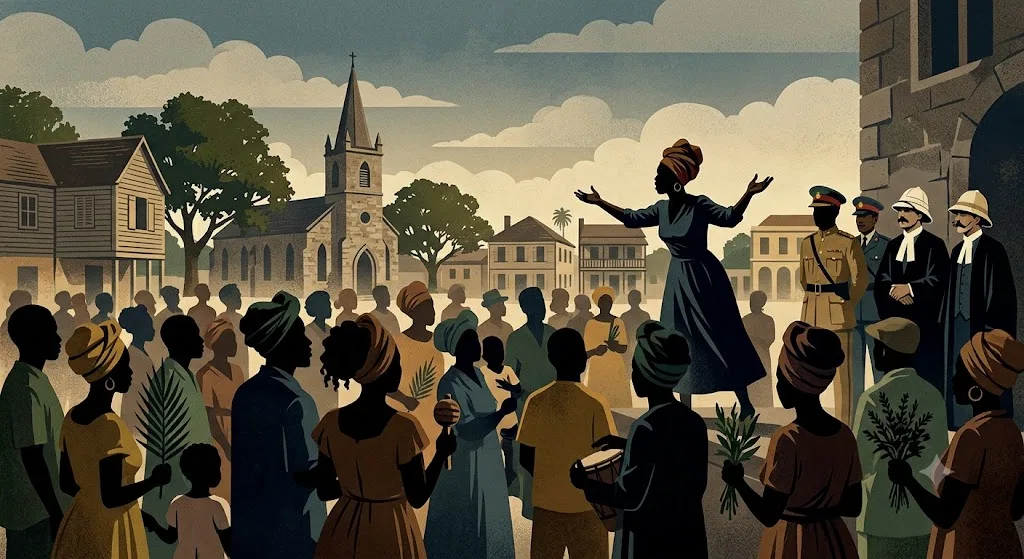
The decisive turning point was Tacky’s Revolt, which began in St Mary in April 1760 and developed into a prolonged conflict across Jamaica. Enslaved African rebels attacked military and plantation targets while Britain was already engaged in the Seven Years’ War. Historians now interpret the struggle not simply as a spontaneous plantation disturbance but as part of a wider Atlantic war against slavery, involving people with military and political experience acquired in Africa.[The Guardian]theguardian.comVincent Brown, a Harvard professor and author of a book about Tacky's revolt, was invited to Jamaica to participate in the second annual…
Colonial accounts emphasised the role of an obeah practitioner who reportedly administered oaths or protective substances and assured fighters that spiritual power would shield them from weapons. British forces made a spectacle of killing an important spiritual leader and displaying his body and ritual objects. Whether every colonial detail was accurate is difficult to establish, because the surviving narratives were largely produced by enslavers, officials and other hostile observers. What is clear is that the authorities understood spiritual leadership as part of the rebellion’s organisational power.[Redalyc.org]redalyc.orgThe Art of Power: Poison and Obeah Accusations and the…by ST Bryson · 2013 · Cited by 30 — Tacky's 1760 rebellion was purportedly one…
After the revolt, Jamaica’s legislature criminalised obeah and further restricted Black gatherings and movement. The point was not merely to protect individuals from alleged fraud or magical harm. Officials feared practices that could bind people through oaths, create confidence, circulate secret information and legitimise resistance. Obeah consequently became both a supernatural danger in popular imagination and a political category through which African-derived authority could be policed.[Digital Grainger]digital-grainger.github.ioOpen source on github.io.
From rebellion law to everyday persecution
The prohibition did not disappear with slavery. After emancipation in 1834, new legislation continued to criminalise obeah, first through vagrancy provisions and later through dedicated statutes. Jamaica’s 1854 Obeah Act allowed imprisonment and flogging, while the 1898 law was designed to make convictions easier. Its wording also drew myalism—an African-derived religious tradition often associated with healing, spirit possession and protection—into the criminal category.[Jamaica Gleaner]past.jamaica-gleaner.comJamaica Gleaner Diana Paton | The racist history of Jamaica's Obeah ActJamaica Gleaner Diana Paton | The racist history of Jamaica's Obeah Act
That legal history helped produce a durable social scare. Newspapers and court reports repeatedly presented accused practitioners through familiar props: bottles, powders, bones, graveyard material, written charms and mysterious packages. Such objects could be evidence of healing, religious practice, theatre, intimidation or fraud, depending on the case. Yet once called “obeah”, they were interpreted through a ready-made story of secrecy and danger.
The distinction between obeah and myalism was itself unstable. In some Jamaican traditions, myal practitioners were understood as healers or spiritual defenders who detected and removed harmful workings attributed to obeah. During the nineteenth century, organised myalist groups reportedly searched for buried charms, identified suspected spiritual attacks and performed public cleansing rituals. These campaigns could offer frightened communities a sense of protection, but they could also redirect suspicion towards alleged practitioners and turn personal misfortune into accusations of supernatural aggression.[The Library of Congress]loc.govOpen source on loc.gov.
Jamaica’s obeah law survived into the twenty-first century, although flogging provisions were removed in 2012. In 2025 a constitutional challenge argued that the statute violated rights including freedom of religion, conscience, privacy and expression. The dispute prompted renewed opposition from some Christian leaders, who portrayed repeal as official acceptance of demonic practice. By June 2026 the challenge was still generating public debate, showing that the old conflict between religious liberty, fear of fraud and supernatural alarm remains unresolved.[obeahhistories.org]obeahhistories.org1898 jamaica law1898 jamaica law
Alexander Bedward: prophet, reformer or failed messiah?
Alexander Bedward became one of Jamaica’s most influential religious leaders in the decades before the First World War. Based at August Town near Kingston, he led the Jamaica Native Baptist Free Church, commonly called the Bedwardite movement. His services combined Christian preaching, fasting, baptism, reported healing and elements of Jamaican Revival religion. The movement established branches across the island and attracted large numbers of working-class followers.[Jamaica Information Service]jis.gov.jmpreserving bedwards legacypreserving bedwards legacy
Bedward’s appeal cannot be understood by treating his followers as gullible devotees awaiting miracles. Post-emancipation Jamaica remained deeply unequal. Land, political influence, respectable churches and the colonial state were dominated by a narrow elite, while much of the Black population faced poverty and racial exclusion. Bedward preached that divine justice favoured the oppressed, criticised racial hierarchy and encouraged collective organisation. His church provided spiritual status and community to people who were marginalised elsewhere.
Reports of healing at the Hope River helped spread his reputation. For believers, baptism, prayer and sacred water offered both physical relief and recognition of suffering that established institutions often ignored. For critics, however, the same gatherings became evidence of fanaticism. Colonial authorities monitored Bedward partly because a charismatic Black leader commanding large crowds could be interpreted as a political danger even when a gathering was religious.
In 1895 he was arrested for sedition after speeches interpreted as encouraging racial confrontation. Rather than dealing only with the political content of his message, authorities committed him to an asylum. He later secured his release, but official claims of insanity followed him for the rest of his public life. Recent scholarship has challenged the easy reduction of Bedward to a mad prophet, placing him instead within Black nationalism, Revival religion and organised opposition to colonial inequality.[The Immanent Frame]tif.ssrc.orgThe Immanent Frame Prophetic blackness: The legendary tale of AlexanderThe Immanent Frame Prophetic blackness: The legendary tale of Alexander
The prophecy of flight
The event most often used to ridicule Bedwardism is Bedward’s reported promise to rise physically into heaven. Accounts disagree over details and dates, and later retellings have blended documented events with folklore. A widely repeated narrative says that on New Year’s Eve 1920 he sat in a chair placed in a tree while followers waited for an ascent that did not occur.[The Immanent Frame]tif.ssrc.orgThe Immanent Frame Prophetic blackness: The legendary tale of AlexanderThe Immanent Frame Prophetic blackness: The legendary tale of Alexander
The failed prophecy became a durable Jamaican joke, preserved in sayings and songs about Bedward flying. Yet the comic version flattens a longer crisis. Apocalyptic expectation had intensified during and after the First World War, a period of death, inflation, labour unrest and political disillusionment. Within that setting, divine intervention was not merely an eccentric prediction. It was an answer to a social order that seemed incapable of delivering justice.
In April 1921, Bedward and hundreds of followers marched towards Kingston. Authorities arrested many participants, and Bedward was again confined to an asylum, where he remained until his death in 1930. The movement declined, but its ideas and organisational experience did not simply vanish. Bedwardism helped normalise an explicitly Black Jamaican religious authority and anticipated themes later associated with Garveyism and Rastafari.
The episode is therefore both a genuine case of millenarian belief and an example of hostile mythmaking. Followers did invest hope in extraordinary prophecy. At the same time, elite accounts used the failed prediction to make the movement’s social criticism seem ridiculous. Remembering only the promised flight reproduces the perspective of those who wanted Bedward’s challenge dismissed.
Rastafari and the panic over a “dangerous cult”
Rastafari emerged in Jamaica during the 1930s amid economic distress, anti-colonial thought, Marcus Garvey’s influence and excitement surrounding the coronation of Haile Selassie I of Ethiopia. Early preachers declared the divinity or sacred importance of the Ethiopian emperor, condemned white supremacy and colonial rule, and called for spiritual or physical repatriation to Africa.
To mainstream newspapers, churches and officials, these teachings appeared seditious and irrational. The term “cult” was often applied not as a neutral description but as a warning that Rastafari lay outside respectable religion. Dreadlocked appearance, communal living, cannabis use and rejection of colonial authority made adherents conspicuous targets.
Leonard Howell, one of the movement’s formative leaders, was repeatedly arrested, prosecuted and confined. His preaching was treated as sedition, while his community at Pinnacle in St Catherine was subjected to police raids and ultimately broken up. Historical research argues that Howell’s suppression was not solely an operation of the colonial government: landowners, churches, newspapers and other social interests also participated in portraying his movement as threatening.[JSTOR]jstor.orgOpen source on jstor.org.
There were real disputes around Howell’s authority, money, land and community discipline, and Rastafari was never a single organisation under his control. Nevertheless, public fear commonly exaggerated the movement into a unified criminal conspiracy. Religious difference, Black self-assertion and opposition to the colonial order were merged with allegations of violence and disorder.
Coral Gardens and the consequences of collective suspicion
The most notorious result came after a violent confrontation near Coral Gardens, St James, in April 1963. Following the deaths of several people, including police officers, security forces launched a broad operation against Rastafari communities. Many people who had no demonstrated connection to the original violence were detained, beaten, humiliated or had their dreadlocks forcibly cut.
The response displayed the logic of moral panic. An identifiable minority was already portrayed as inherently dangerous; an actual crime then appeared to confirm the entire stereotype. Suspicion expanded from particular suspects to people whose hair, clothing or religious identity marked them as Rastafari.
For decades, survivors struggled to obtain official recognition. Jamaica’s public defender investigated the episode and recommended an apology, compensation and the creation of a cultural centre. In 2017 the Jamaican government formally apologised for the state-inflicted violence and announced a trust fund for survivors.[OHCHR]ohchr.orgafter more half century community receives justiceafter more half century community receives justice
Coral Gardens should not be described as mass hysteria in the narrow psychological sense. It was state violence following a real confrontation. Its relevance lies in the panic surrounding it: longstanding fear and dehumanising stereotypes allowed authorities to treat an entire religious community as a suspect population.
The later global popularity of reggae and Rastafari imagery can obscure how recently adherents were persecuted. Cultural acceptance did not develop because the original panic was well founded. It developed partly because Rastafari writers, musicians, lawyers and survivors successfully challenged the categories imposed upon them.
What happened at Oberlin High School?
On 26 October 2022, morning devotion at Oberlin High School in St Andrew escalated into a frightening group event. A teacher reportedly told pupils that she had received a message from God and began praying about behaviour and violence. Students then started shaking, crying, falling and fainting. Early reports quoted a staff member claiming that more than 200 pupils had collapsed, although the precise number was not independently established. Some students were taken to health centres and hospital, classes were dismissed, and videos rapidly circulated online.[Jamaica Observer]jamaicaobserver.comJamaica Observer Scores of students collapse at Oberlin HighJamaica Observer Scores of students collapse at Oberlin High
Interpretations divided almost immediately. Some staff and local worshippers described the event as an overpowering religious anointing. Others believed pupils were being attacked by demons. One church member publicly described praying over a girl whose expression and behaviour she regarded as evidence of an evil force. Meanwhile, politicians and parents asked whether a chemical or environmental cause might have been involved, although no such cause was confirmed in the initial reporting.[Jamaica Observer]jamaicaobserver.comJamaica Observer WATCH: Church sister gets 'in spirit' over 'fierce-lookingJamaica Observer WATCH: Church sister gets 'in spirit' over 'fierce-looking
The acting principal suggested that some pupils had entered intense worship while others became frightened by what they saw. That observation is important because it describes a possible route of contagion without accusing anyone of pretending. In a crowded, emotionally charged setting, one person’s collapse can increase the fear, breathing changes, dizziness and loss of control experienced by others.
Mass psychogenic illness is the rapid spread of genuine physical symptoms through a connected group when investigation does not identify an adequate toxic, infectious or structural cause. It is often associated with stress, strong social bonds, alarming interpretations and close observation of others’ symptoms. Fainting, trembling, breathlessness, nausea and weakness are common features. The term does not mean that symptoms are fabricated or that those affected are mentally ill.[PMC]pmc.ncbi.nlm.nih.govPMCMass psychogenic illness and the social networkPMCMass psychogenic illness and the social network
However, the public evidence from Oberlin is insufficient to declare a confirmed medical diagnosis. News reports documented the collapses and competing explanations, but no detailed epidemiological investigation or published clinical study established mass psychogenic illness. It is therefore more accurate to call Oberlin a possible psychogenic or socially contagious episode than a proven case.
The Ministry of Education’s practical response was to reduce the conditions that could trigger further alarm. Education Minister Fayval Williams advised the school to pause mass devotions, use simpler classroom-based worship and allow pupils to regain calm. She also stressed that Jamaican schools serve children from different religious backgrounds.[Jamaica Observer]jamaicaobserver.comJamaica Observer WATCH: 'No mass devotions' – Fayval Williams tellsJamaica Observer WATCH: 'No mass devotions' – Fayval Williams tells
That response avoided a direct theological judgement. Officials did not have to decide whether an anointing or demonic force existed; they could address crowd size, emotional intensity, safeguarding and the need for medical assessment. This is often the most constructive approach when spiritual and psychological explanations compete.
Why these beliefs spread
Jamaica’s best-documented scares and prophetic movements arose under very different conditions, but several mechanisms recur.
Collective belief offered protection where institutions did not. Enslaved people facing extreme violence had little reason to trust plantation law. Poor congregations in colonial Jamaica had limited access to political power or medical care. Spiritual healers, prophets and communal rituals offered practical help, emotional meaning and a language of justice.
Visible emotion made invisible claims persuasive. Trance, healing testimony, fainting, possession and ecstatic worship provide powerful social evidence. When people see others shaking, collapsing or recovering, the event can feel more convincing than an abstract explanation. The response may spread through expectation, empathy, fear or shared ritual participation.
Rumour converted uncertainty into a recognisable story. Unexplained illness could become an obeah attack; a dissident preacher could become a fraudulent messiah; an unfamiliar religious minority could become a criminal conspiracy. Such explanations spread because they link ambiguous events to existing cultural fears.
Authority amplified some interpretations and suppressed others. Colonial law did not merely respond to belief. It helped create the category of dangerous obeah. Newspapers and churches reinforced images of Bedwardites and Rastafari as unstable or threatening. At Oberlin, viral videos and immediate spiritual commentary gave viewers a dramatic explanation before medical evidence could be assembled.
Social conflict hid inside supernatural language. Disputes described as battles between God and demons often also concerned race, class, land, generation, political authority or respectability. The supernatural claim should not be treated as a disguise that believers did not really mean. Rather, religious and social meanings operated together.

What Jamaica’s panic history teaches
The central lesson is that unusual belief is not itself evidence of collective madness. Tacky’s rebels were engaged in organised resistance, not a delusion. Bedwardism combined apocalyptic expectation with a serious programme of racial and social protest. Rastafari was persecuted because authorities treated religious and political difference as proof of danger. Oberlin High, by contrast, may have involved genuine psychological contagion, but the available evidence does not justify a firm diagnosis.
The term “cult” is especially unreliable across this history. It has been applied to groups because they followed charismatic leaders, rejected established churches or frightened political authorities. Some movements undoubtedly involved failed prophecies, concentrated leadership or demands for sacrifice from followers. Those features deserve scrutiny. Yet hostile labelling can also make repression appear reasonable and prevent outsiders from seeing why a movement attracted support.
“Mass hysteria” presents a similar problem. Used carelessly, it turns frightened or suffering people into a spectacle and suggests that nothing real occurred. In mass psychogenic illness, symptoms are real even when they are not produced by poison or infection. In moral panics, the fear is real even when the alleged conspiracy is exaggerated. In persecution, the danger may lie less in the minority being feared than in what institutions do under the influence of that fear.
Jamaica’s experience therefore requires distinctions rather than a single dramatic theory. Obeah scares grew from slavery, rebellion and religious criminalisation. Bedwardism channelled millenarian hope and Black political protest. The panic surrounding Rastafari converted prejudice into police violence. The Oberlin incident showed how quickly intense worship, physical symptoms, fear and social media can reinforce one another.
Together, these cases reveal a society repeatedly debating where religion ends and deception begins, when spiritual experience becomes a public-safety issue, and whether authorities are protecting vulnerable people or enforcing the prejudices of the powerful.
Amazon book picks
Further Reading
Books and field guides related to Who Decided Which Jamaican Beliefs Were Dangerous?. Use these as the next step if you want deeper reading beyond the article.
The Black Jacobins
Provides essential Caribbean context on slavery, resistance and colonial power.
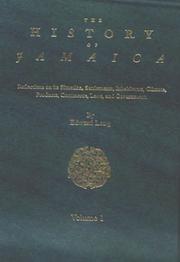
The history of Jamaica
Influential colonial account central to understanding official attitudes.

A Brief History of the Caribbean
Places Jamaican religious and political history in regional context.

Endnotes
1.
Source: time.com
Link:https://time.com/5766781/slave-insurrection-atlantic-world/
Source snippet
Apongo, initially a military leader in West Africa, was captured and sold into slavery, eventually arriving in Jamaica. He began plotting...
2.
Source: redalyc.org
Link:https://www.redalyc.org/pdf/392/39230911003.pdf
Source snippet
The Art of Power: Poison and Obeah Accusations and the...by ST Bryson · 2013 · Cited by 30 — Tacky's 1760 rebellion was purportedly one...
3.
Source: past.jamaica-gleaner.com
Title: Jamaica Gleaner Diana Paton | The racist history of Jamaica’s Obeah Act
Link:https://past.jamaica-gleaner.com/article/news/20190616/diana-paton-racist-history-jamaicas-obeah-act
4.
Source: past.jamaica-gleaner.com
Title: evolution myalism part 2
Link:https://past.jamaica-gleaner.com/article/news/20150530/evolution-myalism-part-2
5.
Source: christiandaily.com
Link:https://www.christiandaily.com/news/jamaican-church-leaders-push-back-against-efforts-to-legalize-spiritual-practice-of-obeah
6.
Source: jstor.org
Link:https://www.jstor.org/stable/24713439
7.
Source: ohchr.org
Title: after more half century community receives justice
Link:https://www.ohchr.org/en/stories/2017/05/after-more-half-century-community-receives-justice
8.
Source: pmc.ncbi.nlm.nih.gov
Title: PMCMass psychogenic illness and the social network
Link:https://pmc.ncbi.nlm.nih.gov/articles/PMC3536509/
9.
Source: past.jamaica-gleaner.com
Title: keeping devotions simple much more helpful
Link:https://past.jamaica-gleaner.com/article/news/20221030/keeping-devotions-simple-much-more-helpful
10.
Source: past.jamaica-gleaner.com
Title: general devotions suspended oberlin high
Link:https://past.jamaica-gleaner.com/article/lead-stories/20221101/general-devotions-suspended-oberlin-high
11.
Source: jeromehandler.com
Title: Jerome Handler Obeah
Link:https://jeromehandler.com/wp-content/uploads/Obeah_healing_Bilby-04.pdf
Source snippet
Jerome HandlerObeah: - Healing and Protection in West Indian Slave ife elAugust 18, 2009 — by KM BILBY · 2004 · Cited by 139 — Obeah enco...
Published: August 18, 2009
12.
Source: theguardian.com
Link:https://www.theguardian.com/news/2024/mar/26/historic-revolt-forgotten-hero-empty-plinth-jamaica-slavery-chief-tacky
Source snippet
Vincent Brown, a Harvard professor and author of a book about Tacky's revolt, was invited to Jamaica to participate in the second annual...
13.
Source: digital-grainger.github.io
Link:https://digital-grainger.github.io/grainger/excerpts/obeah.html
14.
Source: obeahhistories.org
Title: 1898 jamaica law
Link:https://obeahhistories.org/1898-jamaica-law/
15.
Source: loc.gov
Link:https://www.loc.gov/item/hlas-bi81101047/
16.
Source: jamaicaobserver.com
Title: obeah battle
Link:https://www.jamaicaobserver.com/2026/06/09/obeah-battle/
17.
Source: jis.gov.jm
Title: preserving bedwards legacy
Link:https://jis.gov.jm/preserving-bedwards-legacy/
18.
Source: tif.ssrc.org
Title: The Immanent Frame Prophetic blackness: The legendary tale of Alexander
Link:https://tif.ssrc.org/2022/04/22/prophetic-blackness/
19.
Source: jis.gov.jm
Link:https://jis.gov.jm/government-apologises-victims-coral-gardens/
20.
Source: jamaicaobserver.com
Title: Jamaica Observer Scores of students collapse at Oberlin High
Link:https://www.jamaicaobserver.com/2022/10/26/scores-of-students-collapse-at-oberlin-high/
21.
Source: jamaicaobserver.com
Title: strange very strange
Link:https://www.jamaicaobserver.com/2022/10/27/strange-very-strange/
22.
Source: jamaicaobserver.com
Title: Jamaica Observer WATCH: Church sister gets ‘in spirit’ over ‘fierce-looking’
Link:https://www.jamaicaobserver.com/2022/10/26/watch-church-sister-gets-in-spirit-over-fierce-looking-oberlin-schoolgirl/
23.
Source: jamaicaobserver.com
Title: Jamaica Observer WATCH: ‘No mass devotions’ – Fayval Williams tells
Link:https://www.jamaicaobserver.com/2022/10/31/watch-no-mass-devotions-fayval-williams-tells-oberlin-high-admin-to-keep-worship-in-classrooms/
24.
Source: pmc.ncbi.nlm.nih.gov
Link:https://pmc.ncbi.nlm.nih.gov/articles/PMC7396040/
25.
Source: Wikipedia
Link:https://en.wikipedia.org/wiki/Obeah
26.
Source: Wikipedia
Title: Mass psychogenic illness
Link:https://en.wikipedia.org/wiki/Mass_psychogenic_illness
27.
Source: Wikipedia
Title: Leonard Howell
Link:https://en.wikipedia.org/wiki/Leonard_Howell
28.
Source: Wikipedia
Title: Alexander Bedward
Link:https://en.wikipedia.org/wiki/Alexander_Bedward
29.
Source: Wikipedia
Link:https://en.wikipedia.org/wiki/Myal
30.
Source: moey.gov.jm
Title: MOEY Sectoral Presentation Fayval Williams 17.5.23 Inside
Link:https://moey.gov.jm/wp-content/uploads/2023/05/MOEY-Sectoral-Presentation-Fayval-Williams-17.5.23-Inside.pdf
31.
Source: theguardian.com
Title: carol morley the falling mass hysteria is a powerful group activity
Link:https://www.theguardian.com/film/2015/mar/29/carol-morley-the-falling-mass-hysteria-is-a-powerful-group-activity
32.
Source: theguardian.com
Title: satanic panic british agents stoked fears troubles
Link:https://www.theguardian.com/uk-news/2014/oct/09/satanic-panic-british-agents-stoked-fears-troubles
33.
Source: obeahhistories.org
Title: 1760 jamaica law
Link:https://obeahhistories.org/1760-jamaica-law/
Additional References
34.
Source: newyorker.com
Link:https://www.newyorker.com/magazine/2020/01/27/the-long-war-against-slavery
Source snippet
It delves into the history of slavery in Jamaica, particularly focusing on Tacky’s Revolt, one of the largest slave uprisings of the 18th...
35.
Source: historyworkshop.org.uk
Link:https://www.historyworkshop.org.uk/empire-decolonisation/the-racist-history-of-jamaicas-[obeah-laws
Source snippet
History WorkshopThe Racist History of Jamaica's Obeah Laws21 Jan 2023 — The first stand-alone Obeah Act, passed in 1854, made obeah a cri...
36.
Source: youtube.com
Title: Remembering the Coral Gardens Massacre | The Africa Forum: Running African
Link:https://www.youtube.com/watch?v=EalImFJ_DXY
Source snippet
THE GLEANER MINUTE: Chaos at Oberlin High | Fraud at Sagicor bank | Airport woes...
37.
Source: youtube.com
Title: THE GLEANER MINUTE: Chaos at Oberlin High | Fraud at Sagicor bank | Airport woes
Link:https://www.youtube.com/watch?v=G2x3zH7Vk-w
Source snippet
Tacky's Revolt: The Story of an Atlantic Slave War...
38.
Source: youtube.com
Title: Alexander Bedward: The Prophet Who Terrified Colonial Jamaica
Link:https://www.youtube.com/watch?v=riZpj6TuPnE
Source snippet
Remembering the Coral Gardens Massacre | The Africa Forum: Running African...
39.
Source: youtube.com
Title: Tacky’s Revolt: The Story of an Atlantic Slave War
Link:https://www.youtube.com/watch?v=Mp4PaBfWmoE
Source snippet
Guard Ring & Obeah: Beliefs That Still Shape Jamaica Today...
40.
Source: legit.ng
Link:https://www.legit.ng/people/1500398-viral-video-shows-moment-students-collapsed-devotion-jamaica-high-school-stirs-reactions/
41.
Source: degruyterbrill.com
Link:https://www.degruyterbrill.com/document/doi/10.1515/9780822396031-004/html?srsltid=AfmBOopxDia9dr7OZNH_6pHBM8HOEyFzIELyUM7rXcoc6rVgi-uzq11u
42.
Source: researchgate.net
Link:https://www.researchgate.net/publication/271759288_Mass_hysteria_among_South_African_primary_school_learners_in_Kwa-Dukuza_KwaZulu-Natal
43.
Source: researchgate.net
Link:https://www.researchgate.net/publication/319088941_Slavery_and_the_Enlightenment_in_Jamaica_and_the_British_Empire_1760-1772_The_Afterlife_of_Tacky%27s_Rebellion_and_the_Origins_of_British_Abolitionism
Topic Tree
Follow this branch
Related pages 192
- Antigua and Barbuda
- Argentina Belief Scares
- Azerbaijan Belief
- Bahrain Beliefs
- North Korea
- +187 more in sidebar