Within Micronesian Beliefs
Was It Really Mass Hysteria?
Fragmented colonial records make it easy to mistake local religious practices, family crises and hostile labelling for mass hysteria.
On this page
- How colonial observers described indigenous religion
- The difference between possession, panic and psychogenic illness
- What the surviving evidence can and cannot prove
Page outline Jump by section
Introduction
Claims that the Federated States of Micronesia has a history of repeated episodes of “mass hysteria” deserve careful scrutiny. The surviving evidence is fragmentary, unevenly recorded and filtered through colonial, missionary and later academic interpretations. Many reports from Yap, Chuuk, Pohnpei and Kosrae describe spirit possession, healing rituals or religious change, but these are not automatically examples of collective psychological contagion. In many cases, the historical record is simply too limited to distinguish between indigenous religious practice, individual distress, family conflict, political resistance or what modern medicine would call mass psychogenic illness. The safest conclusion is not that Micronesians repeatedly experienced “mass hysteria”, but that later observers often applied labels that reflected their own assumptions as much as the events themselves.[OUP Academic]academic.oup.comOUP AcademicColonial and Postcolonial Spirits: States of Possession and Culture History in Polynesia and Micronesia | Ideas of Possession…
Was It Really Mass Hysteria?
The phrase “mass hysteria” has often been used loosely in older writing to describe unfamiliar religious behaviour, dramatic emotional displays or reports of spirit possession. Modern historians, anthropologists and psychologists are much more cautious.
A diagnosis of mass psychogenic illness normally requires detailed evidence that physical symptoms spread through a connected group without an identifiable organic cause. Such evidence rarely exists for nineteenth- or early twentieth-century Micronesia. Most reports consist of brief observations by missionaries, administrators or travellers who had limited knowledge of local languages and belief systems.[Micsem]micsem.orgDistribution of Spirit Possession and Trance in Micronesia – Micronesian SeminarDistribution of Spirit Possession and Trance in Micronesia – Micronesian Seminar…
This matters because several very different phenomena can appear superficially similar:
- a recognised religious ritual involving trance or possession;
- an individual possession experience interpreted through local belief;
- collective fear during political or environmental crisis;
- family or community conflict expressed through religious language;
- genuine episodes of psychogenic illness.
Without detailed contemporary evidence, treating all of these as the same phenomenon risks misunderstanding both the history and the people involved.
How Colonial Observers Described Indigenous Religion
Much of what is known about early Micronesian religious life comes from Spanish, German, Japanese and later American observers. Their records are invaluable, but they were written for colonial or missionary audiences rather than as neutral ethnographic studies.
Missionaries commonly viewed indigenous spiritual practices as evidence of paganism, superstition or demonic influence. Colonial officials sometimes interpreted ecstatic behaviour as disorder or irrationality. Such descriptions reflected European religious and medical assumptions that differed sharply from local understandings.[OUP Academic]academic.oup.comOUP AcademicColonial and Postcolonial Spirits: States of Possession and Culture History in Polynesia and Micronesia | Ideas of Possession…
Translation adds another layer of uncertainty. Historical documents use overlapping terms such as “priest”, “medium”, “oracle”, “diviner” and “healer”, often without explaining precisely how these roles functioned. Modern researchers have noted that reports survive in Spanish, German and English, with inconsistent terminology carried across translations. This makes it difficult to compare accounts directly or reconstruct exactly what witnesses observed.[Micsem]micsem.orgDistribution of Spirit Possession and Trance in Micronesia – Micronesian SeminarDistribution of Spirit Possession and Trance in Micronesia – Micronesian Seminar…
Because of these limitations, dramatic descriptions of “frenzy” or “hysteria” may tell us as much about colonial expectations as about Micronesian religious practice itself.

The Difference Between Possession, Panic and Psychogenic Illness
Research on Micronesian spirit possession illustrates why careful distinctions matter.
Francis X. Hezel and Jay Dobbin’s comparative study argues that the observable behaviour—such as altered voice, shaking or trance—should be separated from the cultural explanation given to it. The physical behaviour can be described neutrally as an altered state of consciousness, while whether it represents ancestral spirits, illness or something else depends on the cultural framework of those involved.[Micsem]micsem.orgDistribution of Spirit Possession and Trance in Micronesia – Micronesian SeminarDistribution of Spirit Possession and Trance in Micronesia – Micronesian Seminar…
Their work also shows that many contemporary possession episodes in Chuuk and elsewhere were associated with personal or family stress rather than contagious outbreaks affecting entire communities. Researchers interpreted these cases as culturally recognised ways of expressing distress and negotiating family tensions, not as evidence of a population-wide psychological epidemic.[Micsem]micsem.orgPossession and Trance in Chuuk – Micronesian SeminarPossession and Trance in Chuuk – Micronesian Seminar…
More recent scholarship likewise argues that possession traditions changed after Christianisation and colonial rule. Practices once associated with respected ritual specialists increasingly became understood as involuntary experiences, particularly among young women, reflecting wider social and religious transformations rather than simple outbreaks of irrational belief.[OUP Academic]academic.oup.comOUP AcademicColonial and Postcolonial Spirits: States of Possession and Culture History in Polynesia and Micronesia | Ideas of Possession…
None of this rules out the possibility that some episodes included elements of psychological contagion. It does mean that applying the label “mass hysteria” without close examination obscures important cultural differences.
What the Surviving Evidence Can and Cannot Prove
The historical record varies greatly between the four states of the Federated States of Micronesia.
Yap, Chuuk, Pohnpei and Kosrae were documented by different colonial administrations, at different times and with different priorities. Some islands have comparatively rich ethnographic records, while others appear only briefly in explorers’ journals or missionary correspondence. Entire decades are poorly documented, making long-term patterns difficult to establish.[Micsem]micsem.orgDistribution of Spirit Possession and Trance in Micronesia – Micronesian SeminarDistribution of Spirit Possession and Trance in Micronesia – Micronesian Seminar…
The evidence does support several cautious conclusions:
- Spirit possession traditions existed across much of Micronesia before extensive European colonisation.
- These traditions changed significantly under Christianity and colonial administration.
- Involuntary possession became more prominent in many areas during the twentieth century.
- Individual episodes were frequently connected with family conflict, bereavement or personal stress.
However, the evidence does not support equally confident claims that:
- Micronesia experienced repeated nationwide outbreaks of mass hysteria.
- all possession accounts were examples of psychological illness;
- colonial descriptions accurately captured indigenous interpretations;
- isolated reports can be retrospectively diagnosed using modern psychiatric categories.[Micsem]micsem.orgDistribution of Spirit Possession and Trance in Micronesia – Micronesian SeminarDistribution of Spirit Possession and Trance in Micronesia – Micronesian Seminar…
Why Careful Interpretation Matters
Using “mass hysteria” as a catch-all label risks flattening a complex history into a misleading stereotype. It can imply that island communities reacted irrationally when many episodes were embedded in coherent religious traditions, responses to colonial disruption or culturally recognised ways of expressing distress.
Modern scholarship instead encourages asking more precise questions. Who applied the label? What behaviour was actually observed? How did participants explain the event? What political, religious or family pressures were present? And does the surviving evidence genuinely support a diagnosis of collective psychological contagion?
For Micronesia, these questions usually lead to a more nuanced picture. Rather than revealing a history dominated by mass hysteria, the surviving records show societies adapting long-standing spiritual traditions to profound social change while outside observers struggled to interpret practices that did not fit familiar Western categories.[oup.com]academic.oup.comOUP AcademicColonial and Postcolonial Spirits: States of Possession and Culture History in Polynesia and Micronesia | Ideas of Possession…
Amazon book picks
Further Reading
Books and field guides related to Was It Really Mass Hysteria?. Use these as the next step if you want deeper reading beyond the article.
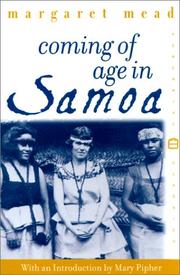
Coming of age in Samoa
First published 1928. Subjects: Adolescence, Children, Children in the Samoan Islands, Girls, Psychology.
Illness as metaphor
First published 1978. Subjects: AIDS (Disease), Acquired Immunodeficiency Syndrome, Cancer, Cancer in literature, Literature.
The Elementary Forms Of Religious Life
First published 2008. Subjects: Sociology, philosophy, Religion and sociology, Sociology, Philosophy, Long Now Manual for Civilization.
Interpretation of Cultures
First published 1973. Subjects: Culturele antropologie, Culture, Ethnology, Ethnologie, Ethnolo.
Endnotes
1.
Source: academic.oup.com
Link:https://academic.oup.com/book/58134/chapter/480190450
Source snippet
OUP AcademicColonial and Postcolonial Spirits: States of Possession and Culture History in Polynesia and Micronesia | Ideas of Possession...
2.
Source: micsem.org
Title: Distribution of Spirit Possession and Trance in Micronesia – Micronesian Seminar
Link:https://micsem.org/article/distribution-of-spirit-possession-and-trance-in-micronesia/
Source snippet
Distribution of Spirit Possession and Trance in Micronesia – Micronesian Seminar...
3.
Source: micsem.org
Link:https://micsem.org/article/spirit-possession-in-chuuk-a-socio-cultural-interpretation/
Source snippet
Spirit Possession in Chuuk: A Socio-Cultural Interpretation – Micronesian Seminar...
4.
Source: micsem.org
Title: Possession and Trance in Chuuk – Micronesian Seminar
Link:https://micsem.org/article/possession-and-trance-in-chuuk/
Source snippet
Possession and Trance in Chuuk – Micronesian Seminar...
5.
Source: academic.oup.com
Link:https://academic.oup.com/book/58134/chapter-abstract/480190450
Source snippet
and Postcolonial Spirits: States of Possession and Culture History in Polynesia and Micronesia | Ideas of Possession: Interdisciplinary a...
6.
Source: micsem.org
Link:https://micsem.org/micronesian-counselo/spirit-possession-in-chuuk-socio-cultural-interpretation/?id=1983&type=micronesian-counselo
7.
Source: micsem.org
Link:https://micsem.org/article/congeries-of-spirits/?id=2065&type=article%3Fid%3D2055%3Fid%3D2088%3Fid%3D2052%3Fid%3D285264%3Fid%3D2072%3Fid%3D2088%3Fid%3D221716%3Fid%3D192290%3Fid%3D2052%3Fid%3D190729%3Fid%3D1999%3Fid%3D1999%3Fid%3D1999%3Fid%3D2032%3Fid%3D2087%3Fid%3D2032%3Fid%3D2087%3Fid%3D2021%3Fid%3D2060%3Fid%3D2065
Additional References
8.
Source: youtube.com
Title: What Is It: Fairy Tales or History? | Francis Hezel | TEDx Hagatna
Link:https://www.youtube.com/watch?v=APZeKS3FE8Y
Source snippet
The Truth About Havana Syndrome & Mass Psychogenic Illness ~ Medical Sociologist Robert Bartholomew...
9.
Source: youtube.com
Link:https://www.youtube.com/watch?v=CDnEHQ3mL4M
Source snippet
Tarantism - Dance or Die - History Documentary...
10.
Source: onlinelibrary.wiley.com
Title: j.1440 1819.2002.01069.x
Link:https://onlinelibrary.wiley.com/doi/full/10.1046/j.1440-1819.2002.01069.x
Source snippet
The mass hysteria emerged in the context of the strong religious and cultural beliefs hel...
11.
Source: link.springer.com
Link:https://link.springer.com/chapter/10.1057/978-1-137-60095
Source snippet
springer.com‘Mass Hysteria’ in the Wake of Decolonisation | Springer Nature LinkDecember 7, 2018 — In describing the behaviour of the ama...
Published: December 7, 2018
12.
Source: youtube.com
Title: History of Micronesia Part II: Foreign Flag
Link:https://www.youtube.com/watch?v=O4k9IISB8SI
Source snippet
What Is It: Fairy Tales or History? | Francis Hezel | TEDxHagatna...
13.
Source: youtube.com
Title: History of Micronesia Part I: Early Encounters
Link:https://www.youtube.com/watch?v=qKe-X1OtrXQ
Source snippet
History of Micronesia Part II: Foreign Flag...
14.
Source: lir.byuh.edu
Title: The Distribution of Spirit Possession and Trance in Micronesia
Link:https://lir.byuh.edu/index.php/pacific/article/download/141/133/244
15.
Source: friendsoftobi.org
Title: The Distribution of Spirit Possession and Trance in Micronesia
Link:https://www.friendsoftobi.org/tobithenandnow/ifiridoitch/hezelanddobbins1996.htm
16.
Source: pubmed.ncbi.nlm.nih.gov
Link:https://pubmed.ncbi.nlm.nih.gov/9601200/
17.
Source: pubmed.ncbi.nlm.nih.gov
Link:https://pubmed.ncbi.nlm.nih.gov/9988854/
Topic Tree