When Belief, Fear and Miracle Gripped Ireland
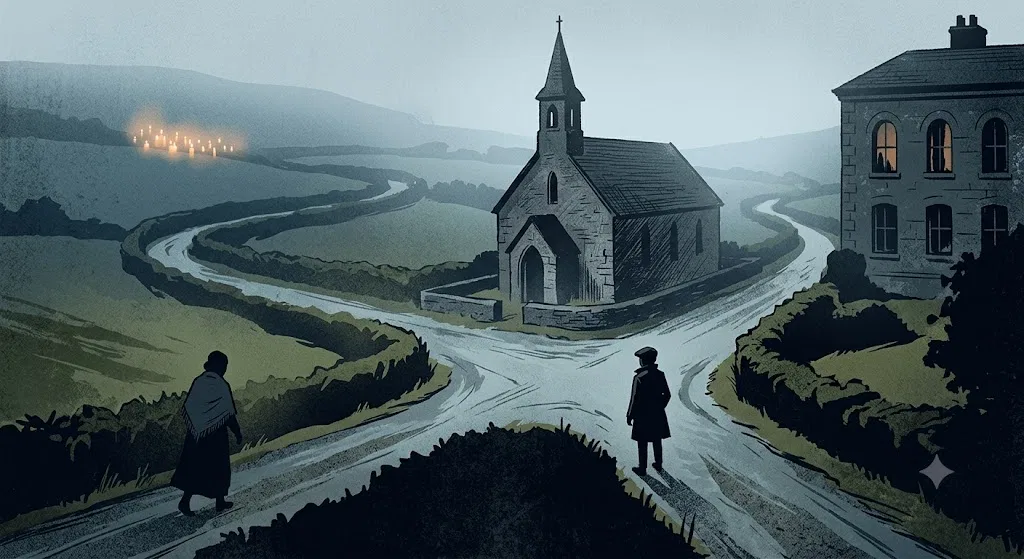
Ireland’s history of collective belief and fear is not one continuous story of “mass hysteria”. It is a collection of very different episodes: medieval witchcraft prosecutions, a fatal belief in a fairy changeling, Marian apparitions, moving statues, fears of satanic cults and public hostility towards unfamiliar religious communities.
Page outline Jump by section
Introduction
The most revealing cases show how extraordinary claims spread through ordinary social channels. Family testimony, sermons, newspapers, television, pilgrimage networks and political speeches could make a local event feel nationally urgent. Yet Ireland also stands out for what did not happen. Despite strong traditions of supernatural belief, it experienced nothing comparable to the vast witch-hunts of Scotland or continental Europe. The evidence therefore demands careful distinctions: belief is not the same as delusion, an apparition is not automatically a panic, and a group described by opponents as a “cult” may be unconventional without being criminal.
Why Ireland avoided a large witch-hunt
Witchcraft accusations existed in Ireland, but prosecutions were relatively rare. Irish communities often interpreted misfortune through magic, curses, fairies or divine punishment, yet such suspicions did not usually develop into sustained judicial campaigns. Historians have consequently questioned the old idea that Ireland was somehow “immune” to witch-hunting. The more convincing explanation is that beliefs were present but were handled through family pressure, clerical intervention, counter-magic and informal community action more often than through courts.
Political and religious fragmentation also mattered. English witchcraft statutes operated unevenly, while Gaelic customs, Catholic practice and Protestant legal culture did not form a single system capable of generating the intensive local investigations seen elsewhere. Scotland, by contrast, developed stronger mechanisms for interrogating suspects and extending accusations from one alleged witch to another. Modern research therefore treats Ireland’s low prosecution rate not as evidence of unusually rational attitudes, but as the outcome of distinctive legal, political and denominational conditions.[researchgate.net]researchgate.netResearchGate(PDF) Witchcraft Belief and Trials in Early Modern IrelandThis article charts a decade-long project on the trial of the Islan…
Alice Kyteler and the politics of heresy
The best-known medieval case began in Kilkenny in 1324. Alice Kyteler, a wealthy woman who had married four times, was accused of sorcery, heresy and involvement with a demon. The proceedings were driven by Richard de Ledrede, Bishop of Ossory, whose campaign collided with the interests of local officials and powerful families. Kyteler escaped, while her servant Petronilla de Meath was tortured and executed.
This was not a popular panic spreading spontaneously through the countryside. It was a conflict involving property, inheritance, episcopal authority and the extension of continental ideas about organised demonic heresy into Ireland. Accusations against Kyteler included elements that would later become familiar in European witch trials, but her prosecution did not set off a nationwide hunt. The case matters because it shows how elite rivalries and imported legal theories could turn allegations of harmful magic into a far more elaborate conspiracy narrative.[kilkennyheritage.ie]kilkennyheritage.ieKilkenny Witch TrialsThe Kilkenny Witch Trial Short Video Series; The darkest chapter in Irish history · The Kilkenny Witchcraft Trial 1…
Islandmagee, 1711: Ireland’s last mass witch trial
Ireland’s most substantial witchcraft prosecution occurred at Carrickfergus in County Antrim in 1711. Eighteen-year-old Mary Dunbar accused eight women from Islandmagee and nearby districts of attacking her in spirit form and causing demonic possession. Accounts described fits, blasphemy, aversion to clergy and the apparent production of pins, buttons, nails, glass and other objects from her body. The women were convicted under Ireland’s witchcraft legislation and sentenced to imprisonment and public punishment. A man, William Sellor, was convicted later that year in a related proceeding.[w1711.org]w1711.orgOpen source on w1711.org.
The accused were vulnerable figures rather than members of a coherent conspiracy. Historical reconstruction suggests that disability, poverty, smoking, drinking, quarrelsome reputations and associations with popular magic helped make them plausible “witches” to their neighbours. The trial took place within a largely Presbyterian settler community at a time of political insecurity, religious division and continuing fear of disorder after the Williamite conflict.[ulster.ac.uk]ulster.ac.ukOpen source on ulster.ac.uk.
The surviving record is incomplete, partly because original legal documents were lost. Claims about exactly what happened to every defendant must therefore remain cautious. What is clear is that the case combined a young woman’s dramatic symptoms, local grievances, clerical interpretations and a court willing to accept spectral accusations. It was a genuine prosecution, not a later folktale, but modern retellings sometimes exaggerate its similarity to Salem. Ireland did not experience a chain reaction of further trials. Islandmagee was an exceptional eruption, not the culmination of a national witch-hunt.

When fairy belief became lethal
The killing of Bridget Cleary in County Tipperary in March 1895 is often described inaccurately as Ireland’s last witch-burning. Cleary was not prosecuted as a witch, nor was she executed by the state. She was an independent, economically active woman who became seriously ill. Her husband Michael, several relatives and neighbours came to believe, or claimed to believe, that she had been taken by fairies and replaced by a changeling.
Over several days, Cleary was subjected to coercive rituals intended to force the supposed substitute to reveal itself. She was questioned, restrained and given harsh remedies. On 15 March she was killed and her body burned. Michael Cleary continued to expect that his real wife would return from a nearby fairy place. Her remains were found a week later, and several participants were prosecuted.[nih.gov]pubmed.ncbi.nlm.nih.govOpen source on nih.gov.
Calling this simply “superstition” can obscure the social forces surrounding the crime. Cleary’s illness created fear and uncertainty, while changeling traditions supplied a ready explanation for changes in her appearance or behaviour. Family members reinforced one another’s suspicions, and ritual specialists or neighbours gave the belief practical form. Some psychiatric writers have interpreted the episode as a delusion shared among several people, although historians warn that a retrospective diagnosis cannot settle motives that were also shaped by marital conflict, gender, property and community pressure.[nih.gov]pubmed.ncbi.nlm.nih.govOpen source on nih.gov.
The press turned the case into a national argument about Irish modernity. Opponents of Home Rule could present it as proof that rural Catholics were too irrational to govern themselves. That framing converted a woman’s murder into a political stereotype about an entire population. Later descriptions of Cleary as a “witch” continued the distortion: the central belief was that she had been replaced by a fairy being, not that she had entered a pact with Satan.
The case remains culturally important because it exposes the danger of a belief becoming self-sealing. Cleary’s protests could be taken as evidence that the changeling was lying; her illness could be treated as proof of supernatural substitution; resistance to the ritual could justify more violence. Once the accusation had been accepted, almost any response could reinforce it.
Apparitions, pilgrimage and the search for miracles
Extraordinary religious experiences should not automatically be classified as hysteria. Ireland’s apparitions and miracle claims arose within established Catholic traditions, and many participants understood them as acts of devotion rather than symptoms of fear. Nevertheless, they belong in this history because they reveal how testimony, expectation and mass attention can transform a local experience into a national event.
Knock in 1879
On the rainy evening of 21 August 1879, witnesses in Knock, County Mayo, reported seeing a silent tableau beside the gable of the parish church. They described the Virgin Mary, Saint Joseph, Saint John the Evangelist, an altar, a lamb and a cross. Fifteen recognised witnesses, ranging from children to older adults, later gave testimony to an ecclesiastical commission. The reported figures did not speak or move, and the witnesses remained at the site for an extended period.[historyireland.com]historyireland.comHistory Ireland The Cusack Papers; new evidence on the Knock apparitionHistory Ireland The Cusack Papers; new evidence on the Knock apparition
The commission judged the witnesses’ evidence trustworthy, although that was an ecclesiastical assessment of testimony rather than scientific proof of a supernatural event. A second inquiry in the 1930s revisited the accounts through surviving witnesses, relatives, devotional publications and press material. Knock subsequently became one of Ireland’s principal pilgrimage destinations.[Knock Shrine]knockshrine.ieOpen source on knockshrine.ie.
Several conditions helped the story resonate. The west of Ireland had endured famine, poverty, eviction and agrarian tension within living memory. Catholic public life had expanded after emancipation, while pilgrimage offered both spiritual consolation and collective identity. Some historians have also examined the role of clergy, newspapers and devotional publishing in shaping the public version of the event. None of this proves that the witnesses fabricated their experience. It explains why their report became durable and nationally meaningful rather than remaining a private local memory.[History Ireland]historyireland.comHistory Ireland The Cusack Papers; new evidence on the Knock apparitionHistory Ireland The Cusack Papers; new evidence on the Knock apparition
The moving statues of 1985
A different form of Marian excitement swept Ireland in the summer of 1985. At Ballinspittle in County Cork, visitors reported that a statue of the Virgin Mary appeared to sway, breathe, change expression or move against the night sky. Reports soon emerged from other grottoes and religious sites. Crowds gathered to pray, watch and test whether they too could see movement. Contemporary and later accounts identify dozens of reported sites, although Ballinspittle remained the best known.[irishtimes.com]irishtimes.comremembering ballinspittle and the moving statueremembering ballinspittle and the moving statue
The phenomenon spread through a combination of word of mouth, press coverage and television. Once people knew what others claimed to see, they arrived with a visual expectation. Night viewing, fixed staring, distant lighting and contrasting backgrounds can all produce apparent movement through normal perceptual effects. The point is not that witnesses were dishonest. A person can sincerely experience movement when an object remains stationary.
Religious, social and political interpretations competed from the beginning. Believers regarded the events as signs of divine presence or warning. Sceptics saw optical illusion, suggestion or media contagion. Commentators linked the excitement to economic anxiety, rapid cultural change and uncertainty over Ireland’s Catholic identity. Anthropologist Peter Mulholland interpreted the moving-statue reports within a longer history of Marian devotion and psychological insecurity, though no single theory can explain every witness or site.[wikipedia.org]WikipediaMoving statuesMoving statues
Church authorities were generally cautious. The gatherings were not simply commanded from above, and official restraint did little to stop local devotion. At the same time, the episode attracted mockery and hostility, including attacks on statues. The result was neither a straightforward miracle panic nor merely a national delusion. It was a participatory media event in which pilgrimage, perception, humour, scepticism and religious longing interacted.
Knock and Ballinspittle are often grouped together, but the differences matter. Knock involved a defined group of witnesses and a stable, silent apparition subsequently investigated by church commissions. Ballinspittle involved repeated experiences by changing crowds at an existing statue, followed by rapid reports from other locations. The first became an institutional pilgrimage tradition; the second is remembered chiefly as a concentrated episode of contagious seeing.
Satanic scares and threats to the young
During the 1980s and 1990s, Ireland absorbed elements of the international satanic panic. Across the English-speaking world, therapists, campaigners, clergy and sections of the media claimed that secret networks were conducting ritual abuse, sacrificing victims or recruiting young people through popular culture. Investigations in several countries found serious cases of ordinary abuse but failed to substantiate the imagined scale of organised satanic conspiracy.[wikipedia.org]WikipediaSatanic panicSatanic panic
The Irish form of the scare was shaped by the authority then retained by Catholic clergy and by anxiety over changing youth culture. Heavy metal, role-playing games, occult books, alternative spirituality and adolescent interest in symbols could be presented as gateways to satanism. Newspaper reports repeated clerical warnings about organised cults, sometimes with little distinction between theatrical imagery, private experimentation, minority religion and criminal activity.[TheJournal.ie]thejournal.ieThe Journal.ie How the Catholic Church and the media thought SatanicThe Journal.ie How the Catholic Church and the media thought Satanic
This was a moral panic rather than a documented wave of satanic crime. That does not mean every underlying concern was imaginary. Young people could experience abuse, exploitation or mental distress, and some offenders used frightening ritual language to control victims. The error lay in treating signs of genuine harm as evidence for an enormous hidden religious conspiracy. Such claims could divert attention from more ordinary perpetrators, encourage suggestive questioning and make unsupported allegations appear self-confirming.
Ireland’s scare also reflected a wider struggle over cultural authority. Imported music, television and youth fashions seemed to weaken traditional gatekeepers. “Satanism” became a flexible explanation for disobedience, sexuality, suicide, drug use and declining religious observance. The label gathered unrelated anxieties into one dramatic enemy.
When “cult” became a weapon
Ireland has hosted small religious, therapeutic and communal movements, but the label “cult” has often revealed as much about public fear as about the groups themselves. It can refer to coercive organisations, harmless minorities, demanding devotional communities or simply unfamiliar people living outside conventional norms. A useful assessment therefore asks about behaviour: control of members, financial exploitation, threats, isolation, abuse and the ability to leave.
The Donegal “Screamers”
The Atlantis Primal Therapy Commune moved from Britain to County Donegal in the 1970s. Led by Jenny James, the community practised intense emotional release influenced by primal therapy, including screaming and weeping. Its members also challenged conventional ideas about sexuality, family life, possessions and communal living.
These practices unsettled some neighbours and generated lurid rumours about brainwashing, kidnapping and sexual misconduct. Political calls were made for members to be deported, while the community reported threats from the IRA. Irish television considered footage of the group too disturbing to broadcast. The commune later moved to Inishfree and eventually left Ireland for Colombia in 1989.[The Times]thetimes.comLife in Colombia proved even more perilous. The community suffered violence, including an armed robbery and the brutal 1998 murder of Jam…
The surviving accounts do not justify treating every hostile allegation as fact. The group was unusual, confrontational and organised around a dominant founder, but public reaction also reflected the cultural distance between a countercultural commune and conservative rural society. The episode is valuable precisely because it sits between legitimate scrutiny and moral panic. “Cult” compressed a complicated argument about therapy, sex, foreignness, communal child-rearing and social conformity into a single condemning word.
Visionary movements and disputed authority
Later controversy centred on the House of Prayer on Achill Island, founded in the 1990s by Christina Gallagher, who said she received messages from the Virgin Mary. The organisation developed an international following but had no official status within the Catholic Church. Critics and media reports used the term “cult”, while supporters regarded it as a place of prayer and prophecy.[Wikipedia]WikipediaHouse of Prayer, AchillHouse of Prayer, Achill
Public concern focused particularly on donations, apocalyptic messages and the influence exercised over followers. In one legal dispute, relatives alleged that an elderly man had been under “spiritual dominance” when a large donation was made; the organisation disputed the allegation and maintained that the money had been given voluntarily. Such claims require legal and evidential care. An accusation reported in court is not itself proof that coercion occurred.[The Irish Times]irishtimes.comThe Irish Times Man under 'spiritual dominance' when he donatedThe Irish Times Man under 'spiritual dominance' when he donated
This kind of case illustrates why neutral description matters. A movement may deserve investigation because of its finances or treatment of followers without every supernatural claim being treated as fraud in advance. Conversely, sincere religious belief does not excuse manipulation. The correct question is not whether a group appears strange, but whether credible evidence shows harm.

What made these episodes spread
Ireland’s best-documented cases occurred in different centuries, yet several recurring mechanisms connect them.
Trusted testimony came before distant evidence. Mary Dunbar’s accusations, the Knock witnesses, Ballinspittle pilgrims and warnings about satanic groups all became influential because people trusted a neighbour, priest, relative or newspaper before they had any independent way to test the claim.
Existing beliefs supplied the script. Fits at Islandmagee were interpreted through demonic possession. Bridget Cleary’s illness was interpreted through changeling lore. Apparent movement at grottoes was understood through Marian devotion. Anxiety about youth culture was organised around the idea of satanic corruption. People rarely encounter an inexplicable event without a cultural vocabulary for naming it.
Repetition created plausibility. A second witness, another newspaper story or a new reported apparition could make the first claim seem confirmed. Yet repetition may reflect transmission rather than independent verification. Ballinspittle demonstrates this particularly clearly: reports multiplied after the expected form of the experience had become widely known.
Periods of change sharpened interpretation. Witchcraft accusations grew within religious and political conflict; Cleary’s murder occurred amid arguments about modernity and national fitness; moving statues appeared during rapid economic and cultural transition; satanic scares accompanied weakening religious authority and expanding global media.
Authorities could amplify as well as restrain. Courts validated witchcraft accusations. Church commissions helped institutionalise Knock, while caution over Ballinspittle limited formal endorsement without stopping popular devotion. Clerical warnings and press reports amplified satanic fears. Political denunciation intensified hostility towards alternative communities.
These patterns do not mean that every participant was gullible or that all claims were false. They show why a belief can spread before its truth has been established.
What “mass hysteria” gets wrong
“Mass hysteria” is often used casually for any episode in which many people behave strangely. The phrase is misleading in several ways. It carries an old association with irrationality and, historically, with stereotypes about women. It also collapses distinct phenomena into one diagnosis.
The Islandmagee trials were a persecution shaped by law and religion. Bridget Cleary’s death was a family and community crime built around a changeling belief. Knock was an apparition claim and pilgrimage tradition. Ballinspittle was a contagious pattern of religious perception. The satanic scare was a moral panic involving exaggerated social threat. Hostility to communal movements involved both social prejudice and, in some cases, legitimate questions about power or money.
Mass psychogenic illness is narrower. It refers to real physical symptoms spreading through a group without an identified organic cause, often amid stress, observation and expectation. Symptoms may include dizziness, fainting, nausea, weakness or involuntary movements. It should be considered only after environmental, infectious and toxic causes have been properly investigated. It is not a synonym for collective belief, religious enthusiasm or crowd excitement.[The Guardian]theguardian.comOpen source on theguardian.com.
There is limited strong evidence for a famous, well-documented Irish school or factory outbreak that deserves equal billing with Islandmagee or Ballinspittle. That absence is itself useful. Later lists of “mass hysteria” cases often repeat weakly sourced stories, merge Ireland with Britain or attach the label retrospectively to events that were never medically investigated. A careful history should resist filling gaps with folklore.
Why these stories still matter
Ireland’s panics and collective beliefs survive because they sit at fault lines in national memory: faith and scepticism, rural life and modernity, colonial stereotype and cultural self-understanding, private experience and public proof.
The victims of witchcraft and changeling accusations remind readers that culturally accepted explanations can legitimise cruelty. Apparition traditions show that shared belief can also create solidarity, pilgrimage and meaning without producing violence. Satanic scares demonstrate how concern for children can be redirected into unsupported conspiracy. Disputes over “cults” reveal how difficult it is to protect people from coercion without treating every minority religion or unconventional community as dangerous.
The broader lesson is not that earlier Irish people were uniquely superstitious. Each episode used the most persuasive media and authorities available in its own period: pulpit, courtroom, family network, newspaper, television or political platform. Modern digital rumours work faster, but the underlying process is familiar. A dramatic claim enters an anxious community, trusted figures repeat it, ambiguous evidence is interpreted in its favour and scepticism begins to look like irresponsibility or betrayal.
Ireland’s record is therefore most valuable when read without mockery. The important questions are who had the power to define reality, whose testimony was believed, what evidence was demanded and who suffered when uncertainty hardened into certainty.
Amazon book picks
Further Reading
Books and field guides related to When Belief, Fear and Miracle Gripped Ireland. Use these as the next step if you want deeper reading beyond the article.
Irish fairy and folk tales
Introduces the folklore underlying many Irish belief traditions.
The Burning of Bridget Cleary
Explores folklore, belief and one of Ireland's best-known supernatural cases.

Endnotes
1.
Source: researchgate.net
Link:https://www.researchgate.net/publication/269900998_Witchcraft_Belief_and_Trials_in_Early_Modern_Ireland
Source snippet
ResearchGate(PDF) Witchcraft Belief and Trials in Early Modern IrelandThis article charts a decade-long project on the trial of the Islan...
2.
Source: kilkennyheritage.ie
Link:https://kilkennyheritage.ie/cultural-heritage/kilkenny-witch-trials/
Source snippet
Kilkenny Witch TrialsThe Kilkenny Witch Trial Short Video Series; The darkest chapter in Irish history · The Kilkenny Witchcraft Trial 1...
3.
Source: cambridge.org
Link:https://www.cambridge.org/core/books/cambridge-anthology-of-british-medieval-latin/trial-of-alice-kyteler-on-a-charge-of-witchcraft/5FA4D52302F1D53D699A7E4018C5D35A
Source snippet
from Fourteenth Century. Published online by Cambridge University Press...
4.
Source: jstor.org
Link:https://www.jstor.org/stable/27724208
Source snippet
The Sorcery Trial of Alice Kytelerby B Williams · 1994 · Cited by 11 — stepson, also called Richard de Valle, for withholding her wi...
5.
Source: Wikipedia
Title: Alice Kyteler
Link:https://en.wikipedia.org/wiki/Alice_Kyteler
6.
Source: researchgate.net
Title: 376697633 Roundtable The Islandmagee Witches 1711 Creative and Digital Project
Link:https://www.researchgate.net/publication/376697633_Roundtable_The_Islandmagee_Witches_1711_Creative_and_Digital_Project
7.
Source: jstor.org
Link:https://www.jstor.org/stable/30090427
8.
Source: mural.maynoothuniversity.ie
Link:https://mural.maynoothuniversity.ie/1194/1/coleman.pdf
9.
Source: Wikipedia
Title: Moving statues
Link:https://en.wikipedia.org/wiki/Moving_statues
10.
Source: thesis.ncad.ie
Link:https://thesis.ncad.ie/T6426Want%20To%20Believe%20A%20Study%20On%20the%20Moving%20Statue%20Phenomenon%20of%201985%20and%20The%20Human%20Urge%20to%20Believe%20In%20the%20Miraculous%20-%20Focusing%20on%20Folklore%2C%20Superstition%20and%20The%20Supernatural_Wearen_Megan%20AD204-4ME%2022-23.pdf
11.
Source: Wikipedia
Title: Satanic panic
Link:https://en.wikipedia.org/wiki/Satanic_panic
12.
Source: ebsco.com
Link:https://www.ebsco.com/research-starters/communication-and-mass-media/satanic-panic
13.
Source: thejournal.ie
Title: The Journal.ie How the Catholic Church and the media thought Satanic
Link:https://www.thejournal.ie/readme/catholic-church-media-satanic-cults-ireland-1490480-May2014/
14.
Source: Wikipedia
Title: House of Prayer, Achill
Link:https://en.wikipedia.org/wiki/House_of_Prayer%2C_Achill
15.
Source: Wikipedia
Link:https://en.wikipedia.org/wiki/List_of_mass_panic_cases
16.
Source: resolve.cambridge.org
Title: novel and the northern troubles
Link:https://resolve.cambridge.org/core/services/aop-cambridge-core/content/view/D3B0D6296D6CEA63FF444172BD0C7628/9781139001212c13_p238-258_CBO.pdf/novel_and_the_northern_troubles.pdf
17.
Source: resolve.cambridge.org
Link:https://resolve.cambridge.org/core/services/aop-cambridge-core/content/view/5A127F9A1E13D2754A5AA11E10A764C0/9781787440784c8_p141-160_CBO.pdf/decadance-in-the-late-middle-ages-the-case-of-choreomania.pdf
18.
Source: cambridge.org
Link:https://www.cambridge.org/core/books/cambridge-world-history-of-genocide/racism-total-war-imperial-collapse-and-revolution/74B29B02A80BC8921328CE98491720FF
19.
Source: cambridge.org
Link:https://www.cambridge.org/core/books/prophetic-times/introduction/77A0A292D14E312495126626DE3AD11E
20.
Source: resolve.cambridge.org
Title: italy and germany as nationstates 18711914
Link:https://resolve.cambridge.org/core/services/aop-cambridge-core/content/view/F5D5ED8382956E084C83F1F5F683E4B4/9780511619328c2_p58-140_CBO.pdf/italy_and_germany_as_nationstates_18711914.pdf
21.
Source: resolve.cambridge.org
Link:https://resolve.cambridge.org/core/services/aop-cambridge-core/content/view/430F72E5676DC369A774DE14BDB497A4/9781805432319c5_p133-167_CBO.pdf/richard_de_burys_philobiblon_translatio_studii_et_imperii_and_the_anglofrench_cultural_politics_of_the_fourteenth_century.pdf
22.
Source: cambridge.org
Title: The North Atlantic Region
Link:https://www.cambridge.org/core/books/cambridge-history-of-socialism/north-atlantic-region/8905D111866834BEEF7886C07F546587
23.
Source: cambridge.org
Link:https://www.cambridge.org/core/elements/intellectual-postfascism/2FF81124F2C37E5EFDFED08258AA8884
24.
Source: cambridge.org
Link:https://www.cambridge.org/core/services/aop-cambridge-core/content/view/AB0C5FC7B4446EFDF645A0F7C25C5A66/9781108486538AR.pdf/Law_as_Religion__Religion_as_Law.pdf?event-type=FTLA
25.
Source: resolve.cambridge.org
Title: teller and the tale a note on hawthornes narrators
Link:https://resolve.cambridge.org/core/services/aop-cambridge-core/content/view/A67029CCFCF9E780ECDC32AE4AE7FB66/9781839983238c6_p99-122_CBO.pdf/teller_and_the_tale_a_note_on_hawthornes_narrators.pdf
26.
Source: cambridge.org
Link:https://www.cambridge.org/core/journals/historical-journal/article/witchcraft-the-press-and-crime-in-ireland-18221922/4948EABCF5E56DF631E1F31290BB35A4
27.
Source: Wikipedia
Title: Islandmagee witch trial
Link:https://en.wikipedia.org/wiki/Islandmagee_witch_trial
28.
Source: Wikipedia
Title: List of satanic ritual abuse allegations
Link:https://en.wikipedia.org/wiki/List_of_satanic_ritual_abuse_allegations
29.
Source: Wikipedia
Title: Knock Shrine
Link:https://en.wikipedia.org/wiki/Knock_Shrine
30.
Source: Wikipedia
Title: Maria Duce
Link:https://en.wikipedia.org/wiki/Maria_Duce
31.
Source: Wikipedia
Title: Moral panic
Link:https://en.wikipedia.org/wiki/Moral_panic
32.
Source: researchgate.net
Link:https://www.researchgate.net/publication/231865347_Political_Catholicism_in_Post-War_Ireland_The_Revd_Denis_Fahey_and_Maria_Duce
33.
Source: researchgate.net
Title: 232274287 Ireland’s New Religious Movements
Link:https://www.researchgate.net/publication/232274287_Ireland%27s_New_Religious_Movements
34.
Source: researchgate.net
Title: 391499524 Famine trauma and memory
Link:https://www.researchgate.net/publication/391499524_Famine_trauma_and_memory
35.
Source: history.com
Title: what was satanic panic 1980s
Link:https://www.history.com/articles/what-was-satanic-panic-1980s
36.
Source: jstor.org
Link:https://www.jstor.org/stable/43235384
37.
Source: jstor.org
Link:https://www.jstor.org/stable/48740717
38.
Source: ebsco.com
Link:https://www.ebsco.com/research-starters/law/lady-alice-kyteler-found-guilty-witchcraft
39.
Source: thejournal.ie
Title: ‘They have been sidelined’
Link:https://www.thejournal.ie/investigates-survivors-stories-historic-psychiatric-institutions-6853901-Oct2025/
40.
Source: pure.qub.ac.uk
Link:https://pure.qub.ac.uk/en/studentTheses/straight-and-narrow-irish-witch-belief-trials-and-memory/
Source snippet
Queen's University BelfastStraight and narrow: a novel, and Irish witch belief, trials...I address the academic research done in this ar...
41.
Source: w1711.org
Link:https://w1711.org/originaldocs/
42.
Source: pure.ulster.ac.uk
Title: possessed by the devil the history of the islandmagee witch trial
Link:https://pure.ulster.ac.uk/en/publications/possessed-by-the-devil-the-history-of-the-islandmagee-witch-trial/
43.
Source: w1711.org
Link:https://w1711.org/history/
44.
Source: ulster.ac.uk
Link:https://www.ulster.ac.uk/news/2022/april/irelands-last-witch-trial-brought-to-life-in-graphic-novel
45.
Source: pubmed.ncbi.nlm.nih.gov
Link:https://pubmed.ncbi.nlm.nih.gov/17073254/
46.
Source: historyireland.com
Title: History Ireland The Cusack Papers; new evidence on the Knock apparition
Link:https://historyireland.com/the-cusack-papers-new-evidence-on-the-knock-apparition/
47.
Source: knockshrine.ie
Link:https://www.knockshrine.ie/history/
48.
Source: knockshrine.ie
Title: the commissions of enquiry 2
Link:https://www.knockshrine.ie/the-commissions-of-enquiry-2/
49.
Source: irishtimes.com
Title: remembering ballinspittle and the moving statue
Link:https://www.irishtimes.com/opinion/an-irish-diary/2025/07/20/remembering-ballinspittle-and-the-moving-statue/
50.
Source: irishtimes.com
Link:https://www.irishtimes.com/opinion/august-6th-1985-1.591280
51.
Source: mural.maynoothuniversity.ie
Title: PMMoving Statues
Link:https://mural.maynoothuniversity.ie/id/eprint/1919/1/PMMoving_Statues.pdf
52.
Source: openaccess.city.ac.uk
Link:https://openaccess.city.ac.uk/id/eprint/11871/
53.
Source: thetimes.com
Link:https://www.thetimes.com/world/ireland-world/article/donegal-hippy-cult-colombia-murders-screamers-tljnxp0l3
Source snippet
Life in Colombia proved even more perilous. The community suffered violence, including an armed robbery and the brutal 1998 murder of Jam...
54.
Source: irishtimes.com
Title: The Irish Times Man under ‘spiritual dominance’ when he donated
Link:https://www.irishtimes.com/news/crime-and-law/courts/high-court/man-under-spiritual-dominance-when-he-donated-200-000-to-house-of-prayer-court-told-1.3365731
55.
Source: theguardian.com
Link:https://www.theguardian.com/uk-news/2025/sep/09/mass-psychogenic-illness-caused-toxic-substance-alert-at-heathrow-says-scientist
56.
Source: irishtimes.com
Title: president trump irish writers have their say 1.2861813
Link:https://www.irishtimes.com/culture/books/president-trump-irish-writers-have-their-say-1.2861813
57.
Source: irishtimes.com
Title: almost every film in cinemas this week reviewed and rated 1.3667985
Link:https://www.irishtimes.com/culture/film/almost-every-film-in-cinemas-this-week-reviewed-and-rated-1.3667985
58.
Source: irishtimes.com
Title: boom time delusions fed by collective amnesia 1.1081730
Link:https://www.irishtimes.com/opinion/boom-time-delusions-fed-by-collective-amnesia-1.1081730
59.
Source: irishtimes.com
Title: man claims cult payment caused spiritual injury to elderly father 1.3247333
Link:https://www.irishtimes.com/news/crime-and-law/courts/high-court/man-claims-cult-payment-caused-spiritual-injury-to-elderly-father-1.3247333
60.
Source: theguardian.com
Title: was ripon school gripped by mass psychogenic illness
Link:https://www.theguardian.com/science/2015/nov/14/was-ripon-school-gripped-by-mass-psychogenic-illness
61.
Source: theguardian.com
Link:https://www.theguardian.com/society/2004/jul/16/childprotection
62.
Source: youtube.com
Link:https://www.youtube.com/watch?v=sMImOz4SzCo
63.
Source: w1711.org
Link:https://w1711.org/home-2/
64.
Source: nationalarchives.gov.uk
Link:https://www.nationalarchives.gov.uk/education/resources/early-modern-witch-trials/
65.
Source: pmc.ncbi.nlm.nih.gov
Link:https://pmc.ncbi.nlm.nih.gov/articles/PMC10874769/
66.
Source: books.google.com
Link:https://books.google.com/books/about/Knock.html?id=SlM7nwEACAAJ
Additional References
67.
Source: youtube.com
Title: Ireland’s Witch Trials | Witches: Truth Behind the Trials
Link:https://www.youtube.com/watch?v=I70imtvIdqU
Source snippet
Ireland's Last 'Witch' Burning: The Murder of Bridget Cleary...
68.
Source: scribd.com
Title: Andrew Sneddon
Link:https://www.scribd.com/document/725383806/Andrew-Sneddon-Witchcraft-Magic-in-Ireland
Source snippet
Andrew Sneddon - Witchcraft & Magic in Ireland | PDFThis is the first academic overview of witchcraft and popular magic in Ireland...
69.
Source: youtube.com
Title: Ireland’s Last ‘Witch’ Burning: The Murder of Bridget Cleary
Link:https://www.youtube.com/watch?v=5TgzZVNtheY
Source snippet
Moving Statues of the Virgin Mary, Ireland 1985...
70.
Source: womenshistorynetwork.org
Link:https://womenshistorynetwork.org/are-you-a-witch-or-are-you-a-fairy-or-are-you-the-wife-of-michael-cleary-the-consequences-of-belief-and-superstition-in-nineteenth-century-ireland-by-melissa-kane/
71.
Source: academia.edu
Link:https://www.academia.edu/56973200/Witchcraft_and_Magic_in_Ireland_by_Andrew_Sneddon
72.
Source: medium.com
Link:https://medium.com/curiosity-chronicles-extended/after-salem-the-little-known-witch-trial-of-ireland-231718dd0cee
73.
Source: stfx.ca
Link:https://www.stfx.ca/media/4551/download?inline=
74.
Source: reddit.com
Link:https://www.reddit.com/r/IrishHistory/comments/1aq7dgo/did_anyone_else_feel_massively_depressed_while/
75.
Source: reddit.com
Link:https://www.reddit.com/r/cults/comments/1l70bj0/irish_cultleader_christina_gallagher_of_the_house/
76.
Source: findzebra.com
Link:https://www.findzebra.com/details/A05QP8g-list-of-mass-hysteria-cases
Topic Tree
Follow this branch
Related pages 192
- Antigua and Barbuda
- Argentina Belief Scares
- Azerbaijan Belief
- Bahrain Beliefs
- North Korea
- +187 more in sidebar