When Belief and Fear Swept Across Egypt
Egypt’s history of collective belief and public fear is not one story of “mass hysteria”.
Page outline Jump by section
Introduction
These cases matter because they show how uncertainty becomes socially powerful. Religious expectation, war, economic strain, generational conflict, distrust of institutions and sensational reporting can all influence what people notice, believe and fear. Sometimes the result is consolation or a renewed sense of national unity. At other times it produces arrests, stigma, violence or badly designed public policy.
The evidence also demands careful language. A shared vision is not the same thing as a psychogenic illness; a moral panic is not proof that the underlying social problem is imaginary; and a rumour may grow from genuine insecurity even when its most frightening claim is false.
What counts as a collective-belief episode?
Several overlapping ideas are useful when examining Egypt’s cases.
Mass psychogenic illness describes physical symptoms that spread within a group without an identified infectious, toxic or structural cause. The symptoms are real rather than invented. Anxiety, observation, expectation and social communication can help transmit them, especially in close settings such as schools. The older phrase “mass hysteria” is now widely avoided because it is imprecise and carries a history of dismissing women’s suffering.
A moral panic occurs when a person, practice or subculture is presented as a grave threat to society, often out of proportion to the available evidence. Journalists, religious authorities, politicians and police may reinforce one another, creating recognisable villains and demands for decisive action.
A rumour panic grows when unverified warnings spread faster than they can be checked. Such rumours are rarely produced by gullibility alone. They gain credibility by attaching themselves to real problems: crime, corruption, trafficking, disease or institutional secrecy.
Collective religious experiences require another category. Large numbers of people may interpret ambiguous sights, lights or coincidences through a shared sacred tradition. Scholars can study how those interpretations spread without claiming either to prove or disprove a miracle.
Egypt provides strong examples of all four patterns.
Zeitoun: a vision above Cairo
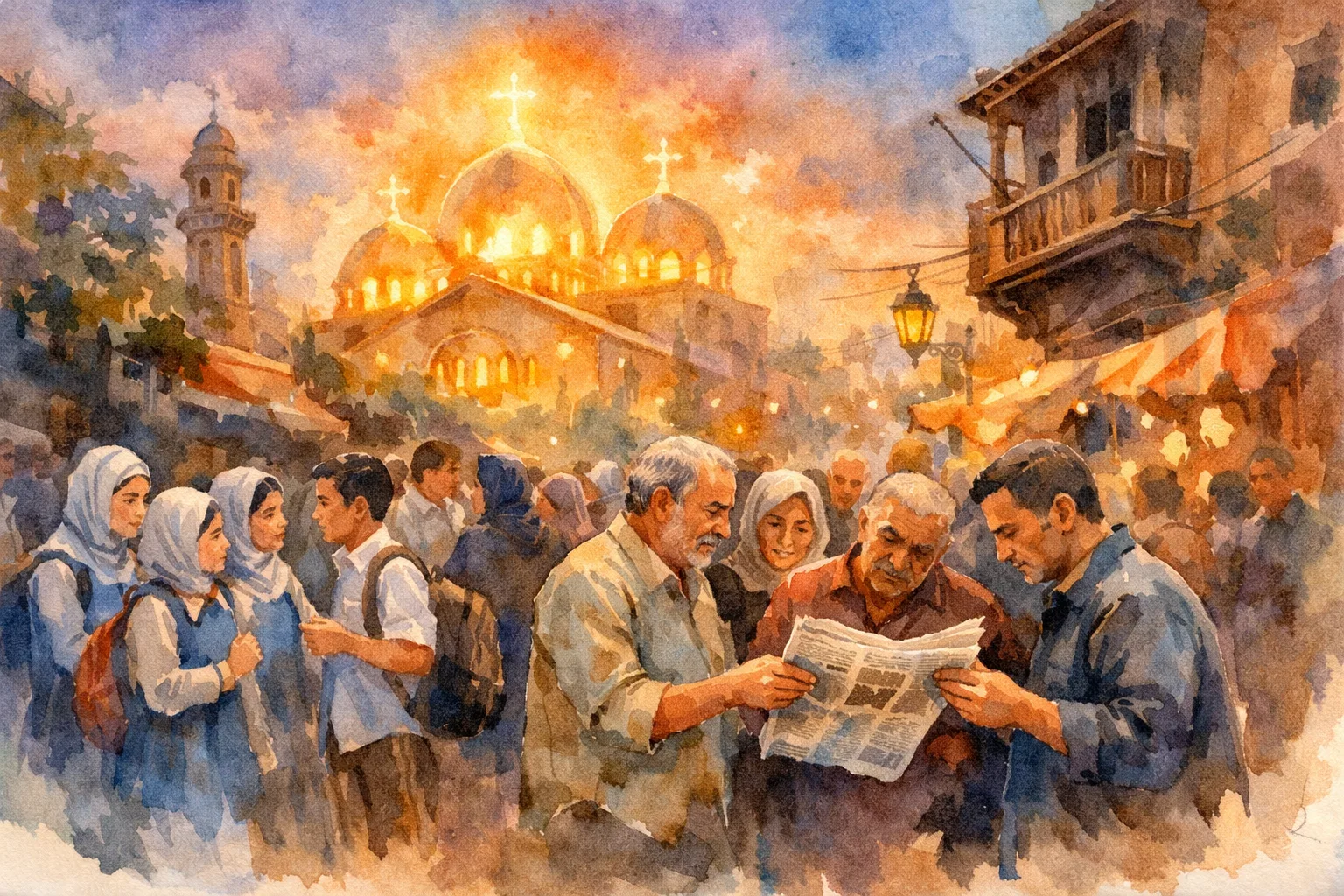
On 2 April 1968, people near a Coptic church in the Cairo district of Zeitoun reported seeing a luminous female figure on its roof. The first witnesses reportedly included two Muslim mechanics, one of whom initially feared that a woman was preparing to jump. As a crowd formed, the figure came to be identified as the Virgin Mary. Similar appearances were reported repeatedly over the following months and, according to church accounts, continued intermittently for several years.[Cambridge University Press & Assessment]cambridge.orgCambridge University Press & AssessmentThe Virgin of Zeitoun | Worldview | Cambridge Coreby C Nelson · 1973 · Cited by 23 — This event, k…
The reported apparitions became an immense public event. Christians and Muslims travelled to Zeitoun, sometimes waiting through the night in crowded streets. Witnesses described a white figure, flashes or globes of light, luminous birds and clouds resembling incense. Estimates of total attendance vary enormously and cannot be verified with precision, but there is no doubt that the site drew very large crowds and became internationally known.[Wikipedia]WikipediaOur Lady of ZeitounOur Lady of Zeitoun
The Coptic Orthodox leadership appointed clergy to investigate and issued an official declaration accepting the appearances. Church recognition helped transform local sightings into a nationally significant religious phenomenon. The state did not treat the gatherings as a threat; government-linked institutions instead promoted Zeitoun as evidence of Egypt’s spiritual importance.[Wikipedia]WikipediaOur Lady of ZeitounOur Lady of Zeitoun
Why the timing mattered
Zeitoun began less than a year after Egypt’s devastating defeat in the June 1967 Arab–Israeli War. The defeat damaged the authority of President Gamal Abdel Nasser’s government and shook confidence in the secular, nationalist promises that had shaped public life. Scholars have therefore interpreted the apparition partly as a response to collective disorientation: a sacred sign appearing when political certainty had collapsed.[Essex Open Access Research Repository]repository.essex.ac.ukMarian apparitions can be interpreted as a backlash against modernity, secularization, and political ideology…
The Virgin Mary also offered an unusually inclusive symbol. She is central to Christianity and honoured in Islam, allowing many Muslim observers to participate without adopting Christian doctrine. Anthropologist Angie Heo argues that the Zeitoun image became associated with Coptic–Muslim unity and shared Egyptian belonging rather than solely with the claims of one religious community.[Cambridge University Press & Assessment]cambridge.orgCambridge University Press & AssessmentThe Virgin Made Visible: Intercessory Images of Church…by A Heo · 2012 · Cited by 22 — In 1968…
This did not erase Egypt’s sectarian inequalities, but it gave the event an important public meaning. The apparition could be understood simultaneously as a Christian miracle, a sign for the Egyptian nation and a promise that humiliation would be followed by protection or recovery.
What did observers actually see?
The surviving evidence does not produce a single secure explanation. Photographs are indistinct, accounts differ, and enormous nighttime crowds made observation difficult. Some witnesses reported a clearly recognisable human figure; others saw lights or an undefined glow.
Anthropologist Cynthia Nelson visited Zeitoun repeatedly during 1968. She did not report seeing a clearly identifiable Virgin, although she observed flashes and ambiguous light effects. Her work is particularly valuable because it records the crowd’s behaviour and interpretations without simply endorsing or ridiculing them.[Cambridge University Press & Assessment]cambridge.orgCambridge University Press & AssessmentThe Virgin of Zeitoun | Worldview | Cambridge Coreby C Nelson · 1973 · Cited by 23 — This event, k…
Naturalistic proposals have included reflected lights, optical effects, birds and the tendency to perceive meaningful figures in uncertain visual material. Religious interpretations hold that the recurrence, variety of witnesses and church investigation support a genuine apparition. Neither position can recreate all conditions at the site decades later.
Calling Zeitoun “mass hysteria” therefore settles little. There was no epidemic of involuntary illness and no obvious public terror. It is better understood as a mass visionary movement: an uncertain visual phenomenon interpreted through shared religious expectations during a national crisis.
The schoolgirl fainting outbreak of 1993
In spring 1993, reports emerged of Egyptian schoolgirls becoming dizzy, nauseous or unconscious. The episodes began in schools and spread geographically as newspapers and broadcasters publicised them. Contemporary reports stated that more than 1,000 girls aged roughly 12 to 18 were affected, although the reliability of totals compiled during a fast-moving scare is uncertain. Schools closed temporarily, pupils were taken to hospital and the outbreak became a national political issue.[Los Angeles Times]latimes.comLos Angeles TimesEGYPT: Schoolgirls Suffer Mysterious FaintingApril 8, 1993 — 8 Apr 1993 — More than 1,000 girls between 12 and 18 years…
Officials and doctors investigated possible physical causes. Early public suspicion reportedly included contaminated water, pollution, poisoning and deliberate attack. No common toxic or infectious agent was established, and the symptoms generally appeared brief, variable and without serious lasting consequences. Medical figures consequently described the event as psychological or “hysterical”, language that reflected the terminology of the period.[Los Angeles Times]latimes.comLos Angeles TimesEGYPT: Schoolgirls Suffer Mysterious FaintingApril 8, 1993 — 8 Apr 1993 — More than 1,000 girls between 12 and 18 years…
The basic pattern resembles what is now called mass psychogenic illness: symptoms appearing within visible peer networks, spreading after observation or publicity, and continuing despite the absence of a confirmed environmental cause. Research on comparable school outbreaks finds that fainting, dizziness, nausea, breathing difficulty and weakness can spread rapidly through social contact while remaining entirely genuine to those affected. Schools are common settings because pupils share routines, stresses and close lines of communication.[PMC]pmc.ncbi.nlm.nih.govOpen source on nih.gov.
Yet the diagnosis should not be used as a shortcut. Investigators must first rule out infection, food contamination, fumes and other hazards. Even after those checks, identifying a psychogenic process does not explain why a particular group was vulnerable at a particular moment.
The Egyptian outbreak occurred amid pressure on overcrowded schools, intense examination expectations and widespread distrust of public services. Teenage girls also lived under restrictions that could make distress difficult to express openly. These conditions do not prove one cause, but they help explain why rumours about danger, bodily symptoms and official concealment could travel so effectively.
The response reveals an enduring problem: authorities need to investigate visibly without allowing repeated emergency scenes, dramatic reporting and speculative statements to intensify the symptoms. Dismissing pupils as attention-seeking can cause additional harm, while treating every episode as evidence of poisoning may magnify fear.
How heavy metal became “Satanism”
Egypt’s clearest modern moral panic erupted around heavy-metal music in 1996 and 1997. Newspaper stories alleged that young fans were participating in Satanic rituals, drinking blood, sacrificing animals, using drugs and insulting religion. Symbols common in metal fashion and album artwork were presented as signs of an organised secret movement rather than a musical subculture.[uark.edu]news.uark.eduArkansas News UA Anthropologist Studies 'Moral Panic’ In EgyptArkansas News UA Anthropologist Studies 'Moral Panic’ In Egypt
In January 1997, security forces arrested dozens of young people following raids on homes and gatherings. Contemporary accounts differ over the exact number, with figures ranging from about 78 to more than 80. Detainees were accused of offences framed around religious insult, extremist ideas and threats to social order. Many came from relatively affluent Cairo families, making the story especially attractive to newspapers: the supposed danger was portrayed as hidden inside respectable homes.[washingtonpost.com]washingtonpost.comOpen source on washingtonpost.com.
Investigators seized music, black clothing, posters, jewellery and videotapes. Much of this material demonstrated an interest in metal culture, but not the existence of a coherent Satanist organisation. The allegations of ritual worship were not substantiated, and the detained fans were eventually released. Anthropologist Ted Swedenburg, who studied the episode, characterised it as a moral panic produced through the interaction of press sensationalism, police action and anxieties about youth culture.[Arkansas News]news.uark.eduArkansas News UA Anthropologist Studies 'Moral Panic’ In EgyptArkansas News UA Anthropologist Studies 'Moral Panic’ In Egypt
Why the accusations caught on
The panic condensed several social tensions into one frightening image.
Heavy metal was associated with Westernisation, long hair, dark clothing, mixed-gender gatherings and behaviour outside established family supervision. Some participants drank alcohol or challenged conventional expectations, but this was transformed into a claim of supernatural conspiracy. A diverse scene was treated as a single deviant group.
The affair also unfolded during a period when the Egyptian state was confronting militant religious violence while trying to present itself as the guardian of both faith and public order. Accusing young music fans of religious extremism allowed authorities and commentators to condemn an unfamiliar lifestyle using the language already applied to threats against national stability.
Class mattered as well. The involvement of privileged youths made the panic a story about failed parenting and imported corruption. Metal fans became what sociologists call “folk devils”: visible figures blamed for broader anxieties about globalisation, morality and generational change.
The case demonstrates why “cult” should not be used as a neutral description. The supposed cult was largely a creation of accusation. Some fans enjoyed provocative imagery; a small number may have experimented with occult themes. That is not evidence of a structured movement based on shared worship, leadership or doctrine.
The legacy continued after the detainees were freed. Egyptian metal musicians remained vulnerable to cancelled performances, surveillance and renewed allegations. The panic helped establish an enduring public association between alternative music and moral danger, even though the central conspiracy claim had collapsed.
The 2009 pig cull: disease fear turned into policy
When the H1N1 influenza strain spread internationally in 2009, it was widely called “swine flu”. The name encouraged the mistaken belief that ordinary contact with pigs or pork was the main danger to people, although human-to-human transmission was driving the pandemic.
Egypt’s government ordered the destruction of the country’s pig population. International health officials said a general cull was not a medically justified response to the human outbreak, and there was no evidence that Egypt’s pigs were transmitting the virus to people. Officials later defended the programme partly as an environmental clean-up measure.[theguardian.com]theguardian.comThe Guardian Pig slaughter lands Cairo in the mire | Joseph MaytonThe Guardian Pig slaughter lands Cairo in the mire | Joseph Mayton
The decision disproportionately affected Cairo’s mainly Coptic Christian informal waste collectors and pig raisers. Pigs consumed large quantities of organic household waste, while families earned income from recycling and livestock. Removing the animals damaged an interconnected waste economy that formal contractors had struggled to replace.[reliefweb.int]reliefweb.integypt pig cull hits livelihoodsegypt pig cull hits livelihoods
Residents resisted confiscations, and clashes broke out when police entered waste-collecting districts. Reuters reported that officers used tear gas after residents threw stones and bottles during one confrontation.[Reuters]reuters.comegypt garbagemen clash with police over pig cull idUSTRE5421R3egypt garbagemen clash with police over pig cull idUSTRE5421R3
The consequences extended well beyond the immediate loss of animals. Organic rubbish accumulated because it no longer had economic value as pig feed. By early 2010, Egyptian officials and professional representatives were publicly describing the decision as a serious mistake, while an environmental organisation estimated that tens of thousands of waste workers and family members had been affected.[The New Humanitarian]thenewhumanitarian.orgThe New Humanitarian Pig-cull induced street rubbish a “national scandal”The New Humanitarian Pig-cull induced street rubbish a “national scandal”
This episode was not a wholly imaginary scare: H1N1 was a genuine pandemic requiring public-health action. The panic lay in the misidentification of the threat and the disproportionate response. A scientifically weak measure appeared decisive, fitted existing cultural discomfort around pigs and imposed its heaviest costs on a marginalised Christian workforce.
It is a useful warning against treating moral panic as the opposite of real danger. Societies can react irrationally to a genuine hazard, especially when a memorable label creates a misleading picture of how risk operates.

Kidnapping and organ-theft rumours
Warnings about children being abducted for organ removal have circulated repeatedly in Egypt. They typically appear as social-media posts, videos or voice messages claiming that organised gangs are operating in a particular neighbourhood or governorate.
Egyptian authorities issued denials in 2017 and again in 2024, saying they had found no evidence for the specific stories of organised gangs kidnapping children to harvest their organs. Officials distinguished these claims from documented crimes such as ransom kidnapping, exploitation and illegal organ transactions involving living adults.[EgyptToday]egypttoday.comEgypt Today No kidnapping gangs stealing human organs in EgyptEgypt Today No kidnapping gangs stealing human organs in Egypt
That distinction is crucial. Egypt has faced genuine organ trafficking, poverty-driven organ sales and human exploitation. Child abductions and disappearances have also caused legitimate public concern. These realities provide fertile ground for a more cinematic rumour in which strangers seize children and remove their organs.[ReliefWeb]reliefweb.intRelief Web Children pay price of rising insecurityRelief Web Children pay price of rising insecurity
The rumour offers a simple villain and an easily repeated warning, while the real systems of exploitation are usually slower, more concealed and tied to economic vulnerability. Graphic posts can therefore feel credible even when their stated incident, location or video is misidentified.
Official denial alone rarely ends the cycle. Where confidence in police, healthcare or the media is limited, a denial may itself be treated as evidence of concealment. Effective responses require prompt verification, specific correction and acknowledgement of the genuine crimes that made the false story believable. Simply telling frightened parents that nothing is wrong leaves the underlying insecurity untouched.
Why these episodes spread
Egypt’s cases differ sharply, but several mechanisms recur.
Ambiguous evidence acquires meaning through existing beliefs. A light above a church became recognisable as Mary within a society familiar with sacred appearances. Metal imagery became evidence of Satanism because commentators already associated Western youth culture with moral decline.
Trusted and powerful institutions accelerate interpretation. Church recognition expanded Zeitoun’s religious authority. Newspaper campaigns and police raids made Satanism allegations appear proven before evidence had been tested. Government action gave the pig scare material force.
Uncertainty rewards vivid explanations. Poisoning, secret rituals and organ-stealing gangs are easier to imagine than complex interactions among stress, global culture, informal markets and weak public services.
Media do more than report contagion. Repetition tells people which symptoms to monitor, which signs to fear and which stories other people apparently believe. During the 1993 school outbreak, coverage connected scattered fainting episodes into a national event. In modern rumour panics, digital networks can perform the same function within hours.
Real grievances support exaggerated claims. Egypt’s metal fans faced genuine generational and religious conflict. Waste collectors faced real discrimination. Parents have real reasons to worry about crime and exploitation. A panic becomes persuasive by attaching an unsupported conclusion to an authentic anxiety.
What the Egyptian cases teach
The most important lesson is to separate the experience from the explanation. Schoolgirls can suffer real symptoms even when no toxin is found. A crowd can sincerely report a sacred figure without providing evidence that settles the apparition’s supernatural status. People can fear organ trafficking for understandable reasons while circulating a false kidnapping story.
Authorities also influence whether uncertainty becomes manageable or destructive. Quiet medical investigation, clear risk communication and respectful treatment can limit an outbreak. Sensational accusations, theatrical raids and policies designed to display strength can deepen it.
Egypt’s record further shows that collective belief is not always driven by fear. Zeitoun provided hope and a temporary language of national unity. The same social mechanisms that transmit danger—shared attention, expectation, repetition and institutional endorsement—can transmit consolation.
What makes these episodes culturally important is therefore not their strangeness. Each reveals who possessed credibility, whose suffering could be dismissed, which minorities could be burdened, and what kind of explanation felt persuasive at a moment of national pressure. Taken together, they form a social history of how Egyptians have tried to make uncertain events meaningful—and of the consequences when belief, fear and authority reinforce one another.
Amazon book picks
Further Reading
Books and field guides related to When Belief and Fear Swept Across Egypt. Use these as the next step if you want deeper reading beyond the article.
Extraordinary Popular Delusions and the Madness of Crowds
Rating: 4.0/5 from 5 Google Books ratings
Introduces enduring themes of collective belief, rumours and public fear.


Mistakes Were Made (But Not by Me)
Explains belief persistence, justification and social reinforcement.
Endnotes
1.
Source: cambridge.org
Link:https://www.cambridge.org/core/journals/worldview/article/virgin-of-zeitoun/790CA1806EB0C929371244686C0F2178
Source snippet
Cambridge University Press & AssessmentThe Virgin of Zeitoun | Worldview | Cambridge Coreby C Nelson · 1973 · Cited by 23 — This event, k...
2.
Source: cambridge.org
Link:https://www.cambridge.org/core/journals/comparative-studies-in-society-and-history/article/virgin-made-visible-intercessory-images-of-church-territory-in-egypt/01B6CF70144FE47A517B80AB0336505C
Source snippet
Cambridge University Press & AssessmentThe Virgin Made Visible: Intercessory Images of Church...by A Heo · 2012 · Cited by 22 — In 1968...
3.
Source: Wikipedia
Title: Our Lady of Zeitoun
Link:https://en.wikipedia.org/wiki/Our_Lady_of_Zeitoun
4.
Source: pmc.ncbi.nlm.nih.gov
Link:https://pmc.ncbi.nlm.nih.gov/articles/PMC3588562/
5.
Source: pmc.ncbi.nlm.nih.gov
Link:https://pmc.ncbi.nlm.nih.gov/articles/PMC7396040/
6.
Source: reuters.com
Title: egypt garbagemen clash with police over pig cull idUSTRE5421R3
Link:https://www.reuters.com/article/business/healthcare-pharmaceuticals/egypt-garbagemen-clash-with-police-over-pig-cull-idUSTRE5421R3/
7.
Source: reliefweb.int
Title: egypt pig cull hits livelihoods
Link:https://reliefweb.int/report/egypt/egypt-pig-cull-hits-livelihoods
8.
Source: egypttoday.com
Title: Egypt Today No kidnapping gangs stealing human organs in Egypt
Link:https://www.egypttoday.com/Article/1/15482/No-kidnapping-gangs-stealing-human-organs-in-Egypt
9.
Source: reliefweb.int
Title: Relief Web Children pay price of rising insecurity
Link:https://reliefweb.int/report/egypt/children-pay-price-rising-insecurity
10.
Source: Wikipedia
Title: Moral panic
Link:https://en.wikipedia.org/wiki/Moral_panic
11.
Source: Wikipedia
Title: Mass psychogenic illness
Link:https://en.wikipedia.org/wiki/Mass_psychogenic_illness
12.
Source: Wikipedia
Title: List of mass panic cases
Link:https://en.wikipedia.org/wiki/List_of_mass_panic_cases
13.
Source: cambridge.org
Link:https://www.cambridge.org/core/books/cambridge-companion-to-metal-music/metal-in-the-middle-east/E611F77E491E2859BC417197A5533975
14.
Source: reuters.com
Title: ancient egypts screaming mummy woman may have died agony 2024 08 02
Link:https://www.reuters.com/science/ancient-egypts-screaming-mummy-woman-may-have-died-agony-2024-08-02/
15.
Source: history.com
Title: mysterious illnesses mass hysteria
Link:https://www.history.com/articles/mysterious-illnesses-mass-hysteria
16.
Source: applications.emro.who.int
Title: epi monitor 2012 5 22
Link:https://applications.emro.who.int/dsaf/epi/2012/epi_monitor_2012_5_22.pdf
17.
Source: repository.essex.ac.uk
Link:https://repository.essex.ac.uk/19964/1/PhD%20revisions%20MUSSO%200966602.pdf
Source snippet
Marian apparitions can be interpreted as a backlash against modernity, secularization, and political ideology...
18.
Source: latimes.com
Link:https://www.latimes.com/archives/la-xpm-1993-04-08-mn-20465-story.html
Source snippet
Los Angeles TimesEGYPT: Schoolgirls Suffer Mysterious FaintingApril 8, 1993 — 8 Apr 1993 — More than 1,000 girls between 12 and 18 years...
Published: April 8, 1993
19.
Source: news.uark.edu
Title: Arkansas News UA Anthropologist Studies ‘Moral Panic’ In Egypt
Link:https://news.uark.edu/articles/11868/ua-anthropologist-studies-moral-panic-rsquo-in-egypt
20.
Source: latimes.com
Title: la xpm 1997 02 10 mn 27250 story
Link:https://www.latimes.com/archives/la-xpm-1997-02-10-mn-27250-story.html
21.
Source: washingtonpost.com
Link:https://www.washingtonpost.com/archive/politics/1997/02/08/egypt-says-heavy-metal-loving-teens-have-gone-to-the-devil/cea56324-3f0c-47a6-93d2-def10b3a8832/
22.
Source: csmonitor.com
Link:https://www.csmonitor.com/1997/0210/021097.intl.intl.4.html
23.
Source: theguardian.com
Title: The Guardian Pig slaughter lands Cairo in the mire | Joseph Mayton
Link:https://www.theguardian.com/commentisfree/2009/oct/08/pigs-slaughter-egypt-christians
24.
Source: voanews.com
Link:https://www.voanews.com/a/a-13-2009-10-16-voa16/414343.html
25.
Source: csmonitor.com
Title: p17s01 wome
Link:https://www.csmonitor.com/World/Middle-East/2009/0903/p17s01-wome.html
26.
Source: thenewhumanitarian.org
Title: The New Humanitarian Pig-cull induced street rubbish a “national scandal”
Link:https://www.thenewhumanitarian.org/news/2010/01/26/pig-cull-induced-street-rubbish-%E2%80%9Cnational-scandal%E2%80%9D
27.
Source: theguardian.com
Title: trafficking people smugglers organs egypt mediterranean refugees migrants
Link:https://www.theguardian.com/global-development/2019/feb/09/trafficking-people-smugglers-organs-egypt-mediterranean-refugees-migrants
28.
Source: pmc.ncbi.nlm.nih.gov
Link:https://pmc.ncbi.nlm.nih.gov/articles/PMC11023688/
29.
Source: pubmed.ncbi.nlm.nih.gov
Link:https://pubmed.ncbi.nlm.nih.gov/8282518/
30.
Source: ndl.ethernet.edu.et
Link:https://ndl.ethernet.edu.et/bitstream/123456789/53348/1/17.pdf.pdf
31.
Source: theguardian.com
Title: carol morley the falling mass hysteria is a powerful group activity
Link:https://www.theguardian.com/film/2015/mar/29/carol-morley-the-falling-mass-hysteria-is-a-powerful-group-activity
32.
Source: x.com
Link:https://x.com/archeohistories/status/2037119801110434158
33.
Source: ebsco.com
Title: moral panic
Link:https://www.ebsco.com/research-starters/social-sciences-and-humanities/moral-panic
34.
Source: ebsco.com
Link:https://www.ebsco.com/research-starters/health-and-medicine/hysteria
35.
Source: medscape.com
Link:https://www.medscape.com/features/slideshow/hysteria
Additional References
36.
Source: eotcmk.org
Link:https://eotcmk.org/e/the-apparition-of-saint-mary/
Source snippet
The Apparition of Saint MaryOur pure, Lady of Zeitoun, Saint Virgin Mary's mass apparition was first reported to have occurred in t...
37.
Source: youtube.com
Title: Egypt Orders Slaughter of Pigs
Link:https://www.youtube.com/watch?v=rYQr-KbdMkY
Source snippet
Our Lady of Zeitoun (Egyptian Apparition, Coptic Church) - Jimmy Akin's Mysterious World...
38.
Source: youtube.com
Title: One Million Eyewitnesses Saw the Blessed Mother in Egypt!?
Link:https://www.youtube.com/watch?v=Fw2wlVmOFOM
Source snippet
Egypt's War On Metal (And Why It Failed)...
39.
Source: youtube.com
Title: The Virgin Mary’s Apparition in Zeitun
Link:https://www.youtube.com/watch?v=tVU8bhbQInw
Source snippet
One Million Eyewitnesses Saw the Blessed Mother in Egypt!?...
40.
Source: wuqukawoq.org
Link:https://www.wuqukawoq.org/wp-content/uploads/2020/11/Psychiatry-of-Pandemics-A-Mental-Health-Response-to-Infection-Outbreak.pdf
41.
Source: researchgate.net
Link:https://www.researchgate.net/publication/259732121_Decline_of_a_Moral_Panic_A_Social_Psychological_and_Socio-Legal_Examination_of_the_Current_Status_of_Satanism
42.
Source: study.com
Link:https://study.com/learn/lesson/mass-hysteria-moral-panic.html
43.
Source: dokumen.pub
Link:https://dokumen.pub/muslim-rap-halal-soaps-and-revolutionary-theater-artistic-developments-in-the-muslim-world-1nbsped-9780292735521-9780292726819.html
44.
Source: desertrose.info
Link:https://www.desertrose.info/organ-and-human-trafficking/?lang=en
45.
Source: facebook.com
Link:https://www.facebook.com/uCatholic/posts/over-one-million-people-witnessed-this-miracle-of-the-virgin-mary-from-1968-to-1/1451848176968905/
Topic Tree
Follow this branch
Related pages 192
- Antigua and Barbuda
- Argentina Belief Scares
- Azerbaijan Belief
- Bahrain Beliefs
- North Korea
- +187 more in sidebar