When Belief Became a Threat in Congo
“Congo” does not have one neat history of mass hysteria or cults. The name covers two modern states — the Democratic Republic of the Congo and the smaller Republic of the Congo — as well as several colonial territories whose borders, rulers and official names changed repeatedly.
Page outline Jump by section
Introduction
These cases should not be treated as evidence that Congolese society is unusually irrational. Again and again, collective beliefs grew in conditions of colonial violence, war, displacement, poverty, family breakdown or failing public institutions. Some beliefs caused demonstrable harm. Others were described as dangerous “cults” or superstitions mainly by governments trying to control religious or political dissent. Understanding the difference is central to the story.[tandfonline.com]tandfonline.comTaylor & Francis OnlineFull article: Authority that is customary: Kitawala…by N Eggers · 2020 · Cited by 19 — Kitawala is part of long…
When religious revival looked like rebellion
Simon Kimbangu and the Belgian colonial panic
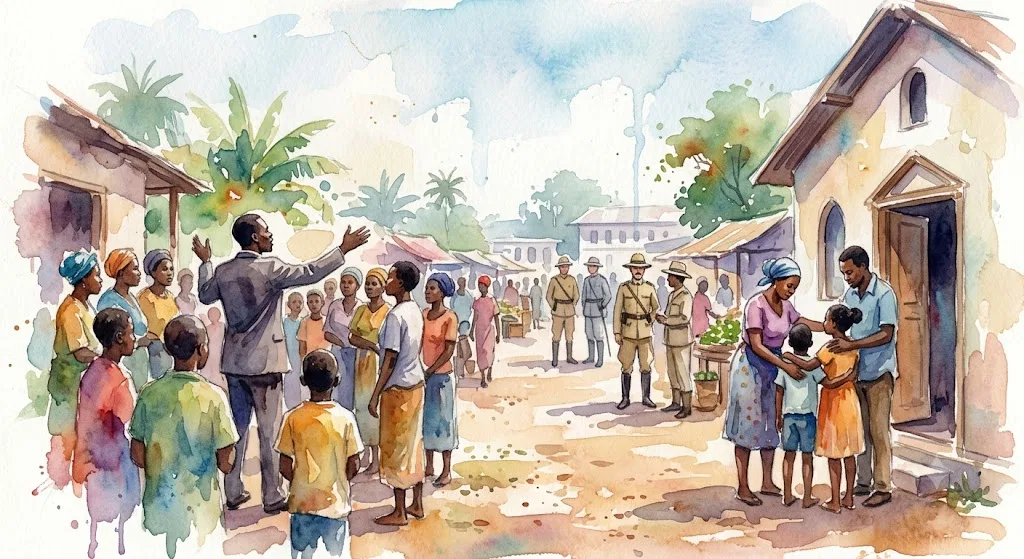
In April 1921, Simon Kimbangu, a Baptist-trained catechist in the Belgian Congo, began preaching, healing and attracting large crowds. His ministry emerged in a society shaped by forced labour, racial hierarchy and missionary control. Followers regarded him as a prophet; reports of miraculous cures helped the movement spread rapidly through villages and workplaces.
Kimbangu did not lead an armed revolt. Accounts of his teaching emphasise prayer, moral reform and spiritual liberation, and he reportedly urged followers to obey basic civic obligations. Yet Belgian officials feared that an independent African Christian movement could weaken both colonial authority and the labour system. He was arrested in September 1921, sentenced to death after a military trial and then had the sentence commuted to life imprisonment. He remained in custody until his death in 1951.[journals.ac.za]scriptura.journals.ac.zaKIMBANGUISM: AN AFRICAN INITIATED CHURCH | Scripturaby AM Gampiot · 2014 · Cited by 7 — During the early 1920s in what was then known as…
The authorities’ reaction is an early warning against using the word “cult” without asking who applied it. To colonial administrators, mass healing, prophetic claims and large African-led gatherings signalled disorder. To followers, Kimbanguism offered dignity, moral discipline and a Christianity no longer controlled by European missions. The movement survived decades of repression and was officially recognised shortly before Congolese independence. It later developed into a major organised church with schools, social institutions and an international following.[ebsco.com]ebsco.comKimbanguism | History | Research StartersDuring the time of Kimbangu's ministry, Belgium held colonial control of the African Congo…
Kimbangu’s story therefore belongs to the history of collective belief, but not simply to a history of delusion. The extraordinary claims made about him are matters of faith. The colonial fear surrounding him, by contrast, was political: officials imagined that spiritual independence might become social rebellion. In modern Congo, Kimbangu is increasingly remembered as an anti-colonial figure as well as a religious founder; 6 April has been observed as a national holiday in the Democratic Republic of the Congo since 2023.[AP News]apnews.comKimbangu, a lay Baptist who preached a theology of Black liberation, was imprisoned by Belgian colonial authorities in 1921 and died in c…
Kitawala: prophecy, healing and an “unruly” idea
Kitawala was another movement that alarmed Belgian authorities. Its roots lay partly in teachings associated with the Watch Tower movement, but Congolese communities reworked those teachings into diverse local traditions involving healing, moral authority, criticism of corrupt chiefs and expectations of a transformed social order. It was never one tightly controlled church with a single creed.
Colonial officials nevertheless tended to treat Kitawala as a unified subversive network. Its rejection of imposed authority, taxes or abusive chiefly power in some places made it especially suspect. Certain Kitawala-linked rebellions became violent, but historians caution against reducing the entire tradition to insurgency. Oral and archival evidence shows that many adherents were concerned as much with communal health, spiritual protection and just leadership as with formal politics.[tandfonline.com]tandfonline.comTaylor & Francis OnlineFull article: Authority that is customary: Kitawala…by N Eggers · 2020 · Cited by 19 — Kitawala is part of long…
The state’s response included surveillance, arrests, exile and restrictions on religious activity. This repression helped create the very secrecy that officials then interpreted as proof of conspiracy. Kitawala’s history illustrates a recurring mechanism in moral panics: authorities combine varied communities under one threatening label, isolated clashes are made representative of the whole, and administrative suspicion becomes self-confirming.[sfu.ca]summit.sfu.caetd7132 DPistoretd7132 DPistor
André Matsoua and belief after martyrdom
Across the river in French Middle Congo, now the Republic of the Congo, André Matsoua founded an association in 1926 that campaigned for the rights and advancement of people from French Equatorial Africa. Although this began as a political and mutual-aid movement, French officials treated it as a threat. Matsoua was repeatedly arrested, imprisoned and exiled, and he died in colonial custody in 1942.[port.ac.uk]francophone.port.ac.ukOpen source on port.ac.uk.
After his death, some supporters came to regard him as a prophet or liberator who would return. The movement known as Matsouanism acquired a religious dimension, particularly among Lari communities. Here again, what officials described as messianic fanaticism also preserved memories of colonial injustice and an unfinished demand for citizenship and equality.
Scholars therefore interpret Matsouanism as both religion and political memory. Expectations surrounding Matsoua’s return had millenarian features, but they were not detached from material experience: a popular leader had been removed by a state that denied most Africans meaningful political representation. His imprisonment and unexplained death gave the movement the structure of a martyr story.[Gale]go.gale.comDuress and Messianism in French Moyen-CongoDuress and Messianism in French Moyen-Congo
The child-witch crisis in Kinshasa
The most serious modern panic involving supernatural accusation in the Democratic Republic of the Congo concerns children branded as witches. From the 1990s onwards, humanitarian organisations documented growing numbers of children accused of causing illness, unemployment, infertility, bereavement or other family misfortunes through hidden supernatural powers. Kinshasa and Mbuji-Mayi became especially associated with the phenomenon.[unicef.org]unicef.orgChildren accused of witchcraft in Africa.pdfChildren Accused of Witchcraftby A Cimpric · 2010 · Cited by 19 — This study addresses the issue of children who are victims of vio…
The accusations often followed a recognisable pattern. A household experienced hardship or conflict; a child who was orphaned, disabled, difficult, withdrawn or living with step-relatives became a focus of suspicion; and a religious practitioner confirmed that the child was possessed or practising witchcraft. Some churches offered deliverance rituals or exorcisms. Documented abuses included isolation, beatings, starvation, forced ingestion of substances and abandonment.[unicef.org]unicef.orgChildren accused of witchcraft in Africa.pdfChildren Accused of Witchcraftby A Cimpric · 2010 · Cited by 19 — This study addresses the issue of children who are victims of vio…
Human Rights Watch reported in 2006 that workers assisting street children in Kinshasa believed witchcraft accusations were one of the largest forces pushing children out of their homes. One frequently cited estimate suggested that up to 70 per cent of the street children encountered by some organisations had previously faced such accusations. That figure was not a national survey and should not be treated as a precise measure of prevalence, but it indicates how closely the accusation crisis was connected to child homelessness.[Human Rights Watch]hrw.orgOpen source on hrw.org.
Calling this simply an ancient superstition is misleading. UNICEF’s comparative research found that modern child-witch accusations were often associated with rapid urbanisation, war, displacement, weakened extended families, economic insecurity and the growth of independent churches offering supernatural explanations for personal crises. Beliefs in witchcraft had older histories, but the routine identification of children as powerful hidden aggressors represented a significant social change.[unicef.org]unicef.orgChildren accused of witchcraft in Africa.pdfChildren Accused of Witchcraftby A Cimpric · 2010 · Cited by 19 — This study addresses the issue of children who are victims of vio…
The panic also developed an economic dimension. Deliverance could be offered in exchange for payment, giving some religious entrepreneurs an incentive to confirm suspicions. Yet it would be unfair to portray all independent or revivalist churches as abusive. Religious leaders and church-based organisations have also participated in prevention, reconciliation and care for abandoned children. The key distinction is between religious belief itself and acts that stigmatise, exploit or harm a child.
The Democratic Republic of the Congo adopted a child-protection law in 2009 that prohibits witchcraft accusations against children and provides penalties for malicious public accusations and related mistreatment. Enforcement remains uneven, especially where policing, courts and social services are weak. The legal reform matters nevertheless because it shifted the official definition of the problem: the accused child, rather than the supposed witchcraft victim, is recognised as the person requiring protection.[upr-info.org]upr-info.orgUPR Info Children's Rights in the Democratic Republic of CongoUPR Info Children's Rights in the Democratic Republic of Congo
The 2008 Kinshasa “penis theft” panic
In April 2008, rumours spread through Kinshasa that sorcerers could steal or shrink men’s genitals by touching them, brushing past them or using enchanted objects. The story circulated rapidly through communal taxis, neighbourhood conversation and radio phone-ins. Men accused strangers of attacking them, while crowds threatened or assaulted alleged perpetrators. Police arrested 13 people accused of sorcery and also detained some of their supposed victims; at least one person was reported killed amid the violence.[Reuters]reuters.comLynchings in Congo as penis theft panic hits capitalLynchings in Congo as penis theft panic hits capital
The belief was not that organs had been surgically removed. Complainants typically reported a sensation of shrinking, disappearance or loss of sexual function after an encounter. Such panics have appeared in several African countries, often travelling through rumours that reuse the same characters: a stranger, a handshake or accidental touch, an immediate bodily sensation and a demand that the accused reverse the damage.
Anthropologist Julien Bonhomme argues that these episodes should be studied as circulating social narratives rather than dismissed as random madness. The accusation gives a dramatic form to fears about intimacy, masculinity, money, strangers and unsafe urban encounters. Once people know the script, ordinary bodily sensations can be interpreted through it, while each accusation becomes evidence that the threat is real.[Sage Journals]journals.sagepub.comOpen source on sagepub.com.
Media attention accelerated the Kinshasa episode. Radio discussion warned listeners about suspicious passengers and particular items of jewellery, making the danger feel immediate and recognisable. The police attempted to calm the public, but arresting alleged sorcerers risked validating the central claim. This is a familiar problem in rumour panics: authorities may detain suspects to protect them from mobs, yet the sight of arrests can persuade the public that a hidden crime has been officially confirmed.[Reuters]reuters.comLynchings in Congo as penis theft panic hits capitalLynchings in Congo as penis theft panic hits capital
There is no credible evidence that supernatural genital theft occurred. The real effects were fear, assault, wrongful accusation and at least one fatality. It is therefore better understood as a rumour-driven moral panic, with possible psychogenic bodily sensations in individual complainants, rather than as a conventional epidemic of mass psychogenic illness.
Magical protection in Congo’s wars
Armed movements commonly grouped under the name Mai-Mai have used protective rituals in eastern Congo. Fighters have been washed, sprinkled or marked with specially prepared water and instructed that observance of certain rules will protect them from bullets. The name itself is often associated with the word for water.[nih.gov]pmc.ncbi.nlm.nih.govPMCInvisible wounds from the Congo warPMCInvisible wounds from the Congo war
It is tempting to present these practices as battlefield superstition alone. Research on Mai-Mai mobilisation, however, shows that the rituals also perform practical social functions. They can create unity among recruits, impose behavioural discipline, legitimise commanders and transform frightened civilians into people who believe they can confront a better-armed enemy. In settings where villages have little state protection, the promise of invulnerability can make collective defence imaginable.[ResearchGate]researchgate.netOpen source on researchgate.net.
This does not make the claim of bulletproof protection true, nor does it reduce the harm caused when young fighters are sent into combat believing themselves invulnerable. It does explain why factual disproof does not always destroy the system. If a fighter is wounded, leaders can say that a rule was broken, the ritual was incorrectly performed or the person behaved impurely. Success confirms the protection; failure is attributed to the believer. Such closed explanations are common in millenarian, magical and conspiratorial systems worldwide.
Mai-Mai belief also shows why the category “mass delusion” can be inadequate. The rituals existed inside real wars involving massacres, invasion, exploitation and state collapse. The danger was not imagined. Magical protection was an attempted answer to genuine military vulnerability, even when the promised mechanism could not work.
Ebola rumours and the politics of mistrust
During the 2018–2020 Ebola outbreak in eastern Democratic Republic of the Congo, the disease itself was unquestionably real. The collective-belief story lies instead in the rumours that surrounded treatment centres, vaccination, burials and the motives of responders.
Some residents believed Ebola had been invented for profit, deliberately introduced, exaggerated to postpone elections or used to remove organs. Treatment centres could appear frightening because patients entered behind barriers, staff wore unfamiliar protective clothing and families sometimes received little information before a relative died. Safe-burial procedures restricted customary contact with the body, creating grief and suspicion at precisely the moment when trust mattered most.[rki.de]edoc.rki.deedoc-Serveran analysis of the atmosphere of mistrust in the tenth Ebolaedoc-Serveran analysis of the atmosphere of mistrust in the tenth Ebola
A population survey conducted in the outbreak region found that low institutional trust and belief in misinformation were associated with reduced acceptance of preventive measures, including vaccination and seeking formal treatment. Roughly a quarter of surveyed respondents did not believe the outbreak was real. This was not merely a problem of medical ignorance: eastern Congo had endured armed conflict, political exclusion, corrupt administration and repeated experiences of outsiders arriving with money for emergencies while ordinary health services remained neglected.[thelancet.com]thelancet.comOpen source on thelancet.com.
Rumours contributed to resistance and violence against health workers, but researchers warn against treating “the community” as irrational or uniformly hostile. Some attacks were entangled with local politics, armed-group activity, disputes over jobs and perceptions that the Ebola response was militarised. Public-health operations themselves could intensify suspicion when they relied heavily on security forces or failed to involve trusted local figures.[sciencedirect.com]sciencedirect.comOpen source on sciencedirect.com.
The practical lesson was that correcting false claims was not enough. Effective response required transparent communication, respectful burial arrangements, employment of local staff and genuine participation by communities. Trust was not an optional addition to medical control; it influenced whether contacts could be traced, patients treated and vaccines accepted.

What these episodes have in common
Congo’s cult and panic history is not a parade of inexplicable crazes. The strongest cases share social mechanisms that are recognisable far beyond Central Africa.
Uncertainty creates demand for an explanation. Illness, death, unemployment or military defeat can feel intolerably random. A witch, hidden sorcerer, corrupt responder or prophetic leader supplies a cause and suggests a course of action.
Existing stories shape new sensations. Once people hear that a touch can shrink the body, that a child can cause misfortune or that a ritual blocks bullets, later events are interpreted through that framework. Testimony spreads the belief because each witness has already learnt what the experience is supposed to mean.
Institutions can magnify the fear. Colonial surveillance transformed religious movements into supposed conspiracies. Radio discussion amplified genital-theft rumours. Arresting alleged sorcerers made an impossible crime appear administratively plausible. Militarised epidemic control deepened suspicions that officials were hiding something.
The accused are usually less powerful. Children, strangers, religious minorities and politically inconvenient preachers become containers for wider fears. The accusation appears to explain hardship while directing anger away from structural causes such as poverty, war or abusive government.
Beliefs can be socially useful and physically disastrous at the same time. A prophetic church may restore dignity. A protective ritual may create solidarity. A supernatural explanation may make grief intelligible. Yet the same system can expose fighters to gunfire, send children onto the streets or turn a taxi passenger into the target of a mob.
Why careful labels matter
“Cult”, “mass hysteria”, “witch panic” and “moral panic” describe different things. Kimbanguism is an established African Christian church, not an outbreak of collective mental illness. Kitawala and Matsouanism combined religion, healing, political resistance and communal memory. Child-witch accusations are a form of persecution and abuse. The Kinshasa genital-theft episode was a rumour panic. Ebola misinformation grew around a genuine epidemic, while Mai-Mai invulnerability rituals functioned within genuine warfare.
The phrase “mass hysteria” is especially easy to misuse. In medicine, mass psychogenic illness normally refers to physical symptoms spreading through a group without an identified toxic or infectious cause. Congo’s best-documented collective-belief episodes do not generally fit that definition. They are better analysed through the study of rumour, millenarian religion, political repression, witchcraft accusation, moral panic and institutional distrust.
The larger historical pattern is not that Congolese people repeatedly lost touch with reality. It is that periods of extreme insecurity produced struggles over who had the authority to explain reality: colonial officials or African prophets, doctors or local communities, parents or accused children, commanders or frightened recruits. Those struggles could generate hope, resistance, scapegoating or violence. Their continuing importance lies in showing that collective belief becomes most powerful when it speaks to fears that institutions have failed to resolve.
Amazon book picks
Further Reading
Books and field guides related to When Belief Became a Threat in Congo. Use these as the next step if you want deeper reading beyond the article.
King Leopold's ghost
Provides essential colonial context for many belief-related episodes.
The fate of Africa
Explains the political background behind social crises across Central Africa.
African religions and philosophy
Helps readers interpret belief systems without sensationalism.

The scramble for Africa,
First published 1990. Subjects: History, Colonies, Colonization, Colonización, Kolonisatie.
Endnotes
1.
Source: ohioopen.library.ohio.edu
Link:https://ohioopen.library.ohio.edu/oupress/25/
Source snippet
Ohio Open Library"Unruly Ideas: A History of Kitawala in Congo" by Nicole Eggersby N Eggers · 2023 · Cited by 3 — Original oral and ethno...
2.
Source: unicef.org
Title: Children accused of witchcraft in Africa.pdf
Link:https://www.unicef.org/nigeria/media/1326/file/%20Children-accused-of-witchcraft-in-Africa.pdf.pdf
Source snippet
Children Accused of Witchcraftby A Cimpric · 2010 · Cited by 19 — This study addresses the issue of children who are victims of vio...
3.
Source: scriptura.journals.ac.za
Link:https://scriptura.journals.ac.za/pub/article/view/101
Source snippet
KIMBANGUISM: AN AFRICAN INITIATED CHURCH | Scripturaby AM Gampiot · 2014 · Cited by 7 — During the early 1920s in what was then known as...
4.
Source: library.oapen.org
Link:https://library.oapen.org/bitstream/id/bf61efc1-f6a4-422f-8fd4-c640509c8de2/627658.pdf
Source snippet
Kimbanguismby AM GAMpiot · Cited by 20 — campaign conducted by Simon Kimbangu, a Congolese Baptist catechist, in reaction to the col...
5.
Source: ebsco.com
Link:https://www.ebsco.com/research-starters/history/kimbanguism
Source snippet
Kimbanguism | History | Research StartersDuring the time of Kimbangu's ministry, Belgium held colonial control of the African Congo...
6.
Source: summit.sfu.ca
Title: etd7132 DPistor
Link:https://summit.sfu.ca/_flysystem/fedora/sfu_migrate/12235/etd7132_DPistor.pdf
7.
Source: works.swarthmore.edu
Link:https://works.swarthmore.edu/context/fac-french/article/1044/viewcontent/Anti_Colonial_Resistance_In_The_Former_Belgian_Colonies.pdf
8.
Source: summit.sfu.ca
Link:https://summit.sfu.ca/item/12235
9.
Source: francophone.port.ac.uk
Link:https://francophone.port.ac.uk/?p=1180
10.
Source: go.gale.com
Title: Duress and Messianism in French Moyen-Congo
Link:https://go.gale.com/ps/i.do?id=GALE%7CA568840026&issn=21644543&it=r&linkaccess=abs&p=AONE&sid=googleScholar&sw=w&v=2.1
11.
Source: ecoi.net
Title: 2021 10 Q37 EASO COI Query Response Sorcery DRC
Link:https://www.ecoi.net/en/file/local/2063478/2021_10_Q37_EASO_COI_Query_Response_Sorcery_DRC.pdf
12.
Source: unhcr.org
Link:https://www.unhcr.org/au/sites/en-au/files/legacy-pdf/4981ca712.pdf
13.
Source: upr-info.org
Title: UPR Info Children’s Rights in the Democratic Republic of Congo
Link:https://upr-info.org/sites/default/files/documents/2013-08/wv_cod_upr_s06_2009.pdf
14.
Source: reuters.com
Title: Lynchings in Congo as penis theft panic hits capital
Link:https://www.reuters.com/article/lifestyle/lynchings-in-congo-as-penis-theft-panic-hits-capital-idUSL22903232/
15.
Source: pmc.ncbi.nlm.nih.gov
Title: PMCInvisible wounds from the Congo war
Link:https://pmc.ncbi.nlm.nih.gov/articles/PMC2742153/
16.
Source: reliefweb.int
Title: dr congo protection insurgency history mayi mayi
Link:https://reliefweb.int/report/democratic-republic-congo/dr-congo-protection-insurgency-history-mayi-mayi
17.
Source: researchgate.net
Link:https://www.researchgate.net/publication/228519529_Mayi-Mayi_Young_rebels_in_Kivu_DRC
18.
Source: pmc.ncbi.nlm.nih.gov
Link:https://pmc.ncbi.nlm.nih.gov/articles/PMC7615618/
19.
Source: pmc.ncbi.nlm.nih.gov
Title: PMCBurial workers’ perceptions of community resistance
Link:https://pmc.ncbi.nlm.nih.gov/articles/PMC10210265/
20.
Source: thelancet.com
Link:https://www.thelancet.com/journals/laninf/article/PIIS1473-3099%2819%2930063-5/fulltext
21.
Source: sciencedirect.com
Link:https://www.sciencedirect.com/science/article/pii/S0277953624002983
22.
Source: pmc.ncbi.nlm.nih.gov
Title: PMCViolence against health care workers in a crisis context
Link:https://pmc.ncbi.nlm.nih.gov/articles/PMC10546691/
23.
Source: thelancet.com
Link:https://www.thelancet.com/journals/lanafr/article/PIIS3050-5011%2826%2900071-4/fulltext
24.
Source: thelancet.com
Link:https://www.thelancet.com/journals/lanafr/article/PIIS3050-5011%2826%2900082-9/fulltext
25.
Source: reliefweb.int
Title: girl accused witchcraft finds support democratic republic congo
Link:https://reliefweb.int/report/democratic-republic-congo/girl-accused-witchcraft-finds-support-democratic-republic-congo
26.
Source: reliefweb.int
Title: Ebola and the narrative of mistrust
Link:https://reliefweb.int/report/democratic-republic-congo/ebola-and-narrative-mistrust
27.
Source: ohioopen.library.ohio.edu
Link:https://ohioopen.library.ohio.edu/context/oupress/article/1024/viewcontent/978_0_8214_2609_8_web.pdf
28.
Source: sciencedirect.com
Link:https://www.sciencedirect.com/science/article/pii/S1201971226004728
29.
Source: researchgate.net
Link:https://www.researchgate.net/publication/361074168_Predictors_of_mass_psychogenic_illness_in_a_junior_secondary_school_in_rural_Botswana_A_case_control_study
30.
Source: researchgate.net
Link:https://www.researchgate.net/publication/373812641_Social_Sciences_in_Emerging_Infectious_Disease_The_Ebola_Disease_Response
31.
Source: tandfonline.com
Link:https://www.tandfonline.com/doi/full/10.1080/17531055.2019.1708544
Source snippet
Taylor & Francis OnlineFull article: Authority that is customary: Kitawala...by N Eggers · 2020 · Cited by 19 — Kitawala is part of long...
32.
Source: apnews.com
Link:https://apnews.com/article/c7ba1dfff9e99e74d91840d9ba75f6f7
Source snippet
Kimbangu, a lay Baptist who preached a theology of Black liberation, was imprisoned by Belgian colonial authorities in 1921 and died in c...
33.
Source: socialscienceinaction.org
Link:https://www.socialscienceinaction.org/resources/authority-that-is-customary-kitawala-customary-chiefs-and-the-plurality-of-power-in-congolese-history/
34.
Source: encyclopaediaafricana.com
Title: matsoua andre
Link:https://encyclopaediaafricana.com/matsoua-andre/
35.
Source: hrw.org
Link:https://www.hrw.org/reports/2006/drc0406/6.htm
36.
Source: media.un.org
Title: Media DRC / WITCHCRAFT | UNifeed
Link:https://media.un.org/unifeed/en/asset/u130/u130627d
37.
Source: clr.africanchildforum.org
Title: d r congo second uncrc co en
Link:https://clr.africanchildforum.org/pdf/d-r-congo-second-uncrc-co_en.pdf
38.
Source: journals.sagepub.com
Link:https://journals.sagepub.com/doi/10.1177/0963662515600391
39.
Source: edoc.rki.de
Title: edoc-Serveran analysis of the atmosphere of mistrust in the tenth Ebola
Link:https://edoc.rki.de/bitstream/handle/176904/12110/EBOLAI~1.PDF?isAllowed=y&sequence=1
40.
Source: pubmed.ncbi.nlm.nih.gov
Link:https://pubmed.ncbi.nlm.nih.gov/30928435/
41.
Source: Wikipedia
Link:https://en.wikipedia.org/wiki/Kimbanguism
42.
Source: Wikipedia
Title: André Matsoua
Link:https://en.wikipedia.org/wiki/Andr%C3%A9_Matsoua
43.
Source: Wikipedia
Title: André Matsoua
Link:https://gpe.wikipedia.org/wiki/Andr%C3%A9_Matsoua
44.
Source: pmc.ncbi.nlm.nih.gov
Link:https://pmc.ncbi.nlm.nih.gov/articles/PMC7396040/
45.
Source: pmc.ncbi.nlm.nih.gov
Link:https://pmc.ncbi.nlm.nih.gov/articles/PMC9210177/
46.
Source: pmc.ncbi.nlm.nih.gov
Link:https://pmc.ncbi.nlm.nih.gov/articles/PMC11234704/
47.
Source: apnews.com
Link:https://apnews.com/article/congo-kimbanguism-politics-rebellion-black-liberation-c7ba1dfff9e99e74d91840d9ba75f6f7
48.
Source: sajp.org.za
Link:https://sajp.org.za/index.php/sajp/article/view/1671/2648
49.
Source: dreamchimney.com
Link:https://www.dreamchimney.com/oftheday/sorcerers
Additional References
50.
Source: youtube.com
Title: The Agony of Congo’s ‘[Child Witches]({{ ‘child-witches/’ | relative_url }})’
Link:https://www.youtube.com/watch?v=UwCGxP35agE
Source snippet
This documentary on Simon Kimbangu provides critical context regarding the prophetic Christian movements and colonial panics in the Congo...
51.
Source: youtube.com
Title: 5 Months of Fire. 30 Years in Chains. One Forgotten Prophet
Link:https://www.youtube.com/watch?v=rO6RlB9aFgQ
Source snippet
The Forbidden Story of Simon Kimbangu: Between Faith, Prison and Prophecy...
52.
Source: youtube.com
Title: Worshippers of Papa Simon Kimbangu
Link:https://www.youtube.com/watch?v=S7aY37JBvZE
Source snippet
The Prophet They Couldn't Silence: The Extraordinary Life of Simon Kimbangu...
53.
Source: facebook.com
Link:https://www.facebook.com/bbcnews/posts/an-attack-on-four-red-cross-volunteers-last-month-in-the-democratic-republic-of-/1527359189428068/
54.
Source: insecurityinsight.org
Link:https://www.insecurityinsight.org/wp-content/uploads/2020/11/Attacks-on-Health-Care-During-the-10th-Ebola-response-in-the-DRC-November-2020-FINAL.pdf
55.
Source: healthpolicy-watch.news
Link:https://healthpolicy-watch.news/ebola-cases-climb-25-as-un-warns-outbreak-may-push-one-million-into-poverty/
56.
Source: haubooks.org
Link:https://haubooks.org/wp-content/uploads/2020/11/Julien-Bonhomme-The-Sex-Thieves-The-Anthropology-of-a-Rumor.pdf
57.
Source: case.edu
Link:https://case.edu/news/beyond-virus-how-social-science-shapes-response-ebola-outbreaks
58.
Source: instituteartist.com
Link:https://instituteartist.com/Mai-Mai-Stephan-Gladieu
59.
Source: kaowarsom.be
Link:https://www.kaowarsom.be/documents/BULLETINS_MEDEDELINGEN/2001-SUPPLEMENT.pdf
Topic Tree
Follow this branch
Related pages 192
- Antigua and Barbuda
- Argentina Belief Scares
- Azerbaijan Belief
- Bahrain Beliefs
- North Korea
- +187 more in sidebar