What Collective Fears Shaped Modern Eritrea?
Eritrea does not have a well-documented national equivalent of the Salem witch trials, a famous dancing plague or a confirmed epidemic of mass psychogenic illness.
Page outline Jump by section
Introduction
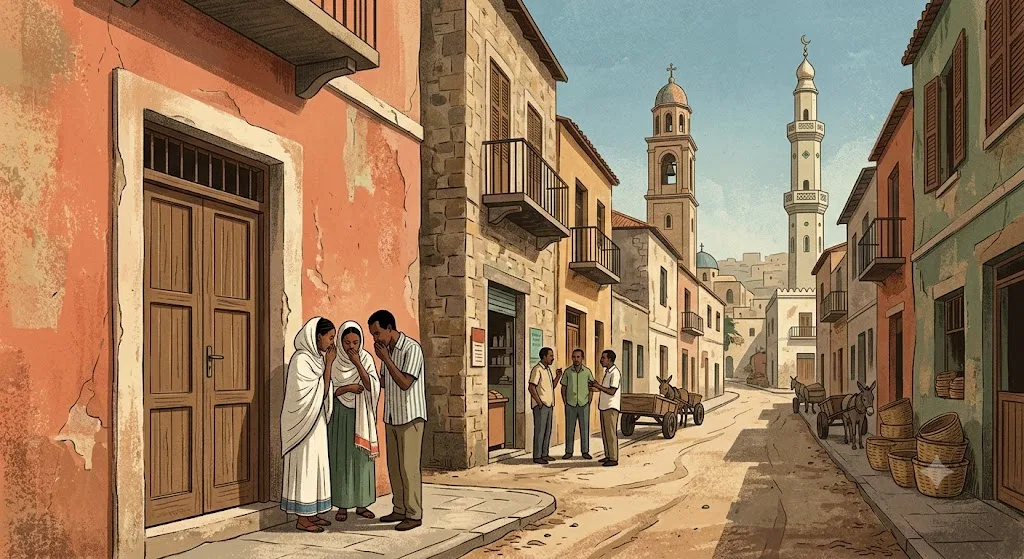
Eritrea also belongs to a wider Horn of Africa and Red Sea cultural zone in which spirit possession and ritual healing have long provided explanations for illness, distress and misfortune. Those traditions should not be confused with mass hysteria or dismissed as primitive superstition. They are better understood as culturally organised ways of interpreting suffering, particularly where medical care, social power and personal autonomy are limited.[nih.gov]pmc.ncbi.nlm.nih.govZār Spirit Possession in Iran and African Countries - PMC - NIHby F Mianji · 2015 · Cited by 36 — Zār refers to a type of spirit, to t…
Why the evidence is unusually thin
Anyone searching for Eritrean witch panics, school fainting outbreaks or miracle scares quickly encounters a problem: the historical record is fragmented. Eritrea experienced Italian colonialism, British administration, federation with Ethiopia, annexation, a long independence war and, after independence, an increasingly closed political system. Independent media have been eliminated, outside researchers face severe access restrictions, and citizens can be punished for speaking openly. A United Nations commission said it had to conduct hundreds of interviews outside the country because Eritrean authorities did not permit access.[OHCHR]ohchr.orgA HRC 29 CRP 1A HRC 29 CRP 1
This matters because episodes of collective fear are usually reconstructed through local newspapers, hospital records, school reports, court proceedings and interviews with participants. In Eritrea, many of those sources are unavailable, unpublished or unsafe to collect. Silence in the record therefore does not prove that local possession scares, rumour outbreaks or unexplained group illnesses never occurred. It means that dramatic claims should not be made without evidence.
The imbalance in surviving material is also important. Much of what can be verified concerns state repression and religious freedom because refugees, international organisations and advocacy groups have documented arrests and detention. Everyday village beliefs, healing rituals and neighbourhood rumours are much less visible. The result is a history in which the machinery of official fear is clearer than the private beliefs of ordinary people.
The “new religion” scare after 2002
The most consequential Eritrean panic-like episode was not a spontaneous crowd delusion. It was a state campaign against supposedly unauthorised religion.
In May 2002, the government required religious groups to register or cease public activity. In practice, only four traditions were officially recognised: Sunni Islam, the Eritrean Orthodox Church, the Roman Catholic Church and the Evangelical Lutheran Church. Other communities, including Pentecostals, Baptists, independent evangelicals, Seventh-day Adventists, Jehovah’s Witnesses and the Bahá’í faith, were left without legal protection. Applications did not lead to meaningful recognition, while meetings in homes could result in raids and detention.[state.gov]2009-2017.state.govDepartment of StateInternational Religious Freedom Report 2002: EritreaIn May 2002, the Minister of Information issued a decree that all…
Government officials presented control as a matter of social order and national sovereignty. Reports from the period indicate particular suspicion of groups considered to lack deep historical roots in Eritrea or to maintain foreign connections. The government denied that it was persecuting religion and argued that registration rules were legitimate regulation. Yet the practical effect was collective punishment: entire categories of believers were treated as potential security problems without evidence that ordinary worshippers posed a threat.[USCIS]uscis.govRIC QueryRIC Query
This resembles a moral panic more than mass psychogenic illness. A moral panic occurs when a person or group is portrayed as a danger to shared values, social cohesion or national survival, and authorities respond in ways disproportionate to the demonstrated threat. In Eritrea, minority churches became useful symbols of unwanted foreign influence, individualism and disobedience.
The label “cult” is especially misleading here. Eritrea’s Pentecostal and evangelical communities were not one secretive organisation controlled by a single leader. They included varied congregations and informal prayer networks. Pentecostalism reached Eritrea during the Ethiopian revolutionary period and developed through multiple churches, renewal groups and personal conversion networks. Its believers commonly emphasised direct experience of the Holy Spirit, healing, miracles and intense prayer, but the movement was internally diverse.[jstor.org]jstor.orgOpen source on jstor.org.
Why Pentecostal worship caused alarm
Pentecostal practice could appear unsettling in a society where religious identity was closely tied to family, inherited tradition and national history. Conversion might mean rejecting established rituals, avoiding customary celebrations or challenging the authority of parents and clergy. Worship could include speaking in tongues, emotional prayer, prophecy, divine healing and belief in active spiritual warfare. Such practices were easily represented by opponents as irrational, foreign or socially divisive.[JSTOR]jstor.orgOpen source on jstor.org.
The appeal of the movement was nevertheless understandable. Research on Eritrean conversion describes people seeking personal spiritual experience, healing, moral community and a form of faith not wholly controlled by older religious hierarchies. Pentecostal congregations could offer close mutual support during war, displacement and economic uncertainty. Their emphasis on individual rebirth also allowed believers to reinterpret suffering as part of a meaningful spiritual struggle.[JSTOR]jstor.orgOpen source on jstor.org.
That same independence made the movement politically suspect. A government built around military discipline and national unity had reason to fear associations it did not direct. Small home meetings were difficult to monitor; transnational religious ties could be described as foreign interference; and a believer’s loyalty to conscience could conflict with demands for unconditional obedience.
The result was not merely hostile rhetoric. Security forces raided prayer gatherings, detained worshippers without ordinary judicial process and reportedly pressured prisoners to renounce their beliefs. Recent monitoring indicates that arrests of Pentecostals, Baptists and other evangelicals continued through 2025, alongside community surveillance of people described as non-traditional Protestants.[Refworld]refworld.orgOpen source on refworld.org.
Jehovah’s Witnesses and the fear of disloyalty
Jehovah’s Witnesses occupy a distinct place in Eritrea’s history of collective suspicion. Their theology requires political neutrality and conscientious objection to military service. Many did not participate in the 1993 independence referendum and later refused national service. In a country where the liberation struggle is central to official identity, these choices were interpreted not simply as religious acts but as rejection of the nation itself.[TB Internet]tbinternet.ohchr.orgTB Internet EritreaTB Internet Eritrea
In 1994, the government revoked the civil rights of Jehovah’s Witnesses. Members lost access to state employment and other ordinary protections, while conscientious objectors were detained indefinitely without charge or trial. Their treatment illustrates how a political loyalty scare can transform a small religious minority into a symbolic enemy. The alleged danger was less what members had done than what their refusal appeared to represent: a limit on the state’s claim over individual conscience.[TB Internet]tbinternet.ohchr.orgTB Internet EritreaTB Internet Eritrea
The punishment has endured for decades. The United States Commission on International Religious Freedom reported that 64 Jehovah’s Witnesses remained detained in 2025 and linked the community’s persecution directly to refusal of the referendum and military obligations.[USCIRF]uscirf.govUSCIRF 2026 Annual Report EritreaUSCIRF 2026 Annual Report Eritrea
Calling this a “cult scare” would obscure the essential point. Whatever one thinks of Jehovah’s Witness doctrine, the documented Eritrean story is one of state persecution, not proof of a dangerous closed group manipulating the public.
Fear also reached recognised churches
Recognition did not guarantee independence. The government has interfered in the affairs of the Eritrean Orthodox Church, Catholic institutions and Muslim communities when religious leaders resisted state control.
A prominent example is Abune Antonios, the former patriarch of the Eritrean Orthodox Church. After objecting to government interference and calling for the release of imprisoned Christians, he was removed from office and held under house arrest for years until his death in 2022. His case demonstrated that the real dividing line was not simply “traditional” versus “new” religion. It was often obedience versus autonomy.[State Department]state.govOpen source on state.gov.
Catholic leaders have also faced pressure after criticising indefinite national service, mass emigration and the country’s social conditions. Clergy from recognised traditions could therefore be recast as political agitators when they challenged the official account of national unity.[State Department]state.govOpen source on state.gov.
This broadens the interpretation of the post-2002 campaign. It was not only a theological dispute or popular reaction against unusual worship. It formed part of a larger system in which unauthorised organisations, independent loyalties and uncontrolled speech were treated as threats. The UN Commission of Inquiry described a system that collected information about people’s activities, intentions and even supposed thoughts in order to rule through fear.[OHCHR]ohchr.orgA HRC 29 CRP 1A HRC 29 CRP 1
Spirit possession is not the same as mass hysteria
Eritrea’s place in the history of collective belief also includes spirit-possession traditions shared across Ethiopia, Sudan, Djibouti, Somalia and parts of the Middle East. In the best-known pattern, a spirit is believed to cause illness, emotional distress or misfortune, and a ritual specialist helps the afflicted person negotiate with or pacify it. Music, incense, dance, altered states and communal participation may form part of the healing process.[nih.gov]pmc.ncbi.nlm.nih.govZār Spirit Possession in Iran and African Countries - PMC - NIHby F Mianji · 2015 · Cited by 36 — Zār refers to a type of spirit, to t…
Older Western writing often called such traditions “cults” and interpreted possession either as fraud or mental disorder. Modern scholarship is more cautious. Spirit possession can be an idiom through which people express distress, seek care, manage family conflict or create a socially accepted role for experiences that might otherwise be silenced. It may have psychological, religious, medical and social meanings at the same time.[ResearchGate]researchgate.netResearchGate(PDF) Spirit Possessionspirit possession studies have been characterized by an emphasis on spirits as representations of psyc…
The gender dimension is particularly important. Across the wider region, possession and healing rituals have often provided women with collective spaces, recognised specialists and ways to communicate suffering within restrictive social settings. This does not mean every possession experience is a disguised protest, nor that all cases can be explained by gender inequality. Anthropologists increasingly reject any single universal explanation.[PMC]pmc.ncbi.nlm.nih.govZār Spirit Possession in Iran and African Countries - PMC - NIHby F Mianji · 2015 · Cited by 36 — Zār refers to a type of spirit, to t…
Nor should possession rituals be classified automatically as mass psychogenic illness. Mass psychogenic illness usually refers to real physical symptoms spreading through a group without an identified toxic or infectious cause, often under conditions of stress and observation. Spirit possession is a culturally meaningful interpretation and ritual system that may persist across generations. The two can overlap in particular incidents, but they are not interchangeable.
There is also no strong published evidence for a major Eritrea-specific outbreak comparable to documented school episodes elsewhere in Africa. A frequently cited school investigation from the region occurred in Tigray in northern Ethiopia, not Eritrea. Treating it as Eritrean would erase an important national distinction.[PMC]pmc.ncbi.nlm.nih.govOpen source on nih.gov.
How fear spread in a closed society
Eritrea’s documented scares spread less through sensational newspapers than through administration, policing and interpersonal surveillance. Independent national media were no longer available to challenge official claims. Religious communities lacked safe avenues to correct accusations, publish evidence or organise legal defence. When gatherings themselves became grounds for arrest, secrecy could then be presented as proof that the groups were suspicious.
Several mechanisms reinforced one another:
- Official classification: the state divided religion into recognised and unrecognised communities, turning an administrative category into a social stigma.
- Security language: independent religious ties could be framed as foreign influence or disloyalty.
- Family pressure: conversion could generate conflict over inherited worship, marriage, rituals and communal belonging.
- Visible punishment: raids, detention and forced recantation warned others against association.
- Informant culture: reports describe neighbourhood and community surveillance of minority believers.
- Lack of verification: without independent press, courts or open research, rumours could not be tested safely.[brill.com]referenceworks.brill.comCOM 036970.xmlBrill Reference WorksEritreaThe local Pentecostal movement originated in the 1960s in Ethiopia, and experienced significant growth in Eri…
This is why the language of “collective fear” is more useful than “mass hysteria” for modern Eritrea. The central phenomenon was not a population temporarily losing reason. It was a political environment in which fear was repeatedly produced, directed and rewarded.
What remains culturally important
Eritrea’s history complicates the usual image of cult scares. The feared groups were not necessarily isolated communes or charismatic sects. They were often ordinary worshippers meeting in houses, refusing military service or seeking forms of Christianity beyond state-approved institutions.
The main lesson is that “cult” can be a weapon rather than a neutral description. Authorities and social opponents may use words such as sect, foreign religion or extremist movement to make coercion appear protective. A careful history must ask who applied the label, what evidence of harm existed and whether the response targeted actual abuse or merely nonconformity.
It is equally important not to romanticise every minority movement. Belief in miraculous healing, demonic influence or prophecy can create its own risks, particularly when medical treatment is rejected or spiritual authority is abused. But Eritrea’s public record does not justify treating Pentecostal, evangelical or Jehovah’s Witness communities collectively as dangerous. The well-supported harm runs in the opposite direction: criminalisation, arbitrary imprisonment, family separation and fear of worship.
The country’s story is therefore less about spectacular outbreaks than about the slow normalisation of suspicion. Traditional possession beliefs show how communities give meaning to suffering; the post-2002 religious campaign shows how institutions can convert difference into danger. Together they demonstrate why histories of panic must distinguish lived belief from contagious illness, moral anxiety from evidence, and genuine social harm from persecution carried out in the name of preventing it.
Amazon book picks
Further Reading
Books and field guides related to What Collective Fears Shaped Modern Eritrea?. Use these as the next step if you want deeper reading beyond the article.

The state of Africa
First published 2005. Subjects: History, Politics and government, Africa, history, Africa, politics and government.
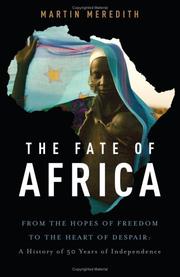
The fate of Africa
First published 2004. Subjects: Politics and government, Social conditions, Economic conditions, Politique et gouvernement, Conditions so...
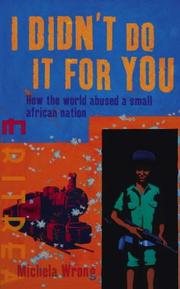
I Didn't Do It for You
First published 2005. Subjects: History, Foreign relations, Biography & Autobiography, Nonfiction, Politics.

Understanding Eritrea
First published 2016. Subjects: Politics and government, History, Eritrea, Asia, history.
Endnotes
1.
Source: 2009-2017.state.gov
Link:https://2009-2017.state.gov/j/drl/rls/irf/2002/13820.htm
Source snippet
Department of StateInternational Religious Freedom Report 2002: EritreaIn May 2002, the Minister of Information issued a decree that all...
Published: May 2002
2.
Source: referenceworks.brill.com
Title: COM 036970.xml
Link:https://referenceworks.brill.com/display/entries/EGPO/COM-036970.xml?language=en
Source snippet
Brill Reference WorksEritreaThe local Pentecostal movement originated in the 1960s in Ethiopia, and experienced significant growth in Eri...
3.
Source: uscirf.gov
Title: USCIRF 2026 Annual Report Eritrea
Link:https://www.uscirf.gov/sites/default/files/2026-03/USCIRF%202026%20Annual%20Report%20Eritrea.pdf
4.
Source: africabib.org
Link:https://www.africabib.org/rec.php?RID=11953844X
Source snippet
illnesses or misfortunes caused by possession by a species of spirit called 'zar...Read more...
5.
Source: researchgate.net
Link:https://www.researchgate.net/publication/327459970_Spirit_Possession
Source snippet
ResearchGate(PDF) Spirit Possessionspirit possession studies have been characterized by an emphasis on spirits as representations of psyc...
6.
Source: ohchr.org
Title: A HRC 29 CRP 1
Link:https://www.ohchr.org/sites/default/files/Documents/HRBodies/HRCouncil/CoIEritrea/A_HRC_29_CRP-1.pdf
7.
Source: ecoi.net
Link:https://www.ecoi.net/en/document/1338424.html
Source snippet
incidents of arrests and detention of Mulu Wongel Church...27 Oct 2014 — In 2002, the government of Eritrea ordered all religious groups...
8.
Source: uscis.gov
Title: RIC Query
Link:https://www.uscis.gov/archive/ric-query-eritrea-28-january-2003
9.
Source: jstor.org
Link:https://www.jstor.org/stable/27286533
10.
Source: refworld.org
Link:https://www.refworld.org/sites/default/files/attachments/56af19b24.pdf
11.
Source: refworld.org
Link:https://www.refworld.org/reference/annualreport/usdos/2008/en/62465
12.
Source: tbinternet.ohchr.org
Title: TB Internet Eritrea
Link:https://tbinternet.ohchr.org/_layouts/15/TreatyBodyExternal/DownloadDraft.aspx?key=NVdCriH95DdRPycOC6L41Kdm3a+ltZLeMFnVmd2vNhATU6TIgFrrdmi4PLdnlJD6
13.
Source: state.gov
Link:https://www.state.gov/reports/2022-report-on-international-religious-freedom/eritrea
14.
Source: uscirf.gov
Title: Eritrea 2025 USCIRF Annual Report
Link:https://www.uscirf.gov/sites/default/files/2025-04/Eritrea%202025%20USCIRF%20Annual%20Report.pdf
15.
Source: pmc.ncbi.nlm.nih.gov
Link:https://pmc.ncbi.nlm.nih.gov/articles/PMC7396040/
16.
Source: 2009-2017.state.gov
Link:https://2009-2017.state.gov/j/drl/rls/irf/2007/90096.htm
17.
Source: uprdoc.ohchr.org
Link:https://uprdoc.ohchr.org/uprweb/downloadfile.aspx?file=EnglishTranslation&filename=6253
18.
Source: uprdoc.ohchr.org
Link:https://uprdoc.ohchr.org/uprweb/downloadfile.aspx?file=EnglishTranslation&filename=482
19.
Source: uprdoc.ohchr.org
Link:https://uprdoc.ohchr.org/uprweb/downloadfile.aspx?file=EnglishTranslation&filename=406
20.
Source: spcommreports.ohchr.org
Link:https://spcommreports.ohchr.org/TmSearch/Mandates?m=25
21.
Source: ohchr.org
Link:https://www.ohchr.org/sites/default/files/lib-docs/HRBodies/UPR/Documents/Session5/MT/COE_MLT_UPR_S5_2009_ECRIMaltaThirdreport-cri08-22.pdf
22.
Source: tbinternet.ohchr.org
Title: Download Draft.aspx
Link:https://tbinternet.ohchr.org/_layouts/15/TreatyBodyExternal/DownloadDraft.aspx?key=PUMsfZkr9HhtB6Nn4rN+19RNB8IPsbRRSwwJevWOqarKrHpWjsOEMGv5KU7LeiZS
23.
Source: uscirf.gov
Link:https://www.uscirf.gov/sites/default/files/Tier1_ERITREA.pdf
24.
Source: uscirf.gov
Title: 2025 USCIRF Annual Report
Link:https://www.uscirf.gov/sites/default/files/2025-03/2025%20USCIRF%20Annual%20Report.pdf
25.
Source: uscirf.gov
Link:https://www.uscirf.gov/countries/eritrea
26.
Source: uscirf.gov
Title: eritrea annual report chapters and translations
Link:https://www.uscirf.gov/resources/eritrea-annual-report-chapters-and-translations
27.
Source: uscirf.gov
Title: 2026 recommendations
Link:https://www.uscirf.gov/countries/2026-recommendations
28.
Source: uscirf.gov
Link:https://www.uscirf.gov/sites/default/files/2026-03/USCIRF_2026_AR%20%282%29.pdf
29.
Source: uscirf.gov
Title: uscirf releases 2025 annual report
Link:https://www.uscirf.gov/news-room/releases-statements/uscirf-releases-2025-annual-report
30.
Source: uscirf.gov
Link:https://www.uscirf.gov/
31.
Source: uscirf.gov
Title: former prisoners story and path religious freedom eritrea
Link:https://www.uscirf.gov/news-room/uscirf-spotlight/former-prisoners-story-and-path-religious-freedom-eritrea
32.
Source: researchgate.net
Link:https://www.researchgate.net/publication/388299171_Zar_Cultural_beliefs_symptoms_and_healing_ritual_anthropological_study_of_a_cultural_mental_disorder
33.
Source: researchgate.net
Link:https://www.researchgate.net/publication/317451160_The_troubled_relationship_of_state_and_religion_in_Eritrea
34.
Source: researchgate.net
Link:https://www.researchgate.net/publication/339474978_Long-Term_Impact_of_War_Civil_War_and_Persecution_in_Civilian_Populations-Conflict_and_Post-Traumatic_Stress_in_African_Communities
35.
Source: researchgate.net
Link:https://www.researchgate.net/publication/359018207_Factors_Influencing_Eritreans_Joining_the_Pentecostal_Faith_Movement_A_Grounded_Theory
36.
Source: researchgate.net
Link:https://www.researchgate.net/publication/340194539_Mass_Psychogenic_Illness_in_Haraza_Elementary_School_Tigray_Northern_Ethiopia_Investigation_to_the_nature_of_an_Episode
37.
Source: researchgate.net
Link:https://www.researchgate.net/publication/227653739_Conceptualizing_Spirit_Possession_Ethnographic_and_Experimental_Evidence
38.
Source: researchgate.net
Title: 45680960 The Greek evil eye African witchcraft and Western ethnocentrism
Link:https://www.researchgate.net/publication/45680960_The_Greek_evil_eye_African_witchcraft_and_Western_ethnocentrism
39.
Source: researchgate.net
Link:https://www.researchgate.net/publication/290015899_Spirit_Possession_Anthropology_of
40.
Source: researchgate.net
Link:https://www.researchgate.net/publication/345699211_Zar_Spirit_Possession_Music_and_Healing_Rituals_in_EgyptSpirit_Possession_Music_and_Healing_Rituals_in_Egypt
41.
Source: researchgate.net
Link:https://www.researchgate.net/publication/319374207_Spirit_Possession_in_Africa
42.
Source: persecution.org
Title: Eritrea: The North Korea of Africa
Link:https://persecution.org/2024/10/03/eritrea-the-north-korea-of-africa/
43.
Source: brill.com
Title: article p167 4.xml
Link:https://brill.com/view/journals/jra/43/2/article-p167_4.xml?language=en&srsltid=AfmBOopObGDSKPAw7tL3yO5KVteL6LT7kC6wGeTs3f8tZedro9GA4uBv
44.
Source: pmc.ncbi.nlm.nih.gov
Link:https://pmc.ncbi.nlm.nih.gov/articles/PMC4801492/
Source snippet
Zār Spirit Possession in Iran and African Countries - PMC - NIHby F Mianji · 2015 · Cited by 36 — Zār refers to a type of spirit, to t...
45.
Source: fln.dk
Link:https://fln.dk/media/koij1exu/erit266.pdf
46.
Source: pubmed.ncbi.nlm.nih.gov
Link:https://pubmed.ncbi.nlm.nih.gov/32775400/
47.
Source: pmc.ncbi.nlm.nih.gov
Link:https://pmc.ncbi.nlm.nih.gov/articles/PMC12710187/
48.
Source: pubmed.ncbi.nlm.nih.gov
Link:https://pubmed.ncbi.nlm.nih.gov/9239794/
49.
Source: pmc.ncbi.nlm.nih.gov
Link:https://pmc.ncbi.nlm.nih.gov/articles/PMC6477824/
50.
Source: fln.dk
Link:https://fln.dk/media/dz5bfjhz/erit070.pdf
Additional References
51.
Source: govinfo.gov
Link:https://www.govinfo.gov/content/pkg/CPRT-108JPRT20429/html/CPRT-108JPRT20429.htm
52.
Source: facebook.com
Link:https://www.facebook.com/firstpostin/posts/firstpostafrica-along-africas-red-sea-coast-bordering-sudan-ethiopia-and-djibout/884871877007134/
53.
Source: academia.edu
Link:https://www.academia.edu/55508181/Spirit_Possession_Revisited_Beyond_Instrumentality
54.
Source: socialtheology.com
Link:https://www.socialtheology.com/docs/isaiah-bako-hinkon-060014-ch5.pdf
55.
Source: facebook.com
Link:https://www.facebook.com/zenazajel/posts/a-new-book-initiative-calling-on-the-people-of-religion-in-eritrea-to-lead-the-s/1596946600667785/?locale=ms_MY
56.
Source: academia.edu
Link:https://www.academia.edu/40869570/_ByesusSh_m_Breaking_with_the_National_Past_in_Eritrean_and_Ethiopian_Pentecostal_Churches_in_Rome_in_Pavanello_M_ed_Witchcraft_Religion_Medicine_Power_and_belief_in_the_human_destiny_post_faction_by_Birgit_Meyer_Routledge_London
57.
Source: opendoorsuk.org
Link:https://www.opendoorsuk.org/persecution/world-watch-list/eritrea/
58.
Source: opendoorsus.org
Link:https://www.opendoorsus.org/en-US/persecution/countries/eritrea/
59.
Source: ixtheo.de
Link:https://ixtheo.de/Record/1797403575
60.
Source: facebook.com
Link:https://www.facebook.com/newsdayzim/posts/it-is-not-often-uncommon-that-a-new-phenomenon-dramatically-rises-up-with-so-muc/4091116084232391/
Topic Tree
Follow this branch
Related pages 192
- Antigua and Barbuda
- Argentina Belief Scares
- Azerbaijan Belief
- Bahrain Beliefs
- North Korea
- +187 more in sidebar