When Fear Swept Through Sri Lanka
Sri Lanka’s clearest episodes of collective fear are not classic “doomsday cults” or organised witch trials.
Page outline Jump by section
Introduction
Three episodes stand out. The 2011 “grease devil” crisis transformed reports of prowlers into armed neighbourhood mobilisation and confrontations with the security forces. In 2012, illness reports spread through schools after more than a thousand pupils were treated at one girls’ school. From 2018 onwards, fabricated claims that Muslims were secretly sterilising the Sinhala Buddhist population helped inflame attacks, arrests and political campaigning. Together, these cases reveal how collective scares flourish when institutions are distrusted, communities feel threatened and sensational claims travel faster than reliable investigation.
The “grease devil” panic of 2011
During August and early September 2011, communities across Sri Lanka reported nocturnal intruders whose bodies were supposedly covered in grease or dark paint. The figure drew on older stories of thieves who greased themselves to make capture difficult, but the 2011 version was more menacing: an almost demonic man said to enter homes, scratch or sexually assault women and escape with unnatural speed.
The panic did not emerge from nowhere. Earlier in 2011, a series of murders and sexual assaults against women around Kahawatta had attracted intense publicity. Some suspects and deserters were arrested, but uncertainty surrounding the crimes encouraged rumours of a supernatural or protected offender. As reports multiplied, the familiar “greased robber” became a flexible explanation for almost any suspicious movement after dark.[LSE Personal Pages]personal.lse.ac.ukvenugopal grease devilLSE Personal PagesDemonic Violence and Moral Panic in Post-‐War Sri Lankaby R Venugopal · 2013 — The grease devil crisis arose in mid-‐20…
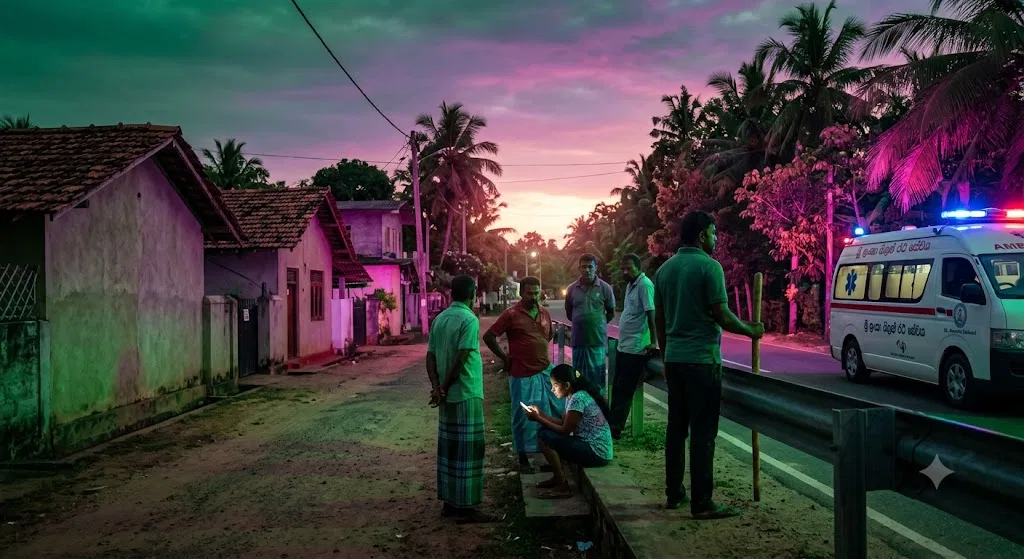
The crisis spread especially rapidly through plantation districts and Tamil- and Muslim-majority areas in the north and east. Women avoided going out, estate workers stayed home and groups of men began guarding roads with sticks, knives and other improvised weapons. Strangers, travelling salesmen and people behaving unusually risked being identified as attackers. At least two men were killed by estate residents after being mistaken for “grease devils”, while further confrontations caused additional deaths and injuries.[reuters.com]reuters.comgrease devil panic grips rural sri lanka at least three id USTRE77B0ZRReuters"Grease Devil" panic grips rural Sri Lanka, at least three12 Aug 2011 — Panic over nighttime assaults blamed on "grease devils" ha…
Why the story became political
The most explosive belief was not that the attackers possessed supernatural powers, but that they were protected or employed by the state. Witnesses sometimes said suspected intruders had escaped towards police stations or military camps. In heavily militarised areas, that fitted existing fears about surveillance, disappearances, sexual violence and the impunity of security personnel.
At Navanthurai near Jaffna, villagers pursuing suspected intruders believed that the men had entered an army camp. The resulting confrontation was followed by the arrest and alleged mistreatment of numerous local men. Elsewhere, police officers, soldiers and residents clashed when crowds demanded that suspects be surrendered. The International Crisis Group concluded that the scare intensified women’s existing insecurity in the north and east rather than simply creating a temporary fear from nothing.[Crisis Group]crisisgroup.org217 sri lanka women s insecurity in the north and eastCrisis Groupsri lanka: women's insecurity in the north and east20 Dec 2011 — conspiracy to garner international sympathy and demon- ise S…
The authorities denied organising or sheltering attackers and commonly described the phenomenon as rumour, criminal imitation or mass hysteria. Yet official statements were frequently contradictory: representatives sometimes said there was no such thing as a grease devil while simultaneously announcing arrests of people accused of impersonating one. That inconsistency strengthened rather than calmed suspicion.[LSE Personal Pages]personal.lse.ac.ukvenugopal grease devilLSE Personal PagesDemonic Violence and Moral Panic in Post-‐War Sri Lankaby R Venugopal · 2013 — The grease devil crisis arose in mid-‐20…
Political scientist Rajesh Venugopal interprets the episode as a moral panic shaped by post-war conditions. His argument does not require every report to have been invented. Some women were attacked, some prowlers and criminals were arrested, and some suspects may have exploited the panic. The “panic” lay in the rapid expansion of the threat, the merging of unrelated incidents into one hidden campaign and the certainty that unseen powerful actors explained every event.[JSTOR]jstor.orgExplaining the Grease Devil CrisisExplaining the Grease Devil Crisis - Sri Lankaby R VENUGOPAL · 2015 · Cited by 17 — Rajesh Venugopal (r.venugopal@lse.ac.uk) is Assi…
The case therefore resists a simple verdict. Saying that “grease devils were real” ignores mistaken identifications, folklore and rumour. Saying that they were entirely imaginary dismisses assaults, women’s testimony and the documented violence of the response. The crisis was a mixture of crime, imitation, fear, political suspicion and vigilantism.
When illness spread through Sri Lankan schools
In November 2012, more than a thousand pupils at Jinaraja Balika Vidyalaya, a girls’ school in Gampola, were taken for medical attention after complaints including itching or rashes, vomiting, coughing and dizziness. Similar symptoms were subsequently reported at schools elsewhere in the country. Contemporary summaries put the total number treated at more than 1,900 pupils and several teachers across about 15 schools.[Wikipedia]WikipediaList of mass panic casesList of mass panic cases
Authorities initially had to consider ordinary medical and environmental explanations: contaminated food, an irritant in the air, infection or an allergic reaction. That is essential in any suspected episode of mass psychogenic illness. The World Health Organization describes such a diagnosis as one of exclusion, meaning that plausible toxic, infectious and environmental causes must be investigated rather than dismissed merely because anxiety appears to be present.[Iris]iris.who.intOpen source on who.int.
The pattern nevertheless resembled what researchers call mass psychogenic illness: real physical symptoms that spread within a socially connected group without a single toxic or infectious agent sufficient to explain the outbreak. Such episodes are especially well documented in schools, where pupils observe one another closely, frightening interpretations circulate quickly and ambulances, evacuations or news coverage can unintentionally confirm that an invisible danger is present. Common symptoms include dizziness, nausea, rapid breathing, weakness and fainting.[PMC]pmc.ncbi.nlm.nih.govOpen source on nih.gov.
Calling these symptoms “imaginary” would be misleading. Anxiety can produce powerful bodily effects, and affected children are not normally pretending. Nor does a psychogenic explanation mean that there was no triggering event: an unusual smell, minor irritation or genuine illness in a few pupils can become the starting point for a much larger outbreak.
The Sri Lankan school episode is less well documented in accessible medical literature than the grease devil crisis. Numbers and symptom descriptions were widely repeated, but detailed epidemiological findings are difficult to locate. It is therefore safer to describe it as an outbreak widely attributed to mass psychogenic illness than as a definitively proven example. The uncertainty itself is instructive. Once officials or newspapers apply the phrase “mass hysteria”, it can become a substitute for explaining what was tested, what was ruled out and why one interpretation was preferred.
The fear of secret sterilisation
Sri Lanka’s most damaging recent conspiracy scare centred on the claim that Muslims were covertly reducing the Sinhala Buddhist birth rate. The story appeared in several forms: food allegedly containing sterilising chemicals, clothing supposedly treated with infertility agents, and Muslim doctors accused of secretly damaging women’s reproductive organs.
These rumours turned ordinary commercial and medical encounters into evidence of an imagined demographic campaign. They drew their force from a broader nationalist fear that the Sinhala Buddhist majority was losing cultural or numerical control, even though the alleged methods were medically implausible or unsupported.
The Ampara restaurant attack
In February 2018, a dispute at a Muslim-owned restaurant in Ampara escalated after a customer claimed that a lump found in food was a “sterilisation pill”. Video of the confrontation circulated online. A crowd attacked the restaurant and nearby Muslim property, helping to ignite a period of anti-Muslim unrest that later became particularly severe in the Kandy district.
Medical authorities rejected the underlying claim. The World Health Organization and the United Nations Population Fund stated that there was no drug or food additive capable of secretly causing permanent infertility in the manner described by the rumour.[Sri Lanka Brief]srilankabrief.orgSri Lanka Brief Sri Lanka UNFPA & WHO: " No medication or 'pills' that canSri Lanka Brief Sri Lanka UNFPA & WHO: " No medication or 'pills' that can
The falsehood was effective because it converted food, hospitality and minority-owned businesses into intimate threats against family survival. It also encouraged retrospective suspicion: a person experiencing fertility difficulties could be invited to reinterpret an earlier meal, garment purchase or medical procedure as deliberate sabotage.
During the violence, social media platforms helped inflammatory claims and images travel between localities. The government imposed a temporary nationwide restriction on several services. The shutdown may have slowed some circulation, but research and commentary have questioned whether broad blocking addresses the deeper causes of communal violence or merely restricts communication while rumours continue through other channels.[arXiv]arxiv.orgarXiv Addicts without Substance? Social Media Addiction when Facebook Shuts DownarXiv Addicts without Substance? Social Media Addiction when Facebook Shuts Down
The accusation against Dr Mohamed Shafi
The reproductive conspiracy returned with greater force after the Easter Sunday bombings of April 2019. On 23 May, the nationalist newspaper Divaina published a front-page allegation that an unnamed Muslim doctor had secretly sterilised 4,000 Sinhala Buddhist women during caesarean births. Dr Mohamed Shafi, an obstetrician and gynaecologist at Kurunegala Teaching Hospital, was arrested the following day. The allegation became a national controversy while fear and anger following the bombings were still intense.[Reuters]reuters.comINSIGHT-Unsubstantiated claims Muslim doctor sterilisedINSIGHT-Unsubstantiated claims Muslim doctor sterilised
The story fused several emotionally powerful subjects: terrorism, childbirth, medical trust and the alleged disappearance of the majority community. It also exploited the fact that patients cannot directly observe everything that occurs during surgery. A technically complex procedure could therefore be recast as a hidden ethnic attack.
Investigators later reported that they had found no evidence that Shafi had performed the alleged sterilisations and no evidence linking him to terrorist organisations. An investigation cited by Agence France-Presse concluded that the accusation was false, while prosecutors separately acknowledged the absence of evidence for allegations concerning terrorism and money laundering.[afp.com]factcheck.afp.comsri lankan authorities found muslim surgeon had not performed any sterilisationssri lankan authorities found muslim surgeon had not performed any sterilisations
Nevertheless, the claim generated complaints from hundreds of women, demonstrations, hostile media coverage and calls for punishment. A prominent monk publicly invoked extreme violence against Muslims amid the controversy. Human Rights Watch also documented threats, economic pressure and attacks on Muslim communities during this period, together with failures by officials to provide adequate protection.[Al Jazeera]aljazeera.comAl Jazeera Fear in Sri Lanka as monk calls for stoning of MuslimsAl Jazeera Fear in Sri Lanka as monk calls for stoning of Muslims
The episode is a strong example of a moral panic rather than mass psychogenic illness. People did not collectively develop the same unexplained symptoms. Instead, a perceived threat to reproduction was magnified by media repetition, political mobilisation and communal prejudice. The allegation produced real distress and social harm even though its central factual claim was unsupported.
Terror, rumour and emergency controls
The Easter Sunday attacks of 21 April 2019 were not an imagined threat. Coordinated suicide bombings killed 269 people at churches, hotels and other locations. The danger of treating every frightening episode as “mass hysteria” is especially clear here: Sri Lankans were responding to an actual atrocity and to genuine concern about further attacks.[AP News]apnews.comOpen source on apnews.com.
Yet real disasters create ideal conditions for false stories. Information is incomplete, people urgently seek explanations and communities associated with the perpetrators may be blamed collectively. After the bombings, the government blocked major social-media and messaging platforms, stating that the measure was intended to restrict misinformation and inflammatory material.[The Guardian]theguardian.comThe Guardian Social media shut down in Sri Lanka in bid to stemThe Guardian Social media shut down in Sri Lanka in bid to stem
The policy demonstrated a recurring Sri Lankan response to contagious rumour: controlling the communication channel rather than relying solely on correction or prosecution. Similar restrictions had already been used during the anti-Muslim riots of 2018. Supporters argued that Facebook and messaging services had become accelerators for hate speech. Critics noted that shutdowns also obstructed emergency communication, journalism and access to trustworthy information, while users could bypass restrictions with virtual private networks.[ICCT]icct.nlThe Impacts of Social Media Shutdown After Sri Lanka'sThe Impacts of Social Media Shutdown After Sri Lanka's
COVID-19 produced another combination of real danger and communal suspicion. As elsewhere in South Asia, social media became a venue for both practical information and divisive claims. Sri Lankan research examining Facebook activity during the early outbreak found harmful ideas and hostile content alongside far larger amounts of constructive or supportive communication. This matters because descriptions such as “mass panic” can obscure the fact that digital publics are rarely unified: fear, prejudice, mutual aid, scepticism and official messaging operate at the same time.[arXiv]arxiv.orgOpen source on arxiv.org.
Government measures during the pandemic also became entangled with anti-Muslim anxiety. The compulsory cremation of people who died with COVID-19, imposed despite objections from Muslim families and criticism of the scientific basis for excluding burial, became a symbol of how emergency health policy could reinforce an already persecuted minority’s sense of vulnerability.[Human Rights Watch]hrw.orgHuman Rights Watch Rights of Sri Lankan Muslims Need International ProtectionHuman Rights Watch Rights of Sri Lankan Muslims Need International Protection
What Sri Lanka’s panics have in common
Sri Lanka’s best-documented scares differ in form, but several mechanisms recur.
A real event supplies the first spark. The grease devil crisis followed genuine murders and assaults. The sterilisation scare flourished around real demographic anxieties and, in 2019, a real terrorist attack. School outbreaks often begin with one or more pupils experiencing genuine discomfort. The later exaggeration does not make the starting event unreal.
An unclear threat becomes a social symbol. The grease devil symbolised unaccountable power, sexual danger and militarisation. The sterilisation plot symbolised fear of minority population growth. Unexplained school symptoms symbolised an invisible environmental or medical hazard. Such symbols succeed because they compress complicated problems into a vivid enemy.
Existing divisions determine who is believed. Tamil and Muslim communities living under heavy security presence were predisposed to suspect state involvement in the grease devil attacks. Sinhala Buddhist nationalist narratives made Muslim businesses and doctors plausible villains to audiences already exposed to demographic conspiracy theories. Collective scares follow the fault lines that society has created beforehand.
Official denial can deepen suspicion. Authorities often treat rumours as irrational ideas that should disappear once contradicted. But denial is ineffective when the authority issuing it is itself distrusted. Contradictory statements, delayed investigations and aggressive policing may appear to confirm that something is being concealed.
Media coverage changes the scale of the episode. Repetition allows scattered events to be perceived as one organised campaign. A local attack, unexplained symptom or allegation becomes a national pattern when every later incident is interpreted through the same story. Social media increases speed, but newspapers, television and word of mouth played similar roles before widespread smartphone use.
The response can cause more harm than the original belief. Vigilantes killed people suspected of being grease devils. Anti-sterilisation rumours contributed to attacks on Muslim businesses and communities. Unproven accusations cost a doctor his liberty and reputation. Panic is therefore not simply an error inside people’s minds; it becomes historically important through policing, communal violence, medical disruption and political mobilisation.
Cults, belief and the problem of labels
Sri Lanka has numerous religious orders, revival movements, charismatic teachers and devotional communities, but reliable evidence for major home-grown “doomsday cult” episodes is much thinner than the evidence for rumour panics and communal scares. Applying the word “cult” merely because a movement is small, intense or unfamiliar would confuse religious difference with coercion.
The Easter attackers belonged to an extremist network, not a “cult” in the loose popular sense. The Liberation Tigers of Tamil Eelam developed a powerful culture of martyrdom and suicide attack during the civil war, but it was an ethno-nationalist armed organisation rather than a new religious movement. These cases may involve devotion, sacrifice and closed-group discipline, yet describing them as cults can hide their political organisation and historical aims.
A more useful approach asks specific questions. Did leaders demand total obedience? Were members isolated from family or outside information? Was apocalyptic prophecy central? Were people coerced, exploited or prevented from leaving? Did outsiders use the “cult” label to discredit an unpopular minority? Without evidence addressing such questions, the label contributes more heat than understanding.
The same caution applies to spirit possession, apparitions and miracle claims. Shared religious experiences can be interpreted by believers as sacred, by clinicians as psychogenic, by sociologists as socially patterned and by opponents as fraud. Those explanations are not interchangeable. A crowd gathering at a shrine is not automatically a panic, and belief in a miracle is not by itself evidence of mental disorder.
Why these episodes still matter
Sri Lanka’s collective scares illuminate the uneasy period that followed decades of civil war. The end of battlefield conflict in 2009 did not end militarisation, communal mistrust or fear of hidden violence. The grease devil crisis revealed how quickly those unresolved tensions could be expressed through folklore. Later sterilisation rumours showed how nationalist politics could shift suspicion towards Muslims and recast ordinary doctors, shopkeepers and restaurateurs as participants in a secret demographic war.
The cases also show why careful terminology matters. “Mass psychogenic illness” may help explain clusters of unexplained physical symptoms after medical and environmental causes have been assessed. “Moral panic” is more appropriate when politicians, campaigners or media construct a group as an exaggerated threat to social survival. “Rumour panic” describes situations in which uncertain reports trigger defensive or violent action. None of these terms should erase genuine crime, discrimination or institutional failure.
The central lesson is not that Sri Lankans were unusually credulous. Collective fear becomes contagious in every society when the danger is difficult to see, trusted information is scarce and an existing enemy can be blamed. Sri Lanka’s distinctive history determined the form those fears took: the prowler who might be connected to a military camp, the minority restaurant accused of poisoning fertility, the surgeon cast as an agent of demographic destruction, and the school illness interpreted before investigations were complete.
These episodes remain culturally important because their consequences survived the rumours themselves. They altered how women moved through public space, how communities viewed police and soldiers, how patients trusted doctors and how governments regulated communication. What began as a frightening story could become a riot, an arrest, a shutdown or a lasting communal grievance.

Amazon book picks
Further Reading
Books and field guides related to When Fear Swept Through Sri Lanka. Use these as the next step if you want deeper reading beyond the article.
Extraordinary Popular Delusions and the Madness of Crowds
Rating: 4.0/5 from 5 Google Books ratings
Foundational reading on collective delusions and panics.

The Suspicions of Mr. Whicher
First published 2008. Subjects: Detectives, biography, Murder, great britain, Murder, Wiltshire, Case studies.
Endnotes
1.
Source: reuters.com
Title: grease devil panic grips rural sri lanka at least three id USTRE77B0ZR
Link:https://www.reuters.com/article/world/grease-devil-panic-grips-rural-sri-lanka-at-least-three-idUSTRE77B0ZR/
Source snippet
Reuters"Grease Devil" panic grips rural Sri Lanka, at least three12 Aug 2011 — Panic over nighttime assaults blamed on "grease devils" ha...
2.
Source: Wikipedia
Title: Grease devil crisis in Sri Lanka
Link:https://en.wikipedia.org/wiki/Grease_devil_crisis_in_Sri_Lanka
3.
Source: jstor.org
Title: Explaining the Grease Devil Crisis
Link:https://www.jstor.org/stable/43552756
Source snippet
Explaining the Grease Devil Crisis - Sri Lankaby R VENUGOPAL · 2015 · Cited by 17 — Rajesh Venugopal (r.venugopal@lse.ac.uk) is Assi...
4.
Source: Wikipedia
Title: List of mass panic cases
Link:https://en.wikipedia.org/wiki/List_of_mass_panic_cases
5.
Source: iris.who.int
Link:https://iris.who.int/bitstreams/2c064608-d15c-4748-8e10-01aac35e072e/download
6.
Source: pmc.ncbi.nlm.nih.gov
Link:https://pmc.ncbi.nlm.nih.gov/articles/PMC7396040/
7.
Source: arxiv.org
Title: arXiv Addicts without Substance? Social Media Addiction when Facebook Shuts Down
Link:https://arxiv.org/abs/2010.10605
8.
Source: reuters.com
Title: INSIGHT-Unsubstantiated claims Muslim doctor sterilised
Link:https://www.reuters.com/article/world/us/insight-unsubstantiated-claims-muslim-doctor-sterilised-women-raise-tensions-in-idUSL4N23D2VF/
9.
Source: reuters.com
Link:https://www.reuters.com/article/business/healthcare-pharmaceuticals/unsubstantiated-claims-muslim-doctor-sterilized-women-raise-tensions-in-sri-lank-idUSKCN1T71HR/
10.
Source: factcheck.afp.com
Title: sri lankan authorities found muslim surgeon had not performed any sterilisations
Link:https://factcheck.afp.com/sri-lankan-authorities-found-muslim-surgeon-had-not-performed-any-sterilisations
11.
Source: reuters.com
Link:https://www.reuters.com/article/world/prosecutors-say-tests-needed-before-sri-lanka-sterilization-case-can-proceed-idUSKCN1U62O4/
12.
Source: icct.nl
Title: The Impacts of Social Media Shutdown After Sri Lanka’s
Link:https://icct.nl/sites/default/files/2022-12/StratComms-Report-2.pdf
13.
Source: arxiv.org
Link:https://arxiv.org/abs/2006.07855
14.
Source: Wikipedia
Title: Mass psychogenic illness
Link:https://en.wikipedia.org/wiki/Mass_psychogenic_illness
15.
Source: Wikipedia
Title: Doomsday cult
Link:https://en.wikipedia.org/wiki/Doomsday_cult
16.
Source: Wikipedia
Title: Miracle of the Sun
Link:https://en.wikipedia.org/wiki/Miracle_of_the_Sun
17.
Source: Wikipedia
Title: 2018 anti Muslim riots in Sri Lanka
Link:https://en.wikipedia.org/wiki/2018_anti-Muslim_riots_in_Sri_Lanka
18.
Source: Wikipedia
Title: 2019 Sri Lanka Easter bombings
Link:https://en.wikipedia.org/wiki/2019_Sri_Lanka_Easter_bombings
19.
Source: reuters.com
Link:https://www.reuters.com/article/world/unsubstantiated-claims-muslim-doctor-sterilized-women-raise-tensions-in-sri-lank-idUSKCN1T71GK/
20.
Source: reuters.com
Title: sri lanka ban burqa shut many islamic schools minister says 2021 03 13
Link:https://www.reuters.com/world/india/sri-lanka-ban-burqa-shut-many-islamic-schools-minister-says-2021-03-13/
21.
Source: iris.who.int
Title: int Index
Link:https://iris.who.int/bitstreams/03475692-7441-41d2-bbf8-7f46622483c5/download
22.
Source: iris.who.int
Link:https://iris.who.int/bitstream/handle/10665/40176/WHO_TRS_714.pdf?seq=
23.
Source: iris.who.int
Title: sea racmr 77.1 6
Link:https://iris.who.int/bitstream/handle/10665/127268/sea_racmr_77.1_6.Pdf?sequence=2
24.
Source: iris.who.int
Link:https://iris.who.int/bitstreams/dcdd8096-e0be-40df-9193-36f75cee0c1e/download
25.
Source: applications.emro.who.int
Link:https://applications.emro.who.int/dsaf/dsa702.pdf
26.
Source: iris.who.int
Link:https://iris.who.int/bitstreams/a41d0536-2b2d-40c8-8e3d-6cf87dbb2aac/download
27.
Source: terrance.who.int
Title: SAGE Yellow Book april 2017
Link:https://terrance.who.int/mediacentre/data/sage/SAGE_Docs_Ppt_Apr2017/SAGE_Yellow_Book_april_2017.pdf
Published: april 2017
28.
Source: iris.who.int
Link:https://iris.who.int/bitstreams/b811e290-59ea-4a63-98a7-ef1a8c33fa15/download
29.
Source: iris.who.int
Link:https://iris.who.int/bitstreams/5181307d-9fb2-4bdf-8a1b-819c688519b5/download
30.
Source: facebook.com
Link:https://www.facebook.com/kathmandupost/posts/mass-hysteria-is-a-misunderstood-psychological-phenomenon-in-which-stress-and-an/1459992042828712/
31.
Source: facebook.com
Link:https://www.facebook.com/aljazeera/posts/sri-lankas-government-shut-down-social-messaging-networks-including-facebook-wha/10156559138768690/
32.
Source: facebook.com
Link:https://www.facebook.com/groups/1343587753571833/posts/1657074702223135/
33.
Source: facebook.com
Title: 250000 people saw the virgin mary the most documented apparition in history zeit
Link:https://www.facebook.com/61582434374577/posts/250000-people-saw-the-virgin-mary-the-most-documented-apparition-in-history-zeit/122116351611081145/
34.
Source: facebook.com
Title: bizarre cases of mass hysteria from history
Link:https://www.facebook.com/Historic.Mysteries/posts/bizarre-cases-of-mass-hysteria-from-history/1015847323864565/
35.
Source: facebook.com
Link:https://www.facebook.com/adaderana/posts/un-urges-sri-lanka-to-deliver-results-in-easter-bombing-proberead-more-nid121543/1280337574263601/
36.
Source: 2021-2025.state.gov
Title: sri lanka
Link:https://2021-2025.state.gov/reports/2019-country-reports-on-human-rights-practices/sri-lanka/
37.
Source: jstor.org
Title: Perspective: Toward a Definition of “New Religion”
Link:https://www.jstor.org/stable/10.1525/nr.2004.8.1.73
38.
Source: jstor.org
Link:https://www.jstor.org/stable/resrep36891.7?seq=1
39.
Source: personal.lse.ac.uk
Title: venugopal grease devil
Link:https://personal.lse.ac.uk/venugopr/venugopal%20-%20grease%20devil.pdf
Source snippet
LSE Personal PagesDemonic Violence and Moral Panic in Post-‐War Sri Lankaby R Venugopal · 2013 — The grease devil crisis arose in mid-‐20...
40.
Source: crisisgroup.org
Title: 217 sri lanka womens insecurity north and east
Link:https://www.crisisgroup.org/rpt/asia-pacific/sri-lanka/217-sri-lanka-womens-insecurity-north-and-east
Source snippet
Crisis GroupSri Lanka: Women's Insecurity in the North and East20 Dec 2011 — The island-wide spate of attacks on women by individuals lab...
41.
Source: crisisgroup.org
Title: 217 sri lanka women s insecurity in the north and east
Link:https://www.crisisgroup.org/sites/default/files/217-sri-lanka-women-s-insecurity-in-the-north-and-east.pdf
Source snippet
Crisis Groupsri lanka: women's insecurity in the north and east20 Dec 2011 — conspiracy to garner international sympathy and demon- ise S...
42.
Source: srilankabrief.org
Title: Sri Lanka Brief Sri Lanka UNFPA & WHO: “ No medication or ‘pills’ that can
Link:https://srilankabrief.org/unfpa-who-no-medication-or-pills-that-can-permanently-make-a-human-being-sterile/
43.
Source: aljazeera.com
Title: Al Jazeera Fear in Sri Lanka as monk calls for stoning of Muslims
Link:https://www.aljazeera.com/news/2019/6/22/fear-in-sri-lanka-as-monk-calls-for-stoning-of-muslims
44.
Source: hrw.org
Title: sri lanka muslims face threats attacks
Link:https://www.hrw.org/news/2019/07/03/sri-lanka-muslims-face-threats-attacks
45.
Source: apnews.com
Link:https://apnews.com/article/b0595ea79ade9c131b0e703c93cdbbe5
46.
Source: theguardian.com
Link:https://www.theguardian.com/world/2019/oct/24/sri-lanka-spy-chief-blamed-for-failures-over-easter-bombings
47.
Source: theguardian.com
Title: The Guardian Social media shut down in Sri Lanka in bid to stem
Link:https://www.theguardian.com/world/2019/apr/21/social-media-shut-down-in-sri-lanka-in-bid-to-stem-misinformation
48.
Source: hrw.org
Title: Human Rights Watch Rights of Sri Lankan Muslims Need International Protection
Link:https://www.hrw.org/news/2021/03/02/rights-sri-lankan-muslims-need-international-protection
49.
Source: youtube.com
Link:https://www.youtube.com/watch?v=bo6UKQEC0T0
50.
Source: youtube.com
Link:https://www.youtube.com/watch?v=OEl26QREuU4
51.
Source: youtube.com
Link:https://www.youtube.com/watch?v=kpmVJPJFMEM
52.
Source: hrw.org
Title: sri lanka
Link:https://www.hrw.org/world-report/2018/country-chapters/sri-lanka
53.
Source: hrw.org
Title: state emergency declared sri lanka
Link:https://www.hrw.org/news/2018/03/07/state-emergency-declared-sri-lanka
54.
Source: hrw.org
Title: sri lanka religious disharmony order threatens minorities
Link:https://www.hrw.org/news/2021/03/16/sri-lanka-religious-disharmony-order-threatens-minorities
55.
Source: moph.gov.lb
Link:https://www.moph.gov.lb/en/HealthFacilities/view/0/54241/84661/salman-zainndine
56.
Source: theguardian.com
Title: was ripon school gripped by mass psychogenic illness
Link:https://www.theguardian.com/science/2015/nov/14/was-ripon-school-gripped-by-mass-psychogenic-illness
57.
Source: crisisgroup.org
Title: 219 sri lanka s north i the denial of minority rights
Link:https://www.crisisgroup.org/sites/default/files/219-sri-lanka-s-north-i-the-denial-of-minority-rights.pdf
58.
Source: pmc.ncbi.nlm.nih.gov
Link:https://pmc.ncbi.nlm.nih.gov/articles/PMC7368451/
59.
Source: aljazeera.com
Title: sri lanka lifts social media ban imposed after easter attacks
Link:https://www.aljazeera.com/news/2019/4/30/sri-lanka-lifts-social-media-ban-imposed-after-easter-attacks
Additional References
60.
Source: youtube.com
Title: Collective Trauma Response in Sri Lanka
Link:https://www.youtube.com/watch?v=lJXFRLdf_fY
Source snippet
"Dr. Shafi's Struggle Against the Injustice": Book Penned in Tamil Launched in Colombo...
61.
Source: guernicamag.com
Title: Guernica The Grease Devil Is Not Real
Link:https://www.guernicamag.com/the-grease-devil-is-not-real/
Source snippet
GuernicaThe Grease Devil Is Not Real - Guernica15 Jun 2012 — Facing police apathy, villagers had armed themselves with clubs and machetes...
62.
Source: youtube.com
Link:https://www.youtube.com/watch?v=tT6sNi6FZGM
Source snippet
Dr. Shafi lodges complaint over his arrest with the Ministry of Public Security...
63.
Source: youtube.com
Title: Dr. Shafi lodges complaint over his arrest with the Ministry of Public Security
Link:https://www.youtube.com/watch?v=rYTFxKQoYuY
Source snippet
Dr. Shafi performed 4372 Caesarian surgeries, CID reports to court (English)...
64.
Source: youtube.com
Link:https://www.youtube.com/watch?v=sKIpyhnUWkY
Source snippet
Sri Lanka declares emergency amid anti-Muslim violence...
65.
Source: researchgate.net
Link:https://www.researchgate.net/publication/356895313_The_politics_of_moral_panic_Anthropology_of_mass-panicking_processes_of_contemporary_Sri_Lanka
66.
Source: researchgate.net
Link:https://www.researchgate.net/publication/280947556_Demonic_Violence_and_Moral_Panic_in_Postwar_Sri_Lanka_Explaining_the_Grease_Devil_Crisis
67.
Source: researchgate.net
Link:https://www.researchgate.net/publication/353259008_On_the_Myth_and_Magic_of_Apparitions_A_Study_Based_on_Mother_Marys_Church_in_Sri_Lanka
68.
Source: scite.ai
Link:https://scite.ai/reports/demonic-violence-and-moral-panic-YQvAXK
69.
Source: wired.com
Link:https://www.wired.com/story/sri-lanka-bombings-social-media-shutdown
Topic Tree
Follow this branch
Related pages 192
- Antigua and Barbuda
- Argentina Belief Scares
- Azerbaijan Belief
- Bahrain Beliefs
- North Korea
- +187 more in sidebar