When Fear Became Power in Libya
Libya has no well-documented equivalent of the Salem witch trials or a classic “dancing plague”.
Page outline Jump by section
Introduction
These cases should not all be called “mass hysteria”. They involve different processes. Some are moral panics, in which authorities and media portray a loosely defined behaviour as a threat to society. Others are persecution driven by religious accusations, or wartime rumours spreading through frightened communities. Libya’s record is also difficult to reconstruct because prolonged dictatorship, censorship, civil war and fragmented government have left incomplete archives and competing narratives. The clearest lesson is therefore not that Libyans were unusually credulous, but that fear becomes especially dangerous when armed groups, security agencies or political leaders can decide which stories count as truth.
Why the evidence is fragmented
Research on Libyan collective fear is much thinner than work on Europe’s witch trials, American satanic scares or school-based outbreaks of mass psychogenic illness. Searches of medical and historical literature reveal no firmly established Libyan epidemic of unexplained fainting, possession or contagious bodily symptoms comparable with widely studied school incidents elsewhere. That absence may reflect a real difference, but it may also reflect weak health surveillance, disrupted universities, inaccessible local records and the tendency for unusual events to be described in religious or political language rather than investigated clinically.
The terminology creates another problem. “Hysteria” has often been used as an insult for crowds, women, religious communities or political opponents. Modern researchers reserve “mass psychogenic illness” for clusters of genuine physical symptoms that spread through social contact after toxic, infectious and other medical causes have been properly investigated. It should not be used as a catch-all description for rumours, riots, sectarian violence or strongly held religious belief. Specialists also stress that psychogenic symptoms are real experiences, not deliberate acting or proof that those affected are mentally ill.[Frontiers]frontiersin.orgFrontiers Characteristics of Adolescents Affected by MassFrontiersCharacteristics of Adolescents Affected by Mass…November 17, 2020 — by RP Sapkota · 2020 · Cited by 26 — This paper presents…
Libya’s strongest documented cases instead fall into four overlapping patterns:
- accusations of witchcraft and sorcery used to justify arrest or public humiliation;
- campaigns presenting Sufi shrines and customs as dangerous religious corruption;
- wartime rumours that treated Black Africans as a hidden mercenary force;
- political personality-building that elevated Muammar Gaddafi’s ideology and image above ordinary public debate.
Each involved fear and contagious belief, but each had different victims, institutions and consequences.
When sorcery accusations become state power
Belief in harmful magic is not itself evidence of a panic. People may consult healers, fortune-tellers or religious figures privately without producing a wider campaign. A moral panic begins when isolated fears are organised into a public threat: alleged practitioners are displayed as enemies of religion or society, accusations circulate faster than evidence, and punishment becomes a demonstration of moral authority.
Libya has moved increasingly in that direction since the breakdown of central government after 2011. Security bodies and armed groups have publicised arrests for “witchcraft”, sometimes displaying suspects or seized objects as if these alone proved supernatural wrongdoing. In 2019, police in Benghazi arrested three Chadian men after a woman complained that rituals intended to restore her marriage had failed. Whatever fraud may have been involved, the public framing centred on witchcraft rather than an ordinary allegation of deception.[The New Arab]newarab.comLibyan police arrest three Chadians for witchcraftThe New ArabLibyan police arrest three Chadians for witchcraft28 Aug 2019 — Libyan police in Benghazi have arrested three Chadian men for…
A more revealing case emerged in 2023, when two Libyan sisters known for animal-welfare work were detained following an online hate campaign accusing them of witchcraft. They were reportedly held incommunicado for six days before being freed. Women’s-rights advocates quoted at the time said such accusations had become increasingly common and linked the trend to the growing influence of hard-line religious currents within security institutions.[The New Arab]newarab.comlibyan sisters freed after witchcraft hate campaignThe New ArabLibyan sisters freed after 'witchcraft' hate campaign4 Apr 2023 — Accusations of witchcraft have become shockingly common in…
The danger lies in the flexibility of the accusation. “Sorcery” can refer to alleged supernatural harm, paid divination, folk healing, possession of unfamiliar objects, unconventional religious practice or simply behaviour that attracts hostility. Migrants and women are particularly exposed because they may lack powerful family protection and can be portrayed as morally or culturally foreign. The United Nations has warned internationally that witchcraft-related beliefs can lead to beatings, banishment and other grave violations, especially where accusations are accepted without reliable evidence.[OHCHR]ohchr.orgWitchcraft and human rightsWitchcraft related beliefs and practices have resulted in serious violations of human rights including, b…
The anti-sorcery campaign
A Libyan human-rights organisation reported in 2026 that an organised campaign operating since 2020 had involved warrantless raids, arbitrary arrests, coerced confessions, public humiliation and the targeting of women and migrants. It argued that religious authorities had become directly entangled with policing, allowing doctrinal claims to function as evidence in criminal investigations. These allegations require continued independent scrutiny, but they fit the broader pattern documented in individual arrests and morality prosecutions.[hrsly.com]hrsly.comHuman Rights Solidarity Organization: Serious violations…April 24, 2026 — Human Rights Solidarity (LHRS): “Anti‑Sorcery” Campaign Led…
In 2024, Libya’s eastern-based House of Representatives enacted Law No. 6 on witchcraft, sorcery, divination and related practices. Published descriptions of the law indicate that it created severe penalties, including the possibility of death in specified circumstances, and incorporated religiously derived rules concerning proof and classification. Because Libya remains divided between rival political and legal authorities, the law’s territorial application and enforcement are not straightforward. Its significance is nevertheless clear: supernatural wrongdoing was no longer merely a social accusation but an expressly codified category of serious crime.[المجمع القانوني]lawsociety.lyالمجمع القانونيCriminalization of Witchcraft6 of 2024May 15, 2024 — 15 May 2024 — Law No. 6 of 2024 establishes severe penalties, including the death penalty, for the criminalizatio…
This does not mean every prosecution is imaginary. Some people accused of sorcery may also be suspected of fraud, drug offences, sexual exploitation or extortion. In October 2025, for example, a Misrata security force announced the arrest of three Nigerian nationals on combined allegations involving witchcraft, narcotics and illegal substances. The problem is that bundling ordinary crimes together with supernatural claims can make the evidential basis impossible for the public to assess. It can also encourage the belief that strange objects, foreign identity or religious disapproval prove a much wider hidden danger.[Libya Observer]libyaobserver.lyOpen source on libyaobserver.ly.
The destruction of Sufi shrines
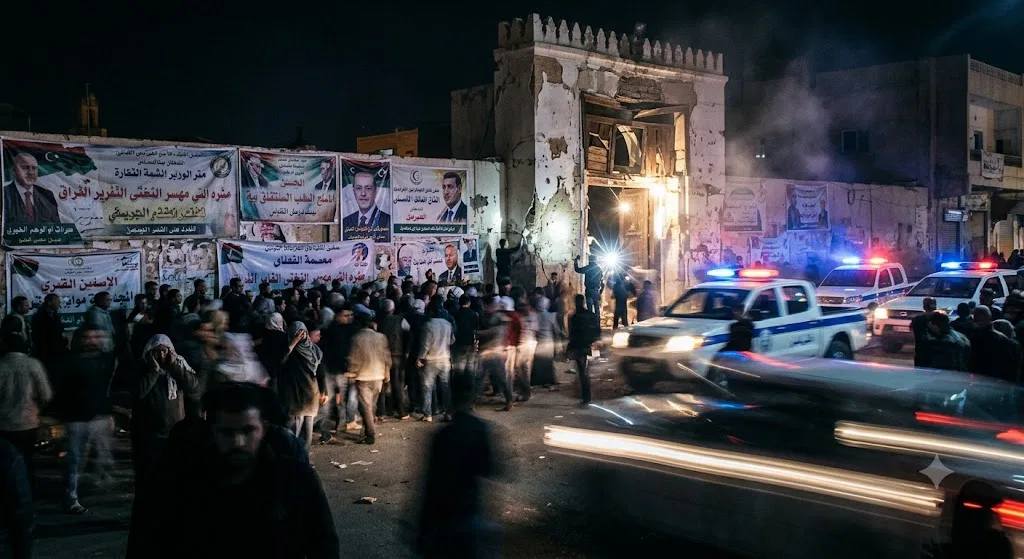
One of Libya’s most important collective-belief conflicts concerns Sufism, a broad current of Islamic devotional life that has deep historical roots in the country. Many Libyan communities have honoured religious teachers at tombs and shrines, preserved manuscripts associated with them, or gathered at sites connected with local spiritual history. Critics influenced by strict Salafi interpretations regard some of these practices as forbidden innovations or forms of idolatry.
After Gaddafi’s fall, that theological disagreement became a campaign of physical destruction. Human Rights Watch documented assaults beginning in Tripoli in October 2011, including the removal of remains from the Al-Masry shrine, followed by attacks on cemeteries and shrines in Tripoli and Benghazi. In August 2012, attackers demolished major sites, including the shrine of Sidi Abdul-Salam al-Asmar in Zliten and the Al-Sha’ab Mosque in central Tripoli. Tombs, libraries and associated cultural material were damaged or destroyed.[Human Rights Watch]hrw.orgHuman Rights Watch Libya: Stop Attacks on Sufi SitesHuman Rights Watch Libya: Stop Attacks on Sufi Sites
The attackers were not simply frightened crowds reacting to a single rumour. They appear to have acted from a sustained ideological conviction that shrine practices endangered correct religion. Yet the episode still belongs to the history of social scares because a diverse devotional tradition was recast as an urgent contaminating threat. Once that framing was accepted, demolition could be presented not as vandalism but as purification.
The state’s response intensified concern. Libya’s newly elected congress held an emergency session in August 2012, while witnesses and politicians alleged that security personnel had failed to intervene or had sympathised with the attackers. International observers called for protection of the sites and prosecution of those responsible.[The Wall Street Journal]wsj.comOpen source on wsj.com.
Attacks continued in later years. Human Rights Watch reported a renewed wave in 2017, showing that the 2012 destruction was not an isolated outburst. Sufi leaders and worshippers were also subjected to intimidation and restrictions in areas controlled by hard-line armed factions.[Human Rights Watch]hrw.orgHuman Rights Watch Libya: New Wave of Attacks Against Sufi SitesHuman Rights Watch Libya: New Wave of Attacks Against Sufi Sites
Calling the victims a “cult” would be misleading. Sufism is not a single secretive organisation, and Libya’s Sufi traditions include long-established communities woven into local religious and national history. The hostile label worked politically because it turned a disagreement over worship and heritage into a struggle between supposed religious purity and corruption.
The Sanusi movement and the danger of retrospective labelling
The Sanusi movement offers an older example of how religious organisations can be distorted by the language used to describe them. Founded in the nineteenth century, it developed networks of religious lodges and social authority across Cyrenaica and the Sahara. It later became central to resistance against Italian colonial expansion and to the emergence of Libyan nationalism. Idris al-Sanusi eventually became the first king of independent Libya.[Oxford Reference]oxfordreference.comOpen source on oxfordreference.com.
Colonial observers sometimes described Islamic revivalist or anti-colonial movements as fanatical sects. Such language implied irrational obedience to mysterious religious chiefs while obscuring more ordinary sources of mobilisation: invasion, land seizure, tribal alliances, taxation, spiritual loyalty and the defence of local autonomy. Modern scholarship instead treats the Sanusi order as a changing religious and political network whose leaders negotiated, collaborated, resisted and competed under severe colonial pressure.[OUP Academic]academic.oup.comAcademic Conclusions | Religion as ResistanceAcademic Conclusions | Religion as Resistance
The distinction matters for any history of “cults” in Libya. A movement can be disciplined, charismatic and religiously conservative without fitting the popular image of a manipulative cult. Sanusi authority was embedded in communities and later connected to national government; it cannot be reduced to collective delusion. The cult label, when used loosely, tells readers more about the fears of colonial officials than about the people being described.
The 2011 “African mercenary” panic
The most consequential rumour panic in recent Libyan history arose during the 2011 uprising against Gaddafi. The regime had genuine political, military and economic relationships with other African states, and some foreign fighters did serve in pro-Gaddafi forces. But reports of mercenaries quickly expanded into a much broader belief that Black men in Libya were likely to be regime gunmen.
In the confusion of civil war, the distinction between verified combatants, migrant workers, refugees, Black Libyans and foreign civilians collapsed. Checkpoints, neighbourhood patrols and armed groups treated skin colour, nationality or an unfamiliar accent as evidence of hidden allegiance. Human Rights Watch reported widespread arbitrary arrests and frequent abuse of Africans in Tripoli, even while noting that it had not substantiated every circulating claim of systematic killing.[Human Rights Watch]hrw.orgHuman Rights Watch Libya: Stop Arbitrary Arrests of Black AfricansHuman Rights Watch Libya: Stop Arbitrary Arrests of Black Africans
Amnesty International documented house raids, violent attacks and unlawful detention directed at suspected mercenaries, including both sub-Saharan Africans and Black Libyans. It warned that opposition forces had attacked people on suspicion rather than on demonstrated participation in combat.[Amnesty International]amnesty.orgOpen source on amnesty.org.
This was not a wholly invented fear. Gaddafi’s forces did use some foreign personnel, and wartime governments often employ outsiders. The panic emerged from the leap between two very different propositions: that some mercenaries existed, and that almost any Black African man might be one. Contemporary reporting described wounded migrants being accused by strangers in hospital beds and foreign workers attempting to flee a country in which their appearance had become incriminating.[The Guardian]theguardian.comThe Guardian Libya: Gaddafi's army of mercenaries face backlashThe Guardian Libya: Gaddafi's army of mercenaries face backlash
The rumour spread because it answered several emotional needs at once. It explained how the regime could attack its own population, gave rebels a visible enemy to search for, and transformed complex military uncertainty into a simple test of identity. Older racism against sub-Saharan migrants made the story easier to believe. Armed checkpoints and social media then converted repetition into apparent confirmation: every arrest could be presented as proof that the mercenary network was larger than previously imagined.
The consequences extended beyond individual detentions. Black residents of Tawergha, a town associated with Gaddafi’s assault on Misrata, were collectively accused of atrocities and driven from their homes. Serious crimes had been alleged against some pro-Gaddafi fighters, but human-rights investigations found that whole communities were subjected to revenge attacks, arbitrary detention and abuse on the basis of collective identity and presumed loyalty.[Human Rights Watch]hrw.orgHuman Rights Watch Libya: Militias Terrorizing Residents of 'Loyalist' TownHuman Rights Watch Libya: Militias Terrorizing Residents of 'Loyalist' Town
This is a classic feature of wartime moral panic: a real security problem becomes racialised and generalised until membership of a category substitutes for evidence of individual conduct.
Gaddafi’s manufactured political faith
Muammar Gaddafi’s rule from 1969 to 2011 produced a different kind of collective-belief system. Libya was officially presented as a state governed directly by the people through popular congresses. In practice, political power remained concentrated around Gaddafi, his security system and competing networks dependent on his favour.
The ideological centrepiece was The Green Book, first published in the 1970s. It claimed to offer a “Third Universal Theory” beyond capitalism and communism and depicted representative institutions and political parties as forms of domination. Its simple slogans were embedded in education, public signage, political ceremonies and state media. Although Gaddafi avoided an ordinary presidential title, he was presented as the revolution’s permanent guide and interpreter.[Time]time.comThe Green Book Project by Jehad NgaThe Green Book Project by Jehad Nga
“Cult of personality” is appropriate here because the regime deliberately elevated one living leader through controlled media, ritualised praise and compulsory ideology. It does not mean that Libyans uniformly believed every claim. Public conformity under dictatorship can reflect fear, career necessity, exhaustion, genuine loyalty or some mixture of all four. Staged rallies and official slogans reveal what people were expected to perform, not necessarily what they privately thought. Reporting from government-controlled Tripoli during the 2011 war described tightly managed access for journalists and a pervasive media environment centred on Gaddafi’s image.[Time]time.comTheater of War: Inside Gaddafi's LibyaWith the start of NATO's bombing campaign, the regime tightened its control on foreign journalists, often confining them to the hotel for…
The system also encouraged conspiratorial explanations for dissent. Opponents could be depicted as foreign agents, drugged youths, religious extremists or traitors manipulated from abroad. Such stories protected the central myth that the people and the revolution were united: if protest existed, it had to come from contamination rather than legitimate grievance.
Gaddafi’s personality system therefore differed from a small, enclosed religious cult. It operated through an entire authoritarian state. Its power rested not only on devotion but also on censorship, patronage, surveillance and violence. The language of collective belief helps explain its rituals and myths, but it should never obscure the coercive institutions enforcing them.
What makes fear spread in Libya
The country’s best-documented scares share several social conditions.
Fragmented authority. Since 2011, rival governments, militias, religious bodies and security agencies have competed to define lawful behaviour. An accusation that would ordinarily require investigation can become an instrument of whichever armed actor controls the neighbourhood.
Low trust in institutions. When courts, police and media are seen as partisan or inaccessible, people rely more heavily on family networks, clerics, local Facebook pages and rumours. Repetition within a trusted circle may carry more weight than an official denial.
War and displacement. Conflict creates unexplained deaths, missing people, unfamiliar armed men and rapid population movement. Under such conditions, stories about hidden mercenaries, traitors or supernatural harm can offer emotionally satisfying explanations for events that are otherwise frightening and chaotic.
Gender and migration status. Women accused of unconventional behaviour and migrants portrayed as culturally foreign face particular risks. They often have less ability to challenge public accusations or obtain protection from armed institutions.
Public displays of confession and capture. When security agencies publish photographs of suspects and supposed magical objects, they produce a circular form of evidence. The arrest is treated as proof of the accusation, while the accusation is used to justify the arrest.
Religious competition. Disputes over shrines, healing and spiritual authority are not merely abstract theological arguments. They concern who may speak for religion, control mosques, shape law and define respectable public life.
What should and should not be called mass hysteria
Libya’s experience shows why careful labels matter.
The persecution of alleged sorcerers is better described as a witchcraft or morality panic when accusations become generalised and punishment outruns reliable evidence. The destruction of Sufi sites is a form of religious persecution and iconoclasm, driven by an ideological campaign against practices portrayed as corrupt. The 2011 mercenary scare was a wartime rumour panic with racialised consequences. Gaddafi’s political system was an authoritarian personality cult, maintained through propaganda and coercion.
None of these is a proven outbreak of mass psychogenic illness. Nor should sincere religious conviction automatically be treated as delusion. The relevant question is not whether a belief seems strange to outsiders, but what happens when that belief is converted into public accusation, collective punishment or state violence.
Why these episodes still matter
Libya’s scares have left physical and social ruins. Shrines and manuscripts were destroyed. Migrants and Black Libyans were detained or assaulted. Women and activists have faced online vilification followed by security intervention. Supernatural accusations have entered formal criminal law, while competing authorities continue to use moral language to legitimise coercion.
These histories also challenge an easy division between “ancient superstition” and modern politics. Mobile phones, social media, televised confessions and official Facebook pages do not necessarily eliminate magical or conspiratorial thinking. They can accelerate it. A rumour that once travelled through a market or neighbourhood can now be amplified by armed institutions and presented to thousands of people in the visual language of breaking news.
The most useful way to understand Libya is therefore not as a collection of bizarre beliefs. It is as a country where periods of colonial violence, dictatorship and state fragmentation have repeatedly made the ownership of truth a political weapon. Beliefs become socially dangerous when no trusted institution can test them, when accusation carries more force than evidence, and when the people spreading the story also possess the power to arrest, exile or destroy.
Amazon book picks
Further Reading
Books and field guides related to When Fear Became Power in Libya. Use these as the next step if you want deeper reading beyond the article.

The Return: Fathers, Sons and the Land in Between
Explores dictatorship, repression and memory in Libya.



Libya: From Colony to Revolution
Provides essential context for fear, politics and social change.
Endnotes
1.
Source: ohchr.org
Link:https://www.ohchr.org/en/special-procedures/ie-albinism/witchcraft-and-human-rights
Source snippet
Witchcraft and human rightsWitchcraft related beliefs and practices have resulted in serious violations of human rights including, b...
2.
Source: hrsly.com
Link:https://hrsly.com/en/human-rights-solidarity-organization-serious-violations-committed-under-the-pretext-of-combating-sorcery-and-witchcraft-in-libya/
Source snippet
Human Rights Solidarity Organization: Serious violations...April 24, 2026 — Human Rights Solidarity (LHRS): “Anti‑Sorcery” Campaign Led...
Published: April 24, 2026
3.
Source: ohchr.org
Title: libya un experts call swift and rigorous response destruction sufi sites
Link:https://www.ohchr.org/en/press-releases/2012/09/libya-un-experts-call-swift-and-rigorous-response-destruction-sufi-sites
4.
Source: academic.oup.com
Title: Academic Conclusions | Religion as Resistance
Link:https://academic.oup.com/book/2495/chapter/142783045
5.
Source: amnesty.org
Link:https://www.amnesty.org/en/wp-content/uploads/2021/06/mde190252011en.pdf
6.
Source: amnesty.org
Title: libya ntc must take control prevent spiral abuses
Link:https://www.amnesty.org/en/latest/press-release/2011/09/libya-ntc-must-take-control-prevent-spiral-abuses/
7.
Source: time.com
Title: The Green Book Project by Jehad Nga
Link:https://time.com/3791841/the-green-book-project-by-jehad-nga/
8.
Source: time.com
Title: Theater of War: Inside Gaddafi’s Libya
Link:https://time.com/3778127/theatre-of-war-inside-gaddafis-libya/
Source snippet
With the start of NATO's bombing campaign, the regime tightened its control on foreign journalists, often confining them to the hotel for...
9.
Source: amnesty.org
Title: revenge killings and reckless firing in opposition held eastern libya
Link:https://www.amnesty.org/en/latest/campaigns/2011/05/revenge-killings-and-reckless-firing-in-opposition-held-eastern-libya/
10.
Source: amnesty.org
Title: security council and african union failing libyan people
Link:https://www.amnesty.org/en/latest/press-release/2011/02/security-council-and-african-union-failing-libyan-people/
11.
Source: amnesty.org
Link:https://www.amnesty.org/en/latest/news/2021/02/libya-ten-years-after-uprising-abusive-militias-evade-justice-and-instead-reap-rewards-2/
12.
Source: amnesty.org
Link:https://www.amnesty.org/en/wp-content/uploads/2021/06/nws210022012en.pdf
13.
Source: amnesty.org
Link:https://www.amnesty.org/ru/wp-content/uploads/2021/05/POL100012007ENGLISH.pdf
14.
Source: amnesty.org
Link:https://www.amnesty.org/en/wp-content/uploads/2021/06/English.pdf
15.
Source: amnesty.org
Link:https://www.amnesty.org/en/wp-content/uploads/2021/06/nws210042013en.pdf
16.
Source: amnesty.org
Link:https://www.amnesty.org/en/wp-content/uploads/2023/03/WEBPOL1056702023ENGLISH.pdf
17.
Source: amnesty.org
Link:https://www.amnesty.org/en/wp-content/uploads/2025/04/WEBPOL1085152025ENGLISH.pdf
18.
Source: amnesty.org
Link:https://www.amnesty.org/en/wp-content/uploads/2021/05/POL1025522016ENGLISH.pdf
19.
Source: amnesty.org
Title: libya internal security agency must end abuses in name of guarding virtue
Link:https://www.amnesty.org/en/latest/news/2024/02/libya-internal-security-agency-must-end-abuses-in-name-of-guarding-virtue/
20.
Source: amnesty.nl
Link:https://www.amnesty.nl/content/uploads/2016/12/libya_i_report_i_militias_threaten_hopes_for_new_libya_-_no_pic.pdf?x65391=
21.
Source: state.gov
Link:https://www.state.gov/report/custom/fd20777d6a
22.
Source: state.gov
Link:https://www.state.gov/report/custom/3894b18c1b
23.
Source: 2017-2021.state.gov
Link:https://2017-2021.state.gov/report/custom/f6de192059/
24.
Source: state.gov
Link:https://www.state.gov/report/custom/55f5d2c874
25.
Source: 2021-2025.state.gov
Link:https://2021-2025.state.gov/report/custom/3b57b4d9fd/
26.
Source: facebook.com
Title: 70 year old woman lynched over witchcraft accusation utm mediumfacebook witchcra
Link:https://www.facebook.com/3fm927/posts/70-year-old-woman-lynched-over-witchcraft-accusation-utm_mediumfacebook-witchcra/1172100751617190/
27.
Source: facebook.com
Link:https://www.facebook.com/lyobserver/posts/a-sorcerer-from-burkina-faso-was-arrested-in-sabha-southern-libya-practising-bla/1747394865365586/
28.
Source: facebook.com
Title: territorial expansion of libya under italian colonial rule
Link:https://www.facebook.com/chmubeen.khan.90/posts/territorial-expansion-of-libya-under-italian-colonial-rule/1628896074768067/
29.
Source: facebook.com
Title: libya imad2020 unmas in partnership with the libyan ngo free fields foundation d
Link:https://www.facebook.com/UnitedNationsMineActionService/posts/libya-imad2020-unmas-in-partnership-with-the-libyan-ngo-free-fields-foundation-d/10157361715270679/
30.
Source: facebook.com
Title: The Libya Observer
Link:https://www.facebook.com/lyobserver/posts/why-did-the-libyans-rise-up-against-gaddafi-one-of-the-worst-dictators-in-modern/1348671757304102/
31.
Source: facebook.com
Link:https://www.facebook.com/WorldAssociationOfSufiBrotherhood/posts/the-sufi-order-of-sanussi-tariqa-sanusiyahthe-senussi-order-has-beenhistorically/505947332832190/
32.
Source: frontiersin.org
Title: Frontiers Characteristics of Adolescents Affected by Mass
Link:https://www.frontiersin.org/journals/psychiatry/articles/10.3389/fpsyt.2020.493094/full
Source snippet
FrontiersCharacteristics of Adolescents Affected by Mass...November 17, 2020 — by RP Sapkota · 2020 · Cited by 26 — This paper presents...
Published: November 17, 2020
33.
Source: theguardian.com
Link:https://www.theguardian.com/uk-news/2025/sep/09/mass-psychogenic-illness-caused-toxic-substance-alert-at-heathrow-says-scientist
Source snippet
Despite initial concerns, investigations by emergency services found no trace of any toxic agent. Experts now suggest the incident may be...
34.
Source: newarab.com
Title: Libyan police arrest three Chadians for witchcraft
Link:https://www.newarab.com/News/2019/8/28/Libyan-police-arrest-three-Chadians-for-witchcraft
Source snippet
The New ArabLibyan police arrest three Chadians for witchcraft28 Aug 2019 — Libyan police in Benghazi have arrested three Chadian men for...
35.
Source: newarab.com
Title: libyan sisters freed after witchcraft hate campaign
Link:https://www.newarab.com/news/libyan-sisters-freed-after-witchcraft-hate-campaign
Source snippet
The New ArabLibyan sisters freed after 'witchcraft' hate campaign4 Apr 2023 — Accusations of witchcraft have become shockingly common in...
36.
Source: lawsociety.ly
Title: المجمع القانونيCriminalization of Witchcraft
Link:https://lawsociety.ly/en/legislation/law-no-6-of-2024-on-the-criminalization-of-witchcraft-sorcery-divination-and-related-practices/
Source snippet
6 of 2024May 15, 2024 — 15 May 2024 — Law No. 6 of 2024 establishes severe penalties, including the death penalty, for the criminalizatio...
Published: May 15, 2024
37.
Source: libyaobserver.ly
Link:https://libyaobserver.ly/inbrief/anti-terrorism-unit-arrests-three-nigerians-misrata-over-witchcraft-and-drug-trafficking
38.
Source: hrw.org
Title: Human Rights Watch Libya: Stop Attacks on Sufi Sites
Link:https://www.hrw.org/news/2012/08/31/libya-stop-attacks-sufi-sites
39.
Source: wsj.com
Link:https://www.wsj.com/articles/SB10000872396390444230504577613260789607638
40.
Source: hrw.org
Title: Human Rights Watch Libya: New Wave of Attacks Against Sufi Sites
Link:https://www.hrw.org/news/2017/12/07/libya-new-wave-attacks-against-sufi-sites
41.
Source: oxfordreference.com
Link:https://www.oxfordreference.com/display/10.1093/oi/authority.20110803100441439?d=%2F10.1093%2Foi%2Fauthority.20110803100441439&p=emailAwS1iljmfuAso
42.
Source: hero.epa.gov
Link:https://hero.epa.gov/reference/7643296/
43.
Source: hrw.org
Title: Human Rights Watch Libya: Stop Arbitrary Arrests of Black Africans
Link:https://www.hrw.org/news/2011/09/04/libya-stop-arbitrary-arrests-black-africans
44.
Source: theguardian.com
Title: The Guardian Libya: Gaddafi’s army of mercenaries face backlash
Link:https://www.theguardian.com/world/2011/sep/02/libya-gaddafi-army-mercenaries-backlash
45.
Source: hrw.org
Title: Human Rights Watch Libya: Militias Terrorizing Residents of ‘Loyalist’ Town
Link:https://www.hrw.org/news/2011/10/30/libya-militias-terrorizing-residents-loyalist-town
46.
Source: theguardian.com
Link:https://www.theguardian.com/books/booksblog/2010/mar/24/dictator-lit-gaddafi
Source snippet
In *Escape to Hell*, Gaddafi presents chaotic, surreal prose lacking structure, characters, or coherent narrative. He vehemently criticiz...
47.
Source: hrw.org
Title: libya new wave attacks against sufi sites
Link:https://www.hrw.org/video-photos/photo-essay/2017/12/06/libya-new-wave-attacks-against-sufi-sites
48.
Source: hrw.org
Title: papua new guinea
Link:https://www.hrw.org/world-report/2017/country-chapters/papua-new-guinea
49.
Source: hrw.org
Title: saudi arabia witchcraft and sorcery cases rise
Link:https://www.hrw.org/news/2009/11/24/saudi-arabia-witchcraft-and-sorcery-cases-rise
50.
Source: hrw.org
Title: papua new guinea
Link:https://www.hrw.org/world-report/2018/country-chapters/papua-new-guinea
51.
Source: hrw.org
Title: papua new guinea
Link:https://www.hrw.org/world-report/2016/country-chapters/papua-new-guinea
52.
Source: hrw.org
Title: saudi arabia halt womans execution witchcraft
Link:https://www.hrw.org/news/2008/02/13/saudi-arabia-halt-womans-execution-witchcraft
53.
Source: hrw.org
Title: saudi arabia move curb religious police abuses 0
Link:https://www.hrw.org/news/2016/04/18/saudi-arabia-move-curb-religious-police-abuses-0
54.
Source: hrw.org
Title: saudi arabia forthcoming penal code should protect rights
Link:https://www.hrw.org/news/2022/04/29/saudi-arabia-forthcoming-penal-code-should-protect-rights
55.
Source: hrw.org
Title: papua new guinea failing protect women and girls
Link:https://www.hrw.org/news/2016/01/27/papua-new-guinea-failing-protect-women-and-girls
56.
Source: hrw.org
Title: EIPR INTERIGHTS HRW v Libya 280211 FINAL
Link:https://www.hrw.org/sites/default/files/related_material/EIPR%20INTERIGHTS%20%20HRW%20v%20Libya%20280211%20FINAL.pdf
57.
Source: hrw.org
Title: libya apparent war crimes tripoli
Link:https://www.hrw.org/news/2020/06/16/libya-apparent-war-crimes-tripoli
58.
Source: hrw.org
Title: libya stranded foreign workers need urgent evacuation
Link:https://www.hrw.org/news/2011/03/02/libya-stranded-foreign-workers-need-urgent-evacuation
59.
Source: hrw.org
Title: libya african rights court issues first ruling against state
Link:https://www.hrw.org/news/2011/03/30/libya-african-rights-court-issues-first-ruling-against-state
60.
Source: hrw.org
Link:https://www.hrw.org/video-photos/audio/2011/09/30/libya-evidence-mass-graves-risk
61.
Source: Wikipedia
Title: Muammar Gaddafi
Link:https://en.wikipedia.org/wiki/Muammar_Gaddafi
62.
Source: theguardian.com
Title: was ripon school gripped by mass psychogenic illness
Link:https://www.theguardian.com/science/2015/nov/14/was-ripon-school-gripped-by-mass-psychogenic-illness
63.
Source: theguardian.com
Title: amnesty widespread torture libyan militias
Link:https://www.theguardian.com/world/2012/feb/16/amnesty-widespread-torture-libyan-militias
64.
Source: newarab.com
Title: Libyas Sufi shrines under attack by extremist militias HRW
Link:https://www.newarab.com/News/2017/12/9/Libyas-Sufi-shrines-under-attack-by-extremist-militias-HRW
Additional References
65.
Source: govinfo.gov
Link:https://www.govinfo.gov/content/pkg/CPRT-108JPRT20429/html/CPRT-108JPRT20429.htm
66.
Source: ojp.gov
Link:https://www.ojp.gov/pdffiles1/nij/grants/211203.pdf
67.
Source: researchgate.net
Link:https://www.researchgate.net/publication/271759288_Mass_hysteria_among_South_African_primary_school_learners_in_Kwa-Dukuza_KwaZulu-Natal
68.
Source: fln.dk
Link:https://fln.dk/media/qe4dfgrw/547-251208-libyen-world-organisation-against-torture-omct-libyan-anti-torture-network-lan-upr-4th-cycle-js9-bidrag-til-summary-of-stakeholders-information-sitecoredato-30-04-2025.pdf
69.
Source: al-islam.org
Link:https://al-islam.org/history-muslim-philosophy-volume-2-book-8/chapter-73-renaissance-north-africa-sanusiyyah-movement
70.
Source: gq.com
Link:https://www.gq.com/story/libya-dispatch-sarah-topol-5
71.
Source: globalr2p.org
Link:https://www.globalr2p.org/wp-content/uploads/2020/07/LibyaAndR2POccasionalPaper.pdf
72.
Source: allafrica.com
Link:https://allafrica.com/view/group/main/main/id/00019031.html
73.
Source: fieldepidemiology.org
Link:https://fieldepidemiology.org/index.php/ajfe/article/download/7807/6435/21437
74.
Source: kaowarsom.be
Link:https://www.kaowarsom.be/documents/BULLETINS_MEDEDELINGEN/2001-SUPPLEMENT.pdf
Topic Tree
Follow this branch
Related pages 192
- Antigua and Barbuda
- Argentina Belief Scares
- Azerbaijan Belief
- Bahrain Beliefs
- North Korea
- +187 more in sidebar