Within Central African Republic
How Does Misfortune Become a Witchcraft Charge?
Illness, death and family conflict can become personalised accusations when communities seek an intentional cause for suffering.
On this page
- From unexplained suffering to suspicion
- Why vulnerable people become targets
- How neighbours and healers validate blame
Page outline Jump by section
Introduction
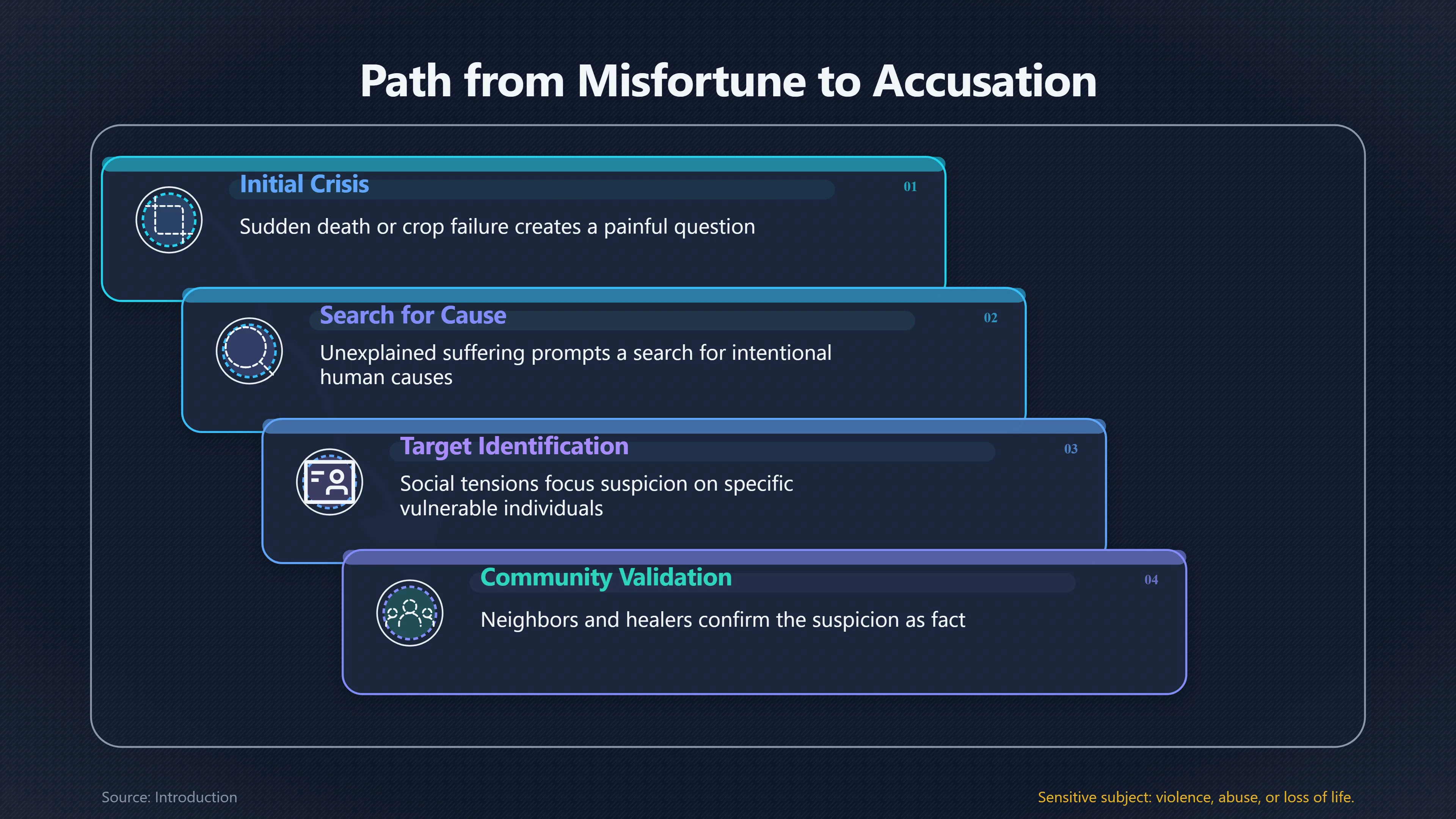
In the Central African Republic, witchcraft accusations usually begin with an ordinary crisis rather than an organised campaign. A sudden death, a child’s unexplained illness, repeated crop failure, infertility, financial collapse or a bitter family dispute creates a painful question: why did this happen? Where suffering appears random and institutions cannot provide convincing answers, many people look for intentional human causes rather than chance. The search shifts from “what caused this?” to “who caused this?”. Once that change occurs, suspicion can rapidly settle on a particular individual, turning misfortune into a criminal accusation or an act of community violence.[Avocats Sans Frontières]asf.beAvocats Sans FrontièresWitchcraft representations and judicial treatment of the offence of Charlatanism and Witchcraft Practices in the C…
This process is not simply a matter of superstition replacing medicine. Many Central Africans simultaneously use hospitals, churches or mosques, and spiritual practitioners. The danger arises when personal tragedy becomes personalised blame, especially in communities affected by poverty, conflict and weak access to healthcare or effective justice.[Avocats Sans Frontières]asf.beAvocats Sans FrontièresWitchcraft representations and judicial treatment of the offence of Charlatanism and Witchcraft Practices in the C…
From unexplained suffering to suspicion
The first step is usually an event that feels too serious to be accidental. Families coping with bereavement, chronic illness or repeated hardship often seek an explanation that restores a sense of order. If no medical diagnosis, legal investigation or practical cause seems satisfactory, invisible supernatural attack may become a socially accepted explanation.
This is particularly significant in the Central African Republic because decades of conflict have damaged health services, courts and other state institutions. Armed violence, displacement and economic insecurity have increased uncertainty, making hidden supernatural causes appear more plausible to some communities when ordinary explanations seem incomplete. Avocats Sans Frontières notes that the crises affecting the country since 2013 have strengthened reliance on witchcraft explanations for death, illness, accidents and other misfortunes.[Avocats Sans Frontières]asf.beAvocats Sans FrontièresWitchcraft representations and judicial treatment of the offence of Charlatanism and Witchcraft Practices in the C…
Importantly, belief in witchcraft does not automatically produce an accusation. Many people hold such beliefs without identifying a specific culprit. The crucial turning point comes when a community decides that someone intentionally caused the suffering.
Why vulnerable people become targets
Once a community begins searching for a human agent, suspicion rarely falls at random. Instead, existing social tensions shape who becomes accused.
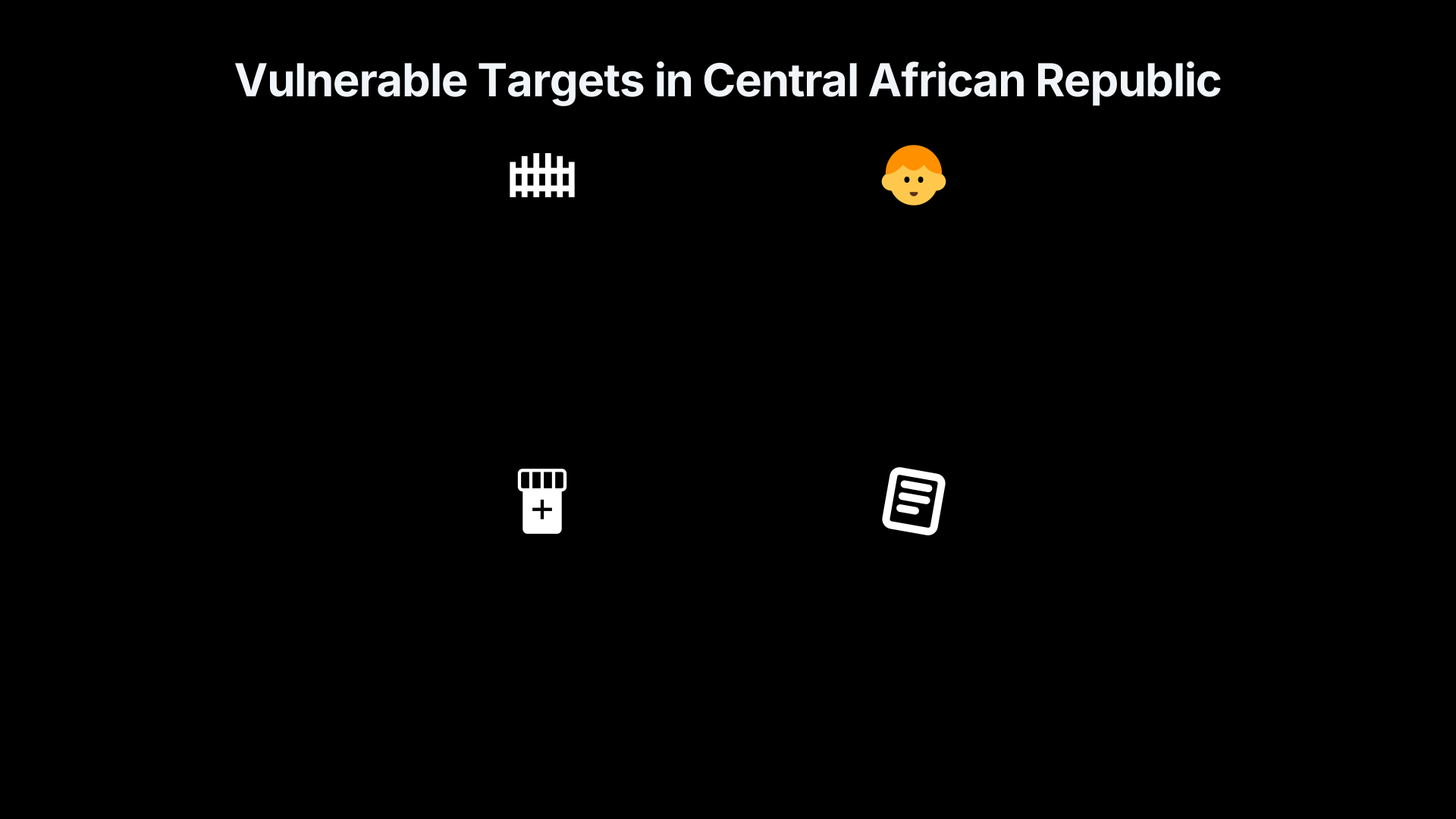
Common risk factors include:
- Older women living alone or widowed.
- Children viewed as unusual, troublesome or difficult.
- People with disabilities or chronic illness.
- Individuals involved in inheritance or property disputes.
- Neighbours who are socially isolated or already unpopular.
- Family members with long-running personal conflicts.
These accusations frequently emerge from relationships that were already strained before the illness or death occurred. A disagreement over land, money, marriage or household authority may suddenly be reinterpreted through the language of witchcraft. The accusation provides a moral explanation for conflict while appearing to justify exclusion or punishment.[asf.be]asf.beAvocats Sans FrontièresThe penalisation of charlatanism and witchcraft practices: An obstacle to the realisation of the rights of women a…
Human rights organisations repeatedly report that women and children are disproportionately affected. Rather than reflecting evidence of supernatural activity, this pattern closely follows existing inequalities in power, wealth and social protection.[Avocats Sans Frontières]asf.beAvocats Sans FrontièresThe penalisation of charlatanism and witchcraft practices: An obstacle to the realisation of the rights of women a…
How neighbours and healers validate blame
A suspicion becomes far more dangerous when other people confirm it.
Neighbours may reinterpret ordinary behaviour as proof that they had “always known” something was wrong. Quietness becomes secrecy. Confidence becomes arrogance. Previous disagreements become evidence of hidden malice. Everyday events are reorganised into a story that appears internally consistent, even though none of the individual details demonstrates guilt.
Traditional healers or spiritual specialists can also play an important role. Their opinions may be sought to identify the supposed source of misfortune or confirm suspicions already circulating within a family. In some cases, religious figures conducting deliverance or exorcism rituals likewise reinforce the belief that a particular person is responsible for hidden harm. Avocats Sans Frontières has documented increased involvement by some religious bodies in campaigns against alleged witchcraft during recent crises.[Avocats Sans Frontières]asf.beAvocats Sans FrontièresWitchcraft representations and judicial treatment of the offence of Charlatanism and Witchcraft Practices in the C…
Once respected community members endorse an accusation, social pressure often discourages scepticism. Family members who question the claim risk appearing indifferent to the original tragedy or even sympathetic to the alleged witch.
Why accusations can spread so quickly
Witchcraft accusations often develop through ordinary social conversation rather than organised campaigns.
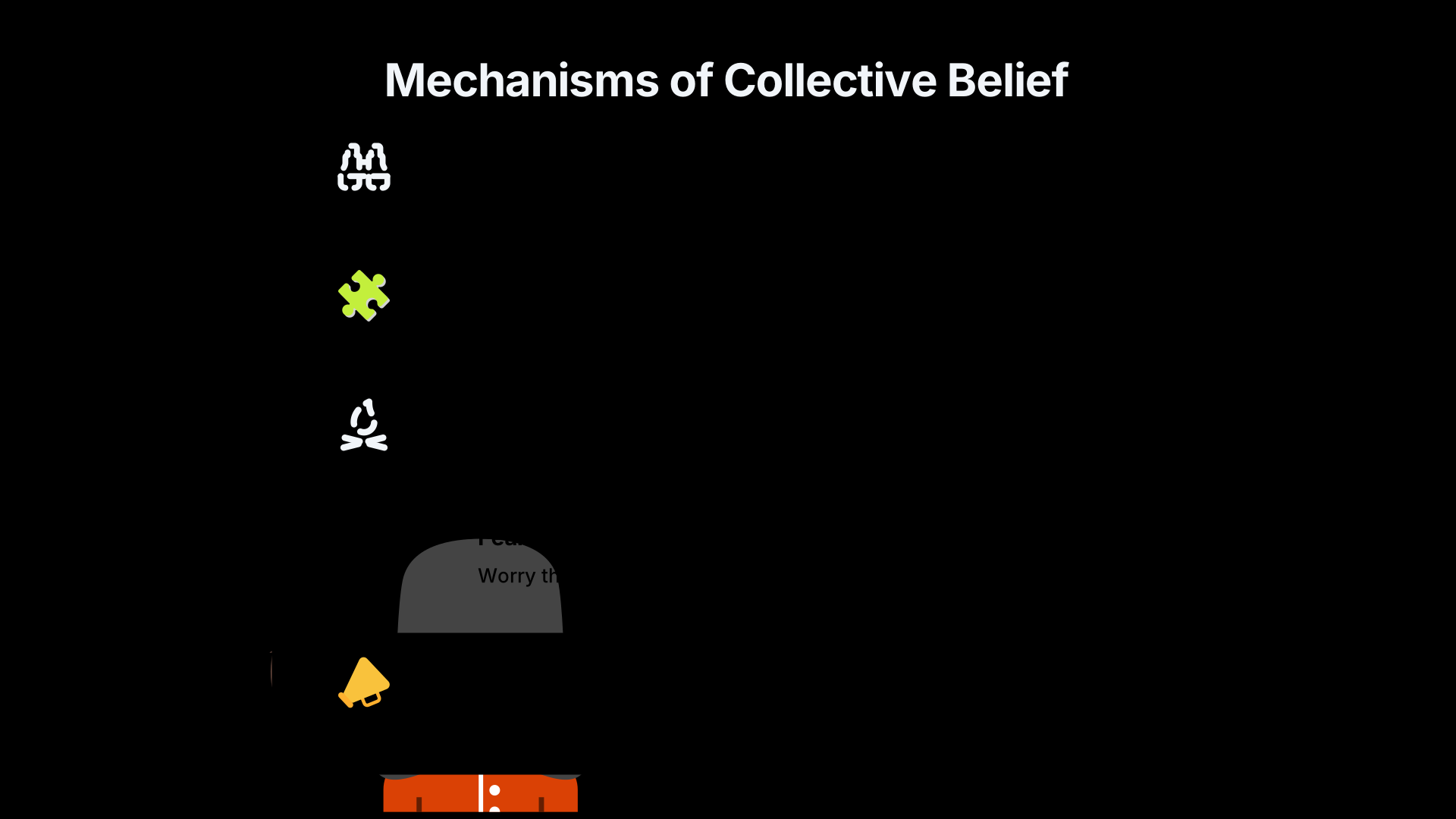
Several psychological and social mechanisms reinforce the process:
- Confirmation bias. People notice events supporting the accusation while overlooking contradictory evidence.
- Pattern seeking. Multiple unrelated hardships become linked into one narrative of deliberate attack.
- Collective reinforcement. Agreement among neighbours increases confidence even when no independent evidence exists.
- Fear of future harm. People worry that failing to identify a witch leaves the community vulnerable to further suffering.
- Social conformity. Public disagreement with the majority may carry personal risks.
These mechanisms help explain why accusations can feel convincing to participants despite the absence of verifiable evidence. The accusation becomes socially persuasive because it organises uncertainty into a coherent story shared by the wider community.
When belief enters the legal system
The Central African Republic presents an unusual situation because accusations may move beyond community suspicion into formal criminal proceedings.
Articles of the penal code criminalising certain forms of “charlatanism” and witchcraft practices have allowed allegations to enter the courts despite the difficulty of establishing objective evidence. Researchers and legal organisations have argued that the laws are drafted so broadly that judges often rely heavily on personal conviction, witness testimony or the opinions of traditional practitioners rather than evidence capable of demonstrating a physical offence.[asf.be]asf.beAvocats Sans FrontièresWitchcraft representations and judicial treatment of the offence of Charlatanism and Witchcraft Practices in the C…
Earlier human rights reporting similarly observed that neighbours and traditional practitioners frequently testified in witchcraft cases and that magistrates exercised wide discretion because the law did not clearly define what constituted witchcraft.[Refworld]refworld.org2010 Report on International Religious Freedom - Central African Republic | Refworld…
The result is that an accusation originating in grief or family conflict can acquire the authority of the legal system, even though the underlying claim remains impossible to verify by conventional standards.
Why this mechanism matters
Understanding how misfortune becomes a witchcraft charge helps explain why accusations persist despite modern healthcare, established religions and formal courts.
The process is less about isolated supernatural belief than about how communities cope with uncertainty. Illness, death and hardship create a demand for explanation. Existing social tensions identify potential suspects. Community endorsement transforms suspicion into apparent certainty. Finally, informal punishment—or sometimes formal prosecution—can follow.
Seen in this way, witchcraft accusations in the Central African Republic are not random episodes of irrational panic. They are a recurring social mechanism through which grief, fear, inequality and unresolved conflict become concentrated onto vulnerable individuals, often with devastating consequences.[Avocats Sans Frontières]asf.beAvocats Sans FrontièresWitchcraft representations and judicial treatment of the offence of Charlatanism and Witchcraft Practices in the C…
Amazon book picks
Further Reading
Books and field guides related to How Does Misfortune Become a Witchcraft Charge?. Use these as the next step if you want deeper reading beyond the article.


African religions and philosophy
Explains religious ideas behind interpretations of misfortune.
Endnotes
1.
Source: refworld.org
Link:https://www.refworld.org/reference/annualreport/usdos/2010/en/76879
Source snippet
2010 Report on International Religious Freedom - Central African Republic | Refworld...
2.
Source: refworld.org
Link:https://www.refworld.org/reference/annualreport/usdos/2012/en/88032
3.
Source: refworld.org
Link:https://www.refworld.org/reference/annualreport/usdos/2011/en/82587
4.
Source: refworld.org
Link:https://www.refworld.org/reference/annualreport/usdos/2011/en/78757
5.
Source: refworld.org
Link:https://www.refworld.org/reference/annualreport/usdos/2008/en/61552
6.
Source: refworld.org
Link:https://www.refworld.org/reference/annualreport/usdos/2007/en/46955
7.
Source: refworld.org
Link:https://www.refworld.org/reference/annualreport/usdos/2006/en/68670
8.
Source: asf.be
Link:https://asf.be/witchcraft-representations-and-judicial-treatment-of-the-offence-of-charlatanism-and-witchcraft-practices-in-car/
Source snippet
Avocats Sans FrontièresWitchcraft representations and judicial treatment of the offence of Charlatanism and Witchcraft Practices in the C...
9.
Source: asf.be
Link:https://asf.be/the-penalisation-of-charlatanism-and-witchcraft-practices-an-obstacle-to-the-realisation-of-the-rights-of-women-and-minors-in-the-central-african-republic/
Source snippet
Avocats Sans FrontièresThe penalisation of charlatanism and witchcraft practices: An obstacle to the realisation of the rights of women a...
10.
Source: asf.be
Link:https://asf.be/representations-sorcellaires-et-traitement-judiciaire-de-linfraction-des-pratiques-de-charlatanisme-et-de-sorcellerie-en-republique-centrafricaine/?lang=fr
Source snippet
rafricaine – Avocats Sans FrontièresJanuary 5, 2023 — 5 janvier 2023 REPRÉSENTATIONS SORCELLAIRES ET TRAITEMENT JUDICIAIRE DE L’INFRACTIO...
Published: January 5, 2023
11.
Source: asf.be
Link:https://asf.be/la-penalisation-des-pratiques-de-charlatanisme-et-de-sorcellerie-entrave-a-la-realisation-des-droits-des-femmes-et-des-personnes-mineures-en-republique-centrafricaine/?lang=fr
Source snippet
es en République centrafricaine – Avocats Sans FrontièresNovember 14, 2022 — 14 novembre 2022 LA PÉNALISATION DES PRATIQUES DE CHARLATANI...
Published: November 14, 2022
12.
Source: asf.be
Link:https://asf.be/country/cf-en/page/3/
Additional References
13.
Source: ecoi.net
Link:https://www.ecoi.net/en/document/1165699.html
Source snippet
HRC – UN Human Rights Council (formerly UN Commission on Human Rights) (Author): “Report of the Independent Expert on the situation of hu...
14.
Source: peacekeeping.un.org
Title: rca comment proteger les victimes des accusations de sorcellerie
Link:https://peacekeeping.un.org/fr/rca-comment-proteger-les-victimes-des-accusations-de-sorcellerie
Source snippet
Comment protéger les victimes des accusations de sorcellerie | Nations Unies Maintien de la paixJuly 19, 2022 — 19 juil 2022 * Image RCA...
Published: July 19, 2022
15.
Source: youtube.com
Link:https://www.youtube.com/watch?v=jClhOegbedo
Source snippet
Helen's Story: Fighting Against Harmful Witchcraft Practices in Kenya...
16.
Source: youtube.com
Title: The Witchcraft Mindset: Stop Blaming Others for Your Misfortune
Link:https://www.youtube.com/watch?v=kKpJ-FGcQCQ
Source snippet
Witchcraft Among The Azande | Disappearing Worlds (Full Documentary) | PostalPast Timelines...
17.
Source: youtube.com
Link:https://www.youtube.com/watch?v=n9cpt_OxY-o
Source snippet
Witchcraft Accusations Are Destroying Families...
18.
Source: fot.humanists.international
Title: Freedom of Thought Report Central African Republic
Link:https://fot.humanists.international/countries/africa-middle-africa/central-african-republic/
Source snippet
Freedom of Thought ReportCentral African Republic - Freedom of Thought Report...
19.
Source: youtube.com
Title: Witchcraft Accusations Are Destroying Families
Link:https://www.youtube.com/watch?v=1lI3Y_Hh8wo
Source snippet
Attention on violence linked to witchcraft accusations in parts of the Eastern Cape...
20.
Source: digitallibrary.un.org
Link:https://digitallibrary.un.org/record/4004272?ln=en
Source snippet
on the situation of the violations and abuses of human rights rooted in harmful practices related to accusations of witchcraft and ritual...
21.
Source: ascleiden.nl
Link:https://www.ascleiden.nl/publications/palm-tree-justice-bertoua-court-appeal-witchcraft-cases
22.
Source: nomadit.co.uk
Link:https://nomadit.co.uk/conference/easa2014/paper/22609
Topic Tree