When Fear Spreads Through Namibia
Namibia’s history offers no single famous “mass hysteria” comparable with the Salem trials or the Tanganyika laughter epidemic.
Page outline Jump by section
Introduction
The evidence is uneven. Newspaper archives preserve striking incidents, but systematic medical studies of individual outbreaks are scarce. That means the safest conclusion is not that Namibia has experienced waves of irrationality, but that bodily distress, religious interpretation, school pressure and public rumour have repeatedly met in ways that frightened communities. The consequences have ranged from interrupted examinations and absenteeism to the far more serious abuse or killing of people accused of witchcraft.[com.na]namibian.com.naThe Namibian Ignore mass hysteria, experts sayThe NamibianIgnore mass hysteria, experts sayOctober 25, 2017 — 26 Oct 2017 — In the past few years, incidents of mass hysteria amongst p…
Why Namibian schools became the main stage
Reports of collective illness in Namibian schools stretch across several decades and regions. The recurring pattern is remarkably consistent: a pupil develops a headache, collapses, screams, shakes or behaves unusually; nearby pupils then show similar symptoms; medical examinations find no obvious physical cause; and competing explanations emerge almost immediately.
At northern schools reported on between 2005 and 2007, pupils fainted, screamed, nodded uncontrollably or said they had seen demons. Nurses, doctors and social workers were called, but examinations reportedly found no clear disease. One education official described the problem as hysteria and expected it eventually to stop.[The Namibian]namibian.com.naThe Namibian Nodding children puzzle teachersThe NamibianNodding children puzzle teachersJuly 26, 2007 — 26 Jul 2007 — Several schools in the North have reported outbreaks of mass hy…
Examinations repeatedly appeared in the background. At one school, 32 girls in Grades 8 to 10 developed screaming fits that occurred at school but not at home. Doctors and social workers found nothing physically wrong, while parents considered closure and administrators resisted cancelling examinations. Contemporary reporting described similar incidents as commonplace around examination periods.[The Namibian]namibian.com.naThe Namibian Exam 'demons' on the looseThe NamibianExam 'demons' on the looseAugust 11, 2009 — Incidents of mass hysteria at schools in the North are not unusual around the tim…
The geographical spread was broad rather than confined to one institution. By 2017, incidents had been reported in the Oshikoto, Ohangwena, Oshana, Omusati and Kunene regions, among others. The affected pupils were said to be mostly girls, with symptoms including fainting, wailing, crawling, rolling on the ground, uncontrolled running and unusual speech.[The Namibian]namibian.com.naThe Namibian Ignore mass hysteria, experts sayThe NamibianIgnore mass hysteria, experts sayOctober 25, 2017 — 26 Oct 2017 — In the past few years, incidents of mass hysteria amongst p…
These reports should not be read as proof that every incident had the same cause. Environmental exposure, epilepsy, infection, substance use and other medical conditions must be investigated before a psychogenic diagnosis is made. “Mass psychogenic illness” is normally used only when a group develops genuine symptoms that resemble physical disease but no adequate organic cause is found. The symptoms are not invented; psychological and social stress is expressed through the body.[PMC]pmc.ncbi.nlm.nih.govby D Kokota · 2011 · Cited by 39 — Introduction. Mass hysteria is the common term used to describe a situation in which various people…
The cases that made the pattern visible
Otjomuise, 2015
In March 2015, pupils at Otjomuise Project School in Windhoek reportedly began screaming, fainting and speaking in unusually deep voices after a morning break. Teachers described the event as a bout of mass hysteria. The behaviour was alarming partly because it matched popular images of possession, even though the report did not establish a supernatural or medical cause.[The Namibian]namibian.com.naThe Namibian Mass hysteria grips pupilsThe Namibian Mass hysteria grips pupils
The incident mattered because it showed that these episodes were not restricted to remote northern schools. It also illustrated how description shapes interpretation. “Deep voices” can be reported as an observable change in speech, but calling them demonic already supplies a cause. Once that interpretation circulates among pupils, parents and teachers, fear may intensify and symptoms may spread more readily.
Okangwati and accusations against adults
At Okangwati Combined School in 2016, alleged attacks were attributed to witchcraft. Earlier, parents at another school had blamed a principal and teacher for what they called demonic attacks. Education officials rejected that explanation and said the children required counselling.[The Namibian]namibian.com.naThe Namibian'Witchcraft' allegations hit Okangwati Combined SchoolThe Namibian'Witchcraft' allegations hit Okangwati Combined School
This is a crucial dividing line. A collective illness episode may be frightening but temporary; naming a supposed witch can redirect that fear towards an identifiable person. Teachers, neighbours or relatives may then face ostracism, threats or violence despite the absence of evidence that they caused the symptoms.
Okongo, 2017
At an Okongo school in 2017, nine girls were affected. One pupil recalled a severe headache followed by collapse and a loss of awareness. Belief that witchcraft was responsible contributed to some pupils staying away from school, while teachers and parents held an emergency meeting.[The Namibian]namibian.com.naThe Namibian Mass hysteria hits Okongo schoolThe Namibian Mass hysteria hits Okongo school
The case demonstrates how an outbreak grows beyond its original symptoms. The immediate health event involved nine pupils, but the social event involved families, school attendance, institutional authority and disagreement over what counted as a credible explanation. The fear of recurrence could disrupt education even among children who had shown no symptoms.
What may cause the outbreaks
Namibian clinicians quoted in the press have linked school outbreaks to shared social difficulties and examination stress. One psychiatrist described the condition as affecting people facing similar pressures; an Oshakati hospital official said episodes were usually brief and that counselling, rather than medical treatment, was often sufficient once physical causes had been excluded.[The Namibian]namibian.com.naThe Namibian Ignore mass hysteria, experts sayThe NamibianIgnore mass hysteria, experts sayOctober 25, 2017 — 26 Oct 2017 — In the past few years, incidents of mass hysteria amongst p…
Research on mass psychogenic illness in African schools points to several conditions that can make outbreaks more likely:
- a close-knit group in which pupils can see or hear others becoming distressed;
- anxiety surrounding examinations, discipline or conflict;
- limited opportunities to express fear directly;
- uncertainty about unexplained bodily sensations;
- culturally familiar explanations involving possession, spirits or witchcraft;
- intense attention from crowds, authorities or media.[PMC]pmc.ncbi.nlm.nih.govby D Kokota · 2011 · Cited by 39 — Introduction. Mass hysteria is the common term used to describe a situation in which various people…
None of these factors implies that pupils are consciously copying one another. Symptoms can spread without deliberate imitation. Seeing a classmate collapse may increase fear, alter breathing and heighten awareness of dizziness, pain or weakness. Those sensations can then become severe enough to produce fainting, shaking or temporary loss of normal movement.
Gender also deserves careful treatment. Many reports emphasise that most or all affected pupils were girls. Similar patterns occur internationally, but simplistic claims that girls are naturally “hysterical” merely repeat an old stereotype. More useful questions concern whether girls experience different disciplinary expectations, social pressures, exposure to violence or restrictions on expressing distress. Namibia-specific research remains too limited to give a definitive answer.
Witchcraft belief and the danger of accusation
Belief in witchcraft is not identical to a witch panic. It may form part of a coherent religious or cultural understanding of illness, misfortune and social obligation. A panic begins when uncertainty hardens into public accusation, when alleged guilt spreads by rumour, or when people are punished without reliable evidence.
Namibia still has a colonial-era Witchcraft Suppression Proclamation dating from 1933. Its provisions criminalise, among other things, naming another person as a witch, employing a witch-finder to identify one, administering dangerous substances as a test and pretending for gain to exercise supernatural power. The law’s original wording included corporal punishment, but that element was invalidated by Namibia’s post-independence constitutional ban on state-inflicted corporal punishment.[LAC]lac.org.naWitchcraft Suppression Proclamation 27 of 1933Witchcraft Suppression Proclamation 27 of 1933
The proclamation reflects a difficult legal problem. It seeks to prevent harmful accusations and ordeals, yet its language also treats supernatural practice as “pretended” and can be criticised for imposing a colonial understanding of religion. Calls have therefore been made to revise it rather than simply assume that a 1933 measure offers an adequate modern response.[The Namibian]namibian.com.nacall to revise witchcraft suppression lawcall to revise witchcraft suppression law
The human danger is not theoretical. A Legal Assistance Centre review cited Namibian murder cases in which defendants claimed that their victims were witches. In one case, a man who killed and decapitated a woman said he feared that she would rise and bewitch him; in another, a man convicted of killing a 62-year-old woman claimed she had bewitched his family. Courts treated these claims as explanations offered by defendants, not as justification for homicide.[LAC]lac.org.naProbono 53 WITCHCRAFTAllegations of WitchcraftIn 2016, a man was convicted of murder for killing a 62-year-old woman. He… witchcraft and of trying to ca…
Recent religious-freedom reporting has also recorded public witchcraft accusations involving traditional leaders, pastors, teachers and relatives. Such reports underline that accusations do not arise only from supposedly isolated rural belief. They can be reinforced by recognised authority figures and circulate through churches, families, schools and public media.[State Department]state.govState Department2023 Report on International Religious Freedom: NamibiaLocal media outlets reported public accusations of witchcraft by t…
Dementia mistaken for supernatural harm
One of the most important modern interpretations concerns dementia. Behaviour associated with cognitive decline—wandering, confusion, speaking to oneself, forgetting familiar routes, undressing or acting unpredictably—may be interpreted as evidence of witchcraft where neurological illness is poorly understood.
Alzheimer’s Dementia Namibia has worked in communities to explain these symptoms and assist people facing supernatural accusations. Its founder, Berrie Holtzhausen, has described encountering questions about why an older person no longer finds the way home or behaves strangely at night. In such settings, a medical explanation can become a form of protection, replacing suspicion with care.[AP News]apnews.comAP News Beaten, banished, killed: Witchcraft accusations haunt Africa's oldAdvocacy groups like Reach One Touch One Ministries and Advocacy for Alleged Witches are intervening to protect victims and raise awarene…
This does not mean every accusation is caused by misunderstanding dementia. Accusations may also emerge from inheritance disputes, jealousy, family conflict, economic hardship or attempts to remove an unwanted relative. Reliable national statistics are lacking, which makes it difficult to measure the scale of the problem or determine whether it is increasing.[AP News]apnews.comAP News Beaten, banished, killed: Witchcraft accusations haunt Africa's oldAdvocacy groups like Reach One Touch One Ministries and Advocacy for Alleged Witches are intervening to protect victims and raise awarene…
The Grootfontein devil-worship scare
In December 1997, Grootfontein was reportedly gripped by stories that devil worship was widespread. Police dismissed the claims after investigation and considered whether the rumours themselves, rather than an organised Satanic group, were the real phenomenon.[allAfrica.com]allafrica.comOpen source on allafrica.com.
The surviving accessible account is brief, so the episode should not be inflated into a nationwide Satanic panic. Its importance lies in its resemblance to moral panics elsewhere in southern Africa during the late twentieth century. Ordinary adolescent behaviour, unusual crimes, alternative music, symbols or religious difference could be interpreted as evidence of a hidden conspiracy. Police denial did not necessarily end the story, because conspiracy beliefs can absorb official contradiction as proof of concealment.
Namibia’s political and media environment was closely connected to South Africa, where a much larger Satanism scare developed during the final apartheid years. Scholars have argued that South African fears of Satanist networks reflected anxiety about youth, violence, racial order and political transformation, despite the absence of evidence for the vast conspiracy imagined by newspapers and specialist police investigators. That neighbouring context helps explain how similar rumours could become credible in Namibia, although it does not prove that the Grootfontein scare had identical causes.[JSTOR]jstor.orgOpen source on jstor.org.
Prophecy under colonial rule
Not every intense collective belief in Namibia belongs under the labels panic or hysteria. Prophetic and millenarian movements—those expecting a dramatic transformation of the existing world—often expressed political hope under colonial domination. Calling them “cults” can obscure both their religious meaning and the violence of the system they opposed.
A striking example is Shepherd Stuurman, also known as Hendrik Bekeer, a Khoekhoe prophet who travelled from the Cape Colony into German South West Africa in 1904. He preached that divine intervention would end white supremacy and reverse the colonial order. German officials feared that he was connected to a wider African religious-political network and regarded him as an instigator of racial war.[static.cambridge.org]static.cambridge.orgSHEPHERD STUURMAN IN NAMIBIA AND SOUTH AFRICA, 1904–7…
Historian Tilman Dedering argues that Stuurman’s message found an audience because it joined Christian prophecy to the immediate realities of land loss, racial domination and war. His visions were extreme and included violent reversal, but the colonial response also contained its own panic: German observers searched for secret agents and international conspiracies behind African resistance.[static.cambridge.org]static.cambridge.orgSHEPHERD STUURMAN IN NAMIBIA AND SOUTH AFRICA, 1904–7…
This distinction matters. Stuurman was not merely a charismatic eccentric who caused irrational followers to lose control. His preaching operated inside a genuine military and colonial crisis. Religious promise gave language to political rage, while colonial officials interpreted prophecy as evidence of a coordinated threat.
Herero prophetic memory developed in a similarly serious historical setting. Scholarship on twentieth-century Herero Christianity shows prophecy functioning as a way of remembering genocide, interpreting survival and imagining future justice. Christian belief offered consolation, but it also provided a language through which people could address the continuing social and spiritual consequences of German colonial violence.[UCL Discovery]discovery.ucl.ac.ukUCL Discovery
What authorities usually got right—and wrong
Namibian responses to collective scares have included medical examination, counselling, parent meetings, police investigation and refusal to close schools. These measures could prevent rumours from dictating public policy. Maintaining normal routines may also reduce reinforcement of symptoms, particularly where an outbreak is linked to anxiety and attention.[The Namibian]namibian.com.naThe Namibian Ignore mass hysteria, experts sayThe NamibianIgnore mass hysteria, experts sayOctober 25, 2017 — 26 Oct 2017 — In the past few years, incidents of mass hysteria amongst p…
Yet dismissive language carries risks. Telling frightened pupils simply to “ignore” an episode may reduce drama, but it can also make children feel that their symptoms are not real. A competent response should first exclude medical or environmental causes, provide calm information, protect privacy and identify sources of stress. Counselling is most effective when it is not presented as punishment or proof that pupils fabricated their distress.
Authorities must also separate three questions that are often confused:
- Are the symptoms real? They can be real and disabling even without an identified disease.
- Is a supernatural interpretation culturally meaningful? It may be meaningful to families without constituting evidence against an accused person.
- Has anyone committed an offence? Threats, assault, poisoning, coercive rituals and defamatory accusations require legal attention regardless of the beliefs offered to justify them.
The strongest responses respect religious freedom while drawing a firm boundary around harm.
Why the story remains important
Namibia’s school outbreaks reveal how quickly physical distress can become a struggle over explanation. Pupils experience symptoms; parents may see spiritual attack; clinicians may see a stress-related disorder; teachers may fear disruption; and journalists must decide whether words such as “demons” belong in a headline or only inside attributed testimony.
Its witchcraft cases show the higher stakes of that struggle. An unexplained illness may pass within hours, but an accusation can remain attached to a person for years. Older people, people with dementia, teachers and socially isolated relatives may become convenient explanations for misfortune that has no simple cause.
The colonial prophetic record offers a necessary counterweight. Collective supernatural belief is not always a delusion imposed upon passive followers. It can be a political language used by people facing conquest, dispossession and historical trauma. At the same time, rulers may generate their own panic by imagining hidden networks behind resistance.
Taken together, Namibia’s record is less a catalogue of bizarre episodes than a history of contested meaning. The central question has repeatedly been who gets to explain fear and suffering: the pupil, the healer, the pastor, the doctor, the police officer, the colonial official or the accused neighbour. The most humane lesson is to investigate symptoms seriously, treat belief without ridicule, and never allow uncertainty to become permission for persecution.
Amazon book picks
Further Reading
Books and field guides related to When Fear Spreads Through Namibia. Use these as the next step if you want deeper reading beyond the article.

The witch
Provides historical and cross-cultural context for witchcraft beliefs, accusations and the fear-driven persecution that can follow commun...
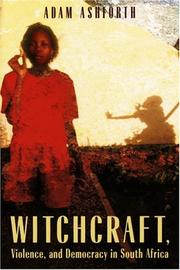
Witchcraft, Violence, and Democracy in South Africa
Explores how witchcraft fears operate in a southern African society and how rumours, insecurity and accusations can generate violence, ma...

The Sleeping Beauties
Examines outbreaks of unexplained symptoms, including fainting, seizures and collective illness, while showing how stress, belief, cultur...

Witchcraft and sorcery in Ovambo
Directly documents beliefs and traditions concerning witchcraft and sorcery among the Ovambo of northern Namibia, the region most closely...
Endnotes
1.
Source: state.gov
Link:https://www.state.gov/reports/2023-report-on-international-religious-freedom/namibia
Source snippet
State Department2023 Report on International Religious Freedom: NamibiaLocal media outlets reported public accusations of witchcraft by t...
2.
Source: lac.org.na
Title: Probono 53 WITCHCRAFT
Link:https://www.lac.org.na/news/probono/Probono_53-WITCHCRAFT.pdf
Source snippet
Allegations of WitchcraftIn 2016, a man was convicted of murder for killing a 62-year-old woman. He... witchcraft and of trying to ca...
3.
Source: pmc.ncbi.nlm.nih.gov
Link:https://pmc.ncbi.nlm.nih.gov/articles/PMC3588562/
Source snippet
by D Kokota · 2011 · Cited by 39 — Introduction. Mass hysteria is the common term used to describe a situation in which various people...
4.
Source: lac.org.na
Title: Witchcraft Suppression Proclamation 27 of 1933
Link:https://www.lac.org.na/laws/annoSTAT/Witchcraft%20Suppression%20Proclamation%2027%20of%201933.pdf
5.
Source: 2021-2025.state.gov
Link:https://2021-2025.state.gov/reports/2022-report-on-international-religious-freedom/namibia/
6.
Source: allafrica.com
Link:https://allafrica.com/stories/199712150066.html
7.
Source: jstor.org
Link:https://www.jstor.org/stable/42001291
8.
Source: static.cambridge.org
Link:https://static.cambridge.org/content/id/urn%3Acambridge.org%3Aid%3Aarticle%3AS0021853798007348/resource/name/S002185379800734Xa.pdf
Source snippet
SHEPHERD STUURMAN IN NAMIBIA AND SOUTH AFRICA, 1904–7...
9.
Source: discovery.ucl.ac.uk
Title: UCL Discovery
Link:https://discovery.ucl.ac.uk/10215565/1/Krautwald_IJAHS_PropheticMemory_Draft.pdf
10.
Source: 2009-2017.state.gov
Link:https://2009-2017.state.gov/documents/organization/256265.pdf
11.
Source: 2009-2017.state.gov
Link:https://2009-2017.state.gov/j/drl/rls/irf/2008/108383.htm
12.
Source: 2009-2017.state.gov
Link:https://2009-2017.state.gov/documents/organization/222291.pdf
13.
Source: 2009-2017.state.gov
Link:https://2009-2017.state.gov/documents/organization/238456.pdf
14.
Source: allafrica.com
Link:https://allafrica.com/stories/202108030915.html
15.
Source: history.com
Title: mysterious illnesses mass hysteria
Link:https://www.history.com/articles/mysterious-illnesses-mass-hysteria
16.
Source: namibian.com.na
Title: The Namibian Ignore mass hysteria, experts say
Link:https://www.namibian.com.na/ignore-mass-hysteria-experts-say/
Source snippet
The NamibianIgnore mass hysteria, experts sayOctober 25, 2017 — 26 Oct 2017 — In the past few years, incidents of mass hysteria amongst p...
Published: October 25, 2017
17.
Source: namibian.com.na
Title: The Namibian Nodding children puzzle teachers
Link:https://www.namibian.com.na/nodding-children-puzzle-teachers/
Source snippet
The NamibianNodding children puzzle teachersJuly 26, 2007 — 26 Jul 2007 — Several schools in the North have reported outbreaks of mass hy...
Published: July 26, 2007
18.
Source: namibian.com.na
Title: The Namibian Exam ‘demons’ on the loose
Link:https://www.namibian.com.na/exam-demons-on-the-loose/
Source snippet
The NamibianExam 'demons' on the looseAugust 11, 2009 — Incidents of mass hysteria at schools in the North are not unusual around the tim...
Published: August 11, 2009
19.
Source: namibian.com.na
Link:https://www.namibian.com.na/exam-demons-strike-again/
Source snippet
The Namibian'Exam demons' strike againKafidi told The Namibian that mass hysteria at schools has become commonplace in the North.”I think...
20.
Source: namibian.com.na
Title: The Namibian Mass hysteria grips pupils
Link:https://www.namibian.com.na/mass-hysteria-grips-pupils/
21.
Source: namibian.com.na
Title: the case of mass hysteria
Link:https://www.namibian.com.na/the-case-of-mass-hysteria/
22.
Source: namibian.com.na
Title: The Namibian’Witchcraft’ allegations hit Okangwati Combined School
Link:https://www.namibian.com.na/witchcraft-allegations-hit-okangwati-combined-school/
23.
Source: namibian.com.na
Title: The Namibian Mass hysteria hits Okongo school
Link:https://www.namibian.com.na/mass-hysteria-hits-okongo-school/
24.
Source: namibian.com.na
Title: call to revise witchcraft suppression law
Link:https://www.namibian.com.na/call-to-revise-witchcraft-suppression-law/
25.
Source: apnews.com
Title: AP News Beaten, banished, killed: Witchcraft accusations haunt Africa’s old
Link:https://apnews.com/article/88d0f28f4caba43e7c8fba2d3563943a
Source snippet
Advocacy groups like Reach One Touch One Ministries and Advocacy for Alleged Witches are intervening to protect victims and raise awarene...
26.
Source: namibian.com.na
Title: Christianity and Governance in Namibia
Link:https://www.namibian.com.na/christianity-and-governance-in-namibia/
27.
Source: namibian.com.na
Link:https://www.namibian.com.na/mass-hysteria-hits-mexican-school/
28.
Source: namibian.com.na
Title: probe into circumstances around death of a swakopmund pupil in class
Link:https://www.namibian.com.na/probe-into-circumstances-around-death-of-a-swakopmund-pupil-in-class/
29.
Source: namibian.com.na
Link:https://www.namibian.com.na/muti-murder-suspect-in-court-on-charge-of-pillaging-a-grave/
30.
Source: Wikipedia
Title: Tanganyika laughter epidemic
Link:https://en.wikipedia.org/wiki/Tanganyika_laughter_epidemic
31.
Source: nationalarchives.gov.uk
Link:https://www.nationalarchives.gov.uk/education/resources/early-modern-witch-trials/
32.
Source: journals.openedition.org
Link:https://journals.openedition.org/civilisations/pdf/3685
33.
Source: justice.gov.za
Link:https://www.justice.gov.za/legislation/acts/1957-003.pdf
34.
Source: sk.sagepub.com
Title: millenarian movements
Link:https://sk.sagepub.com/ency/edvol/globalreligion/chpt/millenarian-movements
35.
Source: seizure-journal.com
Link:https://www.seizure-journal.com/article/S1059-1311%2817%2930293-5/pdf
Additional References
36.
Source: youtube.com
Title: Namibian Police arrests five people for witchcraft in Havana
Link:https://www.youtube.com/watch?v=E35JMWgd1Io
Source snippet
Namibia school demons OR mass hysteria OR fainting OR witch Woman accused of witchcraft SangomaSongs...
37.
Source: youtube.com
Title: Witchcraft in Otjomuise! From bottles of blood to animal penises
Link:https://www.youtube.com/watch?v=WkrFWOtNJ2Q
Source snippet
NAMPOL sting operation nabs foreign witch doctors. By: Joseph Sheefeni...
38.
Source: youtube.com
Title: NAMPOL sting operation nabs foreign witch doctors. By: Joseph Sheefeni
Link:https://www.youtube.com/watch?v=KLjBnRuSSZk
Source snippet
Namibian Police arrests five people for witchcraft in Havana...
39.
Source: youtube.com
Title: POLICE WARN AGAINST WITCHCRAFT ACCUSATIONS
Link:https://www.youtube.com/watch?v=aXnAcrK5MfU
Source snippet
Witchcraft in Otjomuise! From bottles of blood to animal penises...
40.
Source: researchgate.net
Link:https://www.researchgate.net/publication/358803118_The_Intersection_of_Indigenous_African_Beliefs_within_Prophetic_and_Pentecostal_African_Christianity_A_Case_Study_of_the_Owambo_in_Namibia
41.
Source: facebook.com
Link:https://www.facebook.com/100086972801938/posts/40-pupils-at-chipepo-boarding-school-in-kapiri-mposhi-have-been-hospitalised-aft/635212452721176/
42.
Source: facebook.com
Link:https://www.facebook.com/3fm927/posts/70-year-old-woman-lynched-over-witchcraft-accusation-utm_mediumfacebook-witchcra/1172100751617190/
43.
Source: facebook.com
Link:https://www.facebook.com/karabo.kokwana.5/posts/75-year-old-accused-of-witchcraft-eastern-cape/26984219814574500/
44.
Source: facebook.com
Link:https://www.facebook.com/namibiansun/posts/a-school-in-the-ohangwena-region-cancelled-yesterdays-classes-and-sent-children-/1638702339507427/
45.
Source: academia.edu
Link:https://www.academia.edu/1846467/Apartheid_s_Demons_Satanism_and_Moral_Panic_in_South_Africa
Topic Tree
Follow this branch
Related pages 192
- Antigua and Barbuda
- Argentina Belief Scares
- Azerbaijan Belief
- Bahrain Beliefs
- North Korea
- +187 more in sidebar