Why Hidden Enemies Became So Powerful in Cameroon
Cameroon’s history of collective fear is not dominated by one famous outbreak of “mass hysteria”. Its strongest documented pattern is different: recurring scares about witchcraft, secret wealth, hidden societies, spiritual attack and moral corruption.
Page outline Jump by section
Introduction
Three episodes are especially revealing. Mid-twentieth-century stories of nyongo imagined wealthy people turning relatives into invisible labourers. Post-independence courts attempted to prosecute witchcraft as a real criminal offence. In 2006, newspapers transformed allegations about homosexuality and secret societies into a national moral panic centred on powerful public figures. These were not identical phenomena, and none should be reduced to irrationality. Each converted genuine anxieties—about wealth, authority, sexuality or social breakdown—into stories about concealed enemies.
Why occult fears carry such force
In Cameroon, “witchcraft” is not a single, uniform belief. Ideas differ between regions and communities, and English translations can flatten important distinctions between harmful supernatural power, divination, healing and sorcery. Academic studies therefore treat witchcraft language less as a fixed doctrine than as a flexible way of explaining why one person prospers while another suffers, why illness strikes unexpectedly, or why political and economic power appears inaccessible to ordinary people.[africabib.org]africabib.orgCameroon sought to resolve by introducing the criminal offence of witchcraft in the 1967 Cameroonian Penal Code (Section 251). This new l…
These explanations have remained adaptable because they speak to changing conditions. Colonial labour, plantation agriculture, migration, urbanisation and post-independence inequality did not simply erase older supernatural ideas. They gave those ideas new subjects. Motor vehicles, concrete houses, salaried employment and political influence could all become evidence of occult advancement when the route to wealth seemed secretive or unjust.
This does not mean that Cameroonians respond uniformly to every misfortune with supernatural accusations. Religious affiliation, education, generation and locality all matter. Many people combine medical, Christian, traditional and social explanations without seeing them as mutually exclusive. The danger arises when suspicion hardens into an accusation against a named individual and authorities treat the alleged supernatural offence, rather than threats or violence surrounding the accusation, as the central crime.
The nyongo fear: wealth built by the “working dead”
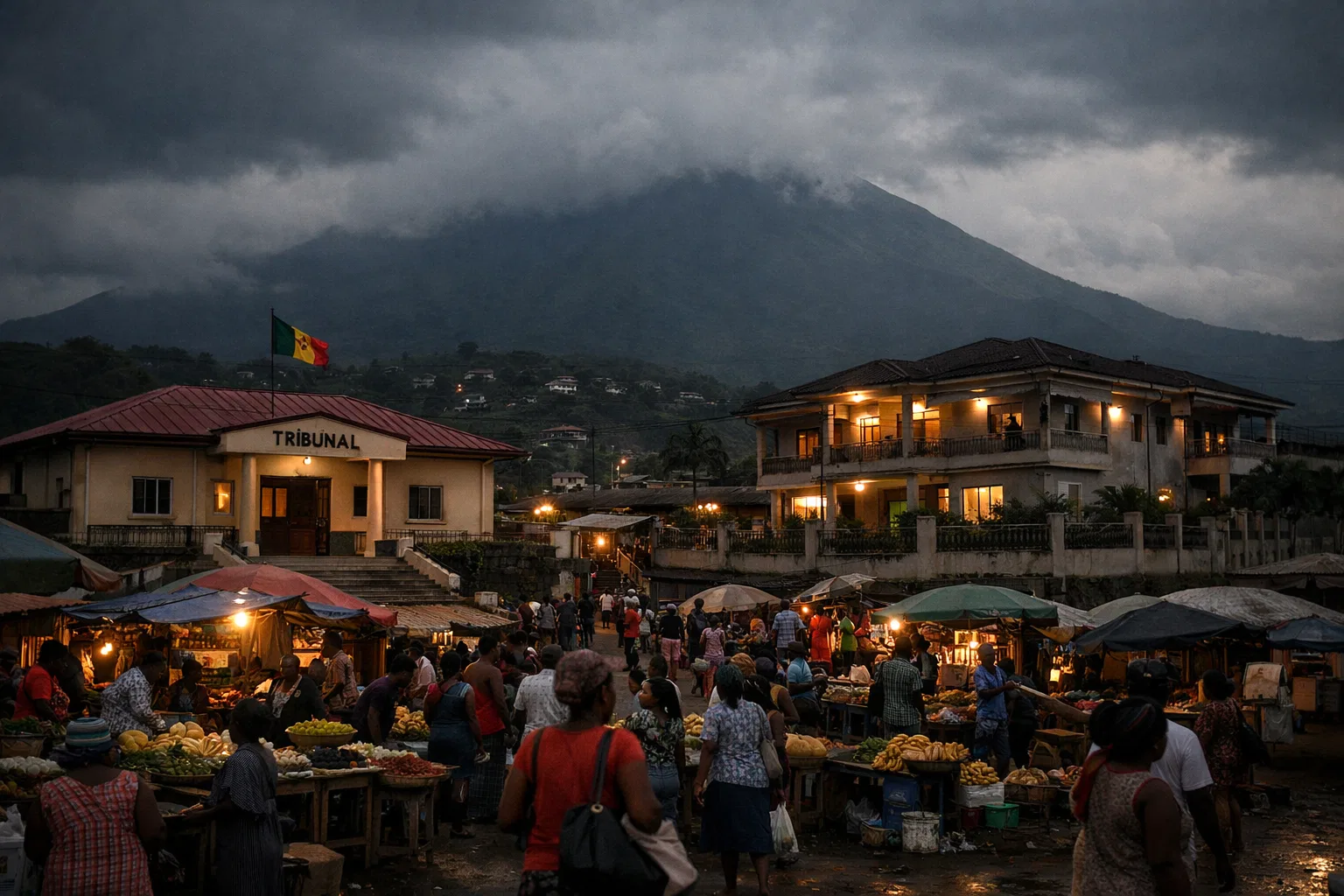
One of Cameroon’s most memorable occult traditions developed around the slopes of Mount Cameroon. Anthropologist Edwin Ardener recorded mid-twentieth-century Bakweri accounts of nyongo, an alleged power through which someone could cause relatives to appear dead and then force them to work in an invisible settlement, often associated with Mount Kupe. Later researchers found related stories elsewhere in southern and western Cameroon, using overlapping ideas of secret societies, zombie labour and wealth obtained through sacrificed human relationships.[google.com]books.google.comGoogle BooksWitchcraft Confessions and Accusations… Ardener, Robert Brain, Julian Pitt… witch beliefs witch-cleansing cults witchcra…
The fear was not merely a strange ghost story. It expressed a sharp moral question: where does private wealth come from, and who pays for it? In nyongo narratives, rapid enrichment was never truly individual. Someone else—usually a relative—had been covertly consumed, enslaved or exchanged. A prosperous person might therefore attract suspicion after an unexplained family death, particularly if their success seemed to exceed what neighbours believed honest work could produce.
Researchers Cyprian Fisiy and Peter Geschiere connected these stories to plantation economies, forced labour and new forms of accumulation. The image of victims labouring on invisible plantations echoed very visible historical experiences in which African labour generated wealth controlled by others. Later versions travelled beyond their original setting and absorbed new concerns about migration, business success and conspicuous consumption.[sagepub.com]journals.sagepub.comSage Journals Sorcery, Witchcraft and AccumulationFisiy…Sorcery, Witchcraft and Accumulation: Regional variations in South and West Cameroon… Bakweri use a related term nyongo to i…
Fear could restrain visible success
During the period sometimes described as the “nyongo terror”, signs of modern prosperity could be socially dangerous. A conspicuous house, commercial venture or sudden rise in income risked being interpreted as evidence of secret sacrifice. Secondary accounts of Ardener’s work argue that this atmosphere discouraged accumulation until the 1950s banana boom made prosperity more widespread and socially intelligible. Once many growers could connect new wealth to cooperative farming and a recognisable market, success became harder to attribute automatically to occult enslavement.[Scribd]scribd.comOpen source on scribd.com.
That interpretation should not be overstated. There was no single moment when belief disappeared, nor is there evidence that every Bakweri person shared the same fear. Nyongo remained a flexible narrative and was later reworked among other Cameroonian communities and migrants. Fieldwork with Cameroonians living in South Africa found that interviewees still described it as a secret route to money and influence, although their accounts varied and often relied on stories rather than direct experience.[ResearchGate]researchgate.netResearchGate(PDF) Images of Nyongo amongst Bamenda Grassfielders…difference. Nyongo is a dynamic, flexible, fluid and common form of wit…
Nyongo is therefore better understood as an occult economy story than as evidence of an organised “cult”. Researchers document belief in such a network, rumours about its activities and social consequences arising from suspicion. They do not establish that a hidden society actually operated plantations of resurrected labourers.
When the state prosecutes witchcraft
Cameroon’s official response makes its witchcraft history unusual. Rather than treating accusations solely as private belief or defamation, the post-independence state incorporated witchcraft into criminal law. Section 251 of the Penal Code punishes an act of witchcraft, magic or divination that disturbs public order or harms another person, property or livelihood. The provision appeared in the 1967 code and remains in the modern criminal code.[africabib.org]africabib.orgCameroon sought to resolve by introducing the criminal offence of witchcraft in the 1967 Cameroonian Penal Code (Section 251). This new l…
The apparent logic was pragmatic. Officials faced communities that demanded action after unexplained illness, death or economic loss. Simply declaring witchcraft unreal could make courts seem irrelevant, leaving suspects vulnerable to private punishment. State prosecution promised to move conflict from the village or street into a controlled legal process.
In practice, however, it created a profound evidential problem: how can a court prove supernatural causation? Studies of cases in eastern and Anglophone Cameroon describe convictions influenced by diviners, traditional specialists, confessions or local reputations rather than independently verifiable evidence. Research on proceedings in the East Province found that state courts were regularly hearing such cases by the 1980s, even though comparable convictions would previously have been unlikely.[persee.fr]persee.frcea 0008 0055 1990 numPerséeJudges and Witches, or How is the State to Deal with…by C Fisiy · 1990 · Cited by 158 — Witchcraft Trials in the East Province o…
The law also sits awkwardly beside defamation provisions. A person who publicly calls someone a witch may face punishment for damaging that person’s reputation, while Section 251 simultaneously implies that witchcraft can be prosecuted as an actual practice. Legal scholars argue that this contradiction leaves police, judges, traditional authorities and frightened communities without a clear standard for separating belief, malicious accusation, public disorder and provable harm.[hrlrc.org]hrlrc.orgOpen source on hrlrc.org.
Containment can legitimise the panic
Criminalisation may prevent some mob attacks by taking an accused person into custody. Yet it can also confirm the accusers’ basic premise: that deaths, illness or poor harvests may have been caused by an identifiable witch. Once courts accept supernatural testimony, rumours gain institutional authority and suspects face the near-impossible task of disproving an invisible crime.
In Cameroon’s Grassfields, responses have ranged from violent witch-hunting to conferences, customary procedures, church intervention and formal prosecution. Research suggests that later initiatives increasingly emphasised procedure and public order, but no approach fully ended deaths attributed either to supposed occult attack or to the punishment of suspects.[aegis-eu.org]aegis-eu.orgOpen source on aegis-eu.org.
Modern human-rights guidance recommends a different emphasis. The United Nations does not require governments to decide whether witchcraft exists. It urges them to criminalise concrete conduct—assault, torture, banishment, trafficking, killing or abuse—arising from accusations. This protects freedom of belief while refusing to let supernatural claims excuse violence. Cameroon itself helped sponsor the 2021 United Nations Human Rights Council resolution addressing harmful practices related to witchcraft accusations and ritual attacks, creating a notable contrast with its domestic law’s continued criminalisation of witchcraft itself.[OHCHR]ohchr.orgaccusations of witchcraft and ritual attacksaccusations of witchcraft and ritual attacks
The 2006 “homosexual lists” panic
A different kind of collective scare erupted in early 2006, when Cameroonian newspapers began publishing lists of prominent people allegedly involved in homosexuality. Ministers, entertainers, business figures and other members of the elite were named without reliable proof. The stories attracted attention not merely as sexual gossip but as claims about corruption, initiation, Freemasonry and hidden networks controlling access to power.
Researchers describe this episode as a moral panic because the alleged behaviour was presented as evidence of a much larger conspiracy threatening the nation. Homosexuality became associated with witchcraft, secret societies and the idea that powerful older men demanded sexual submission from younger people seeking employment or advancement. The imagined enemy was therefore not simply a sexual minority. It was a covert elite believed to exchange jobs, wealth and political protection through degrading rituals.[cairn.info]shs.cairn.infoSHS Cairn.info Popular Homophobia in CameroonSHS Cairn.info Popular Homophobia in Cameroon
Some public concern drew upon genuine grievances: corruption, patronage and the lack of transparent routes into political or professional life. Yet the panic redirected anger towards people accused of same-sex conduct, including many with no connection to the elite. Sexual orientation became a supposed clue to occult power, while rumour substituted for evidence.
The press did not act alone. Religious rhetoric, pre-existing criminal law and political suspicion made the stories legible to a wide audience. Scholars Peter Geschiere and Rogers Orock have shown how rumours about Freemasonry, sexual transgression and illicit enrichment became entangled in Cameroon and neighbouring societies. In such narratives, accusations of homosexuality could explain both the exceptional power of senior figures and the humiliation felt by people excluded from their networks.[JSTOR]jstor.orgOpen source on jstor.org.
The harm outlasted the headlines
The lists generated defamation disputes and public condemnation, but the broader atmosphere of suspicion persisted. Human Rights Watch subsequently documented arrests, police abuse, denial of legal assistance and prosecutions based on appearance, association or weak evidence. Its investigations found that people perceived as lesbian, gay, bisexual or transgender were also less able to report violence because contact with the authorities could expose them to arrest.[Human Rights Watch]hrw.orgHuman Rights Watch Guilty by AssociationHuman Rights Watch Guilty by Association
At least 28 people were prosecuted for consensual same-sex conduct between 2010 and early 2013, according to a joint investigation by Cameroonian organisations and Human Rights Watch. These later cases were not all direct products of the newspaper lists, but they demonstrate how a media panic can operate within a wider legal and social system that already treats a stigmatised minority as evidence of moral danger.[Human Rights Watch]hrw.orgHuman Rights Watch Cameroon: Rights Abuses in 'Homosexuality' ProsecutionsHuman Rights Watch Cameroon: Rights Abuses in 'Homosexuality' Prosecutions
Calling the affair a panic must not imply that homosexuality itself was imaginary. What was unsupported was the picture of a coordinated, occult elite recruiting or controlling society through same-sex practices. The panic combined real people, existing criminal penalties and genuine resentment of political privilege with conspiratorial claims that could not be substantiated.
Revival churches, deliverance and spiritual diagnosis
Christian revivalist and Pentecostal churches have expanded significantly in Cameroon since the late twentieth century. Many offer healing, prophecy and deliverance from demonic attack. Their growth reflects more than credulity: churches can provide community, emotional support and a language for confronting unemployment, illness or family crisis. The International Crisis Group has also noted that revivalist Christianity has altered Cameroon’s religious landscape and sometimes challenged established churches and state regulation.[Crisis Group]crisisgroup.org229 cameroon threat religious radicalism229 cameroon threat religious radicalism
Deliverance practice can nevertheless intensify occult suspicion when a pastor identifies a relative, child or neighbour as the human channel of spiritual harm. Across African settings, researchers describe a “Pentecostal–witchcraft nexus”: churches condemn witchcraft while simultaneously making it more visible by repeatedly diagnosing possession, curses and hidden attack. The promise to defeat occult power may therefore reinforce belief that such power surrounds everyday life.[Springer]link.springer.comAfterword: From Witchcraft to the Pentecostal-Witchcraft NexusAfterword: From Witchcraft to the Pentecostal-Witchcraft Nexus
Evidence specific to Cameroon is more fragmented than the literature on nyongo or witchcraft trials, so sweeping claims about a nationwide wave of abusive deliverance would be unjustified. The clearest conclusion is that revival religion forms one part of a crowded field of explanation in which pastors, diviners, doctors, relatives and courts may offer competing accounts of the same illness or misfortune.
What does not fit the “mass hysteria” label
Cameroon is sometimes discussed alongside African school fainting, possession or laughter outbreaks. Yet the best-known documented cases of mass psychogenic illness—real physical symptoms spreading through a group without an identified toxic or infectious cause—come from countries such as Tanzania, Malawi, Botswana and South Africa. Reviews of African school outbreaks do not establish an equally well-documented, nationally significant Cameroonian case.[PMC]pmc.ncbi.nlm.nih.govOpen source on nih.gov.
That absence matters. “Mass hysteria” should not become a catch-all label for any widespread belief that outsiders find implausible. Cameroon’s witchcraft trials are legal and social conflicts. Nyongo is a body of occult-economy narratives. The 2006 newspaper affair was a media-driven moral panic. None is the same as contagious fainting, involuntary movement or collective illness.
The older term “mass hysteria” is also misleading because it can imply that affected people are pretending or mentally unstable. Specialists increasingly prefer mass psychogenic illness, emphasising that symptoms are genuine and that diagnosis should follow careful investigation for environmental, infectious or toxic causes. The same principle of restraint applies to Cameroon’s social scares: unusual claims should be examined critically without humiliating the people who believe them or overlooking the real pressures that make the claims persuasive.[The Guardian]theguardian.comThe Guardian Falling down | PsychologyThe Guardian Falling down | Psychology
Why these scares endure
Cameroon’s collective fears repeatedly gather around hidden exchanges: a relative secretly sold for wealth, a politician initiated into an occult network, a neighbour blamed for illness, or a sexual minority accused of corrupting national life. The details change, but the underlying structure is remarkably consistent. Visible misfortune or inequality is explained through an invisible transaction.
Several pressures help these stories spread:
- Unequal or mysterious enrichment. When patronage matters more than transparent rules, occult explanations can make inequality feel intelligible.
- Sudden social change. Plantation labour, urban migration and new religious movements disrupt older expectations about obligation and authority.
- Weak confidence in institutions. Rumours flourish when courts, police, politicians or employers are not trusted to disclose how decisions are made.
- Public repetition. Newspapers, sermons, political speeches and courtroom proceedings can turn private suspicion into an apparently shared truth.
- Self-sealing claims. A lack of evidence may be interpreted as proof that the alleged network is especially secret or powerful.
Historians and anthropologists do not generally treat such beliefs as fossilised survivals from a pre-modern past. They interpret them as changing commentaries on modern life. Nyongo absorbed plantation capitalism; witchcraft courts translated supernatural suspicion into state procedure; the 2006 panic joined sexuality to fears about corrupt elites and inaccessible power.[sagepub.com]journals.sagepub.comSage Journals Sorcery, Witchcraft and AccumulationFisiy…Sorcery, Witchcraft and Accumulation: Regional variations in South and West Cameroon… Bakweri use a related term nyongo to i…
The most important distinction is therefore between belief and harm. People may interpret suffering through religious or supernatural frameworks without attacking anyone. The historical danger begins when rumours identify a disposable suspect, when a church or diviner claims unquestionable authority, when journalism publishes allegations as fact, or when courts attempt to prove an invisible offence. Cameroon’s experience shows that collective scares become most destructive not because everyone believes exactly the same story, but because powerful institutions decide to act as though the accusation has already been proved.

Amazon book picks
Further Reading
Books and field guides related to Why Hidden Enemies Became So Powerful in Cameroon. Use these as the next step if you want deeper reading beyond the article.
The devil and commodity fetishism in South America
Explores occult explanations for wealth and capitalism that parallel Cameroonian themes.

The Penguin book of witches
Offers wider historical context on witchcraft beliefs and accusations.
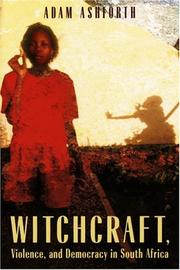
Witchcraft, Violence, and Democracy in South Africa
Examines witchcraft accusations, politics and inequality in modern Africa.
Modernity and its malcontents
Explains why witchcraft and hidden-enemy narratives flourish during social change.
Endnotes
1.
Source: africabib.org
Link:https://www.africabib.org/rec.php?RID=190580615
Source snippet
Cameroon sought to resolve by introducing the criminal offence of witchcraft in the 1967 Cameroonian Penal Code (Section 251). This new l...
2.
Source: books.google.com
Link:https://books.google.com/books/about/Witchcraft_Confessions_and_Accusations.html?id=FG0ds-lZ9gkC
Source snippet
Google BooksWitchcraft Confessions and Accusations... Ardener, Robert Brain, Julian Pitt... witch beliefs witch-cleansing cults witchcra...
3.
Source: researchgate.net
Link:https://www.researchgate.net/publication/229014783_Images_of_Nyongo_amongst_Bamenda_Grassfielders_in_Whiteman_Kontri
Source snippet
ResearchGate(PDF) Images of Nyongo amongst Bamenda Grassfielders...difference. Nyongo is a dynamic, flexible, fluid and common form of wit...
4.
Source: dvkjournals.in
Link:https://dvkjournals.in/index.php/jd/article/download/479/374/951
Source snippet
2.1. Beatrice. According... This form of witchcraft was first observed among the Bakweri of West.Read more...
5.
Source: scribd.com
Link:https://www.scribd.com/doc/259430548/Bakweri-Nyongo-Witchcraft
6.
Source: scispace.com
Title: combating witchcraft in the state courts of anglophone 2lt9lzhxc0
Link:https://scispace.com/pdf/combating-witchcraft-in-the-state-courts-of-anglophone-2lt9lzhxc0.pdf
7.
Source: aegis-eu.org
Link:https://www.aegis-eu.org/archive/ecas2007/papers/36-217-Pelican-Michaela_Witchcraft-containment-in-Cameroon-the-dynamics-of-changing-legal-strategies.pdf
8.
Source: ohchr.org
Title: accusations of witchcraft and ritual attacks
Link:https://www.ohchr.org/sites/default/files/2022-12/PAP-Guidelines-EN.pdf
9.
Source: shs.cairn.info
Title: SHS Cairn.info Popular Homophobia in Cameroon
Link:https://shs.cairn.info/article/E_CEA_204_0921/pdf?lang=en
10.
Source: cambridge.org
Link:https://www.cambridge.org/core/journals/african-studies-review/article/homosexuality-witchcraft-and-power-the-politics-of-ressentiment-in-cameroon/5EA17CC2CE2918E1E94F6D04335BC59A
11.
Source: jstor.org
Link:https://www.jstor.org/stable/26410122
12.
Source: researchgate.net
Link:https://www.researchgate.net/publication/318658465_A_Vortex_of_Identities_Freemasonry_Witchcraft_and_Postcolonial_Homophobia
13.
Source: link.springer.com
Title: Afterword: From Witchcraft to the Pentecostal-Witchcraft Nexus
Link:https://link.springer.com/chapter/10.1007/978-3-319-56068
14.
Source: pmc.ncbi.nlm.nih.gov
Link:https://pmc.ncbi.nlm.nih.gov/articles/PMC3588562/
15.
Source: scispace.com
Link:https://scispace.com/pdf/voodoos-and-obeahs-phases-of-west-india-witchcraft-3v0padww56.pdf
16.
Source: jstor.org
Link:https://www.jstor.org/stable/26773275
17.
Source: researchgate.net
Link:https://www.researchgate.net/publication/289966394_Millennial_and_Apocalyptic_Movements_in_Africa
18.
Source: researchgate.net
Link:https://www.researchgate.net/publication/361074168_Predictors_of_mass_psychogenic_illness_in_a_junior_secondary_school_in_rural_Botswana_A_case_control_study
19.
Source: researchgate.net
Link:https://www.researchgate.net/publication/329922829_Homosexuality_Witchcraft_and_Power_the_Politics_of_Ressentiment_in_Cameroon
20.
Source: researchgate.net
Link:https://www.researchgate.net/publication/328295012_Witchcraft_and_space_A_theoretical_analysis_of_unseen_political_spaces_in_Ghana_and_Cameroon
21.
Source: researchgate.net
Link:https://www.researchgate.net/publication/233518304_Pentecostal_Witchcraft_Neoliberal_Possession_and_Demonic_Discourse_in_Ivoirian_Pentecostal_Churches
22.
Source: link.springer.com
Title: compalgrave advances in witchcraft historiography
Link:https://link.springer.com/content/pdf/10.1057/9780230593480.pdf
23.
Source: 2017-2021.state.gov
Link:https://2017-2021.state.gov/report/custom/b8c3e2e32d/
24.
Source: tbinternet.ohchr.org
Title: Download Draft.aspx
Link:https://tbinternet.ohchr.org/_layouts/15/TreatyBodyExternal/DownloadDraft.aspx?key=jUWIAkar%2FdwgN9++6O9rN6riK7A98FCyq2bg6h+jKY8sF7s2uE4hzWSR9jjncRGA
25.
Source: youtube.com
Title: Secret societies in Bamileke country
Link:https://www.youtube.com/watch?v=P4EXSIv-sD4
Source snippet
Cameroon - The Cult of Skulls...
26.
Source: youtube.com
Link:https://www.youtube.com/watch?v=3k5YsXc1Cqg
Source snippet
The Dark Side of Hair Salons...
27.
Source: persee.fr
Title: cea 0008 0055 1990 num 30 118 1617
Link:https://www.persee.fr/doc/cea_0008-0055_1990_num
Source snippet
PerséeJudges and Witches, or How is the State to Deal with...by C Fisiy · 1990 · Cited by 158 — Witchcraft Trials in the East Province o...
28.
Source: journals.sagepub.com
Title: Sage Journals Sorcery, Witchcraft and Accumulation
Link:https://journals.sagepub.com/doi/10.1177/0308275X9101100304
Source snippet
Fisiy...Sorcery, Witchcraft and Accumulation: Regional variations in South and West Cameroon... Bakweri use a related term nyongo to i...
29.
Source: antislaverylaw.ac.uk
Title: Criminal Code 2019 Official Gazette English
Link:https://antislaverylaw.ac.uk/wp-content/uploads/2019/08/Criminal-Code-2019-Official-Gazette-English.pdf
30.
Source: scholarlypublications.universiteitleiden.nl
Link:https://scholarlypublications.universiteitleiden.nl/access/item%3A3145968/view
31.
Source: hrlrc.org
Link:https://hrlrc.org/2023/09/15/witchcraft-as-an-offence-in-the-cameroon-penal-code/
32.
Source: dare.uva.nl
Link:https://dare.uva.nl/document/2/147198
33.
Source: hrw.org
Title: Human Rights Watch Guilty by Association
Link:https://www.hrw.org/report/2013/03/21/guilty-association/human-rights-violations-enforcement-cameroons-anti
34.
Source: hrw.org
Link:https://www.hrw.org/report/2010/11/04/criminalizing-identities/rights-abuses-cameroon-based-sexual-orientation-and
35.
Source: hrw.org
Title: cameroon same sex relations bring attacks arrests
Link:https://www.hrw.org/news/2010/11/04/cameroon-same-sex-relations-bring-attacks-arrests
36.
Source: hrw.org
Title: Human Rights Watch Cameroon: Rights Abuses in ‘Homosexuality’ Prosecutions
Link:https://www.hrw.org/news/2013/03/21/cameroon-rights-abuses-homosexuality-prosecutions
37.
Source: crisisgroup.org
Title: 229 cameroon threat religious radicalism
Link:https://www.crisisgroup.org/rpt/africa/cameroon/229-cameroon-threat-religious-radicalism
38.
Source: theguardian.com
Title: The Guardian Falling down | Psychology
Link:https://www.theguardian.com/science/2008/sep/18/psychology
39.
Source: theguardian.com
Link:https://www.theguardian.com/uk-news/2025/sep/09/mass-psychogenic-illness-caused-toxic-substance-alert-at-heathrow-says-scientist
40.
Source: library.au.int
Link:https://library.au.int/malleus-maleficarum-scrutinizing-sorcery-cameroon
41.
Source: jamiiforums.ke
Link:https://www.jamiiforums.ke/tags/nyongo/
42.
Source: hrw.org
Title: waiting minds change cameroon
Link:https://www.hrw.org/news/2013/04/09/waiting-minds-change-cameroon
43.
Source: hrw.org
Title: steave nemande cameroon
Link:https://www.hrw.org/news/2010/10/08/steave-nemande-cameroon
44.
Source: sk.sagepub.com
Title: millenarian movements
Link:https://sk.sagepub.com/ency/edvol/globalreligion/chpt/millenarian-movements
45.
Source: pmc.ncbi.nlm.nih.gov
Link:https://pmc.ncbi.nlm.nih.gov/articles/PMC12863508/
Additional References
46.
Source: youtube.com
Title: They Called It The Nyongo Curse But Nobody Believed Them
Link:https://www.youtube.com/watch?v=B0qXOrqaIGI
Source snippet
Witchcraft in Bamenda (Cameroon) | Documentary...
47.
Source: sah.aegean.gr
Link:https://www.sah.aegean.gr/wp-content/uploads/2023/10/Tsekenis_2016.pdf
48.
Source: academia.edu
Link:https://www.academia.edu/85296783/Homosexuality_in_Cameroon_identity_and_persecution
49.
Source: encyclopedia.com
Link:https://www.encyclopedia.com/environment/encyclopedias-almanacs-transcripts-and-maps/african-religions-new-religious-movements
50.
Source: academia.edu
Link:https://www.academia.edu/1907134/Child_Witches_From_Imaginary_Cannibalism_to_Ritual_Abuse
51.
Source: academia.edu
Link:https://www.academia.edu/112412767/Doomsday_movements_in_Africa_Restoration_of_the_Ten_Commandments_of_God
52.
Source: unhcr.org
Link:https://www.unhcr.org/4d346eab9.pdf
53.
Source: dokumen.pub
Link:https://dokumen.pub/powers-of-good-and-evil-social-transformation-and-popular-belief-1nbsped-9781782387565-9781571819925.html
54.
Source: theadvocatesforhumanrights.org
Link:https://www.theadvocatesforhumanrights.org/Res/cameroon_upr_tahr_ac%202.pdf
55.
Source: humanists.international
Link:https://humanists.international/wp-content/uploads/2020/11/Report-to-ACHPR67_Witchcraft.pdf
Topic Tree
Follow this branch
Related pages 192
- Antigua and Barbuda
- Argentina Belief Scares
- Azerbaijan Belief
- Bahrain Beliefs
- North Korea
- +187 more in sidebar