When Belief Became Power, Ritual and Panic
Sudan’s history of contagious belief is not dominated by one famous “mass hysteria” episode.
Page outline Jump by section
Introduction
The best-documented Sudanese examples therefore resist a single explanation. The Mahdist movement was neither merely delusion nor simply nationalism. Spirit possession is not adequately described as epidemic mental illness. The Khartoum genital-theft scare, by contrast, closely resembles a classic rumour panic: extraordinary claims spread through personal testimony and mobile-phone messages, authorities investigated, and no physical mechanism was found. The important question is not whether Sudanese people were unusually credulous, but how political oppression, social inequality, unfamiliar strangers, religious authority and new communications made certain beliefs persuasive at particular moments.
When apocalyptic belief became a revolution
The most consequential millenarian movement in Sudan began in 1881, when the religious teacher Muhammad Ahmad proclaimed himself the Mahdi, the divinely guided redeemer expected by many Muslims to restore justice before the end times. His followers, commonly known as the Ansar, challenged the Ottoman-Egyptian administration that had governed Sudan since 1821. Within four years they had defeated several government armies, captured Khartoum and established an independent Mahdist state. Muhammad Ahmad died in 1885, but the state survived under his successor until an Anglo-Egyptian army defeated it in 1898.[britishmuseum.org]britishmuseum.orgBritish MuseumMahdiyaThe term refers to the period between 1881 and 1898 of the Sudanese nationalist movement led by Mohamed Ahmed al-Mah…
It is tempting to treat the movement as a simple case of apocalyptic enthusiasm overwhelming rational judgement. That interpretation misses why the Mahdi’s claim attracted support. Ottoman-Egyptian rule was associated with taxation, coercive administration, military conscription and outside domination. Muhammad Ahmad’s message promised not only spiritual renewal but an end to an unjust political order. Millenarian expectation gave that resistance urgency: the existing world was corrupt, divine intervention was near, and joining the movement placed ordinary followers on the side of sacred history. Historians consequently describe the Mahdiyya both as a religious revolution and as a major anti-imperial uprising.[newlinesmag.com]newlinesmag.comNew Lines Magazine The Sudanese Mahdiyya: When Doomsday VisionsNew Lines MagazineThe Sudanese Mahdiyya: When Doomsday Visions…May 5, 2023 — 5 May 2023 — By tapping into millenarian longings, early…
Belief spread through preaching, correspondence, personal allegiance, reported visions and dramatic military victories. Early successes were themselves persuasive evidence. A movement that repeatedly defeated better-equipped forces could appear protected by God, while each victory weakened the credibility of the government’s attempts to dismiss Muhammad Ahmad as an impostor or dangerous fanatic. The Mahdi’s religious authority also supported new laws and demands for obedience, allowing a dispersed insurgency to become an organised territorial state.[jstor.org]jstor.orgOpen source on jstor.org.
The movement’s later history complicates heroic retellings. The Mahdist state faced warfare, coercion, internal rivalries, displacement and devastating famine. Its rulers were not merely carriers of popular liberation; they exercised state power and compelled populations that did not always share the original enthusiasm. Likewise, British accounts often presented the Mahdists as irrational hordes and turned the death of General Charles Gordon at Khartoum into an imperial morality tale. Both romantic nationalist memory and colonial demonisation can conceal the variety of Sudanese experiences under Mahdist rule.[cmi.no]cmi.noOpen source on cmi.no.
Calling the Mahdiyya a “cult” is therefore misleading. Muhammad Ahmad made a charismatic messianic claim and demanded exceptional loyalty, but his movement mobilised broad grievances, commanded armies, governed territory and left durable religious and political institutions. The more useful comparison is with other millenarian revolutions: movements in which expectations of divine transformation help people interpret oppression, accept sacrifice and imagine a radically different social order.

Spirit possession was not a mass delusion
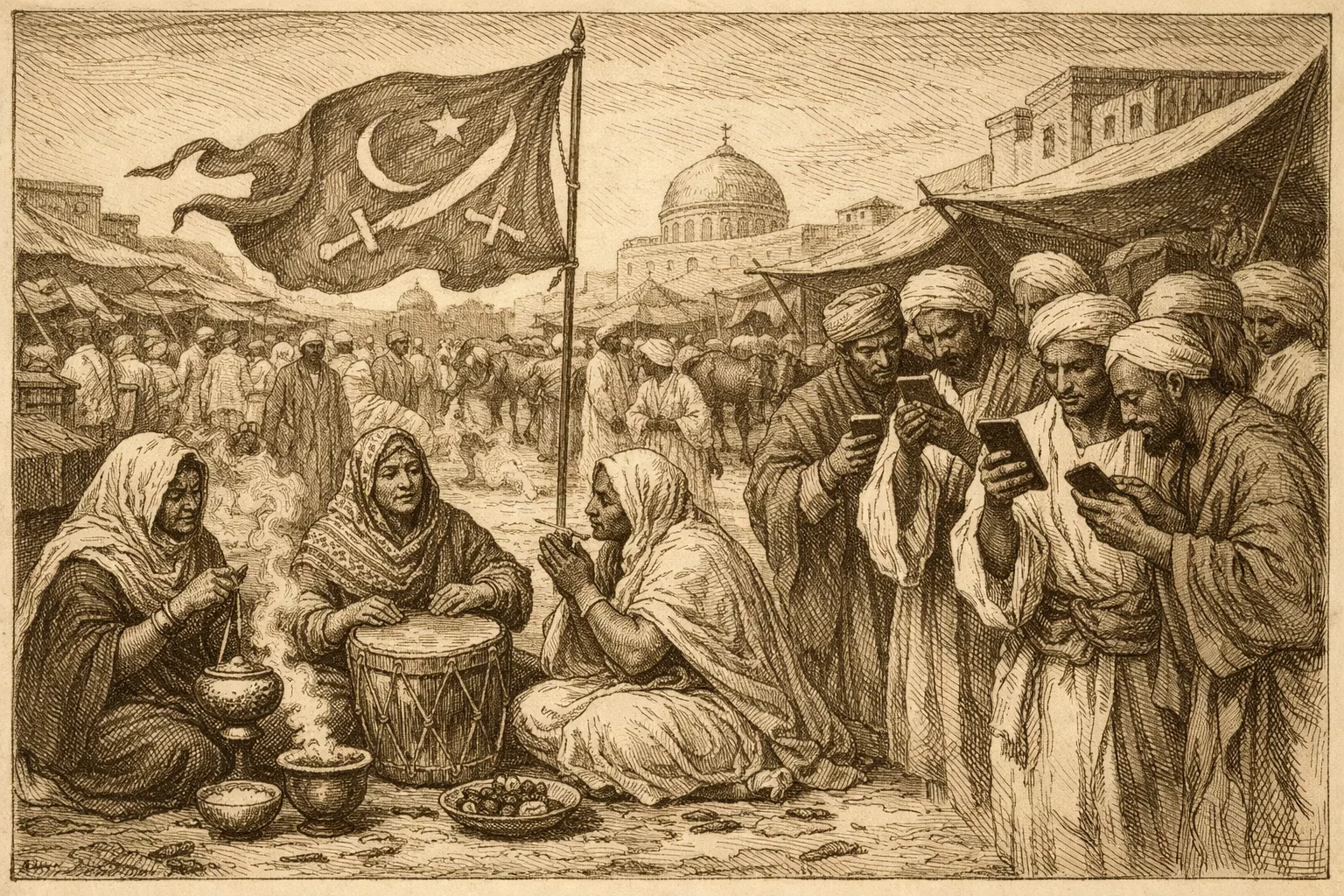
Sudan’s possession traditions provide a second warning against careless labels. Practices usually grouped under the name zar involve relationships with spirits believed to cause illness, emotional disturbance or misfortune. Ceremonies may include music, drumming, incense, distinctive clothing, trance, sacrifice and the identification or appeasement of a possessing spirit. Possession is not necessarily understood as something that can be permanently expelled; the person may instead establish a continuing, managed relationship with the spirit.[nih.gov]pmc.ncbi.nlm.nih.govPMCZār Spirit Possession in Iran and African CountriesPMCZār Spirit Possession in Iran and African Countries
Anthropological research in northern and central Sudan has found that zar participation has been especially important among women. Ceremonies can provide recognised ways to express suffering that might otherwise be difficult to discuss openly, including marital pressure, infertility, domestic conflict, illness and restrictions on women’s autonomy. They also create social networks, ritual expertise and occasions on which participants may temporarily step outside ordinary expectations of modesty or obedience. This does not mean every case can be reduced to hidden protest or psychological therapy. Practitioners understand the spirits as real, and the meanings of possession differ between communities and individuals.[ubc.ca]circle.ubc.caOpen source on ubc.ca.
The tumbura tradition carries an additional history of slavery and racial hierarchy. Researcher G. P. Makris describes it as particularly associated with Sudanese people of slave descent and other subordinated groups. Participation could help devotees construct a valued identity in a society where dominant accounts of respectable Sudanese identity often privileged Arab descent and officially approved forms of Islam. Spirits and rituals therefore preserved memories of displacement, servitude and cultural difference that conventional political history tended to suppress.[ekt.gr]ejournals.epublishing.ekt.grOpen source on ekt.gr.
Authorities and religious reformers have not always regarded such practices neutrally. Conservatives condemned zar as improper or un-Islamic, while modernising officials and some medical observers classified it as backward superstition, fraud or psychopathology. Opposition intensified before and during Omar al-Bashir’s Islamist government, when women’s dress, movement, employment and public behaviour were also subject to aggressive regulation. Reports describe ceremonies being restricted and practitioners facing arrest or harassment, although enforcement and official tolerance varied over time.[sudanupdate.org]sudanupdate.orgOpen source on sudanupdate.org.
This history matters because an outsider watching several people enter trance during the same ceremony might call it collective hysteria. That description confuses a culturally organised ritual with an uncontrolled outbreak. Participants know the setting, roles, music and expected forms of behaviour. The event may involve altered states and genuine distress, but it is socially structured rather than an inexplicable contagion among an unsuspecting crowd.
Nor should “cult” be used simply because zar has specialists, ceremonies and spirit beliefs. It is better understood as a varied complex of healing, religious and social practices. The panic often lay not among practitioners but among officials and reformers who feared that women’s gatherings, non-approved ritual authority or associations with African ancestry threatened their vision of a disciplined Islamic nation.
The 2003 Khartoum genital-theft panic
Sudan’s clearest modern rumour panic erupted in Khartoum in September and October 2003. Stories circulated that mysterious West African strangers could make a man’s penis shrink, disappear or become useless by shaking his hand. Some accounts identified the supposed attacker by a frightening nickname, while others claimed that victims had felt their organs withdraw immediately after physical contact. The rumours spread through conversation, newspaper coverage and text messages, then a relatively new and powerful means of circulating warnings quickly through urban social networks.[memri.org]memri.orgpanic khartoum foreigners shake hands make penises disappearpanic khartoum foreigners shake hands make penises disappear
Men reportedly sought medical examination, and alleged perpetrators risked confrontation or assault. Sudanese health officials stated that examinations had found no physical disappearance and attempted to calm the public. Police intervention and official reassurance helped bring the episode under control. Contemporary reports nevertheless relied heavily on repeated anecdotes, making precise numbers difficult to establish. Claims that hospitals were “flooded” should therefore be treated cautiously unless supported by clinical records that are not readily available in the public literature.[memri.org]memri.orgpanic khartoum foreigners shake hands make penises disappearpanic khartoum foreigners shake hands make penises disappear
Medical writers commonly place such episodes within genital retraction syndrome, sometimes called koro. In its classic form, a person experiences intense fear that the genitals are retracting into the body and that serious harm or death may follow. Outbreaks in parts of Africa have often taken a different form: the feared organ is not thought to be retracting spontaneously but to have been magically stolen, damaged or deprived of its sexual essence by another person. The symptoms and terror can be real even when physical examination finds no corresponding anatomical change.[nih.gov]pmc.ncbi.nlm.nih.govOpen source on nih.gov.
Anthropologist Julien Bonhomme places these rumours within a wider African pattern of “sex theft” accusations. They frequently begin with an ambiguous encounter in a crowded commercial setting: a handshake, accidental touch or conversation with an unfamiliar person. An anxious bodily sensation is interpreted through an already available story about occult theft. The suspected victim seeks confirmation from companions, bystanders repeat the warning, and the accused stranger’s attempt to escape may itself be taken as proof of guilt.[hal.science]shs.hal.scienceOpen source on hal.science.
Several pressures made the Khartoum story plausible to those who accepted it.
- Urban anonymity: A rapidly growing capital brought strangers into daily contact without the kinship ties and reputational knowledge that often help people assess one another.
- Suspicion of outsiders: The rumour specifically marked West Africans as dangerous, converting social difference and migration into evidence of occult threat.
- Masculine vulnerability: Sexual potency, fertility and bodily control carry strong personal and social importance. A rumour threatening them can produce immediate shame and fear.
- Communication technology: Text messages compressed complex allegations into short warnings that appeared to come from trusted friends.
- Apparent testimony: First-person stories were repeated as though independently verified, even when most listeners were several steps removed from the alleged event.
The episode is best understood as a rumour panic with psychogenic features, not proof that everyone involved shared a psychiatric disorder. Some men may have experienced anxiety-driven bodily sensations; others may simply have repeated warnings or joined confrontations. “Mass psychogenic illness” is most useful when a group develops similar physical symptoms without an identified toxic or infectious cause. A moral or rumour panic is broader: it includes the story, the suspected enemy, media circulation, public action and pressure on authorities.
The panic also caused harm beyond embarrassment. By locating danger in foreign bodies, it exposed migrants and visibly unfamiliar people to suspicion and possible violence. Comparable genital-theft panics elsewhere in Africa have resulted in arrests, beatings and attempted lynchings. Sudan’s episode appears to have subsided without reaching the most lethal extremes reported in some other countries, but its social mechanism was similar: an impossible accusation became actionable because crowds treated fear and repetition as evidence.[reuters.com]reuters.comPenis theft panic hits cityPenis theft panic hits city

Witchcraft fears without a single national witch panic
Beliefs about harmful magic, spirit attack and concealed occult power are present in many Sudanese communities, but the available evidence does not support a simple national narrative resembling the organised European witch trials. Sudan contains many religious, linguistic and regional traditions, and accusations have differed sharply between rural and urban settings, Muslim and non-Muslim communities, and successive political periods.
Witchcraft language may be used to explain illness, infertility, unexpected death, business failure or the unsettling success of another person. Such explanations are not merely remnants of an isolated “traditional” world. Scholars of African witchcraft repeatedly note that accusations can intensify alongside modernisation, migration and economic change because these processes create new inequalities and encounters with anonymous power. The Khartoum genital-theft rumour illustrates precisely this combination of occult interpretation, urban commerce and mobile communications.[uchicago.edu]journals.uchicago.eduOpen source on uchicago.edu.
At the same time, researchers must distinguish belief from persecution. A person may consult a healer or interpret misfortune through spiritual causation without accusing a named neighbour or demanding punishment. Serious danger begins when uncertainty is converted into public certainty about an alleged perpetrator. Rumour, repeated testimony and the demand that authorities “do something” can then replace evidence.
Documentation is especially uneven because Sudan’s wars, displacement, censorship and limited archival access have left many local cases poorly recorded. Reports may come from hostile officials, missionaries, reformist religious writers or journalists seeking a striking story. Each source may reveal genuine beliefs while exaggerating their extent or describing unfamiliar rituals as devil worship, madness or fraud. Thin evidence should not be inflated into claims of hidden nationwide witch crazes.
How fear, faith and authority interacted
Sudan’s cases are most revealing when compared rather than forced into one category. The Mahdiyya, zar traditions and the 2003 panic all involved invisible or supernatural power, but their social structures were profoundly different.
The Mahdiyya converted prophecy into collective political action. Followers joined an organised movement with leaders, military strategy and a programme of religious government. Its growth depended on injustice and successful rebellion as much as end-times expectation.
Zar converts affliction into ritual relationship. Its ceremonies provide shared explanations and practices for living with distress. Participation is generally organised and recurrent, not an uncontrolled wave of symptoms.
The genital-theft scare converted uncertainty into accusation. It spread rapidly, identified threatening outsiders and encouraged immediate protective or punitive action. Official medical statements challenged the central claim rather than negotiating with it.
These differences show why “mass hysteria” is often too crude. The phrase has historically been used to dismiss women, colonised people, religious minorities and crowds as irrational. More precise terms reveal more: millenarian movement, spirit-possession tradition, moral regulation, psychogenic symptoms, xenophobic rumour or crowd accusation.
Authorities also played changing roles. Ottoman-Egyptian officials denounced the Mahdi but could not prevent his message gaining authority through military success. Colonial writers later portrayed Mahdism in ways that justified reconquest. Islamist reformers treated possession ceremonies as a problem of religious and social discipline. In 2003, police and health officials acted as sceptical arbiters, publicly denying that magical genital theft had occurred. The state did not merely respond to collective belief; it helped decide which beliefs counted as faith, pathology, crime or dangerous rumour.

Why these stories still matter
The Mahdist movement remains central to Sudanese historical memory because it demonstrated that a religiously framed uprising could overthrow foreign-backed rule and create a sovereign state. Its symbols and descendants continued to influence Sudanese religious and political life long after the Anglo-Egyptian conquest. Yet its memory is contested: liberation, authoritarian rule, sacred renewal and human suffering all belong to the same history.[africabib.org]africabib.orgOpen source on africabib.org.
Zar remains important because it preserves experiences often missing from official accounts, particularly those of women, enslaved people and their descendants. It also exposes the limits of imposing psychiatric or theological categories without understanding what a ritual does for its participants. A ceremony can express suffering, sustain identity and embody sincere religious belief at the same time.
The Khartoum panic remains a compact lesson in the mechanics of modern rumour. New technology did not eliminate magical thinking; it accelerated a story built from old anxieties about strangers, sexuality and hidden attack. The episode anticipated the dynamics now familiar from social media: an alarming personal warning, an emotionally vivid alleged victim, rapid repetition, weak verification and pressure for an immediate response.
Sudan’s wider history therefore suggests that collective belief is most powerful when it connects private uncertainty to a public story. That story may promise deliverance, make suffering socially intelligible or identify an enemy who can be blamed. Understanding the difference is essential. Without it, religious movements become caricatured as cults, healing traditions become pathologised as hysteria, and dangerous rumours are mistaken for harmless folklore.
Amazon book picks
Further Reading
Books and field guides related to When Belief Became Power, Ritual and Panic. Use these as the next step if you want deeper reading beyond the article.
Extraordinary Popular Delusions and the Madness of Crowds
Rating: 4.0/5 from 5 Google Books ratings
Provides comparative background on mass belief.
The river war
First published 1899. Subjects: History, Sudan, history, British, Egypt, history, Military history.

The scramble for Africa,
First published 1990. Subjects: History, Colonies, Colonization, Colonización, Kolonisatie.
Endnotes
1.
Source: jstor.org
Link:https://www.jstor.org/stable/40206104
2.
Source: cmi.no
Link:https://www.cmi.no/publications/9171-al-mahdiya-continues-to-haunt-sudan
3.
Source: cambridge.org
Link:https://www.cambridge.org/core/journals/international-journal-of-middle-east-studies/article/betraying-behita-superstition-and-the-paralysis-of-blackness-in-out-el-kouloubs-zanouba/EAF565414A0E18EB078E1A5E8876C212
4.
Source: africabib.org
Link:https://www.africabib.org/rec.php?RID=055343481
5.
Source: circle.ubc.ca
Link:https://circle.ubc.ca/handle/2429/23461
6.
Source: link.springer.com
Link:https://link.springer.com/rwe/10.1007/978
7.
Source: cambridge.org
Link:https://www.cambridge.org/core/journals/africa/article/cwezikubandwa-debate-gender-hegemony-and-precolonial-religion-in-bunyoro-western-uganda/DF730CC5A294FBBDD593DF8C59FA5B2B
8.
Source: cambridge.org
Link:https://www.cambridge.org/core/journals/comparative-studies-in-society-and-history/article/southern-funj-of-the-sudan-as-a-frontier-society-18201980/92B086934CDED89CFAF423F6D401217A
9.
Source: cambridge.org
Link:https://www.cambridge.org/core/books/african-voices-on-slavery-and-the-slave-trade/understanding-slavery-in-possession-rituals/72796744E1897BCF3A08C276C939ED42
10.
Source: sudanupdate.org
Link:https://www.sudanupdate.org/REPORTS/WOMEN/WOMEN.HTM
11.
Source: Wikipedia
Link:https://en.wikipedia.org/wiki/Z%C4%81r
12.
Source: memri.org
Title: panic khartoum foreigners shake hands make penises disappear
Link:https://www.memri.org/reports/panic-khartoum-foreigners-shake-hands-make-penises-disappear
13.
Source: pmc.ncbi.nlm.nih.gov
Link:https://pmc.ncbi.nlm.nih.gov/articles/PMC9946797/
14.
Source: shs.hal.science
Link:https://shs.hal.science/halshs-00801575/document
15.
Source: reuters.com
Title: Penis theft panic hits city
Link:https://www.reuters.com/article/lifestyle/penis-theft-panic-hits-city-idUSN23196036/
16.
Source: brill.com
Title: article p360 4.xml
Link:https://brill.com/view/journals/ijgr/22/3/article-p360_4.xml?language=en&srsltid=AfmBOoo4TOBBqCdqmrxOUAkFdafqT5-FgDREqEMO3KYB2CHpvwCkLraW
17.
Source: africabib.org
Link:https://www.africabib.org/rec.php?RID=21237219X
18.
Source: Wikipedia
Title: Satanic panic
Link:https://en.wikipedia.org/wiki/Satanic_panic
19.
Source: Wikipedia
Title: Modern witch hunts
Link:https://en.wikipedia.org/wiki/Modern_witch_hunts
20.
Source: Wikipedia
Title: Muhammad Ahmad
Link:https://en.wikipedia.org/wiki/Muhammad_Ahmad
21.
Source: Wikipedia
Title: List of mass panic cases
Link:https://en.wikipedia.org/wiki/List_of_mass_panic_cases
22.
Source: Wikipedia
Title: Mahdist State
Link:https://en.wikipedia.org/wiki/Mahdist_State
23.
Source: Wikipedia
Title: Koro (disease)
Link:https://en.wikipedia.org/wiki/Koro_%28disease%29
24.
Source: Wikipedia
Title: Mahdist War
Link:https://en.wikipedia.org/wiki/Mahdist_War
25.
Source: Wikipedia
Title: Omar al Bashir
Link:https://en.wikipedia.org/wiki/Omar_al-Bashir
26.
Source: cambridge.org
Link:https://www.cambridge.org/core/journals/history-in-africa/article/introduction-ethnic-formation-with-otherthanhuman-beings/3D1F8D9AEB97AC3D9B3E500F4A50CD1E
27.
Source: cambridge.org
Link:https://www.cambridge.org/core/journals/comparative-studies-in-society-and-history/article/an-atlantic-genealogy-of-spirit-possession/CB36DB8C25E80E9940BFB6C77FFFDF14
28.
Source: resolve.cambridge.org
Title: understanding slavery in possession rituals
Link:https://resolve.cambridge.org/core/services/aop-cambridge-core/content/view/72796744E1897BCF3A08C276C939ED42/9781139043359c7_p154-173_CBO.pdf/understanding-slavery-in-possession-rituals.pdf
29.
Source: cambridge.org
Link:https://www.cambridge.org/core/services/aop-cambridge-core/content/view/189A32272BB3374CD03A07F972733B72/S0026318400023713a.pdf/peasant_politics_in_modern_egypt_the_struggle_against_the_state_by_nathan_j_brown_280_pages_yale_university_press_new_haven1990_2850.pdf
30.
Source: cambridge.org
Link:https://www.cambridge.org/core/journals/africa/article/lighthearted-bunch-of-ladies-gendered-power-and-irreverent-piety-in-the-ghanaian-methodist-diaspora/81B47D512A8C44197B29E99634FC3CB5
31.
Source: cambridge.org
Link:https://www.cambridge.org/core/journals/journal-of-african-history/article/affective-the-intellectual-and-gender-history/DAE8CD99CBC323253C4EC2C233361382
32.
Source: history.com
Title: salem witch trials hysteria factors
Link:https://www.history.com/articles/salem-witch-trials-hysteria-factors
33.
Source: theses.hal.science
Link:https://theses.hal.science/tel-04767349/file/POUSSIER.pdf
34.
Source: jstor.org
Link:https://www.jstor.org/stable/3557412
35.
Source: youtube.com
Title: The Mahdi
Link:https://www.youtube.com/watch?v=-CVyAhMU7rA
Source snippet
st War - Fight for the Sudan...
36.
Source: britishmuseum.org
Link:https://www.britishmuseum.org/collection/term/x105338
Source snippet
British MuseumMahdiyaThe term refers to the period between 1881 and 1898 of the Sudanese nationalist movement led by Mohamed Ahmed al-Mah...
37.
Source: tile.loc.gov
Link:https://tile.loc.gov/storage-services/master/frd/copr/Sudan.pdf
Source snippet
Library of CongressCountry Profile: Sudan, December 2004 - Loc25 Dec 2004 — Mahdist control of central and northern Sudan lasted until an...
Published: December 2004
38.
Source: historytoday.com
Title: mahdia sudan 1881 1898
Link:https://www.historytoday.com/archive/mahdia-sudan
Source snippet
History TodayThe Mahdia in the Sudan, 1881-1898The Mahdia in the Sudan, 1881-1898 P.M. Holt depicts 'an organized revolutionary movement...
39.
Source: newlinesmag.com
Title: New Lines Magazine The Sudanese Mahdiyya: When Doomsday Visions
Link:https://newlinesmag.com/essays/the-sudanese-mahdiyya-when-doomsday-visions-fortified-the-struggle-for-independence/
Source snippet
New Lines MagazineThe Sudanese Mahdiyya: When Doomsday Visions...May 5, 2023 — 5 May 2023 — By tapping into millenarian longings, early...
Published: May 5, 2023
40.
Source: soas-repository.worktribe.com
Link:https://soas-repository.worktribe.com/output/847281/the-mahdiyya-in-sudan-and-the-problem-of-history
Source snippet
It reads the insurgency as a critique of the late Ottoman moment in which it emerged...Read more...
41.
Source: ajol.info
Link:https://www.ajol.info/index.php/ejss/article/view/241108/227953
Source snippet
Its main...Read more...
42.
Source: nam.ac.uk
Title: egypt and sudan
Link:https://www.nam.ac.uk/explore/egypt-and-sudan
43.
Source: pmc.ncbi.nlm.nih.gov
Title: PMCZār Spirit Possession in Iran and African Countries
Link:https://pmc.ncbi.nlm.nih.gov/articles/PMC4801492/
44.
Source: ejournals.epublishing.ekt.gr
Link:https://ejournals.epublishing.ekt.gr/index.php/ekke/article/view/6751
45.
Source: irishtimes.com
Title: the sting in sudan s tale of vanishing penises 1.387031
Link:https://www.irishtimes.com/news/the-sting-in-sudan-s-tale-of-vanishing-penises-1.387031
46.
Source: pubmed.ncbi.nlm.nih.gov
Link:https://pubmed.ncbi.nlm.nih.gov/17727356/
47.
Source: journals.uchicago.edu
Link:https://www.journals.uchicago.edu/doi/pdf/10.14318/hau2.2.012
48.
Source: journals.uchicago.edu
Link:https://www.journals.uchicago.edu/doi/full/10.14318/hau2.2.012
49.
Source: pmc.ncbi.nlm.nih.gov
Link:https://pmc.ncbi.nlm.nih.gov/articles/PMC7396040/
50.
Source: pubmed.ncbi.nlm.nih.gov
Link:https://pubmed.ncbi.nlm.nih.gov/9443001/
51.
Source: sajp.org.za
Link:https://sajp.org.za/index.php/sajp/article/view/1671/2648
52.
Source: ebsco.com
Link:https://www.ebsco.com/research-starters/history/mahdi
53.
Source: law.unimelb.edu.au
Title: dr mia swart seminar
Link:https://law.unimelb.edu.au/centres/iilah/news-and-events/2018-events-iilah/dr-mia-swart-seminar
Additional References
54.
Source: theguardian.com
Link:https://www.theguardian.com/world/2019/nov/29/sudan-dissolves-ex-ruling-party-and-repeals-morality-law
Source snippet
Additionally, the dissolution of the NCP, which was heavily influenced by the Islamist movement Muslim Brotherhood, aims to dismantle the...
55.
Source: loc.gov
Link:https://www.loc.gov/resource/gdcmassbookdig.sudancountrystud00metz/?sp=2&st=gallery
56.
Source: academia.edu
Link:https://www.academia.edu/14826439/Chasing_the_Wind_the_Problems_of_Studying_Spirit_Possession
57.
Source: researchgate.net
Link:https://www.researchgate.net/publication/271759288_Mass_hysteria_among_South_African_primary_school_learners_in_Kwa-Dukuza_KwaZulu-Natal
58.
Source: researchgate.net
Link:https://www.researchgate.net/publication/376973814_Mahdist_Movement_Political_Dimensions_in_Sudan_Islamic_State_Creation_Religious_Mentality_during_the_Nineteenth_Century
59.
Source: facebook.com
Link:https://www.facebook.com/groups/751956806860992/posts/1081352967254706/
60.
Source: forums.theregister.com
Link:https://forums.theregister.com/forum/containing/207135
61.
Source: fieldepidemiology.org
Link:https://fieldepidemiology.org/index.php/ajfe/article/download/7807/6435/21437
62.
Source: instagram.com
Link:https://www.instagram.com/reel/DavM5EdJ5lb/
63.
Source: pekingduck.org
Link:https://www.pekingduck.org/2003/10/more-news-of-the-weird-attack-of-the-penis-melters/
Topic Tree
Follow this branch
Related pages 192
- Antigua and Barbuda
- Argentina Belief Scares
- Azerbaijan Belief
- Bahrain Beliefs
- North Korea
- +187 more in sidebar