When Fear Became Public Certainty in Nigeria
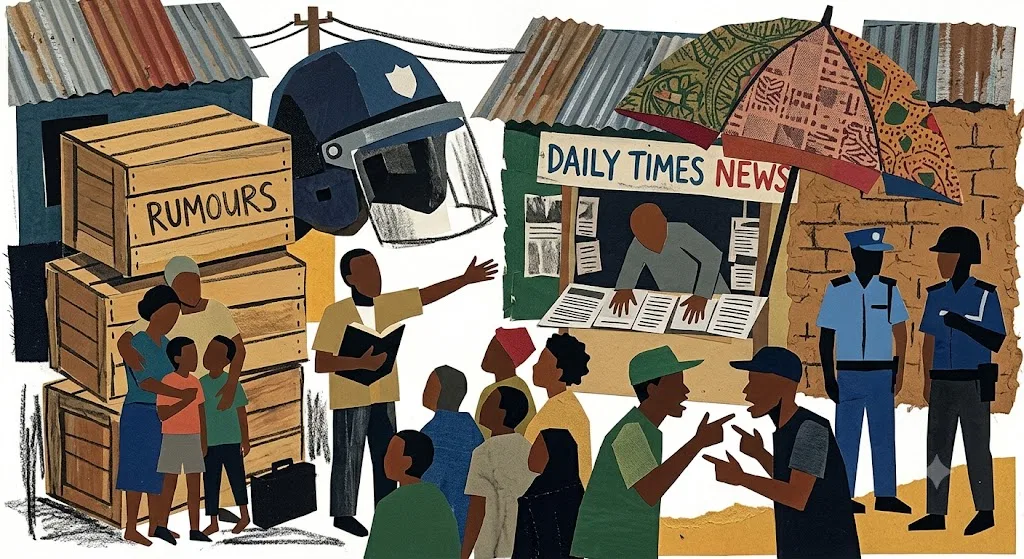
Nigeria’s history of collective fear is not one story of “mass hysteria”. It is a series of very different episodes: children accused of witchcraft, rumours of magically stolen genitals, violent religious movements, public terror over ritual murder, and occasional reports of unexplained illness spreading through schools.
Page outline Jump by section
Introduction
The most important distinction is between belief and evidence. A ritual murder may be real without proving that supernatural wealth-making works. A child may suffer abuse because relatives sincerely believe in witchcraft, but sincerity does not validate the accusation. A movement may be described as a “cult” by enemies even though historians would classify it more carefully as a dissident religious or political movement. Nigeria’s cases show how insecurity, inequality, rapid religious change, weak policing and sensational media can turn private misfortune into contagious public certainty.
Why supernatural fears become socially powerful
Nigeria is religiously diverse, economically unequal and historically marked by colonial rule, military government, civil conflict, rapid urbanisation and uneven access to justice. In such conditions, supernatural explanations can offer a clear cause for experiences that otherwise seem arbitrary: illness, infertility, business failure, unemployment, sudden wealth or an unexplained death.
This does not mean that Nigerians simply reject science or accept every rumour. Beliefs vary greatly by region, generation, education, religious community and personal experience. Nor are supernatural ideas sealed off from modern life. Pentecostal preaching, Islamic reform movements, films, radio, newspapers and social media have all reshaped older concepts of witchcraft, possession, spiritual attack and miraculous power.
Researchers studying witchcraft accusations against African children stress that these practices should not be lazily dismissed as timeless “tradition”. Contemporary accusations often arise from a changing mixture of family breakdown, poverty, migration, illness, charismatic religious entrepreneurship and new ideas about demonic possession.[UNICEF]unicef.orgChildren Accused of WitchcraftChildren Accused of WitchcraftJuly 7, 2010 — by A Cimpric · 2010 · Cited by 19 — This study addresses the issue of children who are…
This same mixture appears in other Nigerian scares. Stories of ritual wealth express anger about unexplained fortunes and corruption. Genital-theft rumours turn anxiety about bodily vulnerability into an accusation against a stranger. Apocalyptic or purification movements can promise moral order to people who feel abandoned by both the state and established religious leaders.
Children accused of witchcraft
The best-documented Nigerian witch panic concerns children in the southern states of Akwa Ibom and Cross River. From the late 1990s and 2000s, charities, journalists and international agencies reported children being blamed for deaths, poverty, failed businesses, illness and family conflict. Some were beaten, abandoned, starved or subjected to dangerous attempts at exorcism.
The accusation often worked backwards from misfortune. A household suffered a death or financial crisis; a vulnerable child, particularly an orphan, stepchild or child considered disobedient, was identified as the hidden cause. A pastor, healer or relative might then claim that nightmares, unusual behaviour or an extracted “confession” proved supernatural guilt. UNICEF’s research noted that confessions were sometimes obtained through pressure or violence rather than volunteered freely.[UNICEF]unicef.orgChildren Accused of WitchcraftChildren Accused of WitchcraftJuly 7, 2010 — by A Cimpric · 2010 · Cited by 19 — This study addresses the issue of children who are…
Religious competition helped spread the panic. Some independent churches and spiritual practitioners advertised the ability to identify witches or remove demonic forces. The accusation could therefore become part of a commercial process: diagnosis, confession and deliverance were offered by the same person or institution. It would be inaccurate, however, to blame Pentecostal Christianity as a whole. Many Nigerian churches reject child-witch accusations, while rescue work has included religious as well as secular organisations.
The effects were not imaginary simply because the supernatural claim was unsupported. Accused children experienced real stigma, injury, homelessness and interrupted education. Reuters reported in 2025 that Nigerian aid groups were still caring for young people accused of witchcraft, despite federal and state protections against child abuse. One organisation estimated that tens of thousands of children had faced accusations over two decades, although such figures are difficult to verify because many incidents remain hidden within families.[Reuters]reuters.comNigerian aid groups help children accused of witchcraft to rebuild livesThe issue, fueled by evangelical pastors and local witch doctors who perform exorcisms for profit, often leads to children being abused…
Nigeria’s Criminal Code also prohibits harmful ordeals and several offences connected with professing supernatural powers, accusations and coercive ritual practices. The law contains a full chapter covering ordeal, witchcraft, prohibited ritual acts and criminal charms. Legal prohibition, however, does not automatically overcome family secrecy, community pressure or weak enforcement.[Laws of Nigeria]lawsofnigeria.placng.orgLaws of Nigeria CRIMINAL CODE ACT ARRANGEMENT OF SECTIONSUnlawful trial by ordeal: prohibited juju. Offences in relation to witchcraft and juju. unlawful…
The episode is best understood as a witch panic and persecution rather than mass psychogenic illness. The central phenomenon was not a contagious physical symptom. It was a socially contagious explanation that transformed vulnerable children into presumed agents of catastrophe.

Maitatsine: prophecy, protest and urban violence
The Maitatsine movement is sometimes called a cult, but that label can conceal more than it explains. It was a dissident Islamic movement built around Muhammad Marwa, a preacher of Cameroonian origin who settled in Kano and became known for denunciatory sermons. His followers were often called Yan Tatsine, meaning followers of the man who curses or condemns.
Marwa attacked established Muslim authorities, conspicuous wealth and aspects of modern urban life. Accounts differ over the precise details of his teaching, partly because later reporting mixed documented sermons with rumours. What is clear is that his movement attracted poor migrants, young men and others living at the insecure edge of Kano’s expanding economy. Scholars have therefore interpreted Maitatsine not merely as religious fanaticism but as protest shaped by inequality, unemployment, migration and conflict between marginal communities, established clerics and the state.[cve-kenya.org]cve-kenya.orgBetween Maitatsine and Boko HaramJune 14, 2017 — by AO Adesoji · 2011 · Cited by 498 — The Maitatsine uprisings of 1980 to 1985 were the first major mani festation of Isl…
Tension escalated into fighting in Kano in December 1980. Police and eventually the army confronted armed followers, and large areas of the city were engulfed in violence. Frequently repeated estimates place the death toll above 4,000, although exact figures vary and contemporary casualty counting was unreliable. Marwa died during or shortly after the confrontation. Further uprisings associated with surviving followers occurred in Maiduguri, Kaduna, Yola and Gombe during the first half of the 1980s.[cve-kenya.org]cve-kenya.orgBetween Maitatsine and Boko HaramJune 14, 2017 — by AO Adesoji · 2011 · Cited by 498 — The Maitatsine uprisings of 1980 to 1985 were the first major mani festation of Isl…
The conflict generated a second layer of collective belief: rumours about who Maitatsine really was, where he came from, whether powerful officials had protected him and whether foreign migrants were secretly responsible. Historian Niels Kastfelt’s study of “rumours of Maitatsine” treated these stories as evidence of political culture rather than reliable biography. They expressed public suspicion that official explanations concealed deeper conspiracies.[Semantic Scholar]semanticscholar.orgOpen source on semanticscholar.org.
Maitatsine is relevant to Nigeria’s history of apocalyptic and millenarian movements because his preaching promised purification and rejected the legitimacy of the existing religious and political order. Yet it should not be reduced to a delusion that somehow infected a passive crowd. It was an organised movement with leaders, social bases, grievances and armed capacity. The Nigerian state faced genuine violence, even as rumours and hostile labelling distorted public understanding of the group.
Later comparisons with Boko Haram are useful but limited. Both movements drew followers from northern Muslim communities, denounced established authority and fought the state. Their doctrines, organisational histories and political environments were not identical, however, and treating Boko Haram as a simple continuation of Maitatsine risks replacing analysis with a neat but misleading genealogy.[cve-kenya.org]cve-kenya.orgBetween Maitatsine and Boko HaramJune 14, 2017 — by AO Adesoji · 2011 · Cited by 498 — The Maitatsine uprisings of 1980 to 1985 were the first major mani festation of Isl…
Ritual murder and the Otokoto uprising
Fear of “money rituals” occupies a powerful place in Nigerian popular culture. The basic claim is that human blood or body parts can be used in occult ceremonies to produce wealth, political power or protection. There is no evidence that such rituals possess supernatural power. There have, however, been genuine murders in which perpetrators or investigators described a ritual motive.
That distinction matters. Public concern cannot be dismissed as pure fantasy, but individual crimes do not prove the sweeping belief that every unexplained millionaire belongs to an occult network.
The most famous case erupted in Owerri in September 1996 after the murder of 11-year-old Anthony Ikechukwu Okoronkwo. The discovery that the child had been killed and mutilated was linked to the Otokoto Hotel and to men portrayed as members of an occult criminal network. Public anger rapidly became a wider revolt against wealthy figures, police officers, politicians and traditional authorities suspected of protecting ritual murderers. Properties associated with the accused were attacked or destroyed.[JSTOR]jstor.orgOpen source on jstor.org.
The killing was real, but the social meaning attached to it went far beyond the criminal evidence. Anthropologist Daniel Jordan Smith argued that stories of ritual murder and sudden wealth expressed a broader moral crisis in south-eastern Nigeria. Structural adjustment, corruption, fraud and spectacular inequality had made prosperity appear both mysterious and morally contaminated. Rumours supplied an explanation: the rich must have purchased success through occult violence.[JSTOR]jstor.orgOpen source on jstor.org.
The Otokoto unrest was therefore neither a baseless panic nor an orderly response to one murder. It was a moment when a documented crime fused with accumulated suspicion. The crowd’s targets represented an entire system believed to unite criminals, wealthy patrons and compromised police.
The episode remains culturally important because “ritual wealth” still provides a language for discussing extreme inequality. Nigerian films, sermons and news reports repeatedly portray riches acquired through sacrifice, secret societies or demonic bargains. Such stories can act as moral criticism, warning that wealth without visible labour is dangerous. They can also create harm by encouraging false accusations, mob action and exaggerated claims about the prevalence of occult murder.
The panic over stolen genitals
One of Nigeria’s strangest recurrent rumours claims that a person’s penis, breasts or other sexual organs can disappear, shrink or become spiritually disabled after contact with a stranger. Similar scares have appeared elsewhere in West and Central Africa, but Nigeria has experienced repeated waves since at least the 1970s.
During an outbreak, an ordinary encounter may suddenly be reinterpreted as an attack. A man brushes against another person in a market or receives a handshake, then checks his body and feels that something has changed. The alleged thief may be surrounded, beaten or taken to the police. Crowds sometimes demand that the accused “restore” the missing organ.
Medical writers commonly relate these episodes to koro-like fear: acute anxiety that the genitals are shrinking, disappearing or retracting into the body. The physical sensation is real to the distressed person, even though examination may show no anatomical loss. Social expectation makes the experience contagious. Once people have heard that strangers can steal genitals by touch, normal variation, cold, muscular contraction or panic itself may be interpreted as proof.[New Lines Magazine]newlinesmag.comNew Lines Magazine The Curious Phenomenon of Nigeria's Disappearing PenisesNew Lines Magazine The Curious Phenomenon of Nigeria's Disappearing Penises
The rumour is also structured by gender, masculinity and economic insecurity. A supposed loss threatens fertility, sexual identity and adulthood. The alleged thief is usually an unfamiliar person, making the story a form of social boundary policing: strangers, migrants and socially marginal people become dangerous because they cannot easily prove their innocence.
These incidents fit the idea of a rumour panic more closely than a conventional psychiatric epidemic. They involve bodily sensation, but also accusation, crowd judgement and sometimes violence. Authorities face a difficult task: they must reassure the complainant without endorsing the supernatural claim, protect the accused from mob attack and investigate whether any conventional assault has occurred.
School illness and the limits of the evidence
Mass psychogenic illness describes the rapid spread of real physical symptoms through a group when medical investigation does not find an adequate toxic, infectious or environmental cause. Common symptoms include fainting, dizziness, trembling, breathing difficulty, weakness and nausea. The older phrase “mass hysteria” is increasingly avoided because it sounds dismissive and has often been used to belittle women and young people.
Nigeria is occasionally included in international discussions of school-based psychogenic illness. One often-repeated account describes more than 600 girls at a northern Nigerian Muslim school in 1995 developing screaming, crying, foaming, paralysis or similar symptoms. Later summaries have interpreted the episode through tension between strict schooling, arranged-marriage expectations and romantic ideals encountered through films.[Wikipedia]WikipediaMass psychogenic illnessMass psychogenic illness
This story should be treated cautiously. It is frequently repeated in secondary literature, but easily accessible primary medical documentation is limited. Without clinical records, environmental testing and a reliable outbreak investigation, it is impossible to know how many pupils were affected, whether all displayed the same symptoms or whether physical causes were adequately excluded.
That uncertainty illustrates an important rule. Mass psychogenic illness should be a diagnosis reached after investigation, not a convenient label for any puzzling behaviour among schoolgirls. Heat, dehydration, infection, food contamination, epilepsy, toxic exposure and deliberate performance can produce superficially similar events. Stress-mediated symptoms are genuine, but they should not be assumed merely because laboratory tests are initially negative.
Media, film and the amplification of fear
Nigeria’s media do more than transmit scares; they help supply the images through which people recognise them. Newspapers, radio phone-ins, social media, sermons and video films can turn a local incident into a national pattern by repeating emotionally vivid details.
The Nigerian film industry has been particularly influential in depicting witches, demonic children, secret societies and wealth gained through human sacrifice. These stories are fictional, but they draw power from real concerns about inequality, corruption and family conflict. Their effect is not straightforward. Audiences can enjoy them as morality tales without believing every supernatural mechanism. Yet repeated images may make certain explanations feel familiar and therefore plausible when a real crisis occurs.
News reporting faces a related problem. The phrase “ritual killing” may describe what a suspect allegedly intended, what police inferred from mutilation, or simply what frightened neighbours assumed. Reporting that collapses those categories can create the impression of a coordinated national epidemic even when cases differ greatly.
The most responsible coverage separates four questions:
- Was a crime or illness independently established?
- What supernatural interpretation did participants give it?
- What evidence supports that interpretation?
- Did publicity encourage further accusations, imitation or violence?
This framework protects against two opposite errors. One is sensationalism: treating every claim of witchcraft or ritualism as fact. The other is condescension: dismissing communities as irrational while ignoring genuine crime, insecurity and institutional failure.
How the state has responded
Nigerian authorities have alternated between force, law reform, investigation and public reassurance. The response has often depended on the category of crisis.
Against Maitatsine, the state used police and military force after the movement became an armed insurgency. The scale of the violence ended the immediate Kano uprising but did not prevent later outbreaks by surviving followers. The episode also fed suspicion that government had ignored warning signs and relied on overwhelming force only after local conflict became catastrophic.[cve-kenya.org]cve-kenya.orgBetween Maitatsine and Boko HaramJune 14, 2017 — by AO Adesoji · 2011 · Cited by 498 — The Maitatsine uprisings of 1980 to 1985 were the first major mani festation of Isl…
In witchcraft cases, the legal challenge is different. The state must protect children without criminalising private belief as such. Nigerian law prohibits harmful ordeals and actions associated with coercive supernatural accusation, while child-protection legislation provides broader grounds for intervention. The persistent difficulty is enforcement: accusations occur in homes, informal churches and neighbourhoods where victims may have little access to police or courts.[Laws of Nigeria]lawsofnigeria.placng.orgLaws of Nigeria CRIMINAL CODE ACT ARRANGEMENT OF SECTIONSUnlawful trial by ordeal: prohibited juju. Offences in relation to witchcraft and juju. unlawful…
After ritual-murder scandals, governments have established inquiries, prosecuted suspects and sometimes demolished or confiscated associated properties. Such visible action can restore confidence, but it can also appear to confirm every rumour surrounding a case. Fair trials are particularly important when public anger has already declared a whole network guilty.
During genital-theft panics, police are placed in the unusual position of protecting someone accused of an impossible act while responding respectfully to a terrified complainant. Mockery can increase distrust. Endorsing the claim can expose the accused to further danger. Calm medical examination, crowd control and clear communication are generally more useful than debating supernatural belief in the street.
What these episodes reveal about Nigeria
Nigeria’s panics and collective-belief movements are not united by one national psychology. They arise in different settings and should not be forced into a single diagnosis. Their common feature is the conversion of uncertainty into a morally meaningful story.
Child-witch accusations explain family misfortune by locating evil in a powerless person. Ritual-wealth rumours interpret inequality as the result of secret violence. Genital-theft scares turn bodily anxiety into an attack by a stranger. Maitatsine transformed deprivation and religious dissent into a movement of purification and confrontation. Suspected school outbreaks show how stress may travel through close-knit institutions, although the Nigerian evidence remains fragmentary.
Across these cases, collective belief becomes most dangerous when accusation outruns verification. The people harmed are often those least able to defend themselves: children, migrants, strangers, religious dissidents and socially marginal individuals. At the same time, simply telling frightened communities that their beliefs are absurd rarely addresses the conditions that make the beliefs persuasive.
Nigeria’s history suggests that effective responses require more than fact-checking. They require trustworthy policing, child protection, medical investigation, responsible journalism and credible ways of explaining misfortune. Where institutions fail, rumour does not merely fill an information gap. It offers a complete moral world, naming the victim, the villain and the hidden cause before evidence has had a chance to speak.
Amazon book picks
Further Reading
Books and field guides related to When Fear Became Public Certainty in Nigeria. Use these as the next step if you want deeper reading beyond the article.

Things Fall Apart
Introduces cultural and historical themes central to understanding Nigeria.
Extraordinary Popular Delusions and the Madness of Crowds
Rating: 4.0/5 from 5 Google Books ratings
Explores recurring patterns of collective belief and panic.
Endnotes
1.
Source: unicef.org
Title: Children Accused of Witchcraft
Link:https://www.unicef.org/nigeria/media/1326/file/%20Children-accused-of-witchcraft-in-Africa.pdf.pdf
Source snippet
Children Accused of WitchcraftJuly 7, 2010 — by A Cimpric · 2010 · Cited by 19 — This study addresses the issue of children who are...
Published: July 7, 2010
2.
Source: unicef.org
Link:https://www.unicef.org/nigeria/media/1661/file/Nigeria-situation-analysis-women-and-children-2011_1.pdf.pdf
Source snippet
prevalent in the South south, particularly Akwa Ibom state, this practice in...
3.
Source: reuters.com
Title: Nigerian aid groups help children accused of witchcraft to rebuild lives
Link:https://www.reuters.com/world/africa/nigerian-aid-groups-help-children-accused-witchcraft-rebuild-lives-2025-11-13/
Source snippet
The issue, fueled by evangelical pastors and local witch doctors who perform exorcisms for profit, often leads to children being abused...
4.
Source: cve-kenya.org
Title: Between Maitatsine and Boko Haram
Link:https://www.cve-kenya.org/media/library/Adesoji_2011_Islamic_Fundamentalism_and_the_Response_of_the_Nigerian_State_1.pdf
Source snippet
June 14, 2017 — by AO Adesoji · 2011 · Cited by 498 — The Maitatsine uprisings of 1980 to 1985 were the first major mani festation of Isl...
Published: June 14, 2017
5.
Source: jstor.org
Link:https://www.jstor.org/stable/3094936
6.
Source: Wikipedia
Title: Mass psychogenic illness
Link:https://en.wikipedia.org/wiki/Mass_psychogenic_illness
7.
Source: Wikipedia
Title: Witchcraft accusations against children in Africa
Link:https://en.wikipedia.org/wiki/Witchcraft_accusations_against_children_in_Africa
8.
Source: Wikipedia
Link:https://en.wikipedia.org/wiki/Millennialism
9.
Source: Wikipedia
Title: 1996 Otokoto Riots
Link:https://en.wikipedia.org/wiki/1996_Otokoto_Riots
10.
Source: Wikipedia
Link:https://en.wikipedia.org/wiki/Maitatsine
11.
Source: reuters.com
Title: penis theft panic hits city idUSN23196036
Link:https://www.reuters.com/article/lifestyle/penis-theft-panic-hits-city-idUSN23196036/
12.
Source: lawsofnigeria.placng.org
Title: Laws of Nigeria CRIMINAL CODE ACT ARRANGEMENT OF SECTIONS [
Link:https://lawsofnigeria.placng.org/laws/C38.pdf
Source snippet
Unlawful trial by ordeal: prohibited juju. Offences in relation to witchcraft and juju. unlawful...
13.
Source: ajis.org
Link:https://www.ajis.org/index.php/ajiss/article/view/2772
Source snippet
The Maitatsine 'Revolution' in Nigeria The spate of disturbances which had the appearance of Islamic fundamentalism in Nigeria in the ear...
14.
Source: semanticscholar.org
Link:https://www.semanticscholar.org/paper/RUMOURS-OF-MAITATSINE%3A-A-NOTE-ON-POLITICAL-CULTURE-Kastfelt/8fd376d017576ddbd451ef40d5b33ac82f27c804
15.
Source: newlinesmag.com
Title: New Lines Magazine The Curious Phenomenon of Nigeria’s Disappearing Penises
Link:https://newlinesmag.com/reportage/the-curious-phenomenon-of-nigerias-disappearing-penises/
16.
Source: cdn.modernghana.com
Title: unicef nigeria child witch report and crarn work
Link:https://cdn.modernghana.com/images/content/report_content/unicef_nigeria_child_witch_report_and_crarn_work.pdf
17.
Source: frontiersin.org
Link:https://www.frontiersin.org/journals/psychiatry/articles/10.3389/fpsyt.2020.493094/full
18.
Source: reliefweb.int
Title: unicef and partners bring hope children accused witchcraft nigeria
Link:https://reliefweb.int/report/nigeria/unicef-and-partners-bring-hope-children-accused-witchcraft-nigeria
19.
Source: bactra.org
Link:https://bactra.org/notebooks/millenarian.html
20.
Source: ebsco.com
Link:https://www.ebsco.com/research-starters/social-sciences-and-humanities/mass-hysteria
Additional References
21.
Source: unodc.org
Link:https://www.unodc.org/cld/uploads/res/document/nga/1916/criminal_code_act_html/Nigeria_Criminal_Code_Act_1916.pdf
Source snippet
Criminal Code ActChapter 20 Ordeal, Witchcraft, The trial by the ordeal of sasswood, esere-bean, or other poison, boiling oil, fire...
22.
Source: academia.edu
Link:https://www.academia.edu/5368224/Apocalyptic_and_Millenarian_Movements
23.
Source: researchgate.net
Link:https://www.researchgate.net/publication/236810237_Between_Maitatsine_and_Boko_Haram_Islamic_Fundamentalism_and_the_Response_of_the_Nigerian_State
24.
Source: researchgate.net
Link:https://www.researchgate.net/publication/271759288_Mass_hysteria_among_South_African_primary_school_learners_in_Kwa-Dukuza_KwaZulu-Natal
25.
Source: researchgate.net
Link:https://www.researchgate.net/publication/350886330_Shrinking_and_psychological_disappearance_of_the_penis_A_salient_psychocultural_issue_in_Nigeria
26.
Source: researchgate.net
Link:https://www.researchgate.net/publication/398436287_Ritualised_wealth_and_the_moral_spectacle_Interrogating_occult_imagery_in_Nigeria_media_narratives
27.
Source: researchgate.net
Link:https://www.researchgate.net/publication/404861540_The_Bloomsbury_Handbook_of_Apocalypticism_and_Millennialism_references_and_notes
28.
Source: ihrda.org
Link:https://ihrda.org/en/acerwc-finds-nigeria-in-violation-in-child-witchcraft-accusation-case
29.
Source: whrin.org
Link:https://www.whrin.org/wp-content/uploads/2012/12/childreninafricanwitchhuntsfinalversion-1-Felix-Riedel-2.pdf
30.
Source: scribd.com
Link:https://www.scribd.com/document/673980755/Assessing-the-Possibilities-and-Limitations-of-Citizen-Moral-Panic
Topic Tree
Follow this branch
Related pages 192
- Antigua and Barbuda
- Argentina Belief Scares
- Azerbaijan Belief
- Bahrain Beliefs
- North Korea
- +187 more in sidebar