Within Denmark's Collective Fears
How Did Danish Witch Accusations Multiply?
Neighbourly disputes became deadly when courts and clergy recast local misfortune as evidence of a hidden diabolical conspiracy.
On this page
- From harmful magic to religious crime
- Koge and the spread of accusations
- Courts, coercion and the human cost
Page outline Jump by section
Introduction
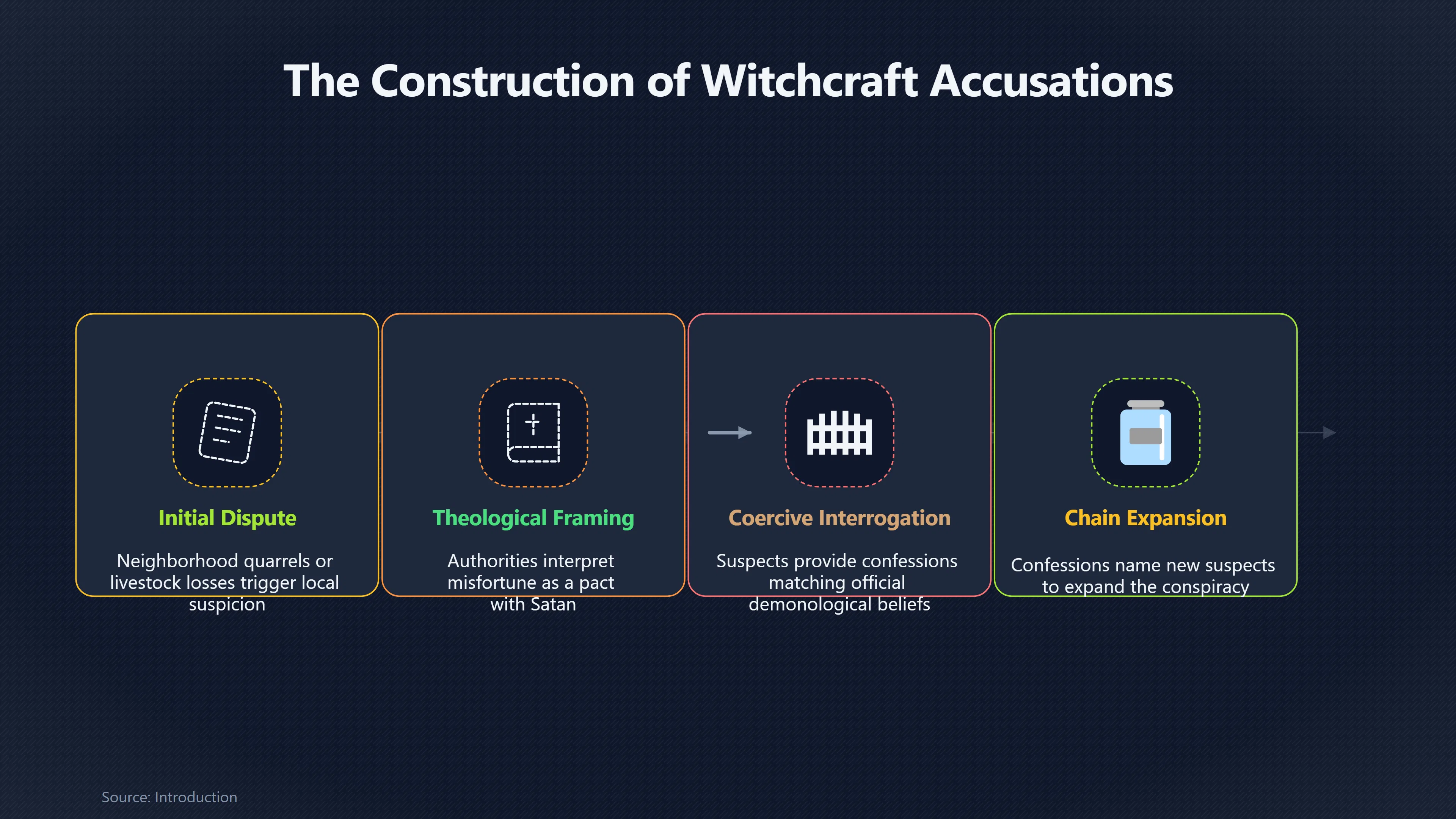
Danish witch hunts were not driven by random outbreaks of fear. Most accusations began with ordinary neighbourhood disputes, illness, failed harvests or unexplained deaths, but they became far more dangerous when courts and clergy interpreted these local conflicts as evidence of a hidden alliance with the Devil. Once investigators accepted the idea that witches acted together rather than alone, accusations developed into chains: one confession produced new suspects, whose interrogations produced still more names. The best-known example, the Køge Huskors trials, shows how a single household’s claims of supernatural attack grew into Denmark’s largest witch prosecution. Historians now view these events less as spontaneous mass hysteria than as a process in which legal procedures, religious beliefs and coercive interrogation transformed local rumours into expanding criminal conspiracies.[Syddansk Universitet]portal.findresearcher.sdu.dkthe construction of witchcraft in early modern denmarkSyddansk UniversitetThe construction of witchcraft in early modern Denmark, 1536-1617 - University of Southern DenmarkMarch 31, 2025…
From harmful magic to religious crime
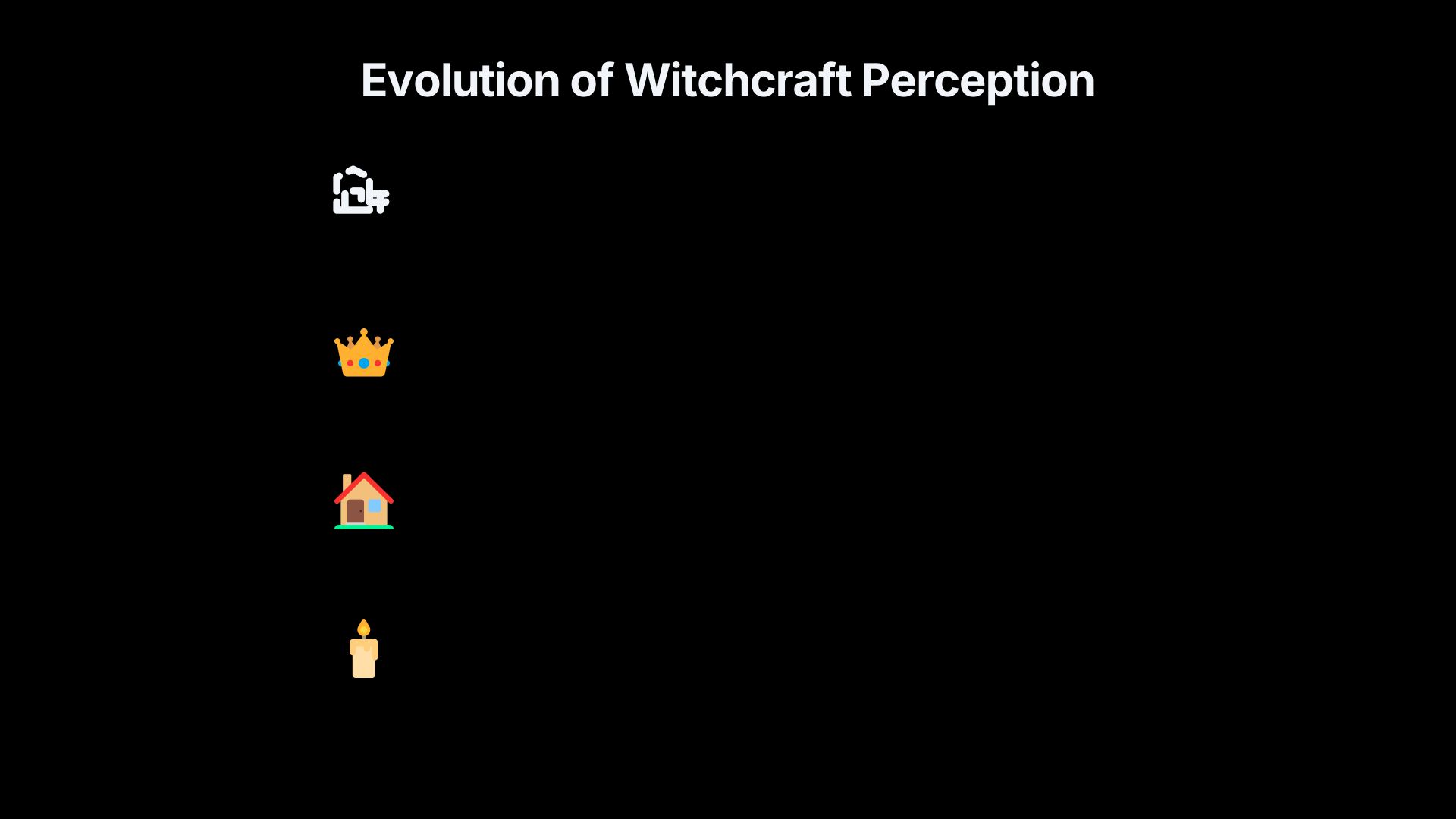
The mechanism behind Danish accusation chains lay in a profound change in how authorities understood witchcraft. Earlier complaints generally centred on harmful magic: a neighbour was believed to have cursed livestock, caused illness or damaged property after an argument. During the decades following the Lutheran Reformation, however, theologians and jurists increasingly argued that such acts were signs of a deliberate pact with Satan. Witchcraft therefore became not simply an offence against another person but a crime against God and the Christian kingdom.[Syddansk Universitet]portal.findresearcher.sdu.dkthe construction of witchcraft in early modern denmarkSyddansk UniversitetThe construction of witchcraft in early modern Denmark, 1536-1617 - University of Southern DenmarkMarch 31, 2025…
This shift altered the logic of investigations. If witches supposedly served the Devil, then they were unlikely to act alone. Magistrates increasingly expected suspects to reveal accomplices, secret meetings and demonic rituals. Under questioning, especially when faced with imprisonment and the threat of torture where legally permitted, accused people often repeated ideas already circulating in court. Each confession appeared to confirm the authorities’ expectations and justified further arrests.
The resulting process created a powerful feedback loop:
- A personal quarrel or unexplained misfortune produced an accusation.
- Investigators interpreted the allegation within a theological framework of diabolical conspiracy.
- Confessions were expected to identify additional witches.
- New suspects were arrested and questioned.
- Their statements generated still more accusations, making the conspiracy appear increasingly real.
Rather than beginning with evidence of an organised network, the network was effectively constructed through successive interrogations and judicial assumptions.[Syddansk Universitet]portal.findresearcher.sdu.dkthe construction of witchcraft in early modern denmarkSyddansk UniversitetThe construction of witchcraft in early modern Denmark, 1536-1617 - University of Southern DenmarkMarch 31, 2025…
How Køge became Denmark’s largest accusation chain
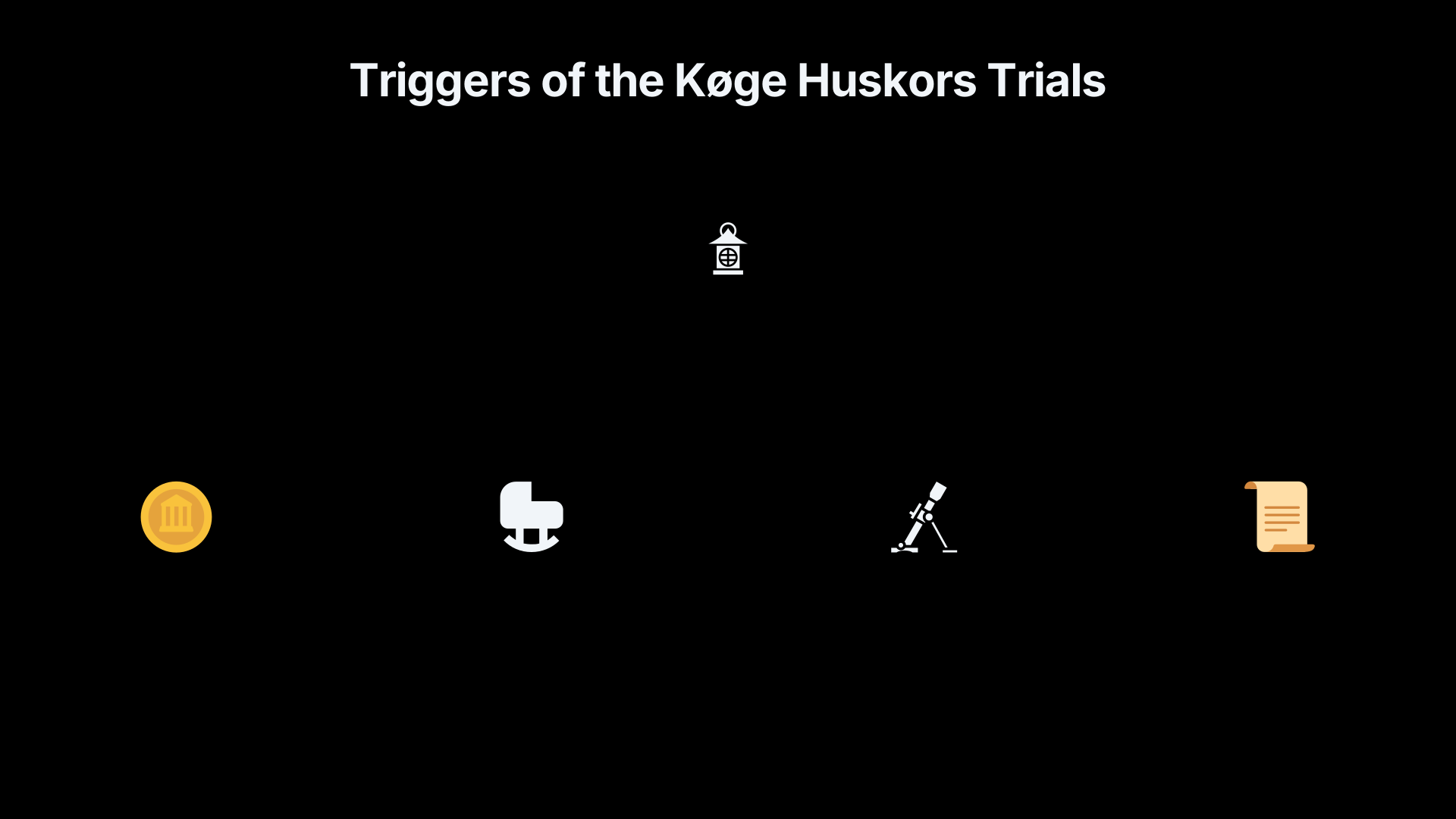
The Køge Huskors prosecutions between 1608 and 1615 provide the clearest illustration of how accusation chains expanded.
The affair began not with a public panic but with reports from the prosperous Bartskær household. Family members described strange noises, apparitions, illness and what they believed were attacks by the Devil inside their home. These experiences followed earlier disputes with neighbours, encouraging suspicion that malicious magic lay behind the disturbances. Ministers and local officials accepted the possibility that demonic forces were involved rather than dismissing the incidents as misunderstanding or coincidence.[Wikipedia]WikipediaKøge HuskorsKøge Huskors
Once Johanne Thomes became a suspect, witnesses began recalling previous quarrels and unfortunate events that suddenly seemed significant. Ordinary memories were reinterpreted as evidence of witchcraft because they fit the emerging narrative. This pattern is common in many European witch hunts: once investigators believe a conspiracy exists, ambiguous past events are reorganised into a coherent story.
The investigation then accelerated through denunciation. Women questioned by the authorities confessed to participating in supernatural acts and named other local women as fellow witches. According to surviving records, some confessions described summoning the Devil and sending him into the Bartskær house, imagery that reflected contemporary demonological beliefs rather than earlier village traditions about harmful magic. Seven women confessed to participating in such acts during the central phase of the investigation, while the broader proceedings ultimately resulted in between fifteen and twenty executions, making Køge the largest documented witch trial in Danish history.[wikipedia.org]WikipediaKøge HuskorsKøge Huskors
The chain did not continue because new independent evidence appeared. Instead, each confession strengthened belief that previous accusations had been correct, encouraging investigators to pursue additional suspects.
Why neighbourly disputes spread so easily
Most Danish witch prosecutions originated in everyday social relationships rather than dramatic religious visions.
Communities were small and closely connected. Many accusations followed disputes over:
- debts or unpaid work;
- begging and refusal of charity;
- arguments between neighbours;
- unexplained illness or infant deaths;
- livestock losses or failed brewing;
- longstanding reputations for healing or magical knowledge.
On their own, these conflicts rarely produced large-scale prosecutions. They became lethal when interpreted through official religious ideas about Satanic collaboration. A quarrel that once suggested a curse could now be presented as evidence that the accused belonged to a hidden community of Devil worshippers.[Syddansk Universitet]portal.findresearcher.sdu.dkthe construction of witchcraft in early modern denmarkSyddansk UniversitetThe construction of witchcraft in early modern Denmark, 1536-1617 - University of Southern DenmarkMarch 31, 2025…
Reputation also mattered. Women who were socially isolated, outspoken, poor or already suspected of possessing supernatural knowledge were particularly vulnerable. Once one such woman confessed—whether voluntarily or under severe pressure—her testimony could implicate neighbours with whom she had long-standing connections, extending the accusation chain through ordinary social networks rather than organised criminal ones.
Courts, coercion and the human cost
The expanding chains depended heavily upon judicial procedure. Early modern courts did not simply record public fears; they actively shaped them.
Investigators sought detailed confessions that matched accepted demonological beliefs. Suspects were expected to explain how they had entered the Devil’s service, identify companions and describe supernatural meetings. The more elaborate these narratives became, the more persuasive they appeared within the legal framework of the time, even though modern historians regard them as products of coercive questioning, religious expectation and institutional pressure rather than reliable evidence.[Syddansk Universitet]portal.findresearcher.sdu.dkthe construction of witchcraft in early modern denmarkSyddansk UniversitetThe construction of witchcraft in early modern Denmark, 1536-1617 - University of Southern DenmarkMarch 31, 2025…
Royal policy also intensified the process. Christian IV’s government, particularly after the 1617 witchcraft ordinance, encouraged officials and clergy to pursue suspected witches more vigorously. This national framework did not create local disputes, but it increased the likelihood that local accusations would be investigated as serious religious crimes capable of threatening the entire kingdom.[Syddansk Universitet]portal.findresearcher.sdu.dkthe construction of witchcraft in early modern denmarkSyddansk UniversitetThe construction of witchcraft in early modern Denmark, 1536-1617 - University of Southern DenmarkMarch 31, 2025…
For those accused, the consequences were devastating. Families lost mothers, wives and neighbours through execution, while communities were fractured by fear and mistrust. Even acquittal could leave a lasting stain on a person’s reputation.
Why historians see accusation chains rather than mass hysteria
Modern scholarship generally avoids describing Danish witch hunts simply as episodes of “mass hysteria”. That phrase suggests an irrational crowd acting independently, whereas surviving records point to a more structured process.
Several interacting forces produced the expanding prosecutions:
- local grievances supplied the initial accusations;
- Lutheran theology redefined witchcraft as participation in a Satanic conspiracy;
- courts expected confessions that named accomplices;
- judicial interrogation transformed rumours into apparently corroborating testimony;
- royal legislation encouraged more vigorous prosecution.
Seen together, these mechanisms explain why relatively ordinary neighbourhood conflicts could escalate into large-scale persecutions. The accusation chain was not accidental. It emerged because institutions repeatedly converted uncertain events into legal proof of an invisible conspiracy.
The Køge trials remain the clearest Danish example of this mechanism. They demonstrate how fear became self-reinforcing once confessions, judicial expectations and religious doctrine all pointed towards the same conclusion. The episode therefore occupies an important place in Denmark’s history of collective belief—not because large crowds suddenly lost reason, but because respected institutions gave local suspicions the authority to multiply into one of the country’s deadliest witch hunts.[sdu.dk]portal.findresearcher.sdu.dkthe construction of witchcraft in early modern denmarkSyddansk UniversitetThe construction of witchcraft in early modern Denmark, 1536-1617 - University of Southern DenmarkMarch 31, 2025…
Amazon book picks
Further Reading
Books and field guides related to How Did Danish Witch Accusations Multiply?. Use these as the next step if you want deeper reading beyond the article.
The witch-hunt in early modern Europe
Comprehensive overview of legal and religious dynamics behind witch hunts.


The Penguin book of witches
Contains documents illustrating expanding witch accusations.
Endnotes
1.
Source: Wikipedia
Title: Køge Huskors
Link:https://en.wikipedia.org/wiki/K%C3%B8ge_Huskors
2.
Source: Wikipedia
Title: Witch trials in Denmark
Link:https://en.wikipedia.org/wiki/Witch_trials_in_Denmark
3.
Source: lex.dk
Title: Køge huskors
Link:https://lex.dk/K%C3%B8ge_huskors
Source snippet
Køge huskors - Besættelse og heksejagt i 1608 - Lex...
4.
Source: portal.findresearcher.sdu.dk
Title: the construction of witchcraft in early modern denmark 1536 1617
Link:https://portal.findresearcher.sdu.dk/en/publications/the-construction-of-witchcraft-in-early-modern-denmark
Source snippet
Syddansk UniversitetThe construction of witchcraft in early modern Denmark, 1536-1617 - University of Southern DenmarkMarch 31, 2025...
Published: March 31, 2025
5.
Source: koegebib.dk
Title: Køge Huskors
Link:https://www.koegebib.dk/artikler/litteratur/koge-huskors-en-nadeslos-heksejagt
Source snippet
En af hovedpersonerne nedskrev sine erindringer. Bogen med denne førstehåndskilde kan du låne hos os...
6.
Source: portal.findresearcher.sdu.dk
Title: the construction of witchcraft in early modern denmark 1536 1617
Link:https://portal.findresearcher.sdu.dk/da/publications/the-construction-of-witchcraft-in-early-modern-denmark-1536-1617/
Source snippet
construction of witchcraft in early modern Denmark, 1536-1617 - Syddansk UniversitetMarch 31, 2025 — THE CONSTRUCTION OF WITCHCRAFT IN EA...
Published: March 31, 2025
7.
Source: books.google.com
Title: The Construction of Witchcraft in Early
Link:https://books.google.com/books/about/The_Construction_of_Witchcraft_in_Early.html?id=KopIEQAAQBAJ
Source snippet
Construction of Witchcraft in Early Modern Denmark, 1536-1617 - Louise Nyholm Kallestrup - Google BooksMarch 31, 2025 — THE CONSTRUCTION...
Published: March 31, 2025
8.
Source: mystoryplace.dk
Title: Køge Huskors
Link:https://mystoryplace.dk/en/11
9.
Source: portal.findresearcher.sdu.dk
Link:https://portal.findresearcher.sdu.dk/en/publications/the-infected-and-the-guilty-on-heresy-and-witchcraft-in-post-refo/
10.
Source: portal.findresearcher.sdu.dk
Title: dk Louise Nyholm Kallestrup
Link:https://portal.findresearcher.sdu.dk/en/persons/lnk
Additional References
11.
Source: koegebib.dk
Title: heksedage tankerne bag
Link:https://www.koegebib.dk/artikler/heksedage-tankerne-bag
Source snippet
Heksedage - tankerne bag | KøgeBibliotekerneAugust 4, 2025 — HEKSEDAGE - TANKERNE BAG For at mindes og ære de dømte kvinder fra Køge Husk...
Published: August 4, 2025
12.
Source: youtube.com
Title: Danish Witch Trials, Ghost Stories, and Modern Magic in Denmark
Link:https://www.youtube.com/watch?v=gVuiWaAqh_4
Source snippet
The Witch-Hunt in Early Modern Europe: A Discussion with Brian Levack...
13.
Source: museerne.dk
Title: Museum Sydøstdanmark Køge Museum
Link:https://museerne.dk/en/pages/koege-museum-besat
Source snippet
Museum SydøstdanmarkKøge Museum - Exhibitions - POSSESSED – Museum Sydøstdanmark...
14.
Source: researchgate.net
Link:https://www.researchgate.net/publication/236724407_Knowing_Satan_from_God_Demonic_Possession_Witchcraft_and_the_Lutheran_Orthodox_Church_in_Early_Modern_Denmark
15.
Source: visitkoege.dk
Link:https://www.visitkoege.dk/koege/oplevelser/fortaellingen-om-kjoege-huskors
16.
Source: visitkoege.com
Link:https://www.visitkoege.com/koge/plan-your-trip/memorial-plaque-about-koge-huskors-gdk619866
17.
Source: youtube.com
Title: King James and the Scottish Witches
Link:https://www.youtube.com/watch?v=5iR14telPN4
Source snippet
Danish Witch Trials, Ghost Stories, and Modern Magic in Denmark...
18.
Source: researchgate.net
Title: 389107462 The Construction of Witchcraft in Early Modern Denmark 1536 1617
Link:https://www.researchgate.net/publication/389107462_The_Construction_of_Witchcraft_in_Early_Modern_Denmark
19.
Source: youtube.com
Title: Witchcraft, Storms, and a Marriage
Link:https://www.youtube.com/watch?v=pT8lwUl6jJ0
Source snippet
The 91 Norwegian "Witches" Sentenced to Death...
20.
Source: koegearkiverne.dk
Title: Historien bag navnet 1: Bygårdsstræde – Køge Arkiverne
Link:https://koegearkiverne.dk/1056
Topic Tree