When Fear Becomes Fact in Mozambique
Mozambique’s history of collective fear is not dominated by one famous “mass hysteria” episode.
Page outline Jump by section
Introduction
This episode matters because it was neither simply an old superstition nor a conventional medical outbreak. It was a rumour panic: an alarming claim moved rapidly between communities and through social media, bodily anxiety was interpreted as proof, and suspected offenders became targets. Earlier Mozambican cases involving witchcraft, spirit warfare and cannibal accusations show why such scares can feel persuasive. They often provide a language for expressing genuine insecurity, even when the alleged supernatural crime is unsupported.
The 2026 genital-shrinking panic
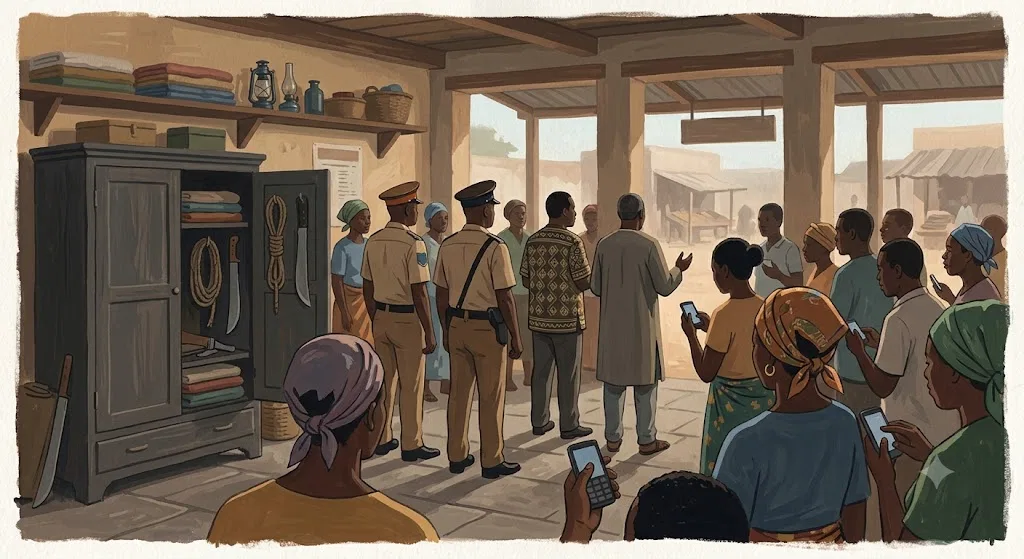
The panic appears to have begun around 18 April 2026 in Cabo Delgado. Men claimed that their genitals had shrunk, disappeared or ceased functioning after contact with an alleged sorcerer. The supposed method varied: some stories blamed handshakes, others a touch, a look or an exchange of money. Once an accusation was made, crowds could gather rapidly and assault the alleged culprit before police or medical workers could intervene. Within days, deaths were reported in Cabo Delgado, Nampula and Zambézia; the rumour subsequently reached other provinces.[aimnews.org]aimnews.orgrumours about shrinking penises have led to 39 deathsAim NewsRumours about shrinking penises have led to 39 deaths4 May 2026 — Maputo, 3 May (AIM) – The wave of disinformation alleging that…
The casualty count rose sharply as the scare spread. Authorities initially announced at least 11 deaths. By early May, reporting based on police statements put the toll at 39, and by 14 May the national police had confirmed almost 60 killings. Victims reportedly included teachers, a nurse, a police officer and a municipal official, illustrating how quickly an ordinary interaction could be reinterpreted as magical aggression. No medically verified case of a stolen or supernaturally shrunken organ was identified.[aimnews.org]aimnews.orgrumours about shrinking penises have led to 39 deathsAim NewsRumours about shrinking penises have led to 39 deaths4 May 2026 — Maputo, 3 May (AIM) – The wave of disinformation alleging that…
Researchers studying similar “genital theft” scares elsewhere describe a recognisable social mechanism. A person notices an unfamiliar bodily sensation, often during a tense encounter, and interprets it through an existing story about magical theft. Bystanders reinforce the interpretation; checking, touching and intense anxiety can make the sensation feel even more alarming. The alleged victim’s conviction then becomes evidence for the crowd, despite the absence of an observable injury. Such episodes are sometimes compared with mass psychogenic illness, in which real distress and physical sensations spread socially without a corresponding toxic or infectious cause. The Mozambican case, however, is better understood primarily as a violent rumour panic because the most consequential behaviour was the identification and lynching of supposed perpetrators.[ResearchGate]researchgate.netUnderstanding Genital-Shrinking Epidemics in West AfricaApril 1, 2005 — PDF | A small-scale epidemic of genital shrinking occ…
Social media accelerated the circulation of warnings, names and claims, but technology did not create the underlying fear. The story drew its power from established ideas about concealed supernatural harm, uncertainty about strangers and the expectation that dangerous powers can be transferred through ordinary social contact. A handshake, normally a sign of trust, became threatening precisely because it brought unfamiliar people into physical proximity.
Why witchcraft accusations carry such force
“Witchcraft” is an imperfect umbrella term. Beliefs about harmful spiritual power differ greatly between Mozambique’s regions and communities, and many practices associated with ancestors, healing or protection are not considered evil by those who follow them. It is therefore misleading to treat Mozambicans as sharing one fixed supernatural worldview. What matters in panic episodes is the accusation that a particular person has secretly caused misfortune.
Such accusations can translate hard-to-explain events into human intentions. An unexplained illness becomes an attack; an infant’s death becomes evidence of hidden hostility; an economic setback becomes sabotage by a jealous relative. This explanation offers apparent certainty, but it also creates a suspect. The accused may be a neighbour, an older woman, a healer, a successful rival or simply a stranger who was nearby when anxiety began.
The United Nations Committee on the Elimination of Discrimination against Women has specifically identified witchcraft accusations against women as a continuing harmful practice in Mozambique. In 2019 it expressed concern about impunity and recommended criminalising harmful accusations and prosecuting those responsible. United Nations work on ageing has also noted that older Mozambicans may face physical assault, mistreatment or expulsion after being accused of witchcraft, with disputes over land, inheritance and property sometimes lying behind the allegation.[un.org]digitallibrary.un.orgited Nations Digital Library Systemited Nations Digital Library System
This does not mean every accusation is a cynical disguise for a material dispute. People may sincerely believe that supernatural harm has occurred. Yet sincere belief and social interest can coexist. A family conflict may shape who is suspected; a property dispute may determine who benefits from an expulsion; and an unresolved death may make an accusation emotionally compelling. The language of witchcraft can therefore express fear, grief, resentment and competition at the same time.

Children and the “night war” of Nampula
Anthropological research in neighbourhoods of Nampula records accounts of a hidden “war of the night” in which witches, hostile ancestors and new malign spirits were believed to prey upon babies and small children. Families described children being abducted, enslaved or spiritually harmed while adults slept. These accounts became particularly significant when a child was seriously ill and neither biomedical treatment nor ritual healing produced a clear recovery.[Cambridge University Press & Assessment]cambridge.orgOpen source on cambridge.org.
The importance of the “night war” lies less in whether a literal secret battle occurred than in what the story revealed about vulnerability. Infant illness is frightening under any circumstances. Where medical services are difficult to reach, treatment is uncertain and families face economic pressure, an unexplained deterioration can seem purposeful rather than accidental. Mothers and carers may be left choosing among clinics, family advice, prayer and traditional healing without knowing which interpretation is correct.
Researcher Diana Espírito Santo Trentini linked these fears to changing household relationships, economic insecurity and tensions between generations and genders. In this reading, supernatural narratives did not float separately from everyday life. They organised anxieties about whether relatives could be trusted, whether healers retained authority and whether adults could adequately protect dependent children. Some healing consultations reassured families; others intensified fear by confirming that a powerful hidden enemy was present.[Cambridge University Press & Assessment]cambridge.orgOpen source on cambridge.org.
Calling such accounts “mass hysteria” would obscure more than it explains. They were not necessarily a short, explosive outbreak of identical symptoms. They were a shared framework through which many families interpreted sickness and danger. The risk arose when that framework produced a specific accusation, delayed effective medical treatment or exposed an alleged witch to punishment.
Cannibal rumours after the civil war
Accusations of cannibalism also appeared in post-war Mozambique. Anthropologist Victor Igreja has shown how these claims became entangled with memories of civil-war violence, local rivalries and struggles over political authority. People accused of being cannibals were not merely imagined as consumers of human flesh. The label suggested hidden predation: powerful individuals were said to gain wealth, influence or strength by consuming the lives of others.[Cambridge University Press & Assessment]cambridge.orgOpen source on cambridge.org.
The Mozambican civil war, which ended in 1992, left communities with deaths, disappearances and atrocities that could not always be publicly explained or legally resolved. Rumours offered a way to connect present-day inequalities with unresolved memories. A person who became prosperous or politically influential might be suspected of possessing secret, morally corrupt power. Media coverage could then give a local accusation a wider audience, making it appear that an established pattern had been uncovered rather than that a contested allegation was circulating.
Igreja argues that these accusations also affected local state-building. Chiefs, healers, officials and community authorities had to decide whether to investigate, dismiss or accommodate claims about invisible crimes. Their responses influenced whether residents regarded them as legitimate protectors. A government that ignored accusations risked appearing indifferent; one that endorsed them risked validating persecution.[Cambridge University Press & Assessment]cambridge.orgOpen source on cambridge.org.
The evidence therefore requires careful language. Researchers have documented cannibal accusations, memories and fears—not proof of organised cannibal groups. Later retellings can easily strip away that distinction and turn social history into horror folklore.
Naparama and belief under wartime pressure
One of Mozambique’s most striking collective-belief movements arose during the later years of the civil war. Naparama was a community-based militia movement that spread through parts of Nampula and Zambézia. Its fighters underwent protective rituals associated with Manuel António, a healer and charismatic organiser, and many believed that ritual medicines and bodily markings could protect them from bullets. They often fought with limited weaponry against the better-armed Mozambican National Resistance, or Renamo.[universiteitleiden.nl]scholarlypublications.universiteitleiden.nlOpen source on universiteitleiden.nl.
It would be inaccurate to describe Naparama simply as a “cult”. The term has been used in some older writing about spiritually organised violence, but it can imply irrational obedience and conceal the movement’s political and military setting. Naparama emerged among civilians exhausted by raids, displacement and the inability of state forces to provide security. Ritual protection helped generate courage, discipline and group identity, but the fighters’ purpose was also practical: to defend communities and drive Renamo forces away.
The government initially feared that Naparama might become a third political-military force. Investigators concluded that its members did not seek national power and presented themselves instead as volunteers who wanted the war to end. Local officials then tolerated or supported Naparama units, sometimes providing weapons or supplies and using them alongside government forces. State representatives nevertheless sought to classify the fighters as civilians, limiting official responsibility for their actions and avoiding full recognition of them as soldiers.[Cambridge University Press & Assessment]cambridge.orgUniversity Press & Assessment People Tired of War (Chapter 5University Press & Assessment People Tired of War (Chapter 5
Belief in invulnerability could have lethal consequences when fighters faced gunfire. Yet dismissing the movement as a collective delusion misses why it mobilised so successfully. Rituals made danger feel manageable, offered a shared moral purpose and distinguished defenders from predatory armed groups. Naparama shows that supernatural belief can be both empirically false in a narrow sense—rituals do not stop bullets—and socially effective in creating solidarity and organised resistance.
The name has more recently been adopted by some community militias operating amid the Cabo Delgado insurgency. These groups are not necessarily direct continuations of the civil-war movement, and reports vary about their organisation and beliefs. The reuse of the name nevertheless demonstrates Naparama’s enduring symbolic power as an image of locally rooted defence when formal security institutions appear unable to protect civilians.[Berghahn Journals]berghahnjournals.comOpen source on berghahnjournals.com.
Rumours that cross borders
Collective scares rarely respect national frontiers. In 2017, rumours of blood-sucking strangers were reported as moving from Mozambique into southern Malawi. Malawian vigilante groups established roadblocks and attacked people suspected of drinking or collecting human blood. At least five people were killed, the government imposed restrictions in affected areas and the United Nations temporarily withdrew some personnel.[Equal Times]equaltimes.orgOpen source on equaltimes.org.
The claim that the rumours originated in Mozambique was widely repeated, including in United Nations security reporting cited by journalists, but the precise point of origin was never firmly established. “Coming from across the border” can itself be part of a panic narrative. It places danger outside the community, associates it with mobile strangers and makes ordinary travellers, aid workers or officials appear suspicious.
Bloodsucker stories have circulated periodically in parts of south-eastern Africa. They often flourish where people distrust medical campaigns, foreign organisations or state authorities, especially when blood tests, vaccination work or unfamiliar equipment are poorly explained. Yet no single cause accounts for every outbreak. Local political conflicts, older supernatural traditions, memories of extraction and immediate rumours all shape who is accused and how authorities respond.
What these episodes have in common
Mozambique’s best-documented cases do not fit neatly into one medical or psychological category. The genital-shrinking scare was a fast-moving rumour panic accompanied by lynching. The “night war” was a durable cultural interpretation of childhood illness. Cannibal accusations expressed memories of violence and arguments over authority. Naparama was a wartime mobilisation in which ritual belief supported organised armed action.
Several recurring conditions nevertheless connect them:
- Uncertainty: unexplained illness, disappearance, military danger or bodily anxiety creates a demand for an answer.
- Existing cultural scripts: stories of witches, predatory strangers or protective medicine make uncertainty understandable.
- Social confirmation: relatives, crowds, healers, officials or online networks repeat the interpretation.
- A recognisable suspect: fear is directed towards a stranger, rival, older person, healer or allegedly powerful figure.
- Weak trusted mediation: when police, courts, health services or local government lack credibility, crowds and informal authorities may act first.
- Real pressures beneath extraordinary claims: war, poverty, family tension, inequality, illness and political distrust give supernatural explanations emotional weight.
These conditions explain spread without assuming that affected people are unintelligent or mentally ill. Rumours become persuasive because they organise genuine experiences of danger. The crucial mistake is not feeling fear; it is treating fear and accusation as sufficient proof.
How authorities can reduce the harm
A purely dismissive response can backfire. Announcing that a community is ignorant or superstitious may deepen distrust, particularly when officials have previously failed to prevent violence or provide reliable health care. Effective responses require rapid factual investigation combined with local communication. Medical workers should examine alleged victims respectfully, explain findings clearly and avoid public humiliation. Police must protect accused people, prevent mob gatherings and investigate organisers of violence rather than treating lynching as an unavoidable cultural reaction.
Trusted community figures also matter. Religious leaders, traditional authorities, teachers, healers and local broadcasters can interrupt rumours before accusations harden. Their role should be to insist that illness deserves medical attention, that an allegation is not evidence and that no person may be assaulted because of a supernatural claim. The 2026 panic demonstrated that corrections need to move at least as quickly as the original story, particularly across messaging platforms and local-language radio.
Legal reform alone is insufficient, but impunity is dangerous. The United Nations has urged Mozambique to prosecute harmful acts connected with witchcraft accusations, especially those targeting women and other vulnerable people. Protection must focus on violence, dispossession, threats and incitement rather than criminalising private belief. People can hold spiritual interpretations of misfortune without gaining a right to punish an alleged witch.[un.org]digitallibrary.un.orgited Nations Digital Library Systemited Nations Digital Library System
Why Mozambique’s panic history still matters
These episodes reveal how collective belief can turn uncertainty into apparent certainty and neighbours into enemies. They also show why “mass hysteria” should be used sparingly. The phrase can suggest an irrational crowd suddenly losing its mind, when the historical reality is usually more structured. A rumour identifies a feared mechanism, social relationships determine who is suspected, authorities either restrain or amplify the claim, and existing inequalities shape who suffers.
Mozambique’s cases are culturally important because they sit at the meeting point of spiritual belief, political history and public safety. Civil war made ritual protection meaningful; post-war inequality gave cannibal accusations political force; childhood illness sustained fears of hidden nocturnal attack; and digital communication helped a genital-shrinking rumour become a nationwide killing panic. None of these explanations validates the supernatural allegation. They explain why it was believed, repeated and acted upon.
The central lesson is that extraordinary scares are rarely detached from ordinary life. They grow from insecurity, grief, bodily fear and mistrust. Preventing their worst consequences requires more than debunking a rumour after it has spread. It requires institutions that investigate credible dangers, communicate in ways people trust and protect the accused before suspicion becomes collective punishment.
Amazon book picks
Further Reading
Books and field guides related to When Fear Becomes Fact in Mozambique. Use these as the next step if you want deeper reading beyond the article.
Purity and danger
First published 1966. Subjects: Purity, Ritual, Ritual Purity, Taboo, Pollution, Cultural Anthropology.
The War Within: New Perspectives on the Civil War in Mozambique
Explains conflict and insecurity shaping rumor and belief.
Endnotes
1.
Source: researchgate.net
Link:https://www.researchgate.net/publication/7652866_Understanding_Genital-Shrinking_Epidemics_in_West_Africa_Koro_Juju_or_Mass_Psychogenic_Illness
Source snippet
Understanding Genital-Shrinking Epidemics in West AfricaApril 1, 2005 — PDF | A small-scale epidemic of genital shrinking occ...
Published: April 1, 2005
2.
Source: digitallibrary.un.org
Title: ited Nations Digital Library System
Link:https://digitallibrary.un.org/record/3827973/files/CEDAW_C_MOZ_CO_3-5-EN.pdf
3.
Source: cambridge.org
Link:https://www.cambridge.org/core/journals/africa/article/night-war-of-nampula-vulnerable-children-social-change-and-spiritual-insecurity-in-northern-mozambique/74DFD6A2F3ACB9F58C047BEAD507147A
4.
Source: cambridge.org
Link:https://www.cambridge.org/core/journals/comparative-studies-in-society-and-history/article/memories-of-violence-cultural-transformations-of-cannibals-and-indigenous-statebuilding-in-postconflict-mozambique/49312841695212FA6C0565BEA051DE14
5.
Source: africabib.org
Link:https://www.africabib.org/rec.php?RID=103889760
6.
Source: cambridge.org
Title: University Press & Assessment People Tired of War (Chapter 5)
Link:https://www.cambridge.org/core/books/violent-resistance/people-tired-of-war/C20AA79F9C5134B30491FA38A7B50133
7.
Source: time.com
Link:https://time.com/4977213/vampire-mob-killing-scare-un-malawi/
8.
Source: cambridge.org
Link:https://www.cambridge.org/core/journals/comparative-studies-in-society-and-history/article/negotiating-relationships-in-transition-war-famine-and-embodied-accountability-in-mozambique/CAAC4E979078C22B14AC78236CE60B0F
9.
Source: cambridge.org
Link:https://www.cambridge.org/core/journals/african-studies-review/article/containing-witchcraft-conflicting-scenarios-in-postcolonial-africa/932DF318C8726BE3ACCA264D41D4B4FA
10.
Source: cambridge.org
Link:https://www.cambridge.org/core/journals/african-studies-review/article/witchcraft-in-statecraft-five-technologies-of-power-in-colonial-and-postcolonial-coastal-kenya/6A66AB72EF663116279D98EB745ADF6F
11.
Source: cambridge.org
Link:https://www.cambridge.org/core/journals/law-and-society-review/article/heterogeneous-state-and-legal-pluralism-in-mozambique/4D06242A744150AD973A5E35987202BD
12.
Source: cambridge.org
Link:https://www.cambridge.org/core/books/middle-class-in-mozambique/democratisation-19922004/64E45AF7B39DC783E353A6D6F4EA1F8D
13.
Source: cambridge.org
Title: Changing Landscapes of Power (Chapter 5)
Link:https://www.cambridge.org/core/books/slavery-and-emancipation-in-islamic-east-africa/changing-landscapes-of-power/F6D64B2779DF234D20FDE4DE1EE7285F
14.
Source: cambridge.org
Link:https://www.cambridge.org/core/journals/africa/article/travelling-while-sitting-down-mobile-phones-mobility-and-the-communication-landscape-in-inhambane-mozambique/5563347007D518FA185DD7589DA904D8
15.
Source: cambridge.org
Title: Immediacy (Part II)
Link:https://www.cambridge.org/core/books/how-transparency-works/immediacy/FB5D01212A37CC92E9ABD4209B1E4502
16.
Source: researchgate.net
Link:https://www.researchgate.net/publication/361074168_Predictors_of_mass_psychogenic_illness_in_a_junior_secondary_school_in_rural_Botswana_A_case_control_study
17.
Source: researchgate.net
Link:https://www.researchgate.net/profile/Maria-Paula-Meneses/publication/236954294_Bodies_of_Violence_languages_of_resistance/links/58a447c0a6fdcc0e07528783/Bodies-of-Violence-languages-of-resistance.pdf
18.
Source: researchgate.net
Link:https://www.researchgate.net/publication/271759288_Mass_hysteria_among_South_African_primary_school_learners_in_Kwa-Dukuza_KwaZulu-Natal
19.
Source: researchgate.net
Link:https://www.researchgate.net/publication/268694182_Outbreak_of_Mass_Psychogenic_Illness_at_a_High_School_Amhara_Region_Ethiopia_April_2010
20.
Source: researchgate.net
Link:https://www.researchgate.net/publication/381306092_The_Naprama_movement_and_its_impact_on_the_Mozambican_Civil_War
21.
Source: youtube.com
Link:https://www.youtube.com/watch?v=Rm6fp1X-K6I
Source snippet
Mozambique's Cabo Delgado Crisis Explained...
22.
Source: youtube.com
Title: Mozambique’s Cabo Delgado Crisis Explained
Link:https://www.youtube.com/watch?v=BZQFUquBUCg
Source snippet
Holy Spirit Power Encounter Heidi Baker & Witch Doctor (Missionary in Mozambique)...
23.
Source: aimnews.org
Title: rumours about shrinking penises led to almost 60 deaths
Link:https://aimnews.org/2026/05/14/rumours-about-shrinking-penises-led-to-almost-60-deaths/
Source snippet
Aim NewsRumours about shrinking penises led to almost 60 deaths14 May 2026 — Maputo, 14 May (AIM) – The Mozambican Police (PRM) has confi...
Published: May 2026
24.
Source: aimnews.org
Title: rumours about shrinking penises have led to 39 deaths
Link:https://aimnews.org/2026/05/04/rumours-about-shrinking-penises-have-led-to-39-deaths/
Source snippet
Aim NewsRumours about shrinking penises have led to 39 deaths4 May 2026 — Maputo, 3 May (AIM) – The wave of disinformation alleging that...
Published: May 2026
25.
Source: clubofmozambique.com
Title: mozambique 11 killed in mob attacks over genital shrinking rumours
Link:https://clubofmozambique.com/news/mozambique-11-killed-in-mob-attacks-over-genital-shrinking-rumours/
Source snippet
Mozambique11 killed in mob attacks over 'genital shrinking' rumours27 Apr 2026 — At least 11 people have died after being physically assa...
26.
Source: plataformamedia.com
Title: mozambique superstition violence hysteria
Link:https://www.plataformamedia.com/en/2026/04/27/mozambique-superstition-violence-hysteria/
Source snippet
Plataforma MediaMozambique: 11 deaths linked to witchcraft superstitions...27 Apr 2026 — Eleven people have died in Mozambique following...
27.
Source: un.org
Link:https://www.un.org/esa/socdev/documents/ageing/ReportofEGMNeglectAbuseandViolenceofOlderWomen.pdf
28.
Source: un.org
Link:https://www.un.org/esa/socdev/ageing/documents/workshops/Tanzania/mozambique.pdf
29.
Source: scholarlypublications.universiteitleiden.nl
Link:https://scholarlypublications.universiteitleiden.nl/handle/1887/71201
30.
Source: scholarlypublications.universiteitleiden.nl
Link:https://scholarlypublications.universiteitleiden.nl/access/item%253A3146108/download
31.
Source: berghahnjournals.com
Link:https://www.berghahnjournals.com/view/journals/conflict-and-society/11/1/arcs110107.xml
32.
Source: equaltimes.org
Link:https://www.equaltimes.org/when-rumours-of-blood-suckers-and
33.
Source: docs.un.org
Link:https://docs.un.org/en/A/HRC/34/59
34.
Source: Wikipedia
Title: Mass psychogenic illness
Link:https://en.wikipedia.org/wiki/Mass_psychogenic_illness
35.
Source: aimnews.org
Title: rumours of penis theft lead to lynch mobs
Link:https://aimnews.org/2026/04/27/rumours-of-penis-theft-lead-to-lynch-mobs/
36.
Source: hts.org.za
Link:https://hts.org.za/index.php/hts/article/view/11036/29425
37.
Source: moztimes.com
Title: mozambique president condemns shrinking genitals panic after 50 die in lynchings
Link:https://moztimes.com/en/mozambique-president-condemns-shrinking-genitals-panic-after-50-die-in-lynchings/
38.
Source: sajp.org.za
Link:https://sajp.org.za/index.php/sajp/article/view/1671/0
39.
Source: sajp.org.za
Link:https://sajp.org.za/index.php/sajp/article/view/1671/2648
40.
Source: urania.institute
Title: mozambique penis theft panic
Link:https://urania.institute/en/news/2026/mozambique-penis-theft-panic/
41.
Source: hrw.org
Link:https://www.hrw.org/world-report/2026/country-chapters/mozambique
42.
Source: frontiersin.org
Link:https://www.frontiersin.org/journals/psychiatry/articles/10.3389/fpsyt.2020.493094/full
Additional References
43.
Source: youtube.com
Link:https://www.youtube.com/watch?v=2r2HWkzACbA
Source snippet
The Shocking Truth About Witchcraft in Katembe...
44.
Source: pmc.ncbi.nlm.nih.gov
Link:https://pmc.ncbi.nlm.nih.gov/articles/PMC9210177/
Source snippet
Predictors of mass psychogenic illness in a junior secondary...by K Siamisang · 2022 · Cited by 7 — Mass anxiety hysteria is most oft...
45.
Source: youtube.com
Title: The Shocking Truth About Witchcraft in Katembe!
Link:https://www.youtube.com/watch?v=9norrtCOEl4
Source snippet
Residents force alleged witch doctor to bury neighbor in his backyard in the Inhassoro district...
46.
Source: facebook.com
Link:https://www.facebook.com/100078934294562/posts/60-killed-in-mozambique-over-allegations-of-missing-penisat-least-60-people-have/961528319821636/
47.
Source: forbiddenstories.org
Link:https://forbiddenstories.org/a-campaign-of-disappearances-inside-the-killings-abductions-and-surveillance-of-mozambiques-government-critics/
48.
Source: amnesty.org
Link:https://www.amnesty.org/en/wp-content/uploads/2025/04/AFR2390992025-ENGLISH-Ghana-Branded-for-life.pdf
49.
Source: opendoors.org
Link:https://www.opendoors.org/en-US/persecution/countries/drc/
50.
Source: amnesty.org
Link:https://www.amnesty.org/en/wp-content/uploads/2021/06/afr440042005en.pdf
51.
Source: askanwi.com
Link:https://www.askanwi.com/feature-publications/fact-sheet-the-dilemma-of-witchcraft-accusations-in-africa
52.
Source: facebook.com
Link:https://www.facebook.com/Malawi24/posts/four-things-behind-malawi-vampire-rumours-perhaps-we-are-yet-to-believe-that-blo/1543198969059140/
Topic Tree
Follow this branch
Related pages 192
- Antigua and Barbuda
- Argentina Belief Scares
- Azerbaijan Belief
- Bahrain Beliefs
- North Korea
- +187 more in sidebar