When Fear Became Power in Saint Kitts and Nevis
Saint Kitts and Nevis has no well-documented equivalent of the Salem witch trials, a dancing plague or a large modern outbreak of mass psychogenic illness.
Page outline Jump by section
Introduction
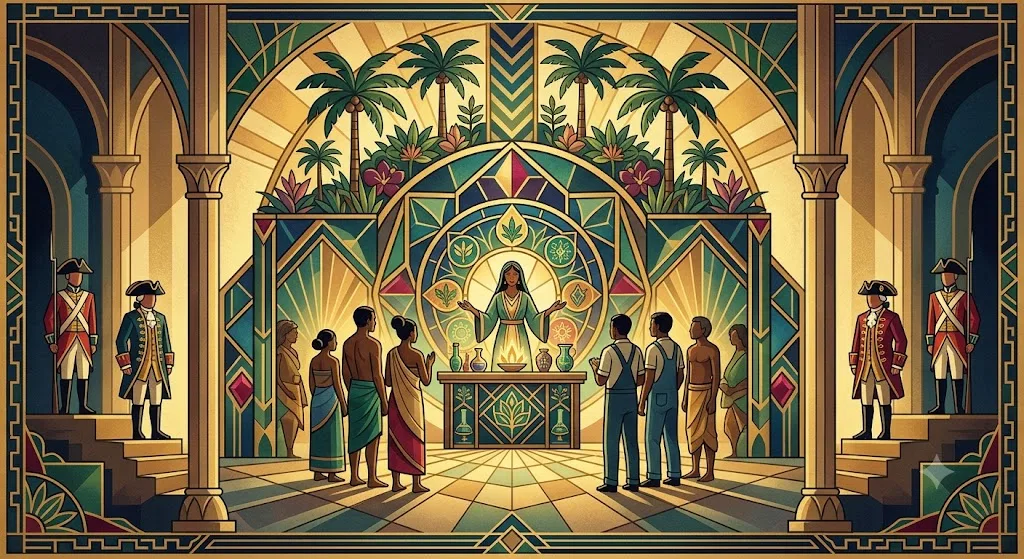
The central case is obeah. The word has been used for a varied field of healing, protection, divination and alleged harmful magic rather than for a single organised religion. Colonial officials often treated all of it as dangerous superstition or fraud, especially when practitioners commanded respect among enslaved or working-class people. Saint Kitts and Nevis therefore offers a revealing history not of one spectacular panic, but of a long institutional anxiety: authorities repeatedly converted fear of hidden spiritual power into criminal law, surveillance and hostile public labels.[jeromehandler.com]jeromehandler.comHealing and Protection in West Indian Slave ife elby KM BILBY · 2004 · Cited by 139 — For the cultural geographer David Watts, in his mon…
Why the evidence is unusually fragmented
Anyone searching for a famous “mass hysteria” episode in Saint Kitts and Nevis is likely to be disappointed. The surviving record does not clearly establish a nationwide satanic scare, school possession panic, UFO religion or epidemic of unexplained group symptoms. That absence matters. It is better evidence of a thin and uneven archive than proof that collective fears never occurred.
Most historical descriptions were written by governors, police officers, missionaries, magistrates and plantation owners. Their documents preserve what the ruling authorities feared or prosecuted, but rarely offer an equally detailed account of what accused people believed about themselves. Practices described as “witchcraft”, “superstition” or “obeah” may have involved healing, protective rites, attempts to discover theft, religious consultation, deliberate deception, feared cursing or some mixture of these. Modern scholars therefore warn against treating obeah as a uniform creed, still less as a clearly bounded “cult”.[ed.ac.uk]research.ed.ac.ukinburgh ResearchWitchcraft, poison, law and Atlantic slaveryby D Paton · 2012 · Cited by 106 — Why, then, did the French colonists emph…
The archive is also distorted by criminalisation. Secretive behaviour does not necessarily show that a practice was sinister; secrecy may simply have been a response to prosecution. Likewise, police reports describing Nevis as a centre of “superstition” tell us as much about official prejudice as about local religious life. The most defensible history must distinguish popular belief from elite alarm and proven harm from accusations of supernatural danger.
Obeah and the fear of hidden power
Obeah became politically charged throughout the British Caribbean because spiritual authority could not easily be controlled by plantation owners or established churches. Practitioners might be consulted for medicine, protection, luck, justice or help with personal conflicts. Some were feared for alleged curses or poisoning. Others gained influence because clients believed they possessed knowledge unavailable to official institutions.[jeromehandler.com]jeromehandler.comHealing and Protection in West Indian Slave ife elby KM BILBY · 2004 · Cited by 139 — For the cultural geographer David Watts, in his mon…
That ambiguity was central to the anxiety. To colonial rulers, a respected healer or diviner could appear to be an alternative authority operating through private networks and word of mouth. Historians have shown that anti-obeah laws did not merely punish objectively harmful acts. They helped officials decide which forms of supernatural belief counted as legitimate religion and which could be classified as criminal deceit, disorder or African “superstition”.[warwick.ac.uk]warwick.ac.ukUniversity of WarwickUniversity of Warwick
Saint Kitts entered early British discussions of this supposed threat. During parliamentary inquiries into the slave trade in the late eighteenth century, Caribbean witnesses described enslaved people consulting obeah practitioners for protection. Across the region, colonial testimony often linked such figures to resistance, even when the evidence for a particular conspiracy was weak. The resulting image of the obeah practitioner as both magician and potential political organiser became exceptionally durable.[cambridge.org]resolve.cambridge.orgOpen source on cambridge.org.
By 1906, an acting police inspector in Saint Kitts reported that obeah still “flourished” in Nevis and called the island a “hot bed of superstition”. The wording should not be accepted as a neutral description. It shows how police classified an entire place and population through the language of backwardness and hidden spiritual danger. At the same time, the report suggests that consultation networks survived despite decades of legal pressure. Scholars studying prosecutions elsewhere in the Caribbean have found that successful practitioners generally depended on settled reputations, personal recommendations and connections extending between islands, rather than on a secret central organisation.[Cambridge University Press & Assessment]cambridge.orgUniversity Press & Assessment Obeah prosecutions from the inside (Chapter 6Cambridge University Press & AssessmentObeah prosecutions from the inside (Chapter 6) - The Cultural Politics of Obeah…
When rumours of rebellion became social panics
The plantation economy created ideal conditions for collective fear. Enslaved majorities lived under coercion, hunger and severe punishment, while a much smaller ruling population worried continually about revolt. In that setting, rumours could carry genuine political hopes among enslaved people and produce panic among slaveholders.
The disputed Nevis plot of 1725
A supposed uprising on Nevis in 1725 illustrates the problem of interpreting such records. The island had suffered years of drought, storms, crop losses, food scarcity and disease. Authorities said that enslaved people had planned a rebellion. Two alleged leaders were sentenced to be burnt alive, while roughly a dozen suspected participants were imprisoned, some on evidence later described as thin.[Seis Bristol]seis.bristol.ac.ukSeis Bristol
Yet the existence and scale of the conspiracy remain uncertain. Historian Natalie Zacek has raised the possibility that the “plot” may have existed chiefly in the fearful imagination of slaveholders. Other contemporary reports claimed that an uprising had occurred and that troops from Saint Kitts were needed, so complete dismissal is also difficult. The safest conclusion is that serious hardship, real resistance and planter panic became entangled in an archive written by people with a powerful interest in presenting coercion as necessary.[Seis Bristol]seis.bristol.ac.ukSeis Bristol
One prisoner, an enslaved man named Frank, was eventually pardoned after influential supporters challenged the legality of his conviction. His case exposes how accusation could work in an atmosphere of fear: association and suspicion were enough to place a person in mortal danger, while the alleged conspiracy itself remained poorly proven. It also warns against calling the incident a simple delusion. Enslaved people had compelling reasons to resist, and colonial fear was rooted in an actually violent social order even when a particular allegation was exaggerated.
The freedom rumour of 1834
A different kind of collective belief shaped resistance when British slavery formally ended on 1 August 1834. Instead of immediate freedom, most former slaves were placed under “apprenticeship”, requiring agricultural workers to provide 43 hours of unpaid labour each week. Many people in Saint Kitts believed that the British king had granted complete freedom and that local planters were withholding it. Similar rumours appeared elsewhere in the Caribbean.[historicstkitts.kn]historicstkitts.knHistoric St. KittsHistoric St. Kitts
The belief was not irrational fantasy. Parliament had announced emancipation while preserving compulsory labour under another name. In Saint Kitts, large numbers of apprentices refused to work, and many withdrew into the hills. Colonial officials feared that they would join maroon communities associated with Marcus of the Woods. Troops and punitive measures followed, including the deportation of five men to a prison hulk in Bermuda.[historicstkitts.kn]historicstkitts.knHistoric St. KittsHistoric St. Kitts
This episode is best understood as a rumour-driven political mobilisation, not mass hysteria. The rumour simplified a confusing legal settlement into a morally clear claim: freedom had been granted but stolen. It spread because it matched people’s expectations, their distrust of planters and the contradiction between the language of emancipation and the reality of compulsory labour. The authorities’ alarm, meanwhile, reflected their fear that information from Britain could undermine plantation discipline.
How fear became law
The clearest institutional legacy is the Obeah Act of 1904, enacted for the federal Leeward Islands and applicable to Saint Kitts and Nevis. It followed earlier legislation that placed obeah within summary criminal procedure and was modelled partly on Jamaican law. Rather than targeting only assault, poisoning or fraud, it created offences around supernatural claims themselves.[Obeah Histories]obeahhistories.org1904 leeward islands act1904 leeward islands act
The consolidated Saint Kitts and Nevis law defines obeah as including witchcraft and the working, or claimed working, of spells or supernatural power. It criminalises practising obeah, consulting a practitioner, possessing an alleged “instrument of obeah”, fortune-telling and claiming to cure or influence events through charms or incantations. It also authorises searches of premises, including at night, when a magistrate or justice of the peace accepts that there is reasonable cause to suspect the presence of such objects.[lawcommission.gov.kn]lawcommission.gov.knObeah ActObeah Act
This breadth matters. An “instrument” can be almost anything alleged to possess occult power. The statute further provides that when such an object is found during an authorised search, its possessor may be presumed to be practising obeah unless the contrary is proved. In effect, an accusation can transform an ordinary object into evidence through the interpretation placed upon it by police, witnesses and courts.[lawcommission.gov.kn]lawcommission.gov.knObeah ActObeah Act
The Act remained listed as Chapter 4.20 in the official revised index showing the laws at 31 December 2020. The same legal system also prohibited the importation of material associated with black magic, secret magic, obeah, witchcraft and occultism under customs legislation. These provisions demonstrate that a colonial classification of dangerous belief survived well beyond independence in 1983.[lawcommission.gov.kn]lawcommission.gov.knSK N Preliminary BookletSK N Preliminary Booklet
Their continued appearance in legislation does not by itself show frequent modern enforcement. Publicly accessible evidence of recent prosecutions is sparse. The importance of the law is therefore partly symbolic: it preserves the assumption that certain African-Caribbean spiritual claims are specially suspicious, while comparable supernatural claims made within socially accepted religions are not normally criminalised as such.
Belief, fraud and persecution are not the same thing
Obeah cases can involve genuine wrongdoing. A person may exploit fear, take money through false promises, threaten a client, administer a dangerous substance or accuse an innocent neighbour of causing illness. Such conduct can cause serious harm and deserves legal scrutiny.
But a law directed at “obeah” creates problems that ordinary fraud, assault and consumer-protection laws do not. It invites the state to determine whether spiritual power is real, whether a particular object is religious or criminal, and whether a minority practice is sufficiently respectable to count as religion. It can also turn community rumours into evidence against people whose social status is already weak.
Four distinctions are especially useful:
- A belief is not automatically a delusion. Religious and supernatural beliefs must be understood within their cultural setting.
- A rumour is not proof of a conspiracy. The disputed Nevis plot shows how fear can fill gaps in evidence.
- Real symptoms or fear are not the same as fabrication. Even when anxiety contributes to illness or panic, the suffering is genuine.
- A criminal act need not validate a supernatural accusation. Fraud or poisoning can be prosecuted without declaring an entire spiritual tradition unlawful.
These distinctions explain why “cult” and “mass hysteria” are usually poor default labels for the Saint Kitts and Nevis material. The principal story is not a population suddenly losing touch with reality. It is a long struggle over who had the authority to define legitimate knowledge, healing and religion.
Folklore without a documented national panic
Stories of spirits, curses, protective objects and uncanny encounters form part of the broader folklore of Saint Kitts and Nevis, as they do across the eastern Caribbean. Such stories can influence behaviour without producing a public crisis. A household may avoid a feared place, interpret misfortune through suspicions of spiritual harm or consult a reputed specialist while never attracting police or newspaper attention.
This everyday level is difficult to reconstruct because belief is often private, joking, ambivalent or deliberately concealed. People may repeat a story without accepting it literally. They may attend a Christian church while also respecting inherited ideas about spiritual danger. Treating every such practice as evidence of panic would flatten a complicated religious culture into exotic folklore.
A 2015 article in the St Kitts-Nevis Observer, for example, presented an individual’s account of feared obeah on Nevis. It is useful as evidence that the idea remained culturally intelligible, but not as proof that supernatural forces caused the events described or that a wider panic existed. Personal testimony, legend and investigative evidence must be kept separate.[thestkittsnevisobserver.com]thestkittsnevisobserver.comObeah On Sunday Island: Fact Or SuperstitionObeah On Sunday Island: Fact Or Superstition
What Saint Kitts and Nevis adds to the wider history
The country’s most important contribution to the history of collective fear is the persistence of a legal and social category. Obeah became a container into which colonial society placed many anxieties: rebellion, poisoning, African religious independence, fraud, illness, sexual jealousy, unexplained misfortune and resistance to missionary authority.
That category could spread fear in two directions. Clients might fear that a practitioner or enemy possessed dangerous power. Officials and respectable society might fear the clients, practitioners and informal networks themselves. Criminalisation then reinforced both fears by presenting obeah as sufficiently potent or socially dangerous to require special laws.
The surviving evidence therefore supports a careful conclusion. Saint Kitts and Nevis did experience episodes in which rumour, hardship and elite insecurity magnified collective alarm, notably around alleged slave conspiracies and the contested meaning of emancipation. It also inherited a colonial system that treated African-Caribbean supernatural practice as a continuing public threat. What it does not supply is firm evidence for a single, spectacular national outbreak of “mass hysteria”. Its history is quieter but no less revealing: fear became durable because it was written into institutions, repeated in official language and attached to communities whose own accounts were least likely to enter the archive.
Amazon book picks
Further Reading
Books and field guides related to When Fear Became Power in Saint Kitts and Nevis. Use these as the next step if you want deeper reading beyond the article.
Extraordinary Popular Delusions and the Madness of Crowds
Rating: 4.0/5 from 5 Google Books ratings
Examines collective fears and popular beliefs.
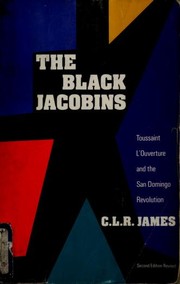
The Black Jacobins
First published 1935. Subjects: History, Biography, Revolutionaries, Generals, Revolution, 1791-1804.
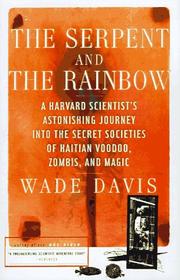
The Serpent and the Rainbow
First published 1985. Subjects: Social life and customs, Description and travel, Zombiism, Bizango (Cult), Religious life and customs.
Endnotes
1.
Source: jeromehandler.com
Link:https://jeromehandler.com/wp-content/uploads/Obeah_healing_Bilby-04.pdf
Source snippet
Healing and Protection in West Indian Slave ife elby KM BILBY · 2004 · Cited by 139 — For the cultural geographer David Watts, in his mon...
2.
Source: warwick.ac.uk
Title: University of Warwick
Link:https://warwick.ac.uk/fac/arts/english/events/warvan-copy/prog/paton_trevor.pdf
3.
Source: cambridge.org
Title: University Press & Assessment Obeah prosecutions from the inside (Chapter 6)
Link:https://www.cambridge.org/core/books/cultural-politics-of-obeah/obeah-prosecutions-from-the-inside/003D8B2DCA83B2F570538EBE75B42C1C
Source snippet
Cambridge University Press & AssessmentObeah prosecutions from the inside (Chapter 6) - The Cultural Politics of Obeah...
4.
Source: ecda.northeastern.edu
Title: What is Obeah?
Link:https://ecda.northeastern.edu/home/about-exhibits/obeah-narratives-exhibit/what-is-obeah/
Source snippet
ECDA - Early Caribbean Digital Archive“Obeah is power. It is a belief. An African tradition. A human tradition. Obeah is Egyptian. Obea...
5.
Source: jstor.org
Link:https://www.jstor.org/stable/26855622
Source snippet
St. Kitts and. Nevis, the British Virgin Islands, Montserrat, St. Vincent and... which delves deep into the de nition of obeah as a lega...
6.
Source: cambridge.org
Link:https://www.cambridge.org/core/books/cultural-politics-of-obeah/emergence-of-caribbean-spiritual-politics/FC51D36577DC37AC641288F0AC718D28
7.
Source: resolve.cambridge.org
Link:https://resolve.cambridge.org/core/services/aop-cambridge-core/content/view/38753CE9D5FB39785ED0FD7D5F1ED6BE/9781139198417c2_p43-75_CBO.pdf/obeahand_the_slavetrade_debates.pdf
8.
Source: seis.bristol.ac.uk
Title: Seis Bristol
Link:https://seis.bristol.ac.uk/~emceee/slaveuprising.pdf
9.
Source: historicstkitts.kn
Title: Historic St. Kitts
Link:https://www.historicstkitts.kn/events/emancipation-1-august-1834
10.
Source: jstor.org
Link:https://www.jstor.org/stable/10.5309/willmaryquar.71.3.0401
11.
Source: lawcommission.gov.kn
Title: Obeah Act
Link:https://lawcommission.gov.kn/wp-content/documents/Act02and09TOC/Ch-04_20-Obeah-Act.pdf
12.
Source: lawcommission.gov.kn
Title: SK N Preliminary Booklet
Link:https://lawcommission.gov.kn/wp-content/documents/Revised-Edition-Indices/2020-St-Kitts-and-Nevis-Rev-Ed-Index-as-at-31-Dec-2020.pdf
13.
Source: lawcommission.gov.kn
Title: Ch 20 04 Customs Act
Link:https://lawcommission.gov.kn/wp-content/documents/Revised-Acts-of-St-Kitts-and-Nevis/Revised-Acts-of-St-Kitts-and-Nevis-2020/Ch-20_04-Customs-Act.pdf
14.
Source: thestkittsnevisobserver.com
Title: Obeah On Sunday Island: Fact Or Superstition
Link:https://www.thestkittsnevisobserver.com/obeah-sunday-island-fact-superstition/
15.
Source: lawcommission.gov.kn
Title: revised acts of st kitts and nevis as at 31st december 2009
Link:https://lawcommission.gov.kn/acts-of-st-kitts-nevis/revised-acts-of-st-kitts-and-nevis-as-at-31st-december-2009/
Published: december 2009
16.
Source: lawcommission.gov.kn
Title: Ch 20 04 Customs Act
Link:https://lawcommission.gov.kn/wp-content/documents/Act17TOC/Ch-20_04-Customs-Act.pdf
17.
Source: lawcommission.gov.kn
Link:https://lawcommission.gov.kn/wp-content/documents/Revised-Acts-of-St-Kitts-and-Nevis/Revised-Acts-of-St-Kitts-and-Nevis-2020/Ch-03_17-Magistrates-Code-of-Procedure-Act.pdf
18.
Source: lawcommission.gov.kn
Title: 2017 St Kitts and Nevis Rev Ed Index as at 31 Dec 2017
Link:https://lawcommission.gov.kn/wp-content/documents/Revised-Edition-Indices/2017-St-Kitts-and-Nevis-Rev-Ed-Index-as-at-31-Dec-2017.pdf
19.
Source: lawcommission.gov.kn
Link:https://lawcommission.gov.kn/repealed-acts-and-ordinances/repealed-acts-and-ordinances/
20.
Source: thestkittsnevisobserver.com
Link:https://www.thestkittsnevisobserver.com/category/religion/
21.
Source: thestkittsnevisobserver.com
Link:https://www.thestkittsnevisobserver.com/homepage-mobile-magazine-pro/page/1405/
22.
Source: thestkittsnevisobserver.com
Link:https://www.thestkittsnevisobserver.com/homepage-mobile-magazine-pro/page/1280/
23.
Source: thestkittsnevisobserver.com
Link:https://www.thestkittsnevisobserver.com/homepage-mobile-magazine-pro/page/64/
24.
Source: thestkittsnevisobserver.com
Link:https://www.thestkittsnevisobserver.com/homepage-mobile-magazine-pro/page/403/
25.
Source: thestkittsnevisobserver.com
Link:https://www.thestkittsnevisobserver.com/homepage-mobile-magazine-pro/page/302/
26.
Source: thestkittsnevisobserver.com
Link:https://www.thestkittsnevisobserver.com/homepage-mobile-magazine-pro/page/1073/
27.
Source: thestkittsnevisobserver.com
Link:https://www.thestkittsnevisobserver.com/homepage-mobile-magazine-pro/page/227/
28.
Source: thestkittsnevisobserver.com
Link:https://www.thestkittsnevisobserver.com/homepage-mobile-magazine-pro/page/307/
29.
Source: jstor.org
Link:https://www.jstor.org/stable/40401879
30.
Source: 2021-2025.state.gov
Link:https://2021-2025.state.gov/reports/2023-report-on-international-religious-freedom/jamaica/
31.
Source: sknis.gov.kn
Link:https://sknis.gov.kn/2025/07/24/government-of-saint-kitts-and-nevis-moves-to-strengthen-sentencing-for-armed-robbery-with-passage-of-key-amendment-to-the-larceny-act/
32.
Source: research.ed.ac.uk
Link:https://www.research.ed.ac.uk/en/publications/witchcraft-poison-law-and-atlantic-slavery/
Source snippet
inburgh ResearchWitchcraft, poison, law and Atlantic slaveryby D Paton · 2012 · Cited by 106 — Why, then, did the French colonists emph...
33.
Source: cdr.lib.unc.edu
Link:https://cdr.lib.unc.edu/downloads/td96k329x
Source snippet
Carolina Digital Repositoryobeah, violence, and power in a nineteenth-century britishby RM Browne · 2009 · Cited by 7 — Although Obeah wa...
34.
Source: archives.history.ac.uk
Link:https://archives.history.ac.uk/history-in-focus/Slavery/articles/zacek.html
35.
Source: stkittsnevisflag.com
Title: emancipation of slaves 1834 and the apprenticeship system
Link:https://stkittsnevisflag.com/discover-stkitts-nevis/historical-overview/significant-historical-events-in-st-kitts-and-nevis/emancipation-of-slaves-1834-and-the-apprenticeship-system/?srsltid=AfmBOoqPghm2MnJRgPCv9G4K3FNcxDA1EwBoR82x0YqmJMLnpJXGekU7
36.
Source: obeahhistories.org
Title: 1904 leeward islands act
Link:https://obeahhistories.org/1904-leeward-islands-act/
37.
Source: Wikipedia
Link:https://en.wikipedia.org/wiki/Obeah
38.
Source: Wikipedia
Title: Saint Kitts and Nevis
Link:https://en.wikipedia.org/wiki/Saint_Kitts_and_Nevis
39.
Source: stkittsnevisflag.com
Link:https://stkittsnevisflag.com/educational-resources/cultural-heritage-guide/churches-of-st-kitts-and-nevis-historical-and-spiritual-landmarks/?srsltid=AfmBOop-Z4IPqXFgwuyp6kbVeAS9vhmoQCVPoR0KfkHqwYaguqz2lDXc
40.
Source: sajp.org.za
Link:https://sajp.org.za/index.php/sajp/article/view/1671/2648
Additional References
41.
Source: youtube.com
Title: Marronage, Medicine, and Mythology: Narrating Obeah in the 19th Century
Link:https://www.youtube.com/watch?v=yRdQTdxdfGI
Source snippet
Author Dianne M. Stewart | Obeah, Orisa, and Religious Identity in Trinidad...
42.
Source: youtube.com
Title: The SMALLEST Country in the Americas… A Paradise Built on Slavery
Link:https://www.youtube.com/watch?v=8BQ_g9L93zc
Source snippet
Marronage, Medicine, and Mythology: Narrating Obeah in the 19th Century...
43.
Source: youtube.com
Title: The Twin Island Nation That Sparked Colonial Rivalries for Centuries
Link:https://www.youtube.com/watch?v=aztDfXS–Wk
Source snippet
The SMALLEST Country in the Americas… A Paradise Built on Slavery...
44.
Source: youtube.com
Title: Enslaved People and Religion
Link:https://www.youtube.com/watch?v=t-d3jsMf5Aw
Source snippet
The Twin Island Nation That Sparked Colonial Rivalries for Centuries...
45.
Source: facebook.com
Link:https://www.facebook.com/kathmandupost/posts/mass-hysteria-is-a-misunderstood-psychological-phenomenon-in-which-stress-and-an/1460023026158947/
46.
Source: skncustoms.com
Link:https://skncustoms.com/pdfs/PROHIBITED%20AND%20RESTRICTED%20GOODS.pdf
47.
Source: researchgate.net
Link:https://www.researchgate.net/publication/250942559_Enchanting_Panics_and_Obeah_Anxieties_Concealing_and_Disclosing_Eastern_Caribbean_Witchcraft
48.
Source: dukeupress.edu
Link:https://www.dukeupress.edu/Archival-Irruptions
49.
Source: facebook.com
Link:https://www.facebook.com/groups/1594883130589796/posts/8984600231618012/
50.
Source: facebook.com
Link:https://www.facebook.com/groups/176530020440/posts/10171782799145441/
Topic Tree
Follow this branch
Related pages 192
- Antigua and Barbuda
- Argentina Belief Scares
- Azerbaijan Belief
- Bahrain Beliefs
- North Korea
- +187 more in sidebar