When Belief Became a Public Crisis in China
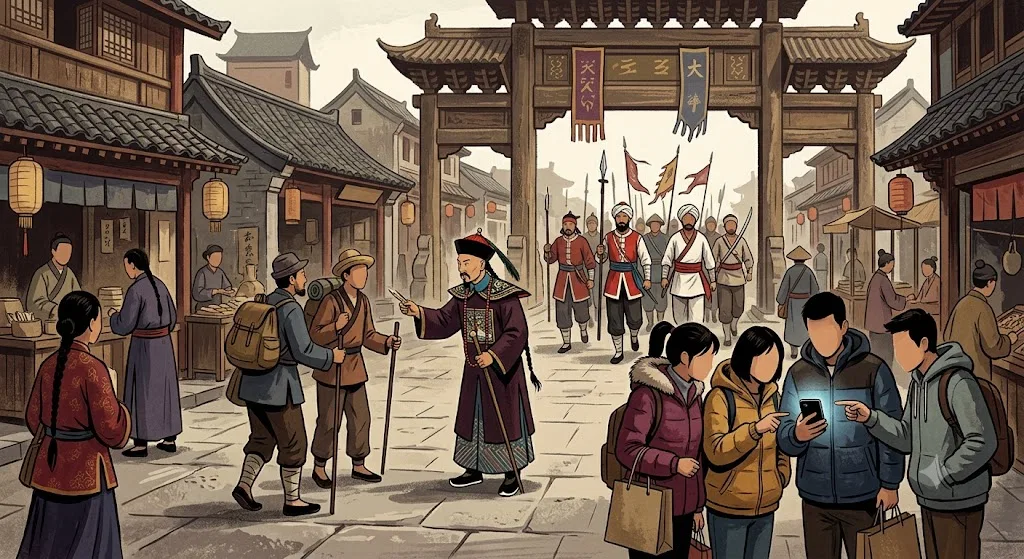
China’s history of collective fear and contagious belief is not a simple procession of “cults” and irrational crowds. It is a history of rumours meeting insecurity, religious hopes becoming political programmes, and governments treating unregulated belief as a possible threat to public order.
Page outline Jump by section
Introduction
These events mattered because belief could alter behaviour on a huge scale. Travellers were beaten as suspected sorcerers; rebels built alternative states around visions of divine salvation; villagers trusted possession rituals to protect them from bullets; and shoppers emptied stores after false health claims circulated online. Yet the label “mass hysteria” can conceal as much as it explains. China’s scares were shaped by genuine poverty, war, foreign intervention, disease, political repression and mistrust of official information—not merely by credulity.[google.com]books.google.comGoogle BooksSoulstealers: The Chinese Sorcery Scare of 17681 Jul 2009 — Kuhn shows how the campaign against sorcery provides insight into…
Why belief repeatedly became a political issue
Chinese states have long distinguished approved religion and ritual from teachings judged dangerous, heterodox or rebellious. That distinction was never purely theological. Officials were especially suspicious of movements that gathered independently, crossed provincial boundaries, predicted the collapse of the existing age or promised the arrival of a new ruler and moral order. Ming and Qing authorities often grouped diverse popular traditions under broad hostile labels associated with “White Lotus” teaching, even when the organisations, doctrines and local circumstances differed considerably.[Cambridge University Press & Assessment]cambridge.orgCambridge University Press & AssessmentReligion and Resistance (Chapter 11) - Supernatural PoliticsMay 15, 2026 — Ming and Qing officials…
This history created a recurring feedback loop. Officials expected secret religious networks to produce rebellion; frightened communities learned that allegations of sorcery or heterodoxy attracted official attention; and religious movements understood persecution through their own stories of cosmic struggle. A local rumour could therefore become a political crisis when the central government interpreted it as proof of conspiracy.
The modern Chinese state inherited and transformed this habit. The Communist Party officially promotes scientific materialism, regulates recognised religions and has repeatedly used anti-superstition or anti-cult campaigns against unauthorised organisations. The English word “cult” is particularly difficult here. Chinese official terminology can encompass groups accused of fraud or abuse, but it can also function as a legal and political category for movements that refuse state supervision. The government classifies Falun Gong as an “evil cult”, for example, while many scholars and human-rights organisations describe it more neutrally as a spiritual practice or new religious movement and treat the label as part of the suppression campaign.[gov.uk]GOV.UKCountry policy and information note: Falun Gong, ChinaNovember 26, 2025 — 25 Nov 2025 — Falun Gong is regarded as an 'evil cult' by the Chinese government and is on the list of banned groups…
The soul-stealing panic of 1768
One of China’s best-documented witch panics began with rumours that sorcerers could steal a person’s soul by clipping hair, obtaining a name or placing magical material inside a construction project. Fear spread through the prosperous but socially strained lower Yangtze region before drawing in provincial officials and the imperial court. Travelling monks, beggars, craftsmen and other strangers became obvious suspects because they moved between communities and lacked powerful local protectors.[Wikipedia]WikipediaChinese sorcery scaresChinese sorcery scares
The queue—the long braid that Qing law required men to wear—gave the scare an unusually political charge. Cutting it was not simply an alleged magical assault. The hairstyle symbolised submission to the Manchu dynasty, so reports of queue-clipping could be understood as both soul theft and covert rebellion. The Qianlong Emperor came to suspect that officials were complacently overlooking a coordinated threat, even though local investigations repeatedly failed to uncover a real network of master sorcerers.[China Books Review]chinabooksreview.comChina Books Review Philip Kuhn: Sorcery in Qing ChinaChina Books Review Philip Kuhn: Sorcery in Qing China
Interrogation made the evidence worse rather than better. Beatings, torture and pressure to name accomplices produced confessions that appeared to confirm the conspiracy. Accused people implicated strangers or invented stories to satisfy their interrogators; each confession then justified further arrests. Some magistrates recognised the weakness of the accusations and released suspects, but the emperor’s insistence on vigilance encouraged officials to treat doubt as negligence.[Wikipedia]WikipediaChinese sorcery scaresChinese sorcery scares
Historian Philip Kuhn’s influential study presents the episode as more than a burst of superstition. Ordinary people were reacting to economic pressure, mobility and fear of unknown outsiders. The emperor, meanwhile, used the emergency to test and discipline his bureaucracy. The panic therefore travelled through two interacting systems: popular rumour from below and political suspicion from above. It resembles a witch hunt because an imaginary conspiracy became institutionally real through accusation, coercive investigation and the fear of appearing insufficiently alert.[Google Books]books.google.comGoogle BooksSoulstealers: The Chinese Sorcery Scare of 17681 Jul 2009 — Kuhn shows how the campaign against sorcery provides insight into…

When salvation movements became civil wars
China’s millenarian movements promised more than private spiritual comfort. Many taught that the existing age was corrupt, that catastrophe or divine intervention was approaching, and that believers could participate in a purified new order. Such ideas did not automatically produce violence. They became revolutionary when religious expectation combined with famine, displacement, ethnic conflict, weak government and leaders capable of building armed organisations.
The Taiping Heavenly Kingdom
The most destructive example was the Taiping movement, which erupted in 1850 under Hong Xiuquan. After experiencing visions and studying Christian writings, Hong came to believe that he had a divine mission and a special relationship with Jesus. His followers presented their struggle as the creation of a sacred kingdom that would overthrow the Qing dynasty and radically transform society. The movement adopted commandments, destroyed religious images it considered idolatrous and attempted to regulate family life, sexuality, property and gender relations.[Cambridge University Press & Assessment]cambridge.orgCambridge University Press & AssessmentHeresy and Banditry: Religious Violence in China since 1850Together, these rebellions and their su…
Calling the Taiping merely a “cult” is misleading. It became an army, territorial government and rival state, controlling major cities and ruling millions of people. Nor was its rise explained by religious enthusiasm alone. Southern China was marked by population pressure, economic insecurity, ethnic tensions and declining confidence in Qing authority. Hong’s revelations gave these grievances a cosmic meaning: hardship was evidence of a corrupt world that divine war could replace.
The resulting conflict lasted until 1864 and devastated large areas of China. Frequently repeated death estimates run into the tens of millions, although exact figures are impossible to establish because many people died through famine, epidemic disease, displacement and the destruction surrounding several overlapping rebellions. The Taiping case shows why millenarian belief should not be treated as a curious side note. Once attached to military organisation and state collapse, a promise of salvation can become a programme for governing, killing and remaking society.[Cambridge University Press & Assessment]cambridge.orgCambridge University Press & AssessmentHeresy and Banditry: Religious Violence in China since 1850Together, these rebellions and their su…
The Boxer movement
The Boxer movement of 1899–1900 grew from a different setting: drought, rural distress, foreign encroachment, missionary privilege and bitter conflict between Christian converts and their neighbours in northern China. Boxer practitioners used martial exercises, incantations and spirit-possession rituals. Many believed that divine powers could enter their bodies and protect them against blades or modern gunfire.[Cambridge University Press & Assessment]cambridge.orgOpen source on cambridge.org.
These beliefs spread because they offered discipline, courage and an explanation for misfortune. Foreigners and Christians could be blamed not only for legal and economic disruption but for disturbing the moral and cosmic order. Rumours portrayed missionaries and converts as polluters, kidnappers or enemies of the whole community. The movement attacked Chinese Christians, missionaries, railways and other symbols of foreign power before receiving support from influential figures at the Qing court.[Cambridge University Press & Assessment]cambridge.orgOpen source on cambridge.org.
Claims of invulnerability were plainly unable to stop bullets, but describing the Boxers as simply deluded misses the social function of the rituals. Possession could transform frightened villagers into members of a sacred army, reduce individual hesitation and make modern weapons appear spiritually defeatable. Foreign observers also exaggerated Boxer “fanaticism” to represent Chinese resistance as primitive and to legitimise their own violence. The uprising ended with invasion by the Eight-Nation Alliance, severe reprisals and further bloodshed between neighbouring communities.[Cambridge University Press & Assessment]cambridge.orgOpen source on cambridge.org.
Qigong fever and the Falun Gong confrontation
During the 1980s and early 1990s, China experienced a nationwide boom in qigong, a broad category of breathing, movement, meditation and body-training practices. Masters gave public demonstrations, books and lectures attracted large audiences, and extraordinary claims circulated about healing, invisible energy and paranormal abilities. The enthusiasm was not initially an underground revolt. Scientists, officials, hospitals and state-linked organisations helped promote qigong as a modernised Chinese health practice and, in some circles, as evidence of scientific discoveries that Western knowledge had failed to recognise.[com.hk]cefc.com.hkOpen source on com.hk.
The movement answered several needs at once. After the Cultural Revolution, people were searching for moral meaning and forms of tradition that did not require a return to conventional organised religion. Healthcare was uneven, while qigong promised inexpensive self-treatment. Its language joined ancient cultivation, patriotism and science, allowing practices with spiritual dimensions to flourish in an officially secular society.
Falun Gong emerged from this environment in 1992 under Li Hongzhi. It combined meditative exercises with moral and cosmological teachings and expanded through informal practice sites and volunteer networks. Authorities at first treated it as one school within the wider qigong world. Relations deteriorated as official scepticism towards paranormal claims increased and Falun Gong practitioners organised protests against critical press coverage.[Wikipedia]WikipediaFalun GongFalun Gong
The decisive moment came on 25 April 1999, when more than 10,000 practitioners assembled quietly near the central leadership compound in Beijing. Participants sought official recognition and redress following detentions and hostile reporting. For Party leaders, however, the demonstration displayed the ability of an independent spiritual network to mobilise large numbers in the political heart of the capital. The government outlawed the movement in July and launched a campaign of arrests, propaganda, compulsory renunciation and coercive re-education. Human Rights Watch documented aggressive and sometimes violent repression and argued that the response formed part of a broader effort to eliminate organisations considered capable of challenging Party control.[Human Rights Watch]hrw.orgOpen source on hrw.org.
The episode is often narrated through two incompatible propaganda systems. Chinese state accounts emphasise alleged deception, medical harm, social disorder and dangerous teachings. Falun Gong sources emphasise peaceful practice, state fabrication and severe persecution. Independent analysis supports taking the movement’s unusual cosmology and controversial teachings seriously without accepting that they justify collective punishment. It also supports treating the government’s “cult” label cautiously: Falun Gong had no established record of armed rebellion, and its political significance arose largely from its size, autonomy and capacity for coordinated action.[newyorker.com]newyorker.comOpen source on newyorker.com.
Apocalypse, radiation and the speed of modern rumour
Contagious belief did not disappear with mass education, modern medicine or internet censorship. New communications systems altered its speed and form.
In December 2012, rumours linked to supposed predictions about the end of the Mayan calendar spread internationally. In China, members of the Church of Almighty God, a Christian-derived new religious movement hostile to Communist rule, circulated apocalyptic warnings. Reports described predictions of several days of darkness and claims that only believers would be saved. The authorities detained roughly 1,000 alleged members in a nationwide crackdown.[reuters.com]reuters.comchina detains 1000 in doomsday cult crackdown idUSDEE8BJ09Fchina detains 1000 in doomsday cult crackdown idUSDEE8BJ09F
The event contained several overlapping phenomena rather than one unified national panic. There was genuine apocalyptic preaching, wider popular fascination with the 2012 prophecy, commercial opportunism and a state security campaign against an already prohibited religious organisation. Official descriptions must therefore be handled carefully: the movement did promote an end-times message, but the reporting environment was dominated by state sources, and arrests were also driven by its opposition to Communist rule.[Reuters]reuters.comchina detains 1000 in doomsday cult crackdown idUSDEE8BJ09Fchina detains 1000 in doomsday cult crackdown idUSDEE8BJ09F
A more ordinary but highly visible rumour panic followed the Fukushima nuclear disaster in March 2011. False claims suggested that iodised table salt could protect people against radiation or that future supplies might become contaminated. Shoppers rushed to buy salt, shelves emptied and authorities tried to reassure the public. The rumour succeeded because it converted an invisible, poorly understood danger into a simple protective action: buy a familiar product immediately.[The Guardian]theguardian.comchinese panic buy salt japanThe GuardianChinese panic-buy salt over Japan nuclear threatMar 17, 2011 — Beijing supermarkets run out of salt after false rumours circu…
Salt buying returned in parts of China in 2023 when Japan began releasing treated water from the damaged Fukushima plant. The Chinese government strongly criticised the discharge and banned Japanese seafood, while social-media rumours again encouraged stockpiling. The state-owned salt company publicly assured consumers that domestic supplies were sufficient and unaffected. This later episode demonstrates how official messaging and unofficial panic can reinforce one another: sharp political warnings increase the emotional credibility of exaggerated private claims, even when the government rejects the resulting consumer behaviour.[The Guardian]theguardian.comOpen source on theguardian.com.
What actually makes these episodes spread?
China’s cases differ greatly, but several mechanisms recur.
Uncertainty creates a demand for usable explanations. Soul theft explained unexplained illness or misfortune; Boxer stories explained drought and foreign domination; radiation rumours converted nuclear physics into an everyday decision about food. The most contagious claims were not necessarily the most coherent. They were claims that told people who was responsible and what to do next.
Existing tensions determine who becomes a suspect. Travelling monks and beggars were vulnerable in 1768 because they were outsiders. Christians became targets during the Boxer crisis because conversion intersected with foreign legal privilege and village disputes. Unregistered religious groups remain vulnerable because political independence is itself treated as suspicious.
Repetition can manufacture evidence. During the sorcery scare, coerced confessions produced new names and apparently confirmed a conspiracy. In modern media environments, reposts, trending topics and repeated official accusations can perform a similar function. Familiarity makes a claim feel established even when all versions trace back to the same uncertain report.
Collective practice changes individual behaviour. Rituals, demonstrations, shared exercises and panic buying make belief publicly visible. A person who privately doubts may still join because neighbours are acting, goods may run out, authorities appear alarmed or abstention carries social risk.
Authorities are participants, not neutral observers. Government intervention can stop violence and correct false information, but it can also enlarge a scare. Imperial demands for arrests intensified the soul-stealing hunt. Qing support helped the Boxers become a national crisis. Modern anti-cult campaigns may combine legitimate investigation of alleged harm with censorship, political labelling and collective repression.[google.com]books.google.comGoogle BooksSoulstealers: The Chinese Sorcery Scare of 17681 Jul 2009 — Kuhn shows how the campaign against sorcery provides insight into…
Myth, panic and documented harm
The phrase “mass hysteria” is most useful when it identifies a social process rather than dismissing participants as irrational. Some Chinese cases involved beliefs for which investigators found no supporting evidence, such as the supposed nationwide network of soul-stealing sorcerers. Others involved real organisations and deliberate political action, including the Taiping state and Boxer armies. Still others mixed demonstrable religious teaching with a wider moral panic, as in the campaign against Falun Gong.
It is also important not to confuse these events with mass psychogenic illness. That term refers to physical symptoms spreading through a group without a sufficient toxic or infectious cause, often under intense stress. China has certainly experienced school illness scares and collective symptom reports, but many widely repeated online examples are poorly documented. The country’s strongest historical evidence lies instead in archival witch panics, millenarian mobilisation, rumour-driven behaviour and state campaigns against unauthorised belief.
Nor does disbelief erase real harm. Imagined sorcery led to beatings, torture and death. Supernatural confidence contributed to disastrous military choices during the Boxer conflict. Apocalyptic and healing teachings can influence vulnerable people’s medical or financial decisions. Conversely, accusations of cult activity have been used to justify imprisonment, forced ideological conversion and abuse. The central historical question is therefore not merely whether a supernatural claim was true. It is how the claim reorganised relationships, authorised action and changed who could safely belong.
Why this history still matters
China’s long record of scares and salvation movements helps explain why religious organisation, rumour control and “social stability” remain closely connected in official thinking. Imperial memories of sectarian rebellion were repeatedly retold, and modern leaders have their own experience of mass political mobilisation. An independently organised belief community can appear threatening even when its members are peaceful, because officials judge not only doctrine but numbers, loyalty and communication capacity.
The history also challenges the comforting idea that panic belongs to an uneducated past. The qigong boom flourished through the language of modern science. Radiation rumours spread through smartphones and social media. Government institutions, journalists, commercial sellers and educated consumers all participated in producing or amplifying collective belief. Modern technology changes the route by which a rumour travels; it does not remove the emotional conditions that make the rumour persuasive.
The most durable lesson is that extraordinary beliefs become socially powerful when they attach themselves to ordinary pressures: insecure livelihoods, illness, political exclusion, rapid cultural change and mistrust. China’s soul-stealers, heavenly kingdoms, spirit warriors, healing movements and doomsday scares are memorable because their claims were dramatic. Their deeper importance lies in showing how fear and hope can move between households, crowds and governments until belief—whether accurate or not—begins to create its own reality.
Amazon book picks
Further Reading
Books and field guides related to When Belief Became a Public Crisis in China. Use these as the next step if you want deeper reading beyond the article.

The Boxer Rebellion and the Great Game in China
Examines millenarian violence and foreign intervention.
Endnotes
1.
Source: books.google.com
Link:https://books.google.com/books/about/Soulstealers.html?id=fpNB3OFHU04C
Source snippet
Google BooksSoulstealers: The Chinese Sorcery Scare of 17681 Jul 2009 — Kuhn shows how the campaign against sorcery provides insight into...
2.
Source: cambridge.org
Link:https://www.cambridge.org/core/books/cambridge-world-history-of-violence/heresy-and-banditry-religious-violence-in-china-since-1850/7BD227A5C5329646861C83883B835B33
Source snippet
Cambridge University Press & AssessmentHeresy and Banditry: Religious Violence in China since 1850Together, these rebellions and their su...
3.
Source: cambridge.org
Link:https://www.cambridge.org/core/product/E79C93D8C70F7A511DE6A8FD9C2E33A0/core-reader
Source snippet
Cambridge University Press & AssessmentReligion and Resistance (Chapter 11) - Supernatural PoliticsMay 15, 2026 — Ming and Qing officials...
Published: May 15, 2026
4.
Source: GOV.UK
Title: Country policy and information note: Falun Gong, China
Link:https://www.gov.uk/government/publications/china-country-policy-and-information-notes/country-policy-and-information-note-falun-gong-china-november-2025-accessible
Source snippet
November 26, 2025 — 25 Nov 2025 — Falun Gong is regarded as an 'evil cult' by the Chinese government and is on the list of banned groups...
Published: November 26, 2025
5.
Source: Wikipedia
Title: Chinese sorcery scares
Link:https://en.wikipedia.org/wiki/Chinese_sorcery_scares
6.
Source: Wikipedia
Title: Taiping Rebellion
Link:https://en.wikipedia.org/wiki/Taiping_Rebellion
7.
Source: cambridge.org
Link:https://www.cambridge.org/core/journals/comparative-studies-in-society-and-history/article/crosscultural-perceptions-of-technology-and-magic-in-the-ghost-dance-boxer-uprising-and-maji-maji-rebellion/807DCE404D0A367FE16046C6B80246F9
8.
Source: Wikipedia
Title: Boxer Rebellion
Link:https://en.wikipedia.org/wiki/Boxer_Rebellion
9.
Source: cambridge.org
Link:https://www.cambridge.org/core/journals/journal-of-asian-studies/article/great-rumor-mill-gossip-mass-media-and-the-ninja-fear/E4A207660DE03F999D9E4F846885060F
10.
Source: cambridge.org
Link:https://www.cambridge.org/core/books/cambridge-world-history-of-violence/race-religion-and-nationalism/74FE491BB57DB06F92577384BC9F3ED1
11.
Source: cefc.com.hk
Link:https://www.cefc.com.hk/article/david-a-palmer-qigong-fever-body-science-and-utopia-in-china/
12.
Source: academia.edu
Link:https://www.academia.edu/8295934/Qigong_Fever_Body_Science_and_Utopia_in_China
13.
Source: Wikipedia
Title: Falun Gong
Link:https://en.wikipedia.org/wiki/Falun_Gong
14.
Source: cambridge.org
Link:https://www.cambridge.org/core/journals/politics-and-religion/article/religion-of-the-nonreligious-and-the-politics-of-the-apolitical-the-transformation-of-falun-gong-from-healing-practice-to-political-movement/721645CB0ED458B1540460F1D99F0B89
15.
Source: reuters.com
Title: china detains 1000 in doomsday cult crackdown idUSDEE8BJ09F
Link:https://www.reuters.com/article/world/china-detains-1000-in-doomsday-cult-crackdown-idUSDEE8BJ09F/
16.
Source: ecoi.net
Link:https://www.ecoi.net/en/document/1161042.html
17.
Source: reuters.com
Title: china tries more members of banned religious group almighty god id USKBN1KY0R3
Link:https://www.reuters.com/article/world/china-tries-more-members-of-banned-religious-group-almighty-god-idUSKBN1KY0R3/
18.
Source: Wikipedia
Link:https://en.wikipedia.org/wiki/White
19.
Source: Wikipedia
Link:https://en.wikipedia.org/wiki/2011
20.
Source: Wikipedia
Title: White people
Link:https://en.wikipedia.org/wiki/White_people
21.
Source: Wikipedia
Title: 2011 in film
Link:https://en.wikipedia.org/wiki/2011_in_film
22.
Source: Wikipedia
Title: Fukushima nuclear accident
Link:https://en.wikipedia.org/wiki/Fukushima_nuclear_accident
23.
Source: Wikipedia
Title: Persecution of Falun Gong
Link:https://en.wikipedia.org/wiki/Persecution_of_Falun_Gong
24.
Source: cambridge.org
Link:https://www.cambridge.org/core/journals/journal-of-the-royal-asiatic-society/article/apocalyptic-belief-and-prophecy-constructing-political-legitimacy-during-the-yuanming-transition/0F16F9637F219D580535893526DEC072
25.
Source: dictionary.cambridge.org
Link:https://dictionary.cambridge.org/zht/%E8%A9%9E%E5%85%B8/%E8%8B%B1%E8%AA%9E-%E6%BC%A2%E8%AA%9E-%E7%B9%81%E9%AB%94/white
26.
Source: cambridge.org
Link:https://www.cambridge.org/core/journals/journal-of-asian-studies/article/rebellion-and-revolution-the-study-of-popular-movements-in-chinese-history/A42F5DF92CB64465339D79D6A0B6A97F
27.
Source: cambridge.org
Title: Religion and Resistance (Chapter 11)
Link:https://www.cambridge.org/core/product/identifier/9781009600972%23bp12/type/book_part
28.
Source: cambridge.org
Title: Religion and Resistance (Chapter 11)
Link:https://www.cambridge.org/core/books/supernatural-politics/religion-and-resistance/E79C93D8C70F7A511DE6A8FD9C2E33A0/core-reader
29.
Source: cambridge.org
Link:https://www.cambridge.org/core/journals/financial-history-review/article/austerity-in-times-of-war-government-finance-in-early-nineteenthcentury-china/786CA3B86A8A76FE0BFB9FEF28F591A3
30.
Source: cambridge.org
Link:https://www.cambridge.org/core/journals/church-history/article/fulfilling-prophecies-on-chinas-ethnic-frontiers-in-southeast-asia-peripheral-peoples-encounter-with-christianity-in-the-twentieth-century/179BAECEDB98542973C4AF4148D54734
31.
Source: cambridge.org
Title: violence and political protest in ming and qing china
Link:https://www.cambridge.org/core/services/aop-cambridge-core/content/view/A3D4D0FBA86A2FE462C52BB1AA7CCC5B/S0020859000007719a.pdf/violence_and_political_protest_in_ming_and_qing_china.pdf
32.
Source: cambridge.org
Link:https://www.cambridge.org/core/books/cambridge-world-history-of-violence/religious-and-sacred-violence/9AE2A9B14ACCB64D21F30391F8A88B73
33.
Source: cambridge.org
Link:https://www.cambridge.org/core/books/cambridge-world-history-of-violence/religion-and-violence-in-east-asia/B448FD4AD43D94F6A0E8911BF815C679
34.
Source: cambridge.org
Title: Classical Foundations (Part I)
Link:https://www.cambridge.org/core/books/cambridge-companion-to-religion-and-war/classical-foundations/2D46B7A1AAC724C47D0216FF126B0A19
35.
Source: cambridge.org
Link:https://www.cambridge.org/core/journals/trans-trans-regional-and-national-studies-of-southeast-asia/article/of-grasshoppers-caterpillars-and-beans-a-historical-perspective-on-hmong-messianism/731242F699217BACF50F4113C788F556
36.
Source: cambridge.org
Link:https://www.cambridge.org/core/books/cambridge-world-history-of-violence/chinese-ways-of-warfare/79F893463F276FC4A05BD96A3888D07F
37.
Source: cambridge.org
Link:https://www.cambridge.org/core/journals/studies-in-church-history/article/memories-of-faith-the-christian-sutras-of-eighteenthcentury-china/72E178AF4ED182DC4696C9B272BFEA38
38.
Source: cambridge.org
Link:https://www.cambridge.org/core/journals/modern-asian-studies/article/recent-studies-of-modern-chinese-history/8E9938CCAE3E4D38137EE0B1E85C91FC
39.
Source: resolve.cambridge.org
Link:https://resolve.cambridge.org/core/services/aop-cambridge-core/content/view/4894C8350BEB5377AB0A96B8EAC11459/9781139055871c16_p437-463_CBO.pdf/china.pdf
40.
Source: cambridge.org
Link:https://www.cambridge.org/core/journals/victorian-literature-and-culture/article/civilized-depravity-evangelical-representations-of-earlynineteenthcentury-china-and-the-redefinition-of-true-civilization/12256B69B4292FAC4C589DE2445A5B32
41.
Source: cambridge.org
Title: Religion (Chapter 1)
Link:https://www.cambridge.org/core/books/asian-law-and-society-reader/religion/6D228BEDB2C2594E0A847D67685E41A2
42.
Source: cambridge.org
Title: Cases (Part II)
Link:https://www.cambridge.org/core/books/converting-rulers/cases/B827122FFD493AAA64632CAC948948BB/core-reader
43.
Source: history.com
Title: taiping rebellion
Link:https://www.history.com/articles/taiping-rebellion
44.
Source: lv.china-embassy.gov.cn
Link:https://lv.china-embassy.gov.cn/eng/zt/jpxjflg/200604/t20060430_2913804.htm
45.
Source: eld.gov.sg
Title: elections past parliamentary2011
Link:https://www.eld.gov.sg/elections_past_parliamentary2011.html
46.
Source: theguardian.com
Title: chinese panic buy salt japan
Link:https://www.theguardian.com/world/2011/mar/17/chinese-panic-buy-salt-japan
Source snippet
The GuardianChinese panic-buy salt over Japan nuclear threatMar 17, 2011 — Beijing supermarkets run out of salt after false rumours circu...
47.
Source: hrw.org
Link:https://www.hrw.org/reports/2002/china/China0102.htm
Source snippet
Human Rights WatchChinese governmentSince 1999, Falungong practitioners have been the target of an aggressive and often violent crackdown...
48.
Source: newyorker.com
Link:https://www.newyorker.com/culture/culture-desk/stepping-into-the-uncanny-unsettling-world-of-shen-yun
49.
Source: chinabooksreview.com
Title: China Books Review Philip Kuhn: Sorcery in Qing China
Link:https://chinabooksreview.com/2024/09/05/philip-kuhn-sorcery-and-bureaucracy-in-qing-china/
50.
Source: hrw.org
Link:https://www.hrw.org/reports/2002/china/China0102-02.htm
51.
Source: hrw.org
Link:https://www.hrw.org/legacy/press/1999/oct/china1014bg.htm
52.
Source: hrw.org
Link:https://www.hrw.org/reports/2002/china/China0102-06.htm
53.
Source: newyorker.com
Link:https://www.newyorker.com/news/evan-osnos/whats-with-the-chinese-mayan-doomsday-cult
54.
Source: theguardian.com
Link:https://www.theguardian.com/environment/2023/aug/25/fukushima-daiichi-nuclear-power-plant-china-wastewater-release
55.
Source: hrw.org
Title: China0102 05
Link:https://www.hrw.org/reports/2002/china/China0102-05.htm
56.
Source: hrw.org
Link:https://www.hrw.org/reports/2002/china/China0102-09.htm
57.
Source: hrw.org
Title: China UN Briefing Feb03
Link:https://www.hrw.org/reports/China%20-%20UN%20Briefing%20-%20Feb03.pdf
58.
Source: hrw.org
Title: suppression china democracy party
Link:https://www.hrw.org/report/2000/09/01/china-nipped-bud/suppression-china-democracy-party
59.
Source: hrw.org
Title: china human rights update february 2000
Link:https://www.hrw.org/news/2000/01/31/china-human-rights-update-february-2000
Published: february 2000
60.
Source: hrw.org
Title: china testimony0216
Link:https://www.hrw.org/legacy/campaigns/china-99/china-testimony0216.htm
61.
Source: reddit.com
Title: wikipedia claims that the qivg boxers claimed
Link:https://www.reddit.com/r/AskHistorians/comments/18i7ch7/wikipedia_claims_that_the_qivg_boxers_claimed/
62.
Source: reutersconnect.com
Link:https://www.reutersconnect.com/item/china-radiation-fears-from-japan-nuclear-leak-spark-panic-buying-of-salt-as-people-believe-its-iodine-content-will-protect-them-from-radiation/dGFnOnJldXRlcnMuY29tLDIwMTE6bmV3c21sX1ZBQ1BWU1NKQkxENFpNWVVKWDdZOE9PV1ZWUg
63.
Source: boxofficemojo.com
Link:https://www.boxofficemojo.com/year/world/2011/
Additional References
64.
Source: cup.columbia.edu
Link:https://cup.columbia.edu/book/qigong-fever/9780231140669/
Source snippet
Columbia University PressQigong Fever"The most comprehensive volume published on the Qigong movement in contemporary China.... China ove...
65.
Source: youtube.com
Title: Why didn’t the western powers support the Christian Taiping Rebels?
Link:https://www.youtube.com/watch?v=Ytnlorm4mAE
Source snippet
The Taiping Rebellion history documentary The Taiping Rebellion: When a Weird Christian Cult Tried to Conquer China WarFronts...
66.
Source: youtube.com
Title: Shen Yun Human Trafficking: Inside the Anti-China Falun Gong Cult
Link:https://www.youtube.com/watch?v=Wk2IEVsMEtk
Source snippet
Why didn't the western powers support the Christian Taiping Rebels?...
67.
Source: youtube.com
Title: The Taiping Rebellion: When a Weird Christian Cult Tried to Conquer China
Link:https://www.youtube.com/watch?v=yq_Hr3XjMiQ
Source snippet
Who are the Falun Gong? | Foreign Correspondent...
68.
Source: youtube.com
Title: Who are the Falun Gong? | Foreign Correspondent
Link:https://www.youtube.com/watch?v=QzlMQyM8p74
Source snippet
Shen Yun Human Trafficking: Inside the Anti-China Falun Gong Cult...
69.
Source: youtube.com
Link:https://www.youtube.com/watch?v=VJc_sakNweY
Source snippet
The Taiping Rebellion: When a Weird Christian Cult Tried to Conquer China...
70.
Source: linkedin.com
Link:https://www.linkedin.com/posts/ashleydudarenok_china-japan-ashleytalks-activity-7101113854989893632-Rs64
71.
Source: freedomhouse.org
Link:https://freedomhouse.org/report/2017/battle-china-spirit-falun-gong-religious-freedom
72.
Source: reddit.com
Link:https://www.reddit.com/r/Buddhism/comments/vjziu1/is_falun_dafafalun_gong_related_to_buddhism_or/
73.
Source: faluninfo.net
Link:https://faluninfo.net/falun-gong-cult-misconception/
Topic Tree
Follow this branch
Related pages 192
- Antigua and Barbuda
- Argentina Belief Scares
- Azerbaijan Belief
- Bahrain Beliefs
- North Korea
- +187 more in sidebar