Did San Marino Ever Have a Witch Panic?
San Marino does not have a well-documented history of mass witch trials, apocalyptic sects, satanic scares or mass psychogenic illness comparable with better-known episodes elsewhere in Europe.
Page outline Jump by section
Introduction
San Marino does not have a well-documented history of mass witch trials, apocalyptic sects, satanic scares or mass psychogenic illness comparable with better-known episodes elsewhere in Europe. The most important finding is therefore one of scale and evidence: the republic’s surviving public image is rich in witches, saints and medieval legend, but the accessible historical record does not support turning those traditions into a dramatic national history of collective hysteria.
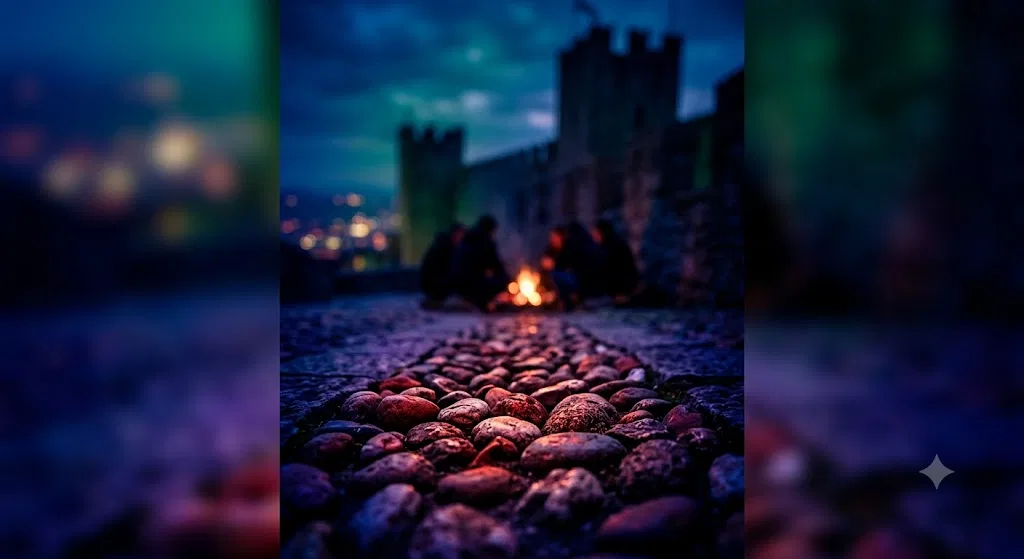
The clearest example is the Witches’ Path on Mount Titano. Modern accounts describe nocturnal gatherings, bonfires and women transformed into cats, yet these are presented as legends rather than records of an organised movement or persecution. San Marino’s real significance lies in the contrast between folklore and documented history: a place can preserve supernatural stories without having experienced a major witch panic. Its small territory, unusually continuous civic institutions and incomplete accessibility of archival material all help explain why firm conclusions require caution.[castellidisanmarino.com]castellidisanmarino.comCastelli di San Marino The Witches' Path of San MarinoCastelli di San MarinoThe Witches' Path of San Marino - Castelli di San Marino14 Feb 2025 — However, no one could imagine that the most b…
The Witches’ Path: folklore rather than a witch panic
The path linking San Marino’s towers is commonly known as the Witches’ Path. Contemporary versions of its legend say that young women gathered there after dark, danced around fires or practised magic. One story describes a beautiful woman of Mount Titano who could change into a cat, a witch or a maiden under the moonlight. These accounts give the landscape an atmosphere of secrecy and transgression, but they are tourist-era retellings of folklore, not evidence of an identified historical congregation.[Castelli di San Marino]castellidisanmarino.comCastelli di San Marino The Witches' Path of San MarinoCastelli di San MarinoThe Witches' Path of San Marino - Castelli di San Marino14 Feb 2025 — However, no one could imagine that the most b…
That distinction matters. A witches’ meeting place in oral tradition is not automatically evidence of a witch trial, an underground religion or a panic involving the wider population. Across early modern Europe, prosecutors and demonologists often transformed older stories about night journeys, magical healing and seasonal gatherings into the more threatening idea of a diabolical conspiracy. Historians of Italy warn that local beliefs varied greatly and that judicial records must be studied jurisdiction by jurisdiction rather than fitted into a single European model.[MDPI]mdpi.comWitch Hunting and Prosecuting in Early Modern Italy: A Historiographical Survey | MDPI…
The San Marino legend may preserve several cultural layers at once. Night-time dancing can represent freedom from ordinary supervision; transformation into an animal is a familiar feature of European supernatural storytelling; and isolated mountain paths naturally attract tales about secret meetings. None of these motifs proves that the alleged participants regarded themselves as witches. The word may have been applied later to women imagined as unruly, independent or sexually unconventional.
The Witches’ Path is therefore best understood as heritage folklore: a story attached to a real place and repeatedly reshaped for local identity and visitors. It remains culturally important because it gives the fortified landscape a human and mysterious dimension, not because it documents a confirmed outbreak of witchcraft.
Were witches prosecuted in San Marino?
The available online evidence does not establish a major series of San Marinese witch trials. This does not prove that no inhabitant was ever accused of magic, harmful sorcery or superstition. It means that a recognisable persecution—with named defendants, surviving proceedings, sentences and an identifiable wave of fear—cannot responsibly be reconstructed from the accessible sources used here.
San Marino’s State Archive preserves extensive institutional material, including judicial acts, council minutes, papal documents, official correspondence and population records. Some of this material has been digitised through the Antichi Documenti portal, although full access requires registration. The existence of these holdings leaves open the possibility that isolated accusations or proceedings may survive in records not easily searchable on the open web.[San Marino Official Portal]gov.smSan Marino Official Portal Archivio StoricoSan Marino Official Portal Archivio Storico
The wider Italian setting offers useful guidance, but not a substitute for local evidence. Witchcraft prosecutions in the Italian states were shaped by fragmented jurisdictions: bishops, inquisitors and secular magistrates could all become involved, depending on whether the alleged offence concerned heresy, forbidden ritual or material harm. Modern research suggests that church tribunals were often more cautious than many secular courts in northern Europe. Roman inquisitorial rules increasingly demanded corroboration and discouraged prosecutions built merely on one accused person naming another as a companion at a witches’ gathering.[MDPI]mdpi.comWitch Hunting and Prosecuting in Early Modern Italy: A Historiographical Survey | MDPI…
Italian cases also frequently concerned practical magic rather than alleged membership of a devil-worshipping organisation. Accused people might be said to have caused illness, offered cures, made someone fall in love or searched magically for buried treasure. The image of a vast satanic conspiracy was only one interpretation among many, often promoted by interrogators rather than volunteered in a coherent form by villagers themselves.[MDPI]mdpi.comWitch Hunting and Prosecuting in Early Modern Italy: A Historiographical Survey | MDPI…
This makes comparison with famous Italian prosecutions such as Triora potentially misleading. Triora experienced a documented crisis in the late 1580s in which women were blamed during a period of scarcity. No equivalent San Marinese episode has emerged from the sources examined here. San Marino should not be assigned a “lost witch hunt” simply because its landscape contains a place called the Witches’ Path.[Wikipedia]WikipediaProcesso alle streghe di TrioraProcesso alle streghe di Triora
Why large panics may have been less likely
San Marino’s political structure does not make collective fear impossible, but it may have altered how rumours and accusations were handled. The republic developed as a small, self-governing city-state whose institutional functions remained concentrated on Mount Titano. UNESCO describes an unusually strong continuity of civic autonomy from the Middle Ages onwards, preserved in a compact inhabited centre containing government buildings, churches, convents and fortifications.[UNESCO World Heritage Centre]whc.unesco.orgUNESCO World Heritage CentreSan Marino Historic Centre and Mount TitanoSan Marino Historic Centre and Mount Titano covers 55 ha, includin…
In a very small jurisdiction, accusations could spread rapidly because people were closely connected. The same closeness, however, might also make it harder to sustain fantasies about a large invisible organisation. Neighbours knew one another’s families, disputes and reputations. Local officials could be more directly exposed to the social costs of arresting numerous inhabitants.
That is only a plausible interpretation, not a demonstrated explanation for the apparent absence of a witch panic. The surviving evidence may also reflect gaps in research, losses in the record, differences in legal terminology or cases handled outside the republic’s own institutions. Historians of Italian witchcraft repeatedly stress that the field depends heavily on unevenly preserved local archives and that broad national conclusions can hide important regional differences.[MDPI]mdpi.comWitch Hunting and Prosecuting in Early Modern Italy: A Historiographical Survey | MDPI…
San Marino’s position among the Italian states also complicates any neat separation between “local” and “foreign” influence. Religious teaching, printed demonology, legal practice and popular stories crossed borders. A San Marinese resident could share the same beliefs about curses, healers and evil spirits as communities in neighbouring regions without those beliefs developing into a prosecution or public scare.
Saints, founding stories and collective belief
San Marino’s most powerful supernatural tradition is not about witches but about its founder. According to Christian tradition, Marinus was a stonemason and religious figure associated with Mount Titano. Over time, the saint’s life became inseparable from the republic’s account of its origins and freedom. As with many medieval founding narratives, the surviving tradition combines devotional memory, civic identity and later historical reconstruction.
It would be misleading to call this a cult in the modern pejorative sense. The veneration of a saint within an established Christian culture is not equivalent to a coercive sect or destructive new religious movement. It is better understood as a shared sacred narrative that helped explain why the community existed and what values it represented.
San Marino’s history nevertheless shows that religious symbolism can become politically contested. In the case of Buscarini and Others v. San Marino, elected parliamentarians were required to swear an oath on the Gospels. In 1999, the European Court of Human Rights ruled that this requirement violated freedom of thought, conscience and religion. The dispute was not a panic, but it exposed a tension between inherited Catholic civic ritual and a modern secular understanding of public office.[HUDOC]hudoc.echr.coe.intHUDOCBUSCARINI AND OTHERS v. SAN MARINOHUDOCBUSCARINI AND OTHERS v. SAN MARINO
The case is valuable because it demonstrates a more grounded form of collective-belief history. Shared traditions do not need to produce hysteria to shape institutions. They can survive quietly in ceremonies and formulas until changing ideas about individual rights make them visible and debatable.
What San Marino does not appear to have experienced
No credible evidence located for this account supports a nationally significant San Marinese example of:
- a large early modern witch hunt;[mdpi.com]mdpi.comWitch Hunting and Prosecuting in Early Modern Italy: A Historiographical Survey | MDPI…
- an organised apocalyptic or millenarian movement;
- a modern satanic ritual-abuse panic;
- a UFO or contactee religion centred in the republic;
- a school or workplace outbreak identified as mass psychogenic illness;
- a sustained miracle or apparition panic that mobilised authorities and crowds.
This absence should not be filled with material imported from Italy merely because San Marino is geographically enclosed by it. Political boundaries matter when identifying which courts acted, which newspapers circulated a claim and which population experienced the consequences. Neighbouring Italian episodes can clarify the wider cultural environment, but they should not be relabelled as San Marinese history.
The terminology also needs discipline. Mass psychogenic illness refers to real physical symptoms spreading through social and psychological processes after infectious, toxic or other organic explanations have been investigated. It is not a synonym for religious enthusiasm, public rumour or political alarm. Medical and sociological literature emphasises that these outbreaks often occur in closely connected groups, particularly schools and workplaces, and that publicity can amplify them. No comparable San Marino case was identified in the available evidence.[PMC]pmc.ncbi.nlm.nih.govPMCMass psychogenic illness and the social networkPMCMass psychogenic illness and the social network
A moral panic, meanwhile, involves a person, group or practice being publicly presented as a disproportionate threat to social values, often through repeated claims by officials, campaigners or media. A frightening legend about witches does not become a moral panic unless it provokes social mobilisation, scapegoating or institutional action.
Why the legend still matters
The Witches’ Path remains important precisely because it reveals how later culture can create a vivid supernatural geography without preserving a corresponding history of persecution. Visitors encounter towers, cliffs and reconstructed medieval surroundings that encourage stories of secrecy and danger. UNESCO has noted that parts of San Marino’s twentieth-century restoration consciously pursued an idealised medieval appearance, making the historic centre not only a survival from the past but also a modern interpretation of it.[UNESCO World Heritage Centre]whc.unesco.orgUNESCO World Heritage CentreSan Marino Historic Centre and Mount TitanoSan Marino Historic Centre and Mount Titano covers 55 ha, includin…
This does not make the legend false in a simple sense. Folklore records imagination, local values and changing attitudes even when it does not describe a verifiable event. Stories about women meeting at night may express unease about behaviour outside family and religious authority. Modern retellings can reverse the moral judgement, portraying the women as free spirits rather than dangerous servants of evil.
That transformation is part of a wider European shift. The persecuted witch has become a symbol of independence, marginalisation or resistance, while historic landscapes reuse supernatural traditions for tourism and cultural identity. In San Marino, the result is notable for being largely detached from evidence of actual executions or a sustained campaign of accusation.
How to read San Marino’s strange history
The safest conclusion is neither that San Marino had no supernatural beliefs nor that it concealed a forgotten witch-cult history. Its inhabitants belonged to a wider Italian religious and folkloric world in which charms, harmful magic, saints, demons and miraculous intervention were familiar possibilities. Yet beliefs do not automatically produce panics, and legends do not automatically record crimes or movements.
Three distinctions keep the history clear:
- Folklore is not a trial record. The Witches’ Path preserves a story attached to place, not a documented prosecution.
- Religious heritage is not automatically a cult. Devotion to the republic’s founding saint belongs to established civic and Christian tradition.
- Sparse evidence is not evidence of a cover-up. San Marino’s archives are substantial, but much material requires specialist investigation before stronger claims can be made.[San Marino Official Portal]gov.smSan Marino Official Portal Archivio StoricoSan Marino Official Portal Archivio Storico
San Marino’s contribution to the history of collective belief is therefore quieter than that of countries marked by famous persecutions or mass scares. It shows how supernatural tradition can survive as legend, landscape and identity without becoming a documented social catastrophe—and why historians must resist turning atmospheric folklore into an invented panic.
Amazon book picks
Further Reading
Books and field guides related to Did San Marino Ever Have a Witch Panic?. Use these as the next step if you want deeper reading beyond the article.
Europe's inner demons
First published 1975. Subjects: Witchcraft, History, Demonology, Church history, Witchcraft, europe.
The witch-hunt in early modern Europe
First published 1987. Subjects: Witchcraft, History, Hexenglaube, Geschichte (1450-1750), Heksenvervolgingen.

The Oxford illustrated history of witchcraft and magic
First published 2017. Subjects: History, Magic, Witchcraft, Magic, history.

The witch
First published 2017. Subjects: Witchcraft, Witch hunting, Witches, History, Witchcraft, europe.
Endnotes
1.
Source: voicemap.me
Title: Voice Map The Witches’ pathway
Link:https://voicemap.me/tour/city-of-san-marino/a-san-marino-walking-tour-from-porta-san-francesco-to-piazza-della-liberta/sites/the-witches-pathway
Source snippet
The Witches' pathway - City of San MarinoThe name of this path is the Passo delle Streghe, the pathway of the witches.... witch...
2.
Source: whc.unesco.org
Link:https://whc.unesco.org/en/list/1245/
Source snippet
UNESCO World Heritage CentreSan Marino Historic Centre and Mount TitanoSan Marino Historic Centre and Mount Titano covers 55 ha, includin...
3.
Source: mdpi.com
Link:https://www.mdpi.com/2077-1444/14/5/610
Source snippet
Witch Hunting and Prosecuting in Early Modern Italy: A Historiographical Survey | MDPI...
4.
Source: Wikipedia
Title: Processo alle streghe di Triora
Link:https://it.wikipedia.org/wiki/Processo_alle_streghe_di_Triora
5.
Source: whc.unesco.org
Title: World Heritage Centre Decision
Link:https://whc.unesco.org/en/decisions/1497/
Source snippet
UNESCO World Heritage CentreDecision - 32 COM 8B.3636. Examination of nomination of natural, mixed and cultural proprerties to the World...
6.
Source: hudoc.echr.coe.int
Title: HUDOCBuscarini and Others v. San Marino [GC]
Link:https://hudoc.echr.coe.int/fre?i=002-4792
7.
Source: hudoc.echr.coe.int
Title: eng press
Link:https://hudoc.echr.coe.int/eng-press?i=003-68423-68891
8.
Source: pmc.ncbi.nlm.nih.gov
Title: PMCMass psychogenic illness and the social network
Link:https://pmc.ncbi.nlm.nih.gov/articles/PMC3536509/
9.
Source: whc.unesco.org
Title: World Heritage Centre Periodic Report
Link:https://whc.unesco.org/document/164360
10.
Source: castellidisanmarino.com
Title: Castelli di San Marino The Witches’ Path of San Marino
Link:https://www.castellidisanmarino.com/en/[witches-path
Source snippet
Castelli di San MarinoThe Witches' Path of San Marino - Castelli di San Marino14 Feb 2025 — However, no one could imagine that the most b...
11.
Source: gov.sm
Title: San Marino Official Portal Archivio Storico
Link:https://www.gov.sm/pub2/GovSM/Dipartimenti/Dipartimento-Istruzione-e-Cultura/Istituti-Culturali/Archivio-di-Stato/Archivio-Storico.html
12.
Source: antichidocumenti.sm
Title: Antichi Documenti
Link:https://www.antichidocumenti.sm/
13.
Source: hudoc.echr.coe.int
Title: HUDOCBUSCARINI AND OTHERS v. SAN MARINO
Link:https://hudoc.echr.coe.int/eng?i=001-58915
Additional References
14.
Source: youtube.com
Title: The Community on The Mount | History of San Marino #1
Link:https://www.youtube.com/watch?v=SYmz4NCYt2g
Source snippet
The Challenge of Modern Age | History of San Marino #2 - The Oldest Republic...
15.
Source: youtube.com
Title: The Challenge of Modern Age | History of San Marino #2
Link:https://www.youtube.com/watch?v=PkCrUnnETu0
Source snippet
Stories from the Land: San Marino Archaeology | History of San Marino #12...
16.
Source: youtube.com
Link:https://www.youtube.com/watch?v=2vIUbWs0dYI
Source snippet
The Community on The Mount | History of San Marino #1 - The Oldest Republic...
17.
Source: youtube.com
Title: San Marino Is Tiny… But Its History Is Massive
Link:https://www.youtube.com/watch?v=VF69qCfU1T4
Source snippet
San Marino's 7 Hidden Gems Most Tourists Never Find (2026)...
18.
Source: theguardian.com
Title: carol morley the falling mass hysteria is a powerful group activity
Link:https://www.theguardian.com/film/2015/mar/29/carol-morley-the-falling-mass-hysteria-is-a-powerful-group-activity
19.
Source: youtube.com
Title: Stories from the Land: San Marino Archaeology | History of San Marino #12
Link:https://www.youtube.com/watch?v=MLeWkMBfB2I
Topic Tree
Follow this branch
Related pages 192
- Antigua and Barbuda
- Argentina Belief Scares
- Azerbaijan Belief
- Bahrain Beliefs
- North Korea
- +187 more in sidebar