Within Antigua and Barbuda
How Antigua Turned Obeah Into a Crime
Obeah laws turned diverse spiritual practices into a criminal category shaped by colonial ideas about fraud, danger and social control.
On this page
- How colonial law defined obeah
- The 1904 Leeward Islands framework
- Religion, fraud and unequal enforcement
Page outline Jump by section
Introduction
Antigua’s laws against obeah were never simply about suppressing superstition. They formed part of a broader colonial system that treated certain African-derived spiritual practices as threats to public order, political authority and plantation society. By defining “obeah” as a criminal offence rather than a religion or healing tradition, colonial governments gave police and magistrates wide powers to arrest practitioners, search homes and punish both those who offered spiritual services and those who sought them. The result was not merely the regulation of alleged fraud but the legal construction of a category that combined religion, magic, deception and political suspicion into a single offence. The legacy of these laws helps explain why obeah remained heavily stigmatised in Antigua long after slavery ended and why historians see anti-obeah legislation as an important instrument of colonial control rather than a neutral response to crime.[ed.ac.uk]research.ed.ac.ukUniversity of Edinburgh ResearchObeah acts: Producing and policing the boundaries of religion in the Caribbean - University of Edinburgh…
How colonial law defined obeah
Unlike laws against theft or assault, Antigua’s anti-obeah legislation did not define a clearly measurable act. Instead, it criminalised a loosely described set of practices that colonial authorities associated with supernatural claims, charms, fortune-telling, healing and occult power.
The governing legislation inherited by Antigua described obeah as including “witchcraft” and working by “spells” or “professed occult or supernatural power”. The law also created the legal category of an “instrument of obeah”, defined broadly enough to include objects ordinarily associated with spiritual practice as well as almost anything that a person claimed possessed supernatural power. Such deliberately expansive language gave officials considerable discretion over what counted as evidence.[Obeah Histories]obeahhistories.org1904 leeward islands actObeah HistoriesThe Obeah Act,1904 (Leeward Islands) | Obeah HistoriesMarch 2, 1904…
The legislation criminalised several different activities:
- practising or assisting in obeah;
- pretending to heal or influence events through supernatural means;
- consulting an alleged obeah practitioner;
- possessing objects treated as “instruments of obeah”;
- publishing material considered likely to encourage belief in obeah.
These provisions show that colonial legislators were not only concerned with alleged practitioners. They also sought to discourage entire networks of belief by punishing clients, restricting publications and allowing intrusive searches.[Obeah Histories]obeahhistories.org1904 leeward islands actObeah HistoriesThe Obeah Act,1904 (Leeward Islands) | Obeah HistoriesMarch 2, 1904…
The 1904 Leeward Islands framework
The key legal framework for Antigua was the Leeward Islands Obeah Act of 1904, which applied across the British Leeward Islands, including Antigua and Barbuda. Rather than creating an entirely new approach, it closely followed Jamaica’s influential 1898 Obeah Law, demonstrating how colonial governments shared legal models throughout the British Caribbean.[Obeah Histories]obeahhistories.org1904 leeward islands actObeah HistoriesThe Obeah Act,1904 (Leeward Islands) | Obeah HistoriesMarch 2, 1904…
The Act authorised imprisonment for practising obeah, fines or imprisonment for consulting practitioners, police searches for suspected “instruments of obeah”, arrest without warrant in some circumstances, and police supervision after conviction. Male offenders could also receive whipping under the original legislation, illustrating that the law combined criminal punishment with public corporal discipline.[Obeah Histories]obeahhistories.org1904 leeward islands actObeah HistoriesThe Obeah Act,1904 (Leeward Islands) | Obeah HistoriesMarch 2, 1904…
Perhaps the most striking provision concerned evidence. If objects considered “instruments of obeah” were found during a search, the law presumed that the person in possession was practising obeah unless they proved otherwise. This reversed the normal expectation that prosecutors demonstrate guilt and greatly strengthened the state’s ability to secure convictions.[Obeah Histories]obeahhistories.org1904 leeward islands actObeah HistoriesThe Obeah Act,1904 (Leeward Islands) | Obeah HistoriesMarch 2, 1904…

Religion, fraud and unequal enforcement
Colonial governments justified anti-obeah laws as measures against fraud, deception and dangerous superstition. The official title of the 1904 Act described its purpose as prohibiting “certain vulgar frauds” connected with obeah and other “pretended” supernatural practices. The repeated use of words such as “pretended” reveals how the law dismissed the possibility that these beliefs might be genuine religious or healing traditions.[Obeah Histories]obeahhistories.org1904 leeward islands actObeah HistoriesThe Obeah Act,1904 (Leeward Islands) | Obeah HistoriesMarch 2, 1904…
Modern historians argue that this legal language performed an important political function. By classifying obeah as fraudulent magic rather than religion, colonial authorities avoided debates about religious freedom while isolating African-derived spiritual traditions from the protections more readily extended to recognised churches. Diana Paton describes anti-obeah legislation as helping produce the very category of “obeah” in law by separating practices labelled “magic”, “superstition” or “witchcraft” from activities regarded as legitimate religion.[University of Edinburgh Research]research.ed.ac.ukUniversity of Edinburgh ResearchObeah acts: Producing and policing the boundaries of religion in the Caribbean - University of Edinburgh…
Enforcement also reflected the unequal structure of colonial society. Although the statutes were framed in general terms, they overwhelmingly targeted practices associated with enslaved and later formerly enslaved African populations. Colonial officials frequently regarded respected healers, ritual specialists and spiritual advisers as potential sources of political influence outside official institutions. The suppression of obeah therefore reinforced racial hierarchy as well as legal authority.[University of Edinburgh Research]research.ed.ac.ukUniversity of Edinburgh ResearchObeah acts: Producing and policing the boundaries of religion in the Caribbean - University of Edinburgh…
Obeah and fears of rebellion
In Antigua, anti-obeah legislation cannot be separated from the colony’s long history of anxiety about slave resistance. The island’s plantation economy depended on maintaining control over a large enslaved population, and colonial authorities repeatedly associated African spiritual specialists with rebellion, secret organisation and collective resistance.
The memory of the alleged 1736 conspiracy, in which colonial officials claimed that spiritual rituals formed part of preparations for revolt, remained influential in shaping official attitudes. Whether or not every allegation made during those trials was accurate, the episode reinforced planter fears that African religious authority could strengthen solidarity among the enslaved. Later anti-obeah legislation emerged within that political culture of suspicion rather than in isolation from it.[University of Edinburgh Research]research.ed.ac.ukUniversity of Edinburgh ResearchObeah acts: Producing and policing the boundaries of religion in the Caribbean - University of Edinburgh…
This helps explain why laws aimed not only at alleged magical harm but also at meetings, consultation and the circulation of ideas. Colonial governments viewed independent spiritual authority as something capable of challenging state power.
Broad powers and everyday policing
The wording of the legislation allowed policing to extend well beyond proven acts of fraud.
Magistrates could issue search warrants when there was reason to suspect the presence of “instruments of obeah”. Police could enter premises, seize ritual objects and use those objects as evidence in court. The law’s broad definitions meant that ordinary items could become incriminating depending on how officials interpreted their purpose.[Obeah Histories]obeahhistories.org1904 leeward islands actObeah HistoriesThe Obeah Act,1904 (Leeward Islands) | Obeah HistoriesMarch 2, 1904…
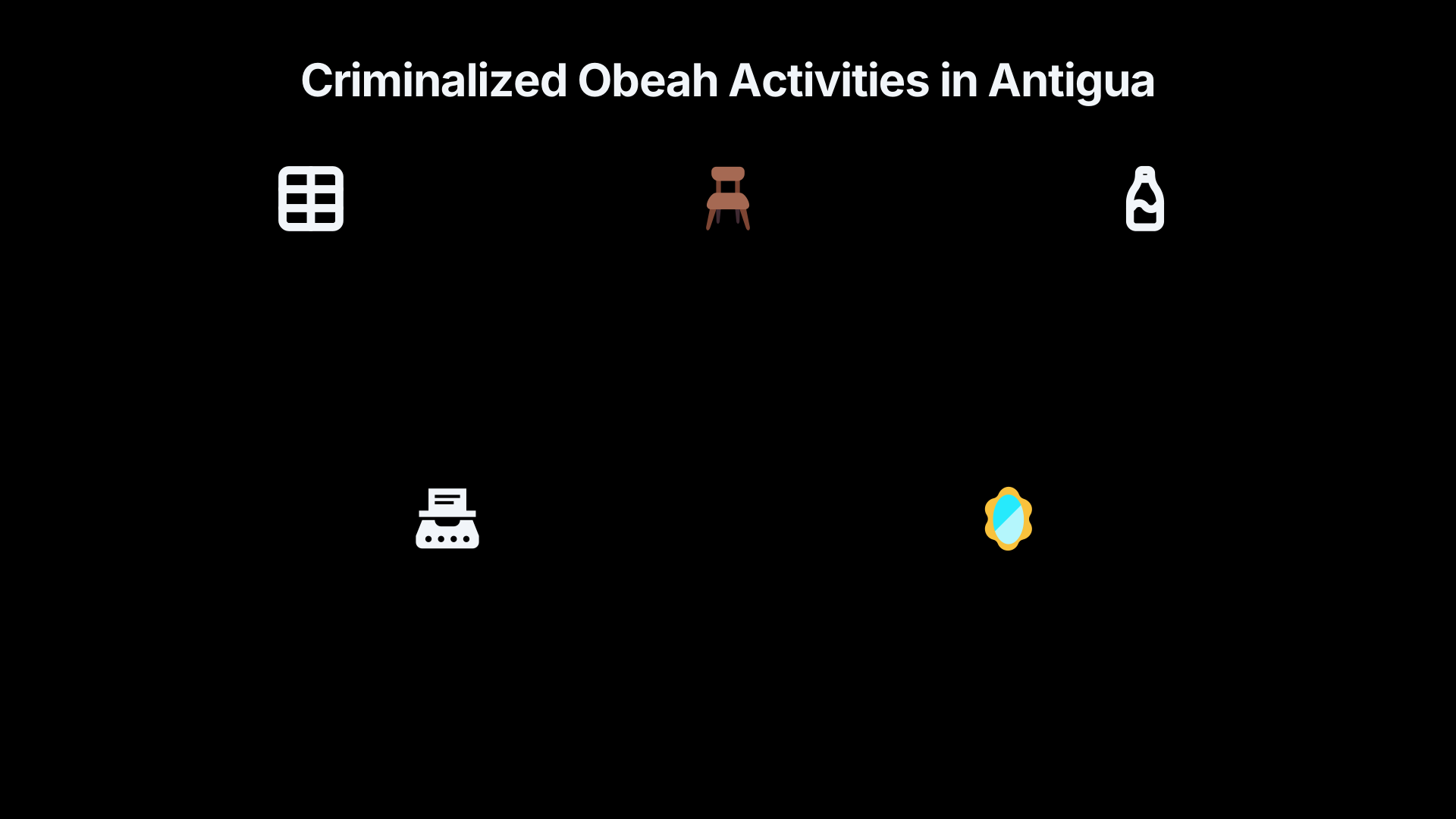
Cases from the wider Leeward Islands illustrate how these powers operated. One well-known prosecution involving Charles Dolly centred largely on objects seized during a police raid—including bones, bottles, mirrors and religious items—which prosecutors treated as sufficient evidence of obeah activity. Although the conviction was later overturned on technical grounds, the case demonstrates how possession of symbolic objects could become central to criminal proceedings under the 1904 framework.[Obeah Histories]obeahhistories.orgcharles dolly leeward islands c 1904Obeah HistoriesCharles Dolly, Leeward Islands c 1904 | Obeah HistoriesNovember 12, 2012…
Why these laws remain historically important
Modern scholarship generally does not treat Antigua’s anti-obeah laws as simple examples of governments combating deception. Instead, they are understood as part of the wider legal architecture through which colonial states regulated race, religion and political authority.
The laws transformed a diverse range of African-Caribbean spiritual practices into a single criminal category whose boundaries were defined by colonial officials rather than practitioners themselves. By criminalising practitioners, clients, publications and ritual objects, they discouraged the public transmission of traditions while reinforcing official ideas about civilisation, Christianity and legitimate authority.[University of Edinburgh Research]research.ed.ac.ukUniversity of Edinburgh ResearchObeah acts: Producing and policing the boundaries of religion in the Caribbean - University of Edinburgh…
For historians of collective belief and social control, Antigua’s Obeah laws therefore illustrate something broader than religious regulation. They show how colonial governments could use criminal law to reshape cultural practices, convert spiritual difference into legal deviance, and reinforce systems of political domination whose effects continued long after emancipation.
Amazon book picks
Further Reading
Books and field guides related to How Antigua Turned Obeah Into a Crime. Use these as the next step if you want deeper reading beyond the article.
The Black Jacobins
First published 1935. Subjects: History, Biography, Revolutionaries, Generals, Revolution, 1791-1804.

The fear of French negroes
First published 2012. Subjects: Blacks, Influence, Migrations, Race identity, History.
Endnotes
1.
Source: research.ed.ac.uk
Link:https://www.research.ed.ac.uk/en/publications/obeah-acts-producing-and-policing-the-boundaries-of-religion-in-t/
Source snippet
University of Edinburgh ResearchObeah acts: Producing and policing the boundaries of religion in the Caribbean - University of Edinburgh...
2.
Source: obeahhistories.org
Title: Obeah Histories Legislation | Obeah Histories
Link:https://obeahhistories.org/law/
3.
Source: obeahhistories.org
Title: 1904 leeward islands act
Link:https://obeahhistories.org/1904-leeward-islands-act/
Source snippet
Obeah HistoriesThe Obeah Act,1904 (Leeward Islands) | Obeah HistoriesMarch 2, 1904...
Published: March 2, 1904
4.
Source: obeahhistories.org
Title: 1898 jamaica law
Link:https://obeahhistories.org/1898-jamaica-law/
Source snippet
Obeah HistoriesThe Obeah Law, 1898 (Jamaica) | Obeah Histories...
5.
Source: obeahhistories.org
Title: charles dolly leeward islands c 1904
Link:https://obeahhistories.org/charles-dolly-leeward-islands-c-1904/
Source snippet
Obeah HistoriesCharles Dolly, Leeward Islands c 1904 | Obeah HistoriesNovember 12, 2012...
Published: November 12, 2012
Additional References
6.
Source: cambridge.org
Link:https://www.cambridge.org/core/journals/journal-of-law-and-religion/article/abs/obeah-vagrancy-and-the-boundaries-of-religious-freedom-analyzing-the-proscription-of-pretending-to-possess-supernatural-powers-in-the-anglophone-caribbean/11EEE1AD5948F72F423FE174FFE61F87
Source snippet
8:02, § 145(5) (1893) (codified as amended 2012), [http://www.legalaffairs.gov.gy/information/laws-of-guyana/](http://www.legalaffairs.gov.gy/information/laws-of-guyana/) (prescribing a punishment of...
7.
Source: cambridge.org
Link:https://www.cambridge.org/core/books/cultural-politics-of-obeah/obeah-in-the-courts-18901939/DC36F64021BD8B2FFDFED90CD9CF9CEF
Source snippet
Obeah in the courts, 1890–1939 (Chapter 5) - The Cultural Politics of ObeahAugust 5, 2015 — 5 - OBEAH IN THE COURTS, 1890–1939 Published...
Published: August 5, 2015
8.
Source: youtube.com
Title: How Colonial Jamaica Turned Obeah Into A Crime with Dr. Katharine Gerbner
Link:http://www.youtube.com/watch?v=u0LjnvBHQ2c
Source snippet
Obeah, Vodou and the Banned Spirits of the Caribbean: The Hidden War on Black Religion...
9.
Source: youtube.com
Link:http://www.youtube.com/watch?v=t16-6g9fG4Y
Source snippet
The Forbidden Healers: Black Midwives and the Obeah Laws...
10.
Source: youtube.com
Title: The Obeah Trials of Jamaica
Link:http://www.youtube.com/watch?v=6edQPdf4o10
Source snippet
Obeah Caribbean history colonialism laws How Colonial Jamaica Turned Obeah Into A Crime with Dr. Katharine Gerbner Strictly Facts: A Guid...
11.
Source: dom767.com
Link:https://www.dom767.com/dompedia/obeah-act-chapter-1038-dominica/
12.
Source: dom767.com
Link:https://www.dom767.com/dompedia/obeah-in-dominica/
13.
Source: architexturez.net
Link:https://architexturez.net/doc/10-1080/03086530500185886
Source snippet
"Making Leeway in the Leewards, 1929-51: The negotiation of colonial development." Journal of Imperia...
14.
Source: slaveryandfreedomlaws.lib.unb.ca
Title: ca An Act for the Trial of Criminal Slaves | Laws of Enslavement and Freedom
Link:https://slaveryandfreedomlaws.lib.unb.ca/laws/antigua-1694
15.
Source: donaldheald.com
Title: acts of assembly passed in the charibbee leeward islands from 1690 to 1730
Link:https://www.donaldheald.com/pages/books/29153/leeward-islands/acts-of-assembly-passed-in-the-charibbee-leeward-islands-from-1690-to-1730
Topic Tree