When Fear and Belief Reshaped Uganda
Uganda’s history of collective fear and extraordinary belief is not one single story of “mass hysteria”. It includes apocalyptic Christian movements, spirit-led rebellions, outbreaks of unexplained behaviour in schools, accusations of witchcraft and ritual murder, and public scares magnified by churches, politicians and the media.
Page outline Jump by section
Introduction
The most consequential cases are the Holy Spirit Movement during the northern war of the 1980s, the deaths associated with the Movement for the Restoration of the Ten Commandments of God at Kanungu in 2000, and recurring reports of collective possession or psychogenic illness in schools. Uganda’s child-sacrifice scare presents a different problem: ritual attacks have occurred, but later research argues that sensational reporting inflated their scale and sometimes circulated false evidence. Together, these cases show how belief spreads most powerfully when it gives recognisable form to war, illness, insecurity, rapid social change or distrust of public institutions.[jstor.org]jstor.orgAlice Lakwena and the Holy Spirits: War in Northern Uganda, 1986-97 | JSTOR…
What counts as a cult, panic or mass illness?
The word “cult” has often been used in Uganda by police, journalists and politicians to describe minority churches, rebel movements and communities that reject government programmes. It can be useful when discussing a highly controlling organisation, but it can also become a hostile label that encourages the public to treat unfamiliar religious beliefs as inherently criminal.
Several different phenomena therefore need to be separated:
- A millenarian movement expects an approaching divine transformation, final judgement or earthly paradise.
- A coercive religious organisation controls members through isolation, threats, exploitation or violence.
- Mass psychogenic illness describes contagious physical or behavioural symptoms for which investigation finds no adequate infectious, toxic or structural cause. The symptoms are real even when stress and social transmission are central.
- A moral panic occurs when a genuine or alleged threat is presented as much larger, more organised or more culturally dangerous than the available evidence supports.
- Witchcraft accusation places blame for misfortune on supposed supernatural action. It may lead to exclusion, assault or killing regardless of whether the accused person practises any form of ritual healing.
These categories can overlap, but they are not interchangeable. The Holy Spirit Movement was simultaneously a religious movement and an armed rebellion. Kanungu was an apocalyptic community ending in mass death, not merely a case of contagious delusion. School outbreaks often resemble mass psychogenic illness, while the child-sacrifice scare combined real criminal cases with unreliable claims about a nationwide epidemic.
The “mass madness” investigated after independence
One of Uganda’s earliest well-documented episodes occurred among the Gisu population around Mbale in the early 1960s. Officials described outbreaks affecting hundreds of people as “mass madness” or “mass hysteria”. Reported behaviour included intense agitation, excessive talking, violence, attempted assaults, petty theft, loss of appetite and a strong desire to smoke. Some people experienced later relapses before gradually becoming calmer and more willing to speak with investigators.[Cambridge Repository]repository.cam.ac.ukbridge RepositoryInvestigating "mass hysteria" in early postcolonial Ugandaby Y Pringle · 2015 · Cited by 14 — In the early 1960s, med…
The Ugandan psychiatrist Benjamin Kagwa was sent to investigate. His work is important because it shows how uncertain the diagnosis was. Officials initially looked for a single medical or psychiatric explanation, but the outbreak was inseparable from local political conditions. Uganda was approaching independence, colonial authority was weakening and eastern Uganda was experiencing severe tension, including disputes over leadership, violence and forced circumcision.[Springer]link.springer.comMass Hysteria' in the Wake of DecolonisationSpringer'Mass Hysteria' in the Wake of Decolonisation - Springer Natureby Y Pringle · 2018 · Cited by 4 — It was characterised by 'marked…
Historian Yolana Pringle argues that the term “mass hysteria” partly reflected the assumptions of administrators and doctors. It converted social disorder into a medical problem and placed attention on supposedly unstable villagers rather than on decolonisation, coercion and political fear. Kagwa’s investigation was more culturally attentive than much colonial psychiatry, but he still worked within a system seeking a clinical label for behaviour that was also an expression of collective crisis.[Cambridge Repository]repository.cam.ac.ukbridge RepositoryInvestigating "mass hysteria" in early postcolonial Ugandaby Y Pringle · 2015 · Cited by 14 — In the early 1960s, med…
This does not mean that the symptoms were invented. Rather, the episode shows why modern researchers hesitate to treat “hysteria” as a complete explanation. A diagnosis may describe how distress spreads without explaining why a particular population became vulnerable at that moment.

Alice Lakwena and a spirit-led army
In August 1986, Alice Auma emerged in northern Uganda as the medium of a spirit called Lakwena. She organised the Holy Spirit Mobile Forces, an army that fought President Yoweri Museveni’s National Resistance Army and rival armed groups. The movement marched southwards from Acholi territory, reportedly attracting between 7,000 and 10,000 fighters before its defeat near Jinja in 1987.[JSTOR]jstor.orgAlice Lakwena and the Holy Spirits: War in Northern Uganda, 1986-97 | JSTOR…
Followers did not understand Alice simply as a charismatic woman issuing orders. Anthropologist Heike Behrend found that they regarded Lakwena and other possessing spirits as the movement’s true commanders. The army developed purification rituals, moral rules and explanations of military success or failure in spiritual terms. It promised not only political victory but the cleansing of soldiers and society from sin, witchcraft and corruption.[JSTOR]jstor.orgAlice Lakwena and the Holy Spirits: War in Northern Uganda, 1986-97 | JSTOR…
The movement’s rise makes little sense when presented as an outbreak of irrational belief detached from history. Northern Uganda had been thrown into upheaval following the fall of the Acholi-dominated government of Tito Okello. Many Acholi feared punishment, loss of political power or even annihilation. Soldiers returned to communities carrying the consequences of earlier violence, while government counter-insurgency deepened insecurity. Under these conditions, a healer who claimed that spiritual purification could stop the bloodshed offered an explanation of catastrophe and a programme for collective redemption.[JSTOR]jstor.orgAlice Lakwena and the Holy Spirits: War in Northern Uganda, 1986-97 | JSTOR…
Accounts that concentrate only on magical battlefield claims can make the movement appear absurd and primitive. That framing misses its organisational strength and political appeal. Its spiritual discipline turned a fragmented and frightened population into a mobile army, provided rules for recruits and interpreted every setback within a larger moral narrative.
The Holy Spirit Movement also complicates the label “cult”. It possessed features commonly associated with prophetic movements, including revelations, strict discipline and supernatural promises. Yet it was also a regional insurgency responding to a real war. Calling it merely a cult can hide the state violence, military competition and fear of political exclusion that made it possible.
From the Holy Spirit Movement to the LRA
After Alice’s defeat and flight to Kenya, several successor prophets attempted to claim her spiritual and political inheritance. The most destructive was Joseph Kony, whose organisation eventually became known as the Lord’s Resistance Army. Behrend treats the LRA as one of several successor Holy Spirit movements, while also stressing the important differences between them.[JSTOR]jstor.orgAlice Lakwena and the Holy Spirits: War in Northern Uganda, 1986-97 | JSTOR…
The LRA preserved a language of spirits, purification and divine mission, but developed into an armed organisation notorious for abduction, mutilation, forced recruitment and attacks on civilians. Its longevity also depended on military conditions, cross-border sanctuary and support from the Sudanese government, not simply on followers accepting Kony’s supernatural claims.[JSTOR]jstor.orgAlice Lakwena and the Holy Spirits: War in Northern Uganda, 1986-97 | JSTOR…
Descriptions of the LRA as a “cult” can illuminate Kony’s spiritual authority and the coercive world imposed on abductees. They become misleading when they imply that the conflict was caused mainly by irrational religion. The organisation survived through terror, regional politics and the forced incorporation of children. Many of those under its authority were captives rather than voluntary believers.
The relationship between Alice Lakwena and Kony is therefore not a straightforward tale of one cult becoming another. It is better understood as the transformation of a religiously framed rebellion within a prolonged war. Spiritual ideas helped give violence meaning, but military coercion and political abandonment gave the movement its human material.
Kanungu and the deaths of an apocalyptic community
On 17 March 2000, a fire destroyed a building belonging to the Movement for the Restoration of the Ten Commandments of God at Kanungu in south-western Uganda. Hundreds of members were inside. Initial reports described the incident as mass suicide, apparently linked to failed predictions of the end of the world. The interpretation changed when investigators discovered additional bodies buried at properties connected with the movement, some apparently killed before the fire.[The Guardian]theguardian.comThe Guardian Uganda inquiry into cult deaths | World newsThe Guardian Uganda inquiry into cult deaths | World news
The movement had developed around Joseph Kibwetere, Credonia Mwerinde and several other leaders influenced by Marian apparitions and apocalyptic Catholic ideas. Its members sought strict observance of the Ten Commandments, lived communally and prepared for divine judgement. Some practised long periods of silence to reduce the risk of breaking the commandment against bearing false witness.[CESNUR]cesnur.orgOpen source on cesnur.org.
The exact death toll remains disputed. Contemporary and later accounts have placed it anywhere from several hundred to more than 1,000. The confusion arose from damaged remains, bodies discovered at multiple locations, inconsistent official figures and the absence of a conclusive public inquiry report. Scholars consequently warn against repeating a precise number with false confidence.[Cambridge University Press & Assessment]cambridge.orgOpen source on cambridge.org.
The same uncertainty applies to the division between murder and suicide. Locked or obstructed exits, the killing of people at other compounds and the disappearance of senior leaders support the view that many members were murdered. Yet researchers have questioned whether every death can be fitted into one simple scenario, especially when information about the movement’s final days is incomplete. The safest conclusion is that Kanungu involved organised mass killing within an apocalyptic community, while the degree of voluntary participation in the final gathering remains unresolved.[Wikipedia]WikipediaGhosts of KanunguGhosts of Kanungu
Why the movement attracted followers
Kanungu is sometimes explained as the result of leaders “brainwashing” passive victims. That answer is too narrow. The movement grew in a region shaped by war, displacement, economic uncertainty, religious competition and intense interest in visions of the Virgin Mary. Apocalyptic belief provided moral order and promised that suffering would soon end.
Members also joined through kinship and neighbourhood networks rather than through anonymous recruitment. Communal life could offer security, identity and a sense of preparation for an approaching transformation. Once people had transferred property, separated from relatives and accepted the leaders as channels of divine knowledge, leaving became materially and emotionally difficult.
Failed prophecy may have increased the danger. When the expected end did not arrive, leaders faced demands from members who had surrendered possessions or abandoned ordinary lives. One influential explanation is that violence offered a way to silence dissent and prevent the movement’s collapse. This remains plausible rather than definitively proved, because the principal leaders were never brought to trial.
How authorities missed the warning signs
Kanungu also became a story about institutional failure. Local concerns had reportedly been raised before the fire, including allegations of children being held and warnings that the organisation posed a security threat. A Ugandan parliamentary inquiry later heard that a complaint had reached senior police officials shortly before the deaths.[Monitor]monitor.co.ugMonitor Kanungu massacre: How government missed the red flagsMonitor Kanungu massacre: How government missed the red flags
The movement’s registration as a religious or non-governmental body appears to have given it a degree of legitimacy. Responsibility was divided among local government, police, intelligence officials and religious authorities. Reports of harsh discipline, poor sanitation and isolation did not produce a coordinated intervention.
The tragedy encouraged calls for tighter supervision of religious organisations. Yet indiscriminate regulation carries its own risk: governments can use fears of “cults” to restrict peaceful minority religions or political opponents. The central lesson is not that unusual theology predicts violence, but that authorities should respond to evidence of confinement, abuse, threats, disappearance, financial exploitation and denial of basic rights.
When schools report demons, possession and unexplained illness
Ugandan newspapers have repeatedly reported incidents in which pupils screamed, fainted, ran uncontrollably, undressed, experienced pain or claimed to see frightening figures. Communities frequently described the events as demonic attack, spirit possession or witchcraft. Health writers and researchers have often classified at least some of them as mass psychogenic illness.[PMC]pmc.ncbi.nlm.nih.govOpen source on nih.gov.
A long-running series of incidents was reported at Mityana Secondary School between the late 1980s and early 2000s, where boarding pupils were said to have been attacked by spirits and to have run amok. In February 2008, more than 100 pupils at Sir Tito Winyi Primary School in Hoima District reportedly became “hysterical”, prompting closure, parental alarm and special prayers.[SciSpace]scispace.comOpen source on scispace.com.
In 2018, 20 pupils at Kiwawu Church of Uganda Primary School in Mityana reportedly experienced what observers called demonic attacks shortly after beginning national examinations. All failed the examinations, showing how an outbreak can produce lasting educational consequences even when its cause remains disputed.[Monitor]monitor.co.ugMonitor20 suspected demon-possessed pupils fail PLE examsMonitor20 suspected demon-possessed pupils fail PLE exams
Mass psychogenic illness typically begins with one or several people showing symptoms during a stressful period. Others who witness the distress, hear an alarming explanation or fear the same exposure may develop similar symptoms. Common complaints include dizziness, headaches, chest tightness, fainting, rapid breathing, nausea, shaking and screaming. There is no suggestion that sufferers are pretending: psychological and social processes can create severe bodily experiences.[PMC]pmc.ncbi.nlm.nih.govOpen source on nih.gov.
Boarding schools offer conditions in which such symptoms can spread quickly. Pupils live closely together, share rumours and may face strict discipline, examinations, homesickness, bullying, religious anxiety or limited opportunities to express distress. Once an event is described as possession, later sensations are interpreted through that expectation. The arrival of frightened parents, clergy, reporters and crowds can intensify attention and contagion.
Prayer may reassure pupils whose understanding of the episode is religious. It becomes harmful when it replaces medical assessment, leads to violent exorcism or treats affected children as morally contaminated. A careful response investigates infectious disease, poisoning, ventilation and other physical causes first; reduces spectacle and rumour; separates affected pupils calmly; and provides psychological support without ridiculing local beliefs.
Evidence for many Ugandan school incidents is weak because reports are short, clinical examinations are rarely published and journalists may rely on the language of teachers or clergy. “Mass hysteria” should therefore not become an automatic diagnosis any more than “demons” should. It is a conclusion reached after reasonable environmental and medical explanations have been considered.
Child sacrifice: crime, rumour and moral panic
Few Ugandan scares have produced more powerful imagery than allegations that wealthy clients pay ritual specialists to kill children for prosperity. There is evidence of real attacks, mutilations and suspected ritual killings, and survivors and families have suffered devastating harm. Uganda established specialist police responses, while Parliament passed the Prevention and Prohibition of Human Sacrifice Act in 2021 to define and punish the offence more clearly.[kidsrights.org]files.kidsrights.orgKids Rights FilesKids Rights Files
At the same time, claims about scale have often been unreliable. Advocacy reports acknowledged major gaps in data, inconsistent investigation and uncertainty about which missing-child or homicide cases were genuinely ritual in nature. Some campaign material nevertheless moved from that uncertainty to assertions that the practice was probably far more widespread than recorded.[KidsRights Files]files.kidsrights.orgKids Rights FilesKids Rights Files
A 2025 study by anthropologist Tim Allen argues that a widely circulated BBC report in 2010 helped trigger a moral panic. According to the study, its central narrative relied heavily on a supposed former ritual practitioner turned Christian preacher, and important parts of the account were fictitious. Dramatic claims that thousands of children were being sacrificed were then repeated through Ugandan and international radio and television.[OUP Academic]academic.oup.comAcademic Child Sacrifice and Moral Panics in UgandaIn 2010, the BBC broadcast a salacious story about child sacrifice in Uganda. A 'witchdoctor', who had become a Christian preacher…
This finding does not mean that no ritual crimes occurred. It means that documented offences, unverified missing-child cases, ordinary murders and fabricated stories were sometimes combined into an image of a vast hidden industry. Once that image became established, almost any discovery of human remains could be interpreted as proof of sacrifice before forensic investigation.
Why the scare became persuasive
The story connected several existing anxieties. Rapid economic growth had created visible wealth alongside deep inequality. Rumours suggested that sudden business success must have been purchased through secret violence. Distrust of elites made claims about powerful clients seem credible, while competition among churches and healers encouraged accusations that rivals served evil forces.
The phrase “witch doctor” also collapsed a varied field of herbalists, diviners, spirit mediums, fraudulent practitioners and criminal suspects into a single threatening category. Advocacy reports themselves noted that the failure to distinguish legitimate traditional healers from offenders could undermine both justice and public health.[KidsRights Files]files.kidsrights.orgKids Rights FilesKids Rights Files
Religious conversion stories added a familiar dramatic structure: a former agent of evil reveals hidden atrocities and confirms the warnings of a new church. Such testimony can be emotionally powerful while remaining difficult to verify. Media organisations often rewarded vivid personal narratives more readily than cautious police statistics or unresolved court files.
The moral panic produced mixed consequences. It drew attention to child protection, encouraged specialised legislation and gave some survivors access to advocacy networks. It also risked spreading false accusations, stigmatising traditional medicine and diverting resources from more common forms of violence against children.
The responsible position is therefore neither denial nor credulous repetition. Individual cases should be investigated as serious crimes, but national claims require forensic evidence, transparent police records and clear distinctions among disappearance, homicide, mutilation, trafficking and proven ritual purpose.

Apocalyptic fears and resistance to the state
Smaller Ugandan religious communities have periodically interpreted censuses, identity systems, schooling or vaccination through biblical end-times imagery. Groups labelled “666” or Abajiri by officials and the media have opposed state registration programmes because numbers and records were associated with the “mark of the beast”. Members have also been reported as resisting government schooling or immunisation, although estimates of the movement’s size differ greatly.[Wikipedia]WikipediaOpen source on wikipedia.org.
Government reactions have included arrests, local bans and compulsory public-health rules. In the 2014 census period, leaders associated with the movement were imprisoned after resisting enumeration. Uganda later strengthened compulsory immunisation provisions amid wider concern about vaccine refusal.[U.S. Department of State]2009-2017.state.govOpen source on state.gov.
Such conflicts illustrate how an administrative programme can become an apocalyptic symbol. A pupil number or vaccination card may look routine to officials but represent spiritual capture to someone who believes that global systems are preparing the reign of the Antichrist.
The practical danger arises when children are denied education or preventive healthcare. Yet treating the entire community as irrational or criminal may deepen distrust and confirm its belief that the state is persecuting the faithful. Effective responses combine enforcement of children’s rights with patient explanation, engagement through trusted community figures and safeguards against unnecessarily broad suppression of religious practice.
Why these episodes spread
Uganda’s cases differ greatly, but several recurring pressures help explain why extraordinary beliefs and collective scares gained force.
War and political rupture. The Gisu outbreaks followed the strain of decolonisation, while the Holy Spirit Movement arose from military defeat, atrocities and fears about the future of northern Uganda. Crisis made prophetic and bodily expressions of distress especially persuasive.[Springer]link.springer.comMass Hysteria' in the Wake of DecolonisationSpringer'Mass Hysteria' in the Wake of Decolonisation - Springer Natureby Y Pringle · 2018 · Cited by 4 — It was characterised by 'marked…
Institutions that were distant or mistrusted. Police, courts, hospitals and local officials often lacked resources or public credibility. In that gap, religious leaders, healers and rumours supplied explanations that felt immediate and morally intelligible.
Dense social settings. Communal religious settlements, military units, villages and boarding schools allowed behaviour, testimony and physical symptoms to circulate rapidly.
Moral explanations of misfortune. Illness, defeat or sudden wealth could be interpreted as evidence of sin, witchcraft, demonic attack or sacrifice. Such explanations identify responsible agents and suggest a remedy, whether purification, prayer, punishment or exclusion.
Media amplification. Newspapers and broadcasters sometimes reported the language of “demons”, “cults” or ritual murder before establishing what evidence existed. International coverage could then return to Uganda with added authority, making an allegation appear independently confirmed when outlets were repeating the same original claim.[OUP Academic]academic.oup.comAcademic Child Sacrifice and Moral Panics in UgandaIn 2010, the BBC broadcast a salacious story about child sacrifice in Uganda. A 'witchdoctor', who had become a Christian preacher…
Failed prophecy and escalating commitment. Apocalyptic groups can become unstable when a promised transformation does not occur. Members have sacrificed relationships, property and status, while leaders face exposure and loss of authority. Kanungu is an extreme example of the danger that can accompany this crisis, though its precise final sequence remains uncertain.
What Uganda’s history warns against
The first warning is against treating unfamiliar belief as proof of madness. Alice Lakwena’s army, for example, cannot be understood without the northern war. School possession reports cannot be understood without stress, discipline and local religious ideas. Beliefs that appear strange from outside may organise experience, express grievance or provide language for suffering.
The second warning is against romanticising those beliefs. Spiritual authority can become a means of coercion. Children can lose education or medical protection. Accused witches, dissenting members and supposed agents of evil can be assaulted or killed.
The third is against letting a useful diagnosis become a dismissal. Calling a school incident psychogenic does not make the symptoms trivial. Calling child sacrifice a moral panic does not erase documented victims. Calling the LRA a military organisation does not remove the importance of its spiritual system.
Finally, Uganda demonstrates how labels influence public action. “Cult” invites surveillance. “Demon possession” invites exorcism. “Epidemic” invites emergency medicine. “Moral panic” invites scepticism. Each label highlights part of an event and conceals another. The most reliable accounts keep several questions open at once: what physically happened, what participants believed, who benefited from the explanation, what evidence was independently verified, and what wider crisis made the story believable.
Uganda’s most disturbing episodes endured in public memory not simply because people accepted extraordinary claims, but because those claims were tied to real insecurity. Apocalyptic communities promised escape from a broken world. Spirit armies promised purification after war. Possession gave visible form to pressure that pupils could not easily articulate. Ritual-murder stories transformed inequality and distrust into an identifiable hidden enemy. Understanding those conditions does not excuse violence or exploitation. It explains why disbelief alone has rarely been enough to prevent them.
Amazon book picks
Further Reading
Books and field guides related to When Fear and Belief Reshaped Uganda. Use these as the next step if you want deeper reading beyond the article.
When Prophecy Fails
Explains how committed groups respond when apocalyptic predictions fail, a central dynamic in the Kanungu movement and related episodes.

The Teeth May Smile but the Heart Does Not Forget
Provides essential historical context for Uganda's violence, political insecurity, memory and distrust of institutions.
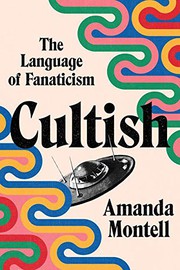
Cultish
Explains how specialised language, identity and social pressure can reinforce extraordinary beliefs and controlling groups.
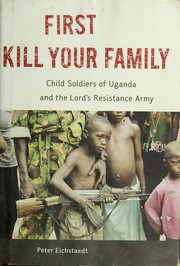
First kill your family
Explores the Lord's Resistance Army, spiritual claims, coercion and the way fear and belief operated during northern Uganda's conflict.
Endnotes
1.
Source: jstor.org
Link:https://www.jstor.org/stable/j.ctv136c09s
Source snippet
Alice Lakwena and the Holy Spirits: War in Northern Uganda, 1986-97 | JSTOR...
2.
Source: academic.oup.com
Title: Academic Child Sacrifice and Moral Panics in Uganda
Link:https://academic.oup.com/afraf/advance-article-abstract/doi/10.1093/afraf/adaf024/8285989
Source snippet
In 2010, the BBC broadcast a salacious story about child sacrifice in Uganda. A 'witchdoctor', who had become a Christian preacher...
3.
Source: link.springer.com
Title: ‘Mass Hysteria’ in the Wake of Decolonisation
Link:https://link.springer.com/chapter/10.1057/978-1-137-60095
Source snippet
Springer'Mass Hysteria' in the Wake of Decolonisation - Springer Natureby Y Pringle · 2018 · Cited by 4 — It was characterised by 'marked...
4.
Source: pmc.ncbi.nlm.nih.gov
Link:https://pmc.ncbi.nlm.nih.gov/articles/PMC4988490/
Source snippet
Investigating “mass hysteria” in early postcolonial Ugandaby Y Pringle · 2013 · Cited by 14 — This article uses Kagwa's investigation...
5.
Source: cesnur.org
Link:https://www.cesnur.org/testi/uganda_002.htm
6.
Source: Wikipedia
Title: Movement for the Restoration of the Ten Commandments of God
Link:https://en.wikipedia.org/wiki/Movement_for_the_Restoration_of_the_Ten_Commandments_of_God
7.
Source: cambridge.org
Link:https://www.cambridge.org/core/elements/revelation-spiritual-home/C5C72690C531F9FDF9CABBB62D2683D0
8.
Source: Wikipedia
Title: Ghosts of Kanungu
Link:https://en.wikipedia.org/wiki/Ghosts_of_Kanungu
9.
Source: pmc.ncbi.nlm.nih.gov
Link:https://pmc.ncbi.nlm.nih.gov/articles/PMC3588562/
10.
Source: scispace.com
Link:https://scispace.com/pdf/view-point-episodes-of-mass-hysteria-in-african-schools-a-1dr2kr3qe4.pdf
11.
Source: files.kidsrights.org
Title: Kids Rights Files
Link:https://files.kidsrights.org/wp-content/uploads/2019/08/15135225/KidsRights-Report-2014-No-Small-Sacrifice.pdf
12.
Source: docs.un.org
Title: DOCSGeneral Assembly
Link:https://docs.un.org/en/A/HRC/WG.6/40/UGA/2
13.
Source: bills.parliament.ug
Link:https://bills.parliament.ug/attachments/LPA3-21-Report%20on%20the%20Prevention%20and%20Prohibition%20of%20Human%20Sacrifice%20Bill%2C%202020.pdf
14.
Source: Wikipedia
Link:https://en.wikipedia.org/wiki/Abajiri
15.
Source: 2009-2017.state.gov
Link:https://2009-2017.state.gov/documents/organization/256295.pdf
16.
Source: dictionary.cambridge.org
Link:https://dictionary.cambridge.org/dictionary/english/movement
17.
Source: cambridge.org
Link:https://www.cambridge.org/core/books/alice-lakwena-and-the-holy-spirits/C6B1550B5A6FD3FD6197D36325AB9DA2
18.
Source: cambridge.org
Link:https://www.cambridge.org/core/journals/journal-of-modern-african-studies/article/memory-of-persecution-is-in-our-blood-documenting-loyalties-identities-and-motivations-to-political-action-in-the-ugandan-pentecostal-movement/28D0D98DA6AB7D19A32552EEA43F6618
19.
Source: cambridge.org
Link:https://www.cambridge.org/core/services/aop-cambridge-core/content/view/28D0D98DA6AB7D19A32552EEA43F6618/S0022278X2200009Xa.pdf/the-memory-of-persecution-is-in-our-blood-documenting-loyalties-identities-and-motivations-to-political-action-in-the-ugandan-pentecostal-movement.pdf
20.
Source: cambridge.org
Link:https://www.cambridge.org/core/books/beyond-brainwashing/8957AAB96B537DA203F22F54396F6ABB
21.
Source: cambridge.org
Title: Kings and Others (Chapter 5)
Link:https://www.cambridge.org/core/books/history-of-modern-uganda/kings-and-others/8CBE0F708649AA63D1EA9CD95577CE71
22.
Source: Wikipedia
Title: Alice Auma
Link:https://en.wikipedia.org/wiki/Alice_Auma
23.
Source: Wikipedia
Title: Child sacrifice in Uganda
Link:https://en.wikipedia.org/wiki/Child_sacrifice_in_Uganda
24.
Source: Wikipedia
Link:https://en.wikipedia.org/wiki/Uganda
25.
Source: Wikipedia
Title: List of mass panic cases
Link:https://en.wikipedia.org/wiki/List_of_mass_panic_cases
26.
Source: Wikipedia
Link:https://en.wikipedia.org/wiki/Movement
27.
Source: Wikipedia
Title: Holy Spirit Movement
Link:https://en.wikipedia.org/wiki/Holy_Spirit_Movement
28.
Source: Wikipedia
Title: Mass psychogenic illness
Link:https://en.wikipedia.org/wiki/Mass_psychogenic_illness
29.
Source: bills.parliament.ug
Title: user bill stage
Link:https://bills.parliament.ug/user_bill_stage.php?billid=376
30.
Source: 2021-2025.state.gov
Link:https://2021-2025.state.gov/reports/2023-report-on-international-religious-freedom/uganda/
31.
Source: 2021-2025.state.gov
Link:https://2021-2025.state.gov/reports/2022-report-on-international-religious-freedom/uganda/
32.
Source: state.gov
Title: 313615 UGANDA 2021 HUMAN RIGHTS REPORT
Link:https://www.state.gov/wp-content/uploads/2022/03/313615_UGANDA-2021-HUMAN-RIGHTS-REPORT.pdf
33.
Source: cesnur.org
Title: uganda oct01
Link:https://www.cesnur.org/2001/uganda_oct01.htm
34.
Source: academic.oup.com
Link:https://academic.oup.com/book/5461/chapter/148351261
35.
Source: history.com
Title: mysterious illnesses mass hysteria
Link:https://www.history.com/articles/mysterious-illnesses-mass-hysteria
36.
Source: repository.cam.ac.uk
Link:https://www.repository.cam.ac.uk/items/8af2c188-03b5-474c-9869-dcda86233f6c
Source snippet
bridge RepositoryInvestigating "mass hysteria" in early postcolonial Ugandaby Y Pringle · 2015 · Cited by 14 — In the early 1960s, med...
37.
Source: theguardian.com
Title: The Guardian Uganda inquiry into cult deaths | World news
Link:https://www.theguardian.com/world/2000/mar/24/1
38.
Source: theguardian.com
Link:https://www.theguardian.com/world/2000/mar/26/theobserver1
39.
Source: monitor.co.ug
Title: Monitor Kanungu massacre: How government missed the red flags
Link:https://www.monitor.co.ug/uganda/magazines/people-power/kanungu-massacre-how-government-missed-the-red-flags-1745746
40.
Source: monitor.co.ug
Title: Monitor20 suspected demon-possessed pupils fail PLE exams
Link:https://www.monitor.co.ug/uganda/news/national/20-suspected-demon-possessed-pupils-fail-ple-exams-1801930
41.
Source: pmc.ncbi.nlm.nih.gov
Link:https://pmc.ncbi.nlm.nih.gov/articles/PMC9214752/
42.
Source: pmc.ncbi.nlm.nih.gov
Link:https://pmc.ncbi.nlm.nih.gov/articles/PMC8116637/
43.
Source: verixiv.org
Link:https://verixiv.org/articles/3-96/pdf
44.
Source: monitor.co.ug
Title: alice lakwena from fishmonger to rebel leader 1783832
Link:https://www.monitor.co.ug/uganda/magazines/people-power/alice-lakwena-from-fishmonger-to-rebel-leader-1783832
45.
Source: upjournals.up.ac.za
Link:https://upjournals.up.ac.za/index.php/adry/article/view/453/360
Additional References
46.
Source: boydellandbrewer.com
Title: alice lakwena and the holy spirits 9780852552476
Link:https://boydellandbrewer.com/book/alice-lakwena-and-the-holy-spirits-9780852552476/
Source snippet
Boydell and BrewerAlice Lakwena and the Holy SpiritsIn August 1986, Alice Auma, a young Acholi woman in northern Uganda, proclaiming hers...
Published: August 1986
47.
Source: pure.roehampton.ac.uk
Title: Kagwa, East African psychiatry, and the Gisu. Yolana Pringle.Read more
Link:https://pure.roehampton.ac.uk/portal/en/publications/investigating-mass-hysteria-in-early-postcolonial-uganda-benjamin/
Source snippet
Investigating "mass hysteria" in early postcolonial Ugandaby Y Pringle · 2015 · Cited by 14 — Investigating "mass hysteria" in early post...
48.
Source: youtube.com
Link:https://www.youtube.com/watch?v=0aynJgp0zPI
Source snippet
Alice Lakwena a Ugandan warrior priestess who led an insurgency in the 1980s...
49.
Source: youtube.com
Link:https://www.youtube.com/watch?v=VQTNB4ROSlI
Source snippet
The Fight Against Child Sacrifice in Uganda (Reupload) | Full Episode | SBS Dateline...
50.
Source: youtube.com
Title: Jinja; The fierce battle that ended Alice Lakwena’s rebellion
Link:https://www.youtube.com/watch?v=FJ1S7XFHzio
Source snippet
How I Fought To Ban Child Sacrifice In Uganda | Minutes With...
51.
Source: youtube.com
Link:https://www.youtube.com/watch?v=HlxkbtYC6O4
Source snippet
Jinja; The fierce battle that ended Alice Lakwena's rebellion...
52.
Source: facebook.com
Link:https://www.facebook.com/kathmandupost/posts/mass-hysteria-is-a-misunderstood-psychological-phenomenon-in-which-stress-and-an/1459992042828712/
53.
Source: historysnob.com
Link:https://www.historysnob.com/war-and-historical-events/20-chilling-cases-mass-hysteria-throughout-history
54.
Source: researchgate.net
Link:https://www.researchgate.net/publication/258282894_Investigating_Mass_Hysteria_in_Early_Postcolonial_Uganda_Benjamin_H_Kagwa_East_African_Psychiatry_and_the_Gisu
55.
Source: semanticscholar.org
Link:https://www.semanticscholar.org/paper/AN-EPIDEMIC-OF-LAUGHING-IN-THE-BUKOBA-DISTRICT-OF-9-Am-Pj/52f6add12054e7cd317f7c72b8182467761f32c2
Topic Tree
Follow this branch
Related pages 192
- Antigua and Barbuda
- Argentina Belief Scares
- Azerbaijan Belief
- Bahrain Beliefs
- North Korea
- +187 more in sidebar