Why Extraordinary Fears Took Hold in Malawi
Malawi’s history of collective fear is not a simple catalogue of “mass hysteria”.
Page outline Jump by section
Introduction
Three patterns recur. Sudden illness, death or economic hardship creates a demand for explanation; rumours identify hidden enemies; and distrust of officials allows denials to be interpreted as proof of a cover-up. Malawi’s most important cases also show why careless labels such as “cult” or “superstition” can mislead. Some movements were organised religious traditions, others were temporary healing campaigns, and others were rumour panics with no stable membership at all. The central historical question is therefore not merely why people believed extraordinary claims, but why particular claims became persuasive at moments of insecurity.
Witchcraft belief, accusation and the law
Belief in witchcraft is widespread in Malawi and cannot be treated as a marginal curiosity. An Afrobarometer survey published in 2022 found that most respondents believed witchcraft existed and supported criminalising its practice. Such findings describe belief, however, not evidence that accused individuals have caused supernatural harm.[Afrobarometer]afrobarometer.orgMost Malawians believe in the existence of witchcraft and…14 Apr 2022 — Most Malawians strongly believe that witchcraft e…
Malawi’s Witchcraft Act dates from 1911, when the territory was under British rule. It criminalises activities including accusing another person of witchcraft, claiming supernatural powers and acting as a witch-finder. Its underlying logic is that courts should punish fraud, intimidation and accusation rather than attempt to prove supernatural causation.[MalawiLII]media.malawilii.orgWitchcraft Act21 Feb 2024 — This is a free download from the Laws.Africa Legislation Commons, a collection of African legislatio…
That approach has never resolved the central conflict. Many Malawians regard the law as dismissive because it appears to deny something they consider an everyday reality. Human-rights advocates answer that formally recognising witchcraft as a prosecutable supernatural offence would make it easier to convict vulnerable people on the basis of dreams, divination, misfortune or community suspicion. Malawi’s long-running law-reform debate therefore turns on a difficult question: how can the state acknowledge the social reality of witchcraft belief without validating accusations that cannot be tested fairly?[humanists.international]humanists.internationalwitchcraft related human rights violations in malawi4 Apr 2023 — We are concerned that Malawi is currently considering a legal amendment to recognize the existence of witchcraft in line wit…
The immediate danger lies less in belief itself than in accusation. Older people, women, children and socially isolated individuals can become targets after a death, illness, crop failure or family dispute. Human Rights Watch reported that attacks on older Malawians accused of witchcraft had risen, citing 25 reported killings in 2023 and six more in January 2024. These figures depend on reported cases and should not be treated as a complete national count, but they show that witchcraft accusation remains a serious form of violence rather than a relic of the past.[Human Rights Watch]hrw.orgHuman Rights WatchWorld Report 2025: Malawi | Human…December 17, 2024 — The number of older people abused and killed in Malawi as a re…
Mchape: cleansing movements in times of crisis
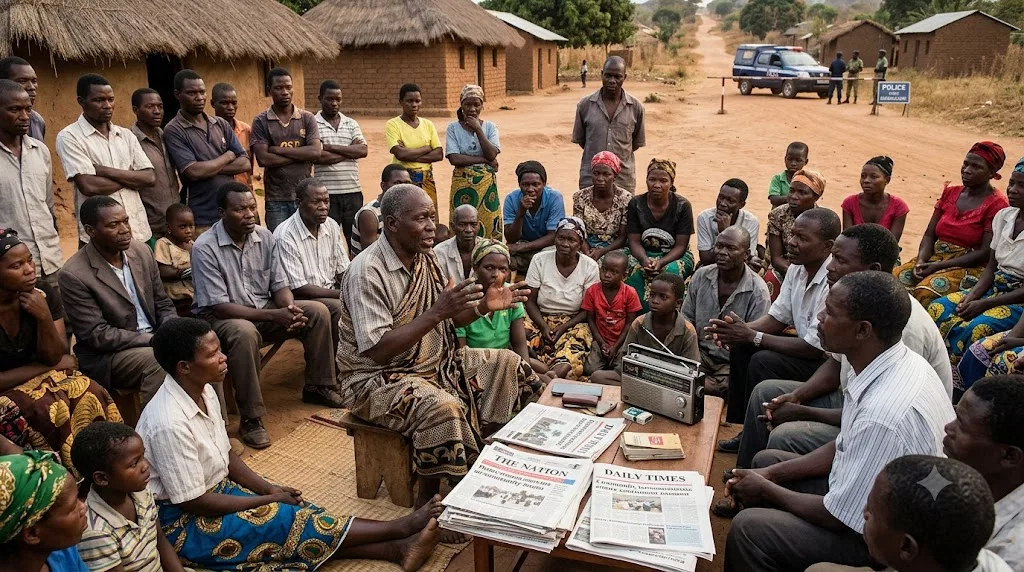
One of Malawi’s most revealing collective-belief traditions is known in scholarship as Mchape. During the 1930s, travelling anti-witchcraft specialists swept through what was then Nyasaland, offering medicines or rituals said to expose, neutralise or protect people from witchcraft. Communities could participate collectively, making the movement both a spiritual campaign and a form of social reordering. Researchers have interpreted its spread in several ways: as a response to colonial disruption, a way of confronting unexplained misfortune, an attempt to restore trust within villages, and a protest against authorities who seemed unable to provide security.[afsaap.org.au]afsaap.org.auOpen source on afsaap.org.au.
The name returned dramatically in 1995, shortly after the end of Hastings Banda’s one-party rule. A healer named Billy Goodson Chisupe attracted vast crowds to Chikamana village in Machinga District. From February to June, approximately 300,000 people reportedly attended what became known as Mchape ’95. Many came seeking protection or healing during the HIV/AIDS crisis, when effective treatment was unavailable to most Malawians and the disease carried fear, shame and uncertainty.[Cambridge University Press & Assessment]cambridge.orgOpen source on cambridge.org.
Radio and newspaper coverage helped transform a local event into a national phenomenon. Accounts of Chisupe’s revelation circulated through a popular radio programme and were amplified by the newly energetic press of Malawi’s democratic transition. As the story spread, so did claims about what the medicine could accomplish. Some participants understood it as a response to AIDS; others treated it as a broader cure or protective remedy.[Academia]academia.eduMchape 95 or, the Sudden Fame of Billy Goodson ChisupeMchape 95 or, the Sudden Fame of Billy Goodson Chisupe
Calling Mchape ’95 simply a “cult” obscures what made it persuasive. It had a charismatic healer and mass pilgrimage, but it was not necessarily a permanent, tightly controlled organisation. It was closer to an emergency healing movement shaped by memories of earlier anti-witchcraft campaigns. Its rise illustrates how epidemic fear, inadequate healthcare, political change and mass media can combine to create contagious hope as well as contagious fear.

The Chilobwe murders and the politics of blood
Between 1968 and 1970, a series of brutal killings in and around Blantyre produced one of independent Malawi’s most enduring climates of fear. At least 30 people were reported murdered, many in poorly secured homes in working-class areas. Some bodies were mutilated, encouraging speculation about ritual purposes. Arrests did not produce convincing convictions, and the crimes were never satisfactorily solved.[Wikipedia]WikipediaChilobwe murdersChilobwe murders
The uncertainty allowed rumours to become politically explosive. One story claimed that blood was being taken from victims and sent to apartheid South Africa, with which President Hastings Banda maintained unusually close relations. Other rumours implicated senior officials or portrayed the killings as part of a hidden arrangement between the government and foreign powers.[Wikipedia]WikipediaChilobwe murdersChilobwe murders
These stories were not supported by reliable evidence, but they made emotional and political sense to people living under an authoritarian state. Banda’s government restricted dissent, while its relationship with white-ruled South Africa was controversial. In that setting, an unsolved murder investigation could become a parable about exploitation: poor Malawians were imagined as having their blood literally extracted for the benefit of distant elites.
The Chilobwe case is therefore both a true-crime mystery and a history of rumour. Real people were murdered; public fear was justified; but the explanatory stories expanded far beyond the available evidence. Later bloodsucker panics drew upon this older association between blood, political secrecy and foreign power.
Why bloodsucker panics keep returning
Rumours about human “bloodsuckers” have surfaced repeatedly in Malawi, including episodes around 2002, 2009, 2017 and 2020. The alleged perpetrators are usually imagined not as supernatural vampires in the European literary sense, but as people using hidden technology, magic or official protection to extract blood. Suspects have included strangers, health workers, aid personnel, wealthy people, drivers and local leaders accused of sheltering attackers.[reuters.com]reuters.comVampire scare prompts U.N. pullout from southern MalawiVampire scare prompts U.N. pullout from southern Malawi
The 2002 panic became especially political. Anthropologist Adam Ashforth’s study of the episode describes rumours that implicated the ruling establishment and provoked intense argument over who the bloodsuckers served. The scare unfolded during a period of food insecurity and public distrust, conditions in which claims that powerful people were secretly exploiting ordinary bodies could acquire unusual force.[JSTOR]jstor.orgOpen source on jstor.org.
The most internationally reported outbreak began in southern Malawi in September 2017. Mobs erected roadblocks, searched vehicles and attacked people accused of drinking or collecting blood. The violence spread from districts including Mulanje and Phalombe towards Blantyre. At least several people were killed, although contemporary reports varied as the toll rose. The United Nations temporarily withdrew staff from affected districts, while the government imposed restrictions and deployed security forces.[reuters.com]reuters.comVampire scare prompts U.N. pullout from southern MalawiVampire scare prompts U.N. pullout from southern Malawi
Police and medical officials rejected the bloodsucker claims. One police explanation noted that ordinary nosebleeds had been reinterpreted by frightened residents as evidence of nocturnal blood extraction. Yet blunt official denial did not necessarily calm the situation. Where trust was already low, statements that “bloodsuckers do not exist” could be heard as evidence that authorities were protecting them.[Voice of America]voanews.comVoice of America Vampire Rumors Spark Mob Attacks in MalawiVoice of America Vampire Rumors Spark Mob Attacks in Malawi
Journalistic and academic analyses suggest that the rumours gained power from structural conditions rather than ignorance alone. Poor public services, inequalities between villagers and mobile professionals, resentment of outsiders, memories of coercive colonial medicine, and suspicions about government all made the imagined bloodsucker an effective symbol. Research on Malawian newspaper coverage also found that media framing could either challenge the rumours or reproduce their assumptions by repeatedly treating alleged bloodsuckers as identifiable actors.[ResearchGate]researchgate.netResearch Gate A Critical Analysis of News Framing in Malawi's NewspapersResearch Gate A Critical Analysis of News Framing in Malawi's Newspapers
The panic should not be described as mass psychogenic illness. There was no principal outbreak of shared physical symptoms comparable to mass fainting or unexplained illness in a school. It was a rumour-driven moral panic that produced collective vigilance, false accusations and mob violence.
Attacks on people with albinism
The persecution of Malawians with albinism belongs within the history of contagious belief, but it demands especially careful language. The victims were not casualties of an abstract “panic”. They were targeted through organised criminal acts encouraged by discriminatory myths and a market for body parts believed to bring wealth, success or protection.
Attacks escalated sharply from late 2014. Amnesty International reported in March 2016 that at least 11 people with albinism had been killed since December 2014, five had been abducted and remained missing, and dozens of other offences had been recorded, including attempted abductions and grave violations.[Amnesty International]amnesty.orgInternationalurgent actionInternationalurgent action
United Nations experts warned in 2019 that killings and abductions were continuing and urged the government to protect people with albinism, investigate criminal networks and confront the beliefs used to justify the attacks. The violence included children as well as adults and generated intense fear among families who faced threats at home, while travelling and even after burial.[OHCHR]ohchr.orgmalawi un experts urge action over albinism atrocities run electionsmalawi un experts urge action over albinism atrocities run elections
It is tempting to explain these crimes solely through “ancient superstition”, but that is inadequate. Harmful beliefs supplied a justification, while profit, trafficking, weak investigations and opportunistic criminal networks made the violence possible. The perpetrators were not simply swept away by collective delusion; some planned abductions, traded body parts or exploited other people’s fears for material gain.
The distinction matters. A rumour panic may spread without central organisation. Attacks on people with albinism can involve deliberate predation hidden behind ritual claims. Treating both as undifferentiated mass hysteria risks minimising criminal responsibility.
The 2026 genital-disappearance panic
In May 2026, a new scare spread through parts of Chikwawa and Nsanje districts. Men claimed that strangers had caused their genitals to vanish or shrink through touch or brief contact. Accusations rapidly triggered mob attacks, and Malawian news organisations reported that seven people were killed.[Nation Online]mwnation.com7 killed over missing private parts claims7 killed over missing private parts claims
Police referred complainants for medical examination. Doctors reportedly found that their organs were intact and identified no physical abnormality. Authorities arrested people accused of circulating false claims or participating in violence.[Nyasa Times]nyasatimes.comNyasa Times Panic, Mob Fear Grip Nsanje as Police Arrest 9 More OverNyasa Times Panic, Mob Fear Grip Nsanje as Police Arrest 9 More Over
Genital-disappearance scares have appeared in several African countries and are sometimes described by researchers as culturally shaped panic reactions. A frightened person may experience bodily retraction, numbness or altered perception, interpret that sensation through an existing supernatural narrative, and then identify the most recent stranger they touched as the attacker. Once crowds accept the claim, medical reassurance can arrive too late to protect the accused.
The Malawian episode closely resembled earlier bloodsucker panics in its social mechanics. An invisible assault was attributed to mobile strangers; personal testimony was treated as decisive; crowds acted before investigation; and institutional denials competed with rapidly transmitted local reports. The specific object of fear changed from stolen blood to stolen sexuality, but the underlying themes of bodily vulnerability, masculinity, mistrust and supernatural attack remained familiar.
Sacred movements are not automatically cult scares
Not every unusual or non-Christian religious tradition in Malawi belongs in a history of panic. The Mbona rain-shrine tradition of the Lower Shire Valley is an important example. Centred on sacred sites associated with a martyr or territorial spirit, it has historically been connected with rainmaking, fertility, protection from drought and the moral well-being of the land. Its surviving traditions are especially associated with the Mang’anja people of southern Malawi.[Wikipedia]WikipediaMbona cultMbona cult
Older scholarship frequently called it the “Mbona cult”, using “cult” in the technical religious-studies sense of an organised body of ritual devoted to a sacred figure. In modern public English, however, the word often implies manipulation, coercion or danger. There is no basis for transferring those implications automatically to a territorial shrine tradition.
Historians have debated whether Mbona was a historical martyr, a priest, a deified figure or a symbolic representation of communities subjected to conquest. They have also examined the political role of the shrines, including periods when ritual authorities opposed colonial agricultural policies or became associated with resistance. Those disputes concern the relationship between oral tradition, myth and political history, not whether devotees were experiencing mass delusion.[Wikipedia]WikipediaMbona cultMbona cult
This distinction is essential to a fair account of Malawi. A rainmaking tradition may express environmental uncertainty and political authority, but it is not therefore equivalent to a vigilante panic, fraudulent healing claim or coercive sect.
Why these episodes spread
Malawi’s collective scares have not arisen from a single national character or from belief alone. They emerge when several pressures coincide.
Unexplained suffering demands an agent. Epidemics, sudden deaths, crop failures and unresolved crimes are difficult to endure as random events. Witchcraft accusations and bloodsucker stories identify somebody who can be blamed.
Rumours translate inequality into bodily imagery. Stories about stolen blood, harvested organs or magical enrichment portray social exploitation as a direct attack on the body. They become especially potent where people believe elites, foreigners or officials profit from their hardship.
Personal testimony outruns institutional evidence. A neighbour’s frightened account can feel more trustworthy than a distant official statement. Once an alleged victim names an attacker, the crowd may interpret requests for proof as indifference or complicity.
Older narratives provide ready-made explanations. The Chilobwe blood rumours, earlier anti-witchcraft movements and previous bloodsucker scares created a cultural memory that later episodes could reactivate. Each outbreak made the next easier to imagine.
Media can amplify both fear and correction. Radio, newspapers and social media have carried healing claims and rumours far beyond their points of origin. Responsible reporting can challenge falsehoods, but repeated dramatic coverage may also make rare allegations seem common or credible.
Mob action offers a false sense of control. Roadblocks, searches and public punishment transform uncertainty into action. They may also allow existing grudges, xenophobia or local power struggles to be pursued under the cover of communal defence.
What “mass hysteria” gets wrong
The phrase “mass hysteria” is often used loosely for any episode in which many people appear to believe something false. It is a poor umbrella term for Malawi’s history.
Mass psychogenic illness has a narrower meaning: real physical symptoms spread within a cohesive group without an identified organic cause, often under conditions of stress. Typical outbreaks involve fainting, dizziness, headaches, breathing difficulties or abnormal movements, particularly in schools and other enclosed institutions.[PMC]pmc.ncbi.nlm.nih.govOpen source on nih.gov.
Malawi’s best-documented episodes usually fit other categories:
- Mchape ’95 was a mass healing and pilgrimage movement during the AIDS crisis.
- The Chilobwe episode combined real unsolved murders with political rumour.[Wikipedia]WikipediaChilobwe murdersChilobwe murders
- Bloodsucker outbreaks were rumour panics followed by vigilantism.
- Witchcraft accusations are forms of persecution and social conflict.
- Attacks on people with albinism include discriminatory belief, trafficking and planned crime.
- The 2026 genital-disappearance episode was a bodily fear panic that led to lethal false accusation.
- Mbona is a religious and territorial shrine tradition, not evidence of collective pathology.
Using the right category changes the moral emphasis. “Hysteria” can imply that an entire population temporarily lost its senses. A more precise account asks who circulated the claim, who benefited from it, why certain people were targeted, what authorities did, and whether the episode involved spontaneous fear, calculated exploitation or both.

What Malawi’s history shows
Malawi’s scares are most revealing when treated as social history rather than a parade of bizarre beliefs. Bloodsucker rumours encoded distrust of political and foreign power. Mchape ’95 expressed the desperate search for healing during an epidemic. Witchcraft accusations converted private misfortune into public blame. Violence against people with albinism showed how myth, discrimination and profit could reinforce one another.
Authorities have repeatedly faced the same dilemma: they must reject claims unsupported by evidence while taking the fear surrounding them seriously. Mockery can deepen alienation, but accommodating supernatural accusations can legitimise persecution. Effective responses therefore require more than police declarations. They depend on credible local leadership, prompt medical explanation, protection for accused people, careful journalism and legal systems that punish violence without putting alleged supernatural powers on trial.
The lasting lesson is that false or unprovable beliefs do not produce unreal consequences. In Malawi, rumours have closed roads, disrupted aid work, drawn hundreds of thousands to healers and cost innocent people their lives. Understanding how those beliefs spread is not an exercise in ridicule. It is part of understanding how communities respond when suffering is visible, trustworthy explanations are scarce and fear offers a simpler story than uncertainty.
Amazon book picks
Further Reading
Books and field guides related to Why Extraordinary Fears Took Hold in Malawi. Use these as the next step if you want deeper reading beyond the article.
Extraordinary Popular Delusions and the Madness of Crowds
Rating: 4.0/5 from 5 Google Books ratings
Classic survey of collective beliefs and panics.
The Lucifer Effect
Explores how social pressures can contribute to harmful collective behaviour.
African religions and philosophy
Provides broad context for African religious worldviews.
Endnotes
1.
Source: afrobarometer.org
Link:https://www.afrobarometer.org/articles/most-malawians-believe-in-the-existence-of-witchcraft-and-support-criminalising-it/
Source snippet
Most Malawians believe in the existence of witchcraft and...14 Apr 2022 — Most Malawians strongly believe that witchcraft e...
2.
Source: media.malawilii.org
Link:https://media.malawilii.org/media/legislation/11728/source_file/1911-4.pdf
Source snippet
Witchcraft Act21 Feb 2024 — This is a free download from the Laws.Africa Legislation Commons, a collection of African legislatio...
3.
Source: humanists.international
Title: witchcraft related human rights violations in malawi
Link:https://humanists.international/advocacy-statement/witchcraft-related-human-rights-violations-in-malawi/
Source snippet
4 Apr 2023 — We are concerned that Malawi is currently considering a legal amendment to recognize the existence of witchcraft in line wit...
4.
Source: jstor.org
Link:https://www.jstor.org/stable/1581051
5.
Source: jstor.org
Link:https://www.jstor.org/stable/532230
6.
Source: cambridge.org
Link:https://www.cambridge.org/core/journals/africa/article/mchape-95-or-the-sudden-fame-of-billy-goodson-chisupe-healing-social-memory-and-the-enigma-of-the-public-sphere-in-postbanda-malawi/4D81F62435E551B9522379A63DCB58CA
7.
Source: academia.edu
Title: Mchape 95 or, the Sudden Fame of Billy Goodson Chisupe
Link:https://www.academia.edu/44750942/Mchape_95_or_the_Sudden_Fame_of_Billy_Goodson_Chisupe_Healing_Social_Memory_and_the_Enigma_of_the_Public_Sphere_in_Post_Banda_Malawi
8.
Source: Wikipedia
Title: Chilobwe murders
Link:https://en.wikipedia.org/wiki/Chilobwe_murders
9.
Source: Wikipedia
Title: Albert Muwalo
Link:https://en.wikipedia.org/wiki/Albert_Muwalo
10.
Source: reuters.com
Title: Vampire scare prompts U.N. pullout from southern Malawi
Link:https://www.reuters.com/article/world/vampire-scare-prompts-un-pullout-from-southern-malawi-idUSKBN1CE25B/
11.
Source: researchgate.net
Link:https://www.researchgate.net/publication/336252299_Vampires_in_the_News_A_Critical_Analysis_of_News_Framing_in_Malawi%27s_Newspapers
12.
Source: jstor.org
Link:https://www.jstor.org/stable/26549656
13.
Source: researchgate.net
Title: Research Gate A Critical Analysis of News Framing in Malawi’s Newspapers
Link:https://www.researchgate.net/publication/336246171_Vampires_in_the_News_A_Critical_Analysis_of_News_Framing_in_Malawi%27s_Newspapers
14.
Source: amnesty.org
Title: Internationalurgent action
Link:https://www.amnesty.org/zh-hant/wp-content/uploads/2021/05/AFR3635852016ENGLISH.pdf
15.
Source: amnesty.org
Link:https://www.amnesty.org/en/latest/press-release/2016/04/malawi-murder-of-baby-with-albinism-highlights-failure-to-protect-vulnerable-group/
16.
Source: ohchr.org
Title: malawi un experts urge action over albinism atrocities run elections
Link:https://www.ohchr.org/en/press-releases/2019/02/malawi-un-experts-urge-action-over-albinism-atrocities-run-elections
17.
Source: Wikipedia
Title: Mbona cult
Link:https://en.wikipedia.org/wiki/Mbona_cult
18.
Source: jstor.org
Link:https://www.jstor.org/stable/1581896
19.
Source: pmc.ncbi.nlm.nih.gov
Link:https://pmc.ncbi.nlm.nih.gov/articles/PMC9210177/
20.
Source: amnesty.org
Link:https://www.amnesty.org/fr/wp-content/uploads/2021/05/AFR3614332019ENGLISH.pdf
21.
Source: amnesty.org
Link:https://www.amnesty.org/en/wp-content/uploads/2025/06/AFR0194872025ENGLISH.pdf
22.
Source: amnesty.org
Title: POL1003202026ENGLISH 1
Link:https://www.amnesty.org/en/wp-content/uploads/2026/04/POL1003202026ENGLISH-1.pdf
23.
Source: amnesty.org
Link:https://www.amnesty.org/es/wp-content/uploads/2025/09/IOR4003002025ENGLISH.pdf
24.
Source: amnesty.org
Link:https://www.amnesty.org/en/wp-content/uploads/2025/04/WEBPOL1085152025ENGLISH.pdf
25.
Source: amnesty.org
Link:https://www.amnesty.org/en/wp-content/uploads/2021/06/English.pdf
26.
Source: amnesty.org
Link:https://www.amnesty.org/en/wp-content/uploads/2022/03/POL1048702022ENGLISH.pdf
27.
Source: amnesty.org
Link:https://www.amnesty.org/en/wp-content/uploads/2023/03/WEBPOL1056702023ENGLISH.pdf
28.
Source: researchgate.net
Link:https://www.researchgate.net/publication/361074168_Predictors_of_mass_psychogenic_illness_in_a_junior_secondary_school_in_rural_Botswana_A_case_control_study
29.
Source: researchgate.net
Link:https://www.researchgate.net/publication/271759288_Mass_hysteria_among_South_African_primary_school_learners_in_Kwa-Dukuza_KwaZulu-Natal
30.
Source: researchgate.net
Link:https://www.researchgate.net/publication/268694182_Outbreak_of_Mass_Psychogenic_Illness_at_a_High_School_Amhara_Region_Ethiopia_April_2010
31.
Source: researchgate.net
Link:https://www.researchgate.net/publication/45681143_Doomsday_movements_in_Africa_Restoration_of_the_Ten_Commandments_of_God
32.
Source: researchgate.net
Link:https://www.researchgate.net/publication/235754862_View_Point_Episodes_of_mass_hysteria_in_African_schools_A_study_of_literature
33.
Source: researchgate.net
Link:https://www.researchgate.net/publication/282018873_Hunting_the_Vulnerable_Witchcraft_and_the_Law_in_Malawi
34.
Source: Wikipedia
Link:https://en.wikipedia.org/wiki/Malawi
35.
Source: Wikipedia
Title: Mass psychogenic illness
Link:https://en.wikipedia.org/wiki/Mass_psychogenic_illness
36.
Source: Wikipedia
Title: Movement for the Restoration of the Ten Commandments of God
Link:https://en.wikipedia.org/wiki/Movement_for_the_Restoration_of_the_Ten_Commandments_of_God
37.
Source: Wikipedia
Title: List of mass panic cases
Link:https://en.wikipedia.org/wiki/List_of_mass_panic_cases
38.
Source: Wikipedia
Title: Prevalence of female genital mutilation
Link:https://en.wikipedia.org/wiki/Prevalence_of_female_genital_mutilation
39.
Source: cambridge.org
Link:https://www.cambridge.org/core/journals/the-british-journal-of-psychiatry/article/protean-nature-of-mass-sociogenic-illness/2BDC2262E104B8A33F3DD49773DA0D8B
40.
Source: cambridge.org
Link:https://www.cambridge.org/core/journals/journal-of-african-history/article/rivergod-and-the-historians-myth-in-the-shire-valley-and-elsewhere/C4BE2B15A6C20F519F9DF9E66C74D43E
41.
Source: malawilii.org
Link:https://malawilii.org/akn/mw/act/1911/4/eng%402014
42.
Source: ecoi.net
Link:https://www.ecoi.net/en/file/local/1085201/1930_1390210386_q17414-malawi.pdf
Source snippet
Researched and compiled by the Refugee...9 Dec 2013 — This report also notes: “Malawi inherited a 1911 Witchcraft Act from the British...
43.
Source: whrin.org
Title: Site is undergoing maintenance -Witchcraft-report-ASH.pdf
Link:https://www.whrin.org/wp-content/uploads/2014/06/Witchcraft-report-ASH.pdf
Source snippet
The witchcraft Act is being reviewed by the Law Commission. Witchcraft...Read more...
44.
Source: hrw.org
Link:https://www.hrw.org/world-report/2025/country-chapters/malawi
Source snippet
Human Rights WatchWorld Report 2025: Malawi | Human...December 17, 2024 — The number of older people abused and killed in Malawi as a re...
Published: December 17, 2024
45.
Source: afsaap.org.au
Link:https://afsaap.org.au/assets/McNamara-Thomas.pdf
46.
Source: mwnation.com
Title: of bloodsuckers myth watching diplomatic row erupt
Link:https://mwnation.com/of-bloodsuckers-myth-watching-diplomatic-row-erupt/
47.
Source: theguardian.com
Title: malawi mobs kill two more people accused of being vampires
Link:https://www.theguardian.com/world/2017/oct/19/malawi-mobs-kill-two-more-people-accused-of-being-vampires
48.
Source: voanews.com
Title: Voice of America Vampire Rumors Spark Mob Attacks in Malawi
Link:https://www.voanews.com/a/vampire-rumors-spark-mob-attacks-in-malawi/4082839.html
49.
Source: mwnation.com
Title: 7 killed over missing private parts claims
Link:https://mwnation.com/7-killed-over-missing-private-parts-claims/
50.
Source: nyasatimes.com
Title: Nyasa Times Panic, Mob Fear Grip Nsanje as Police Arrest 9 More Over ‘
Link:https://www.nyasatimes.com/panic-mob-fear-grip-nsanje-as-police-arrest-9-more-over-disappearing-genitals-claims/
51.
Source: nyasatimes.com
Link:https://www.nyasatimes.com/kamuzu-stadium-turned-into-a-place-of-tears-as-malawi-received-15-bodies-from-zimbabwe-bus-tragedy/
52.
Source: nyasatimes.com
Title: mls warns against criminalising witchcraft amid growing national debate
Link:https://www.nyasatimes.com/mls-warns-against-criminalising-witchcraft-amid-growing-national-debate/
53.
Source: facebook.com
Link:https://www.facebook.com/NationOnlineMw/posts/nationonlinewe-had-similar-rumours-last-year-in-the-southern-region-as-we-were-m/3083468778340658/
54.
Source: pmc.ncbi.nlm.nih.gov
Link:https://pmc.ncbi.nlm.nih.gov/articles/PMC7396040/
55.
Source: pmc.ncbi.nlm.nih.gov
Link:https://pmc.ncbi.nlm.nih.gov/articles/PMC3588562/
56.
Source: pmc.ncbi.nlm.nih.gov
Link:https://pmc.ncbi.nlm.nih.gov/articles/PMC9174911/
57.
Source: pmc.ncbi.nlm.nih.gov
Link:https://pmc.ncbi.nlm.nih.gov/articles/PMC11437948/
58.
Source: justice.gov.za
Link:https://www.justice.gov.za/salrc/ipapers/ip29-prj135-Witchcraft-2014.pdf
59.
Source: mwnation.com
Title: law commission stance on witchcraft stirs debate
Link:https://mwnation.com/law-commission-stance-on-witchcraft-stirs-debate/
60.
Source: theguardian.com
Title: carol morley the falling mass hysteria is a powerful group activity
Link:https://www.theguardian.com/film/2015/mar/29/carol-morley-the-falling-mass-hysteria-is-a-powerful-group-activity
61.
Source: theguardian.com
Title: was ripon school gripped by mass psychogenic illness
Link:https://www.theguardian.com/science/2015/nov/14/was-ripon-school-gripped-by-mass-psychogenic-illness
62.
Source: theguardian.com
Link:https://www.theguardian.com/science/2008/sep/18/psychology
63.
Source: malawi.gov.mw
Title: Malawi Government Information and Services
Link:https://www.malawi.gov.mw/
64.
Source: thecommonwealth.org
Link:https://thecommonwealth.org/our-member-countries/malawi
Additional References
65.
Source: youtube.com
Title: Scores arrested in Malawi after mobs kill 8 suspected ‘vampires’
Link:https://www.youtube.com/watch?v=0ho-xGJsdkA
Source snippet
Malawi Vampire Mob: Crackdown as mobs kill suspected vampires...
66.
Source: youtube.com
Title: Witchcraft Belief in Malawi | Wonderful Mkhutche | TEDx Bwaila
Link:https://www.youtube.com/watch?v=ssTIOhg2YBk
Source snippet
Scores arrested in Malawi after mobs kill 8 suspected 'vampires'...
67.
Source: youtube.com
Title: Malawi scrambles to stop spate of witchcraft mob attacks
Link:https://www.youtube.com/watch?v=EEXamAr9e8U
Source snippet
Witchcraft Belief in Malawi | Wonderful Mkhutche | TEDxBwaila...
68.
Source: youtube.com
Title: Malawi Vampire Mob: Crackdown as mobs kill suspected vampires
Link:https://www.youtube.com/watch?v=dVFKAuuRo4U
Source snippet
Wonderful Mkhutche on Witch-Hunting in Malawi...
69.
Source: ir.lawnet.fordham.edu
Link:https://ir.lawnet.fordham.edu/cgi/viewcontent.cgi?article=1398&context=faculty_scholarship
Source snippet
Witchcraft Act after receiving "various calls for reform" from inter- ested parties, including traditional healers...Read more...
70.
Source: facebook.com
Link:https://www.facebook.com/Malawi24/videos/malawi24newsupdateas-efforts-to-restore-peace-in-nsanje-and-chikwawa-intensify-m/787266010991279/
71.
Source: africanchildforum.org
Link:https://africanchildforum.org/africans-must-condemn-attacks-on-children-with-albinism/
72.
Source: facebook.com
Link:https://www.facebook.com/citi973/posts/at-least-five-people-have-been-killed-in-southern-malawi-after-they-were-accused/10155312118386107/
73.
Source: africaalbinismnetwork.org
Link:https://africaalbinismnetwork.org/wp-content/uploads/2022/09/16395805958956orwmhjhkw2-1.pdf
74.
Source: reddit.com
Link:https://www.reddit.com/r/exjw/comments/1j12yzm/doomsday_cults_through_the_centuries/
Topic Tree
Follow this branch
Related pages 192
- Antigua and Barbuda
- Argentina Belief Scares
- Azerbaijan Belief
- Bahrain Beliefs
- North Korea
- +187 more in sidebar