Within Central African Republic
How Civil War Weaponised Witchcraft Fear
Civil war made witchcraft accusations more lethal as armed groups used fear to punish enemies, extort communities and impose control.
On this page
- Conflict after the Seleka rebellion
- Anti Balaka abductions and public violence
- Fear, extortion and militia authority
Page outline Jump by section
Introduction
The Central African Republic’s civil war did not create belief in witchcraft, but it made witchcraft accusations far more dangerous. After the Seleka rebellion seized power in 2013 and Anti-Balaka militias emerged in response, longstanding local fears about hidden supernatural harm became intertwined with armed rule. In areas controlled by Anti-Balaka groups, accusations of witchcraft were increasingly used to justify abductions, public beatings, extortion and killings, while also reinforcing militia authority over frightened communities. Human rights investigators found that these accusations often had little to do with proving supernatural wrongdoing and much to do with controlling civilians, settling disputes and extracting money from vulnerable people.[Human Rights Watch]hrw.orgOpen source on hrw.org.
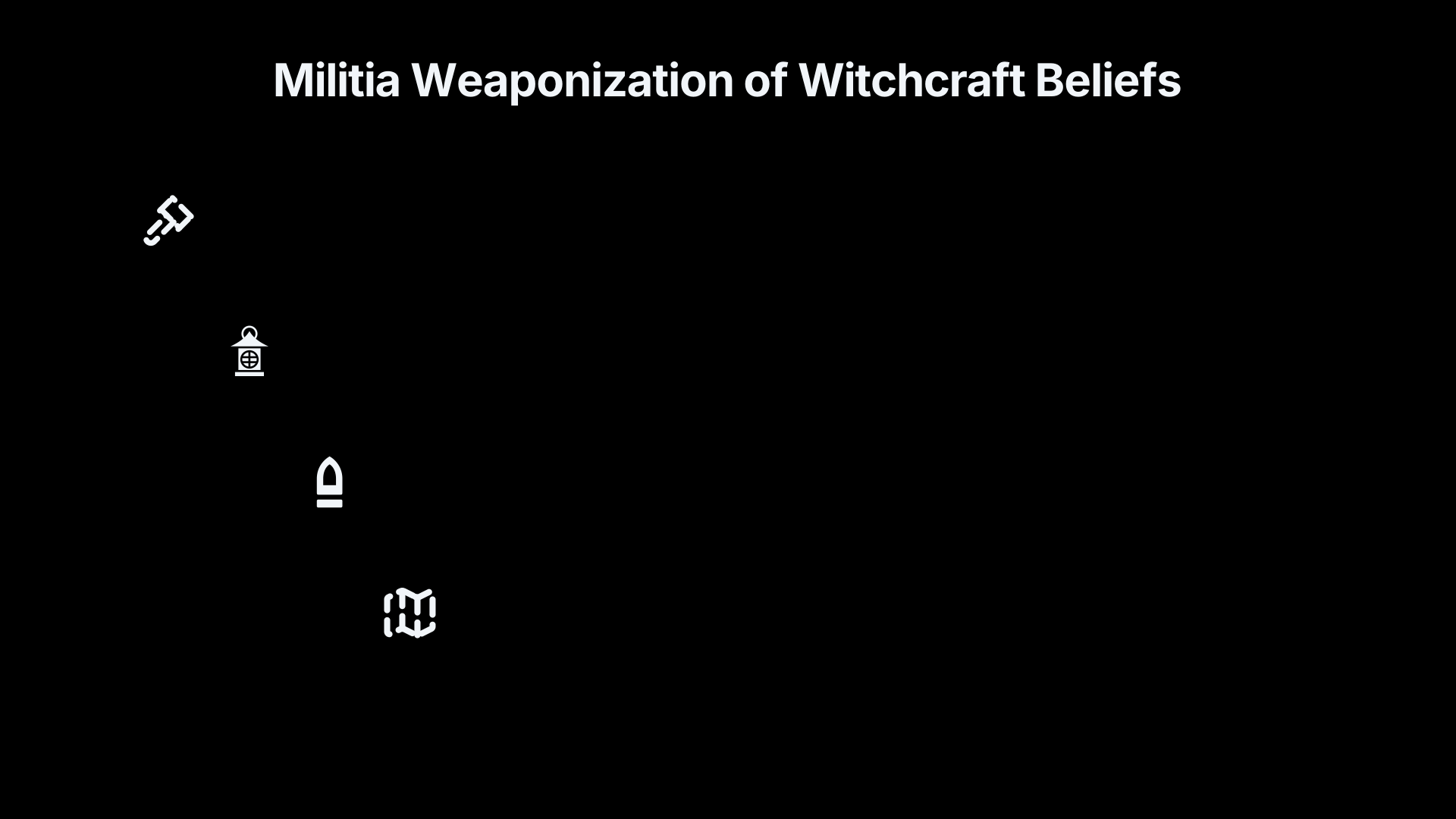
Rather than representing a spontaneous outbreak of collective hysteria, wartime witch hunts illustrate how armed conflict can weaponise existing systems of belief. Fear of invisible enemies merged with fear of heavily armed militias, making it exceptionally difficult for those accused to defend themselves.
How civil war transformed witchcraft accusations
Before the civil war, accusations of witchcraft already appeared in family disputes, unexplained deaths and criminal prosecutions. During the conflict that followed the Seleka takeover, however, violence fragmented state authority across much of the country. In many districts, armed groups rather than courts determined guilt and punishment.
Anti-Balaka militias originally presented themselves as community self-defence forces protecting predominantly Christian populations from abuses committed by Seleka fighters. As the conflict evolved, many factions became local centres of political and military power. Alongside attacks on Muslim civilians and other wartime abuses documented by international investigators, some commanders also assumed authority over alleged cases of witchcraft.[Human Rights Watch]hrw.orgescalating atrocities central african republicHuman Rights Watch“They Came To Kill”: Escalating Atrocities in the Central African Republic | HRWDecember 18, 2013…
The result was not a formal campaign directed from a central Anti-Balaka leadership. Instead, numerous local groups adapted familiar accusations into a flexible tool for governing territory through fear.
Anti-Balaka abductions and public violence
Investigations by the United Nations and Human Rights Watch describe a pattern in which civilians accused of witchcraft were detained by Anti-Balaka fighters, subjected to public humiliation or violence, and forced to pay for their freedom.
The United Nations documented numerous incidents in which people suspected of witchcraft were:
- Arbitrarily arrested by Anti-Balaka elements.
- Beaten, tortured or publicly abused.
- Threatened with death unless relatives paid money.
- Forced to confess under coercion.
- Killed in particularly brutal ways, including stoning, decapitation and burial alive in some recorded cases.[MINUSCA]minusca.unmissions.orgOpen source on unmissions.org.
These acts were not isolated punishments for sincerely believed supernatural crimes. Investigators found repeated evidence that accusations became opportunities for extortion and intimidation.
Human Rights Watch similarly recorded testimony from communities living under Anti-Balaka control in which residents described local commanders acting as both judge and jailer. One witness explained that people accused of witchcraft or theft were brought before a militia leader and required to pay for their release, illustrating how supernatural accusations and ordinary criminal allegations became intertwined under militia authority.[Human Rights Watch]hrw.orgOpen source on hrw.org.
Fear, extortion and militia authority
One of the clearest findings from international investigations is that witchcraft accusations frequently served practical military and economic purposes.
Turning belief into political control
Where government institutions had collapsed, Anti-Balaka commanders could present themselves as defenders of the community against both visible and invisible threats. By claiming the authority to identify witches, they reinforced the idea that only the militia could protect society from hidden dangers.
Traditional beliefs therefore became part of local governance. Decisions that might once have involved elders, family negotiations or local customary authorities increasingly fell under the control of armed men.
Extortion disguised as justice
The UN Human Rights Division concluded that Anti-Balaka groups systematically demanded payments from those accused of witchcraft in exchange for release. Investigators also reported allegations that some armed groups manipulated traditional healers into identifying supposed witches, giving militia actions an appearance of legitimacy while creating opportunities for financial gain.[MINUSCA]minusca.unmissions.orgOpen source on unmissions.org.
In many cases, the accusation itself became the punishment. Families often had little realistic possibility of challenging militia decisions because doing so risked further violence.
Why accusations spread so easily during the conflict
Civil war created conditions in which witchcraft fears could spread more rapidly and become deadlier than in peacetime.
Several pressures reinforced one another:
- Collapse of legal institutions. Police, courts and administrative authorities disappeared from many rural areas, leaving armed groups to resolve disputes.
- Constant trauma. Sudden deaths, disappearances and destruction encouraged people to search for explanations beyond ordinary experience.
- Economic desperation. Livestock losses, displacement and hunger increased family conflicts over property and responsibility.
- Militia propaganda. Armed groups benefited from portraying themselves as protectors against hidden as well as military enemies.
- Weak opportunities for appeal. Once labelled a witch by an armed commander, there were often no functioning institutions capable of reviewing the accusation.[Human Rights Watch]hrw.orgOpen source on hrw.org.
These factors transformed beliefs that had existed for generations into mechanisms of wartime coercion.
Victims and patterns of persecution
The profile of those accused during the conflict broadly reflected longer-term patterns in the Central African Republic while also reflecting local political struggles.
Those at greatest risk included:
- Older women, particularly widows or socially isolated individuals.
- People lacking influential relatives.
- Civilians involved in personal or property disputes.
- Individuals viewed as outsiders within a community.
- People who had already become vulnerable because of displacement or conflict.
Although accusations often appeared to concern supernatural harm, investigators repeatedly found that social isolation, local rivalries and opportunities for exploitation frequently shaped who became a target.[MINUSCA]minusca.unmissions.orgOpen source on unmissions.org.
How researchers interpret these wartime witch hunts
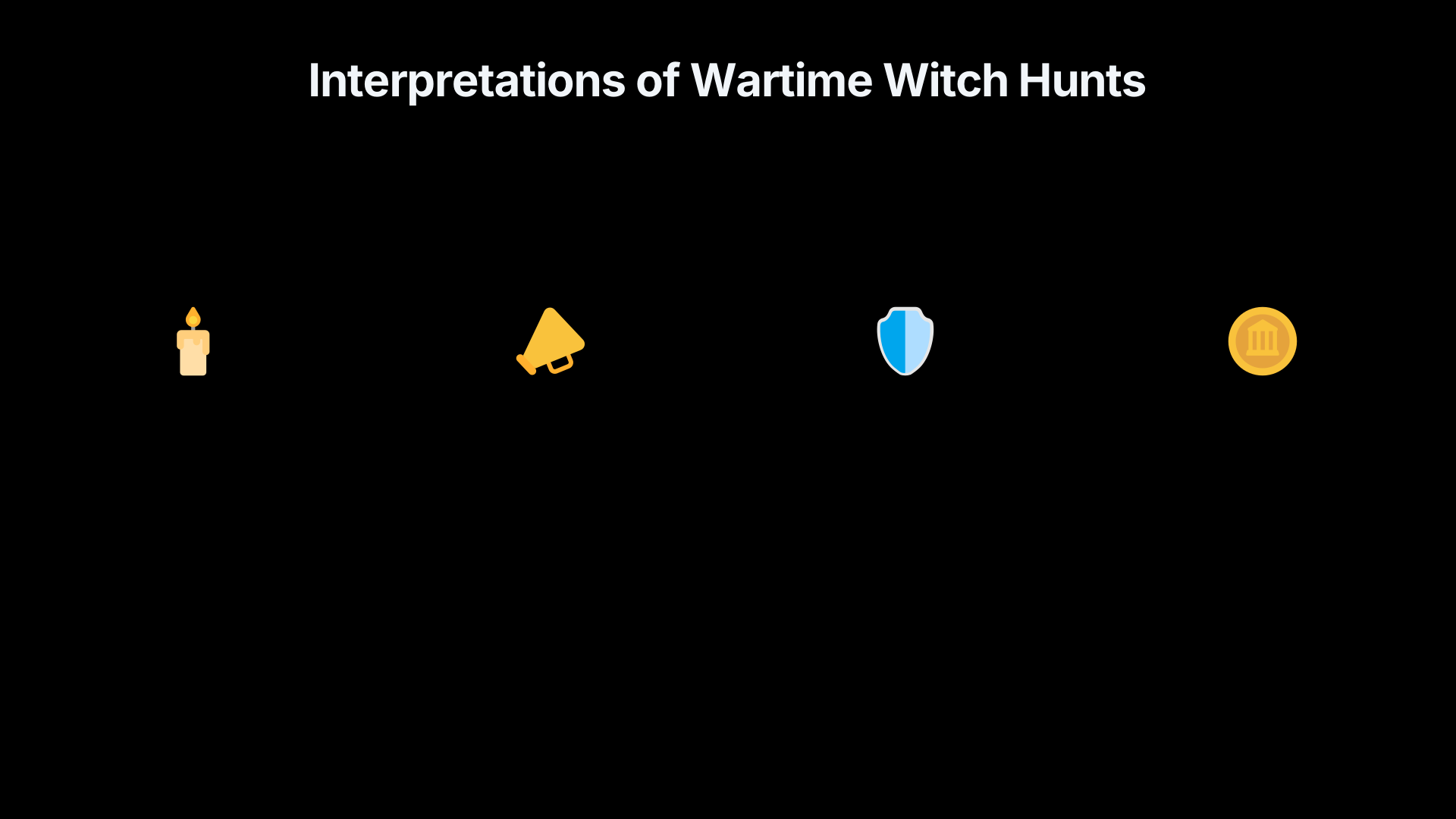
Historians, anthropologists and human rights organisations generally reject simple explanations that portray the violence as either purely religious or purely superstitious.
Instead, the evidence suggests several overlapping dynamics:
- Genuine belief in witchcraft remained widespread among many civilians.
- Armed groups exploited those beliefs to strengthen their authority.
- Economic incentives encouraged false accusations because payments could be extracted from victims.
- The breakdown of state institutions removed safeguards that might otherwise have limited abuse.
- Cycles of fear made communities more willing to accept extraordinary punishments against alleged witches.
This interpretation helps explain why accusations intensified precisely when armed groups rather than civilian institutions controlled large parts of the country.
Why these events matter
The Anti-Balaka witch hunts demonstrate how civil war can transform existing cultural beliefs into instruments of organised violence. They were not simply expressions of traditional ideas about witchcraft, nor merely random outbreaks of panic. Instead, they reveal how supernatural accusations can become embedded in systems of armed power when courts fail, communities are traumatised and militias replace legitimate authority.
Understanding this distinction is important for interpreting the Central African Republic’s wider history of witchcraft accusations. The wartime episodes show that collective fear alone does not explain persecution. Violence became especially severe because armed groups converted fear into a means of governing territory, silencing opposition and enriching themselves at the expense of already vulnerable civilians.[hrw.org]hrw.orgOpen source on hrw.org.
Amazon book picks
Further Reading
Books and field guides related to How Civil War Weaponised Witchcraft Fear. Use these as the next step if you want deeper reading beyond the article.
The logic of violence in civil war
Explains how violence and local accusations become tools of control.

African religions and philosophy
Supplies cultural context for beliefs exploited during conflict.
Dancing in the Glory of Monsters
Provides regional insight into conflict dynamics in Central Africa.
Endnotes
1.
Source: hrw.org
Link:https://www.hrw.org/report/2017/07/05/killing-without-consequence/war-crimes-crimes-against-humanity-and-special
2.
Source: minusca.unmissions.org
Link:https://minusca.unmissions.org/sites/default/files/report_on_violations_of_human_rights_and_humanitarian_law_in_car_from_1_june_2016_to_31_march_2016_0.pdf
3.
Source: hrw.org
Title: escalating atrocities central african republic
Link:https://www.hrw.org/report/2013/12/18/they-came-kill/escalating-atrocities-central-african-republic
Source snippet
Human Rights Watch“They Came To Kill”: Escalating Atrocities in the Central African Republic | HRWDecember 18, 2013...
Published: December 18, 2013
4.
Source: minusca.unmissions.org
Title: la minusca publie son rapport sur lattaque contre le camp de
Link:https://minusca.unmissions.org/en/communiques-de-presse/la-minusca-publie-son-rapport-sur-lattaque-contre-le-camp-de
Source snippet
publishes the results of its investigations into the 15 november 2018 attack on an IDP camp in Alindao | MINUSCAFebruary 28, 2019 — MINUS...
Published: February 28, 2019
5.
Source: hrw.org
Title: sexual violence armed groups central african
Link:https://www.hrw.org/report/2017/10/05/they-said-we-are-their-slaves/sexual-violence-armed-groups-central-african
Source snippet
“They Said We Are Their Slaves”: Sexual Violence by Armed Groups in the Central African Republic | HRWOctober 5, 2017 — October 5, 2017 “...
Published: October 5, 2017
6.
Source: hrw.org
Title: Central African Republic: Sexual Violence as Weapon of War | Human Rights Watch
Link:https://www.hrw.org/news/2017/10/05/central-african-republic-sexual-violence-weapon-war
7.
Source: minusca.unmissions.org
Link:https://minusca.unmissions.org/en/violence-kaga-bandoro-minusca-calls-government-conduct-timely-and-thorough-investigations-abuses
8.
Source: minusca.unmissions.org
Title: start of a social reintegration programme of ex combatants to prevent violence
Link:https://minusca.unmissions.org/en/news/start-of-a-social-reintegration-programme-of-ex-combatants-to-prevent-violence
9.
Source: hrw.org
Title: Central African Republic: Amid Conflict, Rape | Human Rights Watch
Link:https://www.hrw.org/news/2015/12/17/central-african-republic-amid-conflict-rape
10.
Source: minusca.unmissions.org
Title: rebels clash un peacekeepers during weekend fighting
Link:https://minusca.unmissions.org/en/rebels-clash-un-peacekeepers-during-weekend-fighting
11.
Source: hrw.org
Title: Central African Republic: Muslim Communities Emptied | Human Rights Watch
Link:https://www.hrw.org/news/2014/03/06/central-african-republic-muslim-communities-emptied
12.
Source: hrw.org
Title: Central African Republic: Sectarian Atrocities Escalate | Human Rights Watch
Link:https://www.hrw.org/news/2013/12/18/central-african-republic-sectarian-atrocities-escalate
13.
Source: youtube.com
Title: Anti-Balaka militia on the revenge path in the Central African Republic
Link:https://www.youtube.com/watch?v=rd-9ItKguYU
Source snippet
Central African Republic - In The Heart of Chaos | Free Documentary...
14.
Source: youtube.com
Title: Central African Republic
Link:https://www.youtube.com/watch?v=1TiFD8od4ac
Additional References
15.
Source: ungeneva.org
Link:https://www.ungeneva.org/en/news-media/news/2025/02/103550/central-african-republic-faces-ongoing-challenges-ahead-elections
Source snippet
February 20, 2025 — CENTRAL AFRICAN REPUBLIC FACES ONGOING CHALLENGES AHEAD OF ELECTIONS 20 February 2025 The recent attack on a UN patro...
Published: February 20, 2025
16.
Source: ungeneva.org
Link:https://www.ungeneva.org/en/news-media/news/2025/07/108854/two-ex-militia-leaders-central-african-republic-sentenced-war-crimes
Source snippet
July 24, 2025 — TWO EX-MILITIA LEADERS IN CENTRAL AFRICAN REPUBLIC SENTENCED FOR WAR CRIMES, CRIMES AGAINST HUMANITY 24 July 2025 Two for...
Published: July 24, 2025
17.
Source: youtube.com
Title: Accused of Witchcraft and Murder: The British Farmer’s Tale
Link:https://www.youtube.com/watch?v=vOLHvIc_6Qw
Source snippet
Witchcraft: In search of meaning, healing, and blame: Margaret Buckner at TEDxUMKC...
18.
Source: youtube.com
Link:https://www.youtube.com/watch?v=JlX7RfYAY5U
Source snippet
Anti-Balaka militia on the revenge path in the Central African Republic - BBC News...
19.
Source: youtube.com
Title: ‘Witchcraft’ in Africa: Many women find it hard to prove innocence
Link:https://www.youtube.com/watch?v=wV0ubcWkC4k
Source snippet
Accused of Witchcraft and Murder: The British Farmer's Tale...
20.
Source: ecoi.net
Link:https://www.ecoi.net/en/document/1430112.html
Source snippet
USDOS – US Department of State (Author): “Country Report on Human Rights Practices 2017 - Central African Republic”, Document #1430112...
21.
Source: amnesty.org
Link:https://www.amnesty.org/en/documents/AFR19/004/2014/en/
22.
Source: amnesty.org
Link:https://www.amnesty.org/en/location/africa/west-and-central-africa/central-african-republic/report-central-african-republic/
23.
Source: peacekeeping.un.org
Title: with armed groups spreading central african republic un expert urges action
Link:https://peacekeeping.un.org/en/with-armed-groups-spreading-central-african-republic-un-expert-urges-action
24.
Source: iwmf.org
Title: Sisters in Central Africa shield girls singled out as ‘witches’
Link:https://www.iwmf.org/reporting/sisters-in-central-africa-shield-girls-singled-out-as-witches/
Topic Tree