When Belief Became Power, Panic and Persecution
Papua New Guinea’s history of collective belief is not best understood as a catalogue of irrational “cults” or outbreaks of “mass hysteria”. Its most important episodes arose where colonial rule, Christianity, ancestral religion, unequal access to wealth, illness and weak state protection met.
Page outline Jump by section
Introduction
These cases belong on the same page because each shows belief spreading through trusted social networks under conditions of uncertainty. Yet they are not identical. Millenarian movements sought moral and political renewal; colonial “cargo cult” scares often reflected official misunderstanding; vaccine rumours created a public-health panic; and sorcery accusations can become organised persecution. Treating all of them simply as hysteria conceals both their historical causes and their human consequences.
Why the label “cargo cult” causes trouble
The phrase “cargo cult” is familiar, but it began as a hostile colonial label rather than as a neutral description. It first appeared in print in 1945 and was soon applied to a wide range of Melanesian religious and political movements. Officials and scholars grouped together communities that expected ancestral assistance, adopted Christian imagery, drilled or marched, experimented with money and sought access to manufactured goods. The label encouraged outsiders to portray them as people foolishly copying Europeans in the hope that ships or aircraft would deliver riches.[Open Encyclopedia of Anthropology]anthroencyclopedia.comOpen Encyclopedia of Anthropology Cargo cultsOpen Encyclopedia of Anthropology Cargo cults
Modern scholarship is more cautious. Manufactured goods mattered, but so did the question of why Europeans seemed to possess immense wealth and power while presenting Christianity as a religion of equality. Many movements were attempts to explain colonial inequality, reclaim authority and imagine a world in which local people controlled government, knowledge and economic development. The term can therefore obscure the political intelligence of movements whose members were responding to profound disruption rather than merely waiting for free possessions.[anthroencyclopedia.com]anthroencyclopedia.comOpen Encyclopedia of Anthropology Cargo cultsOpen Encyclopedia of Anthropology Cargo cults
It is also important not to assume that all members believed the same thing literally. A promise that ancestors would return with wealth could be prophecy, political language, moral criticism or all three at once. Leaders might promote practical reform while followers attributed supernatural powers to them. Outsiders, meanwhile, often selected the strangest reported ritual and treated it as the movement’s essence.
The Vailala movement and colonial ideas of “madness”
The movement known to history as the “Vailala Madness” emerged in the Papuan Gulf around 1919. Followers reportedly expected ancestral spirits to return on ghostly steamships carrying goods. They abandoned or destroyed some older ritual objects, staged flower-decorated tea tables, marched, drilled, danced and sometimes entered shaking or ecstatic states. Government anthropologist F. E. Williams investigated the movement in 1922, by which time officials were already describing it as madness.[wikipedia.org]WikipediaVailala MadnessVailala Madness
Its rituals were striking, but they did not occur in a vacuum. Gulf communities had experienced missionary teaching, plantation labour, imported goods and a colonial administration that claimed superior knowledge and authority. People who travelled for work encountered military discipline, new languages and unfamiliar systems of production. Prophecies about ancestors and ships offered an explanation for why wealth flowed through colonial channels and not to local communities.[ox.ac.uk]ora.ox.ac.ukWILLIAMS AND THE VAlLALA MAI1~ESSAugust 22, 2013 — by T Kohn · 1988 · Cited by 2 — The Vailala Madness of the Gulf Division of Papua New…
Colonial authorities did not regard the movement simply as private religion. Its leaders were accused of spreading false rumours or extracting fines, and some were imprisoned. Officials were also alarmed by the rejection of established ceremonies and by the possibility that a movement promising transformation might weaken administrative control. The word “madness” therefore tells us as much about the state’s fear of social disorder as it does about the behaviour of participants.[Wikipedia]WikipediaVailala MadnessVailala Madness
There is no sound basis for diagnosing the whole movement retrospectively as mass psychogenic illness. Ecstatic shaking and speaking in tongues can occur in organised religious settings without implying mental disorder. The better interpretation is a millenarian movement: a collective expectation that the present unjust world would soon be replaced by a morally and materially renewed one.
Prophets, reformers and political movements
Later movements further blurred the line between religion and politics. On the Rai Coast, Yali Singina became the focus of a post-war movement involving moral reform, anti-colonial expectation and hopes of transformed material life. Yali had served the wartime administration and then became a local political figure. Scholars disagree over how far his followers’ expectations should be reduced to “cargo” belief, particularly because Papua New Guineans themselves later used, rejected and reinterpreted the label in light of colonial experience.[openedition.org]books.openedition.orgOpen source on openedition.org.
On Manus, Paliau Maloat promoted a broad programme of social reorganisation after the Second World War. His movement challenged older divisions, advocated new community arrangements and entered electoral politics. Paliau served in the House of Assembly, while some followers also developed millenarian expectations around him. Accounts that call the whole enterprise a cargo cult miss the practical, nationalist and institutional work that accompanied its religious dimensions.[persee.fr]persee.frjso 0300 953x 1991 numPerséeThe evolution of cargo cults and the emergence of political…by S Kaima · 1991 · Cited by 16 — Paliau was appointed a village off…
The Pomio Kivung of East New Britain provides another example of religious expectation embedded in political organisation. It combined Christian ideas, ancestral authority, economic aspirations and a vision of a future transformed society. Its supporters also achieved sustained electoral influence. Anthropologist Harvey Whitehouse’s work describes a centralised movement awaiting a period of supernatural renewal, but the movement’s organisation and political success show why the simple image of passive people waiting for goods is misleading.[oup.com]academic.oup.comAcademic The Pomio Kivung Movement | Inside the CultAcademic The Pomio Kivung Movement | Inside the Cult
The Hahalis Welfare Society on Buka demonstrates the political danger of official labelling even more clearly. Founded around 1960, it resisted the colonial head tax and sought to organise welfare and economic activity through its own institutions. The administration called it a cargo cult, while later research described it as a serious political movement rather than a fantasy about miraculous wealth. A major confrontation in 1962 led to mass arrests and injuries after police were deployed against supporters.[hawaii.edu]scholarspace.manoa.hawaii.eduOpen source on hawaii.edu.
These movements were not identical, and some did contain expectations that outsiders would consider miraculous. The central lesson is that “cult” language was often used by authorities to downgrade challenges to colonial taxation, hierarchy and control. Religious prophecy could be present without cancelling the political substance of a movement.
Sorcery accusations: belief becomes persecution
Papua New Guinea’s most urgent collective-belief crisis today is sorcery accusation-related violence. An unexpected death, serious illness or other misfortune can generate suspicion that someone caused it through supernatural means. Suspicion may circulate within a family or village before a diviner, healer or influential person identifies an alleged culprit. Once a name is supplied, grief can turn into a shared demand for confession, punishment or revenge.[PNG NRI]pngnri.orgPNG NRIPNG NRI
A major multi-year study by the Papua New Guinea National Research Institute, Australian National University and Divine Word University found that diviners were involved in almost 29 per cent of the accusation incidents documented in its research areas. Their involvement significantly increased the likelihood of violence because they transformed vague anxiety into a specific accusation carrying perceived spiritual authority. The researchers also stressed that spiritual and biomedical explanations of illness may coexist rather than replace one another.[PNG NRI]pngnri.orgPNG NRI
This is not simply a spontaneous crowd delusion. Accusations can be shaped by inheritance disputes, jealousy, gender inequality, family conflict, land interests and attempts to remove socially vulnerable people. Women are disproportionately targeted in many areas, although patterns differ greatly between provinces and men and children are also accused. Widows, isolated women and people lacking strong protectors may face particular danger.[aljazeera.com]aljazeera.compapua new guinea struggles to end evil of sorcery related violencepapua new guinea struggles to end evil of sorcery related violence
The violence can involve captivity, torture, displacement and killing. The 2013 murder of Kepari Leniata, a young woman burned by a crowd in Mount Hagen, provoked national and international outrage and became a turning point in public debate. Her death helped intensify pressure to repeal the 1971 Sorcery Act, which had recognised sorcery in law and had allowed belief in sorcery to enter criminal defences and prosecutions. Parliament repealed the Act in 2013, although the legal change did not end accusations or attacks.[amnesty.org]amnesty.orgInternational Papua New Guinea repeals Sorcery Act while movingInternational Papua New Guinea repeals Sorcery Act while moving
The government adopted a national action plan in 2015, bringing together justice, health, education, protection and community responses. Researchers and campaigners have nevertheless reported uneven funding and implementation, weak protection for survivors and extremely low levels of prosecution in many areas. Police may face an entire community that regards the accused person as a continuing threat, making intervention dangerous and politically difficult.[embassy.gov.au]png.embassy.gov.auOpen source on embassy.gov.au.
Further criminal-law changes in 2022 targeted people who claim supernatural authority and use dreams, visions or predictions to generate sorcery accusations. A reported 2025 conviction under the amended law was treated as an important test of whether those who initiate accusations can be held responsible even when they do not personally carry out the eventual attack. Legal accountability matters, but researchers argue that prosecution alone cannot resolve the health failures, insecurity, gendered power and community pressure that make accusations persuasive.[parliament.gov.pg]parliament.gov.pgNational Parliament of Papua New Guinea No. 14National Parliament of Papua New Guinea No. 14
Why accusations spread after illness and death
Sorcery accusations offer a social explanation for suffering. Biomedical medicine asks what physical process caused a death; an accusation asks who intended it. That second question can feel more emotionally satisfying when a death is sudden, healthcare is inaccessible or a diagnosis is unclear. It gives grief an agent, a story and an apparent remedy. The danger begins when the explanation becomes collective certainty and punishment is presented as community defence.
Several pressures make escalation more likely:
- Unexplained illness: Limited diagnostic services can leave families without a convincing medical account.
- Authoritative accusation: A diviner, healer, church figure or influential relative can convert rumour into apparent proof.
- Group responsibility: People may fear that refusing to join an attack will expose them as collaborators or future victims.
- Existing conflict: Property, marriage, inheritance and personal grievances can be reframed as supernatural danger.
- Circulating images and rumours: Phones and social media can spread accusations beyond the original community and preserve stigma even after a victim flees.[pngnri.org]pngnri.orgPNG NRIPNG NRI
Calling the result “mass hysteria” is inadequate because it can make the participants appear temporarily irrational while hiding the organised interests, authority structures and coercion involved. “Witch panic” captures the contagious fear; “persecution” better captures what happens to the accused. The most precise description is often sorcery accusation-related violence because it separates belief from the criminal acts committed in its name.
COVID-19 and a modern rumour panic
The COVID-19 pandemic produced a different form of collective fear. Papua New Guinea received vaccines, but rumours spread that vaccination was dangerous, spiritually threatening, experimental or connected to hidden foreign purposes. Some health workers faced threats when attempting to deliver vaccines to remote communities. By late 2021, uptake remained extremely low despite severe pressure on hospitals.[abc.net.au]abc.net.auABC News Health workers face death threats as COVID-19 vaccineABC News Health workers face death threats as COVID-19 vaccine
The resistance was not caused by a single traditional belief. It drew strength from distrust of government, foreign medical advice, contradictory international reporting about vaccine risks, social-media misinformation, religious interpretations and concern about sorcery. Messages designed for populations with greater confidence in state institutions often failed when simply transferred into Papua New Guinea’s very different social setting.[University of Waikato]waikato.ac.nzOpen source on waikato.ac.nz.
This episode resembles a moral or medical panic more than a millenarian movement. Fear spread through rumours about concealed harm, and the people carrying a protective intervention could themselves be seen as dangerous. The consequences were measurable: intimidation of health workers, delayed vaccination and greater strain on an already fragile health system. It also showed that modern digital rumours do not displace older explanatory systems; they can combine with them.
What outsiders commonly misunderstand
The first mistake is to treat Papua New Guinea as a single cultural setting. The country contains hundreds of language communities and major regional differences. Sorcery beliefs, accusation patterns and religious movements vary sharply, so an explanation drawn from one highland province cannot automatically be applied to East New Britain, Manus or Bougainville.
The second is to confuse belief with violence. Many people hold spiritual explanations of illness without accusing or harming anyone. Research and prevention programmes therefore focus not on attempting to erase every belief, but on breaking the chain between suspicion, identification and punishment. Community leaders, churches, health workers and police can intervene at different points in that chain.[Regulation and Global Governance School]regnet.anu.edu.auOpen source on edu.au.
The third is to assume that colonial officials were neutral observers. Terms such as “madness”, “cult” and “false rumour” were used within systems of rule that feared tax resistance, autonomous organisation and challenges to European prestige. Some movements certainly included failed prophecies and extraordinary claims, but official descriptions were also political documents.
The fourth is to romanticise resistance. Recognising the political meaning of a millenarian movement does not require accepting every claim made by its leaders. Likewise, cultural sensitivity must never become an excuse for torture, forced confession or killing. Beliefs deserve careful interpretation; victims deserve unambiguous protection.

Why this history still matters
Papua New Guinea’s movements and panics reveal a repeated pattern: when existing institutions fail to explain unequal wealth, illness, sudden death or rapid social change, collective belief can provide both meaning and action. Sometimes that action creates reform, solidarity and political organisation. Sometimes it supplies a target for fear.
The country’s early millenarian movements are culturally important because they were creative responses to colonial domination and Christian promises of equality. They influenced local leadership, electoral politics and debates about development. Sorcery accusation-related violence matters for the opposite reason: it shows how an explanation of misfortune can become a mechanism of coercion against vulnerable people. COVID-19 rumours demonstrate that similar dynamics can operate through smartphones and global conspiracy narratives as readily as through village discussion.
The most useful distinction is therefore not between modern reason and primitive superstition. It is between beliefs that help communities interpret change, official labels that misrepresent those beliefs, rumours that spread fear, and accusations that authorise harm. Papua New Guinea’s history contains all four—and understanding the differences is essential to understanding both its social movements and its continuing struggles over justice.
Amazon book picks
Further Reading
Books and field guides related to When Belief Became Power, Panic and Persecution. Use these as the next step if you want deeper reading beyond the article.
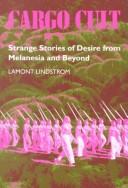

The trumpet shall sound
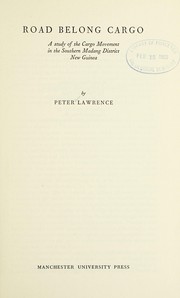
Places Melanesian movements into global comparative perspective.
Endnotes
1.
Source: Wikipedia
Title: Vailala Madness
Link:https://en.wikipedia.org/wiki/Vailala_Madness
2.
Source: jstor.org
Link:https://www.jstor.org/stable/23159549
Source snippet
The Case of the Vailala Madnessby AB van Fossen · 1979 · Cited by 1 — The Vailala Madness emerged in 1919 on the coast of Papua shor...
3.
Source: books.openedition.org
Link:https://books.openedition.org/pacific/168?lang=en
4.
Source: jstor.org
Link:https://www.jstor.org/stable/40331318
5.
Source: academic.oup.com
Title: Academic The Pomio Kivung Movement | Inside the Cult
Link:https://academic.oup.com/book/47557/chapter/422684407
6.
Source: Wikipedia
Title: Pomio Kivung
Link:https://en.wikipedia.org/wiki/Pomio_Kivung
7.
Source: search.proquest.com
Link:https://search.proquest.com/openview/7267bf89d5d0fb580e2c992c20f8414f/1?cbl=2026366&diss=y&pq-origsite=gscholar
8.
Source: Wikipedia
Title: Hahalis Welfare Society
Link:https://en.wikipedia.org/wiki/Hahalis_Welfare_Society
9.
Source: pngnri.org
Title: PNG NRI
Link:https://pngnri.org/images/Publications/Issues_Paper_No_36.pdf
10.
Source: pngnri.org
Link:https://pngnri.org/index.php/news-events/news/270-involvement-of-glasman-glasmeri-in-sorcery-accusation-cases-triggers-violence
11.
Source: amnesty.org
Title: International Papua New Guinea repeals Sorcery Act while moving
Link:https://www.amnesty.org/en/latest/news/2013/05/papua-new-guinea-repeals-sorcery-act-while-moving-closer-executions/
12.
Source: qa.time.com
Link:https://qa.time.com/5616475/papua-new-guinea-witchcraft-justice/
Source snippet
She was finally rescued by the Papua New Guinea Tribal Foundation and is now cared for by Ruth J. Kissam, the organization's director of...
13.
Source: Wikipedia
Title: Cargo cult
Link:https://en.wikipedia.org/wiki/Cargo_cult
14.
Source: Wikipedia
Title: Witch hunts in Papua New Guinea
Link:https://en.wikipedia.org/wiki/Witch_hunts_in_Papua_New_Guinea
15.
Source: Wikipedia
Link:https://en.wikipedia.org/wiki/Witchcraft
16.
Source: Wikipedia
Title: Papua New Guinea
Link:https://en.wikipedia.org/wiki/Papua_New_Guinea
17.
Source: Wikipedia
Title: Mass psychogenic illness
Link:https://en.wikipedia.org/wiki/Mass_psychogenic_illness
18.
Source: Wikipedia
Title: Religion in Papua New Guinea
Link:https://en.wikipedia.org/wiki/Religion_in_Papua_New_Guinea
19.
Source: Wikipedia
Title: Papua (province)
Link:https://en.wikipedia.org/wiki/Papua_%28province%29
20.
Source: Wikipedia
Title: Yali (politician)
Link:https://en.wikipedia.org/wiki/Yali_%28politician%29
21.
Source: Wikipedia
Title: Witch hunt
Link:https://en.wikipedia.org/wiki/Witch_hunt
22.
Source: jstor.org
Link:https://www.jstor.org/content/oa_chapter_edited/j.ctt169wd7b.17
23.
Source: jstor.org
Link:https://www.jstor.org/stable/48590044
24.
Source: jstor.org
Link:https://www.jstor.org/stable/3034427
25.
Source: amnesty.org
Link:https://www.amnesty.org/en/wp-content/uploads/2021/07/asa340052010en.pdf
26.
Source: academic.oup.com
Link:https://academic.oup.com/book/47557/chapter/422684367
27.
Source: anthroencyclopedia.com
Title: Open Encyclopedia of Anthropology [Cargo cults]({{ ‘cargo-cults/’ | relative_url }})
Link:https://www.anthroencyclopedia.com/printpdf/302
28.
Source: persee.fr
Title: jso 0300 953x 1991 num 92 1 2909
Link:https://www.persee.fr/doc/jso_0300-953x_1991_num
Source snippet
PerséeThe evolution of cargo cults and the emergence of political...by S Kaima · 1991 · Cited by 16 — Paliau was appointed a village off...
29.
Source: ora.ox.ac.uk
Link:https://ora.ox.ac.uk/objects/uuid%3A430c7971-2227-45b1-b847-c7508de6bebf/files/rmg74qn404
Source snippet
WILLIAMS AND THE VAlLALA MAI1~ESSAugust 22, 2013 — by T Kohn · 1988 · Cited by 2 — The Vailala Madness of the Gulf Division of Papua New...
Published: August 22, 2013
30.
Source: press-files.anu.edu.au
Title: ANU Press Like Fire
Link:https://press-files.anu.edu.au/downloads/press/n7854/html/ch02.xhtml
31.
Source: harveywhitehouse.com
Title: inside the cult religious innovation and transmission in papua new guinea
Link:https://www.harveywhitehouse.com/books/inside-the-cult-religious-innovation-and-transmission-in-papua-new-guinea
32.
Source: scholarspace.manoa.hawaii.edu
Link:https://scholarspace.manoa.hawaii.edu/bitstreams/6fd02b25-e404-4b0d-82f3-4f0762c124ff/download
33.
Source: aljazeera.com
Title: papua new guinea struggles to end evil of sorcery related violence
Link:https://www.aljazeera.com/news/2022/8/16/papua-new-guinea-struggles-to-end-evil-of-sorcery-related-violence
34.
Source: theguardian.com
Link:https://www.theguardian.com/world/2018/jan/05/bloodlust-hysteria-sorcery-accusations-a-brutal-death-sentence-in-png
35.
Source: png.embassy.gov.au
Link:https://png.embassy.gov.au/pmsb/786.html
36.
Source: regnet.anu.edu.au
Link:https://regnet.anu.edu.au/improving-impact-state-and-non-state-interventions-overcoming-sorcery-accusation-related-violence
37.
Source: pngnri.org
Link:https://pngnri.org/images/Publications/Spotlight_Vol_15_Issue_2.pdf
38.
Source: researchportalplus.anu.edu.au
Title: policing sorcery accusation related violence in papua new guinea
Link:https://researchportalplus.anu.edu.au/en/publications/policing-sorcery-accusation-related-violence-in-papua-new-guinea/
39.
Source: parliament.gov.pg
Title: National Parliament of Papua New Guinea No. 14
Link:https://www.parliament.gov.pg/uploads/acts/22A_14.pdf
40.
Source: theaustralian.com.au
Link:https://www.theaustralian.com.au/world/sorcery-accuser-jailed-in-landmark-png-case-after-victim-hacked-to-death/news-story/8dee0c41e46c4aaa4354066561133cd0
41.
Source: abc.net.au
Title: ABC News Health workers face death threats as COVID-19 vaccine
Link:https://www.abc.net.au/news/2021-09-10/png-vaccine-hesitancy-papua-new-guinea-covid-19/100444380
42.
Source: waikato.ac.nz
Link:https://www.waikato.ac.nz/int/news-events/news/just-1-7-of-people-in-png-are-vaccinated-against-covid-why-is-resistance-so-fierce/
43.
Source: theguardian.com
Link:https://www.theguardian.com/world/2021/dec/13/experts-warn-papua-new-guinea-is-potential-breeding-ground-for-new-covid-variants
Source snippet
PNG has struggled with a severe Covid-19 outbreak throughout 2021, with official figures showing over 35,000 cases and 573 deaths—likely...
44.
Source: regnet.anu.edu.au
Link:https://regnet.anu.edu.au/school-regulation-and-global-governance/content-centre/article/news/police-png-play-important-role
45.
Source: pngnri.org
Link:https://pngnri.org/index.php/blog-release/363-counselling-is-vital-to-healing-and-recovery-of-survivors-of-sorcery-accusation
46.
Source: pngnri.org
Title: Sorcery Accusation PNG online Brochure
Link:https://www.pngnri.org/images/Events/Sorcery_Accusation_PNG_online_Brochure.pdf
47.
Source: pngnri.org
Link:https://pngnri.org/images/BSCP_Page/Background/Themes_BSCP.pdf
48.
Source: pngnri.org
Link:https://pngnri.org/index.php/blog-release/125-keeping-women-and-children-in-view-gender-based-violence-a-key-priority-for-the-new-government
49.
Source: pngnri.org
Title: Sorcery Accusation Related Violence SARV in Enga Province
Link:https://pngnri.org/images/Publications/Sorcery_Accusation-Related_Violence_SARV_in_Enga_Province.pdf
50.
Source: pngnri.org
Link:https://pngnri.org/index.php/blog-release?start=25
51.
Source: pngnri.org
Link:https://pngnri.org/images/Publications/Issue_Paper_47-_Addressing_sorcery_accusation-related_violence_in_the_Village_Court_System_of_Papua_New_Guinea-William_Kipongi_and_Miranda_Forsyth.pdf
52.
Source: pngnri.org
Link:https://pngnri.org/index.php/blog?start=39
53.
Source: openresearch-repository.anu.edu.au
Link:https://openresearch-repository.anu.edu.au/bitstreams/06c2c3ef-2cfc-45df-943f-922ddde7207d/download
54.
Source: openresearch-repository.anu.edu.au
Link:https://openresearch-repository.anu.edu.au/items/7678635c-9faf-469d-b23a-8283777d13a0
55.
Source: anu.edu.au
Link:https://www.anu.edu.au/events/understanding-sorcery-accusation-related-violence-in-papua-new-guinea
56.
Source: digitalcollections.anu.edu.au
Title: anu.edu.au Ten preliminary findings concerning sorcery accusation
Link:https://digitalcollections.anu.edu.au/items/17082965-3b54-466f-8704-3bfa3e0811b7/full
57.
Source: anu.edu.au
Link:https://www.anu.edu.au/events/sorcery-accusations-and-witch-hunts-in-png-and-across-the-globe-an-updated-account-of-their-nature
58.
Source: regnet.anu.edu.au
Link:https://regnet.anu.edu.au/school-regulation-and-global-governance/content-centre/article/news/engaging-youth-messaging
59.
Source: adb.anu.edu.au
Title: anu.edu.au Yali
Link:https://adb.anu.edu.au/biography/yali-12084
60.
Source: researchportalplus.anu.edu.au
Title: putting data around intergroup violence and sorcery accusationrel
Link:https://researchportalplus.anu.edu.au/en/publications/putting-data-around-intergroup-violence-and-sorcery-accusationrel/
61.
Source: openresearch-repository.anu.edu.au
Link:https://openresearch-repository.anu.edu.au/items/ee3dfb31-1ef6-45be-b789-52e9568abb2a
62.
Source: press-files.anu.edu.au
Link:https://press-files.anu.edu.au/downloads/press/p66801/html/ch04.html
63.
Source: theguardian.com
Link:https://www.theguardian.com/world/2020/nov/14/they-just-slaughter-them-how-sorcery-violence-spreads-fear-across-papua-new-guinea
64.
Source: theguardian.com
Title: carol morley the falling mass hysteria is a powerful group activity
Link:https://www.theguardian.com/film/2015/mar/29/carol-morley-the-falling-mass-hysteria-is-a-powerful-group-activity
65.
Source: scholarspace.manoa.hawaii.edu
Link:https://scholarspace.manoa.hawaii.edu/bitstreams/d96b7075-15e1-414e-a542-bcb891dc31eb/download
66.
Source: manifold.uhpress.hawaii.edu
Link:https://manifold.uhpress.hawaii.edu/read/cargo-cult-strange-stories-of-desire-from-melanesia-and-beyond/section/037d221e-d204-429f-b162-33219a1adb6e
67.
Source: ebsco.com
Link:https://www.ebsco.com/research-starters/social-sciences-and-humanities/mass-hysteria
68.
Source: health.gov.pg
Title: PNGCOVID 19CP(NDOH ver04)
Link:https://health.gov.pg/covid19/PNGCOVID-19CP%28NDOH%20ver04%29.pdf
69.
Source: nla.gov.au
Title: nla.obj 333366466
Link:https://nla.gov.au/nla.obj-333366466
70.
Source: healthline.com
Title: mass hysteria
Link:https://www.healthline.com/health/mental-health/mass-hysteria
71.
Source: aph.gov.au
Link:https://www.aph.gov.au/DocumentStore.ashx?id=9d7726b7-ae8c-4326-b556-feba185ec66f
72.
Source: research.usc.edu.au
Title: Sorcery Accusation Related Violence in Papua
Link:https://research.usc.edu.au/esploro/outputs/presentation/Sorcery-Accusation-Related-Violence-in-Papua/991167445302621
Additional References
73.
Source: s3-eu-west-1.amazonaws.com
Link:https://s3-eu-west-1.amazonaws.com/s3-euw1-ap-pe-ws4-cws-documents.ri-prod/9781138024915/suppreading/Ch7b%20-%20Classical%20Study%20of%20Cargo%20Cults.pdf
Source snippet
Amazon Web Services, Inc.The Classical Study of Cargo CultsOne of the first and best-known examples is the “Vailala madness” that “broke...
74.
Source: youtube.com
Title: Hunting Witches in Papua New Guinea
Link:https://www.youtube.com/watch?v=ZKqU0NU13Tk
Source snippet
This documentary on Papua New Guinea's witch hunts is highly relevant as it provides a deep look into the modern humanitarian crisis of s...
75.
Source: onlinelibrary.wiley.com
Title: j.1834 4461.1992.tb00367.x
Link:https://onlinelibrary.wiley.com/doi/pdf/10.1002/j.1834-4461.1992.tb00367.x
Source snippet
New Guineans from their personal experience of the colonial...Read more...
76.
Source: stopsorceryviolence.org
Link:https://www.stopsorceryviolence.org/articles-and-documents/
77.
Source: researchgate.net
Link:https://www.researchgate.net/publication/333578030_Cargo_Cult_Strange_Stories_of_Desire_from_Melanesia_and_Beyond
78.
Source: dwu.ac.pg
Link:https://www.dwu.ac.pg/en/images/All_Attachements/Research%20Journals/vol_03/3%20Sullivan.pdf
79.
Source: newworldencyclopedia.org
Link:https://www.newworldencyclopedia.org/entry/Cargo_cult
80.
Source: lausanne.org
Link:https://lausanne.org/occasional-paper/lop-11
81.
Source: facebook.com
Link:https://www.facebook.com/newsroomgy/posts/over-20-schoolgirls-from-the-dora-secondary-school-on-the-soesdyke-linden-highwa/2655988208011529/
82.
Source: cap-press.com
Link:https://cap-press.com/pdf/2098.pdf?srsltid=AfmBOoojgL1BBy0kK4BjXg2ahCFWyS_cGf6w8qLS1yzrpLgwA6n7wtqj
Topic Tree
Follow this branch
Related pages 192
- Antigua and Barbuda
- Argentina Belief Scares
- Azerbaijan Belief
- Bahrain Beliefs
- North Korea
- +187 more in sidebar