When Fear and Prophecy Shaped South Africa
South Africa’s history of collective belief and fear does not fit one simple story of “mass hysteria”.

Page outline Jump by section
Introduction
The clearest lesson is that supernatural explanations rarely spread in a social vacuum. They become persuasive when they give recognisable form to uncertainty, identify someone to blame or promise a decisive break with an unbearable present. Yet the consequences differ sharply. Some episodes produced genuine bodily illness without an identified toxin or infection. Others involved state repression, lethal accusations or crimes that were inaccurately presented as evidence of vast occult networks. Understanding those differences is essential: a prophetic movement is not the same thing as a panic, and neither is automatically a “cult”.
When prophecy promised to overturn colonial defeat
The Xhosa cattle-killing movement
The most consequential millenarian movement in South African history began in 1856, in what is now the Eastern Cape. A young prophet, Nongqawuse, reported receiving messages from ancestral spirits. According to the movement’s central prophecy, the Xhosa were to destroy their cattle and stop cultivating crops. The dead would then rise, healthy cattle and grain would appear, and the colonial order would be swept away.
This was not simply an inexplicable outbreak of credulity. Xhosa communities had endured repeated frontier wars, territorial loss and political subordination. Their cattle were also being devastated by a serious lung disease. The prophecy transformed these overlapping disasters into a religious programme of purification and renewal: contaminated livestock and the existing world had to be removed before a restored society could emerge.[sahistory.org.za]sahistory.org.zaSouth African History OnlineNongqawuseWhat we know of her is mainly related to the Cattle-Killing/Millenarian Movement of 1856-7 and her…
Belief was neither universal nor passive. Some chiefs and households accepted the prophecy fully, others resisted it, and many occupied positions between firm belief and outright rejection. Those who refused to kill their cattle were blamed when predicted transformations failed to occur, a familiar mechanism in disappointed prophetic movements: failure could be explained not by abandoning the belief, but by identifying insufficient obedience.
The human cost was catastrophic. Estimates vary, but historians agree that hundreds of thousands of cattle were destroyed, tens of thousands of people died during the resulting famine, and many more entered the Cape Colony in search of food or employment. The disaster weakened independent Xhosa political power and increased colonial control over land and labour.[wiley.com]compass.onlinelibrary.wiley.comWiley Online LibraryThe Xhosa Cattle‐Killing Movement in History and Literature6 Nov 2009 — Nongqawuse and Mhlakaza's prophecies failed s…
Later portrayals often reduced the event to the supposed irrationality of one teenage girl. Modern scholarship treats that explanation as inadequate. Nongqawuse’s message travelled through established networks of chiefs, diviners, kinship and oral communication, while its appeal reflected epidemic disease and the accumulated trauma of conquest. The movement remains culturally important because South Africans have repeatedly used it to debate colonial responsibility, political leadership, memory and the danger of blaming national catastrophe on a single symbolic figure.[cam.ac.uk]repository.cam.ac.ukbridge Repositorythe telling of Nongqawuse and the Xhosa Cattle-Killing in…by S Boniface Davies · 2011 · Cited by 5 — In this disse…
Bulhoek: apocalypse, land and state violence
Another prophetic conflict culminated at Bulhoek, near Queenstown, on 24 May 1921. Enoch Mgijima, an independent Christian prophet, led a community known as the Israelites. His followers gathered at Ntabelanga, a settlement they regarded as sacred, after prophecies concerning divine judgement and the transformation of the world. By 1921, several thousand people had assembled there.
Officials described the dispute primarily as unlawful occupation of land. The Israelites understood it in religious and moral terms: they believed they were obeying divine instruction and resisted orders to leave. When negotiations and ultimatums failed, a heavily armed police force confronted the community. Police gunfire killed roughly 180 to 200 followers, depending on the historical count used, and many others were wounded or imprisoned.[jstor.org]jstor.orgOpen source on jstor.org.
Calling Bulhoek merely a clash with a fanatical “sect” repeats the language through which colonial authorities dismissed African religious independence. The Israelites did hold apocalyptic beliefs, but historians also place the massacre within a longer history of conquest, land restriction and state suspicion of autonomous Black communities. Their theology helped organise resistance, yet the scale of death resulted from the government’s decision to resolve a land and authority dispute with overwhelming force.[newcontree.org.za]newcontree.org.zaOpen source on newcontree.org.za.
Bulhoek therefore sits at the boundary between millenarian history and political repression. It shows why “cult” can be a misleading label: it may describe a tightly organised prophetic community, but it can also conceal the unequal legal and military power surrounding it.
Witchcraft accusations: belief becomes a search for blame
Belief in harmful supernatural agency has remained socially important in parts of South Africa, but belief itself should not be confused with violence. The central public problem arises when illness, lightning, death, infertility, financial loss or family conflict is attributed to a particular person and the accusation becomes justification for assault, expulsion or murder.
Accused people are often socially vulnerable. Research and legal commentary have repeatedly identified older women, widows and impoverished rural residents as frequent targets. Gender matters because ideas about age, dependency, inheritance and female social power can make elderly women convenient explanations for otherwise uncontrollable events. Accusations may also provide a supernatural language for disputes that involve property, jealousy, family breakdown or local politics.[springer.com]link.springer.comOpen source on springer.com.
This is not well described as mass psychogenic illness. The accusers are not necessarily experiencing contagious physical symptoms, nor is the underlying belief merely a fleeting delusion. Witchcraft accusations are better understood as episodes in which culturally available explanations for suffering combine with rumour, grievance and collective enforcement. The panic lies in the escalation: a suspicion becomes public certainty, bystanders feel morally compelled to act, and ordinary criminal safeguards may collapse.
South African law has struggled to balance several competing principles. The Witchcraft Suppression Act of 1957 was inherited from the apartheid period and criminalised various activities connected with professing witchcraft, accusing others and claiming supernatural powers. Critics argue that laws framed around suppressing “witchcraft” can stigmatise legitimate religious identities and reproduce colonial categories. Others stress the need for enforceable protection against harmful accusations, coercive practices and violence. The South African Law Reform Commission’s review has therefore focused on whether the law should regulate belief at all, or instead prohibit demonstrable harm associated with accusations and practices.[Justice]justice.gov.zaJustice PROJECT 135 THE REVIEW OF THE WITCHCRAFTJustice PROJECT 135 THE REVIEW OF THE WITCHCRAFT
The distinction matters. A democratic state cannot establish whether supernatural harm is real, but it can prosecute murder, assault, intimidation, fraud and incitement. The most rights-respecting response is therefore to protect freedom of belief while refusing to let an allegation of witchcraft strip an accused person of ordinary legal protection.
The Satanic panic and the policing of evil
South Africa developed one of the world’s most institutionalised versions of the late twentieth-century Satanic panic. From the end of the 1980s into the early 1990s, politicians, clergy, police officers and journalists warned that Satanism was spreading among young people and was linked to drugs, heavy metal, sexual behaviour, suicide and violent crime.
The scare borrowed imagery from international evangelical campaigns but reflected distinctly South African anxieties. Apartheid was entering its final crisis, white political authority was weakening, military conflict and township violence were pervasive, and conservative communities feared changes in race, gender, sexuality and youth culture. Historians have consequently interpreted the Satanist as a symbolic enemy onto whom fears about political transition and moral decline could be displaced.[jstor.org]jstor.orgOpen source on jstor.org.
In 1992, the South African Police established an Occult Related Crimes Unit. It was associated with Kobus Jonker, a born-again Christian detective who became a prominent media authority on ritual and Satanic crime. Training material and public warnings sometimes treated hostility towards Christianity, interest in occult imagery or unconventional youth behaviour as warning signs. Critics argued that this approach blurred the line between evidence of crime and religious interpretation, while also encouraging prejudice against Pagans, Satanists and other minority belief systems.[uct.ac.za]open.uct.ac.zaOpen source on uct.ac.za.
The panic did not mean that every crime described as occult was imaginary. South Africa has experienced brutal murders in which perpetrators used ritual language, staged scenes, expressed supernatural beliefs or borrowed symbols from popular accounts of Satanism. The error was to treat such individual crimes as proof of an organised national conspiracy.
The 2008 Krugersdorp school sword attack illustrates the problem. Initial reporting emphasised the attacker’s mask, interest in heavy metal and statements about Satanic influence. Police psychologist Gerard Labuschagne cautioned that the Satanic label was too simple, while later evidence pointed towards bullying, attention-seeking and a troubled personal history rather than membership of a coherent Satanic organisation.[Wikipedia]WikipediaSatanic panic (South AfricaSatanic panic (South Africa
The 2011 killing of Kirsty Theologo was similarly reported as a Satanic sacrifice. The violence was real and the participants used improvised ritual ideas, but court evidence suggested that they possessed only a confused mixture of biblical material, magazine imagery and curiosity about Satanism. It was not evidence of a hidden, disciplined cult operating behind South African crime.[Wikipedia]WikipediaSatanic panic (South AfricaSatanic panic (South Africa
This distinction is central to the idea of moral panic. A moral panic does not require every underlying incident to be false. It occurs when exceptional cases are presented as symptoms of a much larger threat, uncertain claims are repeated as established facts, and symbolic outsiders are treated as a danger to society as a whole.
Why schools become centres of contagious illness and possession scares
South African schools have periodically experienced outbreaks in which groups of learners fainted, shook, screamed, convulsed or complained of chest tightness, nausea and abdominal pain, despite investigations finding no shared infectious or toxic cause. Doctors generally describe this pattern as mass psychogenic illness: genuine physical symptoms that spread through social and psychological mechanisms rather than an identified pathogen or poison.
A well-documented episode occurred at a primary school in KwaDukuza, KwaZulu-Natal, in August 2002. Twenty-seven children who had appeared well before arriving at school collapsed or developed shaking, nausea, cramps and chest tightness. The incident was investigated as a case of mass psychogenic illness after the pattern of symptoms and their spread did not support a conventional epidemic.[ResearchGate]researchgate.netResearch Gate Mass hysteria among South African primary schoolResearch Gate Mass hysteria among South African primary school
A further widely reported outbreak occurred at a Pretoria high school in 2009, where pupils collapsed, screamed or displayed convulsive movements. A review of African school episodes noted that such events often begin with one visibly distressed person and spread through observation, fear and expectation. Symptoms are involuntary; describing them as psychogenic does not mean that learners are pretending.[PMC]pmc.ncbi.nlm.nih.govOpen source on nih.gov.
Schools provide unusually favourable conditions for this form of contagion. Learners spend long periods in close contact, share information rapidly and are exposed to common stresses involving examinations, discipline, bullying, family expectations or unsafe surroundings. An ambulance, rumour of poisoning or claim of spirit possession can intensify attention to ordinary sensations. Once people begin scanning their bodies for danger, dizziness, breathlessness and trembling may spread quickly through a frightened group.
Local interpretation strongly shapes the form an outbreak takes. One community may suspect contaminated food or gas; another may speak of demons, witchcraft or ancestral disturbance. These explanations are not merely decorative stories added afterwards. They influence which symptoms receive attention, how witnesses respond and whether the event grows or subsides.
Authorities therefore face a difficult task. They must first exclude poisoning, infection, environmental exposure and deliberate harm. But highly dramatic emergency responses can unintentionally confirm rumours that an invisible danger is present. Effective management usually combines medical assessment, calm communication, separation of affected individuals, reduced crowding and attention to the underlying stresses within the institution.[PMC]pmc.ncbi.nlm.nih.govOpen source on nih.gov.
Miracle ministries, harmful claims and the limits of the “cult” label
Post-apartheid South Africa has also debated religious leaders who promise miraculous healing, deliverance or prosperity. These ministries have flourished in a society marked by severe inequality, unemployment, illness and limited access to dependable public services. Their appeal cannot be explained simply by calling followers gullible. They may offer community, personal recognition, emotional intensity and a language of hope when political or economic institutions appear remote.[news.uj.ac.za]news.uj.ac.zaRespite from Revolution- the appeal of miracle churchesRespite from Revolution- the appeal of miracle churches
Public concern becomes justified when leaders exploit believers financially, stage dangerous demonstrations, discourage medical treatment or use claims of supernatural authority to shield abuse. After prominent controversies, the Commission for the Promotion and Protection of the Rights of Cultural, Religious and Linguistic Communities investigated the commercialisation of religion and the abuse of belief systems. Its 2017 report prompted a wider debate over accountability, taxation and institutional oversight.[Parliamentary Monitoring Group]pmg.org.zacommittee meetingcommittee meeting
Yet regulation raises its own danger. Broad state powers to decide which churches are legitimate could threaten religious freedom and reproduce the discriminatory control once exercised over African independent religions. The most defensible approach is to regulate conduct rather than theology: fraud, assault, unsafe practices and coercion should be addressed under ordinary law, while unusual doctrine alone should not trigger official suppression.
For the same reason, “cult” is most useful when it identifies observable patterns such as coercive control, isolation, exploitation, punishment of dissent or domination by an unaccountable leader. It is much less useful as a synonym for a small, unfamiliar or emotionally expressive religion.
What ties South Africa’s panics together
South Africa’s episodes of contagious belief were produced by different communities and cannot be reduced to a single national tendency. Nevertheless, several recurring mechanisms connect them.
Crisis created a demand for explanation. Cattle disease and colonial conquest shaped the world of Nongqawuse’s prophecy. Land dispossession surrounded the Israelites at Bulhoek. Political transition fed the Satanic panic, while poverty, illness and institutional stress continue to shape witchcraft accusations, miracle claims and school outbreaks.
Beliefs travelled through trusted networks. Chiefs, prophets, churches, families, classrooms, police specialists and newspapers all supplied authority. People were rarely persuaded by an isolated rumour alone; they encountered it through institutions or relationships they already recognised.
Failure did not always end belief. Unfulfilled prophecy could be blamed on doubters. A crime that proved unrelated to organised Satanism could be replaced by another alarming case. Rain after an accusation or recovery after a ritual could be remembered as confirmation, while failed predictions faded from view.
Official reactions could amplify the danger. Colonial officials treated prophetic communities as security threats. Police endorsement gave occult claims institutional legitimacy. Dramatic school evacuations sometimes reinforced rumours of invisible contamination. Laws intended to suppress witchcraft risked validating the idea that the state could adjudicate supernatural power.
The greatest harm often fell on people with the least authority. These included famine victims, members of independent African churches, accused elderly women, frightened schoolchildren and religious minorities portrayed as criminal merely because their beliefs were unfamiliar.
The country’s history therefore warns against two opposite mistakes. The first is to accept every supernatural or conspiratorial claim at face value. The second is to dismiss believers as irrational and ignore the political, material or emotional conditions that made the claim meaningful. The most useful analysis asks what happened, what evidence exists, who had the power to define the event, and what real-world pressures the language of spirits, devils, miracles or apocalypse was trying to explain.
Amazon book picks
Further Reading
Books and field guides related to When Fear and Prophecy Shaped South Africa. Use these as the next step if you want deeper reading beyond the article.
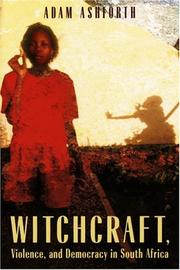
Witchcraft, Violence, and Democracy in South Africa
Explains belief, fear and violence.

Endnotes
1.
Source: compass.onlinelibrary.wiley.com
Link:https://compass.onlinelibrary.wiley.com/doi/10.1111/j.1478-0542.2009.00637.x
Source snippet
Wiley Online LibraryThe Xhosa Cattle‐Killing Movement in History and Literature6 Nov 2009 — Nongqawuse and Mhlakaza's prophecies failed s...
2.
Source: open.uct.ac.za
Link:https://open.uct.ac.za/items/6ba5b82a-8015-49a4-bb4b-ba00f126f00d
Source snippet
Nongqawuse's Prophecies Revisited: Centring the...by J Slingers · 2022 — This study centres the work of South African historians in the...
3.
Source: link.springer.com
Link:https://link.springer.com/chapter/10.1057/9780230245273_14
Source snippet
a young woman known as Nongqawuse, by ancestors long dead. Over 400,000 cattle were killed in compliance with the cattle...
4.
Source: jstor.org
Link:https://www.jstor.org/stable/684521
Source snippet
The Xhosa Cattle Killing and the Politics of Memoryby A Ashforth · 1991 · Cited by 48 — Nongqawuse was told, all the Xhosa must burn...
5.
Source: jstor.org
Link:https://www.jstor.org/stable/j.ctv35q8nm
6.
Source: academic.oup.com
Link:https://academic.oup.com/ahr/article-abstract/125/1/344/5721625
7.
Source: newcontree.org.za
Link:https://newcontree.org.za/index.php/nc/article/view/246/261
8.
Source: jstor.org
Link:https://www.jstor.org/stable/218144
9.
Source: link.springer.com
Link:https://link.springer.com/rwe/10.1007/978-3-031-74932
10.
Source: jstor.org
Link:https://www.jstor.org/stable/pdf/23267031.pdf
11.
Source: researchgate.net
Link:https://www.researchgate.net/publication/260097720_%27No_less_a_foe_than_Satan_himself%27_The_Devil_Transition_and_Moral_Panic_in_White_South_Africa
12.
Source: compass.onlinelibrary.wiley.com
Link:https://compass.onlinelibrary.wiley.com/doi/10.1111/rec3.70064
13.
Source: open.uct.ac.za
Link:https://open.uct.ac.za/bitstreams/7c8bc3b2-0567-489a-9b0b-fd0373263336/download
14.
Source: researchgate.net
Link:https://www.researchgate.net/publication/378739628_South_Africa%27s_Occult_Crimes_Unit_How_Apartheid_shaped_South_African_attitudes_toward_Paganism_and_the_Occult
15.
Source: Wikipedia
Title: Satanic panic (South Africa)
Link:https://en.wikipedia.org/wiki/Satanic_panic_%28South_Africa%29
16.
Source: researchgate.net
Title: Research Gate Mass hysteria among South African primary school
Link:https://www.researchgate.net/publication/271759288_Mass_hysteria_among_South_African_primary_school_learners_in_Kwa-Dukuza_KwaZulu-Natal
17.
Source: pmc.ncbi.nlm.nih.gov
Link:https://pmc.ncbi.nlm.nih.gov/articles/PMC3588562/
18.
Source: pmc.ncbi.nlm.nih.gov
Title: PMCMass psychogenic illness and the social network
Link:https://pmc.ncbi.nlm.nih.gov/articles/PMC3536509/
19.
Source: news.uj.ac.za
Title: Respite from Revolution- the appeal of miracle churches
Link:https://news.uj.ac.za/news/respite-from-revolution-the-appeal-of-miracle-churches-2/
20.
Source: link.springer.com
Title: Commercialisation of Religion in South Africa
Link:https://link.springer.com/book/10.1007/978-3-031-41837-2
21.
Source: Wikipedia
Title: Satanic panic
Link:https://en.wikipedia.org/wiki/Satanic_panic
22.
Source: Wikipedia
Title: South Africa
Link:https://en.wikipedia.org/wiki/South_Africa
23.
Source: Wikipedia
Title: Mass psychogenic illness
Link:https://en.wikipedia.org/wiki/Mass_psychogenic_illness
24.
Source: Wikipedia
Title: Tanganyika laughter epidemic
Link:https://en.wikipedia.org/wiki/Tanganyika_laughter_epidemic
25.
Source: Wikipedia
Link:https://en.wikipedia.org/wiki/Nongqawuse
26.
Source: Wikipedia
Title: Bulhoek massacre
Link:https://en.wikipedia.org/wiki/Bulhoek_massacre
27.
Source: academic.oup.com
Link:https://academic.oup.com/shm/article/19/1/175/2259072
28.
Source: researchgate.net
Link:https://www.researchgate.net/publication/289475318_Witchcraft_in_post-colonial_Africa_Beliefs_techniques_and_containment_strategies
29.
Source: researchgate.net
Link:https://www.researchgate.net/publication/277864567_Mass_hysteria_among_South_African_primary_school
30.
Source: researchgate.net
Link:https://www.researchgate.net/publication/45681143_Doomsday_movements_in_Africa_Restoration_of_the_Ten_Commandments_of_God
31.
Source: researchgate.net
Link:https://www.researchgate.net/publication/262961669_%27Satan_has_come_to_Rietfontein%27_Race_in_South_Africa%27s_Satanic_Panic
32.
Source: researchgate.net
Link:https://www.researchgate.net/publication/326281555_The_Finger_of_God_Enoch_Mgijima_the_Israelites_and_the_Bulhoek_Massacre_in_South_Africa
33.
Source: researchgate.net
Link:https://www.researchgate.net/publication/367467849_Freedom_by_Regulation_A_Legal_Assessment_of_the_CRL_Commission%27s_Report_on_the_Commercialisation_of_Religion_and_Abuse_of_People%27s_Belief_Systems_Research_Article
34.
Source: researchgate.net
Link:https://www.researchgate.net/publication/339068231_Witchcraft_Accusation_and_the_Challenges_Related_Thereto_Can_South_Africa_Provide_a_Response_to_this_Phenomenon_Experienced_in_Tanzania
35.
Source: compass.onlinelibrary.wiley.com
Link:https://compass.onlinelibrary.wiley.com/doi/abs/10.1111/rec3.70041
36.
Source: jstor.org
Link:https://www.jstor.org/stable/177846
37.
Source: jstor.org
Link:https://www.jstor.org/stable/42001291
38.
Source: sahistory.org.za
Link:https://sahistory.org.za/people/nongqawuse
Source snippet
South African History OnlineNongqawuseWhat we know of her is mainly related to the Cattle-Killing/Millenarian Movement of 1856-7 and her...
39.
Source: tandfonline.com
Title: Taylor & Francis Online Full article
Link:https://www.tandfonline.com/doi/full/10.1080/00020180802242517
Source snippet
Taylor & Francis OnlineFull article: IntroductionThe millennial movement commonly known as the 'Xhosa Cattle-Killing' constitutes a pivot...
40.
Source: repository.cam.ac.uk
Link:https://www.repository.cam.ac.uk/items/819d843f-7a9d-4e84-b5aa-1cdf09ff7be3
Source snippet
bridge Repositorythe telling of Nongqawuse and the Xhosa Cattle-Killing in...by S Boniface Davies · 2011 · Cited by 5 — In this disse...
41.
Source: saha.org.za
Title: may 24 marks 91 years since the bulhoek massacre
Link:https://www.saha.org.za/news/2012/May/may_24_marks_91_years_since_the_bulhoek_massacre.htm
42.
Source: researchspace.ukzn.ac.za
Link:https://researchspace.ukzn.ac.za/items/06dc61df-6367-4f8e-8966-46006f614ede
43.
Source: obiter.mandela.ac.za
Link:https://obiter.mandela.ac.za/article/download/11193/16442/
44.
Source: justice.gov.za
Title: Justice PROJECT 135 THE REVIEW OF THE WITCHCRAFT
Link:https://www.justice.gov.za/salrc/dpapers/dp158-p135-Revised-Review-WitchcraftSuppressionAct.pdf
45.
Source: justice.gov.za
Link:https://www.justice.gov.za/salrc/media/20160119-prj135-dp139-WitchcraftSuppression.pdf
46.
Source: justice.gov.za
Title: dp139 Witchcraft Suppression
Link:https://www.justice.gov.za/salrc/dpapers/dp139-WitchcraftSuppression.pdf
47.
Source: justice.gov.za
Link:https://www.justice.gov.za/salrc/nwl/Newsletter_SALRC_May2015.pdf
48.
Source: safpj.co.za
Link:https://safpj.co.za/index.php/safpj/article/view/1411
49.
Source: pmg.org.za
Title: committee meeting
Link:https://pmg.org.za/committee-meeting/24693/
50.
Source: gov.za
Link:https://www.gov.za/sites/default/files/gcis_document/201708/report-commecializationofreligionandabuseofpeoplesbelievesystems.pdf
51.
Source: saps.gov.za
Link:https://www.saps.gov.za/resource_centre/paia/sec15_avail_records.pdf
52.
Source: saps.gov.za
Title: pol mag oct 2017
Link:https://www.saps.gov.za/resource_centre/publications/police_mag/pol_mag_oct_2017.pdf
53.
Source: saps.gov.za
Title: SAPS AR 2014 15 for viewing
Link:https://www.saps.gov.za/about/stratframework/annual_report/2014_2015/SAPS_AR_2014-15_for_viewing.pdf
54.
Source: saps.gov.za
Title: SAPS Annual Report 2023 24
Link:https://www.saps.gov.za/about/stratframework/annual_report/2023_2024/SAPS_Annual%20Report_2023-24.pdf
55.
Source: saps.gov.za
Title: Detective and Forensic Services
Link:https://www.saps.gov.za/careers/downloads/internships-2024/Detective-and-Forensic-Services.pdf
56.
Source: saps.gov.za
Link:https://www.saps.gov.za/about/stratframework/strategic_plan/2015_2019/Strat_plan_2014-2019.pdf
57.
Source: saps.gov.za
Title: saps annual report 2017 2018
Link:https://www.saps.gov.za/about/stratframework/annual_report/2017_2018/saps_annual_report_2017_2018.pdf
58.
Source: saps.gov.za
Link:https://www.saps.gov.za/dpci/contactus.php
59.
Source: saps.gov.za
Title: saps annualreport2018 2019v2
Link:https://www.saps.gov.za/about/stratframework/annual_report/2018_2019/saps_annualreport2018_2019v2.pdf
60.
Source: saps.gov.za
Title: Annual Report 2021 22
Link:https://www.saps.gov.za/about/stratframework/annual_report/2021_2022/Annual-Report-2021-22.pdf
61.
Source: sajp.org.za
Link:https://sajp.org.za/index.php/sajp/article/view/1671/2648
62.
Source: pmc.ncbi.nlm.nih.gov
Link:https://pmc.ncbi.nlm.nih.gov/articles/PMC9090196/
63.
Source: pubmed.ncbi.nlm.nih.gov
Link:https://pubmed.ncbi.nlm.nih.gov/35747341/
64.
Source: pmc.ncbi.nlm.nih.gov
Link:https://pmc.ncbi.nlm.nih.gov/articles/PMC7396040/
65.
Source: gov.za
Title: more transkei schools affected mass hysteria 13 aug 2009
Link:https://www.gov.za/news/media-statements/more-transkei-schools-affected-mass-hysteria-13-aug-2009
66.
Source: justice.gov.za
Link:https://www.justice.gov.za/salrc/media.htm
67.
Source: justice.gov.za
Title: 2022 2023 anr salrc
Link:https://www.justice.gov.za/salrc/anr/2022-2023-anr-salrc.pdf
68.
Source: justice.gov.za
Link:https://www.justice.gov.za/salrc/rss.html
69.
Source: justice.gov.za
Link:https://www.justice.gov.za/salrc/projectlist.htm
70.
Source: justice.gov.za
Title: 2016 2017 anr salrc
Link:https://www.justice.gov.za/salrc/anr/2016-2017-anr-salrc.pdf
71.
Source: justice.gov.za
Link:https://www.justice.gov.za/salrc/dpapers.htm
72.
Source: sahistory.org.za
Title: significance bulhoek massacre today sam matiase 11 may 2015 south africa
Link:https://sahistory.org.za/archive/significance-bulhoek-massacre-today-sam-matiase-11-may-2015-south-africa
Published: may 2015
73.
Source: sahistory.org.za
Title: cattle killing movement
Link:https://sahistory.org.za/article/cattle-killing-movement
74.
Source: journal.eu-jr.eu
Link:https://journal.eu-jr.eu/social/article/view/2423
75.
Source: hts.org.za
Link:https://hts.org.za/index.php/hts/article/view/5593/14388
76.
Source: hts.org.za
Link:https://hts.org.za/index.php/hts/article/view/6340/17809
77.
Source: ajol.info
Link:https://www.ajol.info/index.php/sajpsyc/article/view/241175
78.
Source: verbumetecclesia.org.za
Link:https://verbumetecclesia.org.za/index.php/ve/article/view/1736
79.
Source: ebsco.com
Link:https://www.ebsco.com/research-starters/communication-and-mass-media/satanic-panic
Additional References
80.
Source: youtube.com
Link:https://www.youtube.com/watch?v=jClhOegbedo
Source snippet
Witchcraft and Witch Accusations/Confessions in African Christianity | Samuel Kunhiyop...
81.
Source: youtube.com
Link:https://www.youtube.com/watch?v=GfTpWuj0ZmI
Source snippet
Children warned against occult related crimes...
82.
Source: youtube.com
Title: Johan de Beer unpacks the satanism issue in SA schools
Link:https://www.youtube.com/watch?v=W4jdWlGAEdA
Source snippet
Attention on violence linked to witchcraft accusations in parts of the Eastern Cape...
83.
Source: academia.edu
Link:https://www.academia.edu/19470588/The_Story_of_Nongqawuse_in_South_African_Twentieth_Century_Fiction
84.
Source: nickyfalkof.com
Link:https://nickyfalkof.com/academic-writing/
85.
Source: encyclopedia.com
Link:https://www.encyclopedia.com/environment/encyclopedias-almanacs-transcripts-and-maps/african-religions-new-religious-movements
86.
Source: facebook.com
Link:https://www.facebook.com/dw.africa/posts/do-you-believe-witches-exist-in-your-countrya-recent-amnesty-international-repor/1076931524470739/
87.
Source: facebook.com
Link:https://www.facebook.com/BBCnewsafrica/posts/exactly-20-years-ago-700-people-were-locked-inside-a-church-in-uganda-and-it-was/10158447019940229/?locale=hi_IN
88.
Source: instagram.com
Link:https://www.instagram.com/reel/DY2tZcSIqwc/
89.
Source: facebook.com
Link:https://www.facebook.com/MyANCza/posts/president-zuma-receives-commission-report-on-commercialisation-of-religion-and-a/1637958699572238/
Topic Tree
Follow this branch
Related pages 192
- Antigua and Barbuda
- Argentina Belief Scares
- Azerbaijan Belief
- Bahrain Beliefs
- North Korea
- +187 more in sidebar