Within Sri Lanka Panics
Why Did Illness Spread Through Sri Lankan Schools?
The 2012 school outbreaks show how genuine symptoms can spread through fear even when no single toxin or infection explains the pattern.
On this page
- What happened at Jinaraja Balika Vidyalaya
- How mass psychogenic illness spreads
- What investigators could and could not prove
Page outline Jump by section
Introduction
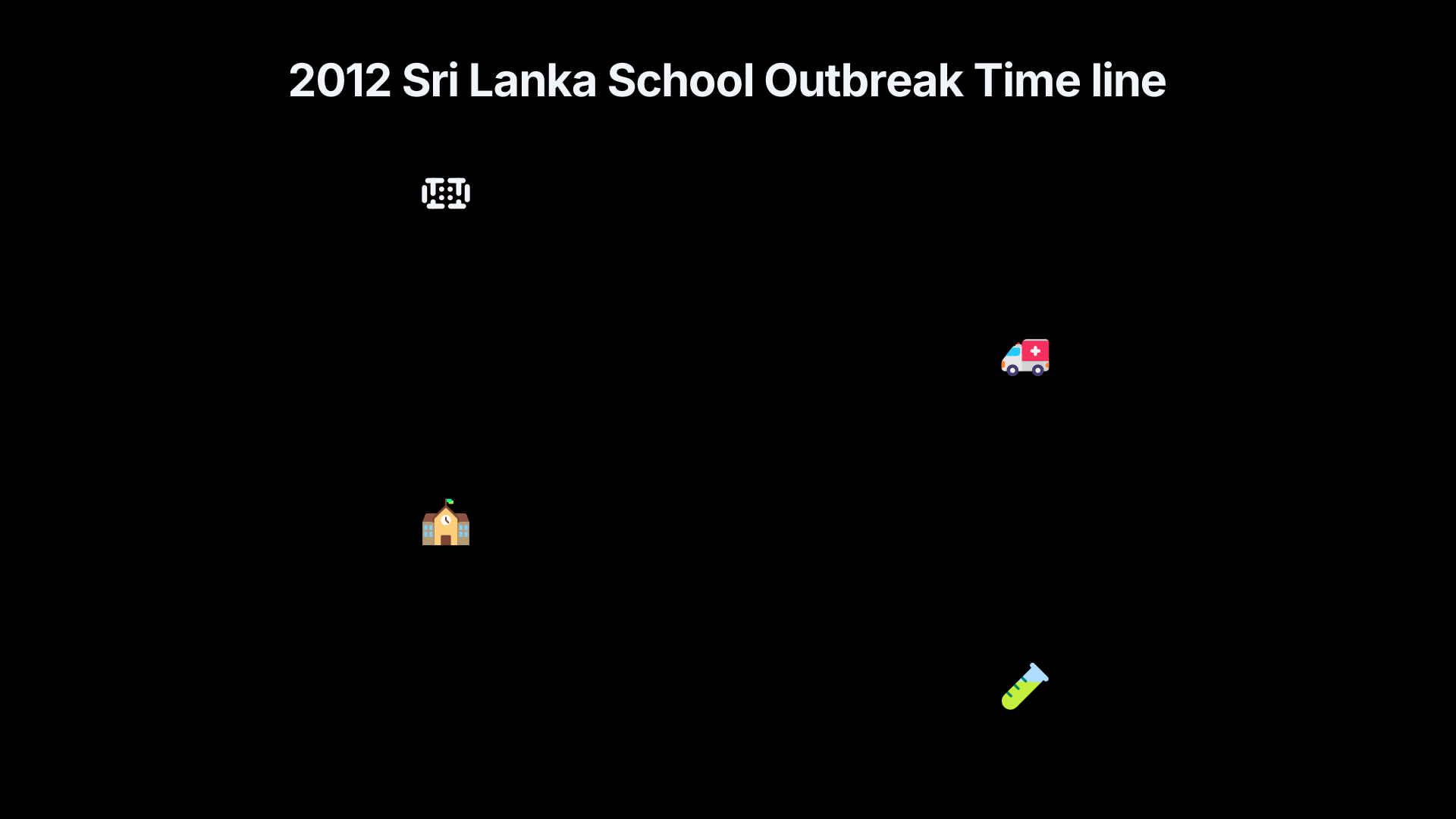
In late 2012, Sri Lanka experienced an unusual wave of illness in schools that began at Jinaraja Balika Vidyalaya in Gampola and spread to schools in several other districts over the following days. More than 1,900 pupils and at least five teachers reportedly received hospital treatment for symptoms including skin irritation, rashes, dizziness, vomiting, coughing and fainting. Despite extensive medical and environmental investigations, officials were unable to identify a single infectious disease, toxic chemical or environmental hazard that explained every case.[sundaytimes.lk]sundaytimes.lkReal or psychological, what ails these students? | The Sundaytimes Sri LankaNovember 18, 2012…
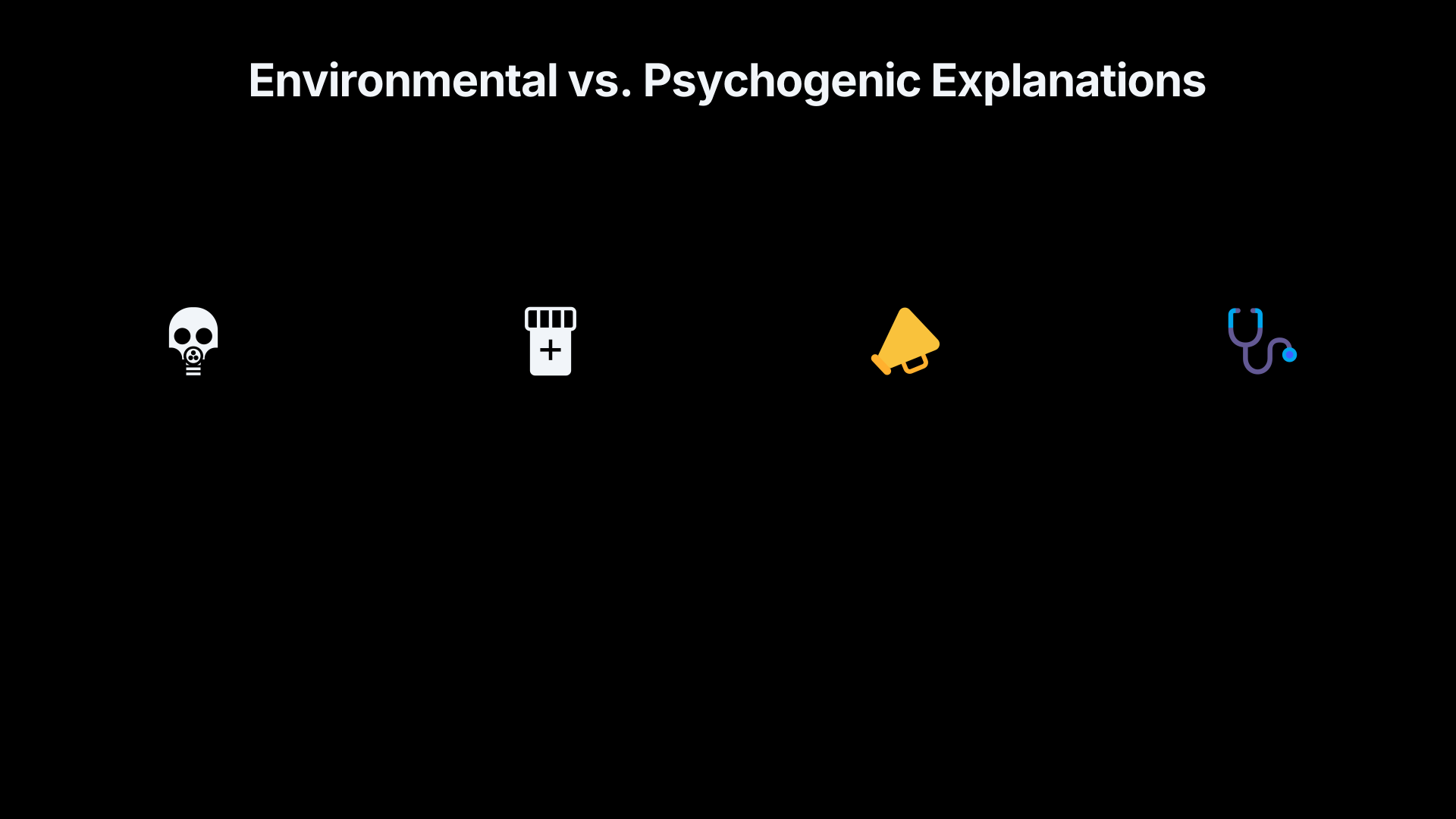
The episode has since become one of Sri Lanka’s best-known examples of suspected mass psychogenic illness, sometimes called mass sociogenic illness or, in older literature, mass hysteria. The term does not mean that people were pretending or imagining their symptoms. Rather, it describes a situation in which genuine physical symptoms spread through a group under conditions of heightened anxiety after an initial triggering event, even though no common physical cause can be demonstrated. The Sri Lankan outbreaks remain important because they illustrate both the limits of medical investigation and the powerful role that fear, uncertainty and social communication can play in schools.
What happened at Jinaraja Balika Vidyalaya?
The first major incident occurred in November 2012 at Jinaraja Balika Vidyalaya, a girls’ school in Gampola. Initial reports described a small number of pupils developing skin irritation and other symptoms. Within days, the number of affected students increased dramatically, eventually leading to around 1,000 hospital visits from the school alone. The school was temporarily closed while authorities cleaned the premises and searched for possible environmental causes.[sundaytimes.lk]sundaytimes.lkReal or psychological, what ails these students? | The Sundaytimes Sri LankaNovember 18, 2012…
Doctors initially considered a wide range of possibilities. Because many pupils reported itching and rashes, attention focused on possible allergic reactions, pesticides, chemical contamination, polluted air, contaminated food or water, or other environmental exposures. Samples were collected from classrooms and school grounds, while blood and other laboratory tests were carried out.[sundaytimes.lk]sundaytimes.lkReal or psychological, what ails these students? | The Sundaytimes Sri LankaNovember 18, 2012…
As media coverage intensified, similar reports emerged from additional schools across the country. Within less than a week, approximately fifteen schools had reported clusters of comparable symptoms, with the total number of treated pupils exceeding 1,900. Although the precise mix of symptoms varied between schools, the pattern of rapid spread raised questions that a purely environmental explanation struggled to answer.[Wikipedia]WikipediaList of mass panic casesList of mass panic cases
Why did investigators suspect mass psychogenic illness?
One reason investigators considered mass psychogenic illness was that repeated environmental testing failed to identify a consistent toxic exposure linking all of the affected schools. Public health officials reported that examinations of dust, food and water had not produced evidence explaining the widespread illnesses, even while investigations continued.[sundaytimes.lk]sundaytimes.lkReal or psychological, what ails these students? | The Sundaytimes Sri LankaNovember 18, 2012…
Clinicians also noticed that many pupils arriving at hospitals showed anxiety-related symptoms without the physical signs expected from a shared poisoning or allergic outbreak. According to reporting at the time, some doctors estimated that a large proportion of hospital visits reflected panic reactions after pupils saw classmates becoming ill or heard rumours about a dangerous exposure.[sundaytimes.lk]sundaytimes.lkReal or psychological, what ails these students? | The Sundaytimes Sri LankaNovember 18, 2012…
Psychiatrist Harischandra Gambheera, speaking during the outbreak, explained that dissociative or psychogenic reactions can occur in groups of children, particularly where anxiety spreads quickly through close social contact. His comments reflected one possible explanation rather than a definitive diagnosis for every affected child.[sundaytimes.lk]sundaytimes.lkReal or psychological, what ails these students? | The Sundaytimes Sri LankaNovember 18, 2012…
Importantly, officials did not argue that the first illnesses had necessarily been psychological. An initial allergic reaction or another genuine medical problem may have affected some pupils. The difficulty was explaining why similar symptoms then appeared rapidly among large numbers of students in multiple schools despite the lack of evidence for a common biological or chemical cause.[sundaytimes.lk]sundaytimes.lkReal or psychological, what ails these students? | The Sundaytimes Sri LankaNovember 18, 2012…
How mass psychogenic illness spreads
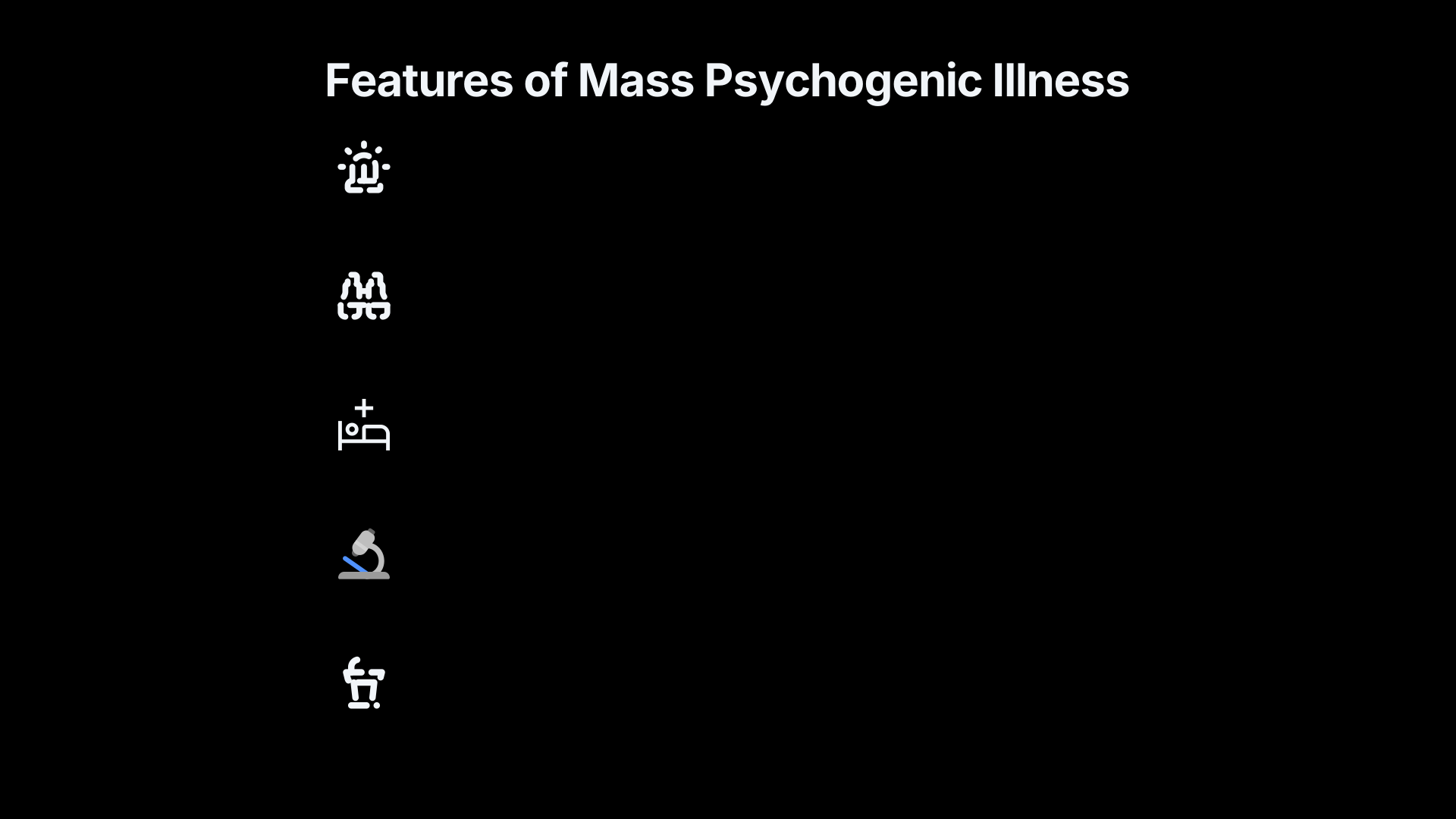
Mass psychogenic illness is a recognised phenomenon in public health and has been documented in schools, factories and other close-knit communities around the world. Modern medical literature identifies several recurring features:
- an initial trigger, such as an unusual smell, illness or alarming event;
- uncertainty about whether the threat is real;
- rapid spread among people who observe others becoming ill;
- symptoms that are genuine and distressing, even without an identifiable toxin or infection;
- normal or inconclusive environmental and laboratory investigations; and
- improvement once reassurance is provided and anxiety subsides.[aafp.org]aafp.orgMass Psychogenic Illness: Role of the Individual Physician | AFPDecember 15, 2000…
Schools are particularly susceptible because pupils spend long periods together, observe one another closely and often experience common sources of stress. Adolescents, especially girls, have been over-represented in many documented school outbreaks internationally, although the reasons remain debated and probably involve social rather than biological factors alone.[AAFP]aafp.orgMass Psychogenic Illness: Role of the Individual Physician | AFPDecember 15, 2000…
The symptoms themselves are real. Headaches, dizziness, nausea, fainting, skin sensations, hyperventilation and weakness can all arise through physiological stress responses. Describing an outbreak as psychogenic does not imply that affected people are dishonest or mentally ill. Instead, it reflects the interaction between the brain, the body’s stress systems and social influence.[AAFP]aafp.orgMass Psychogenic Illness: Role of the Individual Physician | AFPDecember 15, 2000…
What investigators could and could not prove
The Sri Lankan outbreaks demonstrate an important limitation of outbreak investigations: proving that nothing caused an illness is effectively impossible.
Investigators were able to establish several things with reasonable confidence:
- they found no single environmental contaminant that explained cases across numerous schools;
- symptoms spread far beyond the original school within a short period;
- many patients recovered quickly after observation and supportive treatment; and
- no major epidemic infectious disease was identified as the common cause.[sundaytimes.lk]sundaytimes.lkReal or psychological, what ails these students? | The Sundaytimes Sri LankaNovember 18, 2012…
At the same time, investigators could not conclusively prove that every individual case had a psychological origin. Some pupils may have experienced genuine allergies, viral infections or unrelated medical conditions that happened to coincide with the broader episode. Public health experts therefore generally emphasise careful investigation before concluding that an outbreak is psychogenic. International guidance stresses that mass psychogenic illness is not simply a diagnosis made after ruling everything else out; it requires considering the pattern of spread alongside medical findings.[AAFP]aafp.orgMass Psychogenic Illness: Role of the Individual Physician | AFPDecember 15, 2000…
This distinction matters because prematurely dismissing patients can undermine public trust, while assuming a toxic exposure without evidence can unnecessarily amplify fear.
Why the outbreaks mattered
Although the 2012 school illnesses caused widespread alarm, they also prompted discussion about how authorities should communicate during unexplained public health events.
International experience shows that dramatic emergency responses, contradictory official statements and intense media attention can unintentionally reinforce fears that a hidden danger exists, encouraging additional cases among anxious observers. Clear communication, transparent investigation and reassurance after careful testing are generally regarded as the most effective responses.[AAFP]aafp.orgMass Psychogenic Illness: Role of the Individual Physician | AFPDecember 15, 2000…
Within Sri Lanka’s wider history of collective scares, the school illness outbreaks differ from episodes driven mainly by rumours about criminals or minority groups. Here, the central issue was not a conspiracy theory but the difficulty of interpreting genuine symptoms when scientific investigations failed to identify a shared physical cause. The episode remains an important reminder that psychological and social processes can produce authentic physical suffering, and that public health responses must address both medical evidence and community anxiety.
Amazon book picks
Further Reading
Books and field guides related to Why Did Illness Spread Through Sri Lankan Schools?. Use these as the next step if you want deeper reading beyond the article.
Extraordinary Popular Delusions and the Madness of Crowds
Rating: 4.0/5 from 5 Google Books ratings
General background on contagious beliefs.

Mass Hysteria in Schools: A Worldwide History Since 1566
Directly addresses episodes like the Sri Lankan school illnesses.
Outbreak! The Encyclopedia of Extraordinary Social Behavior
Covers psychogenic illness and related phenomena.
Endnotes
1.
Source: sundaytimes.lk
Title: Real or psychological, what ails these students? | The Sundaytimes Sri Lanka
Link:https://www.sundaytimes.lk/121118/news/real-or-psychological-what-ails-these-students-21034.html
Source snippet
November 18, 2012...
Published: November 18, 2012
2.
Source: Wikipedia
Title: List of mass panic cases
Link:https://en.wikipedia.org/wiki/List_of_mass_panic_cases
3.
Source: aafp.org
Link:https://www.aafp.org/afp/2000/1215/p2649
Source snippet
Mass Psychogenic Illness: Role of the Individual Physician | AFPDecember 15, 2000...
Published: December 15, 2000
4.
Source: aafp.org
Title: What Is Mass Psychogenic Illness? | AFP
Link:https://www.aafp.org/afp/2000/1215/p2655
Source snippet
What Is Mass Psychogenic Illness? | AFP...
5.
Source: news.trust.org
Title: 20120227175900 lyt6o
Link:https://news.trust.org/item/20120227175900-lyt6o
6.
Source: everything.explained.today
Title: List of mass panic cases
Link:https://everything.explained.today/List_of_mass_panic_cases/
7.
Source: nejm.org
Link:https://www.nejm.org/doi/full/10.1056/NEJM200001133420206
8.
Source: nejm.org
Link:https://www.nejm.org/doi/abs/10.1056/NEJM200001133420206
9.
Source: wiki-gateway.eudic.net
Title: Mass hysteria
Link:https://wiki-gateway.eudic.net/wikipedia_en/Mass_hysteria.html
Source snippet
7, 2016 — ^{[33]} BRUNEI (2010) In April and May 2010, incidents of mass hysteria occurred at two all-girls secondary schools in Brunei.^...
Published: May 2010
Additional References
10.
Source: pmc.ncbi.nlm.nih.gov
Link:https://pmc.ncbi.nlm.nih.gov/articles/PMC4884863/
Source snippet
Mass psychogenic illness has been a recurrent phenomenon in Bangladesh over recent times. Objectives. This study was aimed at investigati...
11.
Source: youtube.com
Title: The Razor-Thin Line Between Contagion and Connection | Dan Taberski | TED
Link:https://www.youtube.com/watch?v=u0fFIJapsRY
Source snippet
East African Laughing Epidemic – History Documentary...
12.
Source: youtube.com
Title: Teens’ tics: Mysterious illness or hysteria?
Link:https://www.youtube.com/watch?v=rLT5acgRoIg
Source snippet
Case Of Students Being Fearful And Hungry: Dy CMO On Mass Hysteria In Uttarakhand School...
13.
Source: youtube.com
Title: Stop that! It’s not Tourette’s but a new type of mass sociogenic illness
Link:https://www.youtube.com/watch?v=-nsIZwlHUBM
Source snippet
Teens' tics: Mysterious illness or hysteria?...
14.
Source: youtube.com
Title: East African Laughing Epidemic – History Documentary
Link:https://www.youtube.com/watch?v=pGVvD7hlYzI
Source snippet
Stop that! It's not Tourette's but a new type of mass sociogenic illness...
15.
Source: dcfs.developer.istanbul
Title: istanbul Mass hysteria
Link:https://dcfs.developer.istanbul/Mass_hysteria.html
Source snippet
More than 1,900 school children of 15 schools in Sri Lanka and five teachers were treated...
16.
Source: independent.co.uk
Link:https://www.independent.co.uk/life-style/health-and-families/features/did-mass-hysteria-cause-40-pupils-to-faint-at-a-remembrance-service-a6732426.html
17.
Source: sciencedirect.com
Link:https://www.sciencedirect.com/science/article/abs/pii/S1723861712000597
18.
Source: sciencedirect.com
Link:https://www.sciencedirect.com/science/article/abs/pii/S0165032714003577
19.
Source: kclpure.kcl.ac.uk
Link:https://kclpure.kcl.ac.uk/portal/en/publications/outcomes-and-moderators-of-a-preventive-school-based-mental-healt/
Topic Tree