When Belief and Fear Reshaped Saudi Arabia
Saudi Arabia’s history of contagious belief and collective fear is dominated by two unusually consequential patterns: the armed millenarian movement that seized the Grand Mosque in Mecca in 1979, and the state-backed pursuit of people accused of witchcraft or sorcery.

Page outline Jump by section
Introduction
Other Saudi incidents sometimes described loosely as “panic” — particularly deadly crowd disasters during the pilgrimage — require different explanations. Research on pilgrimage congestion points to density, bottlenecks and dangerous crowd dynamics, not irrational stampeding caused by shared delusion. The Saudi record therefore shows why careful labels matter: apocalyptic militancy, witch persecution, moral regulation and crowd disaster may overlap in public memory, but they are not the same social phenomenon.[arXiv]arxiv.orgarXiv From Crowd Dynamics to Crowd Safety: A Video-Based AnalysisFrom Crowd Dynamics to Crowd Safety: A Video-Based AnalysisOctober 25, 2008…
The apocalyptic seizure of Mecca
On 20 November 1979, the first day of a new Islamic century, armed followers of Juhayman al-Otaybi occupied the Grand Mosque in Mecca. The timing was central to their message. They proclaimed that Juhayman’s brother-in-law, Muhammad al-Qahtani, was the expected redeemer whose appearance would precede the end times and restore justice. The seizure was therefore not merely an attack on a government building or a conventional coup attempt. It was a millenarian rebellion: a movement convinced that history had reached a sacred turning point.[Wikipedia]WikipediaGrand Mosque seizureGrand Mosque seizure
Juhayman’s followers had emerged from conservative religious networks rather than from an entirely new faith. They condemned the Saudi monarchy’s wealth, its relationship with Western powers, the expansion of television and consumer culture, and what they regarded as corruption and insufficient religious purity. Their language drew on recognised religious traditions, but they combined them into a radical claim that placed their own group at the centre of an unfolding divine drama. Scholars of new religious movements treat this relationship with the surrounding religious community and political authority as crucial: movements may share much of the dominant tradition while making an explosive claim to special authority, revelation or end-times importance.[Foreign Policy]foreignpolicy.comForeign Policy How Do You Prove Someone's a Witch in Saudi Arabia?Call the religious police's Anti-Witchcraft Unit and get them to set up a sting operation.Read more…
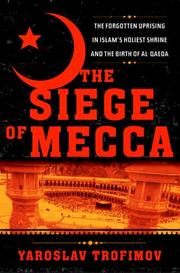
The rebels entered the mosque with weapons and supplies and trapped worshippers inside the sprawling complex. Saudi forces initially faced an exceptional problem: violence in Islam’s holiest sanctuary carried immense religious and political risks, while the militants occupied galleries, towers and underground chambers that were difficult to clear. The siege lasted about two weeks. Al-Qahtani was killed, Juhayman was captured, and dozens of surviving rebels were subsequently executed. Exact casualty totals vary between accounts, which is one reason dramatic retellings should be treated cautiously.[Wikipedia]WikipediaGrand Mosque seizureGrand Mosque seizure
Why followers accepted the claim
The proclamation did not arise from credulity alone. Several pressures made an apocalyptic message attractive to a small but committed audience.
Saudi Arabia had undergone extremely rapid change. Oil wealth had transformed cities, employment, education and consumption within a generation. To religious conservatives, imported goods, foreign workers, mass media and the visible luxury of elites could be framed as evidence that the country was abandoning the austerity associated with its founding ideals. Juhayman converted unease about modernisation into a story of betrayal and approaching judgement.
His group also offered certainty. Millenarian movements often simplify confusing change by dividing the world into the pure and the compromised, interpreting political conflict as part of a predetermined sacred timetable. Once al-Qahtani had been identified as the redeemer, ordinary coincidences — his name, ancestry, appearance or the calendar — could be treated as confirming signs. Commitment to the group then made contrary evidence easier to dismiss.
This does not mean that every participant held an identical belief. Some may have been motivated by loyalty, anger at the monarchy, personal relationships or the momentum of the armed operation. Calling the movement simply a “cult” can obscure these differences. “Millenarian insurgency”, “apocalyptic movement” or “religious rebellion” describes the central claim more precisely without pretending that theology was its only cause.
How the siege changed Saudi society
The seizure failed militarily, but it helped reshape the political climate. The monarchy faced pressure to prove that it, rather than Juhayman’s rebels, was the legitimate protector of religion. Accounts of the period commonly connect the aftermath with stronger conservative control over public life, education, broadcasting, gender segregation and popular culture. The result was paradoxical: the state crushed an anti-government movement while accommodating parts of the wider conservative mood from which it had emerged.[sauditimes.org]sauditimes.orgthe 1979 grand mosque seizure 40 years later part 2The 1979 Grand Mosque Siege: Uncovering the Roots of…While its immediate consequences were political and religious, the siege also tri…
It would be too simple to attribute every later restriction to the siege. Saudi conservatism had much older institutional roots, and 1979 also brought the Iranian Revolution, regional unrest and heightened competition over religious legitimacy. The Grand Mosque attack nevertheless became a powerful warning. It demonstrated that a movement could use the government’s own religious language against it, portraying rulers as impure and itself as the defender of authentic belief.
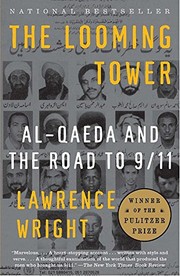
The episode also became a foundation myth in later discussions of Saudi militancy. Some later armed activists admired Juhayman’s defiance even when they did not accept every aspect of his end-times claim. His writings and story survived because they offered several usable narratives at once: resistance to monarchy, rejection of Western influence, purification of society and sacrifice by a small vanguard. Academic work on militant networks has consequently treated the siege as an influential precedent rather than an isolated outburst of irrationality.[Cambridge University Press & Assessment]cambridge.orgUniversity Press & Assessment The Emergence of Tawhid (Chapter 3University Press & Assessment The Emergence of Tawhid (Chapter 3
Public memory has often flattened this complexity. Popular accounts may present the rebels as fanatics appearing from nowhere or imply that Saudi society changed overnight solely because of the attack. A more convincing interpretation sees the siege as an extreme expression of tensions already present: rapid modernisation, unequal access to wealth, rivalry over religious authority and anxiety about cultural change.
Witchcraft accusations became a state campaign
Saudi witchcraft cases followed a different pattern. They were not centred on one movement or a single outbreak. They formed a recurring system of accusation, investigation and punishment in which official institutions treated harmful magic as a real threat.
Human Rights Watch reported that Saudi law provided no clear statutory definition of witchcraft and that officials could not specify consistently what evidence should prove it. Yet defendants faced imprisonment, flogging and, in some cases, execution. Behaviours described as witchcraft included fortune-telling, alleged spell-casting, possession of books or amulets, folk healing and claims to influence relationships.[Human Rights Watch]hrw.orgOpen source on hrw.org.
This uncertainty made accusations unusually dangerous. In one case, an Eritrean man’s personal telephone booklet, written in the Tigrinya script, was treated as a talisman. In another, Lebanese television personality Ali Sabat was arrested while visiting Saudi Arabia after having made predictions and offered advice on satellite television. Human Rights Watch said his media appearances appeared to be the principal evidence and reported that he had no lawyer at trial.[Human Rights Watch]hrw.orgOpen source on hrw.org.
The accusations could also grow from a moment of fear. In 2012, Saudi media reported that a Sri Lankan woman had been arrested after a father said his 13-year-old daughter began behaving abnormally when she passed close to the woman in a Jeddah shopping centre. The sequence is recognisable from witch panics elsewhere: an unexplained symptom is linked to a nearby outsider, suspicion becomes a supernatural accusation, and officials validate the interpretation by making an arrest. Reuters reported that specialised officers acted rapidly after the complaint.[Reuters]reuters.comSri Lankan held for "witchcraft" in Saudi Arabia | ReutersSri Lankan held for "witchcraft" in Saudi Arabia | Reuters
Saudi Arabia formalised this response through a specialist anti-witchcraft unit associated with the religious police. Reports said that the unit investigated suspects, examined alleged magical objects and encouraged the public to report suspected practitioners. By turning private suspicions into matters for a dedicated bureaucracy, the system gave supernatural accusations the appearance of routine security work.[The Atlantic]theatlantic.comThe Atlantic Saudi Arabia's War on WitchcraftThe Atlantic Saudi Arabia's War on Witchcraft
Who was most vulnerable
Foreign workers appear repeatedly in documented cases. Their vulnerability was not accidental. Migrants could possess religious objects, scripts, medicines or customs unfamiliar to employers and investigators. Language barriers limited their ability to explain these objects, while restricted access to lawyers made it harder to challenge confessions or official interpretations. Human Rights Watch’s 1997 investigation of the execution of a Syrian migrant placed particular emphasis on the vulnerability of foreign workers and the uncertain legal basis of the charge.[Human Rights Watch]hrw.orgHuman Rights Watch SAUDI ARABIAHuman Rights Watch SAUDI ARABIA
Women were also exposed, especially where accusations involved healing, relationship advice or domestic disputes. In 2011, Saudi authorities executed Amina bint Abdul Halim bin Salem Nasser after a conviction for witchcraft and sorcery. Amnesty International said the authorities released little detail about the alleged conduct and argued that the offences were not clearly defined. It also reported the execution that year of a Sudanese man convicted of sorcery following a trial without a lawyer and an alleged confession obtained through torture.[Amnesty International]amnesty.orgInternational Saudi Arabia: Beheading for “sorcery” shockingAmnesty InternationalSaudi Arabia: Beheading for “sorcery” shocking - Amnesty International…
These cases resembled witch persecutions more than spontaneous mass panic. The decisive force was not necessarily a crowd seized by fear, but an institutional environment in which judges, police, complainants and media reports could all reinforce the premise that magical harm was both real and criminal. A single accusation could therefore acquire the power of the state.

Belief, fraud and persecution
Not every person accused of sorcery was necessarily engaged in harmless religious practice. Some fortune-tellers or healers may have charged money for false promises, exploited vulnerable clients or claimed powers they did not possess. Fraud, coercion and abuse can be investigated without accepting supernatural causation. The central problem in the documented Saudi cases was that the category of witchcraft blurred together possible deception, unorthodox belief, possession of unfamiliar objects and alleged invisible harm.
That ambiguity encouraged several kinds of error:
- Misreading ordinary objects: notebooks, medicines, beads, written prayers or unfamiliar alphabets could be treated as magical equipment.
- Turning illness into accusation: distress or unusual behaviour could be attributed to the nearest suspected outsider rather than medically investigated.
- Treating confession as proof: defendants facing intimidation, language barriers or promises of release could confess without the admission being reliable.
- Confusing prediction with supernatural crime: horoscopes, television fortune-telling and relationship advice could be prosecuted as evidence of dangerous magical power.
- Allowing prejudice to select suspects: migrant status, gender, poverty or religious difference could make some people easier to accuse and less able to defend themselves.
This is why “witch panic” is useful only when carefully defined. It does not imply that every Saudi believed every allegation or that the entire country was overcome by frenzy. It identifies a recurring social mechanism: fear of hidden supernatural harm was endorsed by institutions powerful enough to arrest, prosecute and sometimes execute the accused.
The religious police lost significant coercive authority in 2016, when new regulations barred them from pursuing or arresting suspects and required them to report alleged offences to the regular police. This changed the institutional machinery that had driven many earlier morality and sorcery investigations, although it did not by itself settle the legal status of every religiously defined offence.[Reuters]reuters.comSaudi cabinet curbs powers of religious policeSaudi cabinet curbs powers of religious police

Crowd disasters are not collective delusions
Saudi Arabia is also associated with recurrent tragedies involving dense pilgrimage crowds. These are sometimes described in headlines or casual histories as “mass panic” or “stampedes”. Such language can suggest that frightened individuals suddenly behaved irrationally and caused their own deaths. Scientific analysis of pilgrimage footage offers a different account.
Research on the 2006 disaster near the Jamarat Bridge found transitions from ordinary movement to stop-and-go waves and then to extremely unstable crowd motion at high density. Under such conditions, people may be carried, turned or knocked down by forces transmitted through tightly packed bodies. Individuals have little freedom to choose their direction, and those at the rear may not know that people ahead are trapped. The researchers described this as “crowd turbulence”, a physical process more comparable to pressure moving through a fluid than to a contagious false belief.[arXiv]arxiv.orgarXiv The Dynamics of Crowd Disasters: An Empirical StudyarXiv The Dynamics of Crowd Disasters: An Empirical Study
Rumours and fear can worsen an emergency, but they should not be assumed without evidence. Describing a crush as “hysteria” can shift attention away from route design, crowd density, scheduling, barriers, emergency communication and official planning. It may also blame victims for circumstances in which their movements were severely constrained.
This distinction is especially important in Saudi social history because religious pilgrimage attracts enormous, multilingual crowds within limited spaces and times. The presence of intense devotion does not make a crowd disaster a miracle panic, mass delusion or episode of religious frenzy. The proper explanation depends on evidence about movement, infrastructure and communication.
What the Saudi cases reveal
Saudi Arabia’s most important episodes of collective belief were powerful because they joined supernatural claims to institutions.
Juhayman’s movement turned an end-times prophecy into an armed occupation of the country’s holiest site. Its members did not merely await a redeemer; they acted as though the expected transformation of history had begun and demanded that society recognise it. The government’s response ended the rebellion but also intensified a wider struggle over who could define legitimate religion and moral order.
The witchcraft campaign worked from the opposite direction. Rather than a dissident group challenging the state, official bodies accepted and enforced accusations of invisible harm. Personal misfortune, unfamiliar ritual practice or fortune-telling could move from rumour to police file and courtroom. The harshest consequences fell on people who were often poorly equipped to defend themselves.
Neither story is well served by ridicule. Apocalyptic militants were shaped by political grievance, social disruption, group loyalty and religious interpretation, not by a single outbreak of madness. People accused of sorcery faced real imprisonment and death even when the alleged supernatural danger could not be demonstrated. And pilgrimage crushes involved real physical forces, not simply frightened crowds losing their reason.
The broader lesson is that collective fear becomes most dangerous when no institution is willing or able to test its assumptions. A prophecy can become a battle plan; a rumour can become a criminal charge; and a misleading story about “panic” can conceal preventable failures in crowd safety. Saudi Arabia’s history shows that the essential questions are not merely what people believed, but who had authority to act on the belief, who was placed at risk, and what kinds of evidence were allowed to count.


Endnotes
1.
Source: cambridge.org
Title: University Press & Assessment New Religious Movements in Islam
Link:https://www.cambridge.org/core/elements/new-religious-movements-in-islam/5F671C5FD542E90AD023A2F4BEC0F59F
Source snippet
Cambridge University Press & AssessmentNew Religious Movements in Islam...
2.
Source: amnesty.org
Title: International Saudi Arabia: Beheading for “sorcery” shocking
Link:https://www.amnesty.org/en/latest/press-release/2011/12/saudi-arabia-beheading-sorcery-shocking/
Source snippet
Amnesty InternationalSaudi Arabia: Beheading for “sorcery” shocking - Amnesty International...
3.
Source: arxiv.org
Title: arXiv From Crowd Dynamics to Crowd Safety: A Video-Based Analysis
Link:https://arxiv.org/abs/0810.4590
Source snippet
From Crowd Dynamics to Crowd Safety: A Video-Based AnalysisOctober 25, 2008...
Published: October 25, 2008
4.
Source: arxiv.org
Title: arXiv The Dynamics of Crowd Disasters: An Empirical Study
Link:https://arxiv.org/abs/physics/0701203
5.
Source: Wikipedia
Title: Grand Mosque seizure
Link:https://en.wikipedia.org/wiki/Grand_Mosque_seizure
6.
Source: sauditimes.org
Title: the 1979 grand mosque seizure 40 years later part 2
Link:https://sauditimes.org/narratives/viewpoints/the-1979-grand-mosque-seizure-40-years-later-part-2/
Source snippet
The 1979 Grand Mosque Siege: Uncovering the Roots of...While its immediate consequences were political and religious, the siege also tri...
7.
Source: cambridge.org
Link:https://www.cambridge.org/core/journals/international-review-of-social-history/article/migration-minorities-and-radical-networks-labour-movements-and-opposition-groups-in-saudi-arabia-19501975/09573B0AB9AB13154C98DB3B6EA49BBA
Source snippet
Juhayman al-▯Utaybi stormed the Grand mosque in Mecca.Footnote Like the Shia Islamists, the leftists tried to link the takeover of the...
8.
Source: cambridge.org
Title: University Press & Assessment The Emergence of Tawhid (Chapter 3)
Link:https://www.cambridge.org/core/books/jihad-in-the-city/emergence-of-tawhid/3623F164345A7D6C22E53FAA5CEE97C6
9.
Source: resolve.cambridge.org
Title: boko haram from salafism to jihadism
Link:https://resolve.cambridge.org/core/services/aop-cambridge-core/content/view/018ABAC864EBD3F6575CF234D5849EC8/9781316661987c7_p193-219_CBO.pdf/boko_haram_from_salafism_to_jihadism.pdf
10.
Source: reuters.com
Title: Sri Lankan held for “witchcraft” in Saudi Arabia | Reuters
Link:https://www.reuters.com/article/lifestyle/sri-lankan-held-for-witchcraft-in-saudi-arabia-idUSBRE83H0UN/
11.
Source: reuters.com
Title: Saudi cabinet curbs powers of religious police
Link:https://www.reuters.com/article/world/saudi-cabinet-curbs-powers-of-religious-police-idUSKCN0XA25J/
12.
Source: amnesty.de
Link:https://www.amnesty.de/sites/default/files/2025-07/Amnesty-Bericht-Saudi-Arabien-Todesstrafe-Juli-2025.pdf
13.
Source: Wikipedia
Title: Saudi Arabia
Link:https://en.wikipedia.org/wiki/Saudi_Arabia
14.
Source: Wikipedia
Title: Satanic panic
Link:https://en.wikipedia.org/wiki/Satanic_panic
15.
Source: Wikipedia
Title: List of mass panic cases
Link:https://en.wikipedia.org/wiki/List_of_mass_panic_cases
16.
Source: Wikipedia
Title: Capital punishment in Saudi Arabia
Link:https://en.wikipedia.org/wiki/Capital_punishment_in_Saudi_Arabia
17.
Source: Wikipedia
Title: Witchcraft in the Middle East
Link:https://en.wikipedia.org/wiki/Witchcraft_in_the_Middle_East
18.
Source: Wikipedia
Title: Islamic religious police
Link:https://en.wikipedia.org/wiki/Islamic_religious_police
19.
Source: amnesty.org
Title: saudi arabia escalation executions foreign nationals drug related offences
Link:https://www.amnesty.org/en/latest/news/2025/07/saudi-arabia-escalation-executions-foreign-nationals-drug-related-offences/
20.
Source: resolve.cambridge.org
Title: shia islamism
Link:https://resolve.cambridge.org/core/services/aop-cambridge-core/content/view/21FFDB23F43240A6A5F89E1CCB9B80DA/9781107337732c3_p91-113_CBO.pdf/shia_islamism.pdf
21.
Source: cambridge.org
Title: The Global Islamic Revolution (Chapter 8)
Link:https://www.cambridge.org/core/books/revolutionary-world/global-islamic-revolution/221DA1A65B43923337C703EF35364A91
22.
Source: assets.cambridge.org
Title: 9781108830645 index
Link:https://assets.cambridge.org/97811088/30645/index/9781108830645_index.pdf
23.
Source: reuters.com
Link:https://www.reuters.com/article/opinion/king-abdullah-replaces-head-of-saudi-arabias-islamic-religious-police-idUS4015653674/
24.
Source: reuters.com
Link:https://www.reuters.com/article/world/saudi-shura-council-to-vote-on-curbing-autonomy-of-morality-police-idUSKCN1BT293/
25.
Source: applications.emro.who.int
Link:https://applications.emro.who.int/docs/9789292740924-eng.pdf
26.
Source: amnesty.no
Title: killing in the name of justice the death penalty in saudi arabia final
Link:https://amnesty.no/sites/default/files/94/killing_in_the_name_of_justice_-_the_death_penalty_in_saudi_arabia_final.pdf
27.
Source: history.state.gov
Link:https://history.state.gov/historicaldocuments/frus1977-80v18/d201
28.
Source: hrw.org
Link:https://www.hrw.org/news/2009/11/24/saudi-arabia-witchcraft-and-sorcery-cases-rise
29.
Source: foreignpolicy.com
Title: Foreign Policy How Do You Prove Someone’s a Witch in Saudi Arabia?
Link:https://foreignpolicy.com/2011/12/13/how-do-you-prove-someones-a-witch-in-saudi-arabia/
Source snippet
Call the religious police's Anti-Witchcraft Unit and get them to set up a sting operation.Read more...
30.
Source: hrw.org
Title: Human Rights Watch SAUDI ARABIA
Link:https://www.hrw.org/legacy/reports/1997/saudi/Saudi.htm
31.
Source: theatlantic.com
Title: The Atlantic Saudi Arabia’s War on Witchcraft
Link:https://www.theatlantic.com/international/archive/2013/08/saudi-arabias-war-on-witchcraft/278701/
32.
Source: hrw.org
Title: saudi arabia halt womans execution witchcraft
Link:https://www.hrw.org/news/2008/02/13/saudi-arabia-halt-womans-execution-witchcraft
33.
Source: hrw.org
Link:https://www.hrw.org/reports/1997/saudi/
34.
Source: hrw.org
Link:https://www.hrw.org/reports/1997/saudi/Saudi-03.htm
35.
Source: hrw.org
Link:https://www.hrw.org/reports/1997/saudi/Saudi-09.htm
36.
Source: hrw.org
Link:https://www.hrw.org/reports/1997/saudi/Saudi-01.htm
37.
Source: arabnews.com
Title: saudi arabia
Link:https://www.arabnews.com/node/2611291/saudi-arabia
Additional References
38.
Source: youtube.com
Link:https://www.youtube.com/watch?v=FWYHJLh94Zk
Source snippet
Mecca's Grand Mosque siege: When a preacher tried to overthrow the Saudi royal family...
39.
Source: youtube.com
Link:https://www.youtube.com/watch?v=cYi_b0efxzI
Source snippet
The Day Kaaba Tawaf Stopped: The 1979 Siege of Makkah...
40.
Source: youtube.com
Link:https://www.youtube.com/watch?v=FbR1s_TWFxM
Source snippet
The Hidden Reality of Saudi Arabia | Witchcraft Police, Desert Empires the Future of the Middle East...
41.
Source: youtube.com
Link:https://www.youtube.com/watch?v=dML8M8SkYyo
Source snippet
The Terrifying Witch in the Desert...
42.
Source: academia.edu
Link:https://www.academia.edu/100154237/Toward_the_Seizure_of_the_Grand_Mosque_in_Mecca_The_Writings_and_Ideology_of_Juhaym%C4%81n_al%CA%BFUtayb%C4%AB_and_the_Ikhw%C4%81n_
43.
Source: researchgate.net
Link:https://www.researchgate.net/publication/233542457_CONCEPTUALIZATION_OF_MENTAL_ILLNESS_WITHIN_ARAB_CULTURES_MEETING_CHALLENGES_IN_CROSS-CULTURAL_SETTINGS
44.
Source: researchgate.net
Link:https://www.researchgate.net/publication/392838044_Factors_related_to_the_occurrence_of_mass_psychogenic_illness_in_schools_a_systematic_review
45.
Source: researchgate.net
Link:https://www.researchgate.net/publication/397452530_The_Criminalization_of_Witchcraft_and_Sorcery_under_Algerian_Law_No_24-06_A_Legal_and_Socio-Cultural_Analysis_of_Articles_303_bis_42_and_303_bis_43_of_the_Penal_Code
46.
Source: facebook.com
Link:https://www.facebook.com/thecentrummedia/posts/a-group-of-extremists-believing-their-leader-to-be-imam-mahdi-took-the-grand-mos/1113003807530615/
47.
Source: facebook.com
Link:https://www.facebook.com/ArabNews/posts/deepdive-everything-you-need-to-know-about-the-siege-of-makkah-which-began-43-ye/10161104439312125/
Topic Tree
Follow this branch
Related pages 192
- Antigua and Barbuda
- Argentina Belief Scares
- Azerbaijan Belief
- Bahrain Beliefs
- North Korea
- +187 more in sidebar