When Fear and Faith Collided in Niger
Niger has no well-documented equivalent of the Salem witch trials, a dancing plague or a famous outbreak of mass psychogenic illness. Its most revealing episodes of contagious belief and collective fear instead concern religious purity, public morality and the perceived intrusion of foreign values.
Page outline Jump by section
Introduction
Niger’s history also warns against treating unfamiliar religious practices as “cults” or episodes of hysteria. Spirit-possession traditions such as Bori have sometimes been portrayed by outsiders or religious reformers as superstition, deviance or dangerous paganism. Anthropological research instead describes them as long-standing systems of healing, social support, performance and religious meaning. The central story is therefore not one of a uniquely credulous society, but of recurring struggles over who may define legitimate religion, respectable behaviour and national identity.[JSTOR]jstor.orgExploring Bori as a Site of Myth in Hausa Cultureby J Sullivan · 2005 · Cited by 12 — A cult of long standing, bori is functionally…
Why the evidence is thinner than the legends
Public accounts of collective fear in West Africa are frequently distorted by confusion between Niger and neighbouring Nigeria. Reports about Nigeria’s Maitatsine uprisings, child-witch accusations, Pentecostal satanic scares and religious riots are often mislabelled online as events in Niger. Even the phrase “Niger Delta” refers to a region of Nigeria, not the Republic of Niger. This makes apparently dramatic search results unreliable unless the location is checked carefully.
The surviving record is uneven for other reasons. Colonial administrators often documented African religious practices through hostile categories such as “fetishism” or “superstition”, while later journalists tended to cover Niger mainly during coups, famine or armed conflict. Local rumours, possession episodes and neighbourhood scares may never have entered searchable archives. What can be established securely comes largely from anthropological fieldwork, historical studies, government reporting and contemporary coverage of major disturbances.
That evidence supports a cautious conclusion: Niger’s best-documented “panic” history is less about unexplained collective illness than about moral and religious mobilisation. These incidents involved genuine grievances and organised political actors as well as rumour, symbolism and emotional contagion. Calling them simply “mass hysteria” would conceal more than it explains.
Bori: possession tradition, not a panic
Bori is a Hausa spirit-possession tradition found on both sides of the Niger–Nigeria border. Ceremonies may involve music, dance, trance, divination and healing. Practitioners understand particular spirits as having recognisable personalities and bodily movements, while specialists help interpret possession and negotiate relationships between spirits and people.[Cambridge University Press & Assessment]resolve.cambridge.orgCambridge University Press & Assessment7 Understanding slavery in possession ritualssuggested by Masquelier, the bori spirits of Niger ar…
Older scholarship often called Bori a “possession cult”. In the historical study of religion, cult could simply mean an organised body of ritual practice. In ordinary modern English, however, it implies manipulation, isolation and an authoritarian leader. Those features do not accurately define Bori. Researchers instead describe a varied religious and therapeutic network that has offered healing, companionship and a social place for people who might otherwise be marginalised.[JSTOR]jstor.orgExploring Bori as a Site of Myth in Hausa Cultureby J Sullivan · 2005 · Cited by 12 — A cult of long standing, bori is functionally…
Bori has been particularly important to women. Possession ceremonies created spaces in which illness, marital conflict, infertility, economic pressure and emotional distress could be expressed in culturally meaningful form. Anthropologists do not need to decide whether spirits objectively exist to recognise that the rituals can organise suffering, mobilise support and give participants a vocabulary for experiences that might otherwise remain private.[jstor.org]jstor.orgFrom Hostage to Host: Confessions of a Spirit Medium in…by A Masquelier · 2002 · Cited by 35 — 1991a The Hausa Bori Possession Cu…
The tradition has nevertheless faced pressure from Islamic reform movements that regard spirit rituals as improper innovations or remnants of pre-Islamic religion. Historical studies describe Bori surviving alongside Islam through adaptation rather than through simple opposition: Islamic figures, colonial characters and symbols of modern life could themselves become represented within the spirit world.[Cambridge University Press & Assessment]resolve.cambridge.orgOpen source on cambridge.org.
This matters to Niger’s history of social scares because Bori practitioners have sometimes become symbolic targets during campaigns for moral purification. The fear was not normally that possession would spread like a disease. It was that visible ritual, female autonomy and religious mixture represented disorder. Attacks on Bori sites therefore reveal a struggle over culture and authority, not evidence that practitioners were members of a destructive sect.
The 2000 fashion-festival riot
On 8 November 2000, violence broke out in Maradi and Niamey during opposition to the second International Festival of African Fashion. Rioters attacked bars, churches and visible elements associated with Bori practice. The festival itself was being held in the capital, yet the destruction extended beyond its venues to places and people already treated by religious activists as symbols of immorality.[jstor.org]jstor.orgAnatomy of a Riot: The Social Imaginary, Single Women…by BM Cooper · 2003 · Cited by 24 — The urban riot that occurred in Maradi…
The immediate complaint was that an international fashion event promoted indecency. Models, revealing clothing and elite celebration appeared especially provocative during a period of intensified debate over Islamic law in neighbouring northern Nigeria. The introduction of stricter religious codes across the border had closed or restricted some bars, gambling businesses and sex-work venues, increasing cross-border traffic into Niger. Maradi consequently became a stage on which activists could portray local authorities as permitting conduct that a properly moral state should suppress.[OhioLINK ETD Center]etd.ohiolink.eduOhio LINK ETD Centerthe socio-political effects of nigerian shari'a on nigerOhio LINK ETD Centerthe socio-political effects of nigerian shari'a on niger
Historian Barbara Cooper’s analysis shows why the riot cannot be reduced to spontaneous outrage over clothing. The targets reflected a broader “social imaginary”: a shared picture of urban corruption in which unattached women, alcohol, prostitution, Christianity, foreign influence and indigenous ritual were bundled together as signs of decline. That picture transformed diverse people and businesses into a single imagined threat.[JSTOR]jstor.orgAnatomy of a Riot: The Social Imaginary, Single Women…by BM Cooper · 2003 · Cited by 24 — The urban riot that occurred in Maradi…
Gender was central. Single women living independently in rapidly growing towns could be presented as both victims of modern disorder and agents spreading it. The language of moral protection therefore justified attacks that reduced women’s freedom and exposed already marginalised workers to violence. Similar moral panics elsewhere have followed this pattern: a complicated problem such as unemployment, migration or inequality is converted into a simpler story about dangerous sexuality.
The riot was also shaped by political change. Niger’s democratisation had opened public space to associations, preachers and opposition groups, but state institutions remained fragile. Religious activism offered a powerful language for criticising rulers without relying on conventional party politics. The government’s tolerance of the festival could be cast not merely as poor judgement but as betrayal of the nation’s moral identity.[JSTOR]jstor.orgAnatomy of a Riot: The Social Imaginary, Single Women…by BM Cooper · 2003 · Cited by 24 — The urban riot that occurred in Maradi…
Calling the episode a “fashion panic” would therefore be partly accurate but incomplete. The festival supplied the spark and the images around which anger could gather. The combustible material was already present: economic insecurity, cross-border religious competition, resentment of governing elites and fear that changing gender roles were undermining familiar social authority.
Why the 2015 cartoon protests became so violent
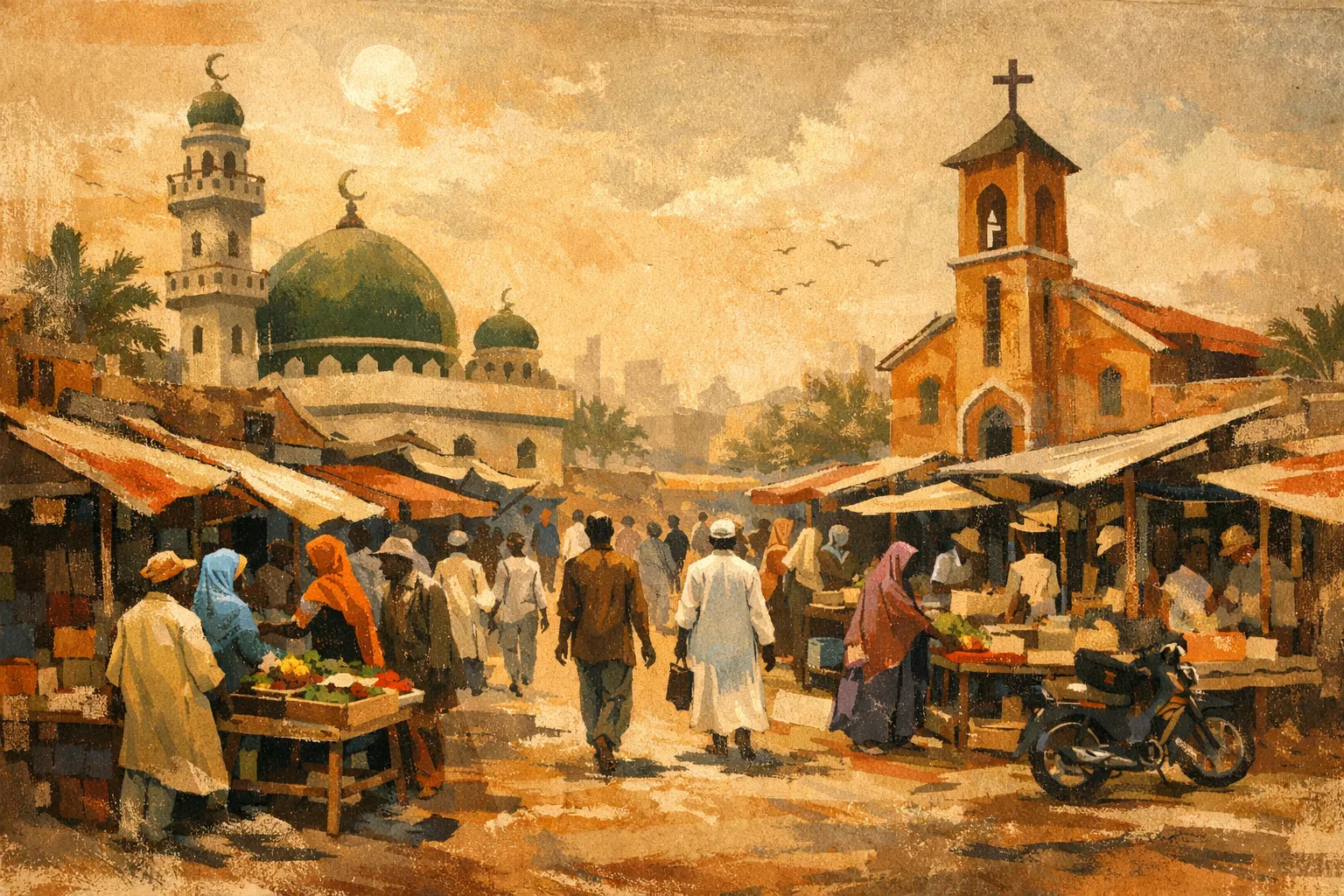
On 16 January 2015, demonstrations began in Zinder after Friday prayers in response to a new Charlie Hebdo cover depicting the Prophet Muhammad. The following day violence spread in Niamey. Churches, bars, Christian-owned businesses and French-linked premises were attacked. President Mahamadou Issoufou said ten people died over the two days, including people trapped in burning buildings.[pbs.org]pbs.orgprotests charlie hebdo turn violent nigerprotests charlie hebdo turn violent niger
The offence felt by many Muslims was real. Depicting Muhammad is rejected in many Islamic traditions, and the magazine’s decision to publish another cartoon immediately after its staff had been murdered was widely interpreted as a deliberate insult. Yet protests took place in many countries without reaching Niger’s level of destruction. The cartoons alone cannot explain why Christian places of worship hundreds of miles from Paris became targets.[The Guardian]theguardian.comThe Guardian Four dead in Niger as Charlie Hebdo cartoon sparks protestsThe Guardian Four dead in Niger as Charlie Hebdo cartoon sparks protests
Researcher Johannes Schritt argues that the label “protests against Charlie Hebdo” is therefore misleading if taken as a complete explanation. The events were tied to Niger’s internal politics, the organisation of religious activism and resentment surrounding Issoufou’s participation in the Paris unity march held after the magazine attack. For opponents, his presence appeared to associate Niger’s government with France and with a publication regarded as blasphemous.[jstor.org]jstor.orgThe "Protests against Charlie Hebdo" in NigerThe "Protests against Charlie Hebdo" in Niger
The violence also drew on an established repertoire. The same types of places attacked in 2000—bars, churches and markers of allegedly improper culture—were again treated as interchangeable pieces of a corrupt moral order. Earlier violence against Christians had intensified from the late 1990s, meaning that rioters in 2015 were not inventing a target from nothing. They were activating older associations between Christianity, Western influence and government-backed modernity.[ResearchGate]researchgate.netOpen source on researchgate.net.
Rumour and crowd dynamics probably helped widen the targets, although the evidence does not support a simple picture of a mindless mob. Demonstrations formed after communal worship, political and religious networks helped mobilise participants, and young men moved through urban spaces where one attack could provide permission for the next. In such conditions, emotionally powerful claims do not need to be wholly fabricated. A real offence can be enlarged until unrelated neighbours, buildings and minorities are made to stand for it.
The victims included Nigerien Christians who had no connection to the French magazine. That fact exposes the mechanism of the scare: a distant act was translated into a local moral emergency, and a small domestic minority was treated as a substitute for France and the wider West. The resulting violence was simultaneously religious, political and post-colonial.
France as symbol and convenient enemy
France’s colonial rule in Niger ended in 1960, but French political, military and commercial influence remained substantial. This history gave later controversies a ready-made vocabulary of humiliation and dependency. When a French publication offended religious feeling, or when a Nigerien president appeared alongside French leaders, anger could attach itself to older memories of domination.
Anti-French sentiment should not be dismissed as collective delusion. Nigeriens have had concrete reasons to debate foreign military deployments, economic relationships and the influence of former colonial institutions. Recent reporting on protests against France’s military role shows participants explicitly connecting contemporary policy to colonial memory.[The New Humanitarian]thenewhumanitarian.orgThe New Humanitarian Why Nigeriens are protesting against France's anti-jihadistThe New Humanitarian Why Nigeriens are protesting against France's anti-jihadist
The panic mechanism lies elsewhere: France becomes a total explanation into which unrelated grievances can be poured. Domestic inequality, unpopular rulers, religious competition and frustration with modern life can all be represented as products of one external contaminating power. Symbols associated with France then become emotionally satisfying targets even when destroying them does nothing to address the underlying problems.
This symbolic compression helps explain why churches were attacked in 2015. Christianity, France and Charlie Hebdo are not the same thing, and many French Christians objected to the magazine. Within the riot’s moral geography, however, such distinctions collapsed. A local church could be made to represent a foreign magazine because both had been placed inside a single imagined camp.
The 2019 Maradi unrest
A smaller but revealing episode occurred in Maradi in June 2019. Protesters demonstrating against the arrest of a prominent imam burned an Assemblies of God church and the pastor’s vehicle. Reports linked the imam’s detention to comments opposing proposed regulation of religious practice; he later apologised for remarks that had helped inflame the situation. Authorities arrested a large number of protesters.[fides.org]fides.orgAgenzia Fides AFRICA/NIGERAgenzia Fides AFRICA/NIGER
The episode repeated a familiar pattern. The initiating dispute concerned the state and a Muslim preacher, yet a Christian building became the retaliatory target. The church functioned as a symbolic stand-in for a broader alleged threat to Islam rather than as the direct cause of the arrest.
At the same time, the government’s proposed regulation was itself a response to fear: officials were concerned about unregulated preaching and religious radicalisation in a country exposed to militant violence across several borders. The result was a feedback loop. State anxiety encouraged regulation; some religious leaders presented regulation as persecution; protest rhetoric magnified that fear; and violence then seemed to validate the state’s original concern.
This is characteristic of many moral panics. Authorities and protesters do not occupy separate worlds of reason and emotion. Each side reacts to the other’s worst-case scenario, and each reaction supplies evidence for the next escalation.
What these episodes were—and were not
The label “mass hysteria” is too broad to describe Niger’s principal cases accurately. None was a documented epidemic of involuntary physical symptoms. Nor were they simply irrational explosions detached from politics.
They are better understood through several overlapping categories:
- Moral panic: fashion, alcohol, independent women and religious pluralism were represented as signs of a rapidly spreading social corruption.
- Religious mobilisation: preachers, worship networks and reform organisations supplied language, authority and meeting points for collective action.
- Rumour and symbolic substitution: local Christians and Bori practitioners could be treated as agents of distant foreign or spiritual threats.
- Political protest: anger at the government, democratisation and foreign influence travelled through religious controversy.
- Crowd escalation: once attacks began, visible destruction and limited control lowered the threshold for further violence.
- Genuine conflict: participants were responding to real disagreements about blasphemy, secular government and foreign power, even when their chosen targets were innocent.
These distinctions matter because “hysteria” can become a way of refusing to examine responsibility. Rioters made choices; organisers shaped narratives; officials made political calculations; and minorities suffered identifiable harm. Emotional contagion may explain how violence accelerated, but it does not absolve those who encouraged or committed it.
Why gender repeatedly became a battleground
The 2000 riot is especially valuable because it makes visible something that remained partly hidden in 2015: disputes over national morality were also disputes over women’s mobility and independence. Fashion models, sex workers, bar workers and single urban women occupied very different positions, but panic rhetoric placed them in one category of dangerous femininity.
This bundling served a political purpose. Economic change is difficult to control, while women’s dress and behaviour are highly visible. Regulating them offers the appearance of restoring order. A campaign against “immorality” can therefore attract people troubled by unemployment, migration or elite corruption even when women did not cause those problems.
Bori created another source of unease because it gave women ritual roles, audiences and forms of authority not wholly dependent on formal religious institutions. Attacks on Bori symbols and on allegedly immoral women belonged to the same effort to narrow acceptable public life.[jstor.org]jstor.orgFrom Hostage to Host: Confessions of a Spirit Medium in…by A Masquelier · 2002 · Cited by 35 — 1991a The Hausa Bori Possession Cu…
The enduring lesson is that moral panics seldom remain confined to the behaviour they claim to oppose. They redraw the boundaries of citizenship. People who dress, worship, work or organise differently become tests of whether the nation is still imagined as pure.
Why Niger’s panic history still matters
The most important continuity from 2000 to 2019 is not any single doctrine. It is a reusable story about contamination: foreign culture enters, rulers tolerate it, vulnerable or marginal people spread it, and purification becomes an urgent public duty. The supposed contaminant may be fashion, Christianity, indigenous ritual, France or state regulation, but the structure remains recognisable.
This history also shows why minority protection cannot depend on whether a grievance seems understandable. Offence at a cartoon does not make a local church responsible for it. Concern about exploitative businesses does not justify attacking women. Anxiety about radical preaching does not grant the state unlimited power over religious life. The crucial democratic task is preserving such distinctions when public emotion rewards their collapse.
Niger’s cases are culturally important precisely because they are not exotic mysteries. They reveal mechanisms found in moral panics around the world: complex pressures condensed into a vivid threat, repeated symbols replacing careful evidence, and familiar minorities made to carry blame for distant events. What is distinctive is the local combination of Hausa religious reform, Bori tradition, gender politics, cross-border influence and the unresolved legacy of French colonialism.
Seen in that light, Niger’s history is not a catalogue of bizarre beliefs. It is a record of struggles over meaning—sometimes peaceful, sometimes deadly—in which fear became powerful when it offered a simple moral map for a society undergoing difficult change.
Amazon book picks
Further Reading
Books and field guides related to When Fear and Faith Collided in Niger. Use these as the next step if you want deeper reading beyond the article.
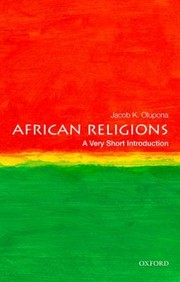
African Religions A Very Short Introduction
Explains indigenous belief systems often misunderstood by colonial authorities.

Endnotes
1.
Source: jstor.org
Link:https://www.jstor.org/stable/4107247
Source snippet
Anatomy of a Riot: The Social Imaginary, Single Women...by BM Cooper · 2003 · Cited by 24 — The urban riot that occurred in Maradi...
2.
Source: jstor.org
Link:https://www.jstor.org/stable/4141314
Source snippet
Exploring Bori as a Site of Myth in Hausa Cultureby J Sullivan · 2005 · Cited by 12 — A cult of long standing, bori is functionally...
3.
Source: jstor.org
Link:https://www.jstor.org/stable/3651815
Source snippet
From Hostage to Host: Confessions of a Spirit Medium in...by A Masquelier · 2002 · Cited by 35 — 1991a The Hausa Bori Possession Cu...
4.
Source: resolve.cambridge.org
Link:https://resolve.cambridge.org/core/services/aop-cambridge-core/content/view/72796744E1897BCF3A08C276C939ED42/9781139043359c7_p154-173_CBO.pdf/understanding-slavery-in-possession-rituals.pdf
Source snippet
Cambridge University Press & Assessment7 Understanding slavery in possession ritualssuggested by Masquelier, the bori spirits of Niger ar...
5.
Source: cambridge.org
Link:https://www.cambridge.org/core/books/african-voices-on-slavery-and-the-slave-trade/understanding-slavery-in-possession-rituals/72796744E1897BCF3A08C276C939ED42
Source snippet
Cambridge University Press & AssessmentUnderstanding slavery in possession rituals (Chapter 7)5 Mar 2016 — the bori spirits of Niger are...
6.
Source: jstor.org
Link:https://www.jstor.org/stable/1215020
7.
Source: jstor.org
Link:https://www.jstor.org/stable/649350
8.
Source: jstor.org
Link:https://www.jstor.org/stable/2156020
9.
Source: resolve.cambridge.org
Link:https://resolve.cambridge.org/core/services/aop-cambridge-core/content/view/D43153B2BB795EF44261733270B687A7/9780511979972c2_p30-44_CBO.pdf/confrontation-and-adaptation.pdf
10.
Source: cambridge.org
Link:https://www.cambridge.org/core/journals/new-theatre-quarterly/article/deviants-and-outcasts-power-and-politics-in-hausa-bori-performances/7AA60B327F4DA26D69BAEA0D6B8ED134
11.
Source: researchgate.net
Link:https://www.researchgate.net/publication/261696399_Anatomy_of_a_Riot_The_Social_Imaginary_Single_Women_and_Religious_Violence_in_Niger
12.
Source: etd.ohiolink.edu
Title: Ohio LINK ETD Centerthe socio-political effects of nigerian shari’a on niger
Link:https://etd.ohiolink.edu/acprod/odb_etd/ws/send_file/send?accession=ohiou1090266448&disposition=inline
13.
Source: pbs.org
Title: protests charlie hebdo turn violent niger
Link:https://www.pbs.org/newshour/world/protests-charlie-hebdo-turn-violent-niger
14.
Source: jstor.org
Title: The “Protests against Charlie Hebdo” in Niger
Link:https://www.jstor.org/stable/24589179
15.
Source: fides.org
Title: Agenzia Fides AFRICA/NIGER
Link:https://fides.org/en/news/66214-AFRICA_NIGER_A_Christian_church_set_on_fire_in_Maradi
16.
Source: 1997-2001.state.gov
Title: irf nigeria99
Link:https://1997-2001.state.gov/global/human_rights/irf/irf_rpt/1999/irf_nigeria99.html
17.
Source: 1997-2001.state.gov
Title: irf nigeria
Link:https://1997-2001.state.gov/global/human_rights/irf/irf_rpt/irf_nigeria.html
18.
Source: 2021-2025.state.gov
Link:https://2021-2025.state.gov/report/custom/a48a642035/
19.
Source: 2021-2025.state.gov
Link:https://2021-2025.state.gov/report/custom/dad4d30169/
20.
Source: 2021-2025.state.gov
Link:https://2021-2025.state.gov/report/custom/bd83b53c0f/
21.
Source: 2021-2025.state.gov
Link:https://2021-2025.state.gov/report/custom/a8e545a326/
22.
Source: state.gov
Link:https://www.state.gov/reports/2020-report-on-international-religious-freedom/pakistan
23.
Source: state.gov
Link:https://www.state.gov/report/custom/7a67cc99fe
24.
Source: 2021-2025.state.gov
Link:https://2021-2025.state.gov/report/custom/9b37626664/
25.
Source: state.gov
Link:https://www.state.gov/report/custom/bd479e26a0
26.
Source: state.gov
Link:https://www.state.gov/report/custom/de2c623b50
27.
Source: state.gov
Link:https://www.state.gov/report/custom/8e38ce7f40
28.
Source: jstor.org
Link:https://www.jstor.org/stable/646391
29.
Source: jstor.org
Link:https://www.jstor.org/stable/1159190
30.
Source: jstor.org
Link:https://www.jstor.org/stable/3174885
31.
Source: jstor.org
Link:https://www.jstor.org/stable/23818780
32.
Source: jstor.org
Link:https://www.jstor.org/stable/j.ctv11smhnm
33.
Source: jstor.org
Link:https://www.jstor.org/stable/4107238
34.
Source: resolve.cambridge.org
Link:https://resolve.cambridge.org/core/services/aop-cambridge-core/content/view/8E6F748D058D63A41ECBF3B0C326DA06/9781787442375c1_p1-34_CBO.pdf/introduction_religious_encounters_in_northern_nigeria.pdf
35.
Source: resolve.cambridge.org
Title: pentecostalism islam culture new religious movements in west africa
Link:https://resolve.cambridge.org/core/services/aop-cambridge-core/content/view/65388F6E383222716C9F0A5124BBCBE5/9781782049777c13_p286-312_CBO.pdf/pentecostalism_islam_culture_new_religious_movements_in_west_africa.pdf
36.
Source: resolve.cambridge.org
Title: general index to volume 64
Link:https://resolve.cambridge.org/core/services/aop-cambridge-core/content/view/59AC91A1DE8CFF6848387D728064F04B/S0001972000042765a.pdf/general_index_to_volume_64.pdf
37.
Source: cambridge.org
Link:https://www.cambridge.org/core/journals/harvard-theological-review/article/where-the-spirits-dwell-possession-christianization-and-saints-shrines-in-late-antiquity/B8FE175DFC63BE61B03935CC240C55DD
38.
Source: cambridge.org
Link:https://www.cambridge.org/core/journals/journal-of-african-history/article/constructing-a-diasporic-identity-tracing-the-origins-of-the-gnawa-spiritual-group-in-morocco/9AD3E5781A340576CEE5B5E8C3677275
39.
Source: cambridge.org
Link:https://www.cambridge.org/core/elements/afrobrazilian-religions/2CF45B212C54F4B1C01F4D9A7F43569D
40.
Source: cambridge.org
Link:https://www.cambridge.org/core/books/how-violence-shapes-religion/religious-violence-in-nigeria/1147A38EC771D40F78262B050BF5FF76
41.
Source: researchgate.net
Link:https://www.researchgate.net/publication/45681143_Doomsday_movements_in_Africa_Restoration_of_the_Ten_Commandments_of_God
42.
Source: researchgate.net
Link:https://www.researchgate.net/publication/275097447_The_Protests_against_Charlie_Hebdo_in_Niger_A_Background_Analysis
43.
Source: researchgate.net
Link:https://www.researchgate.net/publication/304002155_Terrorism_and_Moral_Panic_in_Nigeria
44.
Source: researchgate.net
Link:https://www.researchgate.net/profile/Barbara-Cooper-5
45.
Source: history.com
Title: salem witch trials hysteria factors
Link:https://www.history.com/articles/salem-witch-trials-hysteria-factors
46.
Source: pbs.org
Link:https://www.pbs.org/frontlineworld/blog/2008/12/nigeria_riots_l.html
47.
Source: journals.sagepub.com
Link:https://journals.sagepub.com/doi/10.1177/000203971505000104
Source snippet
Sage JournalsThe “Protests against Charlie Hebdo” in Niger1 Apr 2015 — Violence against Christians began in 1998, rose sharply in 1999 an...
48.
Source: read.dukeupress.edu
Link:https://read.dukeupress.edu/books/book/495/chapter/122283/Bori-Power-and-Identity-in-Dogondoutchi
Source snippet
Duke University PressBori, Power, and Identity in DogondoutchiThe Role of Spirit Possession in Negotiating Social Space. Spirit Possessio...
49.
Source: aljazeera.com
Title: niger death toll rises after [cartoon protests]({{ ‘cartoon-protests/’ | relative_url }})
Link:https://www.aljazeera.com/news/2015/1/18/niger-death-toll-rises-after-cartoon-protests
50.
Source: theguardian.com
Title: niger protesters burn churches charlie hebdo protest
Link:https://www.theguardian.com/world/2015/jan/17/niger-protesters-burn-churches-charlie-hebdo-protest
51.
Source: theguardian.com
Title: The Guardian Four dead in Niger as Charlie Hebdo cartoon sparks protests
Link:https://www.theguardian.com/world/2015/jan/16/pakistan-police-clash-anti-charlie-hebdo-protesters
52.
Source: thenewhumanitarian.org
Title: The New Humanitarian Why Nigeriens are protesting against France’s anti-jihadist
Link:https://www.thenewhumanitarian.org/news-feature/2023/02/28/why-niger-protest-france-anti-jihadist-campaign-interviews
53.
Source: barnabasaid.org
Link:https://www.barnabasaid.org/gb/news/muslim-cleric-apologises-to-christians-for-comments-that-sparked-a-mob-a/
54.
Source: uscirf.gov
Title: search results
Link:https://www.uscirf.gov/search-results?page=15
55.
Source: hrw.org
Link:https://www.hrw.org/world-report/2021/country-chapters/france
56.
Source: barnabasaid.org
Title: nineteen thousand nigerian christians killed by islamists in just six ye
Link:https://www.barnabasaid.org/gb/long-reads/nineteen-thousand-nigerian-christians-killed-by-islamists-in-just-six-ye/
Additional References
57.
Source: youtube.com
Title: Demonstration against “Charlie Hebdo”: several deaths in Zinder
Link:https://www.youtube.com/watch?v=9kGTxVv8pVE
Source snippet
Bori Niger, spirit possession ceremonies in Hausa land...
58.
Source: uscirf.gov
Link:https://www.uscirf.gov/sites/default/files/Blasphemy%20Laws%20Abbreviated%20Report%20v2.pdf
59.
Source: uscirf.gov
Link:https://www.uscirf.gov/sites/default/files/2020%20Blasphemy%20Enforcement%20Report%20_final_0.pdf
60.
Source: youtube.com
Title: Protests Against Charlie Hebdo Turn Deadly
Link:https://www.youtube.com/watch?v=C_zB96FlU0o
Source snippet
Demonstration against "Charlie Hebdo": several deaths in Zinder - NIGER...
61.
Source: youtube.com
Title: Magician of the desert: Alphadi | Fashion Designer | V&A
Link:https://www.youtube.com/watch?v=cMpEa1tjm0s
Source snippet
Protests Against Charlie Hebdo Turn Deadly...
62.
Source: ihrda.org
Link:https://ihrda.org/en/acerwc-finds-nigeria-in-violation-in-child-witchcraft-accusation-case
63.
Source: facebook.com
Link:https://www.facebook.com/achonu.love/posts/do-you-know-that-it-is-a-crime-in-nigeria-to-claim-powers-of-witchcraft-magic-or/822690676752054/
64.
Source: megatrends-afrika.de
Link:https://www.megatrends-afrika.de/en/publication/mta-policy-brief-48-conflict-related-sexual-violence-in-niger
65.
Source: facebook.com
Link:https://www.facebook.com/vanguardngr/posts/demons-in-school-panic-as-suspected-voices-of-evil-spirit-forced-school-to-close/6326754457349597/
66.
Source: facebook.com
Link:https://www.facebook.com/shalomworldnews/posts/for-seven-long-years-this-church-in-nigerias-niger-state-stood-silent-and-abando/1347074550809220/
Topic Tree
Follow this branch
Related pages 192
- Antigua and Barbuda
- Argentina Belief Scares
- Azerbaijan Belief
- Bahrain Beliefs
- North Korea
- +187 more in sidebar