When Fear and Belief Swept Through Thailand
Thailand’s history of collective fear and contagious belief is not one story of a uniquely “superstitious” society.

Page outline Jump by section
Introduction
The important question is therefore not whether Thailand has experienced “mass hysteria”, but what kind of episode occurred, whose interpretation prevailed and what harm followed. The strongest cases show beliefs spreading through trusted social networks, emotionally charged media and institutions already under pressure. They also show why dismissing participants as irrational can conceal bereavement, economic insecurity, political manipulation, school stress or struggles over religious authority.
When illness was understood as spirit possession
One of Thailand’s clearest documented episodes of mass psychogenic illness occurred at a girls’ school in the south in September 1993. Thirty-two pupils aged nine to fourteen developed behaviour interpreted locally as spirit possession. Thai clinicians studied the outbreak both as a cultural event and as an epidemic of dissociation, meaning an involuntary disruption in awareness, memory, identity or bodily control rather than deliberate performance.[nih.gov]pubmed.ncbi.nlm.nih.govRisk factors for spirit possession among school girls in…by U Trangkasombat · 1998 · Cited by 7 — In September 1993, at a school…
The symptoms did not spread like an infection. They appeared within a close social group whose members could see, hear and respond to one another. The investigators found that affected girls were more likely than unaffected classmates to have experienced significant personal difficulties, including family disruption or earlier loss. That did not make the symptoms imaginary. Fainting, shaking, altered speech, trance and apparent loss of control can be physically and emotionally real even when no toxin, pathogen or neurological disease explains their pattern.
The language of possession gave the episode a form that pupils, families and teachers could recognise. In another society, comparable distress might be described as panic attacks, poisoning, demonic influence or a mysterious environmental illness. Medical researchers now tend to treat such outbreaks as interactions between stress, expectation, social contagion and locally available explanations. Reviews of possession and trance disorders cite the southern Thailand outbreak precisely because it demonstrates that culture shapes how distress is expressed without reducing it to play-acting or deceit.[nih.gov]pmc.ncbi.nlm.nih.govDissociation. (1995) 3:130–41. [Google Scholar]; 67. Small GW, Feinberg DT…Read more…
This distinction matters. Calling the event “mass hysteria” can sound as though the girls were foolish or emotionally unstable. “Mass psychogenic illness” is more precise, but even that label should be used after ordinary medical and environmental causes have been investigated. Schools can contain real hazards, and premature psychological explanations have sometimes allowed unsafe conditions elsewhere to be overlooked.
Spirit accusations could punish outsiders
Possession beliefs have also operated not as shared illness but as accusations against particular people. In parts of north-eastern Thailand, a feared ravenous spirit has traditionally been believed to inhabit a human host, leave the body and cause sickness, death or the loss of livestock. People suspected of carrying it could be shunned, driven from their homes or forced to undergo rituals.
Academic work on the same belief across Thailand, Laos and Cambodia shows that accusations often function as a social process. They may attach themselves to families already regarded as troublesome, unusual, poor, recently arrived or insufficiently integrated into village life. Historical accounts describe accused people gathering in separate settlements after exclusion from their former communities.[J-STAGE]jstage.jst.go.jpJ-STAGEWhere Do the Ravenous Spirits (Phi Pop) Go?18, 2024 — by IG Baird · 2024 · Cited by 12 — Phya Anuman and Coughlin. (1954) also reported that sometimes many people…
This resembles a witch panic more closely than mass psychogenic illness. The central event is not a contagious symptom but a contagious explanation: unexplained illness or misfortune is attributed to a hidden human agent. Once that interpretation gains authority, each further death can confirm the accusation. Rumour supplies motive, ritual specialists identify suspects, and community pressure makes denial look like additional proof.
The belief should not be treated merely as picturesque folklore. It can provide a language for discussing jealousy, unresolved conflict and frightening disease, but it can also legitimise scapegoating. Reports of sudden village deaths have periodically revived spirit explanations even when health officials attributed the fatalities to chronic disease, alcohol use or other ordinary causes. The social damage may outlast the original scare because an accused person’s reputation is difficult to restore.
At the same time, it would be misleading to assume that everyone in a village accepts the accusation equally. Families, monks, healers, clinicians and officials may offer competing accounts. What appears from outside to be one shared belief is often an argument over whether suffering is spiritual, medical, interpersonal or fraudulent.
The anti-communist panic that ended in massacre
Thailand’s most consequential modern moral panic was political rather than supernatural. In the mid-1970s, communist victories in Vietnam, Laos and Cambodia produced genuine strategic anxiety. Thailand also faced an armed communist insurgency. Yet these real conditions were used to construct a much broader image of students, labour organisers and reformers as enemies of religion, monarchy and nation.[AP News]apnews.comOpen source on apnews.com.
The campaign intensified after former military ruler Thanom Kittikachorn returned from exile in 1976. Students protesting his return staged a dramatic re-enactment of the recent hanging of two anti-Thanom activists. A right-wing newspaper published an altered photograph that made one performer resemble the crown prince and presented the scene as a mock royal hanging. The inflammatory image converted a protest against police violence into alleged proof of treason.[บันทึก 6 ตุลา | Documentation of Oct 6]doct6.comบันทึก 6 ตุลา | Documentation of Oct 66octoberบันทึก 6 ตุลา | Documentation of Oct 66october
On 6 October, police, right-wing paramilitaries and vigilantes attacked demonstrators at Thammasat University. Students were shot, beaten and lynched. The official toll was 46 dead, although many scholars and survivors believe it was higher; thousands were arrested. The violence was followed by a military coup and a government that imposed severe censorship, suppressed unions and expanded anti-communist indoctrination.[Time]time.comOpen source on time.com.
This episode is sometimes described simply as political repression, but the concept of moral panic helps explain how repression became publicly imaginable. A varied student movement was compressed into a single folk devil: the disloyal communist determined to destroy the country’s sacred institutions. Newspaper imagery, radio commentary, paramilitary mobilisation and regional fear reinforced one another until extraordinary violence could be represented as national defence.
It would be equally wrong to call the fear wholly invented. There was an insurgency, and neighbouring governments had fallen. The panic lay in the exaggeration and redirection of that danger: peaceful demonstrators and social critics were treated as interchangeable with armed revolutionaries. The gap between the real threat and the chosen targets is central to understanding how a security concern became a licence for atrocity.
The massacre remains culturally important because no state official has been held accountable and public discussion was constrained for decades. Commemorations, archives, films and student activism have gradually restored names and testimony to an event once reduced to silence. Its history shows that collective delusion need not mean believing in something nonexistent. It may involve believing something real is everywhere, that every opponent belongs to it and that normal moral limits must therefore be suspended.[Time]time.comOpen source on time.com.
Religious movements and the danger of the “cult” label
Modern Thailand has produced influential Buddhist reform movements whose size, wealth and unconventional methods have prompted accusations of cult-like behaviour. Wat Phra Dhammakaya is the best-known example. It developed a vast following, highly organised mass meditation events and an international network. Supporters present it as a modern form of Buddhist practice suited to urban life. Critics have attacked its fundraising, centralised leadership, prosperity-oriented message and political connections.[SBS Australia]sbs.com.auSBS Australia Cult or modern religion: Inside Dhammakaya Buddhism | SBS DatelineSBS Australia Cult or modern religion: Inside Dhammakaya Buddhism | SBS Dateline
The word “cult” is tempting because it signals suspicion quickly, but it often obscures more than it explains. It may refer to disputed doctrine, intense devotion, aggressive fundraising, institutional secrecy, a charismatic leader or simply a movement disliked by established religious authorities. These are not the same accusation and should be assessed separately.
The conflict surrounding Wat Phra Dhammakaya has also involved concrete legal and political questions, including financial investigations and prolonged confrontations with state authorities. Those issues deserve scrutiny without assuming that millions of meditation practitioners share one motive or that religious difference itself proves coercion. Conversely, respect for religious freedom does not place financial conduct or abuse of authority beyond investigation.
Thailand’s Buddhist establishment is not a single uncontested body. Religious movements compete over doctrine, monastic legitimacy, money, media visibility and proximity to political power. Labelling one side a cult can therefore become part of an institutional struggle rather than a neutral description. A careful account asks who used the label, what specific behaviour they meant and whether the evidence concerns belief, organisational control, crime or political rivalry.
Lucky dolls became both craze and scare
In 2015 and early 2016, lifelike “child-angel” dolls became a highly visible Thai fashion. Some owners believed that caring for a spiritually blessed doll could bring good fortune, business success or family harmony. The dolls appeared in restaurants, ceremonies, shops and airports; one airline briefly allowed passengers to purchase seats and meals for them. Celebrity promotion and social media helped turn a small practice into a national spectacle.[Reuters]reuters.comThais turn to "child angel" dolls as economy struggles | ReutersThais turn to "child angel" dolls as economy struggles | Reuters
The craze flourished during economic uncertainty and political tension following the 2014 coup. Reuters reported that buyers and observers connected the dolls’ appeal with anxiety about money and the future. They offered a sense of companionship and control: luck might be cultivated through care when employment, debt and politics felt less manageable.[Reuters]reuters.comThais turn to "child angel" dolls as economy struggles | ReutersThais turn to "child angel" dolls as economy struggles | Reuters
Yet the public reaction soon became a scare of its own. Owners were ridiculed as mentally ill, while officials raised concerns about aviation rules, consumer exploitation and the possibility that hollow dolls could conceal drugs. Some of those concerns were practical, but sensational coverage blurred the difference between a commercial fad, private spiritual practice and criminal conspiracy.[Anadolu Agency]aa.com.trAnadolu Agency Thai authorities concerned about 'angel doll' fadAnadolu Agency Thai authorities concerned about 'angel doll' fad
The episode is useful because it shows a belief boom and a moral backlash unfolding almost simultaneously. Media attention made the dolls desirable, strange and threatening. Businesses helped normalise them by offering services, while the same visibility invited mockery and official scrutiny. As the novelty faded, everyday sightings became rarer.
This was not a coherent religious movement, still less evidence of national madness. Participation ranged from sincere spiritual attachment to collecting, celebrity imitation, emotional comfort and playful consumption. The rush to explain every owner through one psychological or religious theory repeated the very simplification that moral panics thrive upon.
Meditating for contact with aliens
A more enduring collective-belief movement developed around Khao Kala hill in central Thailand. A group founded in the late 1990s claimed that extraterrestrial beings communicated through meditation. Members linked alien contact to Buddhist practice and said the messages could warn humanity about disasters or global conflict. The hill became a destination for believers, curiosity-seekers and journalists.[Khaosod English]khaosodenglish.comOpen source on khaosodenglish.com.
The movement combined familiar religious practices with modern extraterrestrial imagery. Meditation supplied the means of communication; aliens occupied a role that spirits, divine messengers or advanced sages might fill in another tradition. Such a mixture is characteristic of UFO religions worldwide, although the Thai group remained relatively small and locally rooted.
Official concern focused less on doctrine than on land use and crowding. In 2019, police and forestry officials raided the site over suspected encroachment on protected forest. This distinction is important: authorities were not demonstrating that alien contact claims were false, nor prosecuting belief itself. They were enforcing rules governing a public site that had become associated with gatherings and constructed facilities.[Khaosod English]khaosodenglish.comOpen source on khaosodenglish.com.
The group’s predictions also provide a straightforward credibility test. A reported forecast that a third world war would begin by 2022 did not come true. Failed prophecy does not always destroy a movement. Believers may reinterpret dates, treat warnings as conditional or shift attention from prediction to spiritual practice. That process is well documented in millenarian movements: commitment can survive disconfirmation when belonging, identity and ritual matter as much as the prediction.
By 2024, local officials and promoters were presenting the UFO association as a tourism opportunity through a music and belief festival. Earlier unease had partly given way to branding. The transition from suspicious sect to visitor attraction shows how institutions can domesticate unusual beliefs when they appear economically useful.[South China Morning Post]scmp.comOpen source on scmp.com.
What connects Thailand’s panics and belief waves?
These episodes should not be collapsed into a single category. The 1993 school outbreak involved involuntary shared symptoms. Spirit accusations could become community persecution. The 1976 anti-communist campaign was a state-supported moral panic with lethal consequences. Wat Phra Dhammakaya is a disputed mass religious organisation. The doll fashion was a commercial-spiritual craze followed by backlash. The Khao Kala community is a small contactee movement whose public meaning shifted from alarm to tourism.
Several recurring mechanisms nevertheless stand out.
A recognised cultural script gives uncertainty a shape. Distress becomes possession; unexplained death becomes spirit attack; political dissent becomes communist subversion; economic anxiety becomes a search for luck. The script does not create every underlying problem, but it organises attention and tells people what signs to notice.
Trusted networks carry belief more effectively than abstract propaganda. Classmates watch classmates, villagers repeat neighbours’ accounts, religious followers rely on teachers, and social-media audiences imitate celebrities. People rarely adopt extraordinary claims in isolation.
Institutions decide which explanation gains force. A newspaper can turn an altered photograph into an accusation. Police can convert rumour into investigation. Health workers can replace a supernatural explanation with a clinical one. Tourism authorities can repackage a once-troubling movement as local colour.
Real insecurity often sits beneath exaggerated conclusions. The schoolgirls’ distress was real, even without infection. Thailand faced a real insurgency, although peaceful students were falsely treated as its agents. Economic hardship was real, although lucky dolls could not solve it. Forest regulation was real, regardless of claims about aliens.
The worst harm comes when belief attaches guilt to a target. Shared fainting may cause fear and disruption, but accusations against supposed spirit hosts, political traitors or religious deviants can lead to exclusion, detention or killing. The crucial question is not simply how unusual a belief appears. It is what powers the belief gives one group over another.
Thailand’s record therefore resists the easy language of collective irrationality. Its panics and movements are better understood as struggles over explanation: who may define illness, danger, religious legitimacy, national loyalty and reality itself. The episodes remain memorable because they reveal how quickly fear can move between folklore, medicine, commerce, media and state power—and how differently the consequences fall on those caught inside it.

Amazon book picks
Further Reading
Books and field guides related to When Fear and Belief Swept Through Thailand. Use these as the next step if you want deeper reading beyond the article.

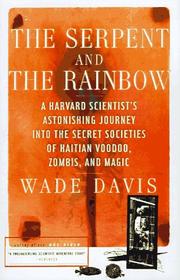
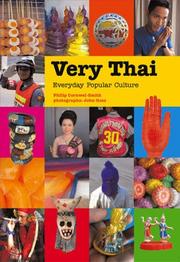
The Spirit Catches You and You Fall Down
Shows how cultural beliefs and medicine intersect.
Endnotes
1.
Source: pmc.ncbi.nlm.nih.gov
Link:https://pmc.ncbi.nlm.nih.gov/articles/PMC7704439/
Source snippet
Dissociation. (1995) 3:130–41. [Google Scholar]; 67. Small GW, Feinberg DT...Read more...
2.
Source: jstage.jst.go.jp
Title: J-STAGEWhere Do the Ravenous Spirits (Phi Pop) Go?
Link:https://www.jstage.jst.go.jp/article/seas/13/1/13_109/_pdf
Source snippet
18, 2024 — by IG Baird · 2024 · Cited by 12 — Phya Anuman and Coughlin. (1954) also reported that sometimes many people...
Published: April 18, 2024
3.
Source: time.com
Link:https://time.com/4519367/thailand-bangkok-october-6-1976-thammasat-massacre-students-joshua-wong/
4.
Source: reuters.com
Title: Thais turn to “child angel” dolls as economy struggles | Reuters
Link:https://www.reuters.com/article/lifestyle/thais-turn-to-child-angel-dolls-as-economy-struggles-idUSKCN0V50J5/
5.
Source: time.com
Link:https://time.com/4353544/thailand-luk-thep-doll/
6.
Source: widerimage.reuters.com
Title: thailands child angels
Link:https://widerimage.reuters.com/story/thailands-child-angels
7.
Source: reuters.com
Title: thailands child angels the wider image idUS3544290397
Link:https://www.reuters.com/article/opinion/thailands-child-angels-the-wider-image-idUS3544290397/
8.
Source: pubmed.ncbi.nlm.nih.gov
Link:https://pubmed.ncbi.nlm.nih.gov/9676093/
Source snippet
Risk factors for spirit possession among school girls in...by U Trangkasombat · 1998 · Cited by 7 — In September 1993, at a school...
Published: September 1993
9.
Source: jmatonline.com
Title: in the form of mass
Link:https://www.jmatonline.com/PDF/81-PB-541-546.pdf
Source snippet
JMAT OnlineRisk Factors for Spirit Possession Among School Girls in...by U TRANGKASOMBAT · 1998 · Cited by 7 — In September 1993, at a s...
Published: September 1993
10.
Source: journals.sagepub.com
Link:https://journals.sagepub.com/doi/10.1177/070674371105600407
Source snippet
Dissociation. 1995;8(3):130–141. Google Scholar. 33. Trangkasombat U, Su-Umpan U...Read more...
11.
Source: apnews.com
Link:https://apnews.com/article/6548fb95902726a57f11e9fcfa4b6068
12.
Source: doct6.com
Title: บันทึก 6 ตุลา | Documentation of Oct 66october
Link:https://doct6.com/wp-content/uploads/2019/10/Cinema-Politics-6-october-Matthew-Hunt-2018.pdf
13.
Source: sbs.com.au
Title: SBS Australia Cult or modern religion: Inside Dhammakaya Buddhism | SBS Dateline
Link:https://www.sbs.com.au/news/dateline/article/cult-or-modern-religion-inside-dhammakaya-buddhism/kutsrwai2
14.
Source: aa.com.tr
Title: Anadolu Agency Thai authorities concerned about ‘angel doll’ fad
Link:https://www.aa.com.tr/en/world/thai-authorities-concerned-about-angel-doll-fad/510812
15.
Source: khaosodenglish.com
Link:https://www.khaosodenglish.com/featured/2019/08/16/police-raid-ufo-sighting-hotspot-for-suspected-forest-encroachment/
16.
Source: scmp.com
Link:https://www.scmp.com/week-asia/lifestyle-culture/article/3249062/thailand-hosts-ufo-music-festival-city-cult-claims-area-51-asia
17.
Source: pmc.ncbi.nlm.nih.gov
Link:https://pmc.ncbi.nlm.nih.gov/articles/PMC6338711/
18.
Source: pmc.ncbi.nlm.nih.gov
Link:https://pmc.ncbi.nlm.nih.gov/articles/PMC9199574/
19.
Source: Wikipedia
Title: Moral panic
Link:https://en.wikipedia.org/wiki/Moral_panic
20.
Source: Wikipedia
Title: Mass psychogenic illness
Link:https://en.wikipedia.org/wiki/Mass_psychogenic_illness
21.
Source: doct6.com
Title: News foreign magazines after Oct 6
Link:https://doct6.com/wp-content/uploads/2019/10/News-foreign-magazines-after-Oct-6.pdf
22.
Source: doct6.com
Title: Bergin Defeating Insurgency
Link:https://doct6.com/wp-content/uploads/2019/10/Bergin-Defeating-Insurgency.pdf
23.
Source: doct6.com
Title: 2539 งานรำลึก 20 ปี 6 ตุลา news comments from Eng newspapers 2
Link:https://doct6.com/wp-content/uploads/2019/10/2539-%E0%B8%87%E0%B8%B2%E0%B8%99%E0%B8%A3%E0%B8%B3%E0%B8%A5%E0%B8%B6%E0%B8%81-20-%E0%B8%9B%E0%B8%B5-6-%E0%B8%95%E0%B8%B8%E0%B8%A5%E0%B8%B2-news-comments-from-Eng-newspapers-2.pdf
24.
Source: europe-solidaire.org
Link:https://www.europe-solidaire.org/spip.php?article55480=
25.
Source: healthline.com
Title: mass hysteria
Link:https://www.healthline.com/health/mental-health/mass-hysteria
26.
Source: ebsco.com
Link:https://www.ebsco.com/research-starters/social-sciences-and-humanities/mass-hysteria
Additional References
27.
Source: youtube.com
Title: Thailand’s Alien Religion | Close Encounters of the Thai Kind | Coconuts TV
Link:https://www.youtube.com/watch?v=sButq3LRtEM
Source snippet
Inside Thailand's Khao Kala UFO Mystery | Expedition X S1 E4 | Discovery Channel India...
28.
Source: youtube.com
Link:https://www.youtube.com/watch?v=5iD4V9RP1zc
Source snippet
Khao Kala Hill & the UFO Phenomenon in Thailand...
29.
Source: frontiersin.org
Link:https://www.frontiersin.org/journals/psychiatry/articles/10.3389/fpsyt.2022.891859/full
Source snippet
TrangkasombatUSu-umpanUChurujikulVPrinksulkaK. Epidemic dissociation among school children in southern Thailand. Dissociation. (1995) 8:1...
30.
Source: youtube.com
Title: Unreported World
Link:https://www.youtube.com/watch?v=MYm1EbNs4sU
Source snippet
Thailand's Alien Religion | Close Encounters of the Thai Kind | Coconuts TV...
31.
Source: thaiexaminer.com
Link:https://www.thaiexaminer.com/thai-news-foreigners/2026/06/26/59-year-old-man-murdered-his-drinking-buddy-fearing-he-was-a-phi-pop-ghost-in-khon-kaen-on-thursday/
32.
Source: academia.edu
Link:https://www.academia.edu/26930695/A_critical_review_of_dissociative_trance_and_possession_disorders_etiological_diagnostic_therapeutic_and_nosological_issues
33.
Source: researchgate.net
Link:https://www.researchgate.net/figure/Accused-Phi-Pop-Sit-under-the-Ta-Ho-in-Nakasang-Village-Awaiting-the-Healing-Ritual_fig3_386370201
34.
Source: qub.ac.uk
Link:https://www.qub.ac.uk/courses/undergraduate/anthropology-ba-l600/
35.
Source: reddit.com
Link:https://www.reddit.com/r/Bangkok/comments/1t30uod/any_idea_what_this_is/
36.
Source: bookshop.iseas.edu.sg
Link:https://bookshop.iseas.edu.sg/component/get/21888
Topic Tree
Follow this branch
Related pages 192
- Antigua and Barbuda
- Argentina Belief Scares
- Azerbaijan Belief
- Bahrain Beliefs
- North Korea
- +187 more in sidebar