When Fear and Belief Reshaped Sierra Leone
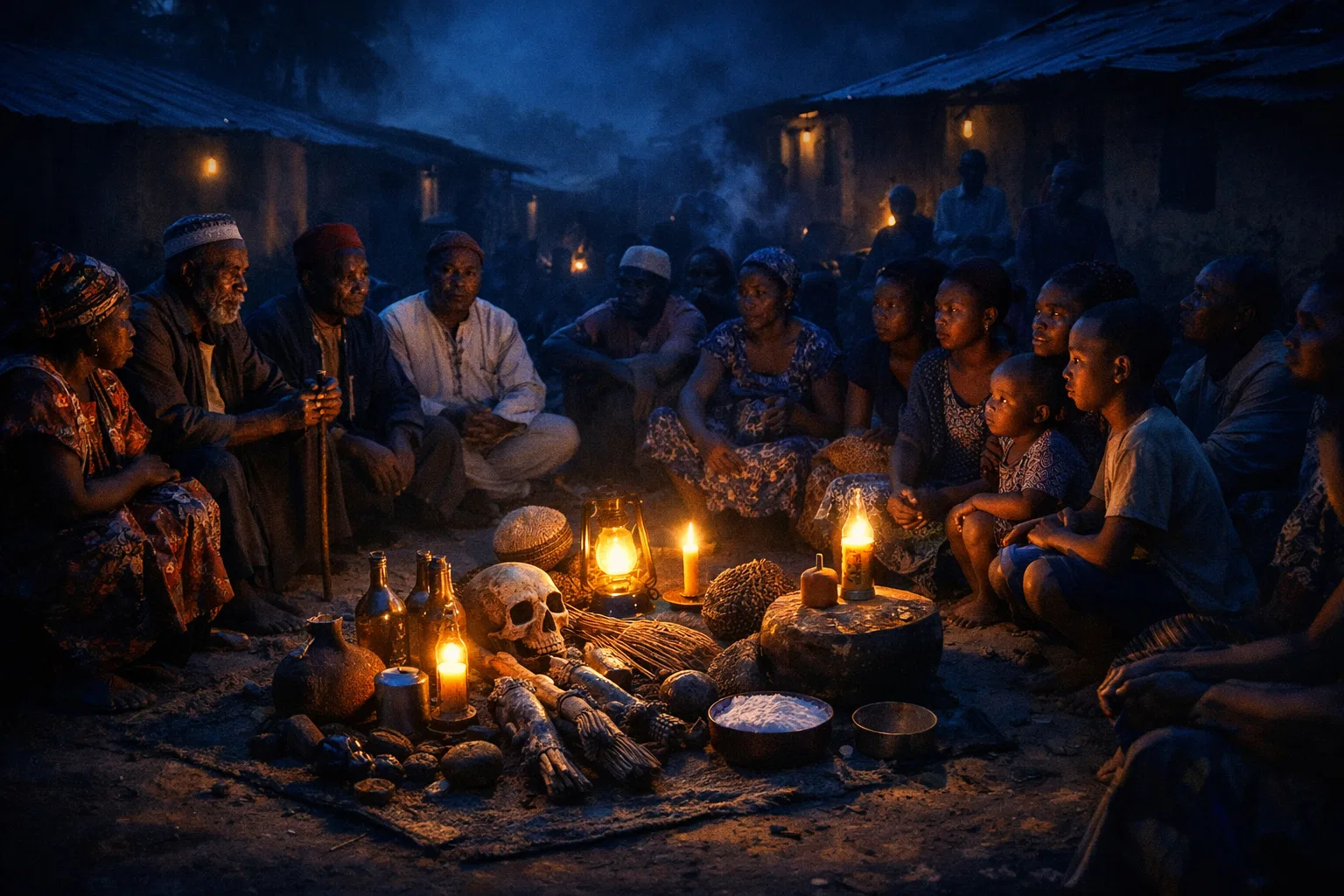
Sierra Leone’s history offers no single famous “mass hysteria” episode comparable to a European witch trial or school fainting epidemic. Its most revealing cases instead involve witchcraft accusations, organised anti-witchcraft campaigns, wartime beliefs in magical protection, and the rumour-filled fear surrounding Ebola.
Page outline Jump by section
Introduction
The evidence also demands caution. Witchcraft beliefs are not simply irrational relics, and Sierra Leone’s initiation societies should not casually be called cults. Nor were fears during the civil war or Ebola epidemic imaginary: people faced armed violence, collapsing public services and a lethal virus. The important question is how supernatural explanations, rumours and public fear shaped behaviour around those genuine threats—and sometimes produced additional harm through accusation, coercion, exclusion or mistrust.
Witchcraft accusations turn misfortune into suspicion
Witchcraft remains a recognised language for discussing hidden harm in parts of Sierra Leone. It may be invoked when illness, infertility, financial loss, sudden death or persistent family conflict seems otherwise inexplicable. Yet anthropological research stresses that belief is rarely a simple matter of unquestioning certainty. People may suspect witchcraft while remaining doubtful about who is responsible, whether an accusation is true, or whether a healer claiming to detect witches can be trusted.[journal.culanth.org]journal.culanth.orgA Disarmament Program for Witches: The Prospective Politics…by SM Anderson · 2019 · Cited by 9 — A Disarmament Program for Witches: Th…
This ambiguity matters because accusations can still have severe consequences. Reports compiled for refugee and human-rights research describe people accused of using “witch guns”—invisible supernatural weapons believed to cause sickness or death—being assaulted, expelled from communities or exposed to informal trials. Sierra Leonean state law does not provide a straightforward legal mechanism for proving supernatural harm, yet ordinary criminal processes may become entangled with allegations when an accusation leads to violence, detention or public disorder.[ecoi.net]ecoi.net1 Sierra LeoneJuly 18, 2014 — 18 Jul 2014 — “Allegations of witch-gun killings are taken seriously in many parts of Sierra. Leone and Guinea. Accused p…
The danger does not come from belief alone. It emerges when bereavement, poverty or rivalry combines with an authority figure who claims to identify a culprit. A healer, diviner, preacher, chief or family elder may give an apparently definite answer to an uncertain problem. Once neighbours accept that answer, ordinary disagreement can be reinterpreted as evidence of secret malice. Denial may itself be treated as proof that the accused is deceptive.
Women, older people, children and socially isolated individuals can be particularly exposed because they have fewer ways to resist an accusation. International guidance therefore treats violence connected with witchcraft allegations as a human-rights problem, while distinguishing the right to hold spiritual beliefs from acts such as assault, forced confession, banishment or degrading treatment.[Humanists International]humanists.internationalReport on witchcraft-related human rights abuses in Africa…Human rights violations associated with witchcraft accusations are marked…
Why children sometimes confess to being witches
One of Sierra Leone’s best-documented collective-belief problems concerns children who are accused of witchcraft or say that they have practised it. A 2021 qualitative study based on interviews and focus groups in Freetown argued that these confessions should often be understood as an “idiom of distress”: a culturally recognisable way for children to express suffering that they cannot easily describe in psychological language.[PMC]pmc.ncbi.nlm.nih.govChild witchcraft confessions as an idiom of distress in Sierra…by HNC Yoder · 2021 · Cited by 13 — We used an ecological approach t…
The children discussed in the study were not merely inventing sensational stories for amusement. Many lived amid disrupted family relationships, bereavement, neglect, poverty, domestic tension or other forms of insecurity. In such settings, a child might absorb an adult’s accusation, reinterpret nightmares or intrusive thoughts as supernatural experiences, or use witchcraft language to explain why they felt angry, rejected or out of control.
A confession could therefore perform several functions at once. It might give a name to emotional pain, attract attention from adults, provide an explanation for conflict within a household, or reproduce stories heard from relatives, religious leaders and peers. In some cases, repeated questioning may encourage a child to develop increasingly elaborate accounts because adults reward confirmation and reject denial.[PMC]pmc.ncbi.nlm.nih.govChild witchcraft confessions as an idiom of distress in Sierra…by HNC Yoder · 2021 · Cited by 13 — We used an ecological approach t…
This does not mean that every account has the same origin. Researchers do not claim that children are consciously lying, nor that spiritual belief is itself a psychiatric disorder. The point is that a supernatural confession may contain information about the child’s social world even when it cannot be treated as factual evidence of magical activity.
The greatest risk comes when adults respond with punishment rather than protection. Accused children may be beaten, expelled, deprived of food, subjected to frightening deliverance rituals or passed between religious and traditional practitioners. UNICEF’s wider West and Central African research links child-witch accusations to “multi-crisis” environments in which economic hardship, family disruption, illness and changing ideas about childhood reinforce one another.[Save the Children’s Resource Centre]resourcecentre.savethechildren.netOpen source on savethechildren.net.
A humane response therefore begins by asking what has happened to the child, not what supernatural power the child supposedly possesses. Mental-health support, family mediation and child-protection investigation are more useful than attempting to force a confession or recantation.
The anti-witchcraft movement that borrowed the language of disarmament
After Sierra Leone’s civil war, an organised anti-witchcraft movement offered one of the country’s most striking examples of collective fear being turned into a public campaign. Anthropologist Samuel Mark Anderson describes a movement that presented witchcraft as another armed threat requiring national disarmament. Its practitioners claimed to uncover “witch guns”, capture offenders and rehabilitate people believed to possess harmful powers.[journal.culanth.org]journal.culanth.orgA Disarmament Program for Witches: The Prospective Politics…by SM Anderson · 2019 · Cited by 9 — A Disarmament Program for Witches: Th…
The choice of language was significant. Sierra Leone had just undergone internationally supervised disarmament, demobilisation and reintegration programmes for combatants. By describing witches as concealed fighters and supernatural objects as weapons, anti-witchcraft organisers placed themselves within the moral drama of post-war reconstruction. The country had supposedly removed rifles from rebels; now invisible weapons also had to be found and neutralised.
Public ceremonies gave shape to fears that were otherwise impossible to verify. Objects displayed as recovered witch guns made hidden danger appear tangible. Confessions, arrests and cleansing rituals allowed communities to imagine that an unseen source of suffering had been identified and controlled. The spectacle could be reassuring precisely because post-war insecurity remained difficult to explain through ordinary institutions.
But the movement’s authority was unstable. It claimed responsibility for matters involving health, morality, local government and public order without clear oversight from the relevant state ministries. Witch-finders could also become targets of suspicion themselves: anyone claiming exceptional access to supernatural forces might be accused of secretly possessing the same powers they said they were defeating.[AnthroSource]anthrosource.onlinelibrary.wiley.comOpen source on wiley.com.
This case resembles a moral panic more than a conventional witch trial. It created an organised campaign around a feared category, identified supposed weapons and offenders, and promised social renewal through purification. Yet it was also shaped by Sierra Leone’s recent political experience. The campaign did not simply revive an old tradition; it adapted the language of humanitarian intervention, security reform and national rebuilding.
War magic and the promise of bulletproof fighters
During the 1991–2002 civil war, combatants and civilians faced extreme violence from forces whose identities and loyalties were often uncertain. Government soldiers, rebels and irregular militias could be difficult to distinguish, while communities sought protection from armed groups that looted, abducted and killed. In this setting, magical protection was not a detached superstition but part of how fighters understood courage, discipline and survival.
The Kamajors, local defence fighters associated especially with Mende communities, became famous for initiation rituals and claims that properly prepared combatants could resist bullets. Traditional specialists supplied protective substances, rules and objects sometimes described as magical “jackets”. Accounts of the war suggest that rival fighters could be intimidated by the Kamajors’ reputation, meaning that belief sometimes had a practical psychological effect even when claims of literal invulnerability were disproved by casualties.[NomadIT]nomadit.co.ukOpen source on nomadit.co.uk.
The promised protection was usually conditional. Fighters might be required to avoid theft, sexual misconduct, certain foods or prohibited behaviour. This transformed magic into a system of military discipline: survival depended not only on medicine or ritual preparation but on obedience to a moral code. If a fighter died, believers could conclude that he had violated the rules rather than that the protective claim had failed.
Such beliefs were not unique to one side or one ethnic group, and they should not be used to portray the war as primitive or irrational. Modern weapons, political grievances, diamond revenues, foreign intervention and organised military strategy all shaped the conflict. The Sierra Leone Truth and Reconciliation Commission identified structural inequalities, corrupt government and the misuse of mineral wealth as central conditions behind the war.[Sierra Leone Web]sierra-leone.orgOpen source on sierra-leone.org.
War magic nevertheless changed perceptions. It could encourage bravery, frighten opponents and bind initiates together. It could also expose young fighters to greater danger by creating confidence that ritual protection would defeat gunfire. Paul Richards has described wartime belief as fluid and experimental: fighters might accept, test, modify or reject magical claims according to what happened in combat rather than belonging to a fixed, isolated sect.[Science Open]scienceopen.comhosted documenthosted document
Ebola: a real epidemic surrounded by rumour
The 2014–2016 Ebola epidemic produced Sierra Leone’s most consequential modern episode of contagious fear. Unlike a psychogenic illness, Ebola was a confirmed viral disease that killed thousands of people in the country. But the social crisis around it also involved rumours, supernatural explanations, mistrust of treatment centres and rapidly spreading claims about how infection occurred.
Some people initially interpreted Ebola as witchcraft, a curse or divine punishment. Others believed treatment centres were places where patients disappeared or died, or suspected that officials and foreign organisations were exaggerating the outbreak for money. These ideas did not arise in a vacuum. Sierra Leone had a recent history of war, weak public institutions and unequal access to medical care. Health workers arrived in protective clothing, removed sick relatives and imposed rules that prevented families from touching or washing their dead—actions that could appear frightening or hostile without careful explanation.[nationalgeographic.com]nationalgeographic.com150130 ebola virus outbreak epidemic sierra leone funerals 1150130 ebola virus outbreak epidemic sierra leone funerals 1
Suspicion was reinforced by what people could observe. Many patients taken to treatment centres did die, especially early in the epidemic, when facilities were overwhelmed and survival rates were poor. Families were sometimes given limited information about what had happened to relatives. A false conclusion—that the centre caused the death—could therefore be built from genuine experiences of separation, grief and institutional failure.
Funerals became a particularly painful point of conflict. Ebola remains highly infectious after death, while ordinary burial practices may involve washing, dressing and touching the body. Safe-burial teams had to interrupt rituals that expressed care, respect and continuity between the living and the dead. Research and field reports indicate that changing burial practices was essential to reducing transmission, but enforcement without local trust could provoke resistance.[Red Cross EU Office]redcross.euOpen source on redcross.eu.
Public messaging sometimes worsened the atmosphere. Campaigns emphasised Ebola’s deadliness and urged people to report neighbours who concealed patients. During the Western Area Surge in Freetown, officials explicitly considered fear-based messages intended to shock the public into changing behaviour. Such tactics could make the danger feel urgent, but they also risked increasing stigma and encouraging people to hide symptoms rather than seek help.[The Guardian]theguardian.comOpen source on theguardian.com.
The more effective shift came when responders treated local people as partners rather than obstacles. Survivors, religious leaders, chiefs, radio presenters and community volunteers explained how transmission occurred, answered rumours and adapted burial procedures so that families could observe from a safe distance or include meaningful prayers. Researchers studying treatment centres found that trust improved when patients’ relatives received reliable information and when local staff played visible roles.[Journal of Ethics]journalofethics.ama-assn.orgOpen source on ama-assn.org.
Ebola therefore shows why “panic” is too simple a label. Fear and misinformation spread, but so did accurate knowledge. Communities changed practices after seeing evidence, discussing deaths and negotiating with response teams. The epidemic was brought under control not by dismissing local beliefs, but by combining biomedical measures with credible relationships.
Secret societies are not automatically cults
Sierra Leone is widely known for initiation societies that organise social, political and religious life. Outsiders sometimes describe them as secret societies or cults because their teachings and ceremonies are restricted to initiates. That language can be misleading.
A secret society may have initiation rites, sacred knowledge and internal discipline without resembling the coercive, leader-centred groups commonly called cults in modern popular usage. Sierra Leonean societies have historically been woven into community authority, gender roles, education and rites of passage. Their influence can be controversial, particularly where initiation involves children, pressure to participate or harmful physical practices, but secrecy alone does not prove criminality or total control.
The same caution applies to charismatic churches, traditional healers and deliverance ministries. Some practitioners exploit fear by charging for exorcism, claiming to detect witches or demanding obedience. Others provide forms of counselling, community support or spiritual care that members value. Analysis should concentrate on specific conduct—fraud, violence, confinement, threats or abuse—rather than treating unfamiliar religion as inherently cult-like.
This distinction also helps explain why anti-witchcraft movements can attract support. They may appear to offer protection from feared harm and may borrow legitimacy from older institutions, modern churches or the language of state security. Their danger lies not simply in being religious, but in claiming unchecked power to identify enemies and punish them.
What the Sierra Leone cases have in common
Sierra Leone’s strongest examples of collective fear are connected by a recurring problem: people must make decisions when danger is real but its source is hidden. A sudden death has no obvious cause. A child behaves in a disturbing way. A fighter survives one attack and dies in another. A patient enters a treatment centre and vanishes from family view. In these gaps, supernatural explanations and rumours can become socially persuasive.
Several conditions repeatedly make them spread:
- Uncertainty: The cause of illness, death or misfortune cannot be seen directly.
- Weak trust: Courts, hospitals, police or government agencies are considered distant, corrupt or ineffective.
- Recognised interpreters: A healer, preacher, chief, fighter or broadcaster supplies an explanation that the community understands.
- Visible confirmation: A confession, ritual object, death or dramatic ceremony appears to prove the belief.
- Social pressure: Doubters risk being accused of protecting witches, betraying the community or denying an obvious danger.
- Real underlying distress: War, bereavement, poverty, family breakdown and epidemic disease make extraordinary explanations more emotionally compelling.
These mechanisms do not mean that Sierra Leoneans are unusually prone to panic. Similar patterns appear worldwide whenever invisible threats meet institutional distrust. What is distinctive is the local vocabulary—witch guns, spiritual protection, initiation, curses and communal obligation—through which uncertainty has been understood.
The lasting lesson is that ridicule rarely dissolves a collective fear. Accurate information matters, but it must be delivered through institutions and relationships that people consider trustworthy. Where an accusation threatens a child, an older woman or another vulnerable person, protection must come before debate over belief. Where a deadly epidemic is involved, public-health authorities must distinguish harmful misinformation from reasonable distrust generated by their own failures. And where the label “cult” is proposed, the first question should be what the group actually does—not whether its rituals look strange to outsiders.

Amazon book picks
Further Reading
Books and field guides related to When Fear and Belief Reshaped Sierra Leone. Use these as the next step if you want deeper reading beyond the article.
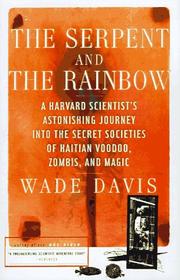
The Serpent and the Rainbow
Explores supernatural belief systems in comparative perspective.

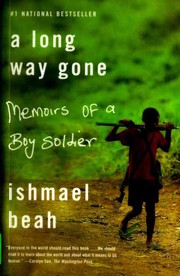
A Long Way Gone
Provides accessible background on Sierra Leone's conflict and society.
Endnotes
1.
Source: journal.culanth.org
Link:https://journal.culanth.org/index.php/ca/article/view/3955
Source snippet
A Disarmament Program for Witches: The Prospective Politics...by SM Anderson · 2019 · Cited by 9 — A Disarmament Program for Witches: Th...
2.
Source: journal.culanth.org
Link:https://journal.culanth.org/index.php/ca/article/view/3955/444
Source snippet
of A Disarmament Program for Witches: The...by SM Anderson · 2019 · Cited by 9 — Contemporary Sierra Leonean understandings of witchcraf...
3.
Source: ecoi.net
Title: 1 Sierra Leone
Link:https://www.ecoi.net/en/file/local/2006716/98020.pdf
Source snippet
July 18, 2014 — 18 Jul 2014 — “Allegations of witch-gun killings are taken seriously in many parts of Sierra. Leone and Guinea. Accused p...
Published: July 18, 2014
4.
Source: humanists.international
Link:https://humanists.international/wp-content/uploads/2020/11/Report-to-ACHPR67_Witchcraft.pdf
Source snippet
Report on witchcraft-related human rights abuses in Africa...Human rights violations associated with witchcraft accusations are marked...
5.
Source: pmc.ncbi.nlm.nih.gov
Link:https://pmc.ncbi.nlm.nih.gov/articles/PMC8035751/
Source snippet
Child witchcraft confessions as an idiom of distress in Sierra...by HNC Yoder · 2021 · Cited by 13 — We used an ecological approach t...
6.
Source: sierra-leone.org
Link:https://www.sierra-leone.org/Other-Conflict/TRCVolume3B.pdf
7.
Source: pmc.ncbi.nlm.nih.gov
Link:https://pmc.ncbi.nlm.nih.gov/articles/PMC6886773/
8.
Source: ecoi.net
Link:https://www.ecoi.net/en/document/1308804.html
9.
Source: unicef.org
Title: and partners bring hope children accused witchcraft liberia
Link:https://www.unicef.org/liberia/stories/unicef-and-partners-bring-hope-children-accused-witchcraft-liberia
10.
Source: culanth.org
Title: articulating the invisible ebola beyond witchcraft in sierra leone
Link:https://www.culanth.org/fieldsights/articulating-the-invisible-ebola-beyond-witchcraft-in-sierra-leone
11.
Source: culanth.org
Title: making violence visible an interview with samuel mark anderson
Link:https://www.culanth.org/fieldsights/making-violence-visible-an-interview-with-samuel-mark-anderson
12.
Source: resourcecentre.savethechildren.net
Link:https://resourcecentre.savethechildren.net/document/children-accused-witchcraft-anthropological-study-contemporary-practices-africa
13.
Source: nyuad.academia.edu
Title: Samuel Mark Anderson
Link:https://nyuad.academia.edu/SamuelMarkAnderson
14.
Source: anthrosource.onlinelibrary.wiley.com
Link:https://anthrosource.onlinelibrary.wiley.com/doi/full/10.14506/ca34.2.04
15.
Source: nomadit.co.uk
Link:https://nomadit.co.uk/conference/iuaes2014/paper/21523
16.
Source: scienceopen.com
Title: hosted document
Link:https://www.scienceopen.com/hosted-document?doi=10.1080%2F03056240601119042
17.
Source: nationalgeographic.com
Title: 150130 ebola virus outbreak epidemic sierra leone funerals 1
Link:https://www.nationalgeographic.com/adventure/article/150130-ebola-virus-outbreak-epidemic-sierra-leone-funerals-1
18.
Source: redcross.eu
Link:https://redcross.eu/latest-news/life-saving-role-of-red-cross-volunteers-during-ebola-outbreak-highlighted-by-new-study
19.
Source: theguardian.com
Link:https://www.theguardian.com/world/2014/dec/16/sierra-leone-scare-tactics-freetown-curb-ebola
20.
Source: journalofethics.ama-assn.org
Link:https://journalofethics.ama-assn.org/article/how-should-public-health-officials-respond-when-important-local-rituals-increase-risk-contagion/2020-01
21.
Source: theguardian.com
Title: was ripon school gripped by mass psychogenic illness
Link:https://www.theguardian.com/science/2015/nov/14/was-ripon-school-gripped-by-mass-psychogenic-illness
22.
Source: pmc.ncbi.nlm.nih.gov
Link:https://pmc.ncbi.nlm.nih.gov/articles/PMC7396040/
23.
Source: pmc.ncbi.nlm.nih.gov
Link:https://pmc.ncbi.nlm.nih.gov/articles/PMC4709130/
24.
Source: sajp.org.za
Link:https://sajp.org.za/index.php/sajp/article/view/1671/2648
25.
Source: assets.publishing.service.gov.uk
Title: 20131128 mod whitehall library resources 1700to1989.csv
Link:https://assets.publishing.service.gov.uk/media/5a7caf90ed915d63cc65c397/20131128-mod-whitehall-library-resources-1700to1989.csv
26.
Source: assets.publishing.service.gov.uk
Title: publishing.service.gov.uk Helpdesk Report: Ebola
Link:https://assets.publishing.service.gov.uk/media/57a08997ed915d622c0002c5/ebola-helpdesk-FOR-WEB1.pdf
27.
Source: anthrologica.com
Link:https://www.anthrologica.com/download_file/force/127/448
28.
Source: frontiersin.org
Link:https://www.frontiersin.org/journals/psychiatry/articles/10.3389/fpsyt.2020.493094/full
Additional References
29.
Source: ohchr.org
Link:https://www.ohchr.org/sites/default/files/2022-12/PAP-Guidelines-EN.pdf
Source snippet
accusations of witchcraft and ritual attacksHarmful practices related to accusations of witchcraft and ritual attacks have contribut...
30.
Source: youtube.com
Title: Money Rituals: Africa’s Deadliest Taboo
Link:https://www.youtube.com/watch?v=EjDe1D8NlOY
Source snippet
2 Rumor and suspicion about the origin of the West Africa Ebola outbreak, and those trying to fight it...
31.
Source: youtube.com
Link:https://www.youtube.com/watch?v=S5zSAaW_uVY
Source snippet
3 Fighting To Contain Sierra Leone's Ebola Epidemic...
32.
Source: youtube.com
Link:https://www.youtube.com/watch?v=X5jkxXu_o-A
Source snippet
5 An Honest Explanation of Sierra Leone's Civil War...
33.
Source: youtube.com
Title: Fighting To Contain Sierra Leone’s Ebola Epidemic
Link:https://www.youtube.com/watch?v=jTF7i6OBGQk
Source snippet
4 Sierra Leone Civil War (1991–2002) | How Luxury Fueled a Massacre...
34.
Source: researchgate.net
Link:https://www.researchgate.net/publication/271759288_Mass_hysteria_among_South_African_primary_school_learners_in_Kwa-Dukuza_KwaZulu-Natal
35.
Source: semanticscholar.org
Link:https://www.semanticscholar.org/paper/A-Disarmament-Program-for-Witches%3A-The-Prospective-Anderson/07ea0cf5d0274d34c2b503d93ad81611c5de0032
36.
Source: researchgate.net
Link:https://www.researchgate.net/publication/333366351_A_Disarmament_Program_for_Witches_The_Prospective_Politics_of_Antiwitchcraft_Postwarcraft_and_Rebrandcraft_in_Sierra_Leone
37.
Source: refworld.org
Link:https://www.refworld.org/reference/themreport/unicef/2011/104141
38.
Source: facebook.com
Link:https://www.facebook.com/groups/TINC.sl/posts/2791586171040036/
Topic Tree
Follow this branch
Related pages 192
- Antigua and Barbuda
- Argentina Belief Scares
- Azerbaijan Belief
- Bahrain Beliefs
- North Korea
- +187 more in sidebar